
Our readers keep the lights on and my morning glass full of iced black tea. As an Amazon Associate, I earn from qualifying purchases.
Specs are compiled from manufacturer listings and verified buyer reviews and can change over time — please confirm the key details on the product page before buying.
If you have a pond, you know the struggle — green water, hungry fish, and bare patches that look more like a puddle than a garden. The right aquatic plants flip that completely: they filter the water naturally, shade your fish from predators and the sun, and bring color that changes the whole feel of your yard. But most descriptions online are heavy on scientific names and light on what you actually need to know.
I’m Min — the founder and writer behind Gadgets Feed. This guide is built by comparing the manufacturers’ published specifications and the patterns across verified customer reviews, so you get each pick’s real strengths and trade-offs instead of marketing spin.
You want a pond that stays clear and looks alive, not a green soup. The right plants do that work for you. This roundup of the best aquatic pond plants covers three jobs: fast-growing surface cover, a marginal plant for the shallow shelf, and a show-stopping bloom for the center of the pond.
Our Picks at a Glance

How To Choose The Best Aquatic Pond Plants
The first thing to realize is that not every pond plant lives in the same spot. Some float freely and spread across the whole surface, while others need a pot on a shallow shelf or anchored mud at the bottom. Your pond’s depth, sunlight, and fish population all decide which type thrives.
Floating vs. Marginal vs. Deep-Water
Floating plants like water hyacinth and water lettuce sit on top with roots dangling in. They are the easiest — no soil, no pots, just drop them in. They also spread fast, creating shade that starves algae. Marginal plants like iris sit at the edge where the water is only a few inches deep. They need a pot or a bog zone and give you tall vertical foliage plus flowers. Deep-water plants like water lilies need 12–24 inches of water above their pot for the pads to reach the surface. They provide the most dramatic blooms but take a bit more setup.
Growth Rate and Coverage
Fast-growing floaters can double in size within weeks, which is great for clearing nutrients but can become a chore if you have to scoop out extras. Slower spreaders like water lilies need patience but stay contained in their pot and don’t overtake the entire pond. Think about how much maintenance you want before picking a speed.
Shipping Realities for Live Plants
Live plants travel through the mail in a box with no light or water for days. Some arrive looking tired with yellow leaves or dropped roots — this is normal if the plant itself is firm and the crown is intact. Avoid extreme temperatures when ordering. Cold below 20°F or heat above 90°F often kills them in transit, no matter how well they are packed.
Quick Comparison
| Model | Best For | Type | Mature Spread | Bloom Season | Amazon |
|---|---|---|---|---|---|
| Chalily Water Hyacinth (3-pack)★ Best Overall | All-around floating cover | Floating | 12 inches per plant | Summer to Fall | Amazon |
| Chalily Mangkala Ubol Water LilyFragrant Showpiece | Fragrant centerpiece blooms | Deep-water lily | Large pads, space needed | Spring to Fall | Amazon |
| 5 Live Water Hyacinth (Generic) | Budget bulk coverage | Floating | 6-12 inches per plant | Summer | Amazon |
| Chalily Iris ‘Black Gamecock’ | Shallow edges & bog zones | Marginal | Clumping, space varies | Spring | Amazon |
| AquaLeaf Water Lettuce + Hyacinth Bundle | Dual-species variety pack | Floating | 3-5 inches per plant | Summer | Amazon |
| AquaLeaf Anacharis & Hornwort Bundle | Oxygenation & fish habitat | Submerged/float | 6-8 inch bunches | Winter | Amazon |
| AquaLeaf Common Water Hyacinth (5-pack) | Greenhouse-grown floating flowers | Floating | 3 inches height | Year-round | Amazon |
In‑Depth Reviews
1. Chalily Water Hyacinth Floating Pond Plants (3-pack)
Our pick — over 4.5★ from 150+ verified ratings; the strongest balance of quality and price.
The crowd-favorite floater that quadruples in size and filters your pond with zero effort.
You unpack the box, drop each bare-root plant into the water, and that is the whole setup — no soil, no pots, no fuss. The glossy green leaves sit right on the surface, and the dangling roots act as a natural filter, pulling excess nutrients straight out of the water. Buyers report that their plants arrived “large, healthy” and “well-packed,” with one noting they “quadrupled in size with babies” after just a week in a koi pond. The plants are rated for USDA zone 9 and above, so they thrive in warmer climates through summer and fall, sending up sporadic bursts of lilac blooms that pollinators love.
What wins people over is the mix of speed and health. The plants spread quickly enough to shade your fish from predators, but the root system stays tidy enough that your pond doesn’t look choked. A few buyers mentioned the plants looked a little tired after shipping, but they “perked right up” once placed in the pond. The trade-off is that water hyacinth is a fast grower — you will need to thin it out occasionally or it can cover the whole surface. That same vigor is why it clears algae so effectively.
Instant-impact coverage: You get immediate floating cover that starts filtering and multiplying within days, all without potting soil or chemicals.
The honest limit: Fast growth means regular scooping to keep it from overtaking the entire pond — plan for a ten-minute tidy every couple of weeks.
Grab this for: a beginner-friendly, fast-acting floating plant that delivers shade, natural filtration, and purple blooms with almost no work.
Look elsewhere if: you want a controlled, contained centerpiece plant that stays in one spot — this one spreads.
2. Mangkala Ubol Live Perennial Water Lily
A hardy, fragrant peach lily that blooms from spring to fall and survives winters down to zone 3.
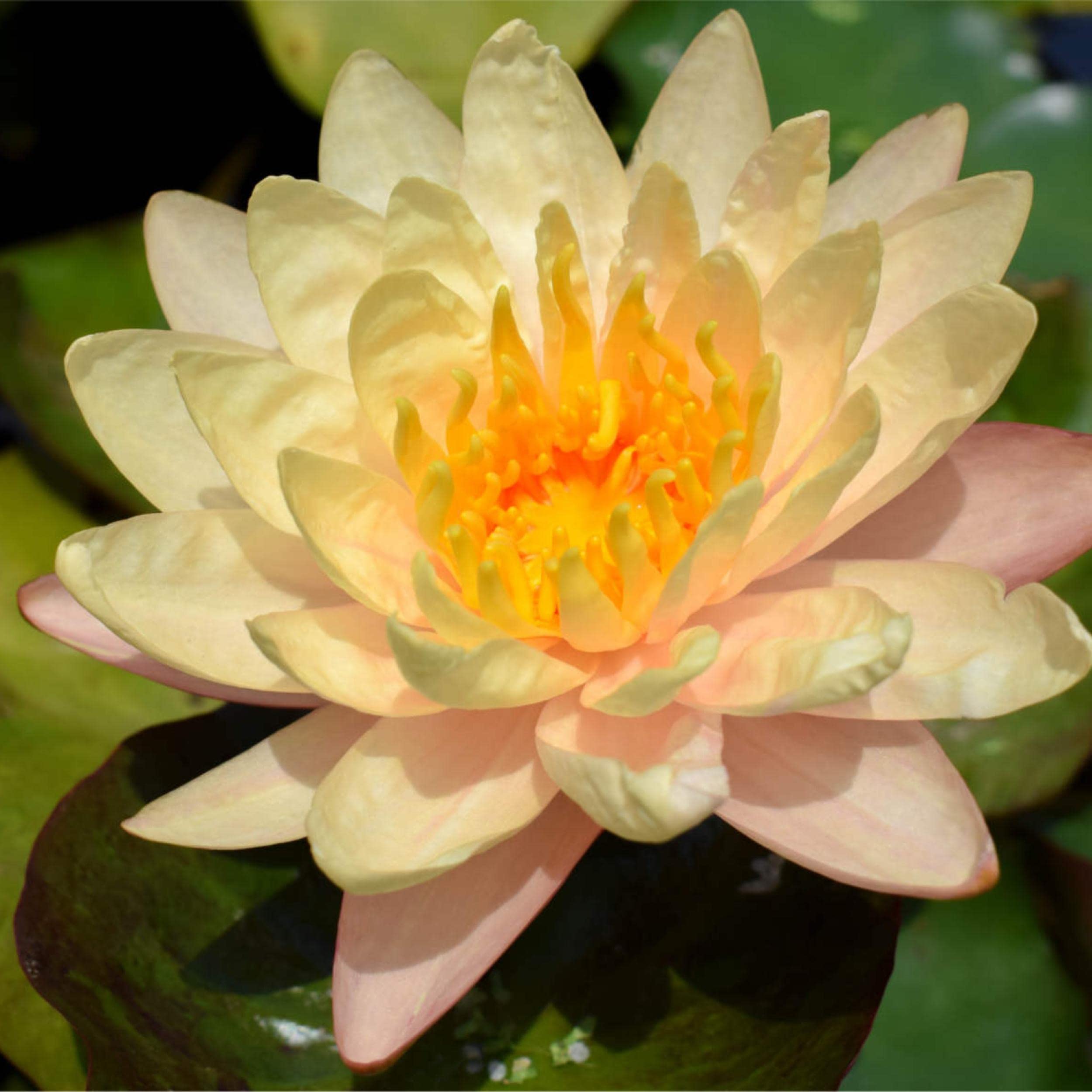
Unlike floating plants that drift wherever the wind takes them, this water lily starts as a bare root that you plant in a pot with sandy soil on the pond bottom. The payoff is a contained centerpiece with deep green pads that carry a subtle burgundy variegation, plus delicate peach flowers that actually smell good — a rarity among water lilies. The owner feedback is remarkably consistent: buyers describe the lily as “much larger and in much better shape than I expected,” with one noting it arrived with 10 or more stems and a flower bud already forming.
The planting instructions included in the box are clear enough that even first-timers get it right. One owner said the “planting instructions were excellent” and that their pond improved dramatically after adding it. The plant is perennial and hardy, meaning it comes back year after year in cold climates, unlike tropical floaters that die at the first frost. The downside is that you need proper soil — sandy soil or aquatic planting mix — and a pot, which the seller does not provide. A few buyers wished the listing had suggested buying those supplies at the same time.
Year-round investment: This is a perennial that survives winter in zone 3 and comes back bigger each spring, giving you a permanent anchor in the pond.
The catch: You must buy a pot and aquatic soil separately — it is not a drop-in plant like the floaters above.
Best for: the pond owner who wants a reliable, scented, long-lived centerpiece that won’t take over the whole surface and survives cold winters.
skip it if: you want instant coverage with zero setup — this requires potting and patience for the first pads to reach the surface.
3. 5 Live Water Hyacinth Plants (Generic)
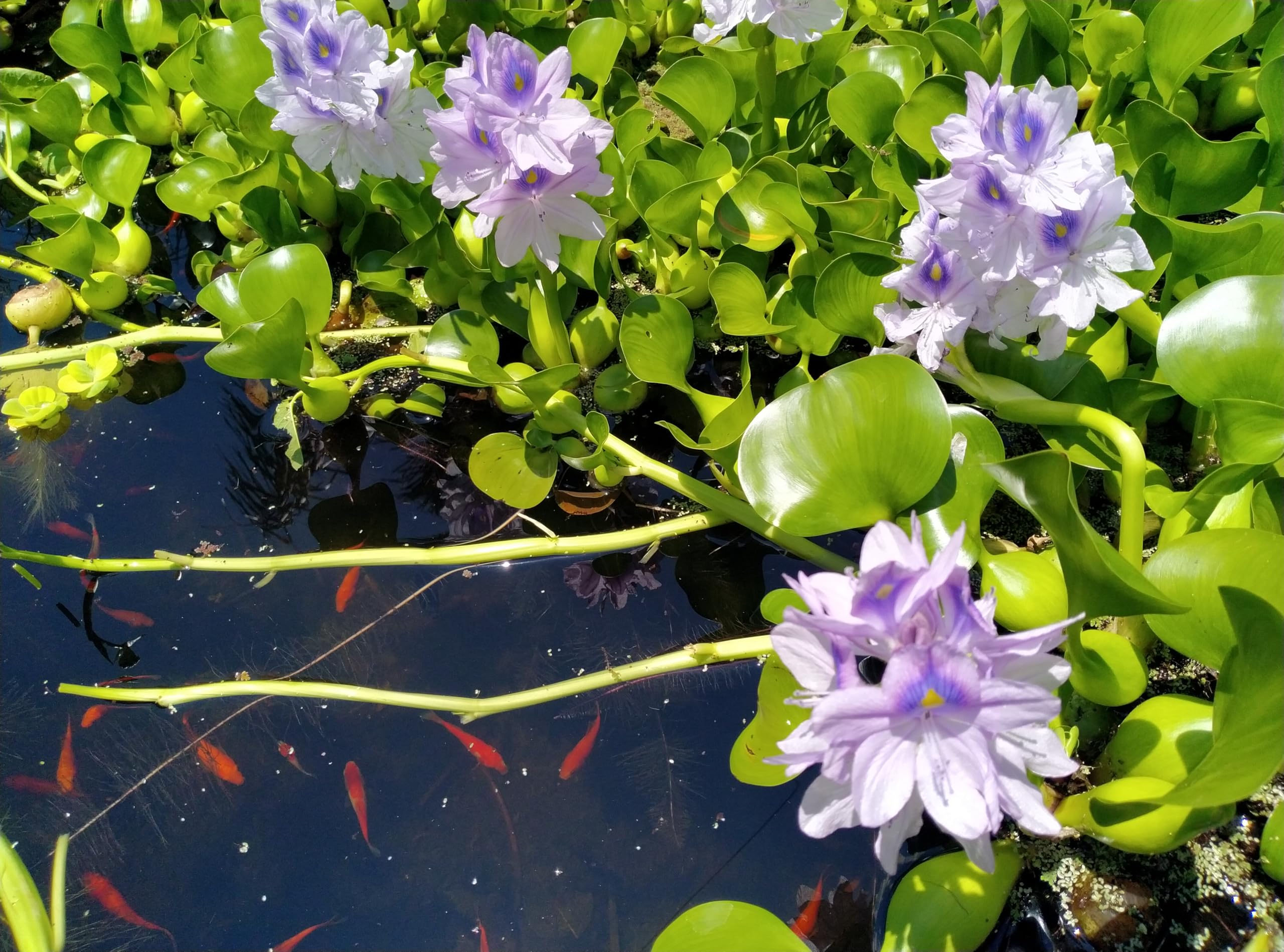
Five healthy hyacinths for the price of three — straightforward bulk coverage without branding markup.
You get five water hyacinth plants here instead of three from the Chalily pick above, for roughly the same money. Each plant arrives bare-root with bright green leaves and a buoyant bulb (a spongy stem that keeps it afloat), ready to float immediately. Owners consistently praise the health — one called them “absolutely beautiful plants — all arrived big and healthy with nice long roots.” The plants also act as a natural filter by absorbing excess nutrients, and since each spreads up to 12 inches wide, five of them cover a nice patch of surface area right from the start.
A small number of buyers reported that some plants turned brown shortly after arrival, though that can happen with any live plant shipped in warm weather. For the price, the value is tough to top if you want to jump-start a pond with multiple plants at once. The plants are rated for hardiness zone 3 (the USDA cold-hardiness zone for areas with winter lows down to -40°F), making them surprisingly cold-tolerant for a floating hyacinth.
Volume play: You get five plants in one purchase, saving money versus buying individual pots or packs from specialty sellers.
Realistic risk: As a generic listing, the plant uniformity and packaging quality are less predictable than the branded option — but most arrive healthy.
Reach for this if: you are stocking a larger pond on a budget and don’t mind the slightly lower consistency of a generic grower.
Choose the Chalily instead if: you want the highest shipping reliability and a proven track record — the branded pick has more than twice the owner feedback.
4. Iris ‘Black Gamecock’ Live Pond Plant
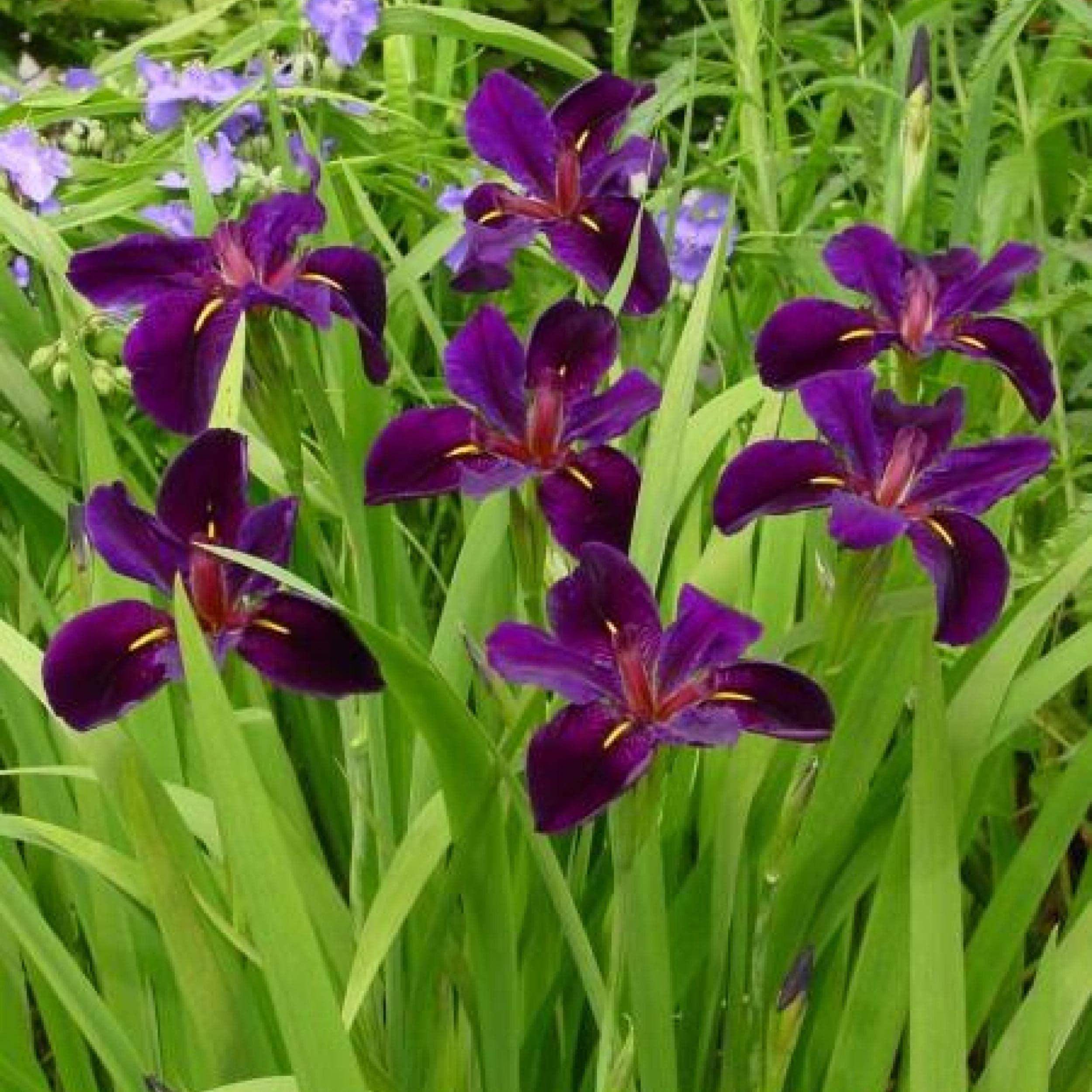
A deep purple iris that sits on the shallow shelf, filtering water while looking nothing like a pond plant.
This is a marginal plant — it belongs on the shallow shelf at the edge of your pond or in a bog area, not floating in open water. The velvety, deep purple blooms (which the seller calls “joining the dark side, we have flowers”) are dramatic and unexpected in a water garden. The plant also features attractive sword-like foliage that softens the pond’s edge and hides the liner. Owner feedback is strongly positive on the health and appearance, with one buyer noting their plant arrived with five tall, variegated leaves plus new growth and “would order again.”
The iris acts as a natural filter for the water, pulling nutrients through its roots and improving clarity. It is winter-hardy down to zone 5, so it survives cold in most of the US. You need to provide gravel or soil to hold the roots in place — the plant ships bare-root and must be potted. A minority of owners did report that the plant arrived yellowish or did not survive shipping, but the broader consensus is that it ships extremely well for a live plant. One owner described theirs as “extremely happy” and said the packaging exceeded expectations.
Edge-of-pond elegance: The dark purple flowers and upright foliage give your pond a deliberate, landscaped look that floating plants alone cannot achieve.
The fit note: This needs to be potted in gravel or soil on a shallow shelf — it is not a drop-and-go floater, so it requires a bit more planning.
Ideal for: pond owners who have a shallow edge or bog zone and want a tall, flowering plant that doubles as a natural biofilter.
Not for: small container ponds or setups without a shelf — this plant needs stable, shallow water and won’t survive in open deep water.
5. 2 Water Lettuce + 2 Water Hyacinth Bundle

Two different floaters in one box — the variety pack approach to natural algae control and fish shelter.
You get two water lettuce plants and two water hyacinth plants, each about 3-5 inches across, shipped as a bundle. The idea is that the two species create a more diverse floating canopy: the water hyacinth’s upright leaves and purple flowers mix with the water lettuce’s rosette-shaped foliage for visual texture. The long roots of both plants dangle through the water, leaching nutrients that would otherwise feed algae. One owner said the plants “arrived perfect; fresh, green, healthy” and spread within days, calling them “great value for easy-care floating plants.”
The seller provides a clear temperature notice — do not order when temperatures exceed 90°F or drop below 20°F, as extreme weather kills the plants in transit. The plants ship with trimmed roots, and if the roots fall off during shipping, the seller advises placing them in the pond and giving them a couple of weeks to re-establish. The bundle cannot ship to several states, including AL, FL, CT, MI, MN, OH, IN, TX, and WI, due to regulations on water hyacinth’s invasive potential. The most common owner complaint is about plant size — some arrive smaller than expected — but most say they multiplied quickly once in the pond.
Two-for-one biology: You get two different species that eat different nutrients and create a richer floating habitat than a single-species order.
The inconvenience: Plants sometimes arrive with trimmed or missing roots, requiring a recovery period in the pond before they take off.
Best for: the pond keeper who wants to experiment with two floater species at once without placing separate orders.
pass on it if: you live in one of the restricted states or have ruled out water hyacinth for its fast-spreading nature.
6. Anacharis and Hornwort Bundle for Ponds and Aquariums

Two submerged oxygenators that clarify water and give fish a dense, hair-like hideout to explore.
Unlike floating plants that shade the surface, anacharis and hornwort live submerged, either floating freely or loosely anchored in the mud. Hornwort (coontail) has sturdy, layered hair-like foliage that oxygenates and clarifies the water, with stems that can reach 24 inches in length. Anacharis comes in a bundle of at least 5 stems, each 6 to 8 inches long, and can be separated and planted individually. One owner noted the “hornwort arrived in good condition” while the anacharis had a couple of stems with melting that were easily trimmed off — a common occurrence with shipped submerged plants.
The bundle is a hit with those who have fish, especially turtles and silver dollar fish, that enjoy nibbling on the foliage. The plants also slow algae growth by absorbing nutrients directly from the water column. The catch is that submerged plants are more fragile in transit — some arrive in poor condition and die within weeks, according to a segment of buyers. The anacharis, in particular, is sensitive; one owner reported it “performed poorly after 1 month” despite trying different tanks. The hornwort is the tougher of the two, often outliving the anacharis in the same bundle.
Fish-friendly filtration: The dense foliage provides grazing and hiding spots for fish while actively removing nutrients from the water column.
The shipping gamble: Submerged plants are the most vulnerable in transit — expect some melting and be ready to trim dead stems, with no guarantee every stem survives.
Perfect for: fish and turtle ponds where you want living water filtration and a natural food source, not just surface cover.
Avoid if: you want a guaranteed lush look from day one — these plants require patience and some tolerance for shipping damage.
7. AquaLeaf Common Water Hyacinth (5-pack)

Greenhouse-grown hyacinths that skip the wild-harvest inconsistency — but size varies significantly.
This is another water hyacinth pack, but the seller emphasizes that these are greenhouse-grown, not harvested from wild waterways. That should mean cleaner, pest-free plants with no hitchhiking snails or duckweed, but the reality is more mixed. Some owners say the plants arrived “healthy and thriving in my patio pond” with beautiful flowers, while others report receiving very small specimens — described as “the size of the palm of your hand” — or plants with yellowed leaves that did not recover. Owner feedback specifically calls out the size as unpredictable, with the leaves drawing the most negative comments.
The plants are rated for year-round planting in warm climates, and the seller is clear about regulatory restrictions — this cannot be shipped to MN, MI, IN, IL, FL, or TX. For low-maintenance floating coverage, the concept is solid, and the greenhouse origin is a nice advantage. But this is a case where you pay for the name and get inconsistent results. The bloom time is listed as year-round, so in the right conditions, you can see flowers across multiple seasons.
No wild-harvest risk: Greenhouse cultivation means cleaner plants with a lower chance of snails or other stowaways compared to pond-grown stock.
The big variable: Size at arrival is the most common complaint — some get generous plants, others get palm-sized ones that feel disappointing at this price.
Consider this if: you specifically want greenhouse-grown plants with a lower pest risk and are willing to accept variability in size.
Pick the Chalily or Generic pack instead if: you want more predictable plant size and higher owner satisfaction at a similar or lower cost.
Understanding the Specs
USDA Hardiness Zone
This is the government’s zone map that tells you the coldest temperature your area gets in winter. A plant rated for zone 3 survives winters as cold as -40°F, while a plant rated for zone 9 only survives down to 20°F or so. If you live in Minnesota (zone 4) and buy a plant rated for zone 9, it dies in the ground the first winter. Some floaters like water hyacinth are annuals in cold zones — you treat them like summer plants and compost them at first frost.
Expected Blooming Period
This tells you which season the plant actually flowers, not just when it looks green. A spring bloomer like the iris ‘Black Gamecock’ puts out dramatic purple flowers for a few weeks in late spring, then stays green the rest of the year. A summer-to-fall bloomer like water hyacinth may flower sporadically through the hottest months. If you want constant color, you need to combine a spring marginal, a summer floater, and a fall bloomer.
FAQ
Can I plant water hyacinth and water lettuce in a small container pond?
How do I keep my water lily alive through the winter in a cold climate?
Why did my shipped aquatic plant arrive with yellow leaves?
Can I grow anacharis and hornwort in a goldfish pond?
What is the difference between a marginal plant and a floating plant?
Why can’t I order water hyacinth to certain states?
How long do live aquatic plants typically last in a pond?
Should I worry about snails coming with my aquatic plants?
What is the best way to anchor a water lily in a pond?
Final Thoughts: The Verdict
Across the board, the best aquatic pond plants winner is the Chalily Water Hyacinth (3-pack) because you get healthy, fast-multiplying plants that filter the water and bloom with zero setup — just drop them in. If you want a fragrant, long-lived centerpiece that survives cold winters, grab the Mangkala Ubol Water Lily. And for a shallow edge with showy purple flowers, the Iris ‘Black Gamecock’ is the one to reach for.
How We Picked
We do not accept paid placement. Every pick is matched to a real buyer and a real use-case; we do not hands-on test units.
Sources & Methodology
Specifications: manufacturer listings and product documentation. Review insights: verified customer reviews, as of July 2026. Pricing: not shown on this page (it changes often); check the current price via the retailer link.
As an Amazon Associate, Gadgets Feed earns from qualifying purchases. This does not affect which products we feature.