
Our readers keep the lights on and my morning glass full of iced black tea. As an Amazon Associate, I earn from qualifying purchases.
Specs are compiled from manufacturer listings and verified buyer reviews and can change over time — please confirm the key details on the product page before buying.
You already know the profit potential. A printer that prints draft after draft before a single saleable part leaves the bed kills your margin. The machine you choose sets your daily output, your material costs, and whether your first batch is ready to list or ready to scrap. This guide breaks down the real contenders — the ones that earn their keep in a small business workflow, not just a hobby bench.
I’m Min — the founder and writer behind Gadgets Feed. This guide is built by comparing the manufacturers’ published specifications and the patterns across verified customer reviews, so you get each pick’s real strengths and trade-offs instead of marketing spin.
From the ultra-reliable workhorse to the speed demon that shortcuts lead times, these are the machines that define the 3d printer for selling products category — and we will tell you exactly which one fits your volume, your materials, and your budget.
Our Picks at a Glance
How To Choose The Best 3D Printer For Selling Products
Picking a printer to run a small product line is different from picking one for cosplay or hobby prints. Your machine needs to be reliable enough to run overnight, fast enough to hit small batch deadlines, and precise enough that parts do not need tons of post-processing. Here is what matters.
Reliability and Uptime
A failed print eight hours in is not a learning moment — it is a wasted day. Look at what owners say about success rates from the start. Machines with strong auto-leveling, enclosed chambers, and active flow control tend to win here. If the printer needs tweaking between every print, it is not ready for product work.
Print Speed and Acceleration
Speed is measured in millimeters per second (mm/s), but the real story is acceleration (mm/s²) — how fast the print head can change direction. Faster acceleration means shorter total print times. For batch production, a bump from 500 mm/s to 600 mm/s saves real hours over a week.
Build Volume
Volume determines how many parts you fit on one plate. A 256 mm³ machine fits several small products or one medium product. Jumping to 300 mm³ or 350 mm³ lets you double your batch or print bigger items outright, which directly lifts your daily output. Measure your product against the build volume before you buy.
Filament and Material Flexibility
Selling products means matching material to function. PLA is easy and affordable for display items. PETG and ASA handle outdoor or light-duty use. For durable, heat-resistant parts, you want a printer that hits 300 °C or more for the nozzle and supports materials like polycarbonate (PC) or carbon fiber filaments. Check the printer’s official support list before committing.
Multi-Color vs. Post-Processing
Multi-color printing adds visual appeal right off the bed, but it also adds plastic waste for each color change (the “poop” from purging). If your product needs painted details or multiple colors, a multi-color system can eliminate an entire painting step. If your product is one-color, a simpler single-filament printer saves material and time.
Quick Comparison
| Model | Best For | Print Speed | Build Volume | Max Nozzle Temp | Amazon |
|---|---|---|---|---|---|
| Bambu Lab P1S Combo★ Best Overall | Overall production | 500 mm/s | 256 mm³ | — | Amazon |
| ELEGOO Centauri CarbonBest Value | Value per dollar | 500 mm/s | 256 mm³ | 320 °C | Amazon |
| Anycubic Kobra X MulticolorSpeed Champion | Speed + color | 600 mm/s | 260 mm³ | 300 °C | Amazon |
| Bambu Lab A1 Mini Combo | Compact starter | — | 180 mm³ | — | Amazon |
| FLASHFORGE AD5X | Speed + budget | 600 mm/s | 220 mm³ | 300 °C | Amazon |
| Anycubic Kobra S1 Combo | Multi-material drying | 600 mm/s | 250 mm³ | 320 °C | Amazon |
| ELEGOO Saturn 4 Ultra 16K | Resin detail | 150 mm/hr | 218 mm³ | — | Amazon |
| Creality K2 Pro Combo | Large batch FDM | 600 mm/s | 300 mm³ | — | Amazon |
| Creality K2 Plus Combo | Production volume | 600 mm/s | 350 mm³ | — | Amazon |
| Original Prusa MK4S | Open-source reliability | — | 250 mm³ | — | Amazon |
| Original Prusa CORE One | Enclosed premium | — | 270 mm³ | — | Amazon |
In‑Depth Reviews
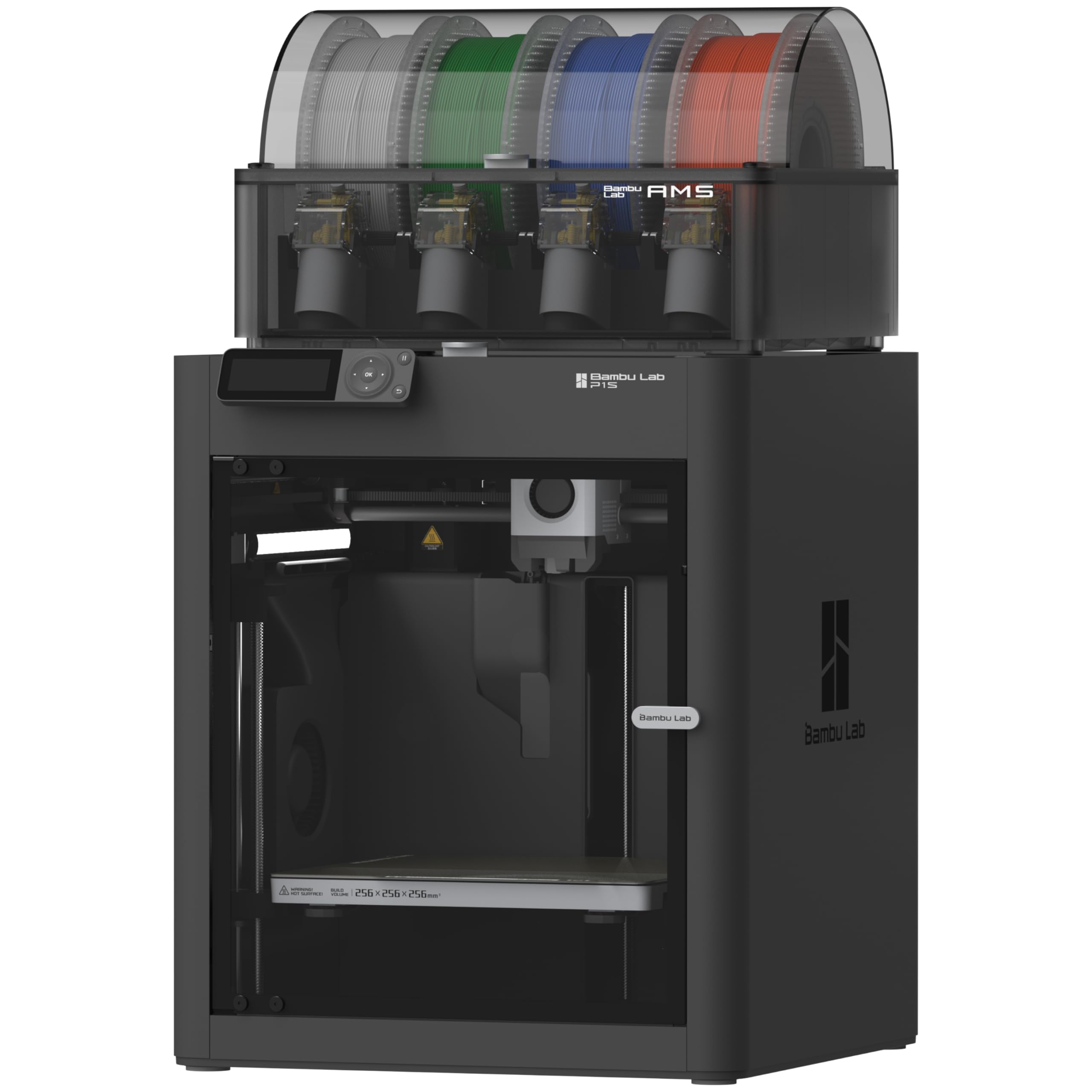
1. Bambu Lab P1S Combo
Our pick — over 4★ from 550+ verified ratings; the strongest balance of quality and price.
The P1S Combo runs unattended overnight, acting as a self-sufficient production assistant.
If you are selling products, your printer cannot be a project. The P1S Combo is the closest thing in this list to a self-running production line. Its fully enclosed CoreXY chassis handles PLA, PETG, TPU, even ABS and ASA without drama, and the included AMS unit lets you run up to 16 colors or multi-material parts with zero manual filament swapping. Setup takes about 15 minutes, then it just works — the crowd favorite reports a 95% success rate across 100 prints, with the few failures all traced back to user error. Print quality is the top praise across hundreds of owners, and reliability sits solidly behind it. The machine weighs 47.5 pounds, which tells you the build is not cutting corners to hit a low price.
The catch is also its strength: at 500 mm/s, it is fast but not the absolute fastest on this list — the Anycubic Kobra X below hits 600 mm/s, a 20% higher top speed. On a single part you might not notice, but across a production batch the P1S is a hair slower than the speed leaders. The AMS also introduces purge waste for multi-color prints, which is the cost of convenience. For most sellers, the reliability, the easy 15-minute setup, and the AMS’s set-and-forget color loading outweigh the slight speed gap.
Production-Ready Strengths
- 95% success rate out of box — buyers report failures are “user error”, not hardware flakiness.
- Built-in AMS handles multi-material and up to 16 colors without manual spool swaps.
- Enclosed chamber supports advanced filaments like ABS and ASA for functional products.
- Nearly silent operation; runs overnight on a shop shelf without disturbing anyone.
Honest Limitations
- At 500 mm/s, it trails the 600 mm/s machines in batch throughput.
- Multi-color printing generates purge waste — factor that into material cost per part.
- Software can be confusing at first; some owners note clunky Bluetooth pairing and a basic screen.
Who needs this: The seller who wants to set filament once, load the plate, hit print, and get back to listing products.
Think twice if: Speed is your absolute priority and you are willing to trade enclosed-material support to get it.
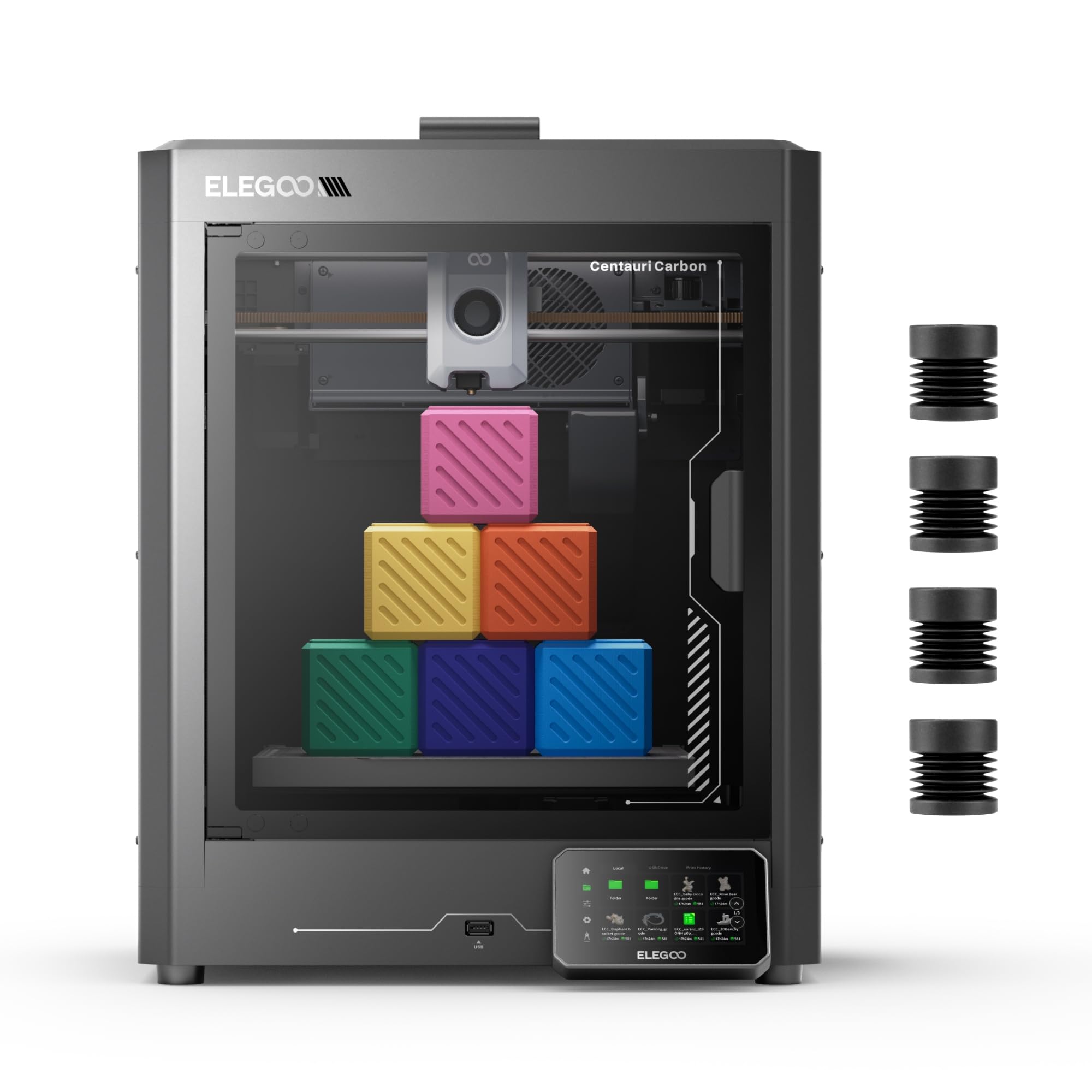
2. ELEGOO Centauri Carbon 3D Printer
The Centauri Carbon offers carbon-fiber printing at a price far below competitors.
The Centauri Carbon arrives fully assembled and pre-calibrated, so you are printing within minutes of unboxing. Its key weapon is the 320 °C brass-hardened steel nozzle, which open up carbon fiber reinforced filaments — great for making strong, lightweight parts for drones, automotive brackets, or any product that needs to resist heat and stress. The enclosed CoreXY frame and automatic vibration compensation keep quality consistent at 500 mm/s. Owners praise the quality and value for money more than any other aspect.
The honest trade-off: at 38.5 pounds, it shakes heavily on flimsy tables — you will want a sturdy stand. Durability gets negative marks from some owners, and a handful report a hotend communication error within the first week. The built-in camera gives low-quality time-lapses, and full build volume requires removing the filament cutter. For the price, the material capability is outstanding, but treat the initial break-in weeks carefully and keep an eye on the hotend connector.
Smart Production Fit: The 320 °C nozzle and enclosed chamber open engineering-grade filaments at a price that leaves room for multiple units — making it a strong second printer for production runs that need strength over speed.
Reach for this if: You need functional parts from carbon fiber or high-temp materials right from the start, without spending premium-tier money.
Look elsewhere if: You want a plug-and-play machine with zero risk of early hardware hiccups — the P1S is safer there.
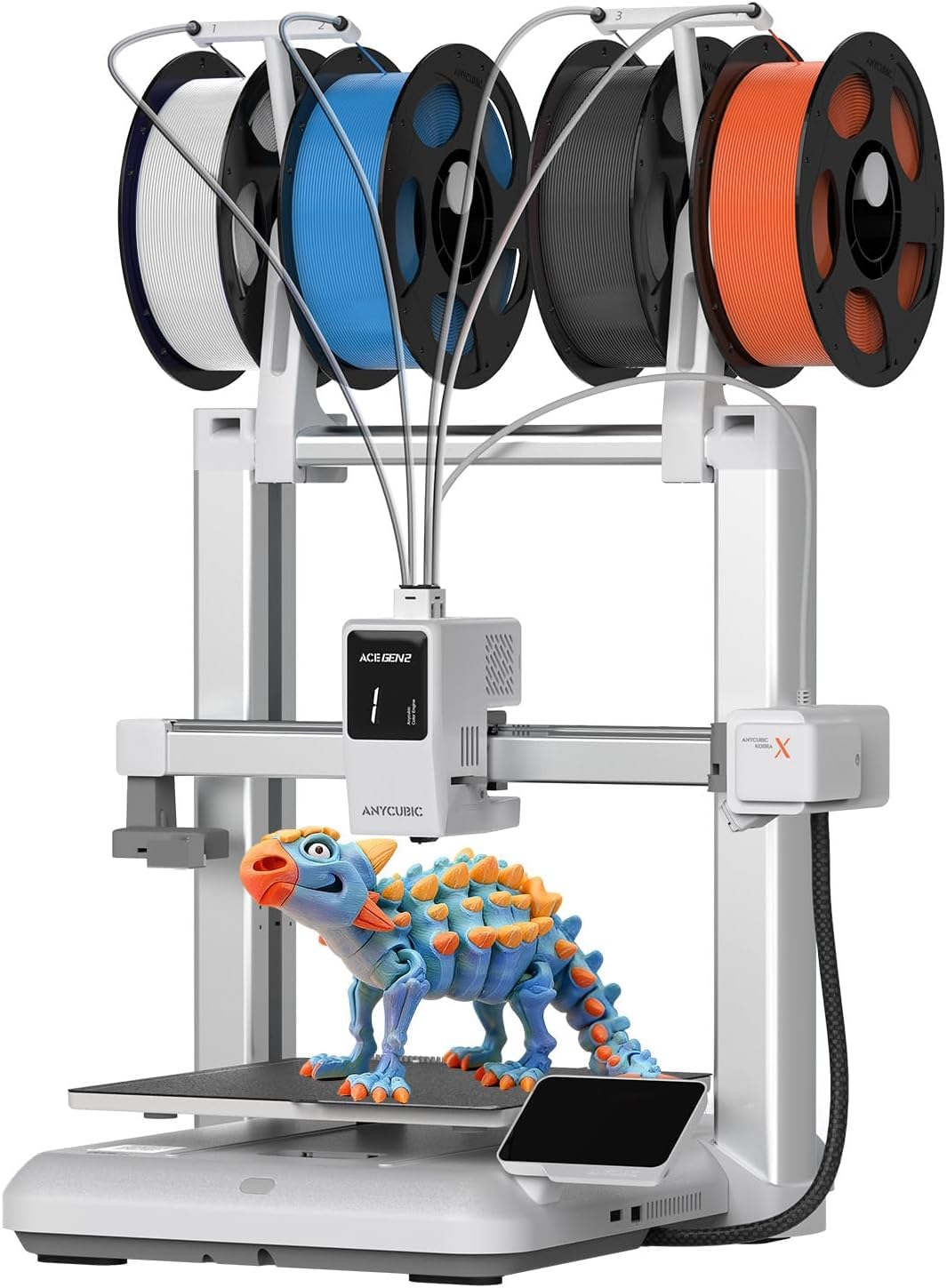
3. Anycubic Kobra X Multicolor 3D Printer
The Kobra X prints a Benchy in 14 minutes, the fastest on this list.
When your orders start stacking, speed is your best friend. The Kobra X hits 600 mm/s with a CoreXY structure and vibration compensation, turning around a test boat in 14 minutes that most machines need 45 minutes to finish. It ships with native 4-color printing via the ACE 2 Pro system, and you can expand to 19 colors by linking four units. The LeviQ 3.0 auto-leveling uses a 49-point calibration to ensure that first layer sticks every time. Owners call out print quality and ease of use as the top draws.
Here is where it gets real: at 20.9 pounds it is much lighter than the P1S or Centauri Carbon, but reliability is mixed — about as many owners mention defects as praise it. A few note severe WiFi connectivity issues and a poor slicer experience. The multi-color purge waste, which the maker claims reduces material travel path by 81.25% compared to earlier systems, still adds waste per color swap. If you batch-print one-color products, this machine is a speed demon that earns its place; for heavy multi-color work, the Bambu AMS system has a longer track record.
Fastest on the list: At 600 mm/s and 20,000 mm/s² acceleration, it shaves minutes off every print — over a hundred parts that adds up to hours saved.
Best for: The seller who cranks out many small one-color products per day and wants minimum wait time between batches.
skip it if: Multicolor is your main sell — the Bambu P1S gives a more refined multi-material experience with better owner-reported reliability.
4. Bambu Lab A1 Mini Combo

The A1 Mini runs at ≤48 dB while maintaining Bambu Lab’s reliable performance.
If your space is tight or you print in a shared room, the A1 Mini runs at ≤48 dB — that is quieter than a typical conversation. It handles all calibration automatically: Z-offset, bed-leveling, and active flow rate compensation. Setup takes about 20 minutes, and the AMS Lite brings multi-color capability in a small footprint. Owners say it is an ideal beginner machine, and suitability for beginners is the most-praised aspect by a wide margin.
The small size is the obvious limit. With a 180 mm³ build volume, you cannot print large products in one piece — you are looking at small desk items, keychains, phone stands, or multi-part assemblies. The AMS Lite also wastes filament during color changes, and the light frame needs a solid table to avoid shaking at high speed. For a small product launch or prototyping before scaling to a bigger printer, it is a fantastic low-commitment entry point.
Real trade-off: The quiet operation and auto-calibration make it a near-zero-fuss machine, but you max out on part size fast — it is a prelude to a larger production printer, not a replacement for one.
Reach for this if: You are testing product ideas, running small-batch desk accessories, or need a quiet unit in a home office.
Look elsewhere if: Your product is larger than a coffee mug or you need to batch-produce more than a few units per day.
5. FLASHFORGE AD5X Multi-Color 3D Printer
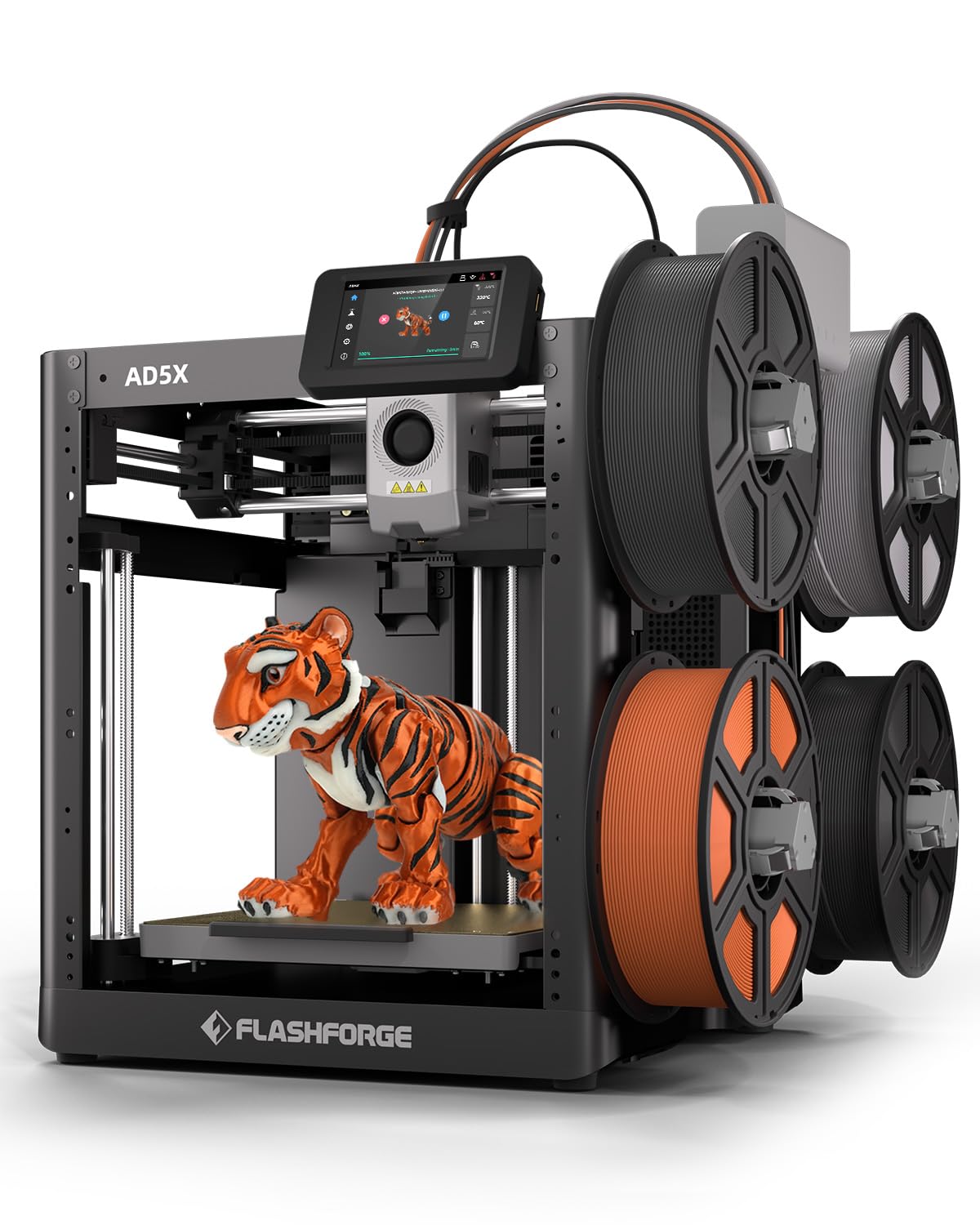
The AD5X delivers four-color printing at a surprisingly low price point.
The AD5X brings 600 mm/s CoreXY speed and up to four simultaneous colors to a price tier that usually forces single-color choices. It has a 1-click auto leveling system, a 300 °C direct-drive extruder, and interchangeable nozzles from 0.25 mm (ultra-fine detail) to 0.8 mm (fast chunky parts). Print quality is the most-lauded aspect — customers note great first layers and crisp details.
The reliability picture is the balancing factor. Owners describe a ~90% initial success rate, but some hit a catastrophic failure at around 300 hours where the nozzle fused to the bed. The seller community notes that filament jams at the 4-in-1 connector happen, stability requires a good surface, and the machine is noisy. The AD5X is a strong value pick if you are willing to learn its quirks and keep spare parts on hand — not a set-and-forget machine, but a near-pro performer at a mid-range price.
Good for price-sensitive rapid prototyping: 600 mm/s with multi-color at this cost is rare, but plan for minor tinkering and keep a spare hotend. Most owners who treat it as a project printer are very satisfied.
Best for: The budget-constrained seller who needs multi-color output and is comfortable performing minor maintenance.
pass on it if: Reliability is your number one need — the Bambu P1S has a higher success rate and better support network.
6. Anycubic Kobra S1 Combo

The Kobra S1 Combo’s ACE Pro actively dries filament during prints, a unique feature for humid shops.
The Kobra S1 Combo ships with the ACE Pro, a smart multi-filament dryer that uses dual PTC heating and 360° hot air circulation to keep spools at their optimal printing condition. This matters if you work in a garage or basement where humidity causes first-layer fails. It prints at 600 mm/s, handles up to 320 °C nozzle temperature for engineering materials, and includes AI monitoring with belt-tension checks. Owners call out ease of use and quick setup as the biggest positives.
The honest picture: reliability is mixed — roughly as many reviewers point out failed prints or early unit issues as praise it. Some say the ACE Pro itself is the weak link, with filament reading errors and jams. The printer is heavy at 56 pounds, assembly takes a few hours, and matte PLA cannot run through the ACE Pro. If you need active drying and multi-color on a budget, this is the only machine offering that combo, but have patience for initial troubleshooting.
Unique advantage: The ACE Pro’s active drying is genuinely useful for humid environments and hygroscopic materials. No other printer at this level combines enclosed CoreXY, 600 mm/s, and a built-in dryer.
Reach for this if: Your workspace is humid and you print PETG or other moisture-sensitive materials, or you want 8-color expandability.
Look elsewhere if: You need a tried-and-true multi-color system — the Bambu AMS ecosystem has far more owner miles behind it.
7. ELEGOO Saturn 4 Ultra 16K Resin 3D Printer
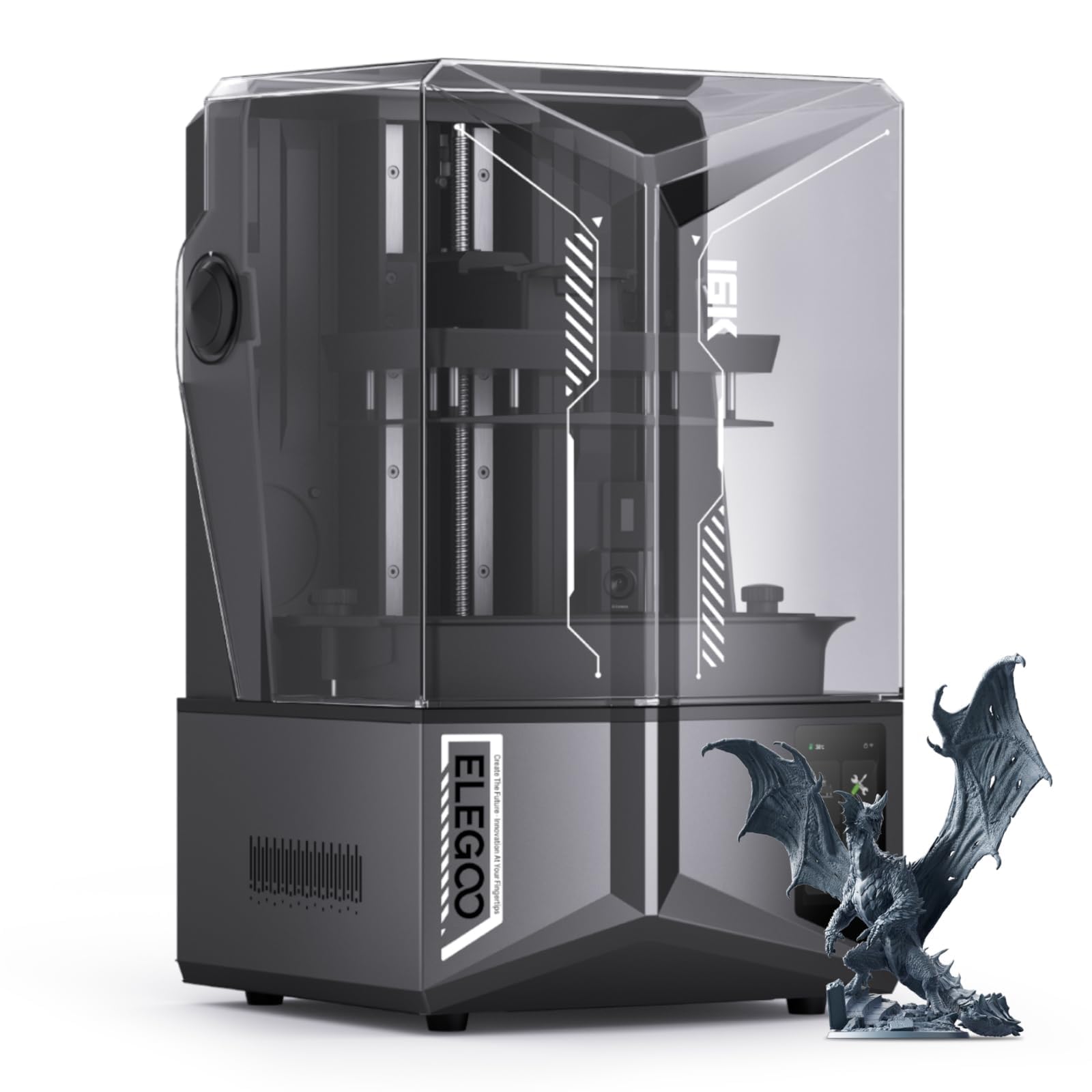
The Saturn 4 Ultra’s 16K resolution produces details comparable to injection molding.
If your product needs smooth surfaces, sharp edges, and fine detail — jewelry, miniatures, tabletop accessories, model parts — FDM cannot match resin. The Saturn 4 Ultra uses a 10-inch 16K mono LCD for ultra-high resolution prints at speeds up to 150 mm/h. Its tilt release system peels layers faster and with less suction, and the smart tank heating keeps resin at a steady 30 °C for consistent layer adhesion. The AI camera alerts you to empty build plates and warped models. Print quality is the top praise by far, with owners calling it an easy-to-use machine right from the start.
Resin is a different workflow: you need washing and curing stations, ventilation for fumes, and you handle liquid resin. Reliability is mixed — some owners hit consistent failures, often support-related. The build volume (8.33 x 4.66 x 8.66 inches) is smaller than FDM machines, and residue detection can be finicky. For detail-critical products sold at higher margins, the Saturn 4 is tough to top. For functional or large parts, stick with FDM.
The detail edge: 16K resolution on a 10-inch screen delivers surface finish that an FDM printer would need extensive sanding to match. If your customer buys with their eyes first, this is your pick.
Best for: High-detail products like miniatures, jewelry molds, or precision parts where surface finish directly affects sale price.
Think twice if: You want fast production of functional parts — resin is slower, messier, and requires extra post-processing steps.
8. Creality K2 Pro Combo (A) 3D Printer
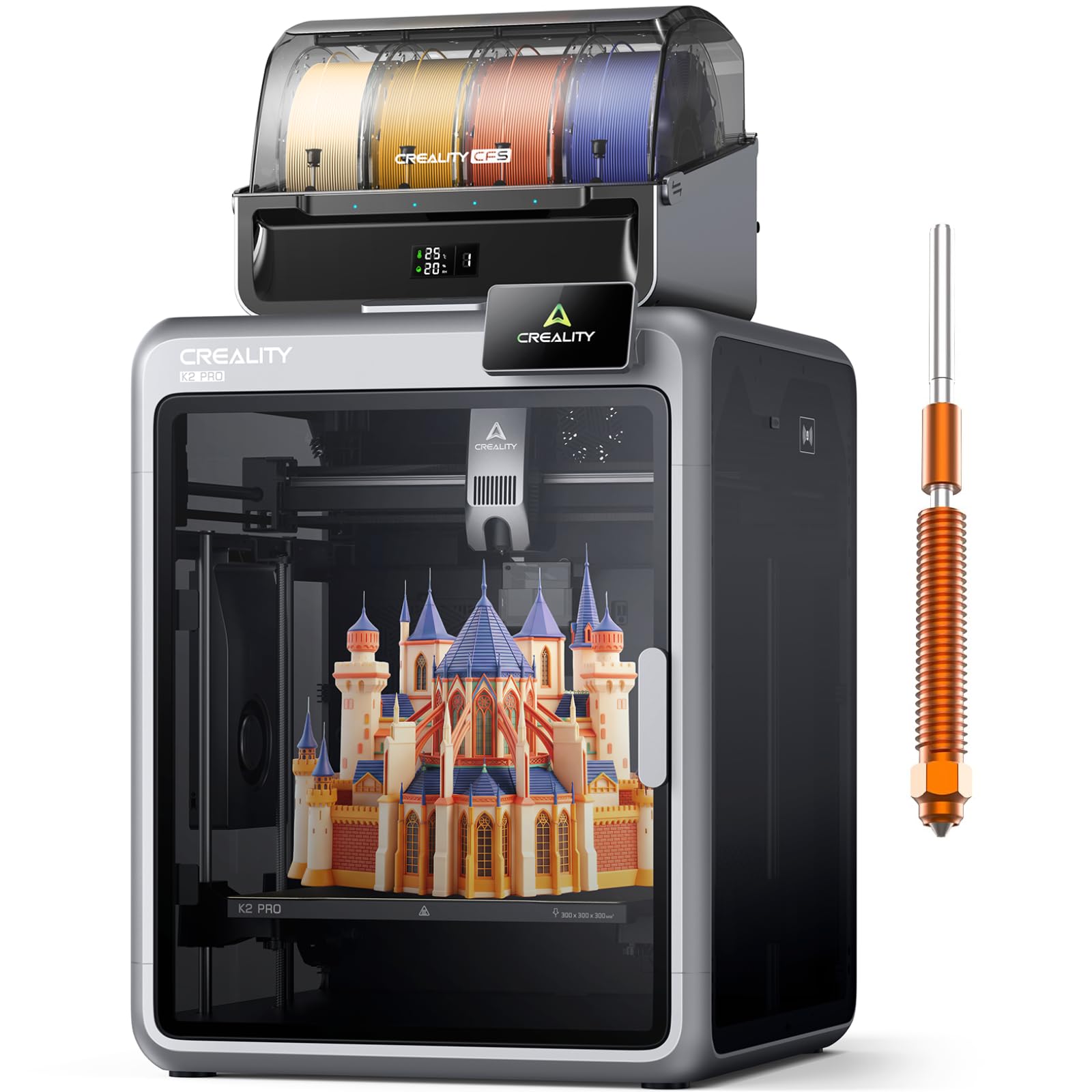
The K2 Pro’s 60 °C active chamber eliminates warping for ABS and ASA prints.
The K2 Pro Combo maintains a 60 °C chamber temperature, which is a lifesaver for ABS, ASA, and PPA-CF — materials prone to corner warping in cold air. It prints at 600 mm/s with 20,000 mm/s² acceleration, uses a dual AI camera (chamber for spaghetti detection, nozzle for real-time flow rate tuning), and ships with a CFS smart filament system for up to 16 colors. The 300 mm³ build volume fits full-sized products in one go. Quality is the most-praised aspect across owners.
Reliability is mixed. Some shoppers say zero issues and stunning prints; others describe the software as confusing and the CFS system’s error messages as cryptic. The printer is heavy at 61.6 pounds and needs a sturdy bench. The active chamber heating and dual AI cameras are genuinely useful for production environments, but expect a learning curve with the Creality OS and slicer integration. If you are already in the Creality ecosystem, it is a natural upgrade.
Production advantage: The 60 °C active heating and 300 mm³ volume mean you can run a full plate of warp-prone materials overnight without babysitting. Few printers at any price offer this.
Reach for this if: You need to print large functional parts in ASA or carbon fiber composites and want to avoid chamber-temperature warping.
Look elsewhere if: You are new to 3D printing — the software setup and slicer tuning can frustrate beginners. The Bambu P1S is more forgiving.
9. Creality K2 Plus Combo 3D Printer

When your product is too big for 300 mm, the K2 Plus swallows it whole.
The K2 Plus expands the build volume to 350 mm³ — that is over 40% more cubic space than a 300 mm³ machine, letting you print large parts in one piece or run bigger batches of smaller products. It rockets at 600 mm/s with a staggering 30,000 mm/s² acceleration, making it the fastest-accelerating printer on this list. The step-servo motor system keeps things quiet despite the speed. Owners heap praise on the quality and print quality.
The bad news: reliability is the most-discussed aspect and it is marked mixed. Several owners hit a Y-axis servo error on setup that required gluing and fixing cables. The CFS system, while promising, has documentation gaps that frustrate new users. At 27.5 pounds it is surprisingly light for its size, but the instructions are vague and the screws can be too tight. This is a powerhouse for volume production once dialed in, but budget time for initial fine-tuning.
Volume king: 350 mm³ with dual AI cameras and 30,000 mm/s² acceleration means you fit more parts per plate and finish them faster than any other printer here. The trade-off is setup patience.
Best for: The established seller who needs the largest possible batch size and has the experience to handle initial setup quirks.
it’s not for you if: You want to unbox and print immediately without touching firmware settings — the P1S or Centauri Carbon are simpler.
10. Original Prusa MK4S Fully Assembled
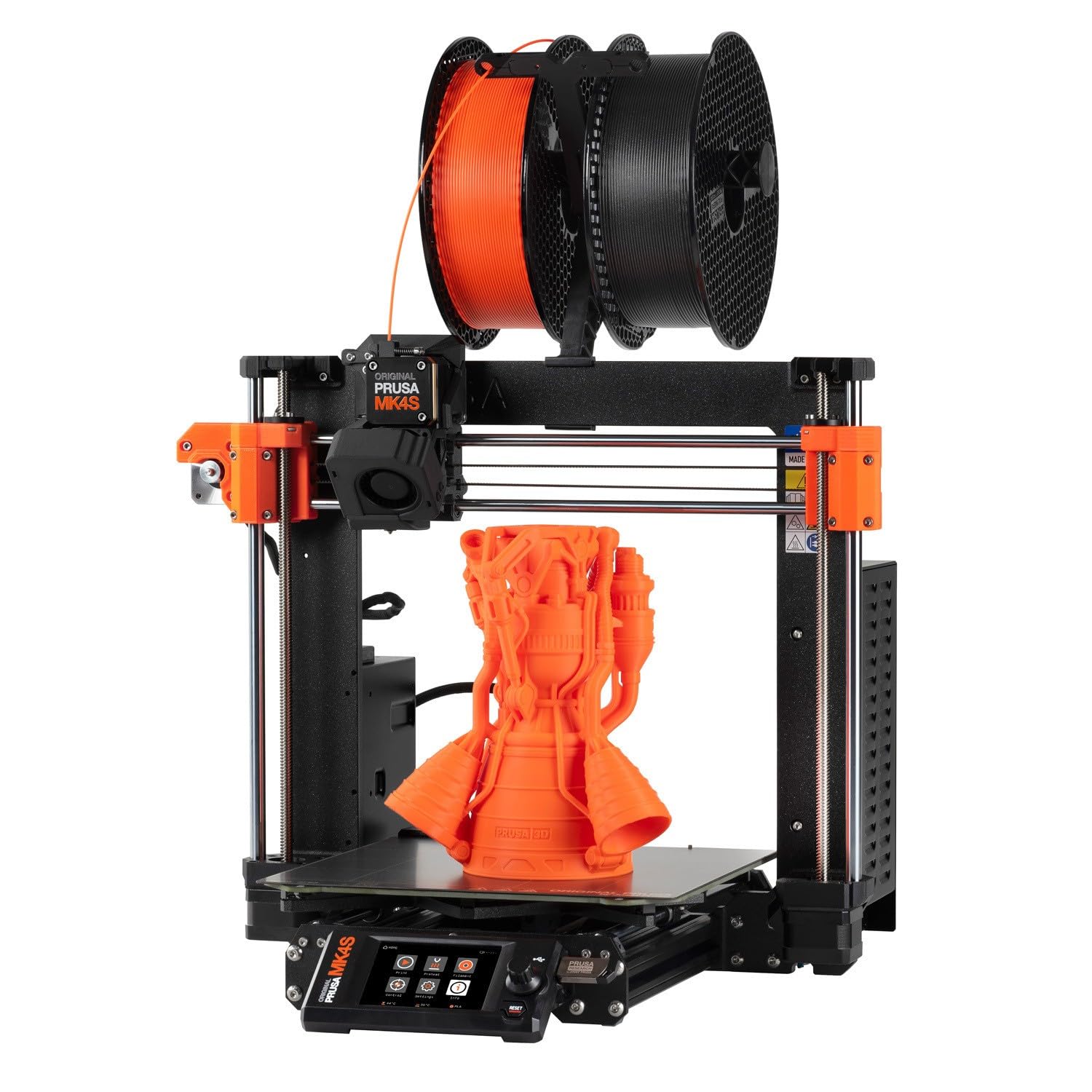
The maker’s benchmark — open, repairable, and consistently excellent.
The MK4S is the fully assembled version of Prusa’s latest open-frame FDM printer. It comes with input shaping, an advanced motion compensation that reduces ringing at higher speeds, and a print volume of 9.84 x 8.3 x 8.6 inches. The open-source design means any part can be replaced with third-party components, and Prusa’s software ecosystem (Prusa Connect, mobile app) works smoothly from the start. It ships with a 1 kg spool of Prusament PLA Galaxy Black and lifetime technical assistance. Owners say print quality is excellent, with a sturdy build.
The biggest caveat is price — it is a premium machine in an open-frame form factor, meaning no enclosed chamber for ABS or high-temp materials. Some owners find the assembly process challenging even on the assembled model, and the cost is high compared to similarly fast enclosed printers. If you value repairability, open-source ethos, and absolute print accuracy over raw speed or enclosure, the MK4S is a long-term investment that will still be running in a decade.
Long-term value: Open-source hardware, firmware updates, and a massive community mean this printer will not be obsolete in two years. It is a buy-for-life machine in a category where most printers get replaced after 18 months.
Reach for this if: You care about repairability, want to print engineering materials at high precision, and plan to keep the same printer for years.
Look elsewhere if: You need an enclosed chamber for ABS/ASA or want multi-ink color printing — the MK4S is open-frame and single-extruder.
11. Original Prusa CORE One
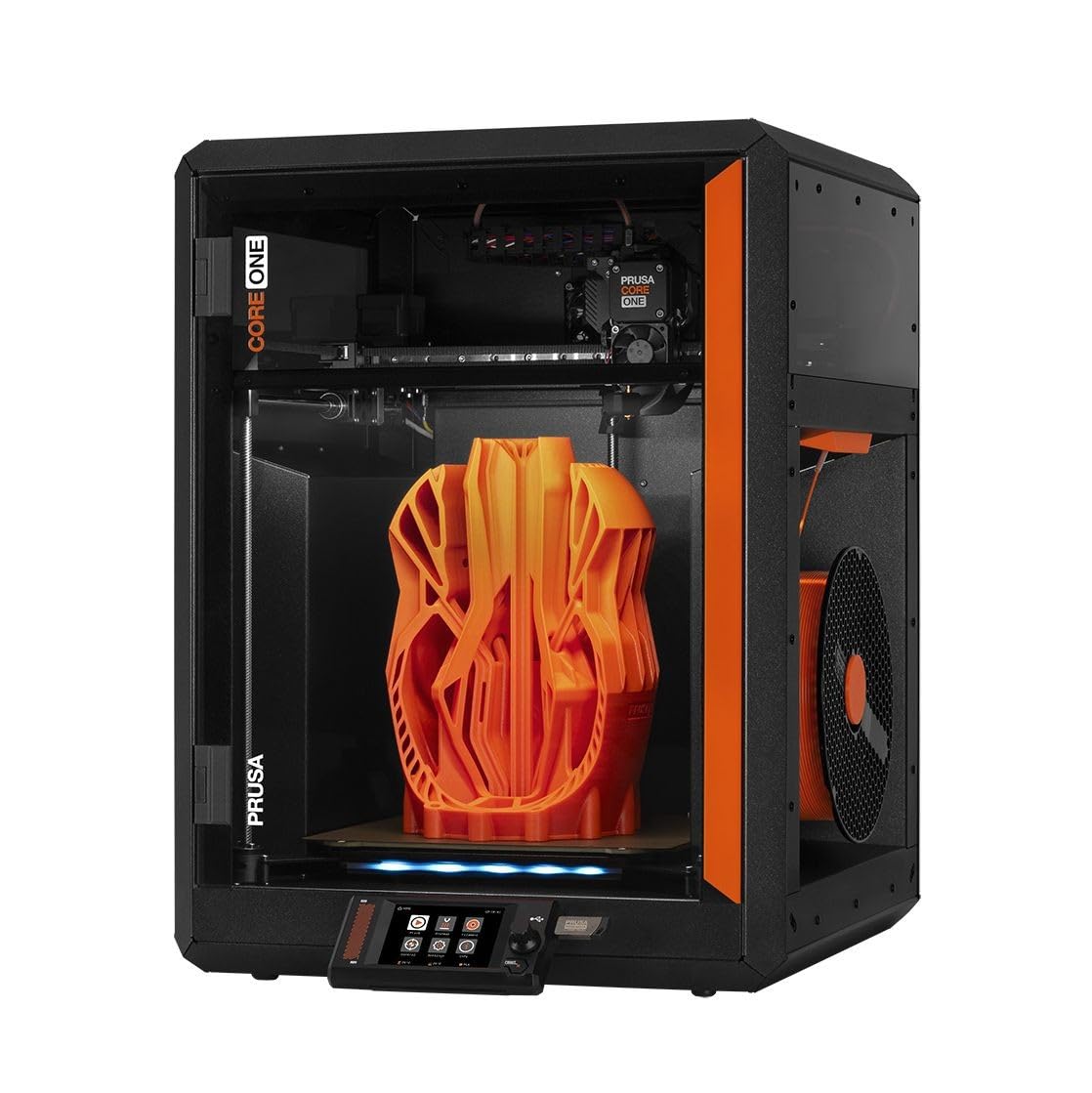
Prusa’s first CoreXY enclosure — finally, a Prusa that handles ABS without aftermarket mods.
The CORE One brings the Prusa reliability into a fully enclosed CoreXY format with active chamber heating up to 55 °C, meaning it can run PLA and PETG with the door shut, plus ASA, PC, and Nylon without warping. The all-steel exoskeleton frame provides rigidity for high-speed printing, and the 250 x 220 x 270 mm build area is generous for a CoreXY. It ships fully assembled and tested, includes a 1 kg spool of Prusament PLA, and comes with lifetime technical support. Owners praise print quality and speed as the top features.
The honest picture: assembly for the kit version takes around 20 hours, and some buyers report tight Z-screws and loose XY motor set-screws on arrival. The price puts it in a premium bracket alongside the K2 Plus and beyond the P1S. Some owners feel the build quality is good but not exceptional for the price, and the multicolor MMU3 add-on is delayed to next year. If you want a Prusa for its ecosystem and repairability but also need an enclosure for engineering materials, the CORE One is the obvious pick — just be ready to spend premium money and tolerate some early teething.
The Prusa bench: 55 °C active chamber, CoreXY speed, and open-source repairability in one box. It competes head-to-head with the K2 Pro and P1S, but the Prusa ecosystem wins if you value long-term upgrades and community support.
Best for: The seller who wants a Prusa’s pedigree with an enclosed chamber — a combination the MK4S cannot offer.
look elsewhere if: Price is a primary concern — the P1S gives similar capability for significantly less, and the Creality K2 Pro offers more build volume for less.
Understanding the Specs
Print Speed (mm/s) and Acceleration (mm/s²)
Speed is how fast the print head moves while laying down filament. Acceleration is how quickly it reaches that speed. A printer that claims 600 mm/s is faster than one at 500 mm/s in theory, but acceleration matters more for small parts where the head stops and starts constantly — higher acceleration means shorter total print time for the same speed rating.
Build Volume
Measured in cubic millimeters (mm³), this tells you the largest single object you can print. Bigger volume means you can run more parts per plate, boosting daily output. If your product fits within 256 mm³ (a 10-inch cube), a 300 or 350 mm³ machine lets you batch multiple units in one print.
FAQ
What is the best 3D printer for starting a small product business?
Is a 500 mm/s printer fast enough for selling products?
Do I need multi-color printing to sell 3D printed products?
How much build volume do I need for selling products?
FDM vs resin — which is better for selling products?
Do I need an enclosed 3D printer for selling products?
How often will a production printer fail?
What filament types should I use for products I sell?
Can I leave a 3D printer running overnight?
How many units can a 3D printer produce per day?
Final Thoughts: The Verdict
If you want one dependable pick, the 3d printer for selling products winner is the Bambu Lab P1S Combo because it balances speed, multi-color capability, and the highest owner-reported success rate at 95% — meaning fewer failed prints and less wasted material. If you want the fastest possible throughput for one-color production, grab the Anycubic Kobra X. And for the largest batch volume from a single machine, the Creality K2 Plus is the one to reach for.
How We Picked
We do not accept paid placement. Every pick is matched to a real buyer and a real use-case; we do not hands-on test units.
Sources & Methodology
Specifications: manufacturer listings and product documentation. Review insights: verified customer reviews, as of July 2026. Pricing: not shown on this page (it changes often); check the current price via the retailer link.
As an Amazon Associate, Gadgets Feed earns from qualifying purchases. This does not affect which products we feature.