
Our readers keep the lights on and my morning glass full of iced black tea. As an Amazon Associate, I earn from qualifying purchases.
Specs are compiled from manufacturer listings and verified buyer reviews and can change over time — please confirm the key details on the product page before buying.
A single 4×8 sheet of diamond plate can be the difference between a trailer floor that rots out in two winters and one that still looks sharp a decade later. But thickness, alloy, and how the plate arrives (flat or rolled) change everything about how it handles, how long it lasts, and how much sweat you will pour into installation. This guide breaks down the real trade-offs between the budget-friendly rolls and the premium rigid sheets, so you land on the right piece for your project the first time.
I’m Min — the founder and writer behind Gadgets Feed. This guide is built by comparing the manufacturers’ published specifications and the patterns across verified customer reviews, so you get each pick’s real strengths and trade-offs instead of marketing spin.
The crowd favorite—scoring over 4.6 stars with 150+ owners—is a budget-friendly black roll, but for structural jobs the thickest 0.045-inch rigid sheet earns the pro nod. This is everything you need to confidently choose the right 4×8 diamond plate for your trailer, garage, or work project.
Our Picks at a Glance

How To Choose The Best 4×8 Diamond Plate
A 4×8 sheet of diamond plate is a big purchase—both in size and in what it can do for your project. To get it right, focus on three things: how thick the metal is, what you are sticking it to, and whether you mind wrestling a sheet that arrives curled up like a fruit roll-up.
Thickness: The Single Number That Tells You Everything
Thickness is measured in thousandths of an inch (like 0.025, 0.03, or 0.045). A thin sheet (0.025 inches) is fine for wall panels, kickplates, or covering rust on a door—it cuts easily with tin snips and can be bent by hand. A thicker sheet (0.045 inches) is what you want for a trailer floor, truck bed, or any surface that has to take weight without dimpling. Thicker also means stiffer, so cutting it cleanly usually calls for power shears or a fine-tooth saw blade.
Delivery Shape: Flat vs. Rolled
Some diamond plate arrives as a flat, rigid sheet. Others come rolled up in a box. A flat sheet is ready to lay down immediately—no extra work. A rolled sheet can save on shipping, but you will need to flatten it yourself (often over a day or two, using weights or wood boards in the sun). If your project is a quick repair, go flat. If you have time and patience, a rolled sheet can save a bit of money.
Quick Comparison
| Model | Best For | Thickness | Delivery | Material & Alloy | Amazon |
|---|---|---|---|---|---|
| EAGLE 1 Black Roll★ Best Overall | Trailer stone guards & DIY micro-campers | 25 mils | Rolled | Aluminum | Amazon |
| Royilink Embossed Roll | RV siding & door kickplates | 0.03 inches | Rolled | 100% Aluminum | Amazon |
| Vruelia Rigid Sheet | Heavy-duty trailer floors & truck beds | 0.045 inches | Flat Sheet | 3003-H22 Aluminum | Amazon |
| Zonon Flat Sheet | Workshop wall paneling | — | Flat Sheet | Industrial Aluminum | Amazon |
In‑Depth Reviews
1. EAGLE 1 8FT Long Embossed Aluminum Diamond Checker Plate (4 x 8 FT, Black)
Our pick — over 4.5★ from 150+ verified ratings; the strongest balance of quality and price.
The budget-savvy roll that trailer owners keep coming back to again and again.
This is the most popular pick for a reason: it works great on trailer edges, stone guards, and even garage door bottoms, and the 25-mil thickness is just right for cutting with ordinary tin snips. Plenty of owners describe snipping off custom lengths in minutes, then screwing or riveting it into place. The black gloss finish cleans up nicely, and a few report spray-painting it for a flatter look with no prep fuss—just oil-based paint straight on.
At a 0.03-inch thickness comparison, the Royilink roll below is slightly thicker (0.03 inches vs 25 mils, roughly a 20% difference). That makes this one a hair more flexible, which owners often call an advantage for wrapping around curved trailer fenders. A recurring note is that the packaging is thin and one sheet arrived scuffed—inspect it on delivery, and the vast majority find it perfectly usable.
What Owners Praise Most
- Build quality gets the loudest thumbs-up — over a dozen owners call it “good quality” or “nice” in their reviews.
- Appearance is the second-most praised aspect, especially the black gloss finish on trailer stone guards.
The Honest Trade-off
- Arrives rolled and can take effort to flatten fully before installation.
- A small number of owners mention scuffs or minor cosmetic blemishes from shipping.
Reach for this if: you need an affordable, easy-to-cut black diamond plate for a trailer, camper, or garage-door protection job where flexibility matters more than absolute rigidity.
Look elsewhere if: your project needs a load-bearing surface (a trailer floor that will take weight) — step up to a thicker sheet.
2. Royilink Embossed Aluminum Diamond Checker Plate (Black, 4 x 8 FT Roll)
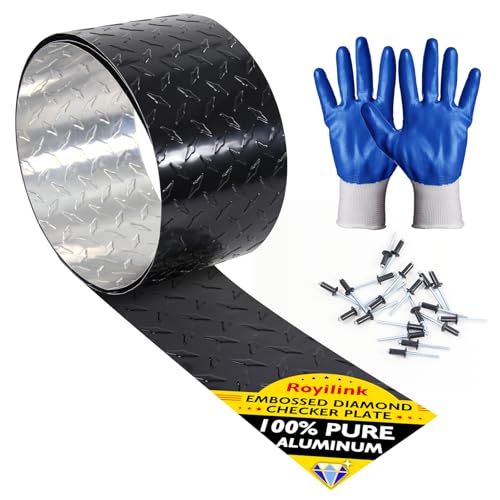
A slightly thicker roll that arrives with rivets and gloves, ready for a clean RV or door project.
In practice, that means it resists dents and dings a bit better without being hard to cut with tin snips. It also comes with 20 pop-rivets and a pair of gloves, so you can start fastening right away. Owners have mounted it on enclosed trailer doors, used it as a kickplate on exterior doors, and patched up trailer damage, all praising how easy it is to shape.
The catch is delivery: it ships as a roll, and you will need to unroll and weigh it down for a day or two before installation to get it flat. One owner who used it on a 40-inch metal door cut it easily with tin snips and attached it with caulk and stainless steel screws, deliberately skipping the included rivets since an insulated door can’t take them. That is exactly the kind of flexibility this mid-tier sheet offers—thick enough to be sturdy, thin enough to adapt.
Where It Shines
- Easier to work with than thicker sheets, but noticeably sturdier than 25-mil rolls.
- Includes installation hardware (rivets and gloves) — one less trip to the hardware store.
What to Prepare For
- Must be flattened with weights for a day or two before mounting — a mild extra step.
- A few owners noted the protective film can be tricky to peel off cleanly in one piece.
Best suited for: an RV owner or DIYer who wants the extra dent-resistance of 0.03-inch aluminum without the tool barrier—tin snips still work fine.
Think twice if: you need it to lay absolutely flat right from the start, or you need a rigid load-bearing floor sheet.
3. Vruelia 4×8 Diamond Plate Aluminum Sheet 0.045″ (Natural Silver)
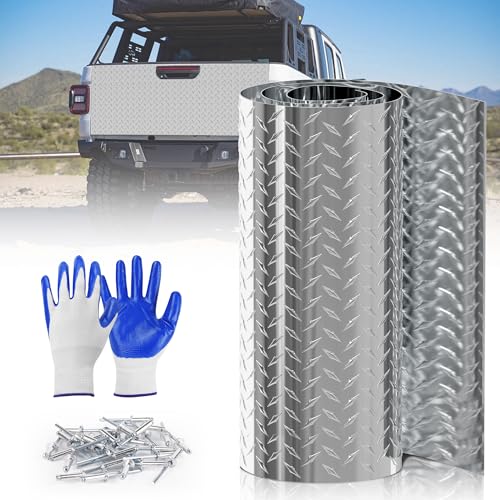
The one rigid sheet that turns a trailer floor into a permanent, no-worry surface.
At 0.045 inches thick, this is the thickest and stiffest option here. It arrives as a flat, rectangular sheet (96 x 48 x 0.05 inches), so there is no unrolling or flattening—set it down and start cutting. The 3003-H22 alloy resists corrosion from saltwater, chemicals, and UV rays, which makes it a natural choice for a marine dock, a commercial kitchen floor, or the bed of a work truck. Owners have used it for pressure-washing trailer backs and as a reflector for shed lighting, and the consensus is that it is “very stiff and thick” but still pliable enough to cut and shape with the right tools.
The honest trade-off is that cutting cleanly requires proper tools—a few owners note it is difficult to cut without power shears or a fine metal-cutting blade, unlike the thinner rolls you can snip by hand. It also comes with gloves and rivets, which is handy, but the real value is in the long-term durability: this sheet is built to survive years of forklifts, pallet jacks, and salt spray without warping.
The Big Strengths
- Thickest, stiffest sheet — resists bending under heavy loads and won’t wrinkle or dimple.
- 3003-H22 alloy offers top corrosion resistance for marine and outdoor projects.
The One Caveat
- Cutting it cleanly demands power shears, a jigsaw with a metal blade, or an angle grinder — tin snips won’t get the job done.
- Slightly heavier than the rolled options, so plan for two people to carry it into place.
Grab this for: a heavy-duty trailer floor, truck bed liner, boat dock surface, or any application where the sheet has to bear real weight and resist the elements.
skip it if: you need a quick, hand-cut piece for a kickplate or wall panel—the thin rolls are easier and cheaper for cosmetic work.
4. Zonon 96 x 48 Inch Aluminum Diamond Plate Sheet (Industrial Aluminum)
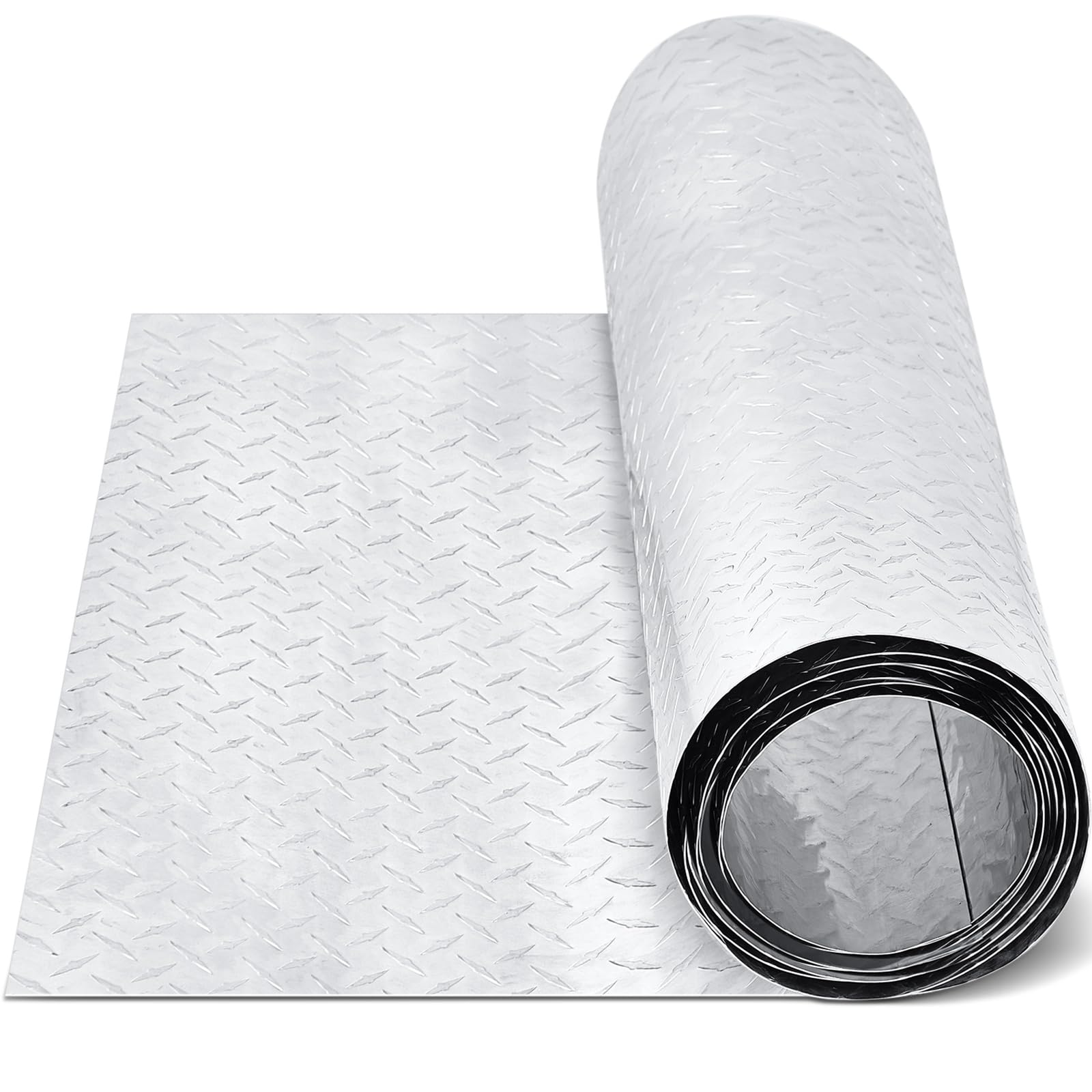
An industrial-grade flat sheet that works best when you can give it a solid support underneath.
You get a full 96 x 48-inch sheet that ships flat, so it is ready to mount as garage wall paneling or a decorative trailer facade without bending it into shape. The sheet is made of industrial aluminum, and buyers report it works well for trailer front panels and repair jobs, with one reviewer calling it “super fast and good quality.” The anti-slip diamond embossed pattern (a raised diamond texture that gives you traction underfoot) provides grip where you need it, such as on a trailer step or workbench surface.
The honest catch: this sheet is thin enough that a few owners found it had too much “memory”—meaning it held onto the curve from its shipping or storage coil and was very difficult to lay perfectly flat. One buyer described a two-day project flattening it with wood pellets in 100-degree heat before mounting it. Another compared it to 24-ga steel, noting it is best for small projects or surfaces with full backing. For a trailer floor that needs to bear weight, this is not the pick. For a vertical wall cover or a supported panel, it does the job.
Good Points
- Ships flat — no unrolling or flattening needed for a flat panel.
- Owners praise the material quality and quick shipping.
Heads Up
- Thin enough that some sheets hold a shipping curve; flattening can be a multi-day project.
- Not heavy-duty enough for a load-bearing trailer floor — best used on vertical or fully-supported surfaces.
Ideal for: a garage wall panel, a supported RV siding, or a sign project where the sheet is backed by a solid surface and does not need to hold weight.
Pass on this if: your project is a trailer floor, workbench top, or any surface that will take foot or cargo traffic — the thicker sheets above are a safer bet.
Understanding the Specs
Thickness (Mils vs Inches)
Thickness is the single biggest decider for how a diamond plate performs. It is measured either in thousandths of an inch (0.025, 0.03, 0.045) or in mils (25 mils equals 0.025 inches). Thinner sheets (0.025–0.03 inches) bend and cut easily, making them good for wall panels, kickplates, and decorative covers. Thicker sheets (0.045 inches) are stiff enough to support weight without dimpling, so they are right for trailer floors, truck beds, and workshop surfaces—but they also need power tools to cut cleanly.
Alloy: 3003-H22 vs Generic Industrial Aluminum
3003-H22 is a specific aluminum alloy made for bending and forming. It resists corrosion well, especially in saltwater and chemical environments, and it holds up to UV rays and pressure washing. “Industrial aluminum” is a broader term that often means a general-purpose alloy—still rust-resistant and conductive, but not always optimal for high-moisture or heavy-load situations. For a marine dock or commercial kitchen floor, a named alloy like 3003-H22 gives you a clearer guarantee of long-term durability.
FAQ
Can I cut a 0.045-inch diamond plate with tin snips?
How do I flatten a diamond plate that arrived rolled up?
Can I use a 4×8 diamond plate sheet for a trailer floor?
Will diamond plate rust outdoors?
How do I attach diamond plate to a door or trailer?
What is the difference between diamond plate and checker plate?
Is a rolled sheet lower quality than a flat sheet?
Can I paint a black diamond plate sheet another color?
Final Thoughts: The Verdict
For most buyers, the best 4×8 diamond plate for the money is the EAGLE 1 Black Roll because it balances ease of cutting, good looks, and a low price that nearly a thousand owners have vouched for. If you need a structural sheet that will handle foot and gear traffic on a trailer floor, the Vruelia 0.045-inch rigid sheet is the one to reach for — it is thicker than the EAGLE 1 roll, so it resists dents under heavy loads. And for a mid-tier project where you want extra dent resistance but still need to cut by hand, the Royilink 0.03-inch roll hits that balance, offering a middle ground between the thin EAGLE 1 and the thick Vruelia.
How We Picked
We do not accept paid placement. Every pick is matched to a real buyer and a real use-case; we do not hands-on test units.
Sources & Methodology
Specifications: manufacturer listings and product documentation. Review insights: verified customer reviews, as of July 2026. Pricing: not shown on this page (it changes often); check the current price via the retailer link.
As an Amazon Associate, Gadgets Feed earns from qualifying purchases. This does not affect which products we feature.