
Our readers keep the lights on and my morning glass full of iced black tea. As an Amazon Associate, I earn from qualifying purchases.
Specs are compiled from manufacturer listings and verified buyer reviews and can change over time — please confirm the key details on the product page before buying.
Flying with a toddler used to mean lugging a thirty-pound beast through a terminal, praying it actually fit on the plane. The three seats below are each FAA-approved for use with just the lap belt. — each one FAA-approved (meaning you can use it on a plane with just the lap belt), each one built to solve a different kind of travel headache. You need a lightweight pick for a lap infant, a foldable one for a preschooler, or a convertible that handles years of road and air. Your child’s age and how often you fly decide which seat you want.
I’m Min — the founder and writer behind Gadgets Feed. This guide is built by comparing the manufacturers’ published specifications and the patterns across verified customer reviews, so you get each pick’s real strengths and trade-offs instead of marketing spin.
The three seats below represent the smartest ways to buy faa-approved car seats right now, each matched to a specific parent’s routine.
Our Picks at a Glance

How To Choose The Best FAA-Approved Car Seats
Not every car seat is built for the aisle. The seats that earn the FAA sticker can be installed on an airplane with the lap belt, and each one trades something — weight, size, longevity, or price — to make that possible. Three factors decide whether a seat will work for your family, and getting them wrong is the fastest way to end up gate-checking an expensive seat you swore you would use onboard.
Weight and Portability
This is the single biggest daily friction point. An infant seat at 6 pounds feels easy to carry through security and clip onto a stroller frame. A convertible at 25 pounds is manageable between cars, but you will not want to haul it through an airport without wheels. If you fly every month, the lightweight pick transforms your experience; if you fly once a year, the weight penalty might be worth the extended size range.
Age and Size Range
Infant seats (typically 4 to 35 pounds) work for the first year and click into a base or the plane seatbelt, but the baby outgrows them fast. Convertible seats rear-face longer and forward-face into preschool years, but they occupy more cabin space. Travel-specific toddler seats (about 22 to 50 pounds) split the difference — they fold small and weigh little, but they only forward-face. Check your child’s current weight and height against the seat’s limits before buying.
Installation on a Plane
Every FAA-approved seat must install with the airplane lap belt alone — no LATCH (the lower anchor system used in cars) allowed in the cabin. The easiest models use a simple belt path with clear tension indicators. Seats with a load leg (a support column that touches the car floor) or an anti-rebound panel are perfectly safe on a plane, but you must remove those features for the flight. Practice the belt-path install at home before you board.
Quick Comparison
| Model | Best For | Weight | Type | Child Weight Range | Amazon |
|---|---|---|---|---|---|
| UPPAbaby Aria V2★ Best Overall | Lap infants & daily stroller use | 6 lbs | Infant (rear-facing) | 4 – 35 lbs (est.) | Amazon |
| WAYB Pico | Frequent flyers with toddlers | 8 lbs | Travel (forward-facing) | 26.5 – 50 lbs | Amazon |
| UPPAbaby Rove | Year-round car + occasional flights | Under 25 lbs | Convertible (rear + forward) | 14 – 65 lbs | Amazon |
In‑Depth Reviews
1. UPPAbaby Aria V2 Lightweight Infant Car Seat
Our pick — over 4.5★ from 100+ verified ratings; the strongest balance of quality and price.
The featherlight infant seat that makes airport security a one-hand carry.
This seat redefines what “travel with a baby” feels like. You can carry it in one hand with a sleeping baby in the other because it weighs just 6 pounds — the lightest infant seat you can buy. The narrow 17-inch footprint means it does not elbow the passenger next to you on a plane, and the FAA approval means you can install it with the lap belt using European routing, which cinches tighter than a standard belt path. Buyers rave about the weight above everything: reviewers report how light it makes handling a baby at the gate. The SmartSecure system with auto-retracting LATCH (hooks that click into car anchors) and red-to-green indicators makes the car install low-maintenance. The 25-position headrest and no-rethread harness grow with a baby from around 4 pounds up through the infant stage. The UPF 50+ canopy (UV protection) with pop-out sunshade and ventilation panel keeps the baby cool without wrapping them in fabric. However, it is an infant seat, not a convertible — your child will outgrow it, and the premium price reflects its advanced safety package. (adjustable load leg, anti-rebound panel, EPP foam for side impact protection). Buyers also report the fit can be snug for larger newborns — noticeably tighter than the WAYB Pico’s roomier design for older toddlers.
One-hand carry, zero compromise: The 6-pound body and load leg make this the safest lightweight infant seat available. — but it is a 12-month seat, not a multi-year investment.
Reach for this if: you are a traveling parent of an infant who wants one hand free, a stroller-friendly travel system, and real side-impact protection in a bag-light package.
Your next seat will be: a convertible — the Rove below is the natural upgrade path when the baby crosses the weight limit.
2. WAYB Pico Travel Car Seat

The toddler seat that folds down to an overhead-bin size and weighs less than a carry-on.
If you fly more than twice a year with a toddler, the Pico changes your relationship with air travel. It folds to a compact 11.6″ L x 14.5″ W x 18.9″ H and packs into the included carry bag, so it fits in an overhead bin and leaves your hands free for a wiggling kid. At 8 pounds with an aerospace-grade aluminum alloy frame (a strong, light metal blend), it is light enough to sling over one shoulder yet passes all NHTSA (the U.S. auto-safety agency) and FAA standards — the approval sticker sits right on the bottom. Owners confirm the install takes under one minute on a plane with the lap belt and under two minutes in a car with LATCH and tether. The AeroWing aluminum frame and AstroKnit performance wool/polyester cover keep a hot-weather toddler from sweating through a long layover. The honest trade-off: the Pico is forward-facing only, so your child must be at least 26.5 pounds and 33.5 inches tall (or 22 pounds on older production units). What owners mention most is the portability — it is the most praised feature by a wide margin.. The recurring complaint is the headrest: when a toddler falls asleep, their head slumps forward, so a neck pillow becomes essential for longer drives or flights. It also fits noticeably lower than a standard car seat, which one parent described as making their daughter feel “shorter” in it — not a safety issue but note if your child is particular about feeling tall. Unlike the UPPAbaby Aria V2, the Pico cannot rear-face, so you must wait until your toddler meets the minimum age and size.
What makes it a travel gem
- Folds to 18.9″ H — fits in an overhead bin
- 8-pound aluminum-alloy frame, carries like a backpack
- Installs in under a minute on a plane with the lap belt
- FAA sticker accepted by major airlines
The real-world limit
- Forward-facing only — not for infants or rear-facing toddlers
- Head support is minimal; sleeping kids slump forward
- Premium price for a single-mode seat
Best for: the family that flies every few months and needs a seat that disappears into a bag. Think twice if: your toddler is still rear-facing or you need a seat that doubles as a daily driver for long road trips.
3. UPPAbaby Rove Convertible Car Seat
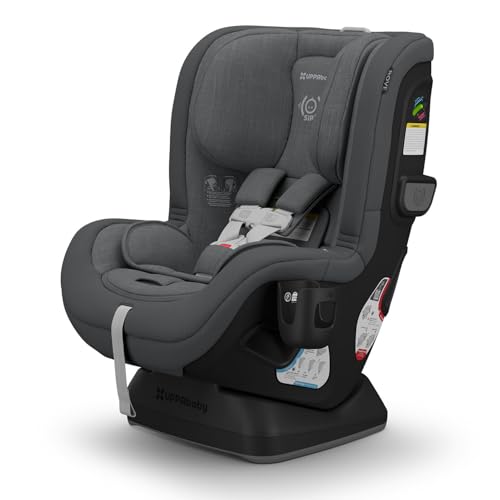
The one-seat solution that takes a child from rear-facing infancy to forward-facing preschool.
You install this seat once and do not think about another car-seat purchase for roughly five years. The Rove handles extended rear-facing from 14 to 50 pounds and forward-facing from 30 to 65 pounds — covering kids from about age one through six. The QuickGuard installation system lives up to the hype: a three-step setup with spring-loaded lock-off doors that secure the vehicle belt without needing the car’s automatic locking retractor, and the SmartSecure tension indicator turns from red to green when the belt is tight enough. The crowd around this seat praises the build quality above everything: the materials feel premium, the fabric is fire-retardant-free and machine-washable via integrated zippers, and the 9-position headrest with active support foams provides side-impact protection that adjusts as the child grows. The Rove is FAA-certified and at under 25 pounds it is lighter than many convertible seats, which makes moving it between cars manageable. However, unlike the featherlight 6-pound UPPAbaby Aria V2, the Rove is a home-base seat first; the odd owner found the seatbelt installation on a plane less intuitive than the car install. A small number mention that the padding and seating angle are slightly less plush than a Nuna equivalent. But ease of use wins most owners over. — 25 owners single it out as the easiest-installing seat they have owned..
Five years, one seat: The Rove’s 14-to-65-pound range and three-step install make it the most efficient long-term choice for daily drivers who fly a few times a year..
Buy this if: you want a single seat that rear-faces to 50 pounds, forward-faces to 65, and installs with visual confidence indicators — and you are okay with the 25-pound weight for occasional air travel.
Choose the Pico instead if: you fly every month and need a foldable travel seat, because the Rove is a home-base convertible first and a plane seat second.
Understanding the Specs
FAA Approval Sticker
This is the small label on the seat that says “This restraint is certified for use in motor vehicles and aircraft.” It is not a separate certification process — the manufacturer certifies the seat meets FAA standards alongside normal car-safety rules. Airlines accept it at the gate; without it, the crew can force you to gate-check the seat. Check that the sticker is physically present before you buy, especially on used seats.
Load Leg and Anti-Rebound Panel
A load leg is a metal support column that extends from the seat base to the car floor, reducing forward movement in a crash. An anti-rebound panel is a brace behind the seat that keeps it from snapping backward. On an infant seat like the UPPAbaby Aria V2, both are included for car use but must be stowed for airplane installation — the lap belt alone holds the seat on the plane.
FAQ
Can I use a car seat on an airplane without FAA approval?
Does the UPPAbaby Rove fit in an airplane seat?
Is the WAYB Pico rear-facing?
How do I install a car seat without the base on a plane?
Can I use LATCH on an airplane?
How heavy is too heavy to carry through an airport?
Does the Aria V2 work with the UPPAbaby Cruz or Vista stroller?
Will a car seat fit in a tiny rental car?
Final Thoughts: The Verdict
If you want one dependable pick, the faa-approved car seats winner is the UPPAbaby Aria V2 — at 6 pounds it is the lightest infant seat on the market, it installs easily with or without the base, and it clips directly into the most popular stroller systems, making air travel with a baby genuinely easier. If you have a toddler who flies often, grab the WAYB Pico for its overhead-bin-sized fold and 8-pound frame. And for a single seat that handles daily driving from infancy through preschool with the occasional flight, the UPPAbaby Rove is the one to reach for.
How We Picked
We do not accept paid placement. Every pick is matched to a real buyer and a real use-case; we do not hands-on test units.
Sources & Methodology
Specifications: manufacturer listings and product documentation. Review insights: verified customer reviews, as of July 2026. Pricing: not shown on this page (it changes often); check the current price via the retailer link.
As an Amazon Associate, Gadgets Feed earns from qualifying purchases. This does not affect which products we feature.