
Our readers keep the lights on and my morning glass full of iced black tea. As an Amazon Associate, I earn from qualifying purchases.
Specs are compiled from manufacturer listings and verified buyer reviews and can change over time — please confirm the key details on the product page before buying.
Every teacher has seen it: a child who cannot stop wiggling, rocking, or tipping their chair ends up missing the lesson. The right seat turns a child’s need to move into a focus tool, not a disruption. Adaptive seating lets a student fidget safely while keeping their eyes on the board and their hands at the desk.
This guide compares published specs and real customer reviews to match the right motion to the right child. It is built for teachers, parents, and therapists who need one honest answer: which chair actually works.
Our Picks at a Glance

How To Choose The Best Adaptive Seating For Classroom
Picking the right chair means matching the type of movement to the child’s specific sensory needs. A student who needs to spin to calm their nervous system (the internal sense of balance and body position, called the vestibular system) will benefit from a 360-degree swivel chair. A student who just needs to shift weight without leaving the group does better with a wobble stool that keeps their feet on the floor. Rocking chairs offer a predictable back-and-forth motion for quiet reading corners and de-escalation.
Match the Motion to the Need
A spinning chair provides strong vestibular input (inner-ear sense that tells the brain where the body is in space) and is excellent for kids who need intense motion to regulate. A wobble stool, in contrast, is a milder fidget outlet that keeps the hips engaged while the feet stay on the floor — better for a student who just needs to shift weight without leaving the group. A rocking chair offers a predictable, soothing back-and-forth motion that works well for quiet reading corners and de-escalation.
Get the Weight Limit Right
Every seat will have a maximum weight recommendation. For a primary-grade classroom, a 220-pound capacity is more than enough and means an adult can occasionally use the chair. For middle or high school, look for limits around 250 pounds so the seat holds up to larger students without wobbling dangerously. Going too close to the maximum on a cheaper chair can cause the plastic base to crack over time.
Consider Portability and Cleaning
A lightweight chair with a wipe-clean surface will survive a classroom year better than one with fabric that stains. Inflatable seats are the easiest to store and move but can tear. Plastic or metal wobble stools are heavy enough to stay put but still portable. If the seat has a removable machine-washable cover, that is a huge bonus for a room shared by many kids.
Quick Comparison
| Model | Best For | Motion Type | Weight Capacity | Height Range | Amazon |
|---|---|---|---|---|---|
| BABAMU Spinning Chair★ Best Overall | Intense sensory spinning | 360° Swivel | 220 lbs | Child | Amazon |
| KidBloom Spinning ChairTop Performer | High-energy kids (with handle) | 360° Swivel | 220 lbs | Children | Amazon |
| TED KANGAROO CloudBounce UltraCompact Pick | Portable, gentle rocking | Rocking | — | Child | Amazon |
| ECR4Kids SitWell Wobble Stool | Universal wobble (ages 4+) | Wobble | — | 15.7″ – 21.7″ | Amazon |
| TED KANGAROO Soft Squeeze | Deep pressure calming | Rocking | — | Child | Amazon |
| Special Supplies Rocking Chair | Portable floor rocker | Rocking | — | 3+ | Amazon |
| Schooled Wobble Stool | Middle/high school students | Wobble | 250 lbs | 16″ – 23″ | Amazon |
| Studico ActiveChairs | Budget teen wobble stool | Wobble | — | 16.65″ – 23.75″ | Amazon |
| Upaloop Wobble Chair | Adults and teens (home/office) | Wobble | 225 lbs | 18.3″ H | Amazon |
In‑Depth Reviews
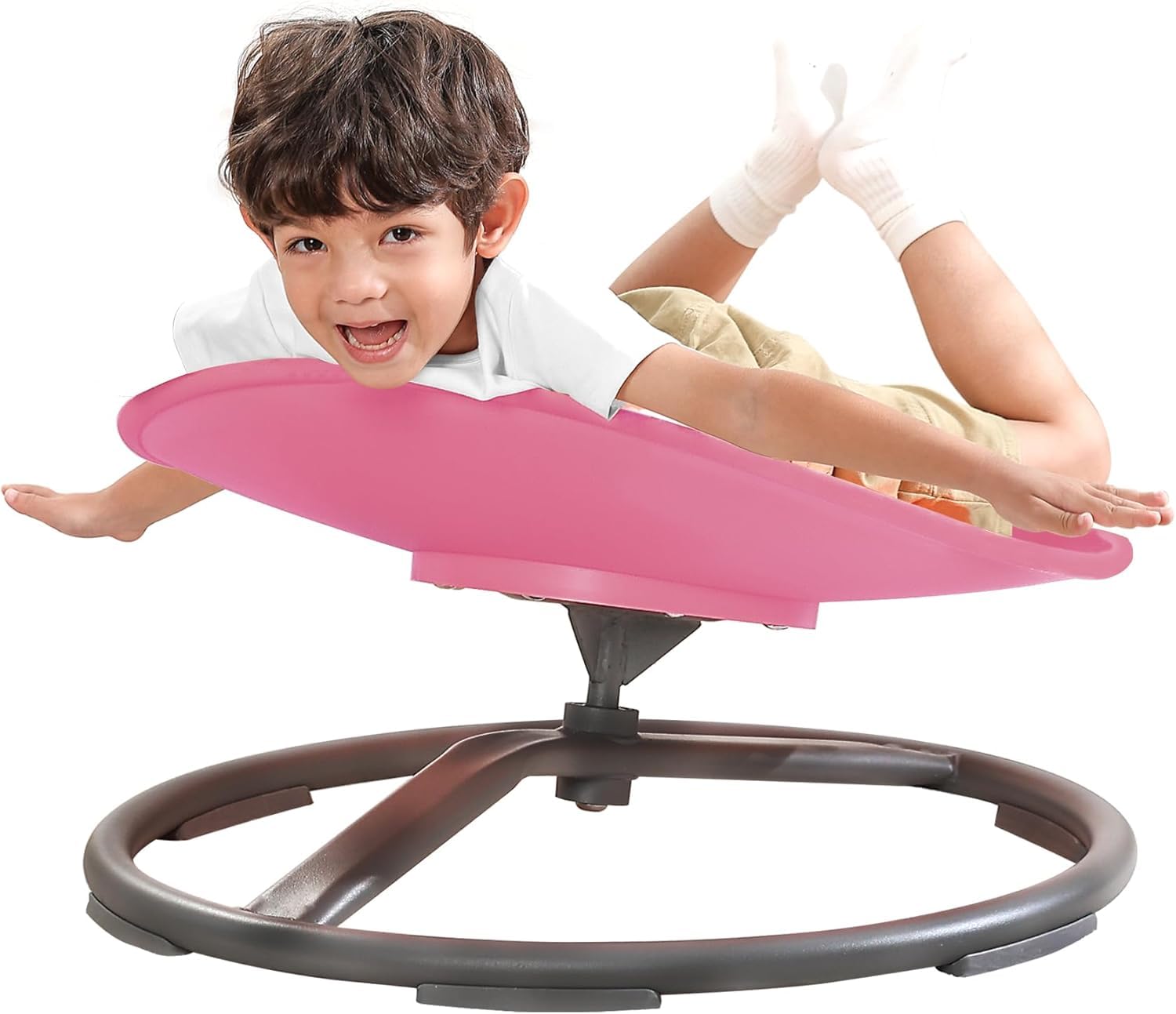
1. BABAMU Spinning Chair for Autistic Kids
Our pick — over 4.5★ from 650+ verified ratings; the strongest balance of quality and price.
The highest-rated pick on this list (4.8 stars from over 600 owners) delivers a 360-degree spin without tipping over — even during fast spinning.
This chair gives kids the vestibular and proprioceptive input (the internal sense of balance and body position) they need to self-regulate. The heavy-duty reinforced metal base keeps things stable, and the 220-pound weight capacity means an adult can sit in it without wobble. The waterproof polypropylene surface wipes clean in seconds, and the included cushion provides ergonomic support right from the start. The open back and armless design let kids sit sideways or backwards freely.
Buyers consistently report straightforward assembly and daily classroom use without visible wear. One reviewer noted it is “strong, easy to put together and perfect size for the house.” The chair gets used by every child in the room, not just the one with sensory needs — the highest compliment a classroom seat can earn.
Gentle Spin Comfort
- 4.8 stars across 600+ owners — the highest-rated pick on the list
- Heat-resistant and waterproof surface for easy wipe-down cleaning
- 220-pound capacity supports larger children and adults
- Powder-coated stainless steel frame for lasting stability
Limited Floor Space
- The open back provides no upper-body support — not for kids who need to lean back against a solid surface
Calming Sensory: You want the most-loved, most-tested spinning chair for a classroom calm-down corner or therapy room.
Active Play: You need a chair that provides upper back support or a high-backed containment seat.
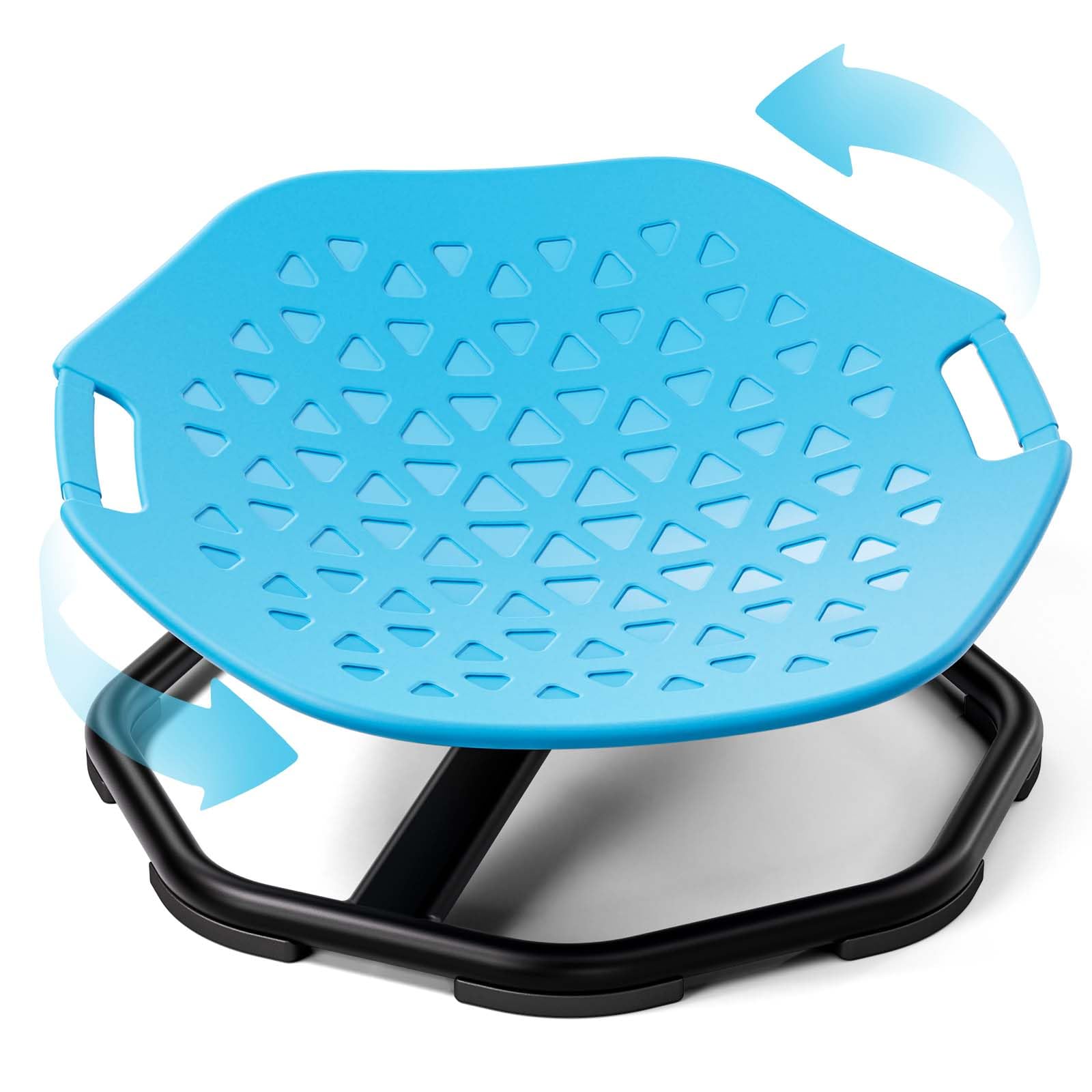
2. KidBloom Spinning Chair for Autistic Kids
An ergonomic handle gives younger kids a secure grip during the spin — a safety edge the BABAMU does not offer.
The KidBloom adds a smart upgrade: a handle that children can hold onto during the 360-degree rotation. This makes a real difference for ages 3-5 who are not yet confident balancing. The silent swivel mechanism means you get the same motion as the BABAMU but without the noise — a big plus in a classroom where chair friction adds up. The base supports 220 pounds, so an adult can sit to help a child regulate. No assembly required: you pull it from the start and it is ready.
Owners call the build quality solid, noting the diamond-patterned panel on the octagonal base adds a visual sensory element kids find engaging. One buyer specifically said “it is not just for autistic kids” and works for any high-energy child. The handle is the main weak point — a few buyers report it breaking if a child leans on it hard or the chair gets rough treatment.
Easy Grip Design: The handle makes this the safest spinning option for younger students (ages 3-5) who need a secure hold while they spin.
Moderate Durability: The handle holds up well for most but is the most likely part to fail under heavy use — check the warranty before buying a whole classroom set.
3. TED KANGAROO CloudBounce Ultra Inflatable Sensory Rocker
A seat that deflates flat for storage — ideal when classroom space is tight and you need a sensory tool that disappears after use.
When you need a portable calm-down tool, the CloudBounce Ultra is the answer. This inflatable chair uses Ted Airbounce technology (a patented chamber system that gives a responsive, bouncy feel) to deliver gentle rocking and applied pressure. The hugging feel of the inflated walls provides proprioceptive input (the calming full-body pressure many kids with sensory needs crave). The 2025 edition has reinforced seams and double-layered handles for more aggressive play.
The built-in electric pump makes inflation fast, and the lightweight vinyl means a young child can carry it. A special education teacher reported that a physical therapist even uses it flipped over as a climbing bridge for mobility exercises. Durability is the main concern: seams can develop holes after months of daily use, and the included repair patches have poor adhesive. Some owners mention the chair lasting 4-5 months, while others say it pops sooner.
Sensory Bounce: A roaming sensory break that fits in a closet when not needed.
Sturdy Seating: Your students are heavy jumpers or you need a furniture-grade seat that lasts a whole school year without patching.
4. ECR4Kids SitWell Wobble Stool

A furniture-grade wobble stool that blends into a classroom and lets kids micro-move without ever leaving their desk — unlike the BABAMU spinner, which is a dedicated break-area tool.
If you need flexible seating without the visual noise of a spinning chair, the ECR4Kids SitWell is the clear choice. This stool engages the core (the midsection muscles that keep you upright) by tilting slightly in any direction. The height adjusts from 15.7 inches to 21.7 inches with a button mechanism, so one stool works from elementary through middle school. The rubber grip on the bottom keeps it planted on hard floors, and the lightweight design (8.6 pounds) makes it easy to carry.
The UL GREENGUARD Gold certification means it meets strict standards for low chemical emissions — important for a room where kids sit all day. The wide base prevents tipping, even when a child leans. The seat is firm with no padding, which encourages kids to stand and move rather than get glued down. Parents and administrators recognize it as legitimate school furniture.
Sturdy Wobble Base
- Height-adjustable from 15.7″ to 21.7″ covering kids through adults
- UL GREENGUARD Gold certified for low VOCs — healthier for indoor classrooms
- Wide base provides real stability; will not tip over during normal use
- Lightweight enough for students to move between workspaces
Hard Seat Surface
- The firm plastic seat has no padding — some kids may find it uncomfortable for extended desk time
- Not designed for the intense spinning or rocking that a sensory-seeking child needs for regulation
Classroom Focus: A whole-classroom set of wobble stools that blend in with standard school furniture.
Soft Cushion: You need a dedicated sensory chair for a child who requires deep pressure or spinning input to self-regulate.
5. TED KANGAROO Sensory Soft Squeeze Seat
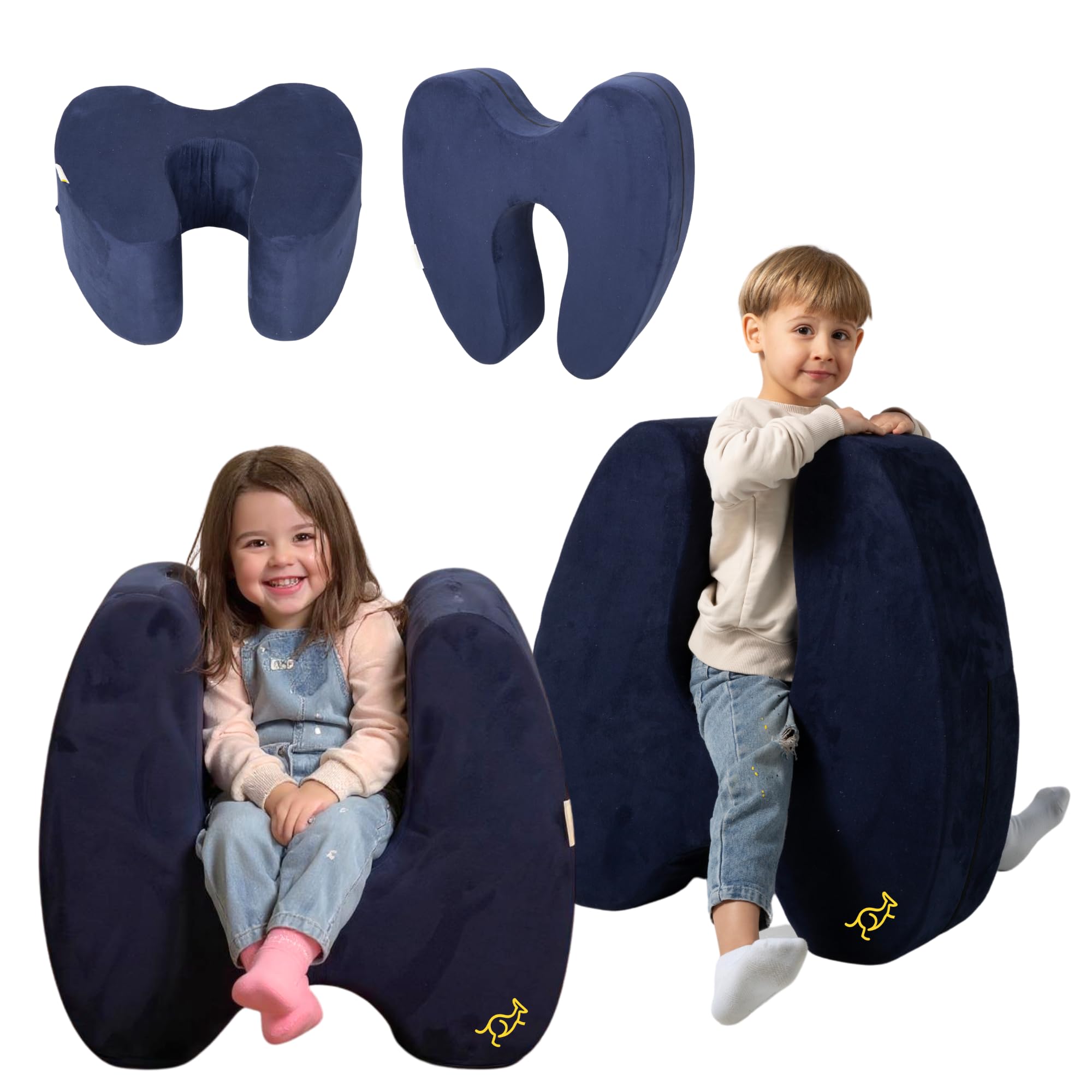
Instead of spinning or wobbling, this seat delivers a firm, hugging pressure that calms an overstimulated nervous system — think of it as a sensory tool, not just a chair.
The Soft Squeeze Seat uses deep pressure input (a hugging sensation that calms the nervous system) through its firm foam and durable vinyl construction. Kids sit across it like a rocking horse, and the gentle back-and-forth motion adds soothing rocking. At 4.9 pounds, you can move it around the classroom easily. The removable fabric cover is machine washable — a lifesaver in a shared room.
Teachers specializing in ages 3-5 report students automatically seek this chair out when they need pressure. The most common word owners use is “hug” — one buyer mentioned “my grandson loves the gentle hug feeling.” The firmness holds its shape during “sensory crashes” (intense moments where a child seeks full-body pressure). Some kids under age 3 may be too small for a good fit, but for ages 3 and up, it is a proven calming tool. This is the chair to reach for when a student is overstimulated and needs a quiet reset.
Calming Hug: A calm-down corner where a child can get deep pressure input without the stimulation of spinning.
Active Wobble: A desk seat — this is a break-area chair, not a replacement for the standard classroom chair.
6. Special Supplies Sensory Rocking Chair
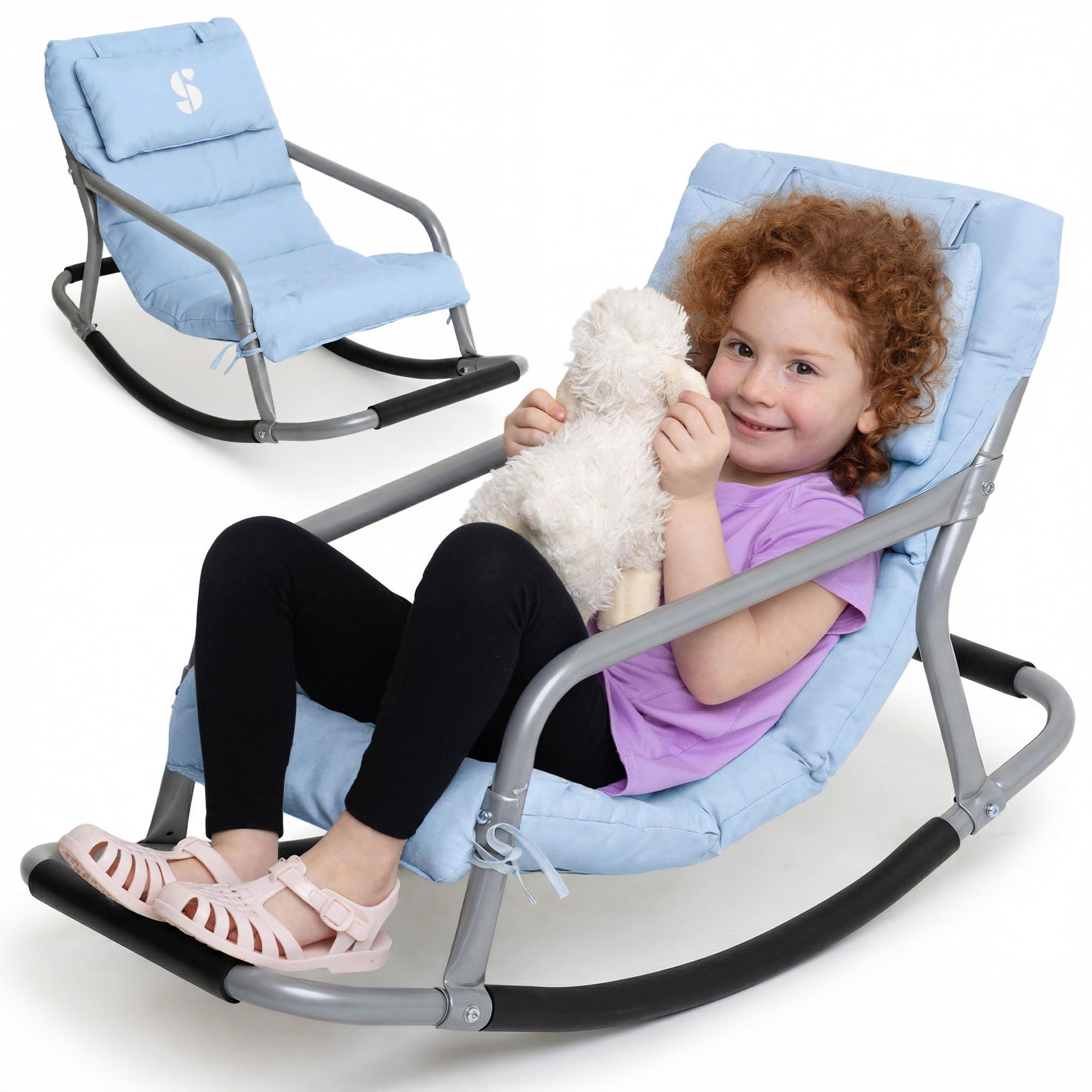
A floor-level rocker with a seesaw-like base that mimics a baby bouncer — predictable, soothing motion for kids who find spinning too intense.
Some children need gentle back-and-forth motion rather than a 360-degree spin. The Special Supplies rocking chair fits that niche with its curved metal frame and fabric seat. The rocking motion provides low-intensity vestibular input (inner-ear balance stimulation) at floor level — just inches off the ground. At just 3 pounds, a young child can drag it to a different part of the classroom or outside.
Size is the most-praised aspect: owners specifically say it works for ages 3 to 6. The rubber grip on the bottom prevents sliding on smooth floors. One owner reported their 6-year-old who was “obsessed with the baby bouncer as an infant” now uses this chair as the big-kid version. The metal frame is sturdy, and assembly is straightforward. Some owners feel it is pricey for a curved frame with fabric. Children over age 7 or taller kids may find the 31 x 15 x 20 inch dimensions small.
Gentle Rocking Motion: Children ages 3-6 who need a predictable rocking motion to self-soothe, especially in a reading corner or calm-down area.
Low Back Support: Older elementary kids who have outgrown the size or need the stronger vestibular kick of a spinner.
7. Schooled Adjustable Wobble Stool
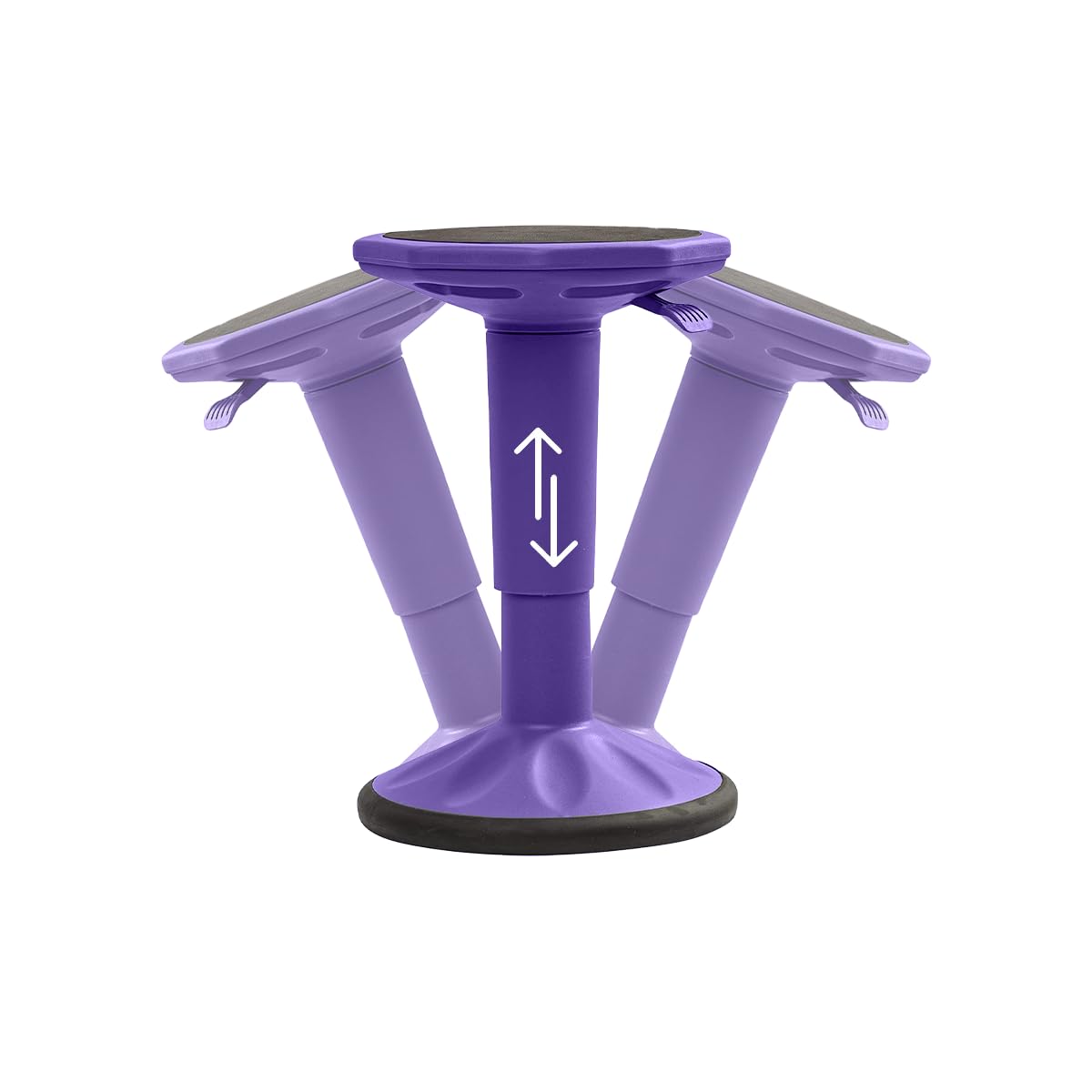
With a 250-pound weight capacity and height adjustment from 16 to 23 inches, this is the only wobble stool on the list built for middle and high school body sizes.
Most wobble stools are sized for elementary kids, but the Schooled stool has a real 250-pound weight limit and an adjustment range that fits growing teens. The tilt-and-swivel motion lets students rock and fidget while staying seated — ideal for the teen who would otherwise tip their chair. The wide round base with an anti-skid surface stays stable even during vigorous rocking.
Sturdiness is the top praised aspect. One owner reported that after one and a half school years, the stool was “holding strong” even after the seat pad came off — the plastic base and mechanism kept working. Another owner noted the non-marking bottom rolled well on softwood floors without damage. The undermount handles make it easy for a student to carry between rooms. The main caveat is the seat pad: multiple owners mention it can separate from the stool over time. The stool still works perfectly without the pad, but it is a small disappointment.
Growing Kids: You need a wobble stool for a middle or high school classroom where the existing options are too small for growing teens.
Budget Pick: You want a cushy seat pad that stays attached — expect the surface pad to detach over time, leaving a functional but bare stool.
8. Studico ActiveChairs Adjustable Wobble Chair

The most budget-friendly wobble stool for teens, with the tallest height adjustment on the list (16.65 to 23.75 inches) — but durability is a known gamble.
The Studico ActiveChairs covers the span from a 4th grader to a tall high school senior. The soft cushion top provides some comfort, and the textured base is designed to give a subtle foot massage that improves blood flow during long sits. The non-slip rubberized bottom keeps it planted during wobbling. One owner reported the stool “stopped my kid from tilting chair on back legs” — a real safety win. Another owner with 4 stools in a high school classroom reported that 3 out of 4 lasted through the entire school year.
The honest concern is durability. Multiple customers note the plastic base cracking, especially when a student lifts the seat all the way up and leans on it. One breakup was reported after just 2 months. This does not happen to every unit, but it is a known risk. For a single stool or a small classroom set, it is decent value. For a whole-school purchase, the Schooled stool above has a better track record for long-term survival.
Active Sitting Core
- Tallest height adjustment range on the list — fits from fourth grade to adult
- Soft cushion and foot-massage base add comfort for longer sits
- Lightweight at 3.4 pounds — easily moved between desks or rooms
Noisy Movement
- Plastic base can crack if kids lift the seat fully and lean back — a known weak point
- Build quality is inconsistent; some units last a year while others break in months
Posture Training: A trial run of wobble stools for a teen classroom without committing to per-unit costs.
Quiet Room: You need a piece of furniture that will survive for years of rough use by many students.
9. Upaloop Wobble Chair

A minimalist design-award-winning stool for adults and teens — but the fixed 18.3-inch seat height means it is not a one-size-fits-all classroom solution.
The Upaloop is designed as much for adults with ADHD as for kids. It received the IDA Best Design Award and looks like minimalist furniture rather than a sensory tool. The 360-degree rotation and wobble motion let you spin, tilt, and fidget without tipping over, thanks to 5 rubber stabilizers on the flat bottom base and a 2.5-millimeter air rod. The weight capacity is 225 pounds, so it works for teens and adults.
Comfort is the top praised aspect — owners describe using it for 10-hour desk sessions with better concentration and posture than a standard chair. The mobility is second-praised: at 7 pounds, it is easy to move between rooms. Each purchase comes with a washable seat cover and a second cover in a different color. Assembly is mixed, and once assembled it does not disassemble easily. The seat cushion can shift around during long sits, requiring constant readjustment. The height is fixed at 18.3 inches, making it less versatile for a classroom with mixed-age students than the ECR4Kids or Schooled stools.
Dynamic Sitting: A teacher or a tall student who needs an active seat that blends into a classroom or home office.
Stationary Desk: A classroom with many different-sized students — the fixed height and non-adjustable design limit who can use it comfortably.
Understanding the Specs
Vestibular Input vs. Proprioceptive Input
These are the two main types of sensory input these chairs provide. Vestibular input (from spinning or rocking) stimulates the inner ear’s balance system and can be alerting or calming depending on the intensity. Proprioceptive input (from pressure or squeezing) comes from the muscles and joints and tends to be deeply calming. A spinning chair is strong on vestibular input, while a squeeze seat like the TED KANGAROO Soft Squeeze is heavy on proprioceptive input. Knowing which type a child responds to is the key to picking the right chair.
Weight Capacity and Safety Margins
Every chair has a maximum weight recommendation. For a classroom used by many children, you want at least a 50-pound safety margin above the heaviest user. A chair rated for 220 pounds is fine for a typical elementary class. For middle and high school, look for 250-pound capacity stools like the Schooled option. Hitting the maximum weight limit of a cheap chair can cause the plastic base to crack, especially if the child leans back or rocks vigorously.
FAQ
How do I know if a child needs a spinning chair versus a wobble stool?
Can adaptive seating replace a standard classroom chair full-time?
What is the difference between an inflatable sensory chair and a plastic wobble stool?
How much weight can a typical classroom wobble stool hold?
Are wobble stools safe for kids who cannot sit still?
Do these chairs help with ADHD in the classroom?
How do I clean a classroom sensory chair?
Can a wobble stool be used on carpet?
How long does a wobble stool last in a classroom?
Do I need assembly for these chairs?
Final Thoughts: The Verdict
For most classrooms, the adaptive seating for classroom winner is the BABAMU Spinning Chair because it combines the highest owner satisfaction with a proven ability to calm and engage kids of all sensory needs. If you want a desk-compatible wobble stool that fits a whole classroom without looking like a toy, grab the ECR4Kids SitWell Wobble Stool. And for a portable deep-pressure tool that helps a child reset in a calm-down corner, the TED KANGAROO Soft Squeeze Seat is the one to reach for.
How We Picked
We do not accept paid placement. Every pick is matched to a real buyer and a real use-case; we do not hands-on test units.
Sources & Methodology
Specifications: manufacturer listings and product documentation. Review insights: verified customer reviews, as of July 2026. Pricing: not shown on this page (it changes often); check the current price via the retailer link.
As an Amazon Associate, Gadgets Feed earns from qualifying purchases. This does not affect which products we feature.