
Our readers keep the lights on and my morning glass full of iced black tea. As an Amazon Associate, I earn from qualifying purchases.
Specs are compiled from manufacturer listings and verified buyer reviews and can change over time — please confirm the key details on the product page before buying.
When your sinuses clamp down and the pressure builds into a full‑blown headache, you need something that actually targets the root cause — not just another pill that masks the pain. The wrong allergy medicine can leave you groggy or still stuffed up, which is exactly what you do not want when you have a day to get through. This guide walks you through three standout options sorted by symptom and speed so you pick the one that matches your real‑life misery.
I’m Min — the founder and writer behind Gadgets Feed. This guide is built by comparing the manufacturers’ published specifications and the patterns across verified customer reviews, so you get each pick’s real strengths and trade-offs instead of marketing spin.
Whether your main complaint is sinus pressure, a pounding headache, or the whole cold‑and‑flu mess, the right allergy medicine for headaches combines a decongestant with a pain reliever and leaves the drowsiness behind.
Our Picks at a Glance

How To Choose The Best Allergy Medicine For Headaches
Your choice depends on your main symptom and if you need to stay alert. If your head hurts because your sinuses are clogged, you need a medicine that combines a decongestant (to drain the pressure) with a pain reliever (to kill the ache). If you also have a fever or body aches, a multi‑symptom formula covers more ground. The key spec to watch is the active ingredient that fights congestion — phenylephrine (a drug that shrinks swollen blood vessels in your nose) — and which painkiller it pairs with.
Decongestant First, Pain Reliever Second
A sinus headache starts with swollen nasal passages. Phenylephrine HCl (10 mg is the standard adult dose) shrinks those blood vessels so you can breathe and the pressure behind your eyes drops. Without a decongestant, a plain painkiller only numbs the symptom while the clog remains. Look for the word “sinus” or “congestion” on the label if your head is the main complaint.
Ibuprofen vs. Acetaminophen for Head Pain
Ibuprofen (200 mg) reduces inflammation — good if you also feel achey or have a fever — and tends to last longer per dose. Acetaminophen (325 mg) is gentler on the stomach and is the ingredient in Tylenol, but it does not reduce inflammation. If your sinus headache feels like a deep pressure, ibuprofen often works better because it tackles the swelling behind the pain.
Drowsy vs. Non‑Drowsy Daytime Relief
If you need to drive or work, avoid any formula with an antihistamine (a drowsiness-causing drug like diphenhydramine or chlorpheniramine maleate that dries up a runny nose) during the day. Those ingredients dry up a runny nose but also hit you with sedation. For a pure headache from congestion, a non‑drowsy decongestant + pain reliever combo is the safer bet for daytime use.
Quick Comparison
| Model | Best For | Pain Reliever | Decongestant | Count | Amazon |
|---|---|---|---|---|---|
| Advil Sinus Congestion and Pain★ Best Overall | Sinus headache + pressure | Ibuprofen 200 mg | Phenylephrine HCl 10 mg | 50 coated tablets | Amazon |
| Advil Multi Symptom Cold and Flu | Cold/flu + headache + congestion | Ibuprofen 200 mg | Phenylephrine HCl 10 mg | 50 coated tablets | Amazon |
| Tylenol Sinus Congestion and Pain Daytime | Non‑drowsy sinus + headache | Acetaminophen 325 mg | Phenylephrine HCl 5 mg | 4‑pack, 24 ct each | Amazon |
In‑Depth Reviews
1. Advil Sinus Congestion and Pain, 50 Coated Tablets
Our pick — over 4.5★ from 3,000+ verified ratings; the strongest balance of quality and price.
Advil Sinus clears sinus pressure and headache in about 20 minutes with 200 mg ibuprofen plus 10 mg phenylephrine.
This is the pick that combines the two things you actually need — 200 mg of ibuprofen to take down the inflammation causing the throb, and 10 mg of phenylephrine HCl to unclog the sinuses that are causing the pressure in the first place. Buyers report that it relieves sinus headache symptoms in about 20 minutes and that a single dose holds through the whole workday. Because it is a pure decongestant (not an antihistamine), you get the sinus drainage without the drowsy fog.
The entire 50‑tablet box comes as individual foil packets, which owners love. People drop a few packs into a purse, pocket, or car bag so they are never caught without relief at the office or on a trip. The recurring note from the review pages: effectiveness is what wins people over here — more than 140 owners single it out as the reason they reach for this box — and the portability is a close second. The only mixed sentiment is the quantity packaging (some prefer bulk bottles over individual packs), but most owners call the packets a major convenience upgrade from hard‑to‑open foil sleeves.
Standout spec: 200 mg ibuprofen + 10 mg phenylephrine per tablet — the exact dual‑action ratio that owners mention knocks out sinus headaches fast.
Honest trade‑off: The individual packets create more wrapper waste, and if you prefer a bulk bottle you will want to transfer them to a baggie (and write the dose date on it).
Reach for this if: sinus pressure and facial pain are your main complaint — you want a non‑drowsy daytime formula that works fast and fits in a pocket.
Look elsewhere if: you also have a runny nose, sneezing, or chest congestion that needs a multi‑symptom formula.
2. Advil Multi Symptom Cold and Flu, 50 Coated Tablets

Advil Multi Symptom Cold and Flu covers headache, congestion, sneezing, and body aches in one pill.
This is what you grab when your head hurts, your nose is running, you are sneezing, and your body aches all at once. It layers three active ingredients: 200 mg ibuprofen for the fever and head pain, 10 mg phenylephrine HCl to decongest, and 4 mg chlorpheniramine maleate (an antihistamine, a drug that stops sneezing and a runny nose) to shut down the sneezing and runny nose. That third ingredient means this will cause some drowsiness — owners are clear that it works best at home or at night rather than during a busy workday. As buyers sum it up: “This helps my sinus headaches so much.”
What drives value here is the coverage. Unlike the pure sinus formula above, this one fights the full cold‑and‑flu spectrum, so if your allergy headache comes with the sniffles and a scratchy throat, you are done in one pill. The discreet foil packets are a hit with people who want to stash a few in a work bag or jacket pocket “for the day” or “keep a few in the car.” The main note from the data: the shelf life is long (multiple owners mention it stays good past expiry), and buyers who switch from acetaminophen‑based pills say ibuprofen works better for them personally.
Standout spec: Three‑active formula — ibuprofen, phenylephrine, chlorpheniramine — that covers headache, congestion, and runny nose in a single coated tablet.
Honest trade‑off: The antihistamine will make you sleepy; this is not a daytime work‑friendly option unless you can afford to power through the drowsiness.
Reach for this if: you are dealing with a mix of sinus headache, sneezing, runny nose, and minor body aches from a cold or seasonal allergies.
Look elsewhere if: you need to stay sharp and alert — the antihistamine in this formula is a drowsiness liability for daytime use.
3. Tylenol Sinus Congestion and Pain Daytime, 4‑Pack (24 ct each)
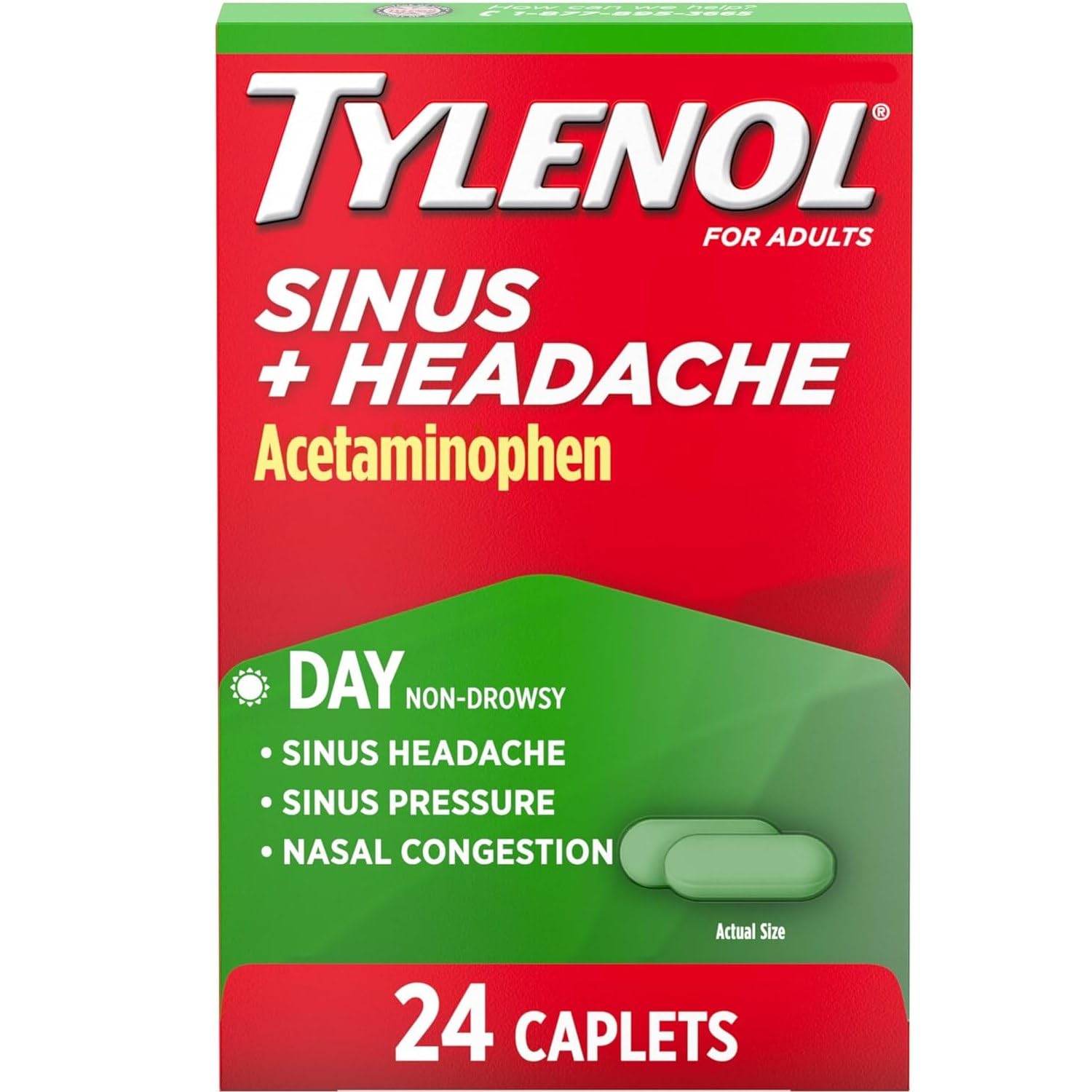
Tylenol pairs 325 mg acetaminophen with 5 mg phenylephrine for non‑drowsy sinus relief that’s gentle on the stomach.
If ibuprofen upsets your stomach or you simply prefer Tylenol, this is your daytime sinus‑headache option. Each caplet delivers 325 mg of acetaminophen (the pain reliever in the #1 doctor‑recommended pain relief brand) paired with 5 mg of phenylephrine HCl for sinus drainage. The label says non‑drowsy, so you can take it before a meeting or a drive without that heavy‑eyed feeling. This formula is specifically aimed at headache pain from “the common cold, hay fever or other respiratory allergies.”
Unlike the other two picks here, this one comes as a bulk 4‑pack — four separate boxes of 24 caplets each — so you can keep one at home, one in the car, and one in your desk without running out. The acetaminophen dose is higher (325 mg vs the 200 mg ibuprofen in the Advil options), which matters if you need stronger pain relief but do not want the anti‑inflammatory effect. Note: the Tylenol formula contains no antihistamine, so a runny nose or sneezing is not addressed — it is purely a sinus decongestant plus painkiller. The small owner pool describes this as a reliable staple: “We are always in need of Tylenol Sinus.”
Standout spec: 325 mg acetaminophen — the highest pain‑reliever dose in this comparison — from the #1 doctor‑recommended pain relief brand.
Honest trade‑off: The decongestant dose is half (5 mg vs. 10 mg) of the Advil sinus options, so if your sinus pressure is intense, this may feel slower to clear your head. If you need the stronger 10 mg dose that the Advil Sinus Congestion and Pain offers, the Tylenol will not match it.
Reach for this if: you tolerate acetaminophen better than ibuprofen, you want a non‑drowsy formula, or you need a bulk supply for multiple locations.
Look elsewhere if: your sinus headache comes with heavy congestion — the 5 mg phenylephrine dose is lower than the competition and may not be strong enough for severe pressure.
Understanding the Specs
Phenylephrine HCl — The Decongestant
This is the ingredient that shrinks swollen blood vessels in your nasal passages so the pressure releases. Most adult doses are 10 mg per tablet. A lower 5 mg dose can still help with mild congestion, but for a pounding sinus headache the 10 mg version usually hits harder and faster.
Ibuprofen vs. Acetaminophen — The Pain Reliever
Ibuprofen (200 mg) is an NSAID (a non-steroidal anti-inflammatory drug that reduces swelling) that reduces inflammation, so it is better for that deep throbbing pressure caused by swollen sinuses. Acetaminophen (325 mg) blocks pain signals without reducing inflammation — it is gentler on the stomach but less effective if your headache is driven by sinus swelling. If fever or body aches are also present, ibuprofen handles all three.
FAQ
Will allergy medicine for headaches make me drowsy?
Can I take allergy headache medicine every day?
What is the difference between phenylephrine and pseudoephedrine?
Which is better for a sinus headache — Tylenol or Advil?
How fast do these medicines work for headache relief?
Can I take this with my other allergy medication?
Is it safe to use if I have high blood pressure?
What is the difference between “sinus” and “allergy” headache medicine?
Final Thoughts: The Verdict
For most buyers, the allergy medicine for headaches winner is the Advil Sinus Congestion and Pain because its 200 mg ibuprofen plus 10 mg phenylephrine combination hits the sinus pressure and the head pain fast — about 20 minutes, by owner reports — without the drowsy side effect. If you also have sneezing and a runny nose that need knocking down, grab the Advil Multi Symptom Cold and Flu. And for a non‑drowsy option from the Tylenol brand that is gentler on the stomach, the Tylenol Sinus Congestion and Pain Daytime 4‑pack is the one to reach for.
How We Picked
We do not accept paid placement. Every pick is matched to a real buyer and a real use-case; we do not hands-on test units.
Sources & Methodology
Specifications: manufacturer listings and product documentation. Review insights: verified customer reviews, as of July 2026. Pricing: not shown on this page (it changes often); check the current price via the retailer link.
As an Amazon Associate, Gadgets Feed earns from qualifying purchases. This does not affect which products we feature.