
Our readers keep the lights on and my morning glass full of iced black tea. As an Amazon Associate, I earn from qualifying purchases.
Specs are compiled from manufacturer listings and verified buyer reviews and can change over time — please confirm the key details on the product page before buying.
Tracking down a 27 x 1.25 tire that actually fits your vintage road bike or commuter can feel like a wild goose chase. You need something that rolls fast on pavement, resists punctures, and doesn’t fight you during installation.
I’m Min — the founder and writer behind Gadgets Feed. This guide is built by comparing the manufacturers’ published specifications and the patterns across verified customer reviews, so you get each pick’s real strengths and trade-offs instead of marketing spin.
Every tire reviewed here is an exact 27 x 1.25-inch (32-630) match, rated for pavement riding, and sorted so you can find the best 27 x 1.25 bike tire for your specific budget and riding style.
Our Picks at a Glance
How To Choose The Best 27 X 1.25 Bike Tire
Buying a 27-inch tire is a different game than buying for a modern 700c bike. The rim diameter is unique, and the selection is much smaller. Here are the three things that make or break your decision.
ETRTO Size is Everything
Ignore the fractions for a moment and look for an ETRTO number of 32-630 on the sidewall. The “630” is the bead-seat diameter in millimeters — it must match your rim. The “32” is the tire width (about 1.25 inches). A tire labeled “27 x 1.25” that uses a different ETRTO number won’t fit your rim safely.
Puncture Protection vs. Weight
At this narrow width, there is no free lunch. A tire with a thick puncture belt (like the Michelin’s 1mm casing) will be heavier and stiffer but much less likely to leave you fixing a flat on the roadside. A lighter, simpler tire rolls easier but demands more attention to road debris. Decide where your priority sits.
Bead Type and Mounting Difficulty
A wire bead is stiffer and often harder to wrestle onto a rim, especially on older steel rims that may have tighter tolerances. A folding Kevlar bead is lighter and usually easier to install, but it comes at a higher price. If you have ever bruised your thumbs during a tire change, a folding bead is worth the upgrade.
Quick Comparison
| Model | Best For | Width | PSI Range | Puncture Protection | Amazon |
|---|---|---|---|---|---|
| Michelin Protek★ Best Overall | High-mileage touring | 1.25″ | — | 1mm City Shield | Amazon |
| Continental Ultra Sport IIITop Performer | Performance training | 1.25″ | — | PureGrip silica | Amazon |
| Bell Flat DefenseBest Value | Budget commuter | 1.25″ | 65-95 | 25% stronger layer | Amazon |
| Panaracer GravelKing Slick | Lightweight touring | 1.25″ | 115 max | Kevlar bead | Amazon |
| Sunlite Super HP | Style-focused riders | 1.25″ | — | Standard | Amazon |
| Blackburn Road | Budget upgrade | 1.25″ | 65-95 | 30% stronger tread | Amazon |
| Alta Duro | Classic cruiser | 1.25″ | 90 | Standard | Amazon |
| YUNSCM 2-Pack | Complete budget set | 1.25″ | 90 | Standard | Amazon |
| RUTU Foldable | Full convenience kit | 1.25″ | — | Standard | Amazon |
In‑Depth Reviews
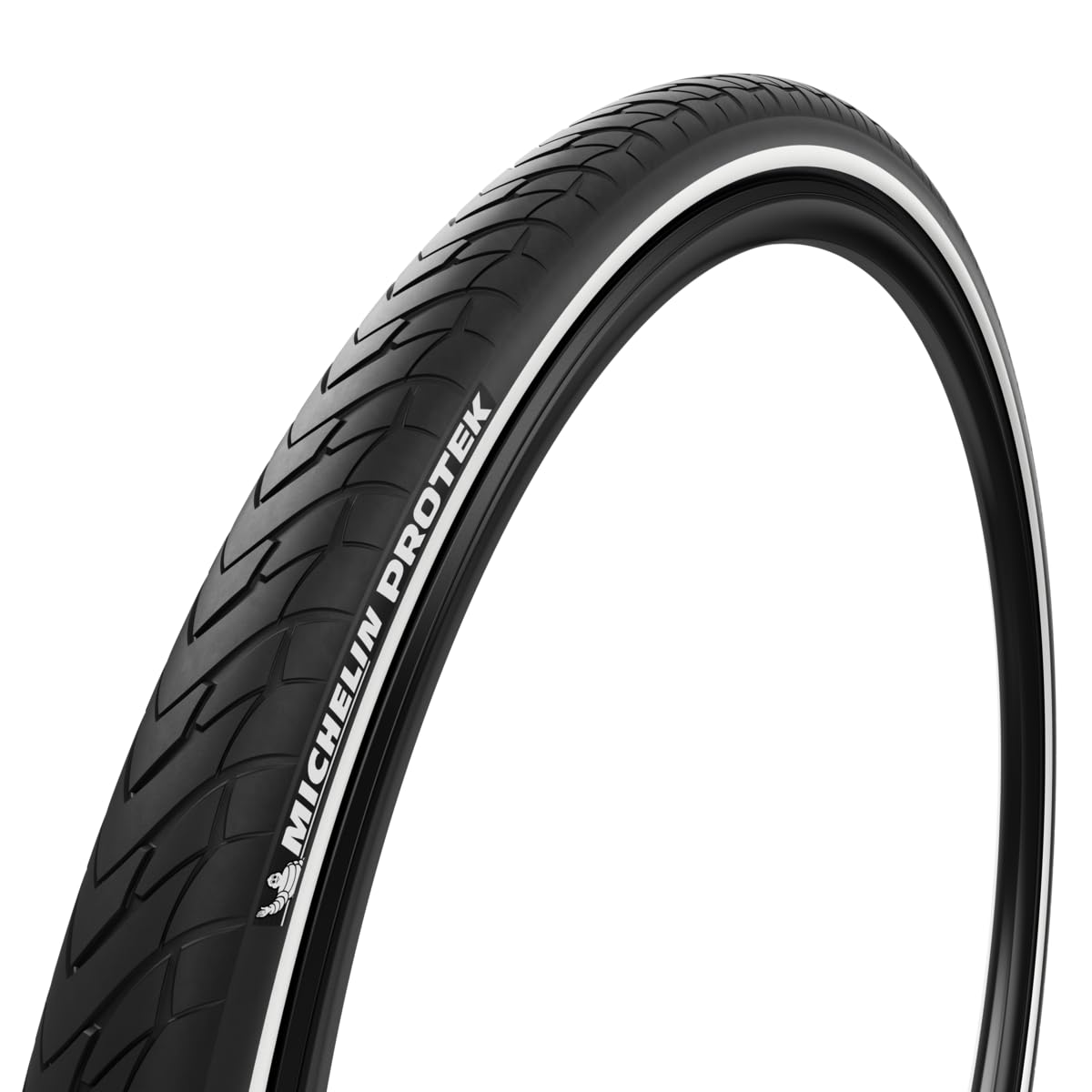
1. Michelin Protek Road & Touring Tire 27×1.25
Our pick — 4.5★ from 800+ verified ratings; the strongest balance of quality and price.
The high-mileage touring tire that just keeps rolling.
This Michelin Protek BR is built for riders who cover real ground. It uses a 1mm reinforced casing (a puncture-fighting layer inside the rubber) that is specifically designed to fend off glass and debris on city streets and asphalt routes. The payoff is a tire that is heavier than a basic model — 1.2 pounds — but one that buyers report still has tread left after 5,000 pavement miles. That is a rare number for a narrow tire in this size.
The smooth ride and reflective sidewall strip are the two things buyers mention most when they talk about daily use. The reflective band is bright enough that customers note it “reflects as well as a safety vest,” an honest safety boost for dusk commutes. The main caveat here is fit consistency: some owners found the tire slightly taller or wider than expected on older rims (a 4mm height difference was reported), so measure your frame clearance if your bike has tight tolerances.
The grip feels different here compared to the Bell Flat Defense — the Michelin excels in wet and dry traction thanks to its silica-based compound aimed at touring rather than just flat resistance. It is a true 650g tire, which means it is not the lightest folding option, but the puncture barrier and longevity make it the most value-per-mile tire in this roundup.
Mileage champ: lasts thousands of pavement miles with the tread still intact — a genuine long-term investment for daily riders.
Fit note: runs slightly large on some rims; check your frame gap before ordering if you have tight clearance.
Reach for this if: you want a tire that will outlast several commuting seasons and you value puncture resistance over outright light weight.
Look elsewhere if: your rims are unusually narrow or your frame has less than a finger’s width of clearance around the tire.
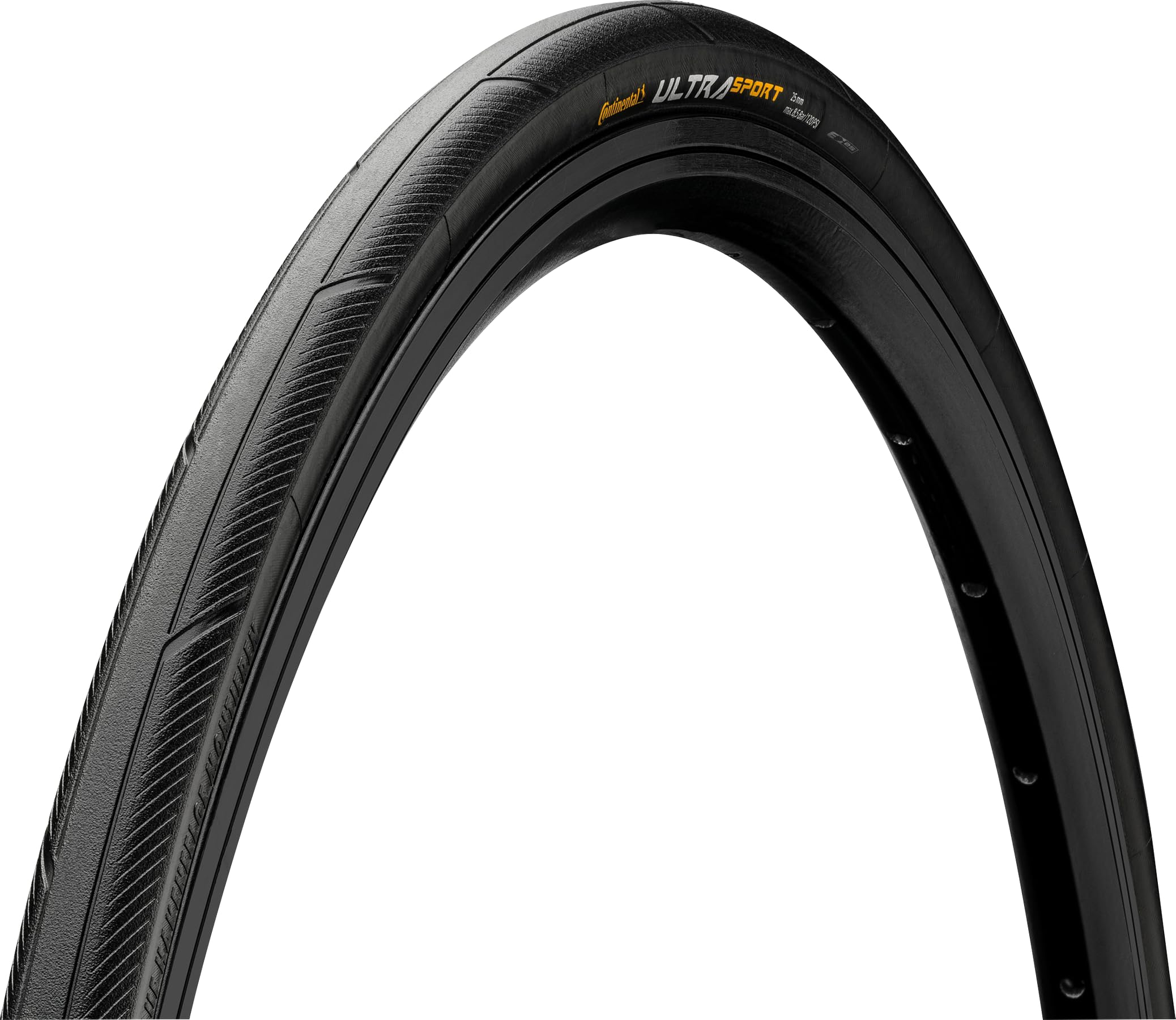
2. Continental Ultra Sport III 27×1.25
The fast roller with German engineering for training and entry-level racing.
Continental brings its PureGrip compound — a silica-based rubber blend — down to this 27-inch size, and the difference is noticeable the first time you sprint away from a stoplight. The tire feels supple thanks to its 180 TPI (threads per inch) casing, which is a high count that allows the rubber to flex more over small bumps. That makes for a noticeably faster, smoother ride than the stiffer Bell Flat Defense, which has a thicker puncture belt but also a firmer feel.
This tire carries an E25 e-bike rating, meaning it is certified for standard-speed electric bikes up to 25 km/h. That is a rare certification in this size. The trade-off comes during installation: the wire bead is stiff, and several owners mention a fight getting it onto the rim. The general consensus is that the rubber quality is excellent, with owners noting that after hundreds of miles on rough Colorado roads there were no cuts or tread wear.
Unlike the Michelin Protek which focuses on touring longevity, the Continental is tuned for speed and handling. It is a narrower performance profile that feels at home on a road bike or a fast commuter, not a heavy cruiser.
Speed-first design: rolls noticeably faster than the Bell and Michelin options — ideal for training rides and club runs.
Installation effort: the wire bead is stubborn; plan on using tire levers and maybe a little dish soap on the rim.
Best for: road cyclists and e-bike commuters who prioritize low rolling resistance and a lively ride feel.
skip it if: you hate wrestling tires onto rims or you need a rugged touring tire that shrugs at gravel shoulders.
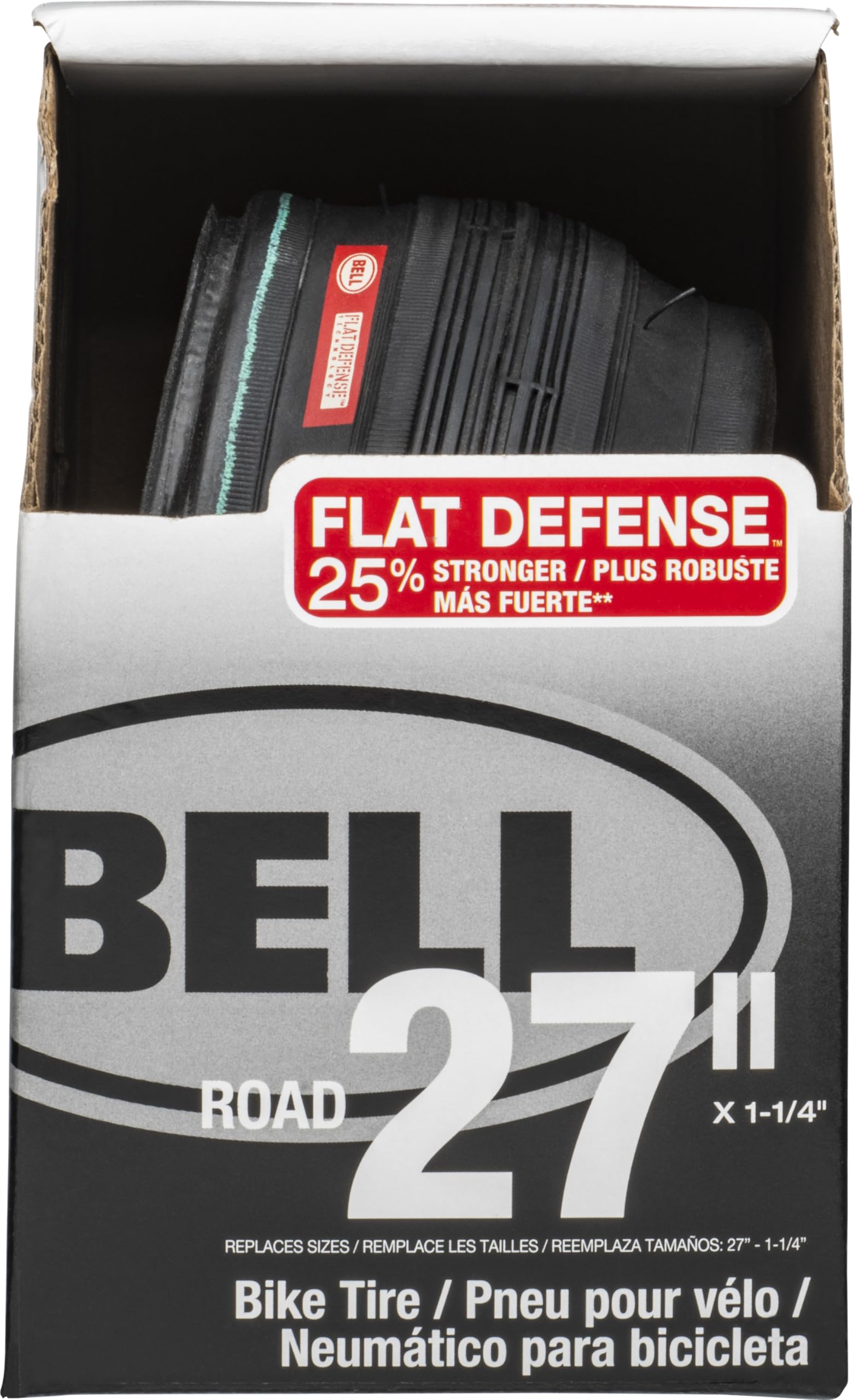
3. Bell Flat Defense Road Bike Tire 27×1.25
The budget commuter that punches above its weight in puncture resistance.
Bell’s Flat Defense layer is claimed to provide 25% more strength than a standard tire. In real-world terms, that translates to a thick casing that resists the sharp stuff you roll over in the bike lane. Owners consistently call it the best value commuter tire on the market, citing a very smooth ride on a no-suspension bike at 75 PSI. That ride quality is a direct result of the inverted tread pattern, designed to reduce rolling resistance while still delivering sure grip on pavement.
The honest catch here is fit. Multiple customers note that the tire runs slightly undersized — some say it measures closer to 1 1/8-inch than the 1 1/4-inch marked on the sidewall. That can make seating it on straight-sided rims tricky, with one owner describing high and low spots that required careful coaxing. The carbon steel bead means it can be folded for storage without damage, but that same bead is what makes it a workout to install compared to a Kevlar folding bead.
Where the Bell differs from the Alta or the YUNSCM pack is its thicker casing layer. It is not a weight-weenie tire — it is a daily rider that prioritizes flat prevention above all else.
Why it wins on value
- Thick Flat Defense casing stops punctures reliably
- Smooth ride feel at 75 PSI on rigid bikes
- Inverted tread offers less rolling resistance for easier pedaling
The honest trade-off
- Some units measure undersized (1 1/8″ instead of 1 1/4″)
- Difficult to seat on some straight-sided rims
Stick with this for: budget-conscious daily commuting where flat protection matters more than a perfectly easy installation.
Think twice if: you run ultra-narrow rims or you lack patience for a tire that may need extra effort to seat evenly.
4. Panaracer GravelKing Slick 27×1.25

The lightest folding tire in the list, made in Japan for vintage bikes and modern gravel alike.
Weighing just 350 grams, this Panaracer is over 100 grams lighter than the Michelin Protek — a difference you feel instantly when you pick up the wheel. It uses an Aramid (Kevlar) folding bead, which makes installation far easier than any wire-bead tire here. Owners mounting it on 1983 Fuji rims report that they needed no tire levers at all, and the tire inflates easily to hold 100 PSI on single-wall rims. The amber sidewall option gives vintage road bikes a classic look that the all-black models cannot match.
The GravelKing Slick is a fast-rolling tire that also handles mixed terrain — packed gravel and hardpack dirt — better than a pure road slick. It is versatile enough to serve as a touring spare because it folds compactly. The main durability note in the data is that the front tire has shown minimal wear after 1,400 miles, while some reviewers point out that the rear has a shorter lifespan of about 4-5 months under heavy use. This is a performance tire, not a tank.
The versatility here is absent from the narrower-focus Bell and Blackburn options. It is the pick for a rider who wants one tire that can do weekend gravel rides and weekday commutes without swapping rubber.
Easiest mount: the Kevlar bead makes this the simplest tire in the list to install, no levers required for most rims.
Durability trade-off: rear tire wears faster than the Michelin — expect 4-5 months of heavy commuting before replacement.
Grab this for: a vintage road bike restoration or a lightweight touring build where every gram counts.
Pass if: you need a tire that survives thousands of heavy-loaded miles without showing tread wear.
5. Sunlite Super HP CST740 27×1.25

The fully white tire that turns heads while delivering functional performance on pavement.
If appearance is a priority, this Sunlite is the only all-white model in the roundup. It features a grooved tread with directional siping (tiny cuts that channel water), and the white color stays bright — shoppers say that a magic eraser and rubbing alcohol bring it back to new when it gets grimy. The tire fits the 27×1.25 size perfectly and is aimed at road use only, not gravel or dirt, so keep it on pavement.
The honest trade-off is weight. Multiple owners note that the tire is heavy, and one experienced rider specifically said they would not run these on a dedicated road bike because of the heft, but found them excellent on paved trails and cruisers. The ride quality gets strong praise — less rolling resistance than a knobby tire, with good turning feel. The grooved tread does double duty, offering enough bite for confident cornering without the drag of a full tread block.
Compared to the utility-focused Bell Flat Defense, the Sunlite is a style-first tire that still performs well for casual riding. It is not for the rider chasing speed records, but for the owner of a classic cruiser or a weekend path rider, the look is a feature as much as the rubber itself.
Style standout: the fully white sidewall and tread draw compliments every ride — a unique look in this size.
Weight penalty: noticeably heavier than the Continental or Panaracer; best for casual cruisers, not race bikes.
Ideal for: riders who want their wheels to match the bike’s aesthetic and ride mostly on paved paths or neighborhoods.
Not for: performance-oriented riding or any surface looser than hard-packed pavement.
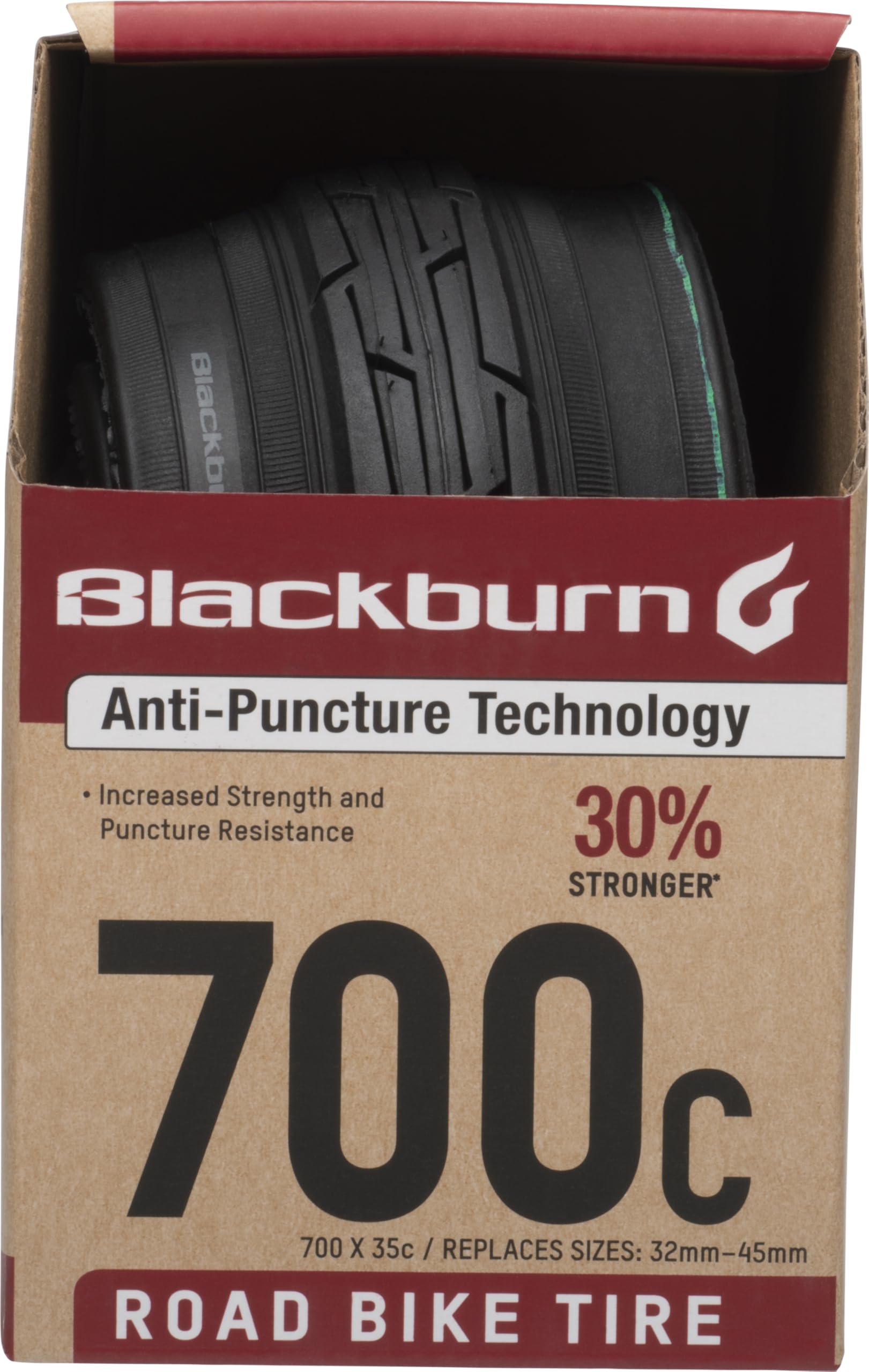
6. Blackburn Road Bike Tire 27×1.25
The budget-friendly 27-inch tire with a protective layer that fits older Schwinns.
Blackburn’s protective belt is claimed to give 30% more puncture strength than a standard tire. The inverted tread pattern mirrors the Bell’s design — it is designed to deliver grip with less rolling resistance on pavement. The PSI range is 65-95, giving you room to soften the ride or firm it up for speed. Owners confirm it fits 1970s Schwinn ten-speeds without issue, and the look and feel on the road are praised for the price.
The problem is consistency. A significant minority of buyers report that the tire bead is weak and that at just 50 PSI, some units bulge off the rim. The data includes a verbatim warning from one experienced cyclist: “Blew out the first tube at just 50PSI” and another that said the tire rose off the rim in one spot at 60 PSI. This is an unacceptable safety risk for a tire that requires reliable bead seating. While some units seem fine, the pattern of bead failure is too frequent to ignore.
The Bell Flat Defense is a stronger choice in the same price tier for most riders, even with its own mounting difficulty, because its bead issues are far less common. The Blackburn only makes sense if you are comfortable with a lottery on bead quality.
The potential upsides
- Affordable option with a reinforced puncture layer
- Fits vintage Schwinn ten-speeds well
- Inverted tread reduces pedal effort on pavement
The serious concern
- Multiple reports of the bead deforming and popping off the rim at low PSI
- Return rates and negative reviews suggest inconsistent quality control
Consider only if: you are on a strict budget and willing to inspect each tire carefully before mounting.
Avoid if: bead reliability is a deal-breaker — the Bell Flat Defense is a safer bet at a similar price.
7. Alta Bicycle Tire Duro 27×1.25 (Black/Gum)
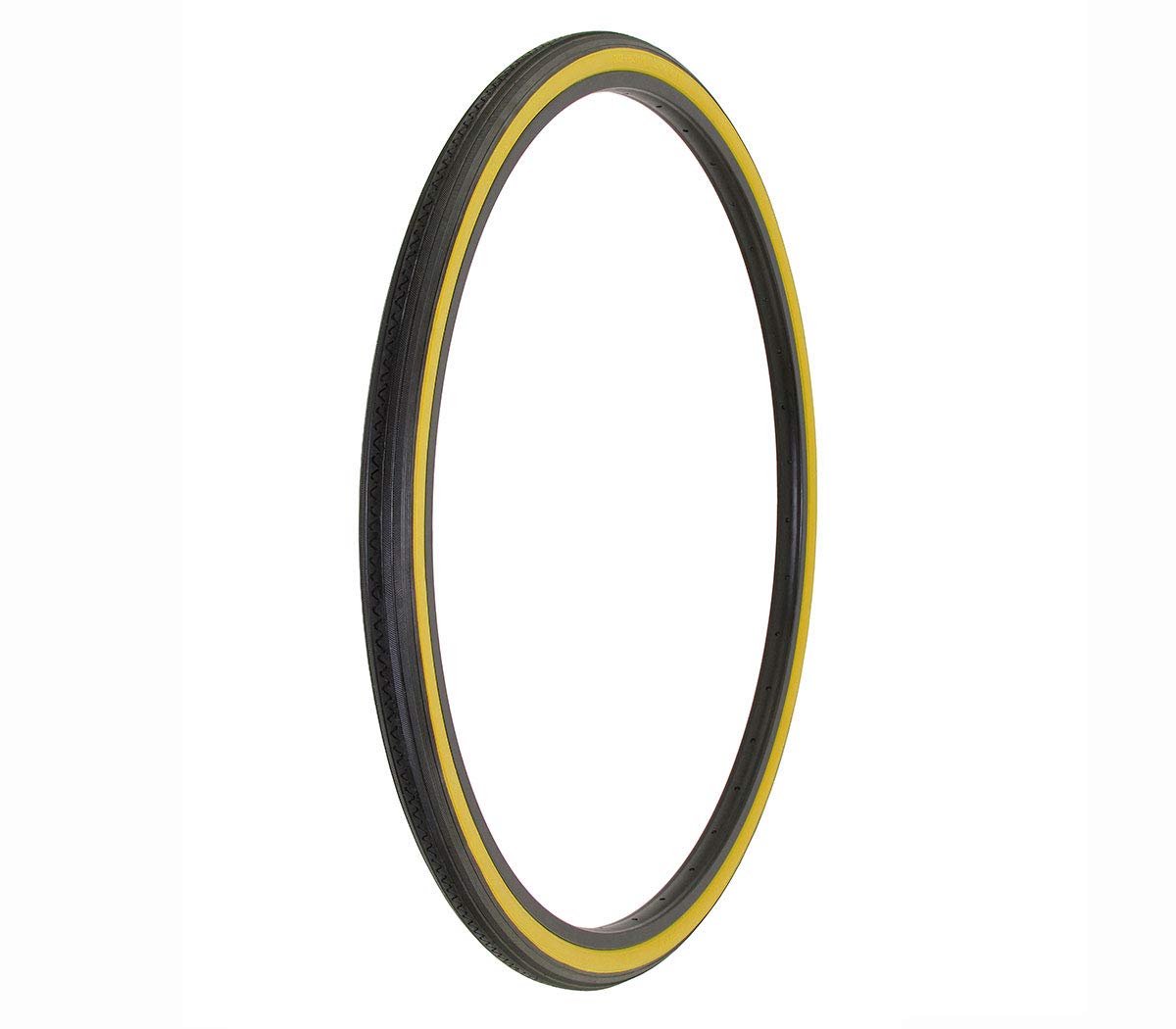
The gum-sidewall Duro that nails the classic look for steel-frame Fuji and Schwinn bikes.
This Alta tire is made by Duro, a manufacturer known for solid basic rubber, and it delivers exactly what it promises: a 27×1.25 inch tire with a black/gum sidewall that looks period-correct on vintage frames. It is rated for 90 PSI, and owners have mounted it successfully on Fuji steel frames, calling the fit perfect and the look exactly what they wanted. If you are restoring a bike to its original appearance, the gum sidewall here is a detail that modern all-black tires cannot replicate.
The experience is not universally positive. One owner reported that the tire “explodes off of rim randomly,” suggesting a mismatched fit on certain rim profiles, while another owner pointed out that the tire was marked incorrectly — “70psi not 90!!!” — raising a question about quality control on the sidewall printing. A third report of a defective tire with a company that agreed to replace but never followed up is a flag for customer service.
This is a simple, inexpensive tire for a straight swap, but the consistency issues mean it is not as reliable as the Michelin or the Sunlite. It is best suited for a low-stakes casual bike where a gum wall is the priority.
Vintage looks: the black/gum sidewall is a perfect match for classic steel ten-speeds and commuters.
Consistency issues: reports of incorrect PSI marking and poor rim fit on some bikes mean you may get a dud.
Best for: casual restoration projects where the gum sidewall is essential to the bike’s look.
pass on it if: you need a dependable daily rider or you want a tire that fits every rim without hesitation.
8. YUNSCM 2-PCS 27×1.25 Bike Tires with Tubes

The complete two-wheel kit that gets a vintage bike back on the road in one order.
This YUNSCM set includes two tires, two Schrader valve tubes, and two rim strips — everything you need to replace both wheels at once. It is designed for narrow 30-32mm rims and uses a symmetrical smooth tread that is strictly for paved city roads. The butyl rubber formula is described as having less odor and better wear resistance than budget alternatives, and the 90 PSI max rating matches the Alta and many original-equipment tires from the 1970s. One owner called it a “very good complete 32-630 tire set” for a Peugeot mixte, noting it was a perfect fit for the narrower 630 rims.
The tubes are the weak link here. Multiple owners mention that the included tubes pop immediately at 90 PSI, with one describing the valve stem as too wide for the rim hole, causing pinching and blowouts. A fix that worked for some was running the tire at 75 PSI instead of 90 PSI, which is a workable but not ideal solution. The tires themselves get solid marks for quality and fit; the tubes are where the cost-cutting shows.
Compared to buying a Bell or Michelin tire alone, this set gets you two wheels for a lower outlay, but the tube failures pull the overall reliability down. If you buy this, plan to keep your own higher-quality inner tubes as a backup.
Everything in one box: two tires, two tubes, and rim strips make for a simple single-order solution.
Tube trouble: the included tubes are unreliable at full 90 PSI; expect to swap them or run at 75 PSI.
Reach for this if: you need a full set for a complete wheel swap and you are willing to test the tubes at lower pressure.
Look elsewhere if: you want a low-maintenance install with components that work reliably at full inflation.
9. RUTU Foldable 27×1.25 Bike Tire with Tools
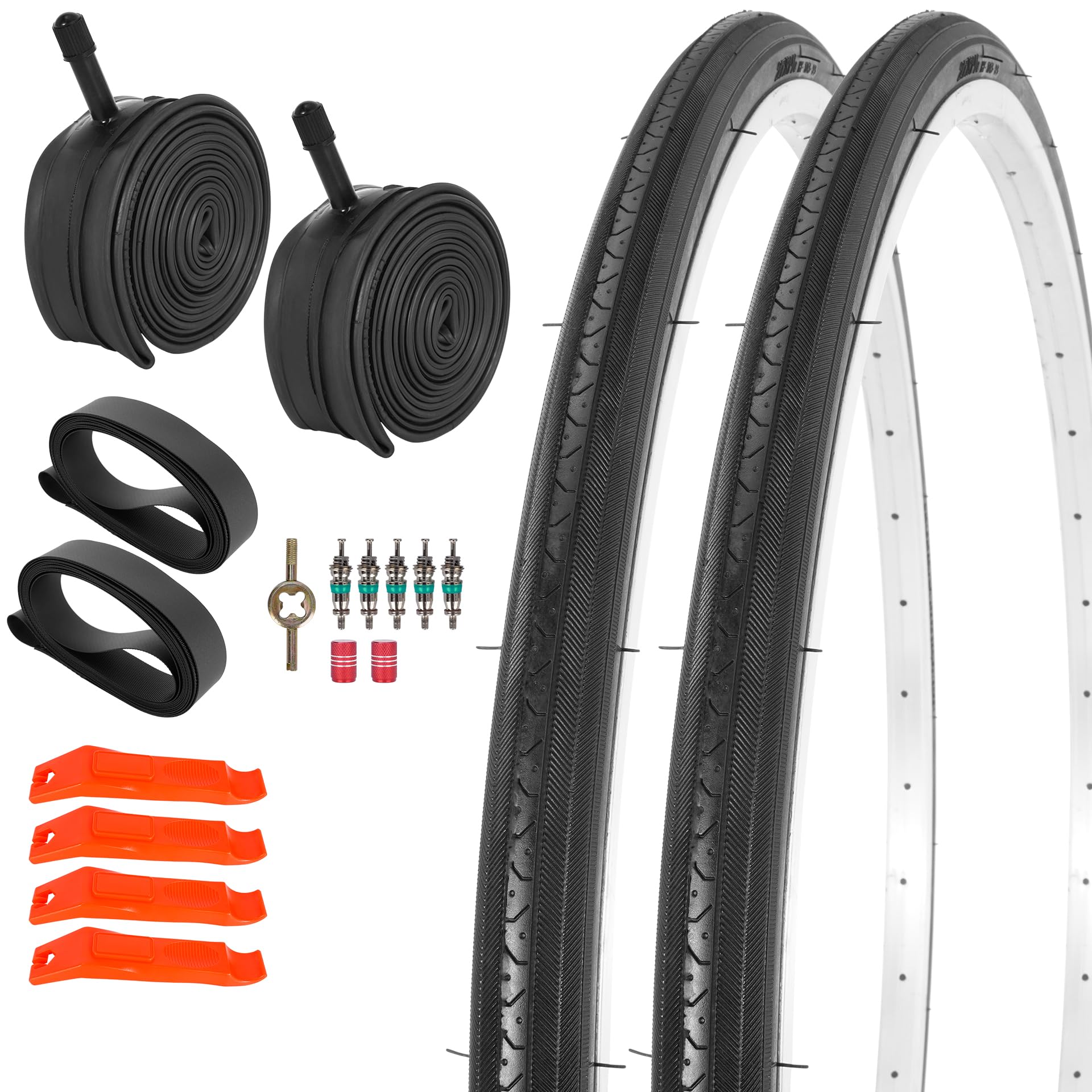
The 2-pack kit that comes with tire pry bars, valve tools, and a nylon lining strip.
RUTU packs a lot into one purchase: two foldable tires, two inner tubes, a valve-core wrench, two aluminum-alloy color nuts, five spare valve cores, four tire pry bars, and two 700c/27-inch rim strips. The tire itself uses a directional tread pattern for improved grip in wet conditions, and The rubber formulation is claimed to be more heat-resistant and last more than twice as long as standard rubber. The tires fold for easy storage as a spare in a bag.
The catch is the same reliability gap seen in the YUNSCM set. The tires themselves earn solid marks — owners praise the grip on wet pavement, the smooth rolling, and the confident cornering. But the included tubes have a high failure rate, with several buyers reporting that the “tubes blew at about 35psi during installation” or that three out of six tubes failed — one blew at half pressure during inflation, another blew while idle, and a third leaked. The value of the extra tools is real, but the tube failure rate is too frequent to ignore.
If you buy this, treat the tubes as throwaway items and use them only as spares for emergencies, not your primary setup. The tires themselves are a decent value when paired with a good third-party tube.
What you get
- Full hardware kit with tire levers, valve cores, and rim strips
- Foldable tire is easy to carry as a roadside spare
- Directional tread gives solid wet-pavement grip
The risk to know
- Included tubes are prone to blowing at low pressure during installation
- Poor tube reliability undermines the convenience of an all-in-one purchase
Ideal for: the tinkerer who wants spare hardware and will swap the tubes for a trusted brand before riding.
Not for: anyone who wants a ready-to-ride kit straight from the start without pre-emptive tube replacement.
Understanding the Specs
ETRTO 32-630 (The Size That Matters)
The numbers 32-630 are the only reliable way to know a tire fits your rim. “630” is the diameter in millimeters of the bead-seat on your rim — the inner edge where the tire locks in. A standard 700c rim uses 622, but vintage 27-inch bikes use 630, so a 700c tire will not work. The “32” is the tire width in millimeters, roughly 1.25 inches. Always check for the ETRTO marking on the sidewall before buying.
PSI Range and Bead Seating
The PSI (pounds per square inch) rating on a tire sidewall tells you the maximum pressure it can safely hold. At this narrow width, running too low (below 60 PSI) can cause the tire to squirm in corners, while running above the max can blow the bead off the rim. The bead is the steel or Kevlar wire at the tire’s inner edge that snaps into the rim. A weak or poorly formed bead is dangerous — it can pop out under pressure, as reported on some of the budget options. Always check that the bead is seated evenly around the rim during inflation.
TPI and Casing Suppleness
TPI stands for threads per inch — a count of how many threads are woven into the tire’s casing fabric. A higher number (like 180 TPI on the Continental Ultra Sport III) means the casing is more flexible, which translates to a more compliant ride that absorbs small road vibrations. A lower count (like the 3×22 TPI on the Michelin) is tougher and more puncture-resistant but feels stiffer. For a 1.25-inch tire, this trade-off matters because there is less air volume to cushion you than a wider tire.
Puncture Protection Layers
Many 27-inch tires now include a protective belt under the tread — usually a layer of rubber or fabric that stops sharp objects from reaching the tube. The Bell Flat Defense uses a layer claimed to provide 25% more strength., while The Michelin uses a 1mm reinforced City Shield casing. These layers add weight and stiffness, but for a narrow tire that sits closer to road debris, they are worth considering if you commute through city streets.
FAQ
Will a 27 x 1.25 tire fit my rim if it currently has a 27 x 1 1/4 tire?
Is a 27-inch tire the same as a 700c tire?
What PSI should I run in a 27 x 1.25 tire?
Can I use a 27 x 1.25 tire on an e-bike?
How do I tell if a 27-inch tire has a weak bead before mounting it?
Are folding tires worth the extra money for a 27 x 1.25 size?
How long should a 27 x 1.25 bike tire last?
Do I need special tools to install a 27-inch bike tire?
What does ETRTO 32-630 mean on my tire?
Can I use a 27 x 1.25 tire on a mountain bike rim?
Final Thoughts: The Verdict
For most riders, the best 27 x 1.25 bike tire is the Michelin Protek because it combines a proven 1mm puncture shield, a usable reflective sidewall, and the real-world evidence of lasting thousands of miles with tread to spare. If you want a fast-rolling performance tire with a folding bead for easier installation, the Continental Ultra Sport III is a sharp choice. For a budget commuter that still offers serious flat protection, the Bell Flat Defense punches above its price tag. And for a classic look on a vintage cruiser, the Sunlite Super HP delivers style without sacrificing function.
How We Picked
We do not accept paid placement. Every pick is matched to a real buyer and a real use-case; we do not hands-on test units.
Sources & Methodology
Specifications: manufacturer listings and product documentation. Review insights: verified customer reviews, as of July 2026. Pricing: not shown on this page (it changes often); check the current price via the retailer link.
As an Amazon Associate, Gadgets Feed earns from qualifying purchases. This does not affect which products we feature.