
Our readers keep the lights on and my morning glass full of iced black tea. As an Amazon Associate, I earn from qualifying purchases.
Specs are compiled from manufacturer listings and verified buyer reviews and can change over time — please confirm the key details on the product page before buying.
Finding a bike for a teenager is less about picking a color and more about matching a frame to a growth spurt that isn’t finished yet. You want something that feels right today and still fits next year, with brakes that inspire confidence and gears that make hills less of a chore. The wrong choice means a bike that sits in the garage. The right one means freedom, exercise, and a set of wheels they actually want to ride.
I’m Min — the founder and writer behind Gadgets Feed. This guide is built by comparing the manufacturers’ published specifications and the patterns across verified customer reviews, so you get each pick’s real strengths and trade-offs instead of marketing spin.
This guide covers 11 of the top contenders to help you find the best bike for teens that balances durable construction with the right fit for growing riders and a budget you can feel good about.
Our Picks at a Glance

How To Choose The Best Bike For Teens
Buying a bike for a teenager is different from buying for a child or an adult. You are trying to hit a moving target: a rider who is still growing, developing strength, and figuring out what kind of riding they actually enjoy. These three factors will help you narrow the field.
Finding the Right Wheel Size
Wheel size is the single most important fit detail. A 20-inch wheel typically suits riders aged 6 to 10, while a 24-inch wheel works for most teens between 9 and 14. Once a teen is over about 5’2″, a 26-inch wheel often becomes the better long-term choice because it lets the bike grow with them without feeling oversized. Measure your teen’s inseam against the stand-over height rather than guessing based on age alone.
Brakes, Gears, and Real-World Riding
Disc brakes deliver stronger stopping power in wet or muddy conditions compared to traditional V-brakes, making them a safer bet if your teen will ride on trails or in unpredictable weather. For gears, a 7-speed setup is simple and forgiving for beginners, while 21-speeds offer the range to handle steep hills and mixed terrain once a rider gains confidence. A single-speed BMX is lighter and simpler but limits where the bike can go.
Frame Material: Steel vs. Aluminum
High-carbon steel frames are durable and affordable but heavy—a steel bike can weigh over 30 pounds, which makes it harder to carry up stairs or accelerate on a hill. Aluminum frames are lighter, often by several pounds, and resist rust better, but they cost more. If your teen will be lifting their own bike onto a rack or carrying it down steps, the weight savings of aluminum quickly pays off.
Quick Comparison
| Model | Best For | Wheel Size | Gears | Frame Material | Amazon |
|---|---|---|---|---|---|
| cubsala BMX Race Bike★ Best Overall | Neighborhood & Park Fun | 20, 24, 26 inch | Single-speed | Carbon Steel | Amazon |
| Ktaxon Mountain BikeBudget Champ | Budget Trail Riding | 24, 26, 27.5 inch | 21-speed | Carbon Steel | Amazon |
| Glerc SkylineTrail Starter | Adventure & Trail Confidence | 20, 24, 26 inch | 21-speed | Carbon Steel | Amazon |
| Pipleo Kids Mountain Bike | Younger Riders (6-14) | 20, 24 inch | 7-speed | Carbon Steel | Amazon |
| Dynacraft Vertical Gauntlet | Full Suspension Comfort | 24 inch | 21-speed | Alloy Steel | Amazon |
| Vollsch Freestyle BMX | BMX Tricks & Stunts | 20 inch | Single-speed | Carbon Steel | Amazon |
| JOYSTAR Brockway BMX | Entry-Level BMX Riding | 20, 24 inch | Single-speed | Alloy Steel | Amazon |
| HILAND Bamcbase Mountain Bike | Light Trails & Commutes | 24, 26 inch | 18-speed | Carbon Steel | Amazon |
| SPATIAL Mountain Bike | Lightweight Trail Riding | 24, 26, 27.5 inch | 8 or 21-speed | Aluminum | Amazon |
| Mongoose Flatrock | Casual Neighborhood Rides | 26 inch | 7-speed | Aluminum | Amazon |
| RoyalBaby Mountain Bike | Long-Term Quality Build | 20-26 inch | 21-speed | Aluminum | Amazon |
In‑Depth Reviews
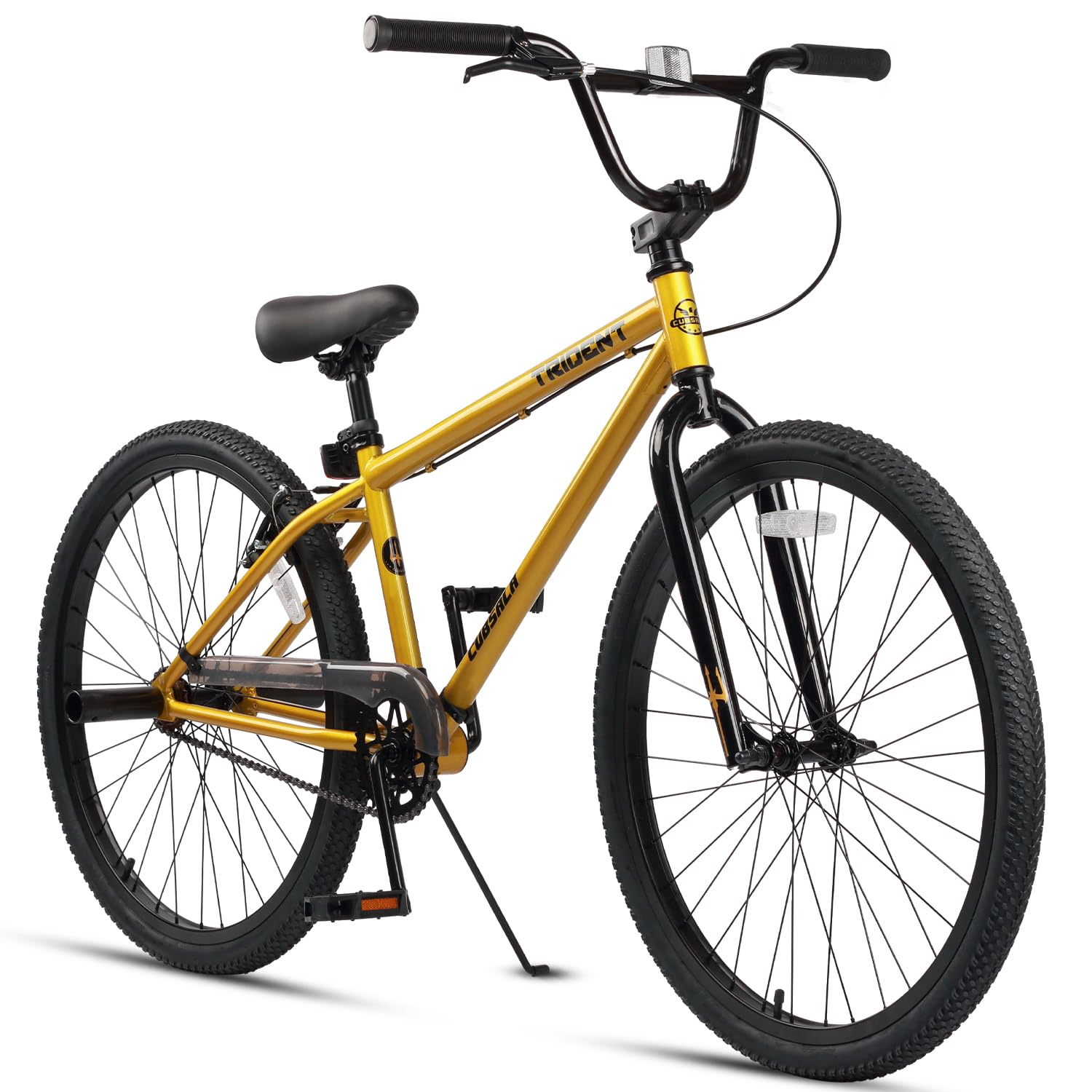
1. cubsala 20 24 26 Inch BMX Race Bike
Our pick — 4.5★ from 300+ verified ratings; the strongest balance of quality and price.
A BMX racer that manages to fit nearly everyone in the house.
This bike from cubsala comes in three wheel sizes—20, 24, and 26 inch—which means the same model can work for a 4-foot beginner or a 6’2″ adult. The Hi-Ten steel frame is built to take a beating, and the single-speed drivetrain keeps things simple: no derailleurs to bend, no shifters to confuse a first-time rider. Buyers report that a 6-foot-tall adult weighing 195 pounds rode it comfortably and even took it down steps, which tells you the frame is genuinely sturdy, not just painted to look tough.
The rear linear pull V-brake offers low-maintenance stopping power, while the included pegs let a teen start learning basic tricks right away. Assembly is listed at 85% complete, and the package includes tools, gloves, stickers, and reflectors—a complete unboxing experience that gets the bike rolling in under 10 minutes according to multiple owner reports.
The crowd favorite callout: Quality is what owners praise most—over 50 buyers singled it out—and the assembly process earns similar applause. Braking and durability get more mixed feedback, with a few noting the rear brakes need a quick adjustment from the start.
Reach for this if: you want a do-it-all bike for a teen who is still growing, with a price that leaves room for a good helmet and lock.
Look elsewhere if: your teen needs gears for steep hills or plans to ride serious mountain trails—this is a single-speed BMX designed for flats, parks, and pavement.
2. Ktaxon Mountain Bike 24/26/27.5 Inch
The affordable gateway to gears, trails, and real mountain bike tech.
Where the cubsala is a focused single-speed, the Ktaxon throws in 21 speeds, mechanical disc brakes, and a suspension fork for not much more money. It comes in 24, 26, and 27.5-inch wheel options, so you can size it to a growing teen or even a shorter adult. The high-carbon steel frame is heavy—the bike weighs 16 kg (about 35 pounds)—but it is built to shrug off the bumps and drops of unpaved trails without creaking.
The disc brakes are a clear step up from V-brakes for stopping confidence, especially on wet gravel, and the lock-out suspension fork lets you firm up the front end for pavement climbs. One owner reported putting 54 miles on a 27.5-inch model with no complaints, adding a rear rack and basket for hauling. The catch, mentioned often by owners, is the seat—many find it uncomfortable enough to replace, and a handful of units have arrived with minor cosmetic damage from shipping. Still, for the price, this is a remarkable amount of mountain bike for a teen ready to explore beyond the driveway.
Smart budget move: Quality and value for money are the top two praises from owners. The seat is the most common upgrade, and occasional paint chips in shipping are a known quirk.
Grab this for: a teen who wants to hit dirt trails without spending premium money, or a family buying a first “real” mountain bike.
skip it if: you need the lightest possible bike for carrying up stairs, or you want zero assembly fuss—this one takes about 20 minutes and benefits from some mechanical expertise.
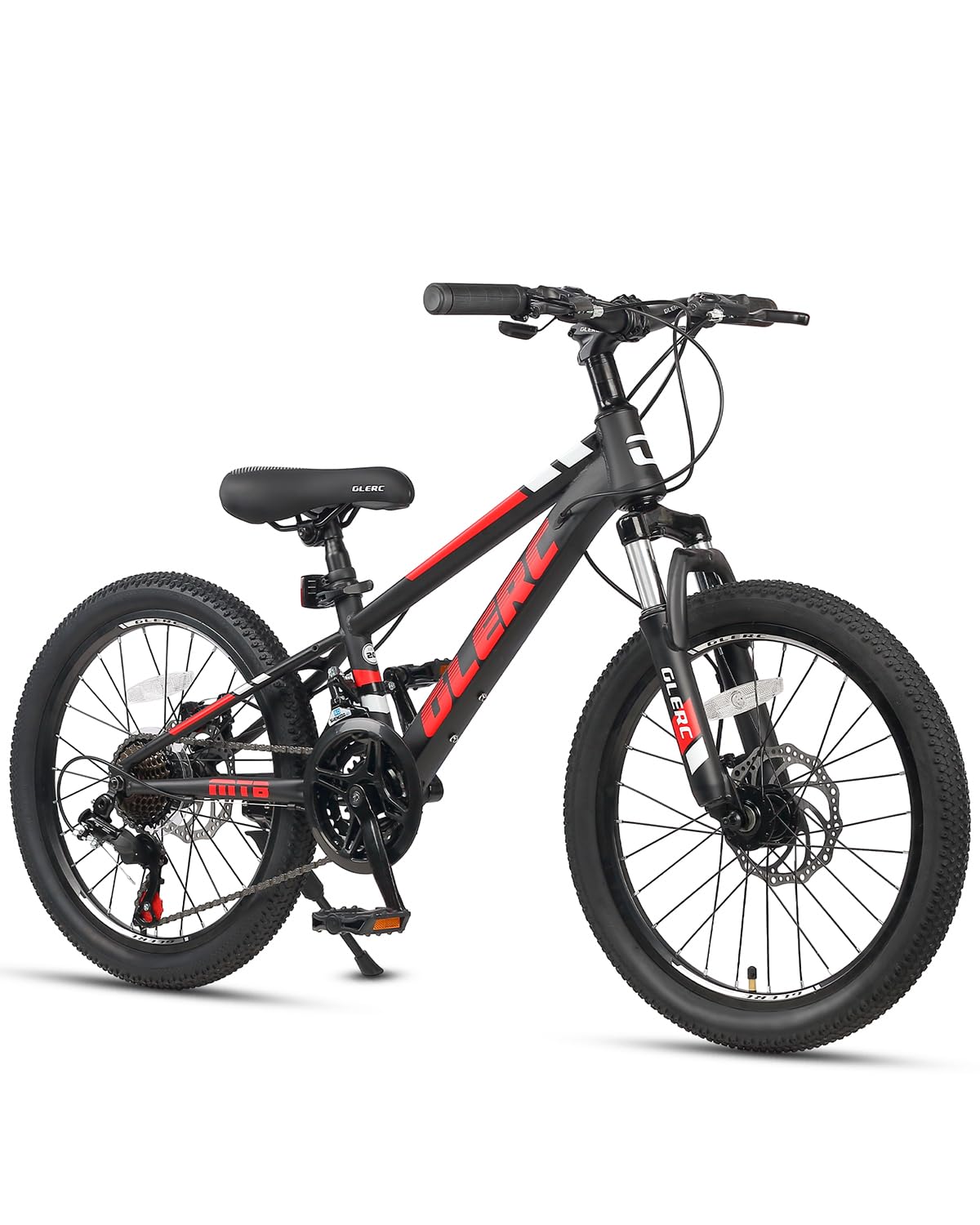
3. Glerc 20 24 26 Inch Kids Mountain Bike
A 21-gear mountain bike that punches well above its price tier.
The Glerc Skyline delivers a surprisingly complete package for the money: a high-carbon steel frame, 21-speed drivetrain, responsive disc brakes front and rear, and a suspension fork to tame rough terrain. The 20-inch model weighs 30 pounds and is recommended for ages 6-12 with a height of 45-55 inches, while the larger 24 and 26-inch sizes stretch the range well into the teen years. The trigger shifters give crisp, intuitive gear changes that a young rider can learn quickly.
Owners consistently praise the build quality—one describes it as “just about every upgrade” compared to similarly priced department store bikes. The brake disc and derailleur come properly tuned more often than not, which reduces the dreaded first-ride frustration. The main trade-off is durability over the long haul: a small number of owners mention wheel alignment issues or front-wheel concerns after extended use, so it pays to double-check the spokes and axle nuts after the first few rides. For the price, this is a confident recommendation for a family that wants 21 gears and disc brakes without creeping into three-figure territory.
Top pick insight: Quality is the overwhelming reason owners give it high marks—over 60 buyers called it out. Assembly is also a breeze, with many reporting a straightforward 10-minute setup.
Best for: a parent who wants a feature-rich trail bike at entry-level pricing, especially for a child between 6 and 12 who is ready for gears and real brakes.
Consider a different size if: your teen is already over 5’5″ and needs a 26-inch wheel—check the Glerc size chart first.
4. Dynacraft Vertical Gauntlet 24 Inch

Full suspension at an entry-level price—and a brand name that parents recognize.
The Dynacraft Vertical Gauntlet stands out from the hardtail crowd with a front suspension fork and a rear coil shock, giving it a dual-suspension setup that soaks up bumps on trails, gravel, and neighborhood streets. The 24-inch wheels are a good fit for teens aged 13-17, and the alloy steel frame keeps the weight manageable despite the extra suspension hardware. Shimano 21-speed grip shifters deliver smooth, precise gear changes that feel a cut above the generic twist shifters found on many budget bikes.
Front and rear V-brakes provide dependable stopping power, though a few owners note the brakes need an initial adjustment to reach their full potential. Assembly is straightforward, and the bike ships with a limited 1-year warranty for confidence. The most common theme in owner feedback is that this bike is fantastic for the money, with one buyer calling it “well worth it” for a teenager who rides every day. The frame can arrive with minor scratches from shipping, so inspect it promptly when the box arrives.
What owners love: The value proposition is strong—many say it beats anything at a big-box store for similar money. The dual suspension and Shimano shifters are the standout features.
Reach for this if: your teen wants a plusher ride on bumpy trails without jumping to a premium price point.
Think twice if: your teen is a serious mountain biker—this is a recreational full-suspension bike, not a downhill machine.
5. RoyalBaby Kids Mountain Bike
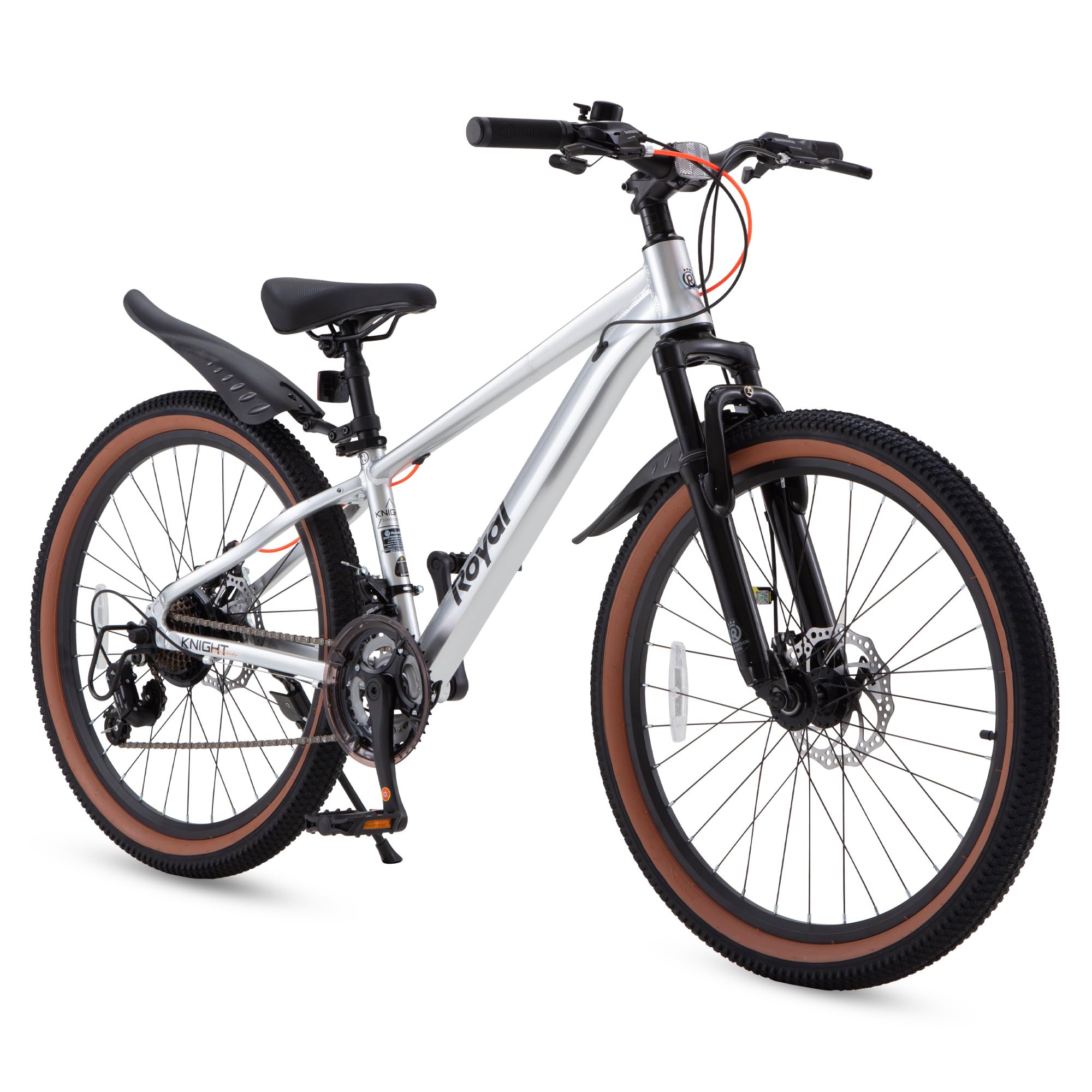
The aluminum-frame premium option for families who plan to keep this bike for years.
RoyalBaby has built a loyal following among parents who appreciate genuine quality over flashy specs. This mountain bike features a high-strength aluminum alloy frame that keeps the weight to 31.5 pounds—significantly lighter than steel alternatives—which makes a real difference when a teen is lifting the bike onto a rack or accelerating up a hill. The 21-speed drivetrain with front and rear disc brakes provides the gear range and stopping power that a more adventurous rider will appreciate.
The suspension fork absorbs trail bumps, and the knobby MTB tires with a puncture-resistant layer add durability on mud and gravel. RoyalBaby bikes comply with CPSC and EN-71 safety standards, and the company offers a high-level warranty with local 24-hour service. This is the third RoyalBaby bike for at least one owner, which speaks volumes about repeat satisfaction. The only minor complaint is that one pedal can sometimes strip its threads under heavy use, but it is an easy fix with a simple thread clean-up and replacement pedals.
Build quality note: Owners consistently praise the aluminum frame welds and the Shimano derailleur, calling the bike a “great value for an engineer or home mechanic.” The frame alone is worth the price.
Invest in this if: you want a bike that will last through multiple seasons and multiple kids, or if your teen is already an intermediate rider who needs reliable gearing and braking.
pass on it if: your budget is tight—this is the premium pick on the list, and the price reflects the lightweight aluminum construction and safety certifications.
6. Vollsch Freestyle BMX Bike 20 Inch
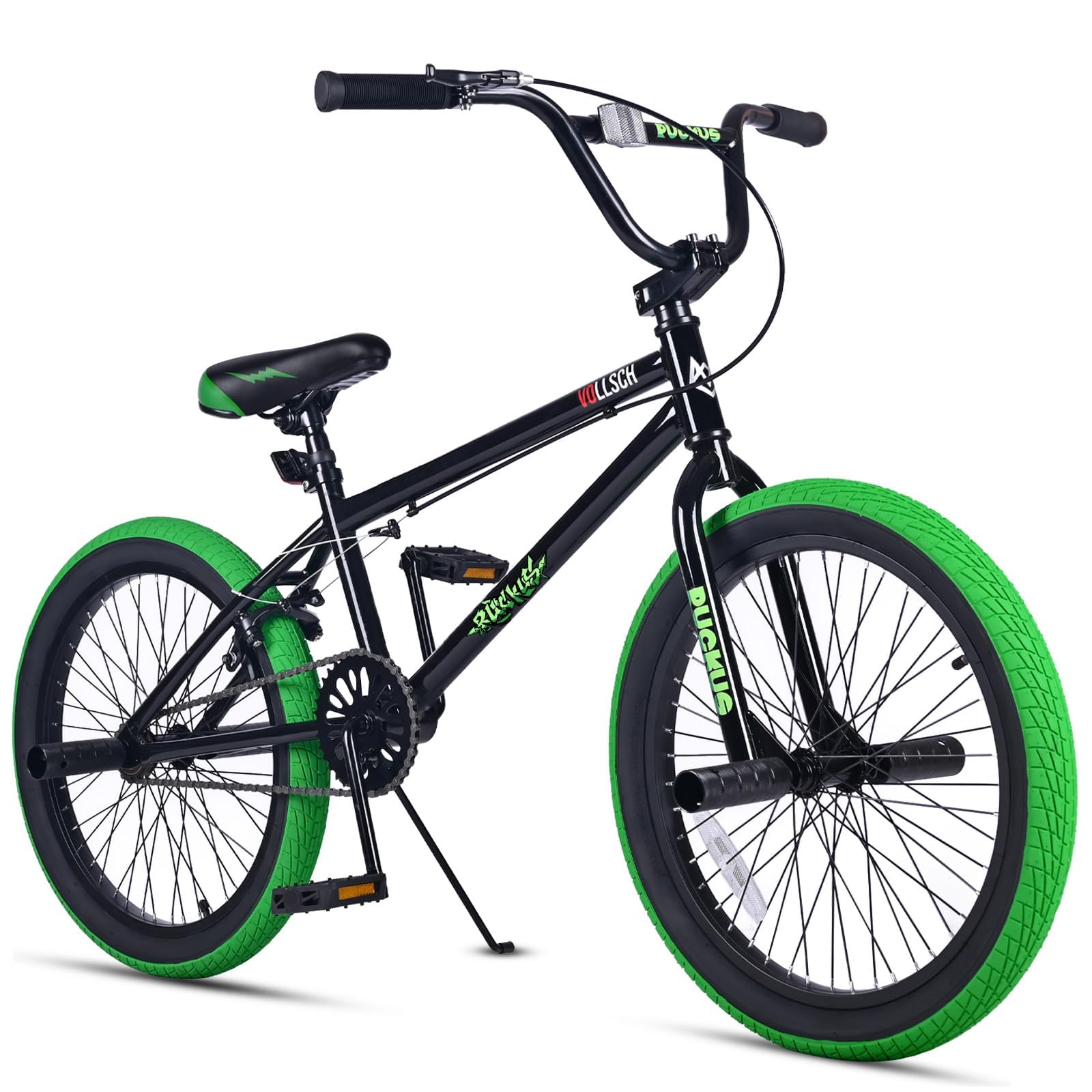
A dedicated freestyle machine for the teen who wants to learn bunny hops and tail whips.
If your teenager is less interested in trail mileage and more focused on mastering tricks at the skatepark, the Vollsch RUCKUS 20 is built for exactly that. It has a 19.1-inch top tube high-carbon steel frame that is tough enough to handle repeated jumps and drops, yet light enough for a 10-year-old to maneuver. The single-speed drivetrain with a 165mm one-piece crank and 36T chainring keeps things simple and durable—fewer moving parts means fewer things to break when you land a wheelie wrong.
The rear aluminum U-brake provides precise speed control, and the 20 x 2.35-inch tires on carbon steel single-wall rims offer a solid platform for learning. The bike includes pegs, cool stickers, and a tool kit, and it arrives 85% pre-assembled. Owners highlight the easy assembly and beginner-friendly ride quality, though a small number report that the pedals can loosen over time if not tightened properly. The consensus from the reviews: this is a great-looking, well-built BMX for kids who are serious about getting into the sport.
What stands out: Assembly and quality are the most-cited positives, both mentioned by over a dozen owners. The value for money gets more mixed feedback, with some feeling it is overpriced for the component level.
Perfect for: a teen aged 10-15 who is ready to move beyond a casual cruiser and start practicing freestyle BMX.
Not ideal if: your teen is over 5’4″ or needs gears for hilly terrain—this is a 20-inch single-speed focused on the park, not the trail.
7. JOYSTAR Brockway Freestyle 20/24 Inch

A well-built BMX that holds up better than what you will find at the big-box store.
JOYSTAR has carved out a reputation for delivering BMX bikes that feel more substantial than their price tag suggests. The Brockway features a hi-tensile alloy steel frame with a 22-inch top tube and a 40T chainring, giving it a balanced geometry that suits beginners and intermediate riders alike. The single-speed setup is paired with an aluminum U-brake for clean stopping power, and the bike includes two pegs for basic freestyle tricks. Owners consistently compare it favorably to Walmart bikes, calling it “way better quality” and “super tough.”
The standout feature for many is the range of vibrant color options with matching colored tires that make the bike look great from the start. But the recurring downside is the stock brakes, which several owners describe as weak and fast-wearing. A common workaround is to replace the brake pads or add a front brake for more stopping authority. The bike also ships with a limited lifetime warranty, which adds a layer of confidence that budget BMX bikes rarely offer.
Owner consensus: Quality is praised by over 90 owners—the most of any feature on this bike. Assembly, build quality, and value also score highly. Braking quality and long-term durability are the main pain points.
Buy this for: a teen who wants a sharp-looking, sturdy BMX for neighborhood and park riding, especially if you are willing to swap the brake pads for an upgrade.
Look elsewhere if: your teen needs strong brakes from the start—the stock setup requires patience or an aftermarket fix.
8. Pipleo 20/24 Inch Kids Mountain Bike

A 7-speed trail bike that keeps things simple for younger teens.
The Pipleo mountain bike targets a specific age window—ages 6 to 14—with a 7-speed drivetrain that is less intimidating than a full 21-speed setup. The carbon steel frame is paired with a suspension fork and 2.35-inch wide anti-slip butyl tires that provide good traction on dirt and gravel. The front and rear disc brakes deliver strong stopping power that is more effective than the V-brakes found on many kids’ bikes in this price range.
Assembly is straightforward at 90% pre-built, and customers note that the bike is sturdy and easy for a 13-year-old to control. The twist-grip shifters are simple for kids to operate, and the padded seat and handlebars keep things comfortable on longer rides. The main durability concern comes from a small number of owners who experienced pedal or weld failures after a short time—a rare but notable issue. The quality, ease of assembly, and braking performance are the most praised aspects, making this a solid choice for a younger teen moving up from a smaller bike.
What wins people over: Quality and assembly ease are the top praises, with braking and value close behind. Stability gets mixed feedback, so check the tire pressure and spoke tension on delivery.
Ideal for: a 9- to 14-year-old who is ready for disc brakes and gears but does not need the complexity of a 21-speed.
Consider an alternative if: your child is over 5’5″ or needs a bike for aggressive trail riding—the 24-inch wheels cap out at that height range.
9. SPATIAL Mountain Bike 24/26/27.5 Inch
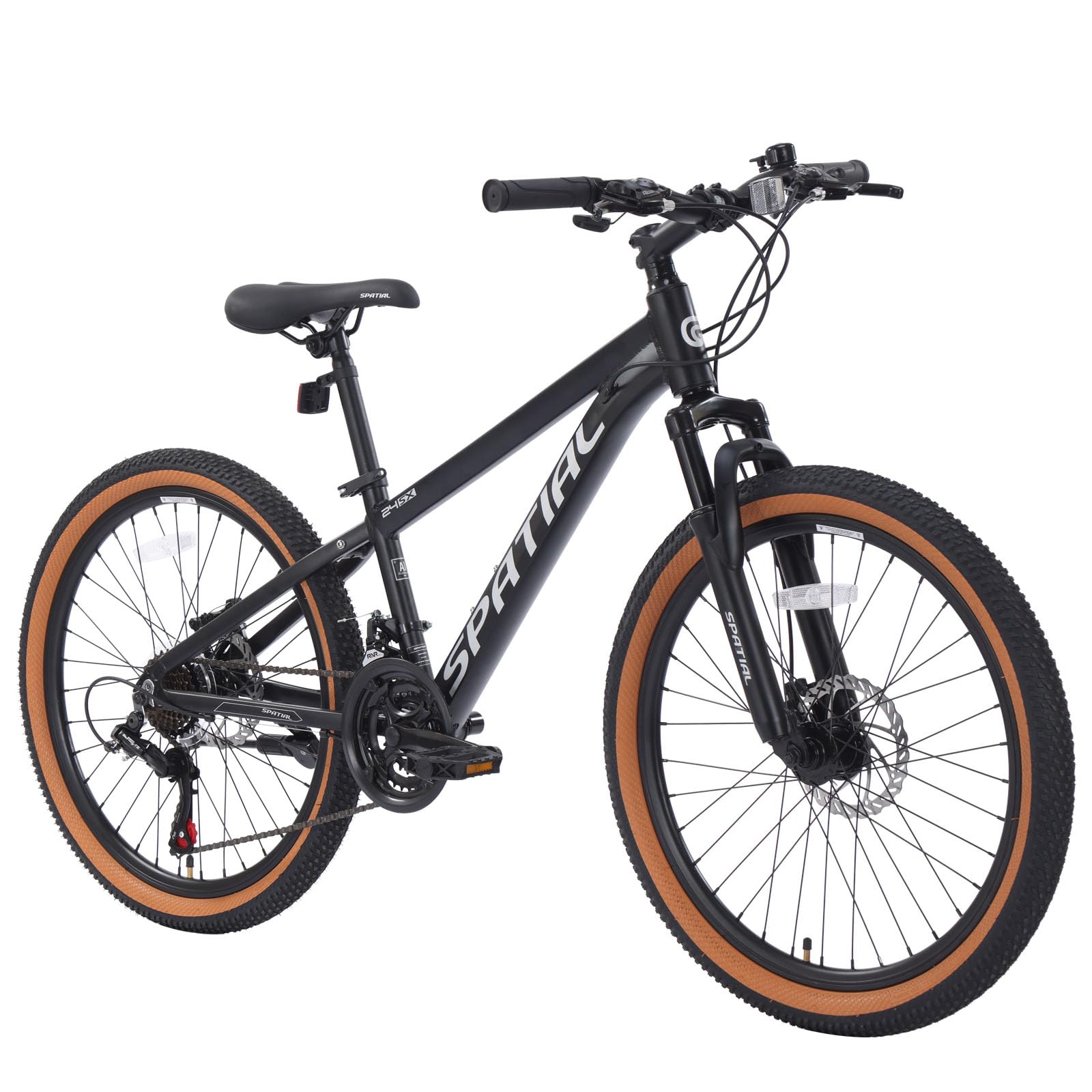
An affordable aluminum-frame option that shaves serious weight off the ride.
The SPATIAL mountain bike brings an aluminum alloy frame to the table at a price point where steel is the norm. At 33 pounds, it is noticeably lighter than the steel alternatives, which makes a real difference when a teen is carrying the bike up stairs or accelerating on pavement. The bike is available in 24, 26, 27.5, and even 29-inch wheel sizes, covering riders from 146 cm to 195 cm. A key feature is the lock-out front suspension fork, which lets you stiffen the fork for climbing efficiency and then open up it for descending on rough terrain.
This bike uses a Shimano drivetrain—either an 8-speed or a 21-speed 3×7 setup depending on the model. The mechanical disc brakes provide reliable all-weather stopping. Reviewers point out smooth assembly, with one calling it a “fantastic bike” that held up through six months of daily use. The rear inner tube can sometimes leak on arrival, and the seat may feel small for taller riders, but the overall build quality and ride comfort earn consistent praise. For a teen looking to get into trail riding without a heavy steel frame holding them back, this is a compelling pick.
Standout spec: The aluminum frame at this price is the headline—most competitors in this range use carbon steel. Owners also highlight the smooth Shimano shifting and responsive disc brakes.
Go for this if: your teen is strong enough to handle gearing but wants a lighter frame for easier climbing and carrying.
it’s not for you if: you prefer a steel frame for extreme durability over lightness—aluminum is lighter but less forgiving of hard impacts.
10. Mongoose Flatrock 26 Inch Mountain Bike

A familiar brand name with an aluminum frame for easy neighborhood cruising.
Mongoose has been in the bike game for over 50 years, and the Flatrock reflects that experience in a straightforward, no-nonsense package. The hardtail mountain bike features a lightweight aluminum frame—a clear step up from the steel frames of budget competitors—and 26-inch wheels that fit riders from 5’4″ to 6’2″. The 7-speed drivetrain with twist shifters is simple enough for a beginner but offers enough range for moderate hills and casual trails.
The linear pull brakes deliver reliable stopping for neighborhood rides, and the knobby tires provide durable traction on dirt paths. Owners describe it as a comfortable, reliable bike for casual riding, with one calling it “perfect for riding around the neighborhood.” The main criticisms are that the hardware feels entry-level—the grips are narrow and the shifters small—and the overall weight is on the heavy side for an aluminum frame at 19.16 kg. For a teen who needs a functional, sturdy bike for school commutes and weekend paths, the Flatrock is a trustworthy choice from a legacy brand.
The main trade-off: Owners praise the quality and appearance, but assembly experiences are mixed and durability concerns come up more often than on higher-priced models. The frame itself feels solid for the price.
Best for: a teen who needs a dependable, easy-to-ride bike for paved paths and gentle dirt, with a brand name that parents already trust.
Not for: aggressive trail riding or long-distance commuting—this is a recreational mountain bike suited to gentle use.
11. HILAND Bamcbase Womens Mountain Bike 24/26 Inch
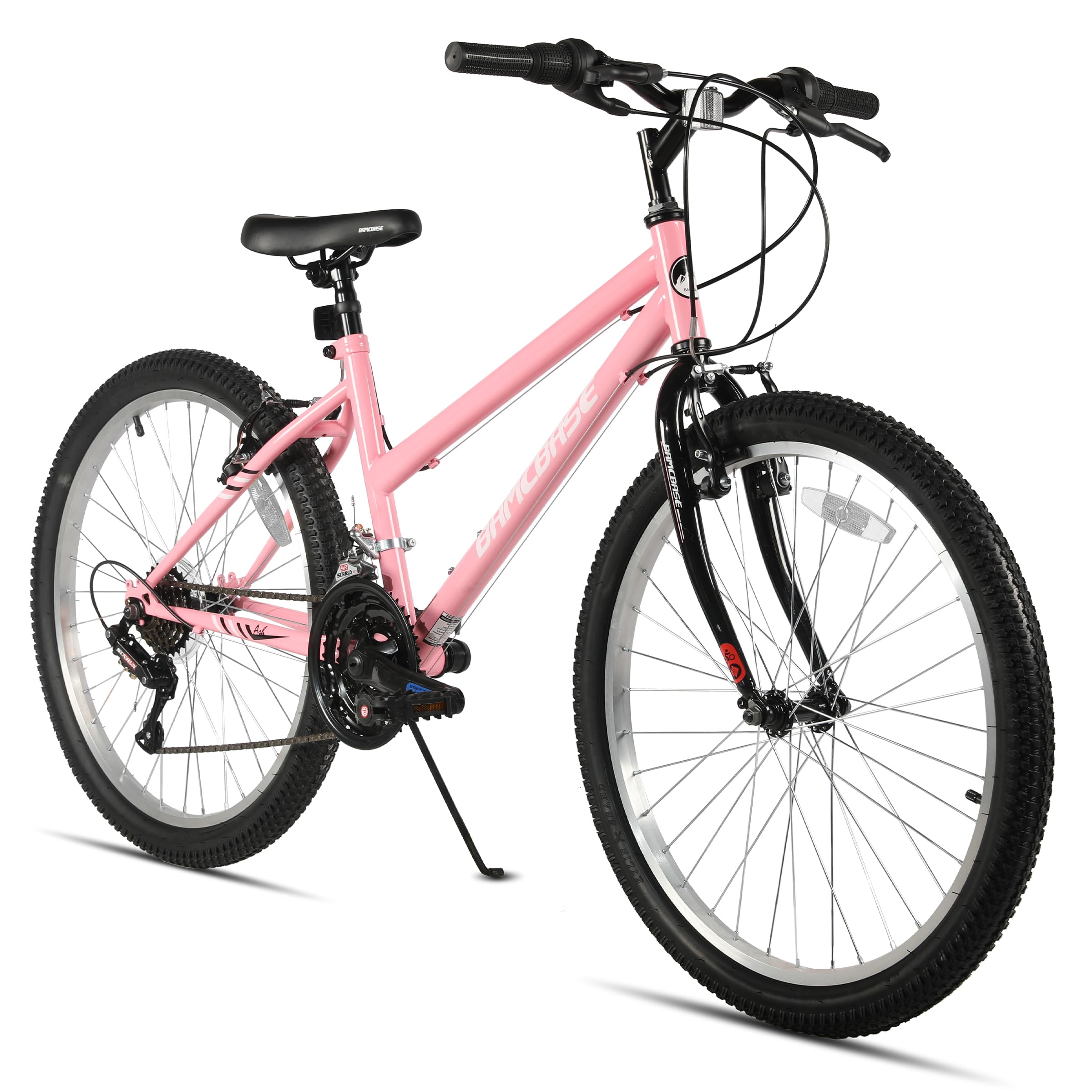
A step-through frame that makes mounting and dismounting easy for smaller riders.
The HILAND Bamcbase is built with a lower step-through frame that makes it easier for teens to swing a leg over, especially when wearing a backpack or school bag. It comes in 24-inch (14.5-inch frame, for riders 4’3″ to 5’2″) and 26-inch (16.5-inch frame, for riders 5′ to 5’8″) sizes. The 18-speed drivetrain offers a wide gear range for both hills and flats, and the V-brakes provide smooth stopping for city streets and bike paths.
Key components include a Shimano Altus groupset, which is a notable upgrade at this price point and among the most praised features by owners. The knobby 1.95-inch tires handle paved roads and light gravel without slipping. Assembly is listed as 90% pre-assembled, though several owners note the seat is uncomfortable and recommend replacing it. A small number reported missing parts or shipping damage, so inspect the box carefully on arrival. For a teen girl looking for a stylish, easy-to-mount hybrid that bridges school commutes and weekend trails, this is a strong contender.
Key insight: The Shimano Altus groupset is the headline feature at this price—it is rare to find it on a sub- bike. The appearance and quality are well-regarded, but comfort and assembly both get mixed owner feedback.
Reach for this if: you want a bike with a lower stand-over height for a teen who is still building confidence, or if the Shimano drivetrain matters more to you than premium brakes.
Look elsewhere if: your teen needs disc brakes for wet conditions, or you want a bike that rides perfectly from the start without a seat swap.
Understanding the Specs
Wheel Size and Fit
The wheel size determines how the bike fits the rider. A 20-inch wheel works for children around 4’0″ to 5’0″ tall, while a 24-inch wheel typically fits teens between 4’7″ and 5’5″. The 26-inch wheel is the adult standard, fitting riders from about 5’0″ upward. You want the rider to be able to stand over the top tube with both feet flat on the ground and a couple of inches of clearance—that gap is called the stand-over height. Measuring your teen’s inseam is more reliable than guessing by age or height alone.
Gears and Drivetrain
The number of gears a bike has directly affects how easy it is to climb hills and how fast you can go on flat ground. A single-speed drivetrain is the simplest—no shifting, low maintenance, but limited to flat terrain. A 7-speed system gives you a decent range for mild hills and casual riding. A 21-speed system offers a wide spread of gears for steep climbs, fast descents, and everything in between. If your teen will mostly ride on pavement or at the park, 7 speeds is plenty. If they want to tackle real trails, go with 21 speeds.
Brakes: Disc vs. V-Brake
Disc brakes use a caliper that clamps a rotor attached to the wheel hub. They offer stronger, more consistent stopping power in wet or muddy conditions because the braking surface stays cleaner. V-brakes use pads that squeeze the rim of the wheel. They are lighter, simpler to adjust, and cheaper to replace, but they lose effectiveness when the rims are wet. For a teen who will ride in all weather or on dirt, disc brakes are the safer choice. For dry-weather neighborhood riding, V-brakes work perfectly well.
Frame Material and Weight
High-carbon steel (Hi-Ten) is the most common material on budget bikes. It is strong and inexpensive but heavy, often making a bike weigh 30-38 pounds. An alloy steel frame (like the one on the Dynacraft) is a bit lighter while staying durable. Aluminum is the lightest common frame material, often bringing the weight down to 28-33 pounds. Lighter bikes are easier to accelerate, lift, and maneuver, which makes a big difference for a younger or smaller rider. The trade-off is cost—aluminum frames typically add – to the price of a comparable steel bike.
FAQ
What wheel size should I choose for my teen?
How important is the number of gears for a teen rider?
Are disc brakes worth the extra cost for a teen bike?
How long does it take to assemble a bike that arrives 85% pre-assembled?
What is the maximum rider weight for a typical teen bike?
Can a teen use a mountain bike for everyday school commuting?
How do I find the right bike height for my teen without them sitting on it?
What is the difference between a steel frame and an aluminum frame?
Should I buy a single-speed or a geared bike for my teen?
What tools do I need for final assembly and maintenance?
Final Thoughts: The Verdict
For most families, the bike for teens winner is the cubsala BMX Race Bike because it balances near-universal fit, proven durability, and a price that leaves room for gear. If your teen needs gears and disc brakes for trails, the Ktaxon Mountain offers the most value for the money. And for a premium, long-term investment with a lightweight aluminum frame, the RoyalBaby Mountain Bike is the one to reach for.
How We Picked
We do not accept paid placement. Every pick is matched to a real buyer and a real use-case; we do not hands-on test units.
Sources & Methodology
Specifications: manufacturer listings and product documentation. Review insights: verified customer reviews, as of July 2026. Pricing: not shown on this page (it changes often); check the current price via the retailer link.
As an Amazon Associate, Gadgets Feed earns from qualifying purchases. This does not affect which products we feature.