
Our readers keep the lights on and my morning glass full of iced black tea. As an Amazon Associate, I earn from qualifying purchases.
Specs are compiled from manufacturer listings and verified buyer reviews and can change over time — please confirm the key details on the product page before buying.
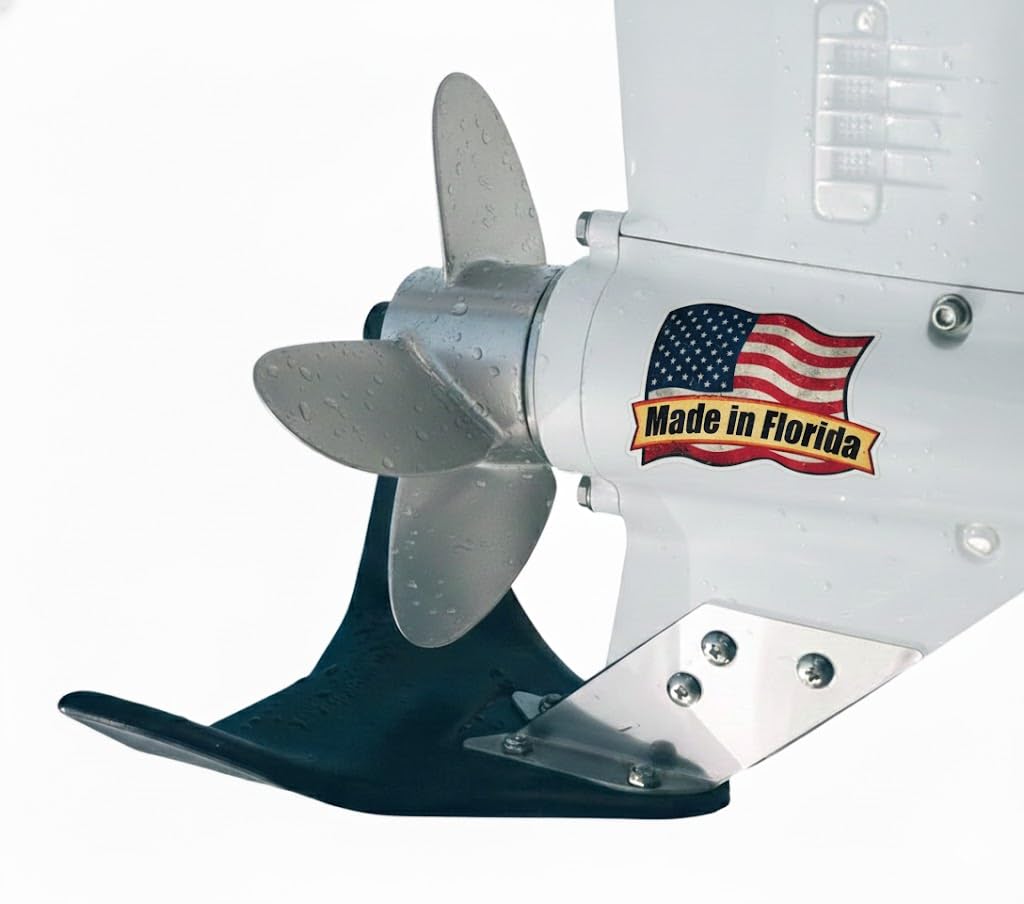
If your boat struggles to get on plane, porpoises in chop, or feels like the bow is pointed at the sky every time you hit the throttle, a hydrofoil is the simplest fix you can bolt on. These fins attach to your outboard’s or sterndrive’s cavitation plate and redirect prop wash into downward thrust, lifting the stern and flattening the ride. The result is quicker planing, better visibility, and usually a measurable bump in fuel efficiency — all for a fraction of what a new prop or engine re-power would cost.
I’m Min — the founder and writer behind Gadgets Feed. This guide is built by comparing the manufacturers’ published specifications and the patterns across verified customer reviews, so you get each pick’s real strengths and trade-offs instead of marketing spin.
Whether you run a 12-foot tinny with a 9.9 hp kicker or a 24-foot deck boat with a 300 hp V8, the right fin solves the same fundamental problem: getting the hull on top of the water and keeping it there. This guide breaks down the best boat hydrofoil stabilizers by horsepower range, material, and real-world owner results so you match the right wing to your rig.
Our Picks at a Glance


How To Choose The Best Boat Hydrofoil
Picking the wrong foil can make your boat handle worse or simply fall off. Focus on these three things first, and you will land on the right fin for your motor.
Horsepower Rating — The One Spec That Overrides Everything
Every hydrofoil has a published maximum horsepower limit. A fin rated for 40 hp bolted onto a 115 hp motor is an aerodynamic brick that adds drag and may snap under load. Conversely, a 300 hp foil on a 9.9 hp kicker is heavy overkill that can actually hurt planing. Match the fin’s range to your engine’s peak horsepower exactly. The data here shows a 7.5x gap between the smallest and largest rated fins, so this is not a nicety — it is the make-or-break number.
Material — Nylon vs. Aluminum
Marine-grade reinforced nylon (often PA66) is the most common material. It is lightweight, resists corrosion, and flexes slightly under impact rather than cracking. Aluminum variants, like the marine-grade anodized piece on the Davis Instruments model, are stiffer and more dent-resistant but can corrode if the anodized finish chips. For saltwater use, nylon or stainless-steel hardware is usually the safer bet.
Installation Method — Drill vs. No-Drill
Drill-in fins require you to mark and drill holes through the cavitation plate, then bolt the fin on with stainless hardware. It is permanent but rock-solid. No-drill models use set screws that clamp onto the plate; they are easier to remove but the data shows a recurring complaint about them sliding off or falling off mid-use. If you are willing to drill, you get a more reliable hold. If you lease your motor or hate drilling, a no-drill design works — provided you check the set screws every outing.
Quick Comparison
| Model | Best For | Max HP | Material | Weight | Amazon |
|---|---|---|---|---|---|
| Davis Instruments Whale Tail XL★ Best Overall | All-around performer | 300 hp | Anodized Aluminum | 3.4 lb | Amazon |
| StingRay XR4 SeniorTop Performer | Watersports & tow sports | 300 hp | Metal | 5.2 lb | Amazon |
| Hydro-Shield R35Dual Purpose | Prop protection & planing | 115 hp | Thermoplastic / SS | 1.01 kg | Amazon |
| StingRay Classic Junior | Small boats (9.9-40 hp) | 40 hp | Polypropylene | — | Amazon |
| SE Sport 200 | Budget-friendly planing fix | 40 hp | Copolymer | — | Amazon |
| SeaSierra-9002 | Small outboards & I/O | 40 hp | Marine Nylon PA66 | — | Amazon |
| UANOFCN Whale Tail | Mid-range (40-300 hp) | 300 hp | Reinforced Nylon PA66 | 1.84 kg | Amazon |
| NorthBoat Dolphin Tail | Mid-range (40-300 hp) | 300 hp | Marine Nylon PA66 | 1.79 kg | Amazon |
| StingRay Starfire | No-drill convenience | 300 hp | Polypropylene | 2.8 lb | Amazon |
In‑Depth Reviews
1. Davis Instruments Whale Tail XL Hydrofoil Stabilizer
Our pick — 4.5★ from 450+ verified ratings; the strongest balance of quality and price.
The anodized aluminum classic that has flattened wakes for decades.
This is the benchmark that other fins get compared to — a marine-grade aluminum hydrofoil with a durable anodized finish that handles saltwater better than most nylon competitors. It mounts on the anti-cavitation plate of any inboard/outboard or outboard up to 300 hp and installs in about 15 minutes with the included stainless steel hardware. Owners consistently report that it reduces porpoising and cavitation, smooths out the ride in rough water, and flattens the wake for waterskiing. The crowd favorite — 4.5 stars from 450+ owners — backs up every claim.
Real-world results are concrete. On a 16-foot Sea Ray with a 2.5L engine, buyers report reduced bow rise, easier steering, and the ability to hold plane at 12 mph instead of the previous 18 mph. On a 12-foot Livingston with a 20 hp Yamaha, solo planing that was previously impossible became routine, and top speed climbed from 16 to 19-20 mph. The functionality and stability are the most-discussed positives, with functionality singled out by over 50 owners as the standout trait. The recurring note is that some newer motors need a little modification to fit — a 2021 Mercury 115 hp required longer fasteners — but the payoff is a boat that behaves like it has a bigger engine.
The only honest trade-off: at 3.4 pounds and 15.5 x 13.5 inches, it is one of the heftier fins here, and the fit can be tight on certain sterndrives. But if you want the most proven, most-reviewed hydrofoil on the market that works across the widest horsepower band, this is the one.
What owners love
- Reduces bow rise and gets the boat on plane much faster
- Solid anodized aluminum construction resists corrosion
- Works across a huge range — 40 hp to 300 hp motors
What to watch
- Some newer outboards need modified hardware or longer bolts
- Not the best fit for very small motors under 40 hp
Reach for this if: you own a 40-300 hp outboard or sterndrive and want the most proven, best-reviewed fin that boosts planing, steering, and fuel efficiency in one 15-minute install.
Look elsewhere if: your motor is under 40 hp or you are dead-set against drilling into the cavitation plate — this is a drill-in-only design.
2. StingRay XR4 Senior Hydrofoil (40-300 hp)
The tow-sports specialist that keeps pontoons carving through turns.
If you pull skiers, wakeboarders, or tubers, this is the fin built for that job. The XR4 Senior is designed specifically to generate more lift and stability than standard fins, and the owner feedback on bow control is overwhelming — 12 owners call it out as the top improvement. It uses a 2-drill installation method (hardware included) and is made in the USA from metal, giving it a solid, heftier feel at 5.2 pounds. The 1-year warranty and lifetime return policy add confidence that cheaper plastic fins do not offer.
The results on larger boats are dramatic. On a 240 Sea Ray Sundancer with a MerCruiser 350 MPI (300 hp), owners say the boat planes faster, stays on plane at lower RPMs, and “cuts through waves like butter.” A Tidewater 1910 Baymax with a 115 hp Yamaha saw porpoising eliminated entirely and bow lift during acceleration minimized. The 4.7-star score across nearly 80 ratings is the highest in this lineup, though the sample is smaller than the Davis model. Compared to the Whale Tail XL, the XR4 is heavier and more aggressively shaped — it trades some top-end speed for superior hole shot and mid-range lift.
The installation is straightforward — several owners mention a 10-minute job — but the extra weight means you want a motor that can handle it. This is not a fin for a 9.9 hp kicker. It is for the 115 hp to 300 hp crowd who need to pull toys out of the hole and hold plane at lower speeds when chopping the throttle for a fallen rider.
Best for heavy tow boats: The XR4 is purpose-built for pontoon and deck boats that carry extra weight and need to carve turns without backing off the throttle. The bow-control advantage is real.
One trade-off: At 5.2 lb it is the heaviest fin here — not an issue for a 300 hp stern drive, but overkill for a light aluminum hull under 18 feet.
Choose this if: watersports are your primary use — the extra lift gets skiers up fast and keeps the bow manageable at low speeds.
Pass if: your engine is under 40 hp or you want the lightest possible fin; the massive surface area and weight are wasted on small kickers.
3. Hydro-Shield R35 Hydrofoil Stabilizer
The only fin that also guards your skeg and prop from rocks.
Unlike every other hydrofoil here, the Hydro-Shield mounts to the skeg (the vertical fin at the bottom of the lower unit) rather than the cavitation plate. That positioning gives it two jobs: lift the stern for faster planing and act as a sacrificial protector that takes the hit when you skim over a rock or log. The energy-absorbing thermoplastic compound is designed to reduce damage to the propeller and lower unit gearing at low and moderate speeds. It is made in the USA and installs in 20-25 minutes with the included marine-grade stainless steel bracket system.
Owner results back up the dual-purpose claim. On a heavy 21-foot ocean boat (4,000 lbs), the R35 dropped planing speed to 14 mph and saved the prop from a rock strike — the owner called it “exactly what it says it does.” On a small dinghy with an 8 hp motor, speed jumped from 10 mph to 18 mph with improved turn stability. The performance and prop protection are the two most-discussed aspects, with 34 and 21 mentions respectively. The key limitation is its 115 hp maximum and the 26-foot boat length cap — if your rig exceeds either, this fin is not compatible.
The downside is a potential top-end speed loss of around 5 mph compared to a standard cavitation-plate fin, because the skeg-mount design adds drag. And if you hit a hard obstruction at speed, the bracket can bend, which happened to one owner whose bent bracket led to a skeg-tip snap. But for anyone who runs shallow rivers or rocky lakes, a bent bracket beats a shattered prop or cracked lower unit.
Best for shallow-water operators: If you regularly dodge rocks, stumps, or oyster bars, the prop-protection angle makes this a smart buy over a standard foil. But on open water with no debris, a traditional fin is faster and simpler.
Not for 300 hp rigs: The 115 hp ceiling rules out big-block sterndrives and high-horse offshore boats.
Buy it if: you run an outboard under 115 hp in rocky or shallow conditions — the planing boost comes with real prop insurance.
skip it if: top speed matters most or your motor exceeds 115 hp; the drag and horsepower cap make this a niche tool.
4. StingRay Classic Junior Hydrofoil (9.9-40 hp)

The small-motor savior that turns an underpowered dinghy into a planing machine.
If you are running a 9.9 hp to 40 hp outboard on a small skiff, inflatable, or aluminum fishing boat, this is the fin that gets you on top of the water. The Classic Junior uses a 4-drill installation that anchors it securely to the cavitation plate, and the polypropylene construction is lightweight but durable. The most-discussed aspect is functionality — 33 owners call it out as the standout trait, with installation close behind at 24 mentions. The hydrofoil design includes removable mid-section portions for a customized fit on different cavitation plates.
The real-world stories are the kind that save boats from being sold. On a Tracker Grizzly 1448 with a 25 hp Yamaha, planing distance went from hundreds of feet to under 50 feet, with the boat staying on plane at half throttle and fuel efficiency improving roughly 25%. On a 12-foot Livingston with a 20 hp Yamaha, planing that was previously impossible solo became routine, and top speed increased from 16 to 19-20 mph. The polypropylene material is tough but can be trimmed with a hacksaw if you need to fit a narrow cavitation plate — the grooves on the underside suggest this is by design.
The mixed feedback on fit is worth noting. Some owners on 9.8 hp Tohatsu motors had to cut off about 4 inches of the fin to clear the anode or trim tab. And the “ugly appearance” is mentioned in more than one review. But for the price and the performance jump it delivers on underpowered small boats, the Classic Junior is the best budget option here by a wide margin.
Best bang for small-boat owners: If your 14-foot V-hull struggles to plane with two people, this fin is a -ish fix that transforms the boat.
One honest gripe: Fit is not universal — some small outboards require trimming or custom drilling. Read the fitment notes before buying.
Grab it if: your outboard is between 9.9 and 40 hp and you want proven planing improvement from a USA-made brand.
Skip if: your engine is over 40 hp — you need the Senior or XR4 models from the same brand.
5. SE Sport 200 High Performance Hydrofoil (8-40 hp)

The affordable planing cure that fits down to 8 hp motors.
The SE Sport 200 is the entry-level hero for the smallest outboards — it is rated for 8 hp to 40 hp, making it one of the few fins that works on a 6 hp or 8 hp kicker. The one-piece high-strength copolymer construction is tough and resists corrosion, and the crescent-shaped surface funnels water for increased thrust. The most-praised aspects are installation ease and speed improvement, each mentioned by 14 owners. The Turbo Trac design is meant to cut planing time dramatically and keep the boat on plane at lower speeds.
The owner reports are consistent with the claims. On a 12-foot aluminum boat with a 9.9 hp Johnson, the hydrofoil got the boat on plane quickly with a straightforward drill-in install. On a 15-foot Tracker with a 25 hp motor, top speed with three people improved from 9 mph to 19 mph into the wind — a massive gain that came from simply being able to get on plane at all. The template included in the box helps with drilling alignment, and the install usually takes under 20 minutes. The stainless steel hardware is a nice touch at this price point.
The stability feedback is mixed. Some customers note that steering feels slightly different and requires getting used to, and the fin can induce a slight pull to one side if not perfectly aligned. A few owners on 6 hp Tohatsu motors had to widen the throat and drill new holes for a proper fit. But for the price and the performance it delivers on the smallest motors, the SE Sport 200 is a solid pick that does not break the bank.
What works
- Works on very small outboards — down to 8 hp
- Noticeable speed and planing improvement on lightweight hulls
- Easy install with included template and stainless hardware
What to note
- Can require modifications to fit some narrow cavitation plates
- Mixed feedback on high-speed stability and steering feel
Best for: owners of 8-40 hp outboards on small fishing boats, inflatables, and lightweight skiffs who need a cheap planing fix.
Not ideal if: you have a high-horsepower motor over 40 hp or want a no-drill installation — this requires drilling.
6. SeaSierra-9002 Whale Tail Hydrofoil (8-40 hp)

A drill-in nylon fin that covers the most common small outboard brands.
The SeaSierra-9002 is specifically designed to fit Yamaha, Mercury, Johnson, Evinrude, Honda, Suzuki, and Tohatsu motors in the 8-40 hp range, including both 2-stroke and 4-stroke engines. The marine-grade nylon PA66 construction is lightweight and rust-proof, and the 13.39 x 13.7 inch surface area is compact enough for small cavitation plates. The package includes a 6.5 mm drill bit and four sets of stainless steel screws and nuts — everything you need for installation except a drill.
Owner feedback is overwhelmingly positive, with all reviews at 5 stars. The common thread is that the fin does exactly what it promises: improves handling, cuts planing time, and keeps the boat on plane at lower speeds. One owner mounted it on a Suzuki 115 hp (beyond its 40 hp rating) and reported it worked great, though that is not a recommended use. The 90-day manufacturer warranty is standard for this tier. The functional limitation is that it requires drilling holes in the cavitation plate — the no-drill preference is the most common reason for returns, with one owner returning the unit because they did not want to drill into their new motor.
Compared to the StingRay Classic Junior, the SeaSierra is narrower and lighter, making it easier to fit on compact outboards like the 9.9 hp Tohatsu. But the StingRay has a longer track record with 385 reviews versus the SeaSierra’s 47. If you want a nearly identical design with a slightly smaller footprint and a drill bit included, this is a great value.
Best for first-time buyers: The included drill bit and straightforward instruction sheet make this the easiest drill-in install. The 90-day warranty covers any manufacturing defects.
Know before you buy: This is a drill-in-only design. If you want a no-drill clamp-on fin, look at the StingRay Starfire instead.
Reach for this if: you own a 8-40 hp Yamaha, Mercury, or Honda and want a lightweight, corrosion-proof fin that includes all hardware.
Skip if: you are not comfortable drilling into your motor’s cavitation plate or your outboard exceeds 40 hp.
7. UANOFCN Whale Tail Hydrofoil Stabilizer (40-300 hp)
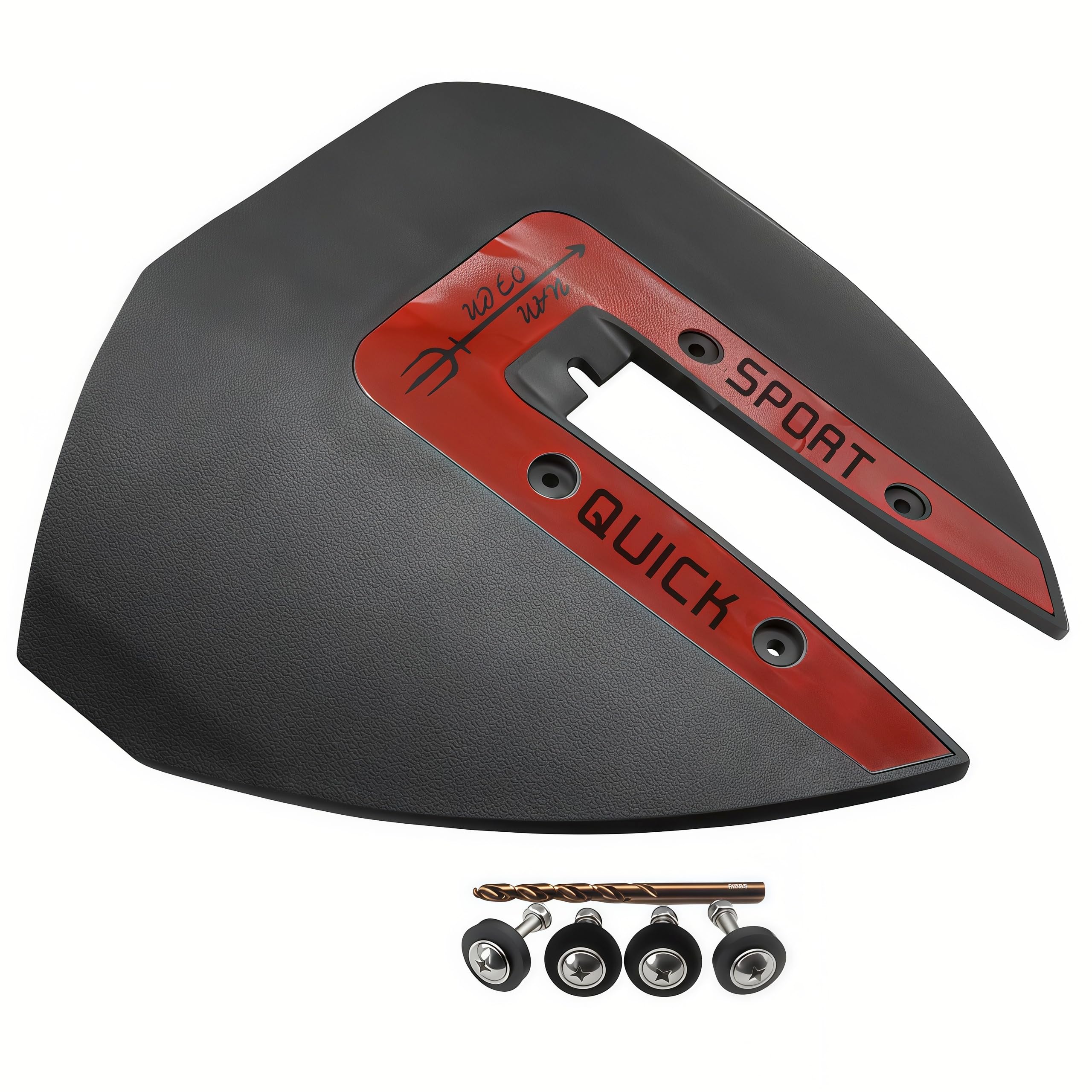
A 300 hp-rated fin that uses prop-wash energy for instant throttle response.
This model from UANOFCN is designed for the big boys — 40 hp to 300 hp outboards and sterndrives — and uses a unique hydrodynamic shape that extends behind the prop to capture prop-wash energy that is normally wasted. The red anodized finish is eye-catching, and the marine-grade reinforced nylon PA66 plastic with SS316 bolts should hold up well in saltwater. At 1.84 kg (about 4 lb), it is slightly heavier than the NorthBoat model but lighter than the all-metal StingRay options. The 30-day warranty is on the short side.
Owner feedback is generally positive, with owners reporting that the fin makes a “big difference” in hole-shot performance and reduces cavitation. The most vivid description comes from a flat-bottom 16-foot jon boat with a 90 hp Yamaha: the owner noted a “slightly better hole shot” and the boat feeling “lighter on plane,” though the changes were described as insignificant compared to the stability issues the boat had. Another owner on a heavier boat noted that the fin “surprisingly improved my boat coming out of the hole.” The included drill bit and stainless hardware make installation straightforward.
The recurring negative is the sticker quality — one owner reported the decal was peeling and poorly applied. And the 30-day warranty is the shortest in this lineup, which may give pause to buyers who want longer coverage. Compared to the Davis Whale Tail XL (same 300 hp max but anodized aluminum), the UANOFCN is a cheaper nylon alternative that works well but lacks the longevity track record of the aluminum classic.
Best for budget-conscious high-HP owners: If you need a fin for a 150-300 hp outboard and do not want to spend premium money, this nylon option gets the job done.
One honest trade-off: The 30-day warranty and mixed feedback on build quality mean you may want to inspect it carefully before installing.
Choose this if: you have a 40-300 hp motor and want a lightweight, rust-proof fin that improves hole-shot, and you are comfortable with a shorter warranty.
Pass if: long-term durability is your priority — the aluminum Davis model has a much longer owner track record at a moderate price premium.
8. NorthBoat Dolphin Tail Hydrofoil Stabilizer (40-300 hp)

The universal fin that works on 2-stroke, 4-stroke, and sterndrive engines.
NorthBoat’s Dolphin Tail is a universal hydrofoil designed to fit most 40-300 hp outboards and sterndrives, covering Yamaha, Mercury, Suzuki, Honda, Evinrude, Volvo, and Mercruiser. At 17 inches tall and 14.4 inches wide, it is one of the larger fins here, and it uses marine-grade reinforced nylon PA66 plastic with SS316 bolts and gaskets. The package includes a 6.5 mm drill bit for installation. At 1.79 kg, it is fractionally lighter than the UANOFCN model (the comparison data shows a 3% weight difference, with the NorthBoat being the lighter of the two).
Owner results are concrete and positive. One owner on a Yamaha outboard reported that the fin improved speed by “about 7 miles per hour” and made the boat plane “a lot easier and fast.” Another owner on a Bravo 3 sterndrive found that it fit nicely and worked great. The most common praise is that it fixes planing and steering issues — one owner said it “made it twice as easy to steer and my boat planes like it’s supposed to.” The 90-day warranty is better than the 30-day UANOFCN warranty and matches the SeaSierra.
The most common complaint is that the supplied bolts are too short for some outboards, particularly Mercury Optimax and 115 hp four-stroke models. Owners recommend buying longer stainless bolts if your cavitation plate is thicker than standard. Volvo SX-A, DPS, DPR, DPH, and 280/290 series owners need longer bolts and 1-inch fender washers. It is also not recommended for Volvo Ocean Series XDP drives. Check your engine’s mounting plate thickness before buying.
Best value in the high-HP category: At a slightly lower weight than the UANOFCN and a longer warranty, plus the same 300 hp max, this is a strong mid-range contender.
Plan for hardware: If your cavitation plate is thicker than average, order longer 316 stainless bolts before you start the install.
Reach for this if: you need a fin for a 40-300 hp engine and want a good balance of price, weight, and warranty length with a proven track record.
Consider alternatives if: you run a Volvo Ocean Series XDP or a sterndrive with an unusually thick mounting plate — the bolt length may not be sufficient without modification.
9. StingRay Starfire Hydrofoil (40-300 hp)

The no-drill option that sparkles in sunlight but demands careful installation.
If drilling holes in your lower unit makes you cringe, the Starfire is the first hydrofoil designed with a no-drill installation — it uses set screws that clamp onto the cavitation plate rather than bolts through it. The polypropylene construction is lightweight at 2.8 pounds, and the “sparkle” finish is a cosmetic touch that catches light. It is made in the USA by StingRay and covers 40-300 hp outboards and sterndrives. Performance feedback from owners is positive when it stays on — it helps the boat “pop out of the water” with minimal bow rise and gets on plane faster with less power.
However, the 3.4-star rating across 282 reviews is the lowest in this lineup, and the durability and value-for-money aspects score negatively. The most common and serious complaint is that the no-drill set screws are not secure enough for sustained use — reports of the fin “falling off, never to be found” and “lasting two trips and falling off” are not rare. The data shows durability is the most-discussed negative aspect, with 29 owners calling it out. The consensus among experienced owners is that the no-drill concept works short-term but you should plan to drill through the plate and bolt the fin on for long-term reliability. A few owners recommend buying two: one to install with the set screws and a second to bolt on after the first inevitably falls off.
Compared to the drill-in StingRay Classic Junior and XR4 models, the Starfire sacrifices reliability for convenience. If you absolutely cannot drill into your motor (lease restrictions, warranty concerns, or personal preference), the Starfire is your only option in the StingRay lineup. But if you can drill, the XR4 Senior or the Davis Whale Tail XL are much safer long-term investments.
The upside
- Truly tool-free installation — no drilling required
- Lightweight (2.8 lb) and made in the USA
- Real planing improvement when it stays put
The catch
- Set screws are not reliable long-term — falling off is a recurring complaint
- Buyers advise drilling and bolting for permanent use, defeating the no-drill purpose
- Lowest overall star rating in this guide
Best for: short-term use or lease situations where you cannot drill into the motor and you are willing to check the set screws every outing.
Look elsewhere if: you want a set-and-forget installation. The drill-in models from StingRay or Davis are more reliable for the same performance gains.
Understanding the Specs
Horsepower Rating (Max HP)
This is the upper limit of engine power the fin is designed to handle. Exceeding it risks snapping the fin off under the torque of a bigger motor. Staying well under it (like a 40 hp fin on a 9.9 hp motor) works fine — the fin just needs to be matched to the cavitation plate size. The biggest spread in this guide is a 7.5x gap between the 40 hp-rated fins and the 300 hp-rated fins.
Cavitation Plate vs. Skeg Mount
Most hydrofoils bolt or clamp to the cavitation plate (the flat horizontal plate just above the propeller). This is the standard location for lift generation. The Hydro-Shield is the outlier — it mounts to the skeg (the vertical fin below the gearcase) to also act as a propeller protector. A skeg-mount fin adds drag and may reduce top speed slightly, but it protects the prop. A cavitation-plate fin is purely for lift and speed.
Drill-In vs. No-Drill Installation
A drill-in fin requires you to mark holes, drill through the cavitation plate, and bolt the fin on with stainless hardware. It is permanent but extremely secure. A no-drill fin uses set screws that clamp onto the plate — easier to install and remove, but the trade-off is that the screws can vibrate loose and the fin can slide off during use. The data shows this is a real risk, not a theoretical one.
Planing Speed
This is the speed at which the hull lifts from displacement mode (pushing water) to planing mode (riding on top of the water). A hydrofoil’s main job is to lower that threshold speed. Several owner reports in this guide show planing speeds dropping from 18 mph to 12 mph or eliminating the inability to plane entirely. A lower planing speed means you can cruise at lower RPMs, which reduces fuel burn and engine wear.
FAQ
Will a hydrofoil work on my pontoon boat?
Can I install a hydrofoil on a sterndrive (I/O) motor?
How much does a hydrofoil improve fuel economy?
Will a hydrofoil increase my top speed?
How long does installation take?
What is the difference between a hydrofoil and a trim tab?
Can a hydrofoil damage my outboard?
Is a hydrofoil worth it for a jet boat?
How do I know if a hydrofoil fits my outboard?
Can I use a hydrofoil for waterskiing and wakeboarding?
Final Thoughts: The Verdict
For most owners, the boat hydrofoil to beat is the Davis Instruments Whale Tail XL because it combines proven aluminum durability, a huge 40-300 hp range, and the highest owner satisfaction count in the category. If you primarily pull skiers and wakeboarders and want the extra lift, the StingRay XR4 Senior is the go-to. And for small outboards under 40 hp, the StingRay Classic Junior delivers the biggest performance jump for the smallest investment.
How We Picked
We do not accept paid placement. Every pick is matched to a real buyer and a real use-case; we do not hands-on test units.
Sources & Methodology
Specifications: manufacturer listings and product documentation. Review insights: verified customer reviews, as of July 2026. Pricing: not shown on this page (it changes often); check the current price via the retailer link.
As an Amazon Associate, Gadgets Feed earns from qualifying purchases. This does not affect which products we feature.