
Our readers keep the lights on and my morning glass full of iced black tea. As an Amazon Associate, I earn from qualifying purchases.
Specs are compiled from manufacturer listings and verified buyer reviews and can change over time — please confirm the key details on the product page before buying.
The oilfield demands boots that survive 12-hour shifts in mud, crude, and loose rock. Twelve-hour shifts are the norm, and the ground under you is a cocktail of mud, crude, chemicals, and loose rock. Your boots are your primary safety gear. The right pair combines steel-like protection with all-day mobility so you finish your shift ready for the next one.
I’m Min — the founder and writer behind Gadgets Feed. This guide is built by comparing the manufacturers’ published specifications and the patterns across verified customer reviews, so you get each pick’s real strengths and trade-offs instead of marketing spin.
This roundup digs into the best boots for oilfield work, from affordable composite-toe options to premium cold-weather models that shrug off chemical spills and arctic winds.
Our Picks at a Glance

How To Choose The Best Boots For Oilfield
You need a boot that protects your toes, resists mud and chemicals, grips slick surfaces, and keeps your feet dry for 12-plus hours.
Steel Toe vs. Composite Toe Protection
Your first decision is the toe cap material. A steel toe offers the most impact and compression protection, but it also conducts cold and gets heavy when you walk through ankle-deep mud. A composite toe (made of carbon fiber or plastic) meets the same ASTM safety standard for impact and compression — typically ASTM F2413 — without conducting temperature, so your toes stay warmer in freezing weather. Composite toes also make the boot lighter, which reduces fatigue on long shifts. The trade-off is that a composite cap is usually a bit thicker than steel.
Slip and Chemical Resistance
Oil, grease, drilling mud, and water turn every surface into a potential slip hazard. Look for outsoles explicitly labeled as oil-, slip-, and chemical-resistant. On rubber boots, check if the compound is rated for fuel and oil resistance. The outsole pattern matters too — deeper lugs shed mud and give you bite on loose rock and catwalks.
Insulation and Waterproofing
Oilfield work often takes you from hot surface conditions to freezing rain in the same shift. You want a waterproof liner (like Carhartt’s Storm Defender or a 100% rubber construction) that keeps water out but still lets moisture escape so your feet don’t soak in sweat. If you work in sub-freezing temperatures, look for specific cold-weather insulation ratings — like a boot rated to keep feet warm down to minus 58 degrees Fahrenheit.
Quick Comparison
| Model | Best For | Toe Type | Height | Key Feature | Amazon |
|---|---|---|---|---|---|
| Carhartt Ground Force Wellington★ Best Overall | Best Overall | Composite | 10″ | FastDry moisture-wicking liner | Amazon |
| VULTREAK Composite ToeBudget Champion | Budget Value | Composite | 8″ | Quick Fit lacing system | Amazon |
| Georgia Boot Eagle One ChelseaLightweight Slip-On | Lightweight Slip-On | Non-Steel | 6″ | AMP memory foam insole | Amazon |
| Xtratuf 15″ Legacy | Wet & Chemical | Steel | 15″ | 100% latex waterproof | Amazon |
| ARIAT Groundbreaker Chelsea | Everyday Comfort | Steel | 11″ | Wide square toe | Amazon |
| MUCK Chore Cool | Tall Muck Boot | Steel | 15″ | Vibram sole | Amazon |
| Carhartt Rugged Flex Wellington | Traditional Pull-On | Steel | 11″ | Goodyear welt construction | Amazon |
| Dunlop Purofort Thermo+ | Arctic Cold | Steel | Tall | Insulated to -58°F | Amazon |
| Ariat Workhog H2O | Premium Lace-Up | Composite | 8″ | Duratread self-cleaning outsole | Amazon |
| Dunlop Explorer Vibram | Extreme Chemical & Cold | Steel | Tall | Vibram sole & -58°F insulation | Amazon |
In‑Depth Reviews
1. Carhartt Ground Force 10” Waterproof Wellington Boot
Our pick — over 4.5★ from 700+ verified ratings; the strongest balance of quality and price.
A pull-on boot that wraps your foot in comfort from the first step.
The Carhartt Ground Force Wellington earns the top spot because it balances safety, waterproofing, and surprising lightness. Its composite toe meets ASTM safety standards for impact and compression (the industry standard for protection against falling objects) and carries an electrical hazard rating — critical when you work around live equipment. The Storm Defender waterproofing keeps water out, while the FastDry lining wicks sweat away so your feet stay dry instead of clammy after a long shift.
The Insite footbed delivers real arch support that cuts down on that familiar end-of-day foot fatigue. The EVA midsole and Ground Force rubber outsole work together to soak up shock and provide grip on uneven rig floors and catwalks. Many buyers report these boots need no break-in period — a huge win when you need dependable gear from day one. Durability is the one point where opinions split: while some owners mention years of heavy oilfield use, a few note that the construction can fail after about three months. The fit runs slightly wide and true to size, giving you room for a thick work sock without feeling sloppy.
One experienced oilfield user reports that this boot outlasts every Red Wing and other competitor they tested over a ten-year span. Another notes the ankle support keeps them stable even in kiawe thorns, which are notorious for piercing lesser soles. That level of versatility — from standing in mud to navigating sharp debris — is what makes this the one to reach for every morning.
What Owners Love
- Zero break-in — comfortable from the start for 12-hour days.
- Storm Defender waterproofing keeps feet dry in wet mud and rain.
- FastDry lining stops sweat buildup and odor.
The Trade-Offs
- Durability splits opinion; some see failure around 3 months.
- The pull-on style is very comfortable but can be hard to get off in heavy mud.
Reach for these if: you want a lightweight composite-toe boot that is ready to work immediately with no break-in.
Think twice if: your work involves sharp metal or extreme puncture hazards where a steel midsole would be mandatory.
2. VULTREAK Composite Toe Work Boots
Safety features at a fraction of the usual cost.
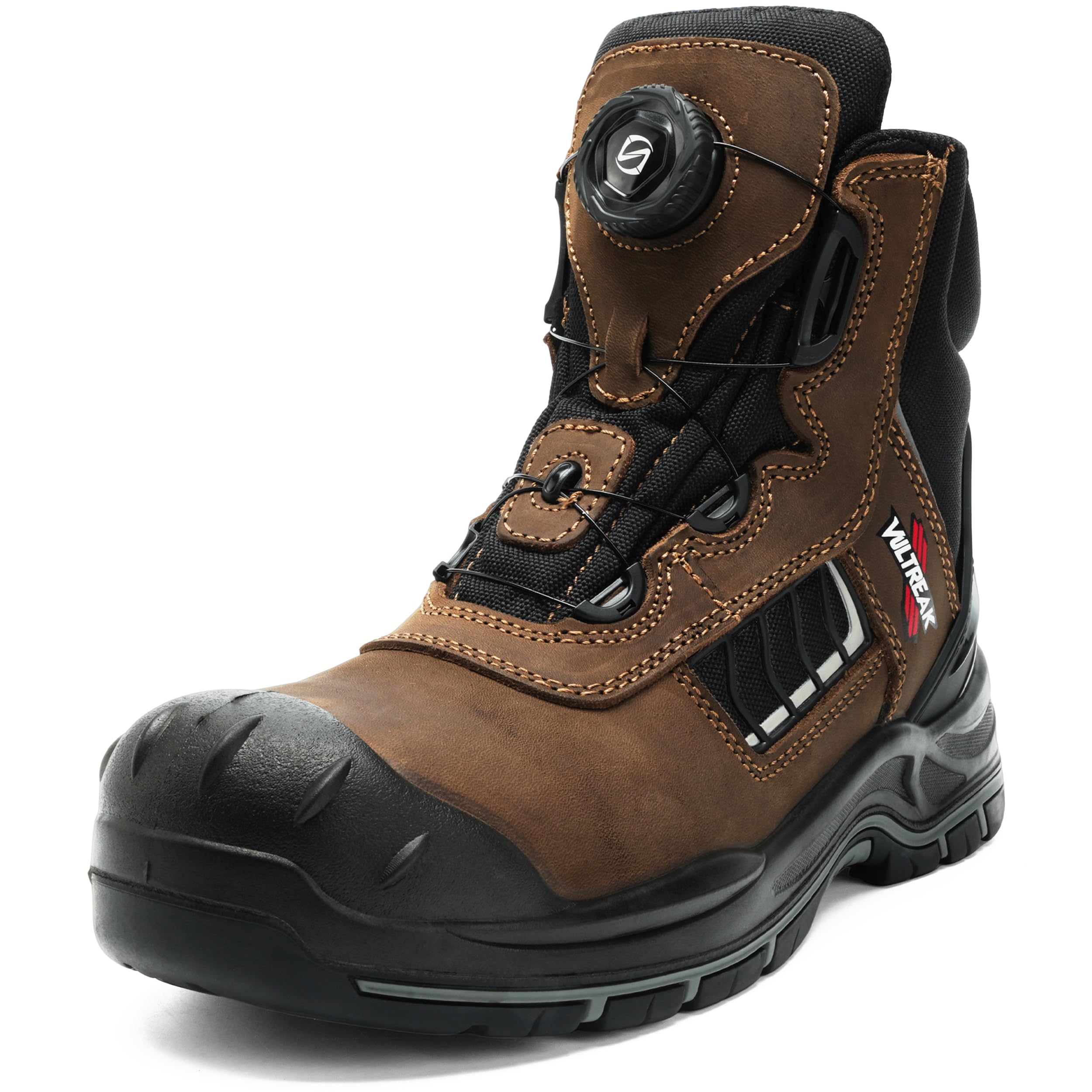
VULTREAK enters the field with a boot that packs an S3 HRO certified safety profile — including a Kevlar puncture-resistant midsole and a heat-resistant outsole rated up to 572°F — at a price that undercuts most competitors. The composite toe exceeds steel toe protection standards, and the Quick Fit system uses a ratcheting mechanism on the upper to let you dial in a secure fit fast. For welders and workers near spark-heavy environments, the heat and oil resistance here is a major practical advantage.
Owners praise the lightweight feel given the heavy protection. However, the fit can be tricky: these run large, and buyers with narrower feet report the lacing system doesn’t tighten enough to prevent heel slip. A recurring note is that the first pair sometimes arrives with a broken ratchet — but Amazon’s replacement process resolves it quickly. The Kevlar midsole (a puncture-resistant layer) provides confidence when you walk over debris and sharp metal on site.
Several construction workers mention that the quick lacing is convenient for slipping in and out between tasks. One reviewer noted that while the size 10 felt slightly big for their foot, the overall safety and light weight made it a solid daily driver. If you are looking for maximum certified protection (Kevlar midsole, heat resistance, S3 rating) at the lowest entry point, this is the boot that delivers.
Certified Protection on a Budget: The Kevlar puncture midsole and 572°F heat-resistant outsole are features usually found on boots costing twice as much.
Grab these for: high-heat environments like welding or foundry work where S3 HRO certification matters.
Look elsewhere if: you have narrow feet — the fit runs wide and the lacing can’t cinch down enough for a locked-in feel.
3. Georgia Boot Eagle One Steel Toe Waterproof Chelsea Boot
A Chelsea boot light enough for all-day wear but tough for the yard.
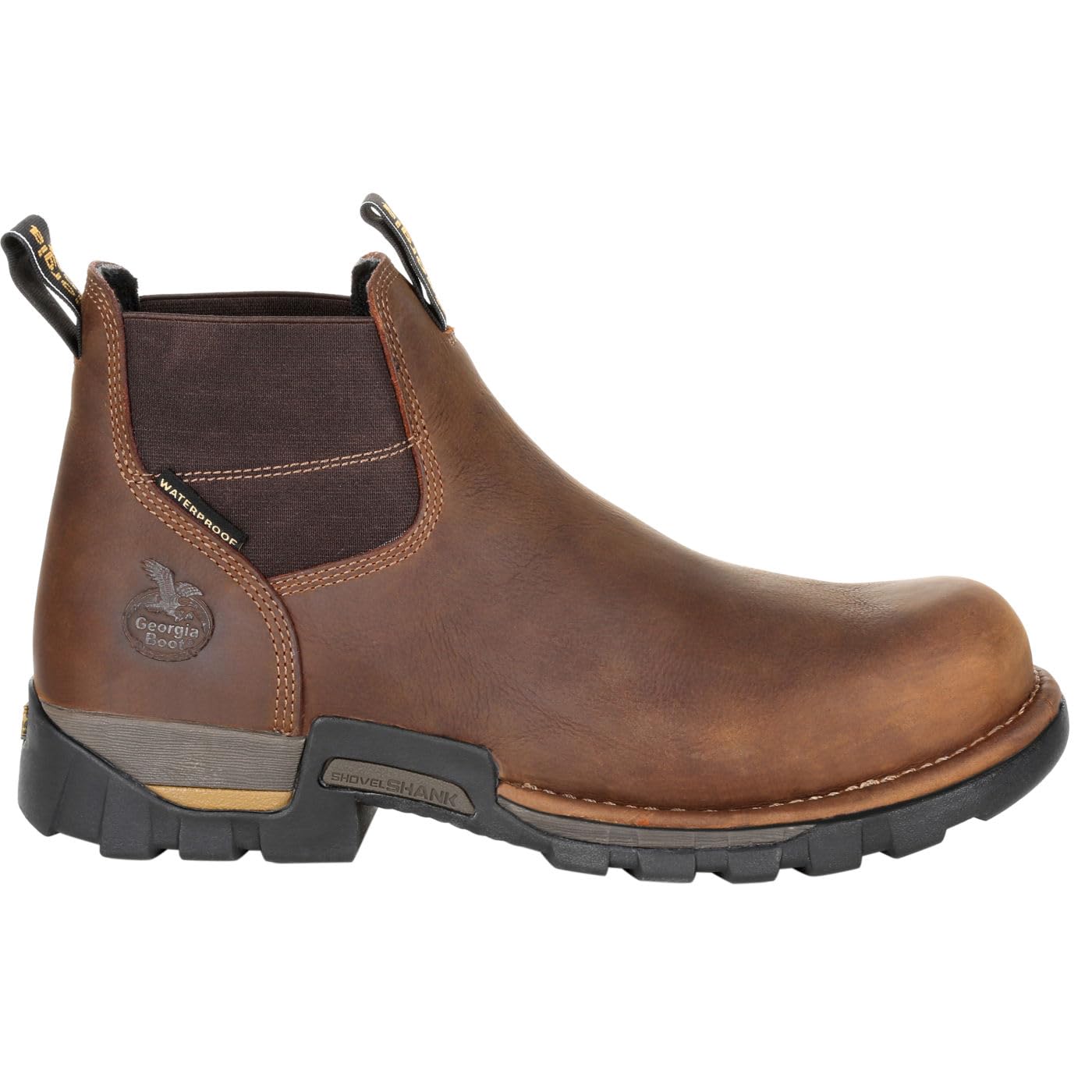
The Georgia Boot Eagle One delivers a soft, easy pull-on fit thanks to the twin gore panels and nylon pull tabs. The upper is built from full-grain SPR leather, and the AMP memory foam insole provides a cushion that makes this feel more like a sneaker than a heavy work boot. The rubber outsole is rated for oil, slip, chemical, heat, and abrasion resistance — a strong list for anyone dealing with mixed ground conditions on a farm or production site.
Water resistance is a point of mixed feedback. While the Georgia Waterproof System does a good job with most rain and puddles, some owners note that the seams can let moisture in during deeper water exposure. The fit runs large, often by half a size, so ordering down is common advice. Despite that, the boot is widely praised for its comfort from the start, with many farm and ranch workers reporting it lasts 2 to 2.5 years of daily use before the stitching starts to fail.
One owner who wore these on a farm for over two years noted that they outlasted other big brands like Danner and Thorogood. The shoe is versatile enough to wear from the job site to a casual outing, making it a great option if you want a single boot that does both. Just be aware that this is NOT a steel toe boot — a point that confuses some buyers, so check the product details carefully.
The Upside
- Extremely light and comfortable with great memory foam cushioning.
- Oil, slip, chemical, and heat-resistant outsole for mixed terrain.
The Catch
- Fit runs large — size down by half a size for a snug fit.
- Water resistance has mixed reviews; seams can leak in deep water.
Best suited for: farm and ranch work where you need a lightweight, cushioned boot that slips on and off easily.
Not for you if: you require certified steel toe protection or work in standing water regularly.
4. Xtratuf 15” Men’s Steel Toe Legacy Boot

Legendary in Alaska for a reason — total liquid and chemical protection.
Xtratuf is a household name among commercial fishermen and brewers, and the 15” Legacy boot brings that same 100% waterproof latex rubber protection to the oilfield. The steel toe adds impact protection, and the outsole resists slip and chemical damage — two huge advantages when you are standing in drilling mud, oil, or cleaning solvents. The cushion insoles deliver a level of comfort that is rare in a tall rubber boot.
The fit is a recurring point of feedback. Many customers note that these run a bit large, so you may need to size down or add an insole to get a snug lock around the heel. Water resistance is generally excellent, but a small number of buyers have experienced leaking after some use — an occasional quality issue that seems to be batch-dependent. The 15-inch height gives you extra coverage for wading through deeper puddles and mud pits.
Outside of oilfield work, these boots are a favorite in the brewing industry for their chemical resistance. If you need a tall, absolutely waterproof rubber shell that can stand up to chemicals and slippery floors, the Xtratuf Legacy is a proven classic.
The Go-To for Wet Work: The 100% latex construction means zero water entry as long as the boot is intact — a lifesaver on rain-soaked rigs and in chemical washdown areas.
Ideal for: environments with standing water, chemical spills, or constant mud exposure where only full rubber coverage works.
Skip these if: you need a lace-up boot for ankle support or prefer a composite toe for cold weather.
5. ARIAT Groundbreaker Chelsea Wide Square Toe Steel Toe
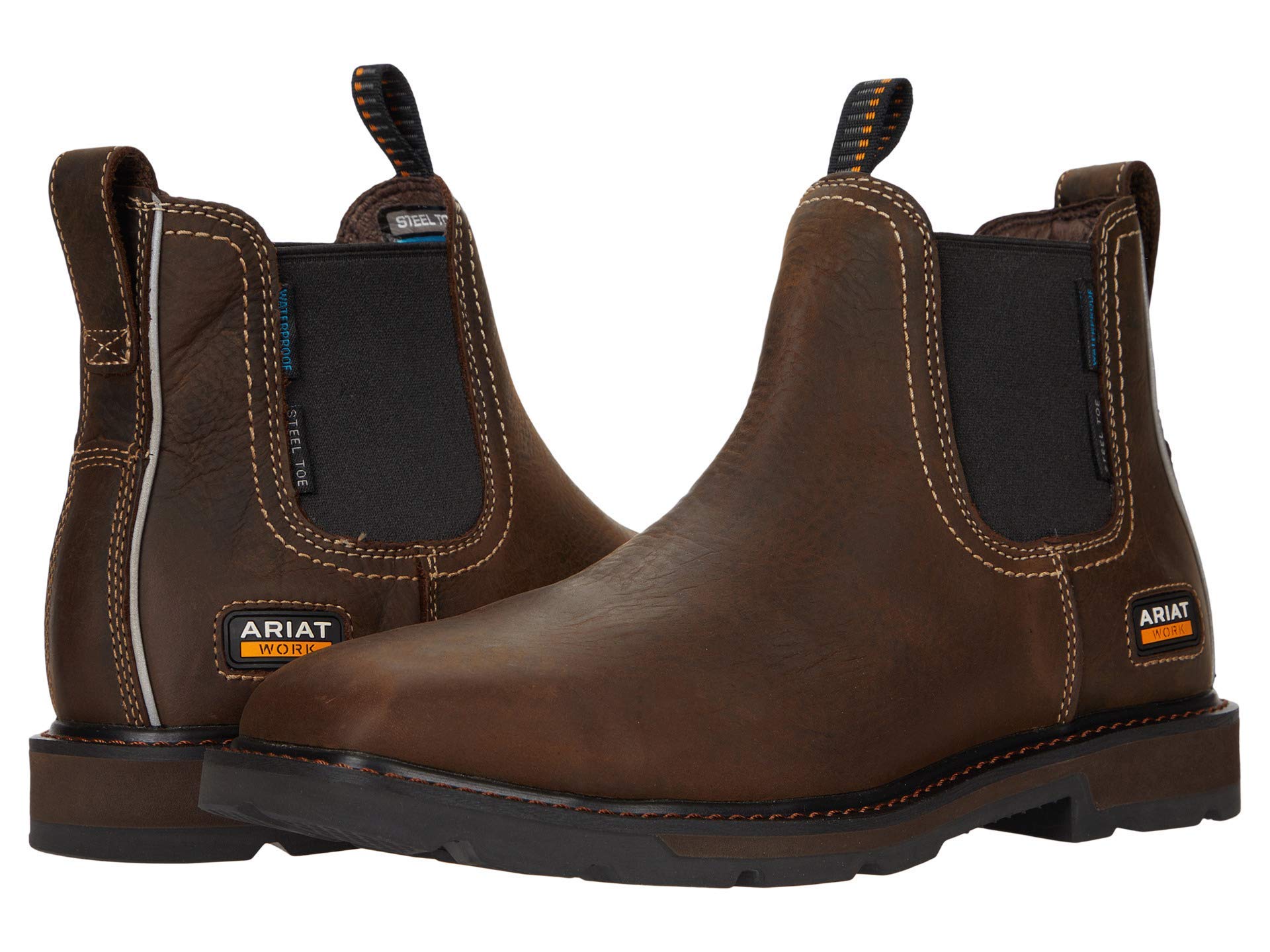
A wide square toe that gives your toes room to breathe all shift.
The ARIAT Groundbreaker Chelsea is built for people who have spent years cursing cramped toe boxes. The wide square toe allows your toes to splay naturally inside a steel toe cap, which dramatically reduces pressure points and the pinching that leads to foot fatigue. The Pull-On design with a waterproof build makes this a boot you step into and forget about.
Comfort is the headline here — owners frequently report that the steel toe doesn’t hurt, a complaint that plagues many other steel toe boots. One buyer dealing with neuropathy from back surgeries and diabetes noted that these were the only boots that relieved their foot pain, which speaks to the ATS (Advanced Torque Stability) technology that Ariat packs into the platform. The boot is also noticeably lighter than competitive steel toe models like Wolverines, making each step feel less laborious.
Durability draws a mixed picture. Some reviewers point out the sole peeling off after a few months. Others have worn them for years with no issues. The fit is generally true to size, but a minority of buyers find them running small. For the price, they deliver exceptional comfort from the start, but the long-term construction quality is something to monitor. The brown color is much darker than product images show — a cosmetic note to keep in mind.
Standout Benefits
- Wide square toe provides superior comfort — toes don’t feel crushed.
- Lightweight compared to other steel toe models, reducing fatigue.
Potential Downsides
- Durability is inconsistent — some shoppers say sole separation after months.
- Color is much darker than what the listing photos show.
Perfect for you if: you have wide feet or suffer from foot pain and need a steel toe that doesn’t squeeze your toes.
Think twice if: you demand long-term, heavy-duty durability — this boot’s lifespan can vary significantly.
6. MUCK Chore Cool Men’s Steel Toe Tall Boot

The tall rubber boot that stays cool in heat and warm in the cold.
The MUCK Chore Cool is a high-performance rubber work boot designed for warm weather and tough conditions. The steel toe protects against falling objects, and the flexible neoprene upper adjusts to the natural shape of your foot while absorbing shock — a far cry from the stiff and unforgiving rubber boots of the past. The Spandura treatment on the shaft resists abrasion, and triple toe and quadruple rubber heel reinforcements add extra durability in high-wear zones.
The Vibram outsole provides excellent traction and lasts significantly longer than standard rubber outsoles. The fit is the biggest variable. These boots tend to run large, and the ankle area can feel roomy — many owners recommend ordering a size down or adding a thick insole to dial in the fit. The moisture-wicking lining does a good job keeping feet cool, and buyers report no overheating even during summer work.
One construction professional working in deep foundation drilling noted that these boots fit like older Muck Chore models but have a better tread pattern that provides substantially improved traction. The calf fit is a minor complaint for some, who say it is too loose and allows debris to enter. If you need a tall boot that handles mud, muck, and water while staying breathable on hot days, the Chore Cool is the one to pick.
Cool & Breathable for Tall Rubber: The Spandura and neoprene combo keeps this boot from trapping heat while maintaining 100% waterproof protection.
Choose this for: hot, muddy conditions where a tall 100% waterproof boot is essential but you don’t want your feet to steam.
Not ideal if: you have a narrow ankle — the calf and above-ankle area can feel sloppy without additional insoles.
7. Carhartt Men’s Rugged Flex Square Toe 11” Steel Toe Wellington
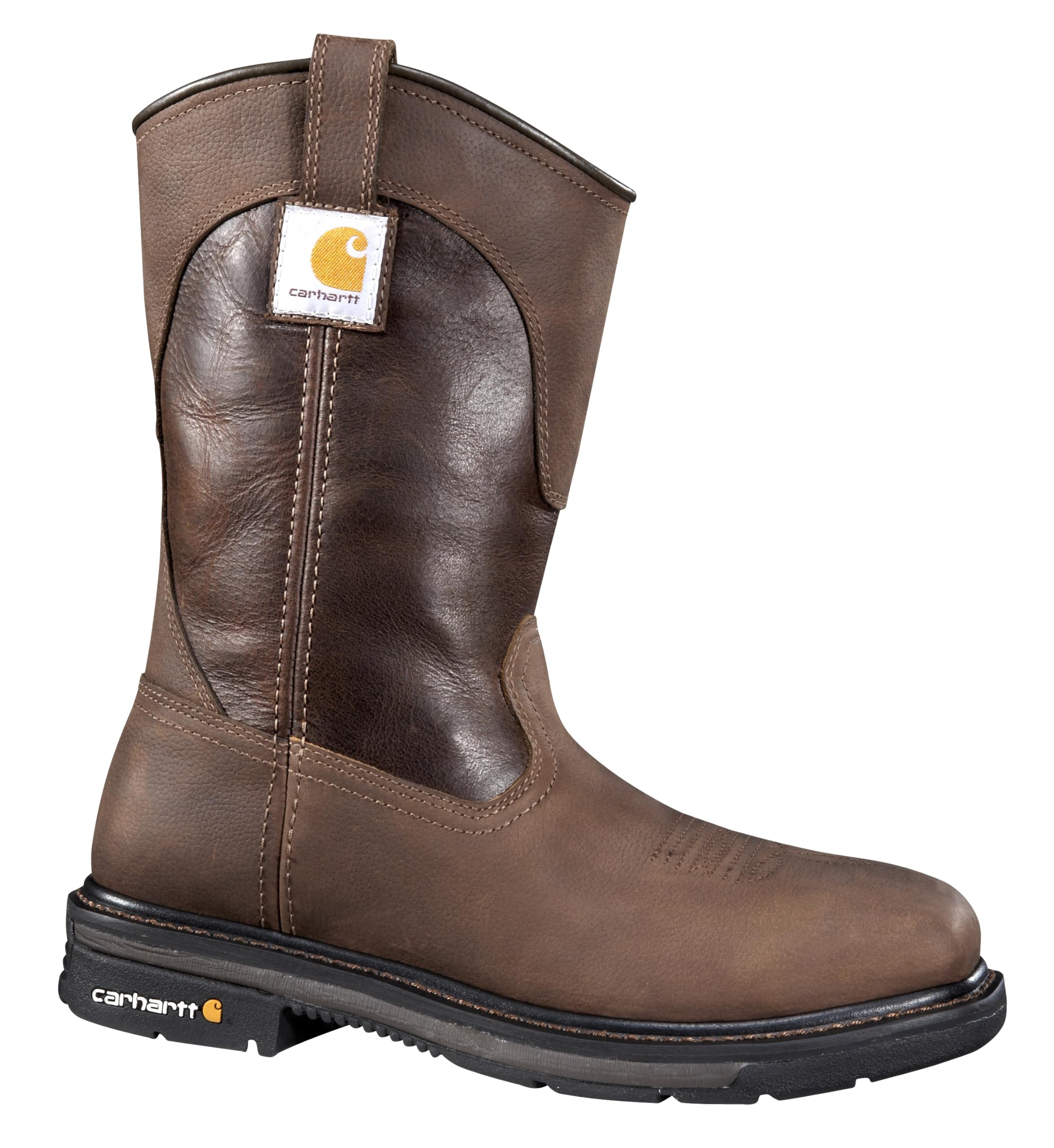
A classic Wellington built with Carhartt’s Rugged Flex technology for easier movement.
This 11-inch Wellington is a straightforward working boot that combines a traditional western silhouette with modern comfort tech. FastDry lining pulls moisture away from your skin, and the Carhartt PU insole provides cushion that reduces foot fatigue during long shifts. The CMEVA midsole and a PU strobel pad add another layer of shock absorption under the steel toe.
The Goodyear welt construction is a durability anchor: it means the sole can be replaced when it wears out, extending the boot’s life significantly. A number of owners mention that a previous pair lasted ten years of daily use before the uppers finally gave out. But not everyone has that experience — some owners note the sole splitting or water leaking after just four months of use, even with regular cleaning and conditioning. The fit tends to run tight for wide-footed buyers, and the top rim can rub against the shin, requiring taller socks.
One owner who uses these on hills and in trenches every day says they are comfortable, hold their fit well, and are lighter than expected for a steel toe boot. The trade-off with this boot is the shallow tread pattern: it sheds mud easily, so you get better grip on packed dirt and catwalks, but it is less aggressive on loose gravel and deep mud than some competitors. It remains a reliable, American-made work boot with a loyal following.
The Strong Points
- Goodyear welt construction allows the sole to be replaced when worn out.
- FastDry lining keeps feet from getting clammy during long shifts.
Watch Out For
- Durability can be inconsistent; some report soles splitting after 4 months.
- Runs tight for wide feet — size up if you have a wider foot.
Go for it if: you want a classic American-made Wellington with a proven track record (some pairs last 10 years).
Skip if: you need a deep mud-tread outsole or have wide feet that always struggle with standard-width boots.
8. Dunlop Purofort Thermo+ Full Safety Omega/EH Boot
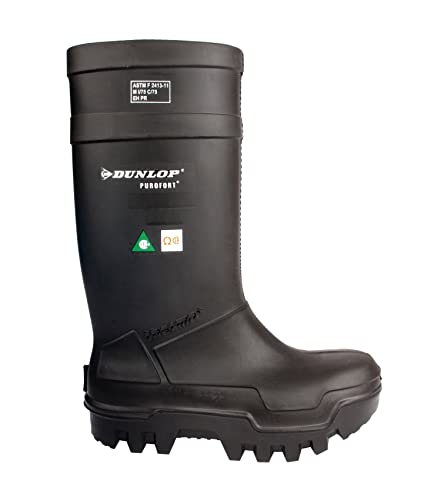
The boot that keeps working when the thermometer drops to minus 58°F.
The Dunlop Purofort Thermo+ is engineered for the worst cold weather you will encounter. The unique Purofort material insulates down to minus 58 degrees Fahrenheit, meaning your feet stay warm and functional when even heavy-duty trucks struggle to start. The steel toe and steel midsole meet ASTM F 2413-18 M I/C PR EH MT and CSA Z195-14 PR Omega standards — which translates to full impact, compression, puncture, and electrical hazard protection.
The SRC-rated outsole provides strong grip on uneven, slick, or icy surfaces, and the boot is fuel- and oil-resistant, making it a natural fit for industrial processing and construction sites. Weighing 5.7 pounds, it is lightweight for a fully armored rubber boot, which helps reduce leg fatigue during 8-10 hour shifts. Owners regularly report that one pair lasts six years of daily wear in snow, rain, and mud.
A buyer who has owned three pairs notes that the comfort and durability are excellent, but the steel plate in the sole can cause initial stiffness and sore feet until broken in. For extreme cold oilfield or outdoor work, this boot is the gold standard.
Built for Extreme Cold: The -58°F insulation rating is verified by owners who wear these for 8-10 hour days in snow and mud for six years running.
Get these if: you work in sub-zero conditions and need a boot that will not crack or let cold seep through the rubber.
Don’t buy if: you never see temperatures below freezing — the Purofort material is overbuilt for moderate climates.
9. Ariat Men’s Workhog 8 Inch H2O Composite Toe Boot
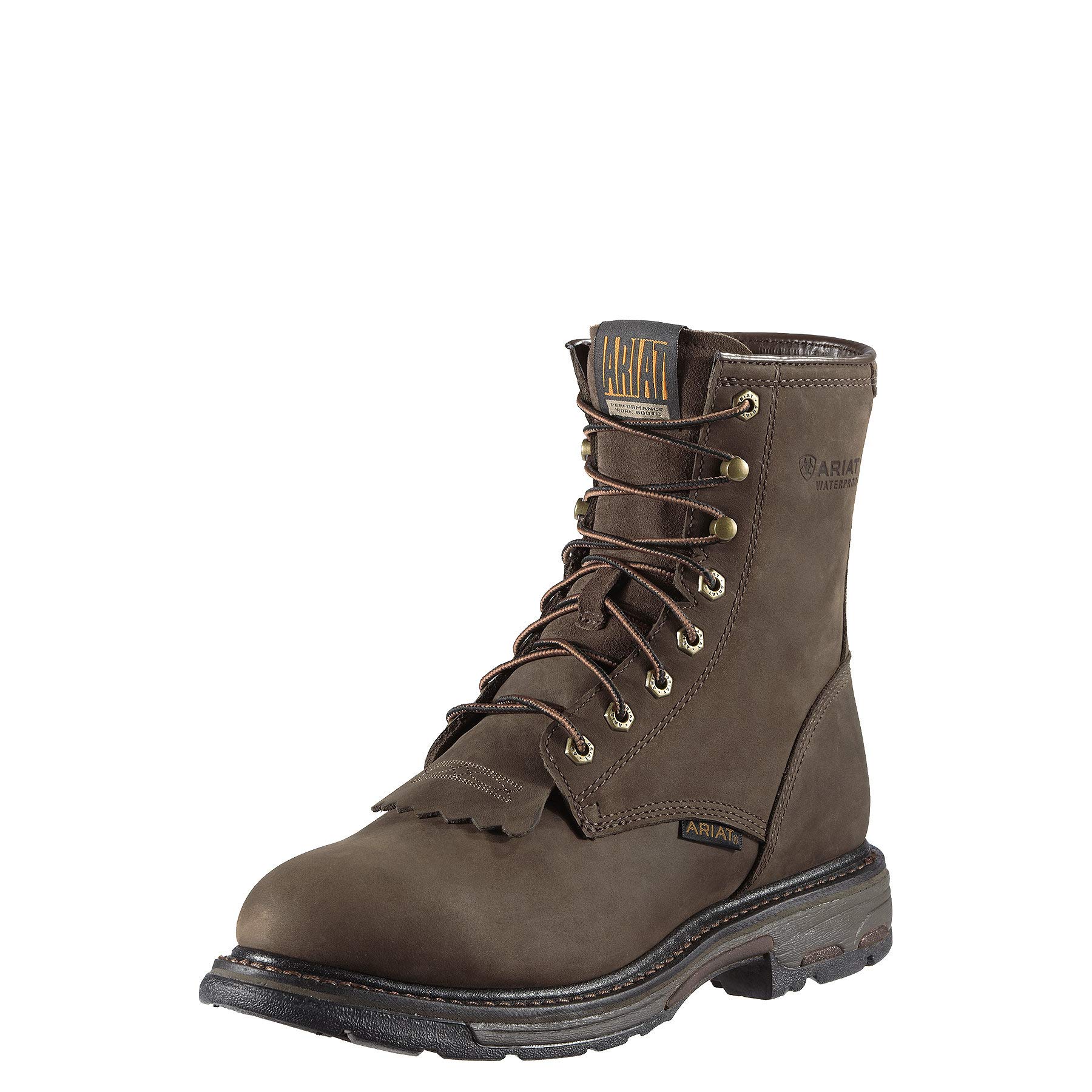
A premium lace-up boot with a self-cleaning outsole and stellar waterproofing.
The Ariat Workhog H2O is a lace-up work boot that delivers a noticeable step up in build quality. The full-grain leather upper is paired with Goodyear welting for classic construction that holds up well over time. The composite toe complies with ASTM F2413-05 M/1/75 C/75 EH, giving you impact and compression protection plus an electrical hazard rating — all without the cold-conducting mass of steel. The Duratread outsole is specifically designed to be self-cleaning and non-tracking, so mud and debris fall off instead of building up underfoot.
Comfort is exceptional right from the start, with owners praising the waterproof performance and the boot’s ability to regulate temperature. The interior liner handles temps from -21°F up to 85°F without making feet feel clammy. One golf course worker who is 6’3″ and 200 lbs reported that the boot helped stop their back pain — proof of the stability chassis and anatomically correct step engineering. The fit is true to size for medium-width feet, and the 8-inch height provides solid ankle support without feeling too tall.
The longest-term reviews show that the durability of the Workhog is strong, but there are occasional reports of quality issues — a few buyers received pairs with crooked stitching, mismatched soles, or early failure of the lace hooks. Overall, the consensus among the thousands of owners is that this boot is worth every dollar for the comfort and waterproof reliability it delivers. If you want a lace-up boot and are willing to pay for premium construction, this is your pick.
Why It Excels
- Duratread outsole sheds mud effectively — less weight on your feet.
- Composite toe doesn’t conduct cold, keeping toes warmer in winter.
Things to Consider
- High price point — this is a premium boot for those who can afford the investment.
- Occasional quality control issues reported — inspect upon delivery.
Perfect for: supervisors, inspectors, and workers who value a comfortable lace-up boot with premium features and are willing to invest in it.
Pass on this if: you are on a strict budget or need a pull-on boot for quick changes.
10. DUNLOP Explorer Full Safety with Vibram Sole

The boot that resists every chemical the oilfield throws at it — for seven years.
The Dunlop Explorer is the heavy lifter of the list. Built from advanced Purofort material, it offers full protection against chemicals, fuel oils, and workplace grime while keeping your feet warm down to minus 58 degrees Fahrenheit. The steel toe and steel midsole provide impact and puncture protection, and the Vibram outsole delivers aggressive traction on mud, ice, and slick metal surfaces. This boot is SRC-certified for slip resistance, which is critical when you are walking on an oil-slicked rig floor.
Owners consistently report that this boot lasts years — one buyer mentioned that a single pair held up for seven years in an oil refining environment. Another oilfield worker called this the “best oilfield boot ever hands down,” citing its resistance to all chemicals and its ability to stay comfortable in both summer and winter conditions. The only negative is that the deep mud-tire tread is uncomfortable for driving, and the boot runs large — many buyers size down by up to two sizes for the correct fit.
The Explorer is heavier and stiffer than other rubber boots when new, but after a month of wear, it softens up significantly and becomes a favorite. One coal miner reported that the ankle support and grip are far superior to Muck boots in their specific environment. If you need a rubber work boot that can survive extreme chemical exposure for years without breaking down, the Explorer is your only real choice.
Seven-Year Lifespan: Verified owner reports prove the Explorer can survive half a decade plus of oil refining work without structural failure.
Choose this for: extreme chemical resistance and long-term value — one pair can outlast three pairs of cheaper boots.
Avoid if: you drive long distances to site — the aggressive tread is uncomfortable on pedals — or if you need a lightweight boot for daily walking.
Understanding the Specs
ASTM F2413 Safety Rating
This is the standard for protective footwear in the US. The letters tell you exactly what the boot is rated for. “M” means it protects the metatarsal. “I” means the toe cap protects against impact. “C” means compression protection. “PR” stands for puncture resistance. “EH” means electrical hazard protection — the boot can stand on live circuits up to 18,000 volts without conducting. When you see “Composite Toe ASTM F2413,” it means the non-metal cap meets the same impact and compression standards as steel.
Slip Resistance Ratings (SRC)
A European standard used on many premium boots, SRC is the highest slip resistance rating. It means the outsole has been tested on both ceramic tile with soap solution (SRA) and steel with glycerol (SRB) and passed. For oilfield work, this matters because water, oil, and drilling mud all create different slip hazards. Also look for oil-resistance labels on the rubber or outsole compound — those tell you the material won’t swell or break down when exposed to hydrocarbons.
Cold Insulation Ratings
When you see a rating like “-58°F cold insulation” for a rubber boot, it refers to the temperature at which the material keeps your foot from freezing. Purofort material, for example, uses a specific molecular formula that stays flexible and insulative in extreme cold. This rating is measured in a lab, so real-world performance depends on activity level and moisture inside the boot. The number gives you a reliable ordering guide — a boot rated to -58°F will vastly outperform a standard rubber boot below 0°F.
Goodyear Welt vs. Cement Construction
A Goodyear welt means the upper leather is stitched to a strip of rubber (the welt), which is then stitched to the sole. This allows a cobbler to replace the sole when it wears out, extending the boot’s life to many years. Cement construction bonds the sole directly to the upper with adhesive — it is lighter and less expensive, but the sole cannot be replaced. For a boot you plan to wear daily on the oilfield, Goodyear welt construction is a durability advantage that justifies a higher price.
FAQ
How do I choose between steel toe and composite toe for oilfield work?
Will a waterproof boot keep my feet dry if I stand in drilling mud all day?
Can I wear composite toe boots in metal-detector environments?
How often should I replace oilfield boots?
Are slip-resistant outsoles enough for walking on an oily catwalk?
What does an ASTM electrical hazard (EH) rating mean in practice?
Are tall rubber boots (15 inches) better than ankle-height work boots for the oilfield?
How do I clean and maintain my oilfield boots?
What is the difference between a Wellington boot and a Chelsea boot for work?A Wellington boot is a tall pull-on style that reaches about mid-calf and typically has a stacked leather heel and a defined welt. It originated as a riding boot and is common in western-style work boots. A Chelsea boot is also a pull-on boot but typically shorter (about ankle height) with elastic gore panels on the sides for easy entry. Chelseas are usually lighter and more casual. For oilfield work, Wellingtons provide more support and coverage, while Chelseas are lighter and easier to slip on and off between tasks but offer less protection from mud and debris entry over the top of the boot.?
Will heel slip go away after break-in on a new pair of work boots?
Final Thoughts: The Verdict
For the majority of shoppers, the boots for oilfield winner is the Carhartt Ground Force Wellington because it combines a comfortable zero-break-in fit with composite toe safety, Storm Defender waterproofing, and the moisture-wicking FastDry liner that real oilfield workers need for long shifts. If you work in extreme cold and need certified arctic protection, the Dunlop Purofort Thermo+ is the pair to grab. And for budget-minded buyers who still demand Kevlar midsole puncture protection and heat resistance, the VULTREAK Composite Toe offers serious value without cutting corners on safety ratings.
How We Picked
We do not accept paid placement. Every pick is matched to a real buyer and a real use-case; we do not hands-on test units.
Sources & Methodology
Specifications: manufacturer listings and product documentation. Review insights: verified customer reviews, as of July 2026. Pricing: not shown on this page (it changes often); check the current price via the retailer link.
As an Amazon Associate, Gadgets Feed earns from qualifying purchases. This does not affect which products we feature.