
Our readers keep the lights on and my morning glass full of iced black tea. As an Amazon Associate, I earn from qualifying purchases.
Specs are compiled from manufacturer listings and verified buyer reviews and can change over time — please confirm the key details on the product page before buying.
Saddle hunting puts a unique demand on your boots that a standard deer-hunt just does not. You are not only walking in — you are also standing on a tiny platform, sometimes for hours, relying on your boots for both traction on tree bark and silence on sticks. The wrong pair leaves you cold, cramped, or worse, slipping at height. This guide cuts through the marketing to find you a boot that actually performs in the saddle, from the hike in to the final set.
I’m Min — the founder and writer behind Gadgets Feed. This guide is built by comparing the manufacturers’ published specifications and the patterns across verified customer reviews, so you get each pick’s real strengths and trade-offs instead of marketing spin.
When you are climbing a tree in a saddle, you need a boot with a stiff, grippy sole so your feet stay secure on tree steps and your approach stays quiet. That is why this roundup of the boots for saddle hunting focuses on three things: neoprene thickness for warmth, outsole aggression for gripping tree steps, and overall weight so you are not hauling heavy boots up the trunk.
Our Picks at a Glance


How To Choose The Best Boots For Saddle Hunting
Walking to a stand and climbing into a saddle are two completely different jobs for a boot. You need one that is comfortable on the approach but also gives you the precise grip and warmth you need while stationary on a platform. Here are the key specs to consider.
Neoprene Thickness and Insulation
The thickness of the neoprene (measured in millimeters, like 5mm, 6mm, or 7mm) determines how warm the boot is. More thickness means more warmth but less leg flexibility. The insulation, measured in grams (like 400g, 600g, or 800g of Thinsulate), is an extra layer of heat that gets trapped for your toes. For saddle hunting, where you are often still for long periods, you want enough insulation to stay warm without your foot sweating too much on the hike in. The TIDEWE uses 7mm neoprene with 800g insulation for serious cold, while the Under Armour HOVR Dawn is uninsulated for high-exertion, warmer days.
Outsole Traction and Footbed
When you are standing on a 12-inch wide platform or placing your foot on a tree limb, the outsole is your only connection. You want an aggressive, slip-resistant rubber sole with deep lugs (the raised bumps on the bottom). Look for an EVA midsole (a lightweight foam cushioning layer) for comfort on the hike and a non-slip outsole for the climb. A stiff or dual-density footbed also helps reduce foot fatigue during those long, static sits.
Weight and Fit
Heavy boots sap your energy on a long hike and make climbing a saddle feel like a workout. Lightweight boots, often with neoprene uppers, are the standard for saddle hunting. The fit is critical: you need enough room in the toe box for thick socks but a snug heel to prevent blisters on the walk. Many neoprene boots run a half-size large to accommodate a heavy sock. Pay close attention to calf circumference if you have larger legs.
Quick Comparison
| Model | Best For | Neoprene Thickness | Insulation | Outsole Type | Amazon |
|---|---|---|---|---|---|
| TIDEWE Rubber Hunting Boots★ Best Overall | Best Overall | 7mm | 800g | Non-Slip Rubber | Amazon |
| Trudave Hunting BootsBest Value | Best Value | 5mm | — | Rubber with Steel Shank | Amazon |
| Hunting Boots 6mm NeopreneTop Lightweight Pick | Top Lightweight Pick | 6mm | 800g Thinsulate | EVA Mid-sole | Amazon |
| Rubber Hunting Boots 800g | Warmth on a Budget | 6mm | 800g Thinsulate | EVA Mid-sole | Amazon |
| Muddy Men’s DV8 Insulated Boot | Compact & Light | 3mm | — | 4×4 Grip Rubber | Amazon |
| Under Armour HOVR Dawn 2.0 | Best for Hiking In | — | Uninsulated | High-Grip Rubber | Amazon |
| Danner Vital 8” | Classic Leather | — | Uninsulated | Non-Slip Traction | Amazon |
| SITKA Back40 Boot | Premium Construction | — | 800g Thinsulate | Multi-Surface Rubber | Amazon |
| Irish Setter Wingshooter | Pro-Level Comfort | — | 400g Thinsulate | Prairie Debris-Shedding | Amazon |
| Irish Setter Elk Tracker | Extreme Cold & Durability | — | 600g Thinsulate | Bulls-Eye Air Bob Aggressive | Amazon |
| Danner Sharptail 10” Rear-Zip | Easy On/Off | — | Uninsulated | Gore-Tex & Traction Outsole | Amazon |
In‑Depth Reviews
1. TIDEWE Rubber Hunting Boots
Our pick — over 4.5★ from 900+ verified ratings; the strongest balance of quality and price.
The warm, flexible neoprene boot that quietly dominates the saddle-hunting crowd.
The TIDEWE keeps your feet warm during long, still sits on a platform because it has the thickest neoprene wall in this lineup at 7mm. The 800g of insulation (the amount of synthetic fill trapping heat) keeps toes warm even in single-digit temperatures. Buyers confirm this: one owner said the boots “kept boyfriend’s feet super warm for deer hunting,” and another reported staying toasty while ice fishing at 26°F.
The rubber and neoprene construction is designed to flex naturally as you walk, a critical feature for saddle hunting where you are often on uneven ground and tree limbs. The thick, cushioned footbed and ample toe room mean you can wear a heavy wool sock without your feet feeling cramped. While some buyers report a slight rubber odor initially and that the heel lugs can be slippery on very smooth surfaces, the overwhelming praise focuses on the boot’s quality and warmth.
What Owners Rave About
- 7mm neoprene with 800g insulation outranks most others for pure warmth, with a thickness 40% greater than the Trudave’s 5mm.
- Runs true to size with a wide toe box, fitting most feet comfortably even with thick socks.
- Owners mention the boots are sturdy and last a full season, holding up to the abuse of hiking and climbing.
Honest Fit Notes
- Some owners mention a strong rubber smell that takes a few wears to dissipate.
- The heel lug pattern is less aggressive than a true hiking boot, so be cautious on wet, smooth rock.
Reach for this if: you hunt cold-weather late-season sets and want the highest warmth-to-weight ratio in a flexible boot.
Consider the alternative if: you mostly hunt early-season or in the south (less than 20°F) and prefer an uninsulated, lighter boot for the hike.
2. Trudave Hunting Boots for Men
The budget-friendly rubber boot that punches above its weight for comfort.
At 5mm, the Trudave’s neoprene is thinner than the TIDEWE’s 7mm, so it is more flexible for walking but with less insulation for sitting still. The steel shank (a metal strip running through the midsole) gives the sole a rigidity that is helpful for climbing sticks, offering a stable platform for your foot. The camouflage design is a nice bonus for staying concealed near the tree line.
Customers note these are “super comfortable” and fit true to size, even accommodating wide feet. One owner noted, “I’ve been wearing these for a year and a half and absolutely LOVE them,” praising the fit around the ankle, which is a common trouble spot for chafing. The main trade-off is durability; they are not as tough as premium + boots, but for the price, they are an excellent gateway to saddle hunting. The boots tend to wear holes in the heel of your sock, so consider a good pair of boot socks.
Why It’s a Steal
- Very lightweight for a rubber boot, making them easy to pack in and out.
- Comfort right from the start with no blister break-in, even for those with narrow heels.
- Steel shank provides sturdy support for climbing steps.
The Catch
- Durability is a step below the premium options; not built for years of hard brush busting.
- Some reviewers point out the boots are a bit small, so if you are a half-size, order up.
Ideal for: the saddle hunter on a budget or someone new to the sport who wants a functional, comfortable boot without a big investment.
Not the best fit for: hunters who spend entire days in extremely wet conditions or those who demand a thick, insulated boot for sub-zero temps.
3. Hunting Boots, Waterproof Insulated 6mm Neoprene
A surprisingly light neoprene boot that offers big brand performance for less.
The Trudave hits a balance: 6mm neoprene gives you good flexibility and warmth, and 800g of Thinsulate insulation (a synthetic fiber that traps heat) locks in warmth. The EVA midsole (a foam-like cushioning layer) makes them feel light on your feet, so you get less fatigue on a long walk to your spot. One buyer’s son told his dad, “These are the best boot I have ever had!” noting they are warm and dry.
The 6mm wall is a middle ground between the TIDEWE’s 7mm and the Trudave’s 5mm, offering good insulation without feeling like a stiff pipe. The boot is also 100% waterproof, so you can cross a creek without hesitation. A caution from a few reviews: the material is not indestructible. One owner reported a stick piercing the top of the boot within two months of heavy use. This is a boot for the walker and saddle setter, not for busting through heavy brush.
Best Features
- Lightweight design with a flexible neoprene upper, feeling more like a tall sneaker than a stiff boot.
- Excellent value, offering quality comparable to premium brands at a fraction of the price.
- The clip on the back makes pulling them on easy, even with cold, thick socks.
Keep in Mind
- The neoprene material can be punctured; avoid pushing through thick, sharp brush.
- Some owners found the inside cloth cut incorrectly, creating a slight lump that was not enough to return but was noticeable.
Go for this if: you want a lightweight, insulated boot for long hikes and moderate cold.
skip it if: you often hunt in areas with heavy thorns or need a boot that can withstand briar patches.
4. Rubber Hunting Boots for Men with 800g Insulation
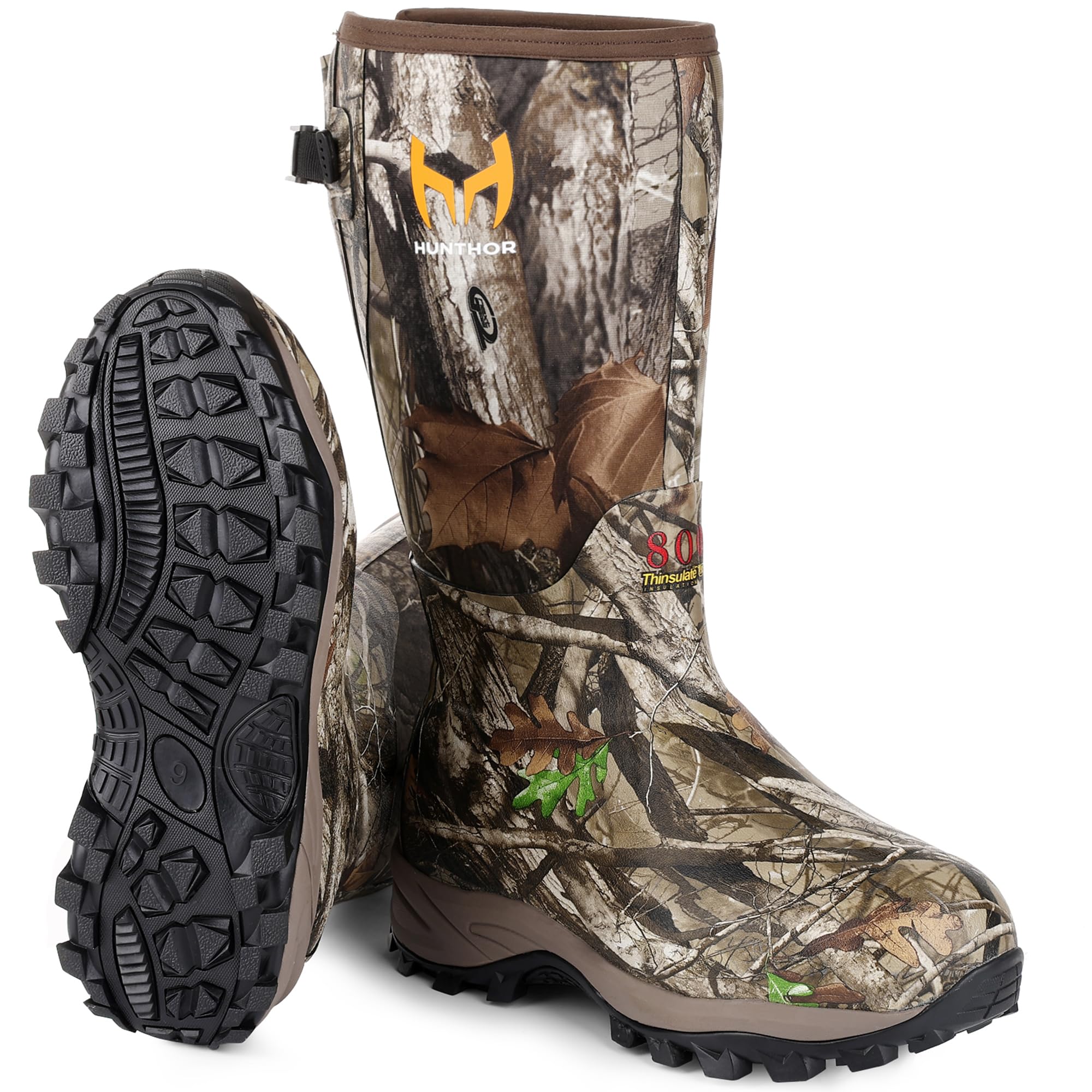
Serious warmth and comfort without the high price tag.
These boots are another strong budget-friendly option that packs 800g of Thinsulate insulation into a 6mm neoprene wall. The focus here is pure warmth. A 76-year-old hunter with poor circulation reported his “feet never got cold,” a strong testament to the insulation’s effectiveness. The boots are also praised for being easy to get on and off, which is great for those quick transitions from the truck to the set.
However, the fit is where you have to pay attention. While many find them true to size, a significant number of reviews point out that the calf area runs extremely narrow. If you have larger calves, you may find the top of the boot uncomfortably tight. Additionally, they are noted as “VERY heavy for hunting boots,” so be prepared for a bit of a leg workout on longer hikes. The trade-off is that you get serious warmth for the price.
Why It’s a Strong Contender
- Excellent cold-weather performance, with owners reporting warm feet in 15-degree weather and snow for 8 hours.
- Good traction and a solid rubber outsole for climbing.
- True to size for most foot shapes, providing a comfortable and secure fit.
Important Fit Considerations
- Narrow calf shaft is the most-discussed issue; not ideal for hunters with larger legs.
- Noticeably heavy, which can be tiring on long walks to the set.
Perfect for: hunters who prioritize warmth above all else and have a slender to average calf size.
Hard pass if: you have big calves, need an ultra-light boot, or do most of your hunting via long hikes.
5. Muddy Men’s DV8 Insulated Boot
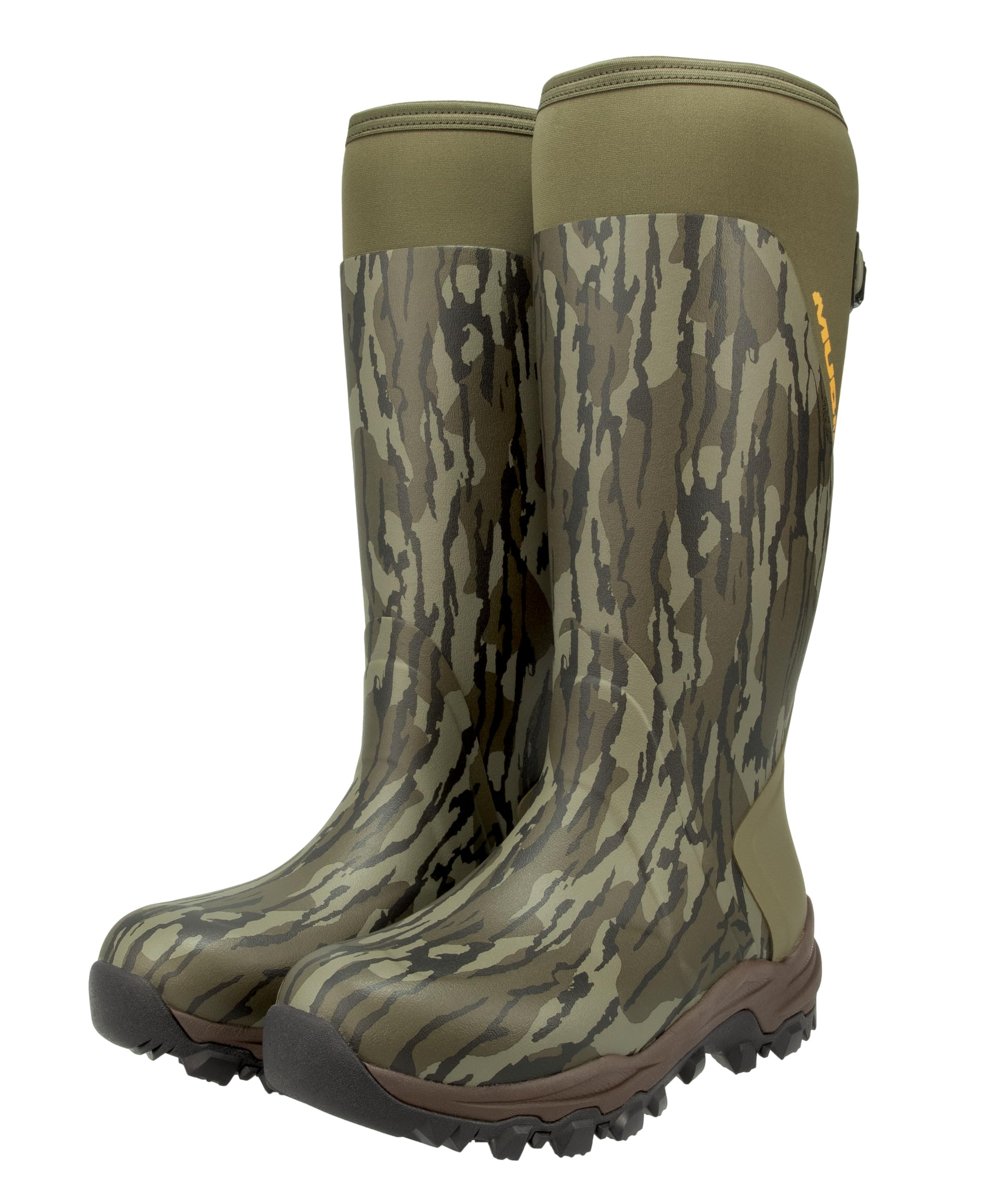
A sneaker-light ankle boot designed for high mobility and warmth in milder weather.
The Muddy DV8 is a different beast from the tall neoprene boots. At ankle height, it is more of a rugged shoe than a boot. The 3mm neoprene upper keeps it light and flexible, but it is comfort-rated for 25-85 degrees, meaning it is not a late-season, freeze-proof option. The natural vulcanized rubber construction (a chemical process that bonds rubber for flexibility and strength) and the 4×4 grip outsole are designed to feel like a sneaker, making every step feel fast.
The thing everyone raves about is the comfort. Shoppers say they are “like walking on clouds” and are the “lightest pair of hunting boots I’ve ever bought.” The PU comfort footbed provides good shock absorption. The trade-off is clear: this is a boot for active hunting, not for sitting still in the cold. Most owners suggest going up a full size, as they run small, especially around the ankle. One owner rightly pointed out they are “great for milder temps but not really for very cold temps.”
Ideal for Active Hunts
- Extremely lightweight, making them perfect for spot-and-stalk or long hikes to multiple sets.
- Excellent traction from the mud-terrain inspired sole design.
- Feels like a sneaker right from the start, with no break-in period.
Not for the Cold
- Ankle-height design offers no protection from snow or deep puddles; limited to dry conditions.
- Not insulated for extreme cold; best for early-season and mild-weather hunting.
Grab these for: early-season saddle hunts, scouting trips, or when you need to cover a lot of ground in mild temperatures.
Pass on them for: late-season cold, wet snow, or any situation where you need tall waterproof coverage.
6. Under Armour HOVR Dawn 2.0 Boots

A hiking boot disguised as a hunting boot, built for all-day comfort on the trail.
The Under Armour HOVR Dawn is a completely different category of boot for saddle hunting. It is an uninsulated, trail-running inspired hiker. The key is the UA HOVR cushioning, which absorbs impact and returns energy, making you feel less tired after a long hike. It features a 100% waterproof membrane to keep your feet dry in wet grass and light rain. This is the boot for the hunter who walks several miles to get to their set and prioritizes foot comfort over static warmth.
The fit is divisive. While most buyers find them comfortable and true to size, they run narrow. Owners with wider feet have found them “very narrow and not made for wide feet,” leading to returns. The aggressive tread outsole is excellent for mud and loose dirt, but the boot is not designed for standing still in cold weather. As the manufacturer states, it is a “3-season boot” for high-exertion activity. For the saddle hunter, this is the approach shoe. Use it to get there, then layer up.
Perfect for the Trek
- The HOVR foam cushioning is the most comfortable sole for long walks in this entire list, absorbing shock with every stride.
- Lightweight and breathable, preventing hot, sweaty feet on the hike in.
- Excellent ankle support and stability on uneven, off-camber terrain.
Key Limitations
- Uninsulated, so your feet will get cold if you are sitting still in sub-40-degree weather.
- Runs narrow, a non-starter for hunters with wider feet.
Reach for this if: you hike miles to your set and value a comfortable, responsive, waterproof boot for active movement.
Look elsewhere if: you need a tall, insulated boot for freezing temperatures or have wide feet that need extra room in the toebox.
7. Danner Vital 8” Waterproof Hunting Boots

A leather workhorse for the hunter who values support and durability.
The Danner Vital is a premium, leather-and-textile boot that offers excellent support for the hike and is durable enough for years of use. The full-grain leather upper is abrasion-resistant, which is a huge advantage over neoprene if you are pushing through brush. The 8-inch height provides good ankle support for climbing without being a tall, heavy rubber boot. It is uninsulated, making it a great choice for warmer weather and early-season saddle hunting, where you need more ankle mobility.
Comfort is the standout feature here, with over 80 buyers focusing on it positively. Many owners say it feels “as comfortable as tennis shoes once broken in.” The fit is mixed, but Danner offers wide sizes. The main trade-off is water resistance. While it has a waterproof leather upper, it is not a full neoprene seal. Several buyers report it is not fully waterproof, with water soaking through in a drizzle. It is more of a water-resistant boot for dry hikes and light dew, not for sitting in a creek-bottom saddle.
Why Go Leather
- Durable, abrasion-resistant leather upper that stands up to briars and brush much better than neoprene.
- Excellent comfort and support, with breathable lining for warm weather.
- Offers wide sizing options for comfort.
Trade-Offs
- Water resistance is mixed; not a fully submersible boot.
- Uninsulated, so it is a three-season boot only.
Best for: the hunter who walks through brush and prefers a supportive leather boot for early-season and mild-weather hunts.
Not the best for: late-season cold, prolonged wet conditions, or hunters who need tall rubber protection.
8. SITKA Back40 Boot
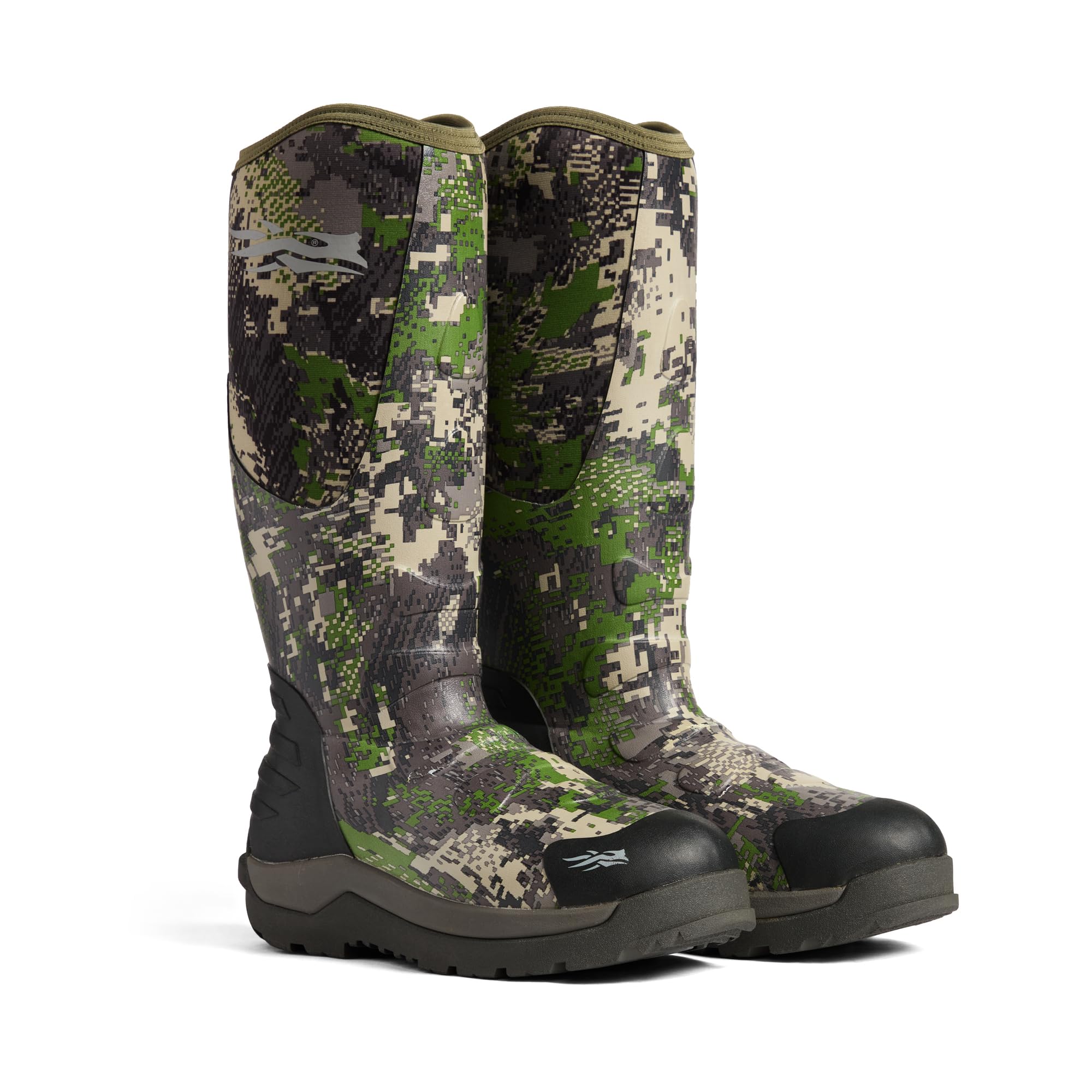
A premium, high-performance boot that redefines tall-boot comfort for the serious saddle hunter.
The SITKA Back40 is built to excel in the saddle. With 800 grams of Thinsulate insulation, it is ready for late-season cold. The design prioritizes all-day comfort, from the fully rubber overlays for durability to the multi-surface traction outsole for a secure platform stand. One owner said it fits “just like a sneaker, no floppy loose feel” unlike taller muck boots. This is the boot you wear when you know you will be in the tree for hours.
Owners mention the SITKA’s build quality is class-leading, but the boots are bulky as a trade-off for that tough construction. They are not as heavy as they look. The main fit issue: they run small. Several owners suggest ordering a half to a full size larger, especially if you plan on wearing thick socks. If you demand top-tier performance and are willing to pay for it, the SITKA delivers an edge for saddle hunting.
The Premium Edge
- 800g of Thinsulate provides serious warmth for long, cold sits in the saddle.
- Exceptional build quality and durable rubber overlays for longevity.
- Comfortable fit with a stable, non-floppy feel on the platform.
Consider Before Buying
- Runs small; most owners need to order a half to a full size up.
- Bulkier and heavier than a lightweight hiking boot, which can be a downside on long hikes.
Choose this if: you are a dedicated saddle hunter who wants a premium, warm, and exceptionally durable boot for late-season and heavy use.
pass on it if: you are on a tight budget or need a lightweight boot for hiking miles to multiple sets.
9. Irish Setter, Wingshooter, Men’s, Waterproof, Insulated 400g

The iconic upland boot that brings legendary comfort and durability to the tree stand.
The Irish Setter Wingshooter is a classic for a reason. It is a full-grain leather boot with a Goodyear leather welt (a construction method that stitches the upper to the sole for long-lasting durability and the ability to be resoled). The 400g of 3M Thinsulate Ultra insulation makes it ideal for active hunting in winter, providing warmth without overheating on the walk. The Prairie outsole is designed to shed debris, so you are not picking mud out of the lugs all day.
Comfort is what owners come back for. One buyer, a 56-year veteran of the outdoors, calls the Under Armour HOVR Dawn 2.0 the most comfortable boot he has ever worn. The 400g insulation (the amount of synthetic fill) is a balance for most winter saddle hunting: it keeps you warm during a sit but lets your feet breathe on the hike in. The biggest drawback is the sole’s grip. The Prairie sole is excellent on dry ground and in the field, but it is not the best for mud and snow, where the lugs can get packed. They also run slightly small, so sizing up is often recommended.
Why Irish Setter Reigns
- class-leading comfort and a quick break-in time; many say they feel broken in from the start.
- Goodyear welt construction makes them exceptionally durable and resoleable, extending their life for years.
- The 400g insulation is ideal for active winter hunting.
The Catch
- The Prairie outsole provides poor grip in mud and snow; not the best for slippery or wet conditions.
- They run small, so you will likely need to go up a size.
Perfect for: the hunter who values all-day comfort and a boot that can be resoled, for use in dry, cold conditions.
Not the one if: you hunt in muddy swamps, snowy mountains, or need deep-outsole traction for climbing.
10. Irish Setter, Elk Tracker, Men’s, 12″, Waterproof, Insulated 600g
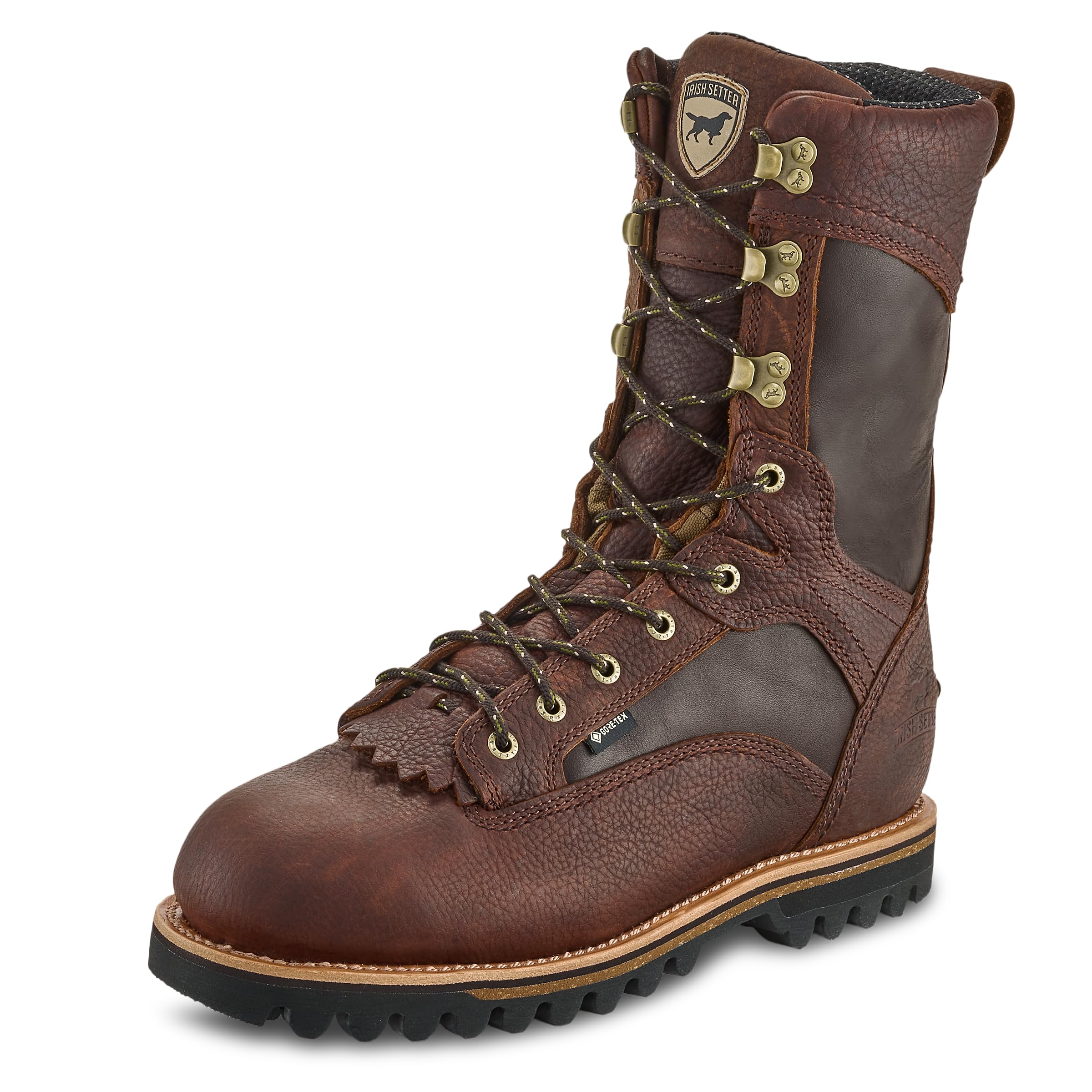
The ultimate late-season and mountain boot, built for the most extreme conditions.
The Irish Setter Elk Tracker is a serious boot for serious conditions. The 12-inch tall full-grain leather upper provides exceptional ankle and calf support. The 600g of 3M Thinsulate Ultra insulation, combined with a GORE-TEX waterproof membrane (a breathable fabric with billions of microscopic pores that block liquid water but let sweat vapor escape), makes it a fortress against cold and wet. The Bulls-Eye Air Bob Aggressive sole offers superb traction on the toughest terrain, making it a great choice for rocky or steep saddle sets.
Buyers overwhelmingly praise its warmth and durability. One owner reported staying warm in 10-degree below zero Fahrenheit temperatures. The ScentBan technology (an odor-eliminating treatment in the leather and linings) is a smart bonus for scent-conscious hunters. However, the fit is the biggest hurdle. The toe box is notoriously narrow for a boot of this class. Many owners with standard-width feet have to buy a EE or EE2 wide just to get adequate room. They are also heavy, but the stability they offer in return is significant.
Built for the Harsh
- 600g of Thinsulate with GORE-TEX offers the highest level of warmth and waterproofing in this list.
- The Bulls-Eye Air Bob sole provides incredible traction on snow, rock, and mud.
- ScentBan technology helps control human odor in the field.
Fit Reality
- Narrow toe box requires going up a width size for most standard feet.
- Heavy weight makes them a workout on long, steep hikes.
Go for this if: you hunt extreme cold, deep snow, or rugged mountains and need a tall, supportive, waterproof boot.
Think twice if: you have wide feet, short hikes are not the norm, or you need a lightweight boot for a long hike-in.
11. Danner Sharptail 10” Rear-Zip Hunting Boot

A premium, high-performance boot with a convenient rear zipper for easy entry.
The Danner Sharptail is an upland-inspired boot that brings the convenience of a rear zipper to the hunting world. The zipper runs from just above the ankle, making it incredibly easy to get the boot on and off, which is a huge plus when you are getting dressed in the dark or after a long day. It features a Gore-Tex lining for waterproof performance and breathability, a full-grain leather and 900D nylon upper for durability, and the Terra Force platform for support without excessive weight.
The comfort is noted by many buyers, with one saying they are “the only boots I will wear.” The rear zipper is the defining feature, but it comes with a durability caveat. The most-discussed mix of feedback centers on the fit, which runs narrow from the toe up through the ankle. A small number of owners reported the zipper or a seam failing within a year of use, a rare but notable issue. For the hunter with standard-width feet who values convenience, this is a great choice.
Why It’s a Great Idea
- The rear zipper makes these the fastest boot to get on and off, perfect for quick trips or cold mornings.
- Lightweight, comfortable, and supportive with a premium Gore-Tex lining for all-weather wear.
- High-quality materials and construction from a trusted brand.
Honest Trade-Offs
- The most-discussed complaint is the narrow fit; it is not suitable for wide feet.
- Rare reports of zipper failure point to a potential durability weak point over time.
Best for: hunters with standard-width feet who prioritize easy on/off and want a comfortable, supportive boot for milder weather.
Not for you if: you have wide feet, need an insulated boot, or demand a completely bomb-proof, zero-failure design.
Understanding the Specs
Neoprene Thickness & Insulation
Neoprene is a synthetic rubber used in hunting boots that provides flexibility and insulation. The thickness, measured in millimeters (mm), indicates how warm the boot is. A 7mm boot is warmer than a 5mm boot, but it is also stiffer. The insulation rating, measured in grams (like 400g or 800g), is an additional layer of fiber (often Thinsulate) that traps heat without adding bulk. For saddle hunting, a 5-7mm neoprene wall with 400g to 800g of insulation covers most cold-weather scenarios. A thicker wall is better for sitting still, while a thinner wall is better for active hiking.
Outsole Traction
When you step onto a 12-inch saddle platform or a tree limb, your boot’s outsole is your only grip. You want a rubber outsole (a thick, durable bottom layer) with deep, aggressive lugs (the individual raised bumps). A “non-slip” or “multi-surface” outsole is preferred. EVA midsoles (a foam cushioning layer) provide comfort on the hike but are not as durable as rubber. A stiff shank (a metal or composite insert in the sole) adds stability for climbing on sticks. The key is a sole that will not slip on dry tree bark or wet leaves.
FAQ
What is the ideal neoprene thickness for saddle hunting?
How much insulation do I need for saddle hunting?
Will a leather boot work for saddle hunting?
Are neoprene boots quiet for walking in the woods?
How should saddle hunting boots fit?
What is a steel shank and why do I need it?
Can I use regular hiking boots for saddle hunting?
How do I care for my neoprene hunting boots?
Are rubber boots or leather boots better for the saddle?
What socks should I wear with my saddle hunting boots?
Final Thoughts: The Verdict
For most saddle hunters, the boots for saddle hunting winner is the TIDEWE Rubber Hunting Boots because its 7mm neoprene and 800g insulation give you the best warmth and flexibility for long, cold sits, and it is backed by a huge number of satisfied owners. If you want a lightweight, budget-friendly option that still offers great comfort, grab the Trudave Hunting Boots. And for the hunter who hikes miles and prioritizes comfort on the trail above all else, the Under Armour HOVR Dawn 2.0 is the one to reach for.
How We Picked
We do not accept paid placement. Every pick is matched to a real buyer and a real use-case; we do not hands-on test units.
Sources & Methodology
Specifications: manufacturer listings and product documentation. Review insights: verified customer reviews, as of July 2026. Pricing: not shown on this page (it changes often); check the current price via the retailer link.
As an Amazon Associate, Gadgets Feed earns from qualifying purchases. This does not affect which products we feature.