
Our readers keep the lights on and my morning glass full of iced black tea. As an Amazon Associate, I earn from qualifying purchases.
Specs are compiled from manufacturer listings and verified buyer reviews and can change over time — please confirm the key details on the product page before buying.
Standard trail cameras only see what’s directly in front of them—a narrow slice of the woods. That single blind spot is how you miss the buck circling around the bait pile or the trespasser approaching from the side. A 360 trail camera solves that by panning, tilting, or stitching a full panorama together, so you see the whole clearing, not just one lane. The choice now is between cellular-connected models that stream live to your phone and simpler units that save to an SD card—but every camera here covers the full circle.
I’m Min — the founder and writer behind Gadgets Feed. This guide is built by comparing the manufacturers’ published specifications and the patterns across verified customer reviews, so you get each pick’s real strengths and trade-offs instead of marketing spin.
You need a 360 trail camera that captures every angle without missing a thing, whether you are watching a hunting plot, a remote cabin, or a construction site. Your choice depends on three things: resolution (how clear the image is), power source (batteries or solar), and how much you want to spend on cellular data each month.
Our Picks at a Glance

How To Choose The Best 360 Trail Camera
Picking a 360 trail camera is different from buying a standard fixed-lens model. The rotating mechanism adds complexity, and so does the cellular plan if you want remote viewing. Focus on these three factors to narrow your options quickly.
Pan, Tilt, and True 360° Coverage
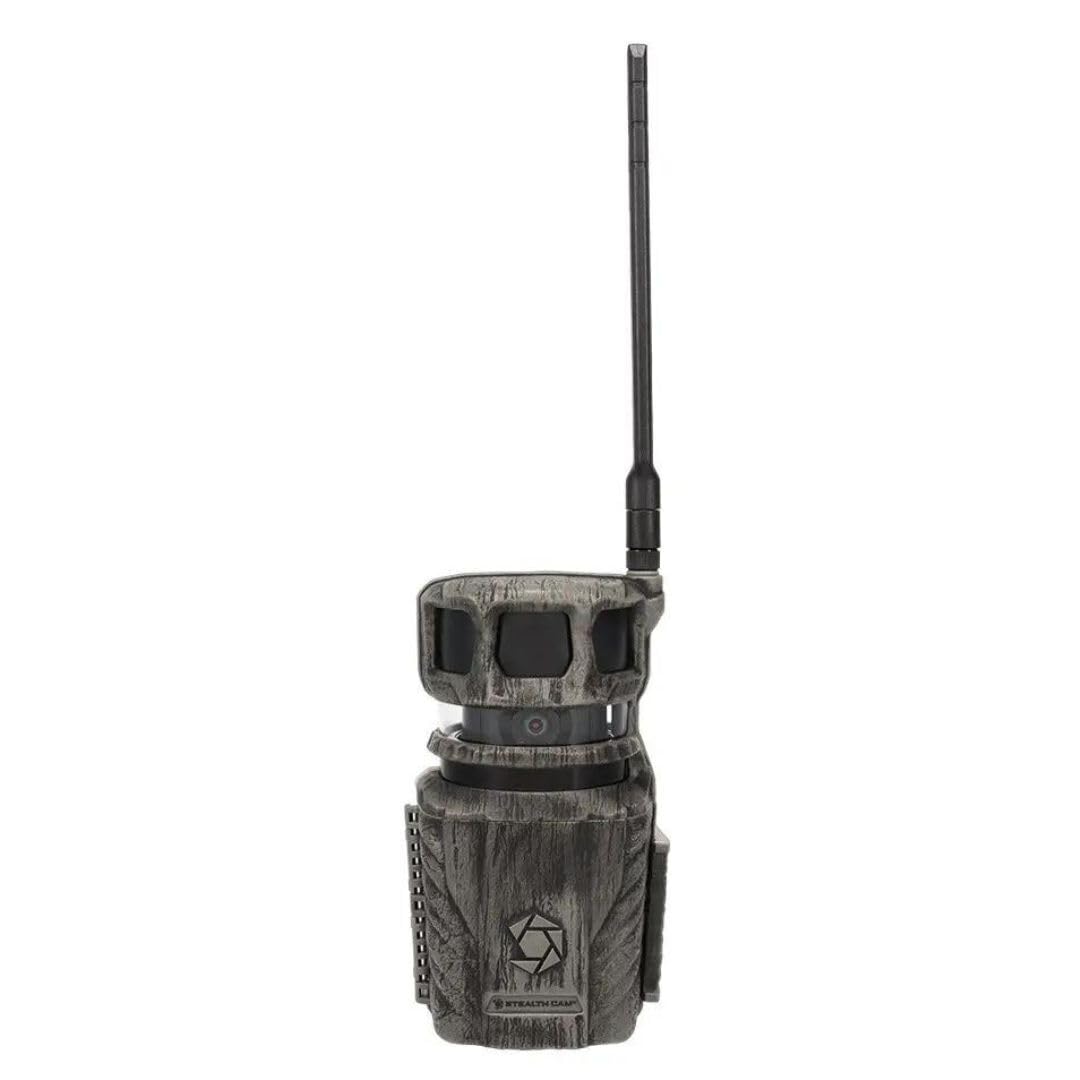
A “360 trail camera” can mean two things—a rotating lens that pans left and right plus tilts up and down, or a stationary lens that captures a full panorama in a single shot. Rotating models let you remotely steer the view to a specific spot, which is ideal for checking on a feeder or a trail junction. Stationary 360-degree units (like the Stealth Cam Revolver) snap multiple zone photos and stitch them together. Check whether the camera uses pan/tilt motor control or a fixed multi-lens setup, because that changes how you aim it.
Power Source: Solar vs. Battery
Remote cameras run on batteries, and batteries die fast when a motor is spinning the lens 355 degrees every few minutes. Solar-powered models with a separate panel can run indefinitely in good sun—many buyers report the panel keeping the internal battery above 94% even during cloudy stretches. If you choose a battery-only model, budget for a bulk pack of 16 dual-cartridge batteries or a rechargeable lithium pack, because a 360 motor drains them faster than a fixed camera.
Cellular Plan and Data Costs
Every cellular 360 camera reviewed here includes a built-in SIM card and requires a monthly data plan after a short trial (usually 7 days or 300 MB). Plans require a monthly subscription per camera, with some companies offering annual discounts. If you plan to stream live 2K video or use cloud storage, the data use adds up fast. One reviewer noted that a 3 GB plan was enough for heavy use, but those who want continuous live view or AI features should expect a higher bill. Each camera needs its own plan—data cannot be shared across units.
Quick Comparison
| Model | Best For | Photo Resolution | Night Vision Range | Power Type | Amazon |
|---|---|---|---|---|---|
| SEHMUA TC18★ Best Overall | Best Overall | 2K live stream | Color + IR night vision | Solar (6W panel) | Amazon |
| Stealth Cam Revolver PROTop Performer | Highest Photo Quality | 40MP | 100 ft | 16 x dual cartridge batteries | Amazon |
| Stealth Cam Revolver 36MP | 360-Degree Panorama | 36MP | 80 ft | 16 x dual cartridge batteries | Amazon |
| GLEEMALL RBX-S70 2-Pack | Best Value 2-Pack | 2K live stream | Color night vision | Solar (6W panel) + 10400mAh battery | Amazon |
| Oculview 4G LTE | Affordable Solar Cell | 2K live stream | 65 ft (low-glow IR) | Solar (6W panel) | Amazon |
| VOOPEAK 4G LTE 2-Pack | AI Species Detection | 2.5K live stream | Full-color + IR night vision | Solar (high-efficiency panel) | Amazon |
| TKENPRO Camo 2-Pack | Best for Security | 2K live stream | 85 ft (IR) | Solar (5W panel) | Amazon |
In‑Depth Reviews
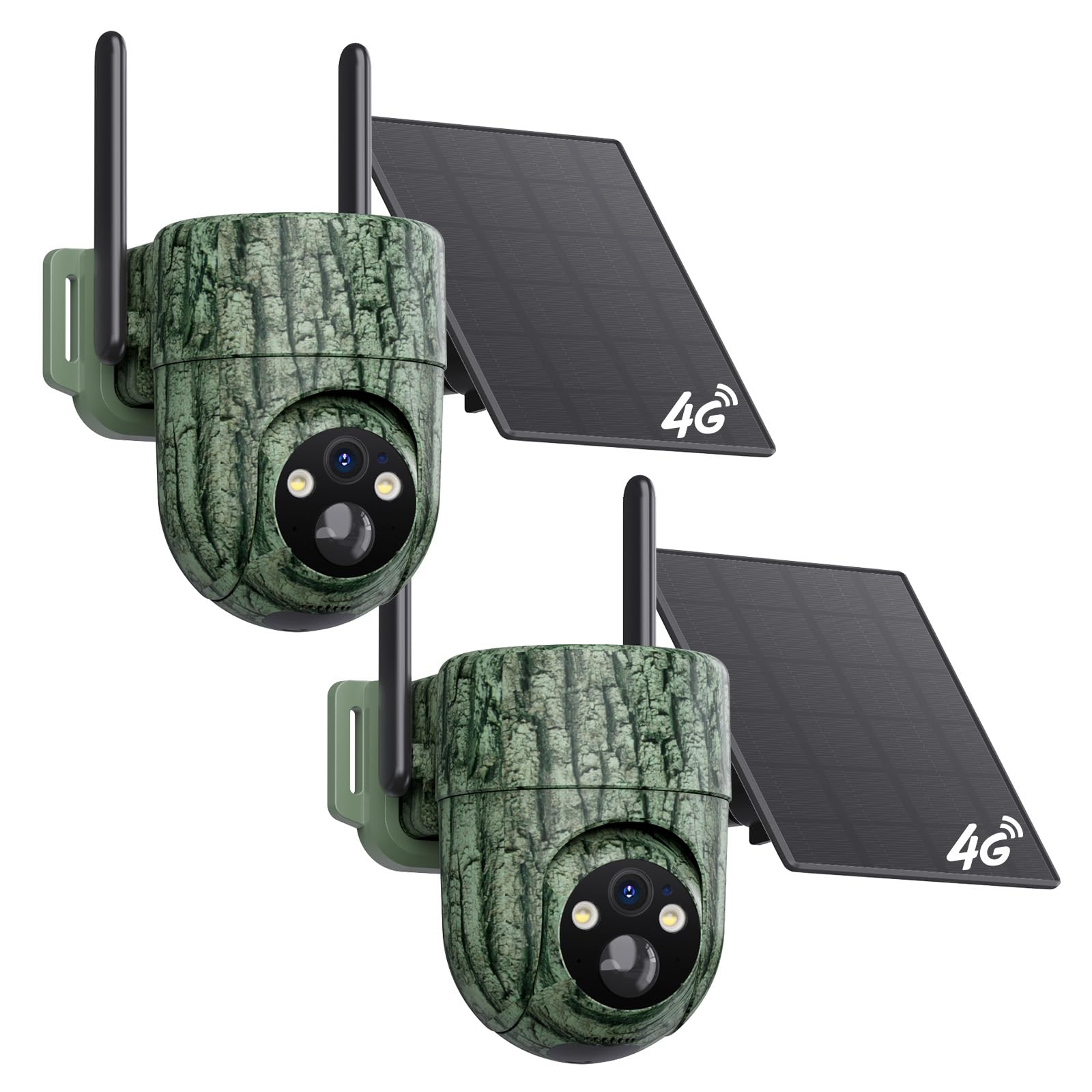
1. SEHMUA 4G LTE Cellular Trail Camera (TC18)
Our pick — over 4★ from 500+ verified ratings; the strongest balance of quality and price.
The solar-powered cellular cam that keeps watch without a single battery swap all year.
This is the unit that solves the two biggest headaches of a 360 trail camera: power and connectivity. The 6W solar panel keeps the internal battery charged even through snowy, overcast days—one owner reported it holding above 94% through a string of winter weather. You get 2K HD live streaming direct to your phone, motion alerts in 0.2 seconds, and a 355° horizontal pan combined with 90° vertical tilt for true zero-blind-spot coverage. It works on Verizon, AT&T, and T-Mobile networks with a pre-installed SIM card, so you don’t need any WiFi at the camera location.
The catch is the data plan. After the 7-day trial expires, you need a subscription, and the built-in SIM card is non-removable and U.S.-only. A few buyers flagged that rain can seep through the solar panel plug if the sealing isn’t perfect—a wrap of waterproof tape around that connection seems to be the field fix owners use. The crowd favorite (4.3 stars from 500+ owners) lands here because the combination of solar autonomy, 2K live view, and the pan/tilt motor simply works day in, day out.
Why it wins
- Solar panel keeps battery above 94% even in snow/cloud, per owner reports
- 2K live streaming with color night vision for clear ID day or night
- 0.2-second trigger speed catches fast-moving animals without the blur
The honest trade-offs
- Required monthly data plan after 7-day free trial
- Solar panel plug can let moisture in during heavy rain—tape it
- App needs English refinement on Android, per some users
The one to buy if: You want a low-maintenance cellular camera that powers itself and streams 2K video to your phone from any remote spot.
skip it if: You don’t want another monthly subscription bill on top of the camera purchase.
2. Stealth Cam Revolver PRO (40MP)
Six cameras in one shell—the 360-degree cellular cam that swaps zones silently.
If photo resolution is your priority, this is the camera that delivers the highest still image quality on the list at 40MP, paired with 1440P QHD video at 30 frames per second. Its silent pivoting motor lets the lens lock onto a specific zone and snap a high-res photo, then rotate to the next zone. The 100-foot detection range beats the standard Revolver’s 80-foot reach, and the trigger speed stays sharp at under 0.4 seconds. You can set it to capture single-zone, 180-degree, or full 360-degree panoramas through the Command Pro app.
The real-world trade-off you need to know: moisture inside the lens after rain. Buyers call this a “50/50 gamble” in wet conditions—when dry, the images are crisp and the 360-view feature is a revelation; after a downpour, fogged lenses can render photos useless. A rain cover seems essential if you live in a damp climate. It runs on 16 dual-cartridge batteries (not included), so expect to swap those every few weeks depending on activity, unlike the solar-powered models elsewhere in this guide.
What stands out
- 40MP still images with 1440P QHD video at 30 FPS—the sharpest on this list
- 100-foot detection range with 0.4-second trigger speed
- Six-zone panoramic capture covers a full 360 degrees
The honest trade-offs
- Lens fogging after rain is a well-documented issue—buyers recommend a rain cover
- Requires 16 dual-cartridge batteries (not included)—no solar option
- 360-degree panorama mode uses 6 photos per cycle, which eats cellular data fast
Reach for this if: You need the highest-resolution still photos for identifying buck racks and trail patterns, and you can add a weather shield.
Think twice if: Your setup is in a consistently rainy area and you want solar independence.
3. Stealth Cam Revolver (36MP)
The entry-level 360 cellular cam that reveals movement from every direction at once.
This is the slightly more affordable sibling in the Stealth Cam Revolver line, swapping the PRO’s 40MP sensor for a 36MP sensor and 1080P HD video instead of 1440P. The core 360-degree rotating mechanism is the same—it still covers the equivalent of six fixed cameras with a motor that pivots silently between zones. The detection range drops to 80 feet (the PRO reaches 100 feet), but the 0.4-second trigger speed remains unchanged. Three operation modes let you choose single-zone, 180-zone, or 360-zone capture, so you can trade coverage for data savings.
Owners love the setup simplicity—the Command Pro app gets you running quickly—and many report that the 360 view revealed deer entry points that two other fixed cameras had missed entirely. The downside is the same moisture sensitivity as its PRO sibling: fogging and water ingress are the most-discussed negatives, with the cameras summary noting reliability as mixed. Rechargeable batteries (sold separately) can last up to 9,000 pictures per one owner’s report, but 16 AA batteries drain fast if false triggers from sunlight are not tamed. The 3.9-star average across 280+ ratings reflects both the brilliant 360 concept and the persistent weather-sealing frustration.
Where it fits: This is the right pick if you want the 360-degree panorama system for a smaller property and are willing to budget for a rain cover and battery changes.
Best for: Hunters who want to experiment with 360-degree scouting without paying premium for 1440P video.
Consider the PRO instead if: You need that extra 20 feet of detection range and higher video resolution are non-negotiable.
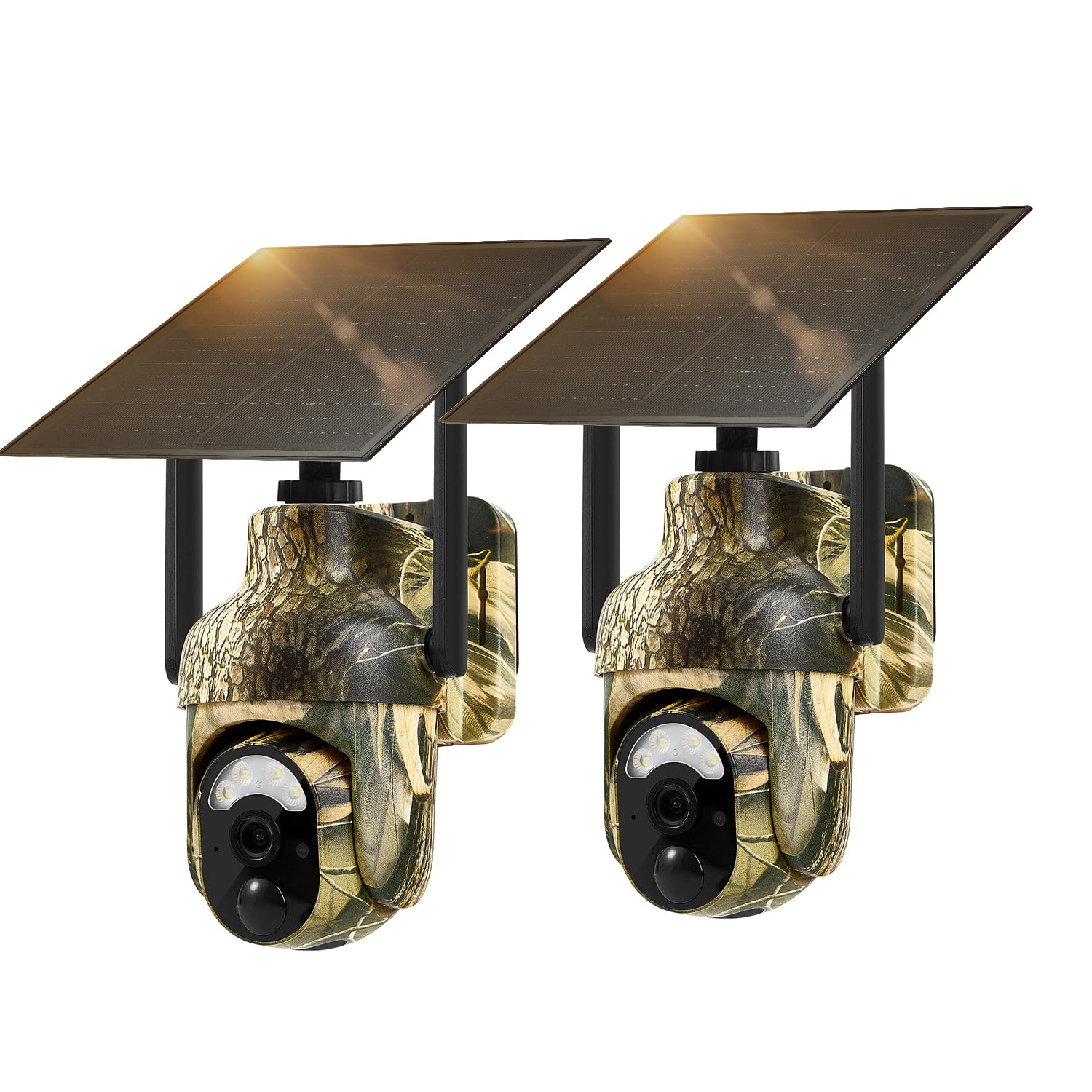
4. GLEEMALL RBX-S70 4G LTE Cellular Trail Camera (2-Pack)
Two solar-powered cameras for the price of one premium single unit—a solid value play.
This 2-pack from GLEEMALL is the most cost-effective way to cover two separate areas with 360-degree cellular cameras. Each unit packs a 10400mAh rechargeable battery paired with a 6W solar panel, which together deliver continuous power without climbing ladders for charging. The pan-tilt motor gives you 355° horizontal and 110° vertical movement, and the UBox app streams 2K live video with 4X digital zoom. The 0.2-second trigger speed with smart PIR sensor is designed to cut down on false alarms from wind-blown leaves and insects.
The shared caveat across cellular cameras applies here too: you need a separate data plan for each camera after the trial ends. Build quality gets a positive consensus—”Reliable, Easy-to-Use” is the Amazon summary—and the solar panel is praised for keeping the battery topped up. A handful of owners mention connectivity being touchy in very remote valleys, so check your cell signal before mounting. At 4.4 stars across 75 ratings, this pack is a strong mid-range buy for monitoring two separate properties or far ends of a large ranch.
The price-to-performance read: You get two solar-powered 360 cameras with large batteries for less than two individual premium units, making this the smart choice for multi-point setups.
Reach for this if: You need to cover two locations (or a large property) on a mid-range budget and want solar independence.
Skip if: You can only afford one data plan—each camera needs its own subscription.
5. Oculview 4G LTE Cellular Trail Camera

A 360 cellular cam with a clever 850nm infrared glow that keeps night shots clear at 65 feet.
The Oculview differentiates itself with a low-glow 850nm infrared system that captures sharp nighttime footage out to 65 feet without blasting white light across the woods. The motorized head rotates 336° horizontally with a 90° tilt, and the 4X digital zoom lets you inspect a distant scrape or a delivery truck’s license plate without walking out there. The 6W adjustable solar panel does the heavy lifting for power—the maker claims just 10 minutes of direct sunlight per day keeps the camera running a full 24 hours. Build quality stands out with 109 positive mentions, the highest count in that category among the listed products.
The battery life story has a wrinkle. A few early units shipped with a defective solar panel that drained the internal battery from 100% to 1% in three days; the company resolved that by sending replacements that hold charge normally (99% overnight, per one owner). If you buy one, test the solar hold immediately. The UBox app requires a data plan after the trial period, as with all cellular cameras here. Cloud storage costs extra too. You get a feature-dense camera that, when working correctly, delivers on its promise of year-round off-grid monitoring.
The standout move: The 850nm low-glow IR night vision is the quietest on this list—animals don’t spook, and you still get crisp ID.
Best if: Night vision with minimal disturbance is your top priority, and you’re okay verifying the solar panel works right from the start.
Not for you if: You want zero troubleshooting—buy the SEHMUA if set-and-forget is the goal.
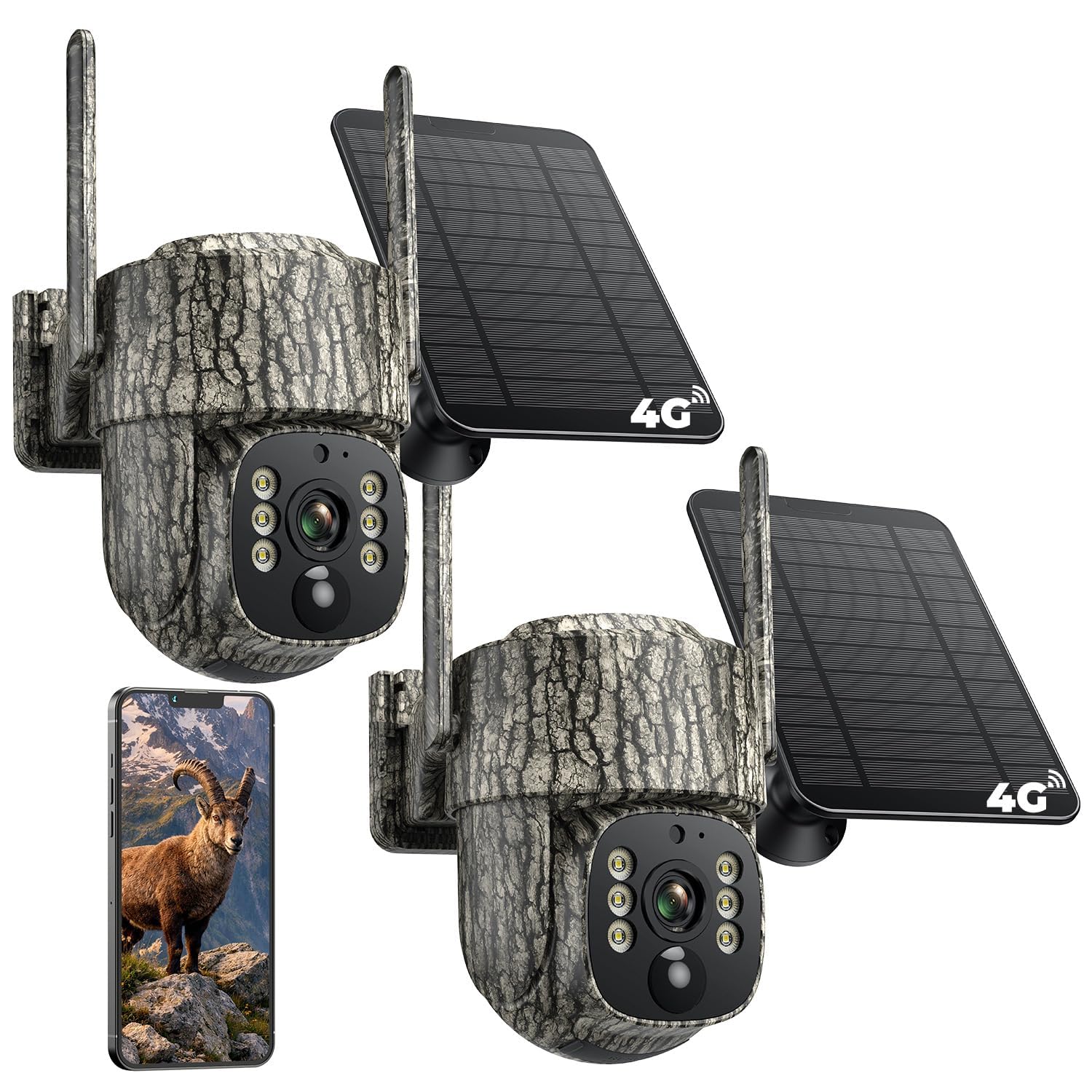
6. VOOPEAK 4G LTE Cellular Trail Camera (2-Pack)
The camera that tries to tell you what species just walked past before you even open the app.
This is the most tech-forward option on the shelf. The VOOPEAK offers 2.5K live streaming—the highest video resolution among the cameras reviewed—and a paid AI feature that, according to the maker, identifies animal species and behavior, sending alerts like “A mature buck with a heavy rack is scraping near the oak ridge” directly to your phone. The solar panel is a high-efficiency unit that owners describe as genuinely “no-cost” operation, and the dual day/night cameras with six IR LEDs (infrared light-emitting diodes that illuminate the scene without visible light) produce bright, full-color night vision.
The fine print matters here. The AI detection is a subscription add-on, not included in the base price. The app support is China-based, and a frustrated owner reported a 15-second live view lag with motion detection that eventually stopped working entirely. On the positive side, many owners praise the easy setup and weather-resistant build, and the 4.0-star average across 437 ratings shows broad satisfaction. The microSD supports up to 512 GB—the largest capacity on the list—so you can store weeks of footage locally before reviewing. The 100 MB free data trial is stingy (you’ll need the plan fast), but the 2.5K video alone may be worth the hassle for quality-obsessed users.
The AI factor: Species-level identification is a genuine leap forward, but it’s a paid bonus on top of the cellular plan—budget accordingly.
Reach for this if: You are a serious deer manager who wants species and behavior data without hiking to the SD card.
Look elsewhere if: You want reliable motion detection from the start without debugging app connectivity.
7. TKENPRO 4G LTE Cellular Trail Camera (Camo 2-Pack)
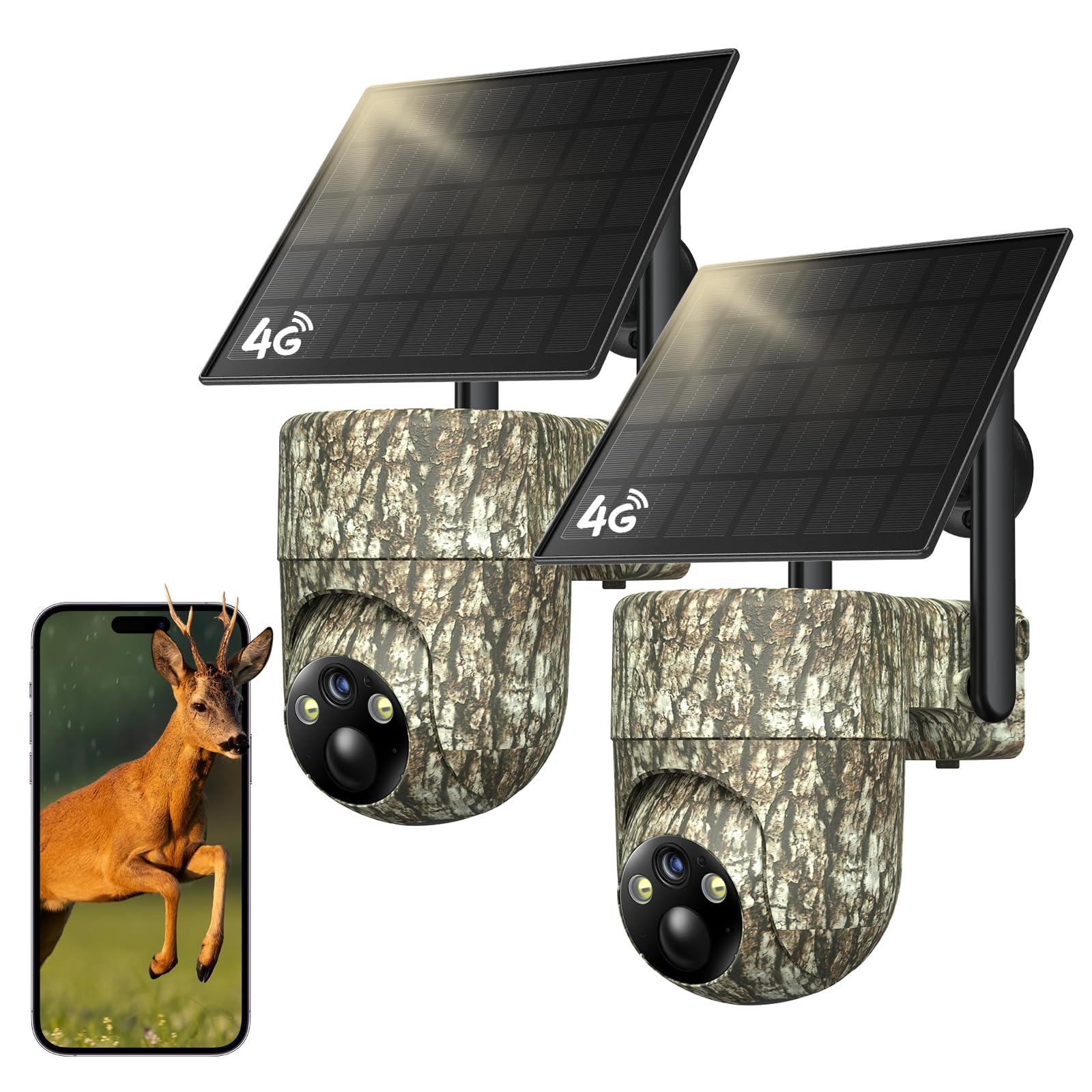
A camo security camera that tracks intruders across a 355-degree arc and alerts you by name.
While most trail cameras are built for deer, the TKENPRO is tuned for human detection with auto-tracking that smoothly follows a person across its 355° pan range. One owner described watching the camera track a package thief down their walkway, with 2K video clear enough for identification. The 85-foot IR night vision is 20 feet longer than the Oculview, and the 0.2-second trigger speed catches movement before it leaves frame. Built-in two-way audio lets you speak to someone at the camera location through the app—useful for scaring off unwanted visitors or talking to family in a detached garage.
The catch is the subscription math. Like every cellular camera here, it needs a separate data plan per camera, and the cloud storage is an additional cost. A few customers note inconsistent recordings—motion alerts firing but no video saved—which suggests the PIR sensor and cloud save logic don’t always sync. The IP65 rating handles rain well, and the 5W solar panel keeps the unit running through overcast stretches. At 4.4 stars across 74 ratings, it’s a narrow winner for security-focused buyers who want a trail cam that doubles as an outdoor surveillance tool.
The human-detection edge: Auto-tracking plus human-specific alerts make this the best choice for cabin and property security, not just wildlife.
Grab this if: Your primary need is monitoring people (trespassers, workers, delivery drivers) at a remote property.
Stick with the SEHMUA if: You want a simpler, well-proven wildlife camera that doesn’t need auto-tracking.
Understanding the Specs
Pan/Tilt vs. Multi-Zone Panorama
Every 360 trail camera here uses either a motorized head that rotates left/right and tilts up/down, or a rotating-lens system that stops at preset zones to capture individual photos that stitch into a full circle. Motorized pan/tilt models (like the SEHMUA and GLEEMALL) let you remotely steer the lens to any specific angle via phone app—ideal for checking a corner of the property live. Multi-zone models (like the Stealth Cam Revolver PRO) snap separate zone images that combine into one panoramic shot, which saves battery but uses more cellular data per cycle. For property security, motorized real-time control is better. For pattern scouting where you review the panorama later, the multi-zone approach works fine.
Trigger Speed and False Alarms
Trigger speed measures how fast the camera fires after detecting motion. Most 360 trail cameras on this list claim a 0.2-second or 0.4-second trigger. The faster speed matters for animals trotting past the detection zone—a 0.2-second trigger catches a running buck mid-stride, while a 0.4-second trigger might grab only a tail vanishing into the brush. Faster triggers also mean more false alarms from wind-blown branches and grass, especially in open fields. The best strategy is to pair a fast trigger with a narrow PIR detection zone and a well-positioned mounting angle that avoids swaying foliage.
FAQ
Do I need WiFi for a 360 trail camera to work?
How much does the cellular data plan cost per month?
Will a solar-powered trail camera work in cloudy or winter conditions?
How far can a 360 trail camera detect motion at night?
Can I use the 360 trail camera for security, not just hunting?
How do I prevent the lens from fogging up in wet weather?
What size memory card do I need?
Can multiple people view the live feed at the same time?
How long does the battery last on a non-solar 360 camera?
Will the camera work in Canada or Mexico?
Final Thoughts: The Verdict
For most buyers, the 360 trail camera winner is the SEHMUA TC18 because it combines solar independence, 2K live streaming, a fast 0.2-second trigger, and the most positive owner consensus at 4.3 stars from 500+ ratings. If you need the highest-resolution photos for serious scouting, grab the Stealth Cam Revolver PRO with its 40MP sensor and 100-foot detection range, but budget for a rain cover. And for covering two properties on a mid-range budget, the GLEEMALL 2-Pack delivers solar-powered 360-degree coverage in a single economical box.
How We Picked
We do not accept paid placement. Every pick is matched to a real buyer and a real use-case; we do not hands-on test units.
Sources & Methodology
Specifications: manufacturer listings and product documentation. Review insights: verified customer reviews, as of July 2026. Pricing: not shown on this page (it changes often); check the current price via the retailer link.
As an Amazon Associate, Gadgets Feed earns from qualifying purchases. This does not affect which products we feature.