
Our readers keep the lights on and my morning glass full of iced black tea. As an Amazon Associate, I earn from qualifying purchases.
Specs are compiled from manufacturer listings and verified buyer reviews and can change over time — please confirm the key details on the product page before buying.
Most first-time birders grab the wrong binocular. They buy based on magnification alone, then wonder why everything looks dark and shaky. For this hobby, the real gateway is brightness and field of view — how much light a lens gathers and how wide a scene stays sharp. An 8×42 configuration is the proven balance because the 42mm objective lenses pull in enough light for dawn and dusk viewing, while 8x magnification keeps the image steady enough for handheld use.
I’m Min — the founder and writer behind Gadgets Feed. This guide is built by comparing the manufacturers’ published specifications and the patterns across verified customer reviews, so you get each pick’s real strengths and trade-offs instead of marketing spin.
Whether you just spotted your first warbler or want to upgrade from a blurry pair you already own, these are the best birding binoculars for beginners that deliver real clarity without needing a second mortgage.
Our Picks at a Glance


How To Choose The Best Birding Binoculars For Beginners
Picking your first real binocular feels like decoding a secret language of numbers and coatings, but the buying decision depends on a handful of hardware specs you can weigh in a couple of minutes. Here are the ones that matter most for a beginner birder.
Magnification and Objective Lens (8×42)
The first number — 8x — means the view is magnified eight times closer. The second number — 42 — is the diameter of the objective lens in millimeters. A 42mm lens captures a lot of light, so you see details in early morning or late evening when birds are most active. A 10x binocular sounds more powerful but magnifies hand shake too, making it harder to hold steady without a tripod.
Eye Relief for Glasses Wearers
Eye relief is the distance in millimeters between the eyepiece and your eye. If you wear glasses, you generally need at least 15-16mm to see the full field of view without taking your glasses off. Owners with glasses consistently point to this number as the deciding factor in everyday comfort.
Prism and Coatings (BAK4 and FMC)
The prism — usually BAK4 glass — bends light from the objective lens into your eye. A BAK4 prism delivers a round, bright exit pupil with no dark edges. Fully multi-coated (FMC) lenses cut reflections and boost contrast. Together they prevent the dull, washed-out image you get from cheap binoculars.
Quick Comparison
| Model | Best For | Magnification | Eye Relief | Field of View | Amazon |
|---|---|---|---|---|---|
| Nikon PROSTAFF P3 8×42★ Best Overall | Best Overall | 8×42 | 20.2 mm | 377 ft | Amazon |
| Gosky 8×42 Roof PrismBest Value | Budget Value with Phone Adapter | 8×42 | 15 mm | 110 m | Amazon |
| Bushnell R3 8×42 | Compact w/ Harness | 8×42 | — | 6.8° | Amazon |
| Timorn HD 8×42 | All-in-one Kit | 8×42 | 15 mm | 430 ft | Amazon |
| PEIKETAO 8×42 ED HD | Premium Optics | 8×42 | 17.5 mm | 393 ft | Amazon |
| Nocs Provisions Field Issue 8×42 | Most Durable/Rugged | 8×42 | 20.4 mm | 394 ft | Amazon |
| Celestron Nature DX ED 8×42 | ED Glass on a Budget | 8×42 | 17.8 mm | 7.5° | Amazon |
In‑Depth Reviews
1. Nikon PROSTAFF P3 8×42 Binocular
Our pick — over 4.5★ from 600+ verified ratings; the strongest balance of quality and price.
Nikon delivers premium optical quality at a mid-range price.
This binocular is the crowd favorite among first-time birders for a single clear reason: the image quality simply exceeds its price bracket. The 42mm objective lenses gather light exceptionally well even in flat dusk light, and the multilayer-coated lenses suppress reflections so colors stay vivid instead of washed out. A wide field of view of 377 feet at 1,000 yards lets you track a flitting warbler without re-aiming constantly.
At 20.2mm of eye relief, it is genuinely comfortable for glasses wearers — one of the best numbers in this roundup — and the smooth central focus wheel makes dialing in a distant hawk feel quick and natural. The whole unit weighs just 20.3 ounces and the rubber-armored body gives a secure grip even in damp conditions. The crowd speaks clearly: quality and clarity are the traits owners mention most, and that consistent verdict is hard to argue with.
The only recurring note from owners is the diopter ring — it can feel stiff when you first adjust it. That stiffness is not a failure, but it means you should set it once and leave it. For a dedicated birder who prefers instant re-adjusting for each user, there are faster options.
Nikon crisp optics
- Crisp, bright images with minimal edge fringing — buyers call it “sharp to the edge”
- Generous 20.2mm eye relief means glasses wearers see the full field without hassle
- Light enough (20.3 oz) for all-day neck carry
Premium price tag
- Diopter adjustment is stiff — set it once and it stays, but it is not quick to change
Sharpest view: you want a do-everything 8×42 that delivers Nikon-level optical quality without crossing into luxury pricing.
Budget buster: you share binoculars frequently and need a diopter that adjusts easily between users.
2. Gosky 8×42 Roof Prism Binoculars for Adults
This all-in-one kit includes a phone adapter and tripod for digiscoping from the start.
Gosky packs a remarkable amount of hardware into what is essentially an entry-level spend. The 8×42 configuration uses BAK4 prisms and fully multi-coated optics, which together deliver a clear image with good contrast. Owners say the view at 40 yards looks like 10 feet — proof of the crisp focus. The exit pupil diameter of 5.25mm is actually a touch larger than the Nikon’s 5mm, which means slightly more light reaches your eye in dim conditions.
It is also rated IPX7 waterproof, so a sudden downpour or a drop into a puddle is not a disaster. The real kicker here is the included smartphone adapter and tripod. You can snap a photo of a lifer right through the lenses without juggling extra gear. An argon-purged and O-ring sealed body keeps internal fogging at bay through temperature shifts. Quality is the aspect owners praise most — over 400 mentions — and clarity runs a close second.
There is a trade-off: the eye relief measures 15mm, which is functional for glasses wearers but noticeably tighter than the Nikon. You may have to press your glasses closer to see the full circle of view.
Versatile all-rounder: includes tripod, phone mount, and carrying bag — everything a beginner needs to start birding and digiscoping from day one.
Best value: the new birder who wants to shoot smartphone photos through the lens without buying extra accessories.
Pro users: you wear glasses and find eye relief under 16mm uncomfortable for extended use.
3. Bushnell R3 8×42 Binoculars with Vault Lite Bino Chest Harness
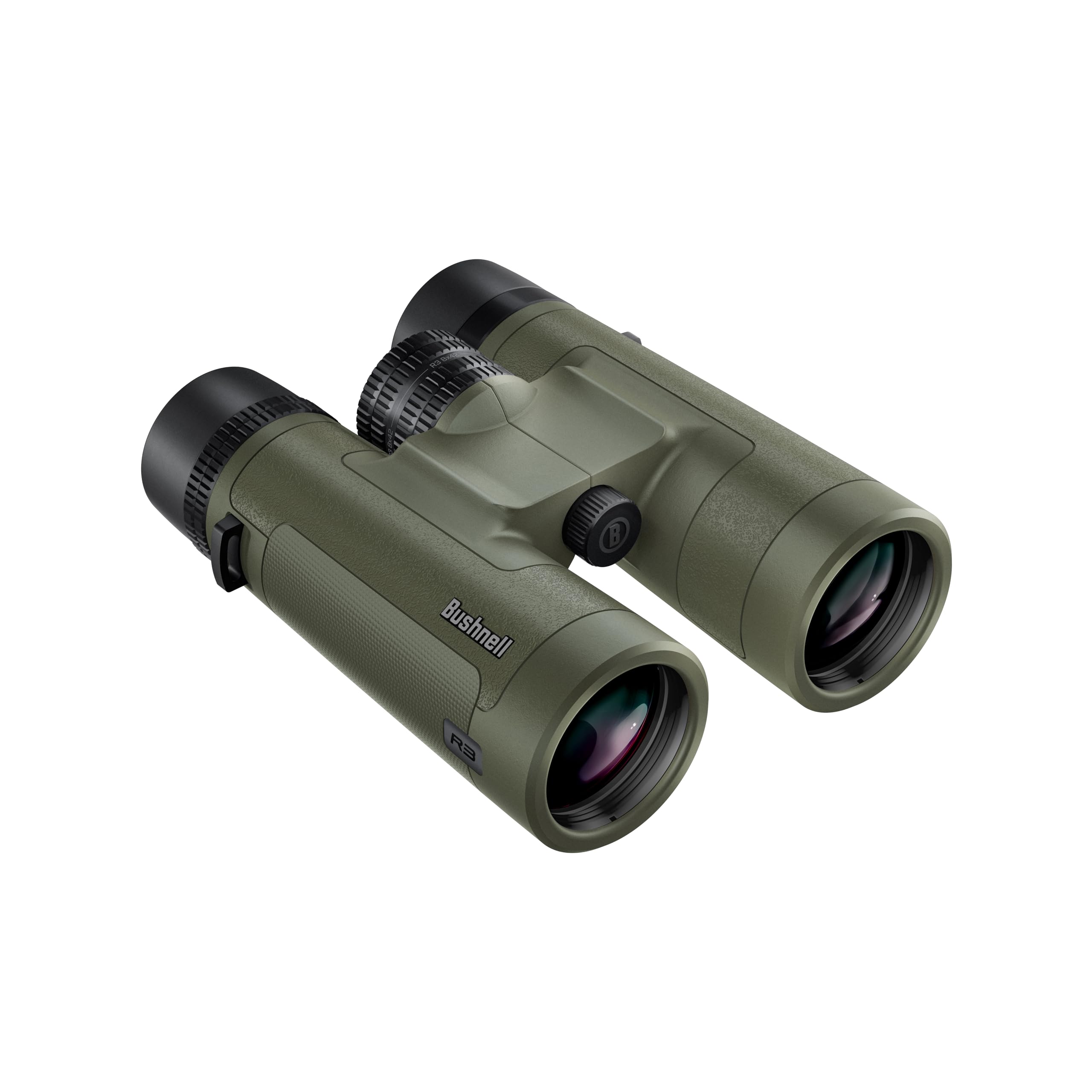
Bushnell bundles a chest harness for hands-free carry with its HD optical system.
Bushnell’s R3 brings an HD Optical System with fully multi-coated lenses, and it shows. The clarity is what owners praise most — 16 call it out directly — and several remark that the image rivals binoculars costing a thousand dollars more. Bushnell’s exclusive EXO Barrier is a permanent coating on the outer lens surfaces that sheds water, oil, and dust on contact, so you spend less time cleaning lenses and more time watching birds.
The IPX7 rating means you can use it confidently in rain or spray. It also comes with the Vault Lite Bino Chest Harness included in the box, which keeps the binoculars snug against your chest rather than swinging on a neck strap — a huge comfort upgrade for long hikes. The lens quality is the second most-mentioned aspect, with owners appreciating the bright, clear view. The focus action is fast and smooth, which helps when tracking moving wildlife.
A few owners note the binocular is slightly bigger than they expected. That bulk is partly due to the sturdy rubber overmold and the shockproof construction, so it is a trade-off of durability versus pocketability. If you need the absolute smallest packable binocular, this is not that pick.
Field ready: you want a rugged, weather-ready binocular with a bundled chest harness that takes the weight off your neck.
Light packers: compact size is your top priority — this one prioritizes shockproof robustness over minimizing bulk.
4. Timorn HD 8×42 Birding Binocular for Adults

A 430-foot field of view at 1,000 yards is the widest in this roundup.
Timorn’s 8×42 delivers a 430-foot field of view at 1,000 yards — noticeably wider than the Nikon or the PEIKETAO. That extra 30-50 feet of scanning width matters when a sparrowhawk cuts across a clearing. The BAK4 roof prisms and fully multi-coated green film coating produce clear images even in lower light, and the 5.2mm exit pupil is generous for an 8×42. A 15mm eye relief works for glasses wearers, though it is at the bare minimum of what is comfortable.
At 1.45 pounds it is not the lightest in this list, but the ergonomic bridge design puts both the focus ring and the diopter adjustment in the center so you can tweak focus with a single finger. The included phone adapter and folding tripod add digiscoping capability from the start. The twist-up eyecups give quick adjustment for glasses vs. no-glasses use. Owners praise the image quality most — it is the top-mentioned positive aspect, with quality running a close second.
The diopter ring sits where your fingers naturally rest, so some buyers report accidentally nudging the adjustment during use. If you set the diopter and forget it, this is a non-issue, but it is something to be aware of during quick handling.
Bird watcher: you want the widest view for scanning open landscapes and a complete accessory kit for phone photography.
General use: you dislike controls that can be bumped out of alignment during normal use.
5. PEIKETAO ED HD 8×42 Binoculars
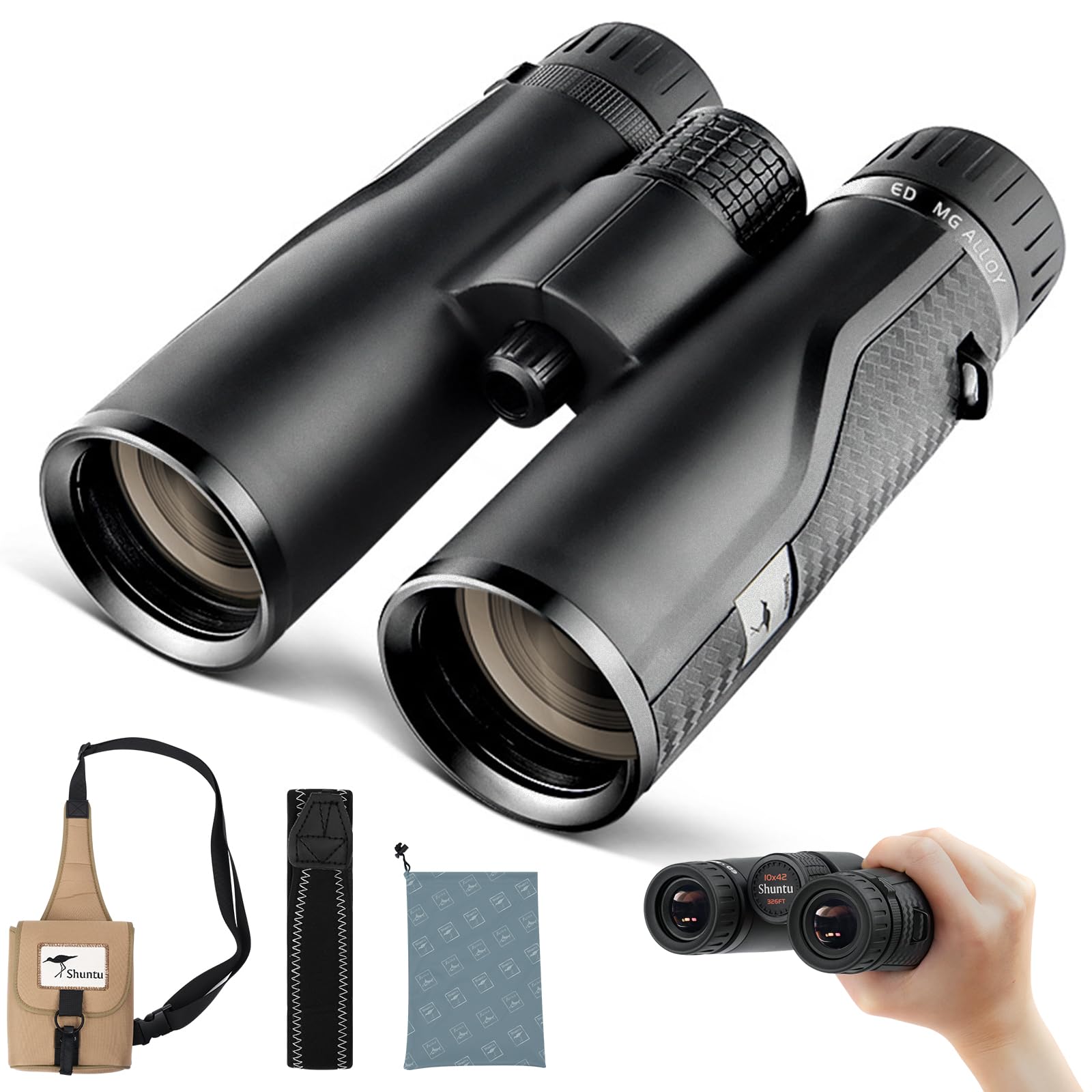
ED glass and a magnesium alloy body deliver pro-grade image quality at a budget-friendly price.
ED glass — extra-low dispersion — is the gold standard for eliminating chromatic aberration (the purple or green fringing you see around high-contrast edges in cheaper binoculars). This PEIKETAO model pairs ED glass with phase-coated BAK4 prisms and dielectric coatings that push light transmission up to 98 percent. The result is an image that owners say rivals binoculars priced at to. The apparent angle of view is a generous 7.5 degrees, and a 17.5mm eye relief is genuinely comfortable for glasses wearers.
The magnesium alloy body is 30 percent lighter than an equivalent aluminum frame, bringing the whole unit to 1.5 pounds with excellent thermal stability in hot or cold weather. It is also argon-purged to IPX7 standards, meaning it survives submersion up to 1 meter for 30 minutes without fogging. Image quality is the aspect owners mention most — 19 call it out — and the ergonomic feel and carrying case both earn praise too.
A small number of owners note that when direct sunlight hits the objective lenses at a certain angle, you can see some flare. It is not a flaw that affects most birding situations — you are rarely looking directly into the sun — but serious low-angle light can briefly wash out the view.
Color accuracy: the beginner who wants ED glass and pro-grade coatings without paying + for a name brand.
Quick users: you frequently glass in harsh low-angle sunlight and find flare unacceptable.
6. Nocs Provisions Field Issue Compact 8×42 Waterproof Binoculars
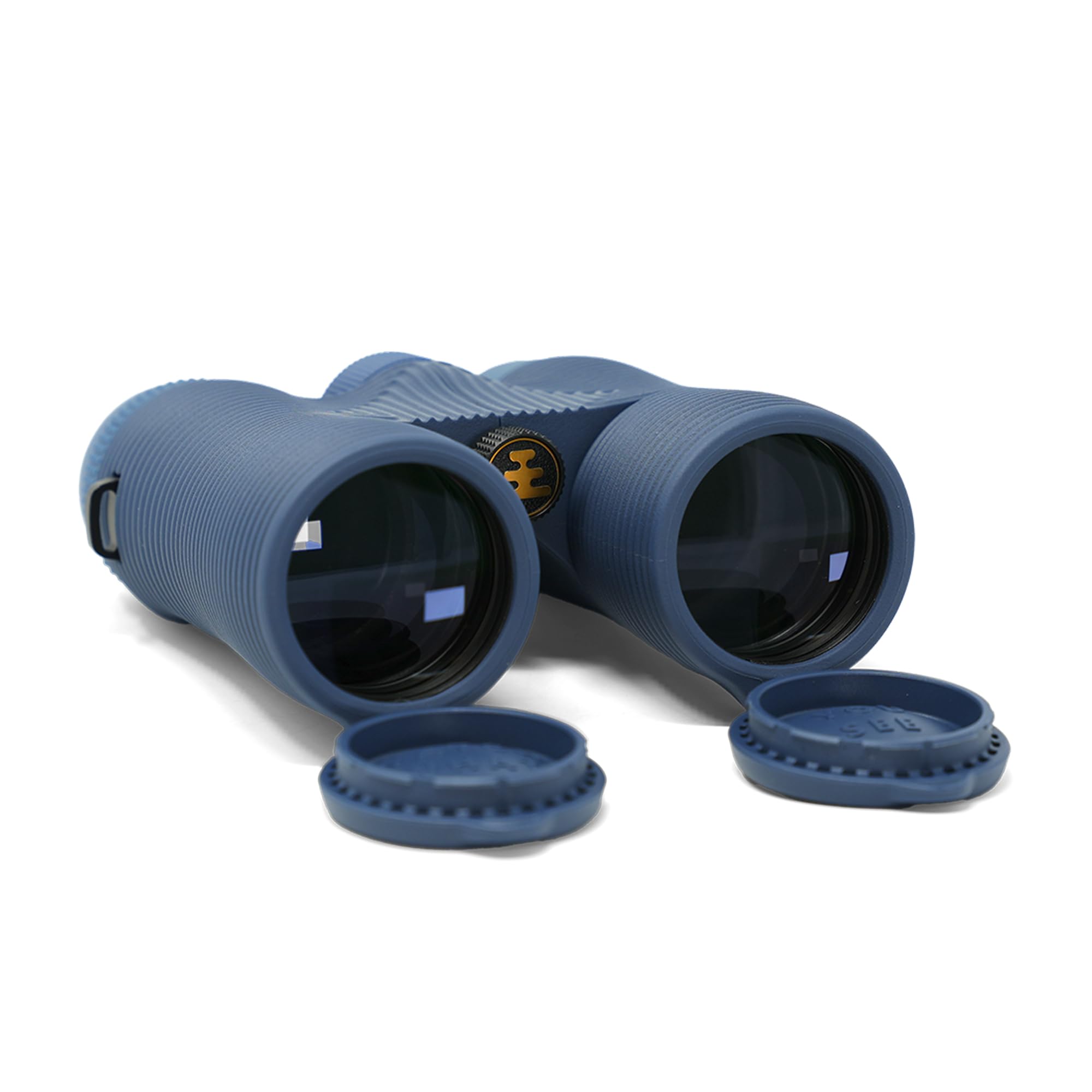
This rugged binocular offers a 5.4mm exit pupil and 20.4mm eye relief, backed by a lifetime warranty.
The Nocs Field Issue is built to roam — and backed by an unconditional “No-Matter-What” lifetime warranty. It gives you a 5.4mm exit pupil, the largest of the bunch, which means maximum light delivery to your eye even on overcast mornings. The 20.4mm eye relief ties with the Nikon for glasses-friendly viewing, and the multi-stop twist-up eyecups let you dial in the exact distance. The 394-foot field of view at 1,000 yards is wide, so scanning a treeline feels natural.
The Swiss-designed BAK4 prisms and fully multi-coated optics deliver bright, true-to-life color. The patented Rugged Wave Grip housing is impact-resistant and stays secure even with wet hands. It is rated IPX7 and nitrogen-filled, so internal fogging is off the table. Quality and clarity are the top aspects owners praise, and the lightweight 1.3-pound build gets consistent shout-outs for long walk comfort. The binocular focuses as close as 6.6 feet, which is excellent for backyard butterflies or insects.
The included case and strap are functional but felt low-quality to a few owners — they work fine for storage, but you may want to swap the strap for something nicer during a full-day outing. The “No-Matter-What” Lifetime Warranty remains the real value here.
Travel buddy: you value an unconditional lifetime warranty, maximum low-light brightness, and a durable build you can take anywhere.
Large hands: a premium-feeling strap and case matter to you straight from the start.
7. Celestron Nature DX ED 8×42 Premium Binoculars

Celestron brings ED glass to the budget-conscious birder with an optical quality that surprises longtime owners.
The Nature DX ED uses extra-low dispersion objective lenses to virtually eliminate color fringing, a common flaw in cheaper binoculars that adds a purple edge to every twig and wing. With phase-coated BAK4 prisms and dielectric coatings, it boost light transmission for bright, true-to-life color in dim light. The 17.8mm eye relief is solid for glasses wearers, and the rubber-armored polycarbonate housing is built to take bumps. It is waterproof and nitrogen-purged, so you can use it through rain and fog without worrying about internal condensation.
Optical quality is the aspect owners mention most — by a wide margin at 91 mentions — and value for money runs second at 38 mentions. Owners describe the view as “more clear than any other binoculars I’ve had a chance to use” and find it excellent for both backyard birding and moon-gazing. The focus action is smooth and the tripod-adaptable body lets you mount it for stable, extended sessions without needing an extra adapter.
Some owners flag the eyecup stability and build quality as mixed. A few note that the eyecups feel a bit fragile, and the overall construction does not feel as tank-like as the Bushnell or Nocs. If you plan to toss this into a pack without a case, you may want to treat the eyecups gently.
Optical upgrade: the budget-conscious birder who insists on ED glass to eliminate color fringing and wants a trusted California optics brand with a lifetime warranty.
Budget buyers: you need absolute ruggedness and worry about fragile eyecups getting knocked around in a pack.
Understanding the Specs
Eye Relief
This is the distance in millimeters from the eyepiece to your eye where you still see the full image without black edges. For glasses wearers, a longer eye relief — 16mm or more — makes the difference between a comfortable view and a constant struggle to get close enough. The Nikon (20.2mm) and Nocs (20.4mm) lead here. A 15mm spec like the Gosky or Timorn can still work but often requires pressing glasses firmly against the eyecups.
ED Glass (Extra-Low Dispersion)
Standard glass splits white light into colors at the edges of objects, creating an effect called chromatic aberration — that purple or green fringe you see around branches or bird wings against a bright sky. ED glass corrects this by bending different wavelengths of light closer together, delivering a clean, color-accurate image with no false coloring. The PEIKETAO and Celestron Nature DX ED both use it, which is why owners call them “crisp” and “sharp.”
Exit Pupil
The circle of light you see when you hold the binocular at arm’s length. It is measured in millimeters and equals the objective lens diameter divided by the magnification. A larger exit pupil (5.25mm or above) delivers a brighter image to your eye, especially in low light at dawn or dusk. It also makes it easier to line your eye up with the view — you see the full circle without hunting for the balance.
Field of View (FOV)
How wide a scene you can see at a single glance, usually measured in feet at 1,000 yards. A wider FOV (377 to 430 feet) means you can track a moving bird more easily because you have to pan less to keep it in view. The Timorn leads at 430 feet, followed by the Nocs at 394 feet and the Nikon at 377 feet. For scanning dense woods or open marsh, wider is almost always better.
FAQ
What does 8×42 mean on a pair of binoculars?
Is 8x or 10x better for bird watching?
What is a good eye relief for glasses wearers?
What is ED glass and is it worth paying extra for?
Do I need a waterproof binocular for birding?
How do I clean binocular lenses without scratching them?
Can I use birding binoculars for stargazing?
How much should I spend on my first binocular?
What does BAK4 prism mean?
How do I choose between the Nikon PROSTAFF P3 and the Gosky?
Final Thoughts: The Verdict
For the majority of shoppers, the birding binoculars for beginners winner is the Nikon PROSTAFF P3 8×42 because it delivers the sharpest, brightest image in this price range with the longest eye relief for glasses wearers and a proven reputation that thousands of owners back. If you want a complete starter kit with a phone adapter and tripod, grab the Gosky 8×42. And for ED glass and pro-grade coatings without the premium price tag, the PEIKETAO ED HD 8×42 is the one to reach for.
How We Picked
We do not accept paid placement. Every pick is matched to a real buyer and a real use-case; we do not hands-on test units.
Sources & Methodology
Specifications: manufacturer listings and product documentation. Review insights: verified customer reviews, as of July 2026. Pricing: not shown on this page (it changes often); check the current price via the retailer link.
As an Amazon Associate, Gadgets Feed earns from qualifying purchases. This does not affect which products we feature.