
Our readers keep the lights on and my morning glass full of iced black tea. As an Amazon Associate, I earn from qualifying purchases.
Specs are compiled from manufacturer listings and verified buyer reviews and can change over time — please confirm the key details on the product page before buying.
A window unit that both cools and heats is the smartest upgrade for a room without central HVAC, but most heat pumps stop working below 41°F outside. That threshold determines whether your bedroom stays comfortable through a cold snap or forces you to use a space heater. This guide covers the top AC and heat window units, from a whisper-quiet inverter model to a 23,000 BTU powerhouse, to help you match BTU rating and heating type to your room and climate.
I’m Min — the founder and writer behind Gadgets Feed. This guide is built by comparing the manufacturers’ published specifications and the patterns across verified customer reviews, so you get each pick’s real strengths and trade-offs instead of marketing spin.
if you need supplemental warmth for a chilly office or reliable year-round comfort for a large living area, the right ac and heat window unit balances cooling power, heating performance down to its threshold, and an acceptable noise level for the space it serves.
Quick Picks
- Midea 8,000 BTU Smart Inverter Air Conditioner — Best Overall
- ROVSUN 8,000 BTU Window Air Conditioner — Smart Value
- Garvee 8,000 BTU Window Air Conditioner — Basic All-Season
- ROVSUN 12,000 BTU Window Air Conditioner — Large Room Value
- Frigidaire 12,000 BTU Window Air Conditioner — Eco-Minded Pick
- Keystone Energy Star 12,000 BTU Inverter Air — Energy Star Efficiency
- LG 7,600 BTU Window Air Conditioner with Heat — Compact Premium
- Whirlpool 12,000 BTU 230V Window Air Conditioner — High-Output Cooler
- Soleus Air 10,000 BTU Over-the-Sill Saddle Air — Saddle Style
- Friedrich Chill Premier 8 — Premium Quiet
- LG 23,000 BTU 230V Window Air Conditioner — Maximum Output
How To Choose The Best AC And Heat Window Unit
Buying a combo window unit means committing to one machine for both seasons, so a few specs matter more than price. The three key decisions are: room size, heat type, and window fit.
Cooling Capacity — BTU and Square Footage
BTU stands for British Thermal Unit, and it measures how much heat the unit can remove from a room per hour. A higher number means faster cooling in a larger space. The rough rule: 8,000 BTU handles rooms up to roughly 350 square feet, 10,000 to 12,000 BTU works for rooms around 450 to 550 square feet, and units above 20,000 BTU can cover open-concept areas up to 1,400 square feet. Oversizing a room with too many BTUs leads to short-cycling and poor dehumidification, while undersizing means the compressor runs continuously without reaching the set temperature.
Heating Type — Heat Pump vs. Electric Heat Strip
Most window units with heat use a reversing valve that turns the cooling cycle backward — a heat pump. The main limitation is the outdoor temperature: a typical heat pump stops working effectively when the mercury falls below roughly 41°F. Some units rely on an electric resistance heat strip (like a space heater built into the chassis) which works at any temperature but uses far more electricity — roughly three times the wattage for the same warmth. If your winters dip into the 20s and you need steady heat, a model with a heat strip or a backup heater matters more than the quietest inverter pump.
Installation and Window Fit
Not every window unit fits every window. Double-hung windows are the standard, and each unit specifies a minimum and maximum width — typically 24 to 38 inches — plus a minimum vertical clearance of 14.5 inches or more. Casement or sliding windows require a different style of unit. Also factor in weight: a heavy 12,000 BTU unit can exceed 80 pounds, which demands a second person for safe installation and sturdy window framing. Saddle-style over-the-sill designs virtually eliminate the risk of the unit falling out, but they require a specific sill depth.
Noise Levels and Smart Features
A window unit sits next to the living space, so sound level is critical for daily comfort. Look for units that quote a low dBA figure — models around 45 to 54 dBA are considered quiet enough for a bedroom. Inverter technology (variable-speed compressors) produces the lowest sound because the compressor doesn’t slam on and off. Smart features like Wi-Fi and voice control let you pre-cool a room, set a timer, or adjust temperatures from bed — useful when the unit is mounted high.
Quick Comparison
| Model | Best For | BTU Cooling | Room Size | Noise Level | Amazon |
|---|---|---|---|---|---|
| Midea 8,000 BTU Inverter | Versatile year-round comfort | 8,000 | Up to 350 sq ft | 45 dBA | Amazon |
| ROVSUN 8,000 BTU | Budget-friendly smart control | 8,000 | Up to 350 sq ft | — | Amazon |
| Garvee 8,000 BTU | Basic all-season function | 8,000 | Up to 350 sq ft | 52 dBA | Amazon |
| ROVSUN 12,000 BTU | Larger rooms on 230V | 12,000 | Up to 550 sq ft | — | Amazon |
| Frigidaire 12,000 BTU | Supplemental heat with Eco Mode | 12,000 | Up to 550 sq ft | 54 dBA | Amazon |
| Keystone 12,000 BTU Inverter | Energy-sipping efficiency | 12,000 | Up to 550 sq ft | — | Amazon |
| LG 7,600 BTU | Compact reliability for small rooms | 7,600 | Up to 330 sq ft | 52 dBA | Amazon |
| Whirlpool 12,000 BTU | High-temp cooling for apartments | 12,000 | Up to 550 sq ft | — | Amazon |
| Soleus Air 10,000 BTU Saddle | No-fall installation | 10,000 | Up to 450 sq ft | — | Amazon |
| Friedrich Chill Premier 8,000 BTU | Ultra-quiet premium build | 8,000 | Up to 350 sq ft | — | Amazon |
| LG 23,000 BTU | Large open spaces | 23,000 | Up to 1,400 sq ft | 62 dBA | Amazon |
In‑Depth Reviews
1. Midea 8,000 BTU Smart Inverter Air Conditioner with Heat

The inverter unit that redefines quiet for a bedroom or office.
This Midea is the crowd favorite and the reason is clear: its variable-speed inverter compressor runs at a noise level as low as 45 dBA — quiet enough that buyers report barely noticing it during a Zoom call or while sleeping. The 8,000 BTUs handle spaces up to 350 square feet, and the heat pump provides supplemental warmth down to 41°F outside. What wins people over is the noise level — over 120 owners single out the quiet operation as the top reason to buy, and energy efficiency gets another 30 buyers nodding along.
The honest trade-off is the heat pump’s low-temperature cut-off. Below 41°F, the heater shuts off, and in colder climates you will need a backup heater. The recurring gripe from the review pages is also the reliability — some units developed control panel issues or random mode changes. The crowd favorite for sound and efficiency, but not a primary heat source for harsh winters. As the review pages sum it up: “very quiet inverter heat pump” that “uses 1/3 the power” of a standard unit.
Why it stands out
- Ultra-low 45 dBA noise — quieter than most bedroom fans
- Variable-speed inverter draws under 500W typical usage, trimming energy bills
- SmartHome app plus Alexa and Google Assistant for remote control
What to know
- Heat pump stops working below 41°F; needs supplemental heat in deep cold
- Heavy unit at roughly 80 lbs; stresses lightweight window frames
- Some reports of control panel unresponsiveness after several months
Reach for it if: you want the quietest inverter-driven unit for a bedroom or office and have mild winters where temps rarely drop below 41°F.
Look elsewhere if: your winters see sustained freezing — the heat pump limitation will leave you cold.
2. ROVSUN 8,000 BTU Window Air Conditioner with Heat

An 8,000 BTU combo that throws in full app control without the premium price.
ROVSUN packs a lot of convenience into a budget-friendly package: Wi-Fi and voice control via Alexa and Google Assistant, plus five operating modes (Heat, Auto, Cool, Dry, Fan) and a 24-hour timer. The 8,000 BTU cooling and 4,000 BTU resistive heating serve rooms up to 350 square feet. Heat performance is the most-praised aspect among owners — 19 buyers single it out — and the installation is described as straightforward with the included mounting kit for windows 26 to 36 inches wide.
The catch is that cooling performance is the most-mixed aspect, with 33 owner notes. Some say it works great for a 34-foot RV, while others report it takes time to bring down the temperature. A smaller group mentions noise — one buyer calls it “kinda noisy” — and the remote’s dim display draws complaints. Good for someone who wants smart features at a lower entry point but is flexible on cooling speed.
What impresses
- Full Wi-Fi and voice control — adjust temps from anywhere via phone or voice
- Heat function is the top-rated feature; owners find it effective for supplemental warmth
- Easy installation with included side panels for standard double-hung windows
What to weigh
- Cooling takes time — not a rapid-chill unit for quick relief on hot days
- Some buyers find the condenser noise noticeable, especially on high fan speed
- Remote display numbers are hard to read in low light
Best for: budget-conscious buyers who prioritize smart home integration and need a reliable secondary heat source in mild weather.
Think twice if: you need instant, powerful cooling in a large room — this unit is better suited to small-to-medium spaces.
3. Garvee 8,000 BTU Window Air Conditioner with Heat
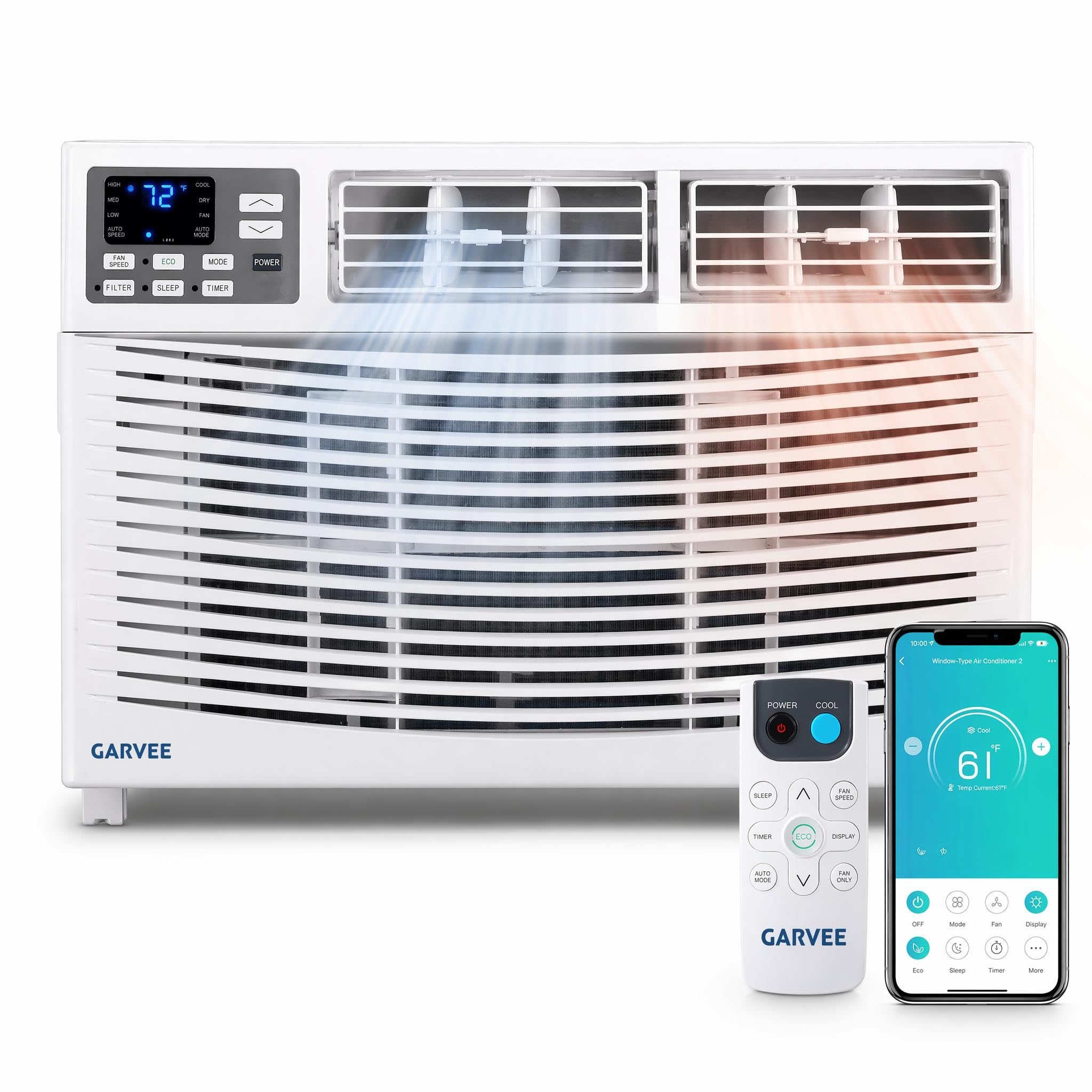
An 8,000 BTU four-mode unit that keeps it simple — but noise is a sticking point.
Garvee’s 8,000 BTU unit handles cooling, heating, dehumidifying, and fan-only modes for rooms up to 350 square feet. It offers smart control via an app and works with Alexa, plus a sleep mode and ECO energy-saver. The annual energy consumption is 1,838 kWh per year — notably higher than inverter models — which is the trade-off for the simpler compressor design. Owners call the installation easy, and the washable filter with a clean alert is a nice convenience.
The noise level is the main sticking point: at 52 dBA it is louder than premium inverters, and one buyer flatly says it is “super loud” — the TV has to be turned up. A separate buyer reports a scary installation mishap where the unit fell out of the window. Good for a basement, garage, or living room where noise is less critical and you want all four functions at a mid-range price.
Bottom line: The Garvee works for small rooms and offers app control, but the noise and relatively high energy consumption make it a better fit for spaces where quiet isn’t the priority.
Choose it if: you need a straightforward 4-in-1 unit for a small room and don’t mind the audible hum of a non-inverter compressor.
Pass on it if: a quiet bedroom is non-negotiable or you have a tight budget for electricity — the 1,838 kWh/year will show on your bill.
4. ROVSUN 12,000 BTU Window Air Conditioner with Heat
A 12,000 BTU unit for larger rooms that delivers strong results once the tricky install is done.
Stepping up to a 12,000 BTU unit covering up to 550 square feet, this ROVSUN runs on a 208/230V line — not a standard 115V outlet. Owners praise the functionality above all else (19 mentions), with one buyer reporting it outperforms a 14,000 BTU portable unit and an old 10,000 BTU window unit, cooling a 350-square-foot room down to 62°F. It also includes Wi-Fi control and voice compatibility with Alexa and Google Assistant.
The downside: installation is the most-mixed aspect. The unit requires removing the chassis, installing the casing, and then sliding the guts back in — a two-person job. A smaller number of owners mention a loud compressor despite the quiet claims. One owner also notes that the remote, the app, and the unit screen can get out of sync. A solid performer for the right buyer, especially if you have a 230V outlet ready.
What works
- Strong 12,000 BTU output; owners say it outperforms larger portable and older window units
- Wi-Fi and voice control for convenient remote adjustments
- Fast replacement service when a unit arrives defective
What requires patience
- Installation is tricky — requires disassembling the chassis to mount the casing
- Requires a 208/230V outlet, not a standard 115V household plug
- The compressor can be loud, despite marketing claims about quiet operation
Ideal if: you have a 230V outlet and a large living room or basement that needs consistent year-round temperature control.
Avoid if: you want a quick plug-and-play installation or only have standard 115V outlets available.
5. Frigidaire 12,000 BTU Window Air Conditioner with Supplemental Heat
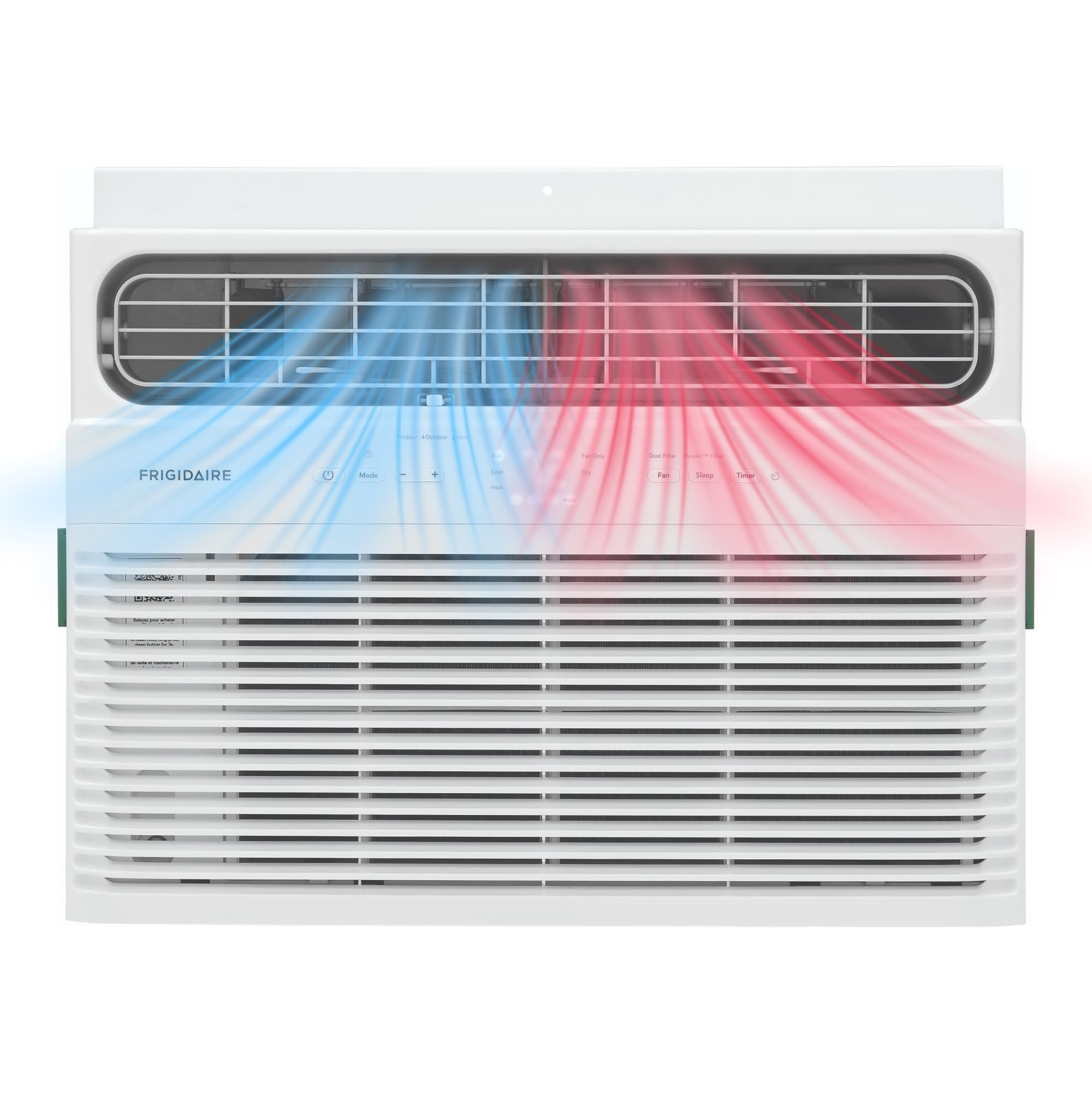
A 12,000 BTU name-brand unit with Eco Mode, Sleep Mode, and a filter light reminder.
Frigidaire’s entry brings a recognizable name and a set of thoughtful features: an Eco Mode that maintains the set temperature while saving energy, a Sleep Mode for quiet overnight operation, a 24-hour on/off timer, and a clean-filter alert. It runs at a noise level of 54 dBA — quiet enough for a living room. The 12,000 BTUs cover up to 550 square feet, and the supplemental heat function is designed for those days when your primary heating system isn’t quite enough. One buyer says it “gets very cold” and looks nice.
The big catch is that this unit requires a 240VAC outlet with a proprietary plug, not a standard 115V household outlet. A few buyers also report a lack of a slide-in chassis — one called it an “odd size” that makes finding a sleeve impossible. The supplemental heat is not a primary source for freezing winters; it’s for taking the chill off a cool room.
The short read: A solid, name-brand performer for large rooms with a 240V outlet ready to go. skip it if you only have standard 115V or need a slide-out chassis for semi-permanent wall installation.
Reach for it if: you have a 240V outlet, want a recognizable brand, and value energy-saving modes for your living room.
Look elsewhere if: you need a standard 115V plug or a sleeve-style unit for a through-wall installation.
6. Keystone Energy Star 12,000 BTU Inverter Air Conditioner with Heat
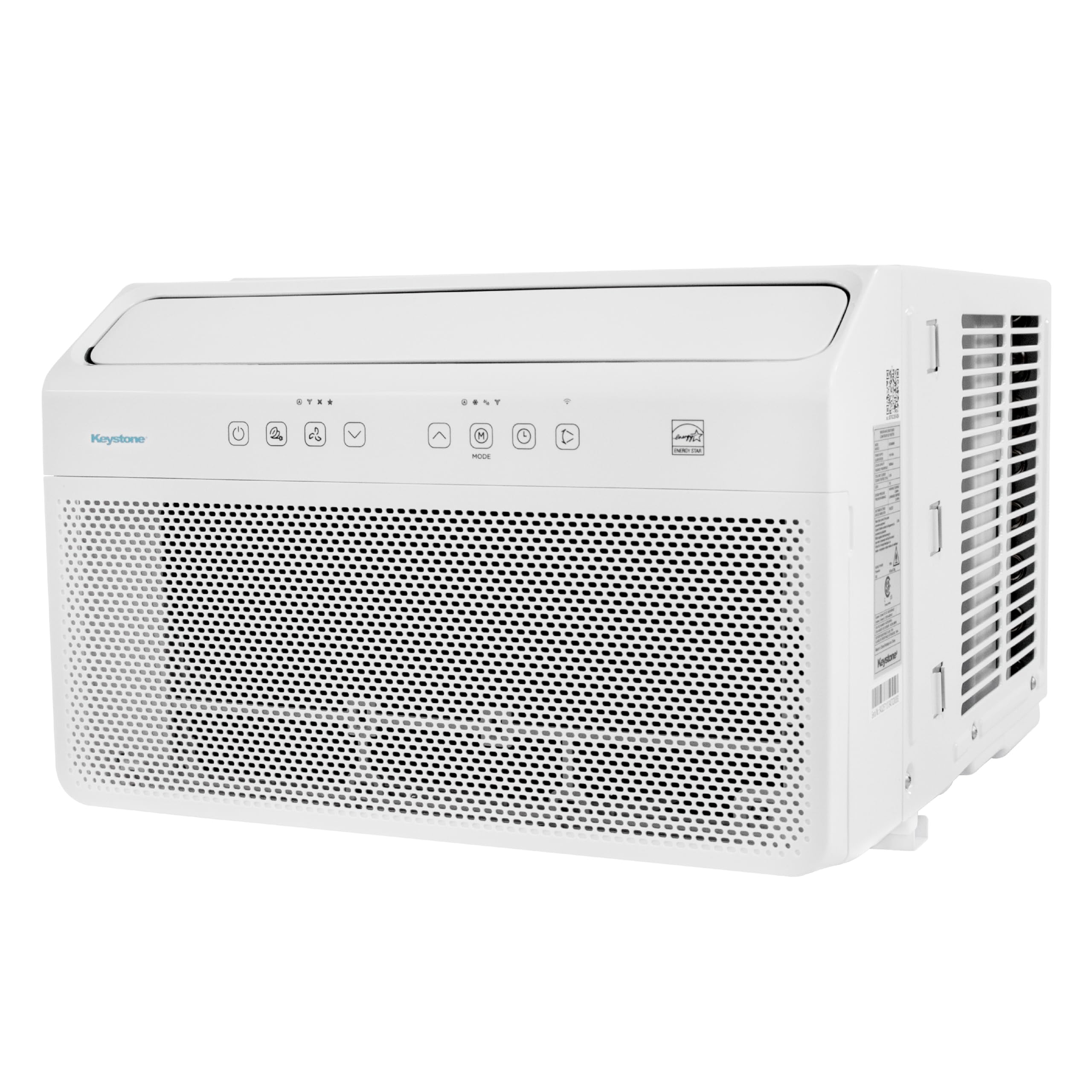
An inverter-driven 12,000 BTU unit that cuts energy use and runs quieter than a standard compressor.
Keystone’s inverter technology works by varying the motor speed to match the cooling demand, which makes this unit quieter than a regular window unit. The 12,000 BTU cooling and 10,000 BTU supplemental heating cover up to 550 square feet, and it pulls out 1.73 pints of moisture per hour. The SEER rating is 13.3, and owners confirm it “works better than expected” — one buyer ran it in a detached garage in Southeast Virginia and saw only a increase in the monthly electric bill while keeping the space comfortable through summer.
The heat performance is the most-discussed aspect (12 mentions) and it gets a mixed verdict. The unit supplements heat well above 40°F but fails to heat effectively below that — it has no defrost feature. One owner says it stopped cooling reliably after 10 months and reports a difficult warranty experience. Good for mild climates where you mainly need cooling and occasional shoulder-season warmth.
Standout strengths
- Inverter technology delivers quieter operation on low speed compared to conventional units
- High SEER rating of 13.3, reflected in a low electric bill impact
- Fits windows with a minimum of 24 inches wide and 14.5 inches high
Limitations
- Heating mode is supplemental only; ineffective below 40°F and has no defrost cycle
- Warranty experience was a headache for one owner whose unit failed within the first year
- Runs on 115V — not suitable for quick cooling of large open-concept areas
Pick it if: energy efficiency and low noise are your top priorities for a mid-sized room in a mild climate.
pass on it if: you need a reliable primary heat source for winter — this unit’s heat pump stops being effective below 40°F.
7. LG 7,600 BTU Window Air Conditioner with Heat
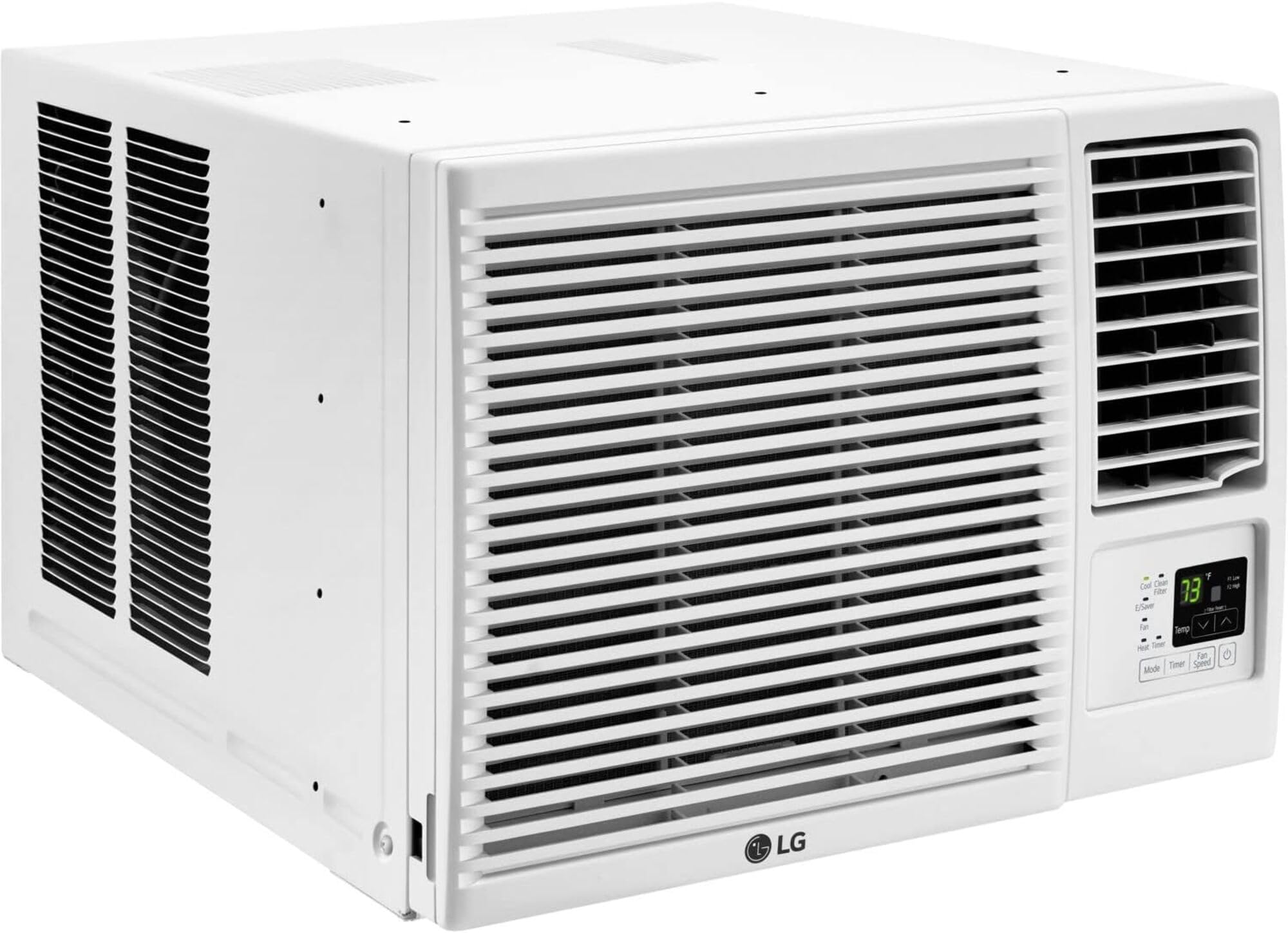
An LG that offers the familiar slide-out chassis for those replacing old through-wall units.
This 7,600 BTU unit from LG uses a slide-in-out chassis, which made it a direct replacement for one owner’s 22-year-old through-wall AC — no wall modifications needed. It cools rooms up to 330 square feet and provides supplemental heat via an electric strip. The sound level is 52 dBA on low mode, quieter than the old unit it replaced. It includes two cooling and two heating speeds, a 24-hour timer, and an Auto Restart feature that returns the unit to its previous settings after a power outage.
The heat performance is limited by recent efficiency regulations — one buyer notes that below 40°F, the heat output drops significantly and the unit blows cool air, forcing the purchase of extra heaters. Another buyer says the installation is not plug-and-play: you must remove the outer casing, slide in the chassis, and it takes two people due to the weight. Good for those who need a compact, name-brand unit with a specific slide-out chassis for a tight space.
Key takeaway: A reliable small-room unit from a trusted brand, but its heating is supplemental only and the installation demands more effort than a typical window unit.
Ideal for: replacing an existing through-wall or window unit with a slide-out chassis in a small bedroom or office up to 330 square feet.
Not for: anyone needing primary winter heat or a single-person installation.
8. Whirlpool 12,000 BTU 230V Window Air Conditioner with Supplemental Heat
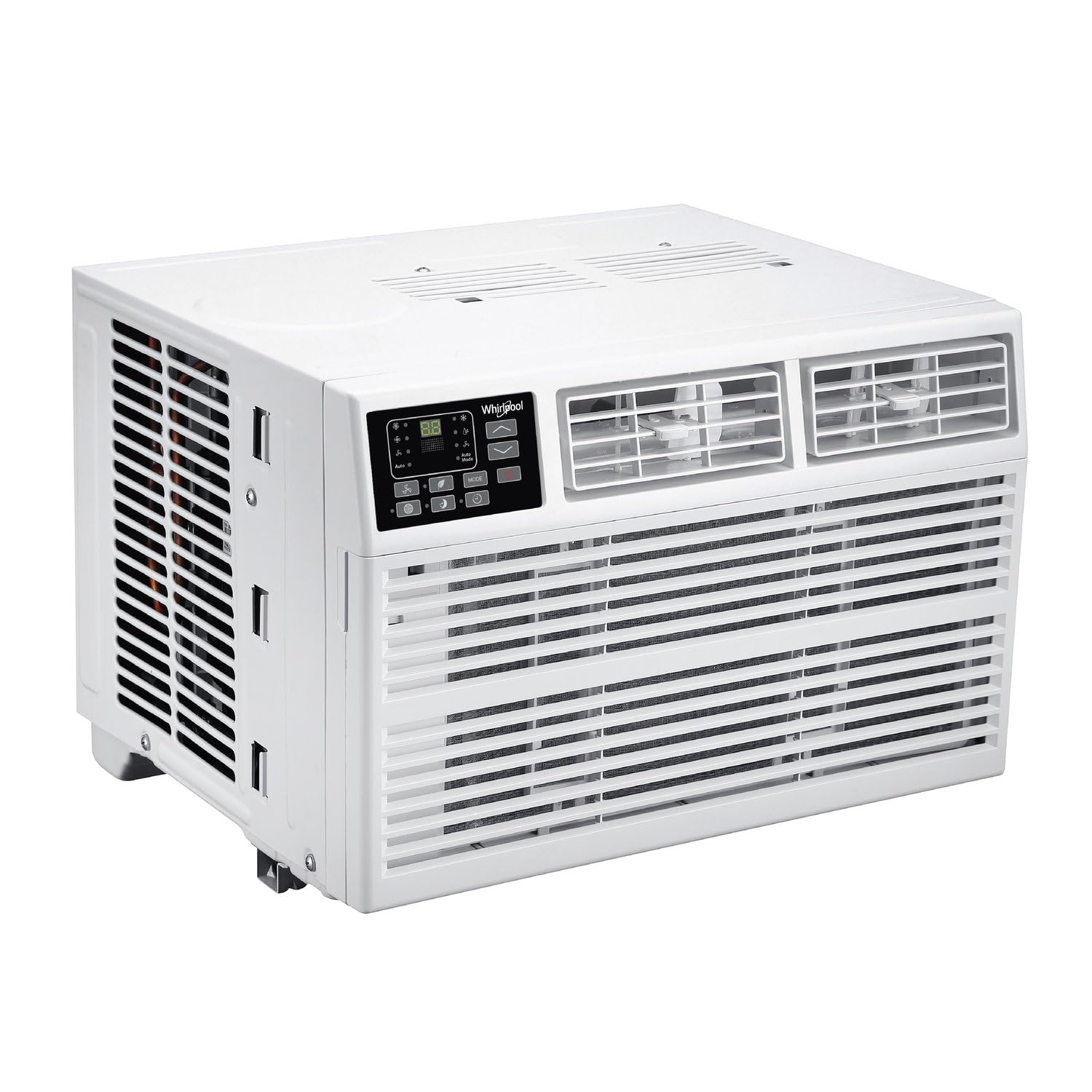
A powerful 12,000 BTU 230V unit that impressed with its heat output but raised durability concerns.
Whirlpool’s entry packs 12,000 BTUs of cooling and 11,000 BTUs of supplemental heating into a 230V unit rated for rooms up to 550 square feet. The heat mode worked so well that one owner living in a 312-square-foot studio said it kept the space warm “all this winter” despite a string of days where outside temperatures were in the teens. It includes eco mode, sleep mode, a programmable 24-hour timer, and an 8-way directional louver for custom airflow. The installation requires a minimum window height of 19.5 inches.
The most-discussed aspect is reliability, and it gets a mixed verdict — nine mentions. While some units work perfectly, the negative feedback is notable: one buyer says their unit “only lasted a year” and others report durability issues. The aspect Durability (6 mentions) is marked as NEGATIVE in the review data, which is an honest flag. An occasional unit also arrives with cosmetic damage from shipping. The heat is genuinely powerful when it works, but you are taking a chance on long-term reliability.
What it does well
- Supplemental heat kept a small studio warm through a cold winter with temps in the teens
- 8-way directional louvers provide flexible airflow across the room
- Eco and sleep modes help manage energy consumption
Risks to consider
- Reliability is the top concern; a notable number of units fail after a year
- Requires a 230V outlet — not a standard 115V plug
- Some units arrive with cosmetic damage; the ground pin has been reported loose on delivery
Go for it if: you need powerful, reliable heat during cold snaps and are prepared for a 230V installation in a medium apartment.
Be cautious if: long-term durability is a dealbreaker — the review data suggests a risk of failure within the first year.
9. Soleus Air 10,000 BTU Over-the-Sill Saddle Air Conditioner with Heat

A saddle design that hugs the sill for a secure, no-fall installation and a clear view out the window.
The Soleus Air is different from every other unit on this list. Instead of a box that sits in the window opening, it straddles the sill like a saddle, keeping the window glass almost fully visible. It is rated at 10,000 BTU for rooms up to 450 square feet, and the manufacturer says it requires no tools to install. It includes Wi-Fi connectivity via the Soleus Home Comfort app, and it supports cooling, heating, dehumidification, and fan-only modes. Two customers note their units have been running since early 2025 and cooled well even when outside temps exceeded 90°F in New England.
The reliability and noise are the biggest concerns: the unit is the most-discussed aspect for reliability (28 mentions) and it gets a mixed verdict, with a significant number of owners reporting failures “within minutes to a few months.” One owner says the unit made a “horrible” noise, shook the house, and threw a P7 error code after 15-20 minutes of run time. The noise level is marked as NEGATIVE in the data (21 mentions). The clever saddle design makes it exceptionally stable, but the electrical reliability is a gamble.
What’s unique
- Saddle design straddles the window sill, making it nearly impossible to fall out
- Leaves the window view mostly unobstructed — a rare feature for a window unit
- No-tools-required installation for double-hung windows up to 12.5 inches sill width
What’s risky
- Reliability is a major concern; many units fail shortly after installation
- Significant complaints about compressor vibration and noise that “shakes the house”
- Customer service is described as unhelpful when units arrive damaged or fail
Choose it if: the saddle form factor is essential for your window setup and you are comfortable with the risk of early failure.
Avoid it if: reliability and quiet operation are your top requirements for a year-round unit.
10. Friedrich Chill Premier 8,000 BTU Air Conditioner with Heat

A Friedrich built for permanent installation with sound-dampening insulation and a quiet compressor.
Friedrich positions the Chill Premier as a premium semi-permanent unit for window or through-wall installation. It is rated at 8,000 BTU cooling and 4,200 BTU electric heating, and it claims to run up to 25% quieter than other units on the market thanks to heavy-duty insulation and a stiffened sheet-metal casing. It has a slide-out chassis for easier servicing, and it uses the Friedrich Go App for Wi-Fi and voice control via Alexa or Google Home. Buyers consistently call it quiet and note it produces adequate temperature control.
The catch is the Wi-Fi and remote control. One owner says they are “useless” and that the panel controls do not sync with the remote or the app. The Friedrich builds a truly quiet machine, but the smart features feel half-baked. Good for someone who values a rock-solid, quiet unit and is fine using the panel controls.
What to expect: One of the quietest window units available, but the Wi-Fi and remote experience may frustrate tech-savvy users. Best treated as a high-end manual unit.
Ideal for: permanent installation in a noise-sensitive room where you’ll use the panel controls for daily adjustments.
Not ideal if: you rely heavily on app control and want smooth smart home integration.
11. LG 23,000 BTU 230V Window Air Conditioner with Heat
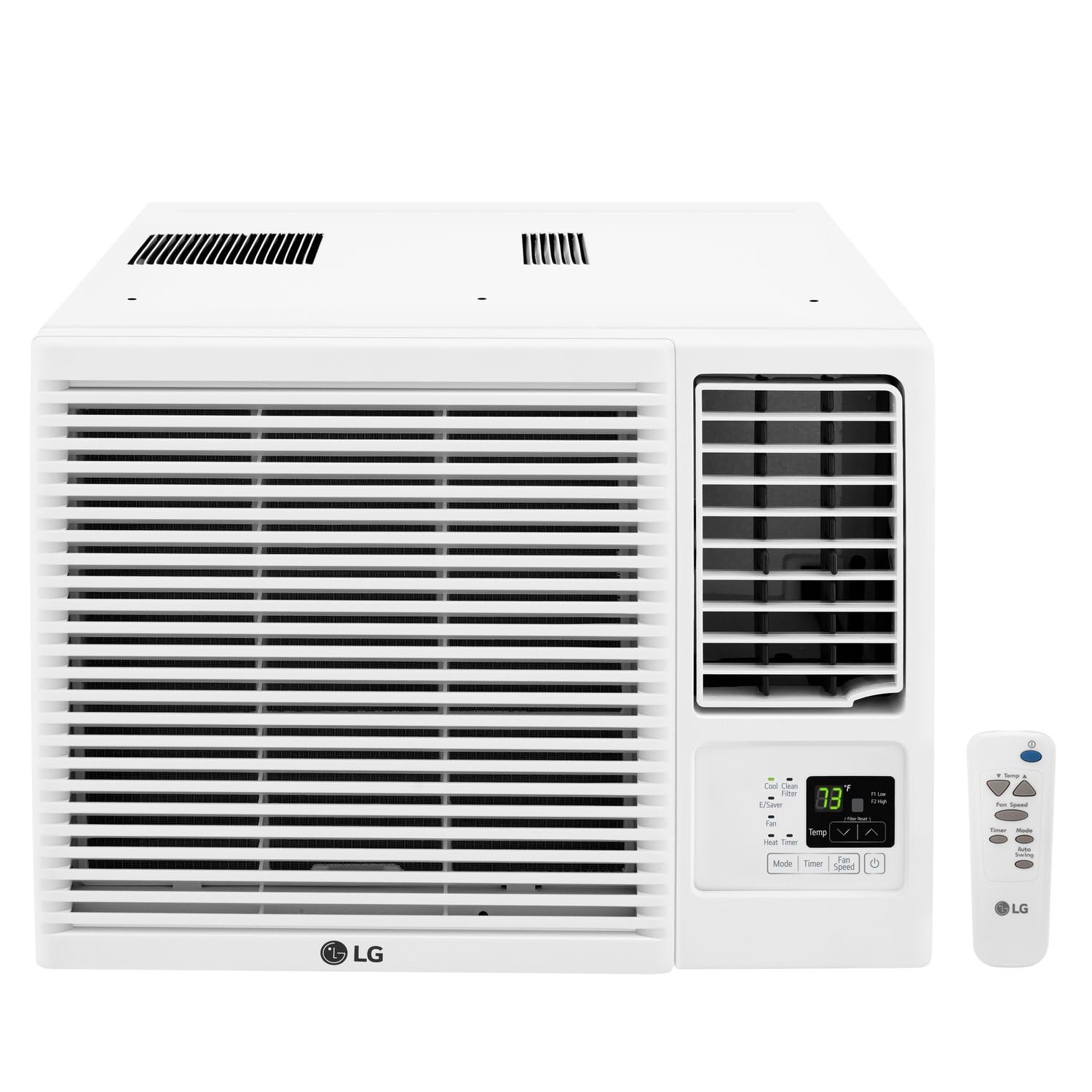
A beast of a unit that single-handedly conditions up to 1,400 square feet of living space.
This LG is the undisputed heavyweight: 23,000 BTU of cooling and 9,200 to 11,200 BTU of supplemental heating for rooms up to 1,400 square feet — that is essentially an entire floor of an apartment or a large open-concept living and dining area. It runs on 230V and offers two cooling, heating, and fan speeds. The Auto Restart feature is a welcome addition for areas with power flickers. One owner says it has been “a lifesaver especially in the winter months” and notes it is easy on the electric bill. The sound level is 62 dBA on low, which is noticeably louder than smaller units but expected given the output.
Reliability is the most-discussed aspect with 18 mentions, and it gets a mixed verdict. A few reviewers point out the unit stops cooling after less than six months, and one says the AC “doesn’t blow cold air” from the start. Another buyer reports a dead unit that the company refused to take back. A powerful machine for huge spaces, but quality control seems inconsistent — factor in an extended warranty or buy from a retailer with a generous return policy.
What it delivers
- Massive 23,000 BTU cooling capacity for rooms up to 1,400 square feet
- Supplemental electric heat works in any outdoor temperature
- Auto Restart function restores settings after a power outage
What to watch for
- Reliability is a concern; some units fail within months of purchase
- Requires a dedicated 230V outlet — not compatible with standard household wiring
- At 62 dBA, it is loud enough to be noticeable in a quiet room
Reach for it if: you need to cool and heat a very large space from a single window unit and have a 230V outlet.
Be aware: the power comes with risk — reliability is inconsistent, so consider a protection plan with your purchase.
Understanding the Specs
BTU — British Thermal Units
This is the number that tells you how much heat the unit can remove from a room in an hour. A higher BTU rating means faster cooling in a larger space. An 8,000 BTU unit typically handles a room up to 350 square feet, while a 12,000 BTU unit can cover up to 550 square feet. The 23,000 BTU LG can condition up to 1,400 square feet. Choosing the right BTU is essential: too few BTUs means the unit runs non-stop and never catches up, and too many for the room size causes short-cycling, which wastes energy and fails to dehumidify the air properly.
Heat Pump vs. Electric Heat
A heat pump reverses the cooling cycle to produce warmth, which is very efficient — typically using 600 to 800 watts to deliver 7,000 BTU of heat. The trade-off is that most heat pumps stop working when the outdoor temperature drops below 41°F. An electric resistance heat strip (like a space heater built into the unit) works at any temperature but uses more electricity for the same warmth. Units with electric heat (like the Friedrich and the LG 23,000 BTU models) are better for cold climates, while heat pumps are ideal for mild winters.
Inverter Compressor
A standard compressor runs at full speed until the target temperature is reached, then shuts off completely. An inverter compressor varies its speed continuously, matching the exact cooling demand. This makes inverter units noticeably quieter — noise levels as low as 45 dBA on the Midea — and significantly more energy-efficient because the motor never wastes power restarting. Units like the Keystone advertise being quieter on low speed than conventional units. The downside is a higher upfront cost, though the energy savings often recover the difference over a few seasons.
Window Fit and Voltage
Two numbers define whether a unit can physically go in your window: the minimum and maximum width (typically 24 to 38 inches for double-hung windows) and the minimum vertical opening (usually 14.5 to 16 inches). Always measure your window opening before ordering. Voltage is just as critical — most smaller units run on standard 115V outlets, but larger models (12,000 BTU and above) often require a dedicated 208V or 230V outlet, which needs professional installation. Buying a 230V unit without confirming the outlet is the most common installation mistake.
FAQ
Will a window AC with heat work below freezing outdoors?
What size AC and heat window unit do I need for a 400 square foot room?
Can I install a window AC and heat unit in a casement or sliding window?
What is the difference between a heat pump and electric heat in a window unit?
How do I know if I need a 115V or 230V window unit?
Why does my window AC with heat blow cold air when I turn on the heat?
How loud is a typical window AC and heat unit?
How long does a window AC and heat unit typically last?
Can I use a window AC and heat unit as my primary heat source in winter?
Do window AC units with heat also dehumidify the air?
Final Thoughts: The Verdict
For most people, the ac and heat window unit winner is the Midea 8,000 BTU Inverter because it delivers the quietest operation, lowest energy draw, and the most overwhelmingly positive owner feedback on noise and quality. If you want the raw power for a large space, grab the LG 23,000 BTU unit. And for those on a tighter budget who still want Wi-Fi and voice control, the ROVSUN 8,000 BTU is the one to reach for.
How We Picked
We do not accept paid placement. Every pick is matched to a real buyer and a real use-case; we do not hands-on test units.
Sources & Methodology
Specifications: manufacturer listings and product documentation. Review insights: verified customer reviews, as of July 2026. Pricing: not shown on this page (it changes often); check the current price via the retailer link.
As an Amazon Associate, Gadgets Feed earns from qualifying purchases. This does not affect which products we feature.