
Our readers keep the lights on and my morning glass full of iced black tea. As an Amazon Associate, I earn from qualifying purchases.
Specs are compiled from manufacturer listings and verified buyer reviews and can change over time — please confirm the key details on the product page before buying.
You are about to spend over a thousand dollars on a 36-inch French door refrigerator, and the single biggest risk is ending up with one that cools unevenly, runs out of room for a full grocery run, or breaks down after the first year. The wrong pick means lost food, costly repairs, or a fridge that does not fit your kitchen. Here is how six top models actually compare on the specs that matter.
I’m Min — the founder and writer behind Gadgets Feed. This guide is built by comparing the manufacturers’ published specifications and the patterns across verified customer reviews, so you get each pick’s real strengths and trade-offs instead of marketing spin.
The right 36 inch french door refrigerator depends on matching its total capacity (measured in cubic feet), annual energy use (measured in kilowatt hours, or kWh), and door-swing depth to how your household shops and cooks every week.
Our Picks at a Glance

How To Choose The Best 36 Inch French Door Refrigerator
Choosing a 36-inch French door fridge means locking in three critical specs before you even look at finishes or ice makers. Get these right, and the fridge will serve you for a decade or more.
Capacity: Total Cubic Feet vs. Your Kitchen Flow
A larger capacity (27+ cubic feet) suits families who stock up weekly, while a smaller, counter-depth model (around 22 cubic feet) creates a built-in look but means less room for sheet pans and tall bottles. Measure what you actually store.
Depth: Counter-Depth vs. Full-Depth
A full-depth model sticks out past your counters by several inches, while a counter-depth model sits flush for a smooth look. Check the “depth with door open” spec — a fridge that needs 48 inches of clearance won’t work in a narrow galley kitchen.
Door Shelf Count and Layout
Door shelves hold your daily milk, juice, and condiments. The count ranges from 6 to 9 across these models — more shelves mean better organization for different bottle sizes, but fewer shelves often pair with larger gallon bins. Match the layout to what your household actually drinks.
Quick Comparison
| Model | Best For | Total Capacity | Door Shelves | Annual Energy | Amazon |
|---|---|---|---|---|---|
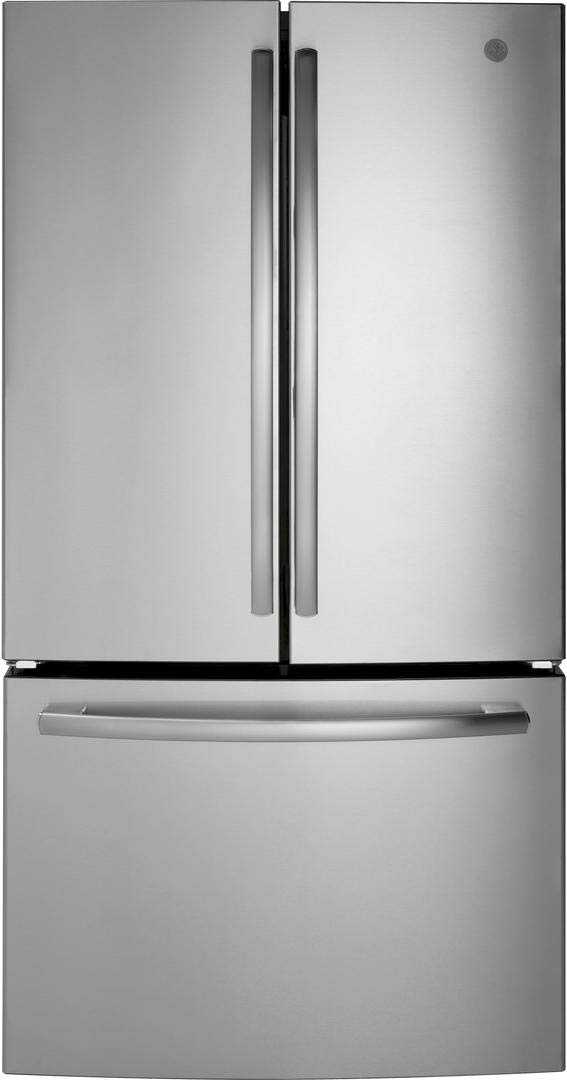
| GE Profile PVD28BYNFS★ Best Overall | Convertible flexibility | 27.9 cu. ft. | 6 | 722 kWh | Amazon |
| GE GNE27JYMFSBest Value | Value without water dispenser | 27 cu. ft. | 8 | 633 kWh | Amazon |
| Frigidaire FRFS2823A | Budget-friendly capacity | 27.8 cu. ft. | 9 | 725 kWh | Amazon |
| Forno Moena 36″ | Pro-style compact design | 19.2 cu. ft. | — | 238 kWh | Amazon |
| GE GYE22GYNFS | Counter-depth sleek look | 22.1 cu. ft. | 6 | 665 kWh | Amazon |
| Kenmore 28.6 cu. ft. | Maximum fridge space | 28.6 cu. ft. | 2 | 740 kWh | Amazon |
In-Depth Reviews
1. GE Profile PVD28BYNFS
Our pick — over 4★ from 90+ verified ratings; the strongest balance of quality and price.
You get a convertible middle drawer that no other fridge here offers — it switches between fridge, freezer, or a drink/deli zone at the touch of a button.
This GE Profile combines a huge 27.9 cubic feet of total capacity with that convertible drawer, which owners call a real standout for party platters or extra deli storage. The external water and ice dispenser (an ice and water dispenser built into the door) gives you cold filtered water plus cubed and crushed ice. Its fingerprint-resistant stainless steel (a coating that resists smudges from your fingers) keeps the front door clean. Owners consistently praise the bright, adjustable LED lighting (lights that you can reposition) and the flexible storage layout.
Reviewers report the fridge section reaches temperature fast, and the convertible drawer’s separate settings add versatility. The soft-close vegetable drawers (drawers that close slowly on their own) and the Door-In-Door feature (a small door within the main door that stays about 5°F warmer for quick-access items like drinks) get frequent shout-outs. The trade-off is that it has only six door shelves — half the count of the Frigidaire FRFS2823A below. Some buyers report the ice bin is smaller than traditional models, and one owner said the door leveling process took them a full 1.5 days to get right. This is the most flexible pick for anyone wanting a drawer they can toggle for different uses.
The convertible edge: The middle drawer’s dual-temperature zone is a real advantage over the standard GE models below, which lack that adjustability.
Worth noting: The depth with the door fully open stretches to 48.38 inches, so measure your kitchen clearance carefully before buying.
Reach for this if you: need maximum flexibility from your fridge layout and want the convertible drawer for party platters or extra deli storage.
Think twice if you: rely on door shelf organization for many bottles — the six-shelf count is half what the Frigidaire offers.
2. GE GNE27JYMFS
Eight door shelves let you store every daily bottle, jar, and carton within easy reach — two more than the GE Profile above.
At 27 cubic feet, this GE model lands right in the balance of capacity while using just 633 kilowatt hours per year — the most energy-efficient of the full-sized options here. The internal water dispenser (a water tap inside the fridge, not on the door) keeps the front door clean. The Quick Space shelf slides out of the way to fit tall bottles. Owners like the LED lighting and the ability to turn off the ice maker if you prefer, and early reviewers praise the quiet compressor (the motor that cools the fridge).
What makes this a value pick is that you get eight door shelves versus the Profile’s six, a slightly smaller door-swing depth at 43.75 inches (good for tighter kitchens), and lower annual energy consumption. The trade-off is a mixed long-term reliability picture. One owner reported cooling system trouble after year one, saying they “bought it three years ago and I have been having problems after the first year specifically with the fridge cooling system.” The rotary compressor (a simpler motor type) and electric defrost are less advanced than the inverter compressor (a variable-speed motor that adjusts power) on the Forno Moena, which could mean a shorter lifespan under heavy use.
Where it saves you
- 633 kWh per year — the lowest energy draw of the full-size options
- 8 door shelves beat the Profile’s 6 for daily bottle organization
Where it cuts corners
- Mixed owner reports on cooling system reliability past year one
- Limited shelf adjustability compared to the higher-end Profile models
The GE GNE27JYMFS wins if you want the lowest electricity bill among full-sized models and eight door shelves for bottles. But if you plan to keep the fridge a decade and want a convertible drawer, the GE Profile is the safer long-term bet.
3. Frigidaire FRFS2823A
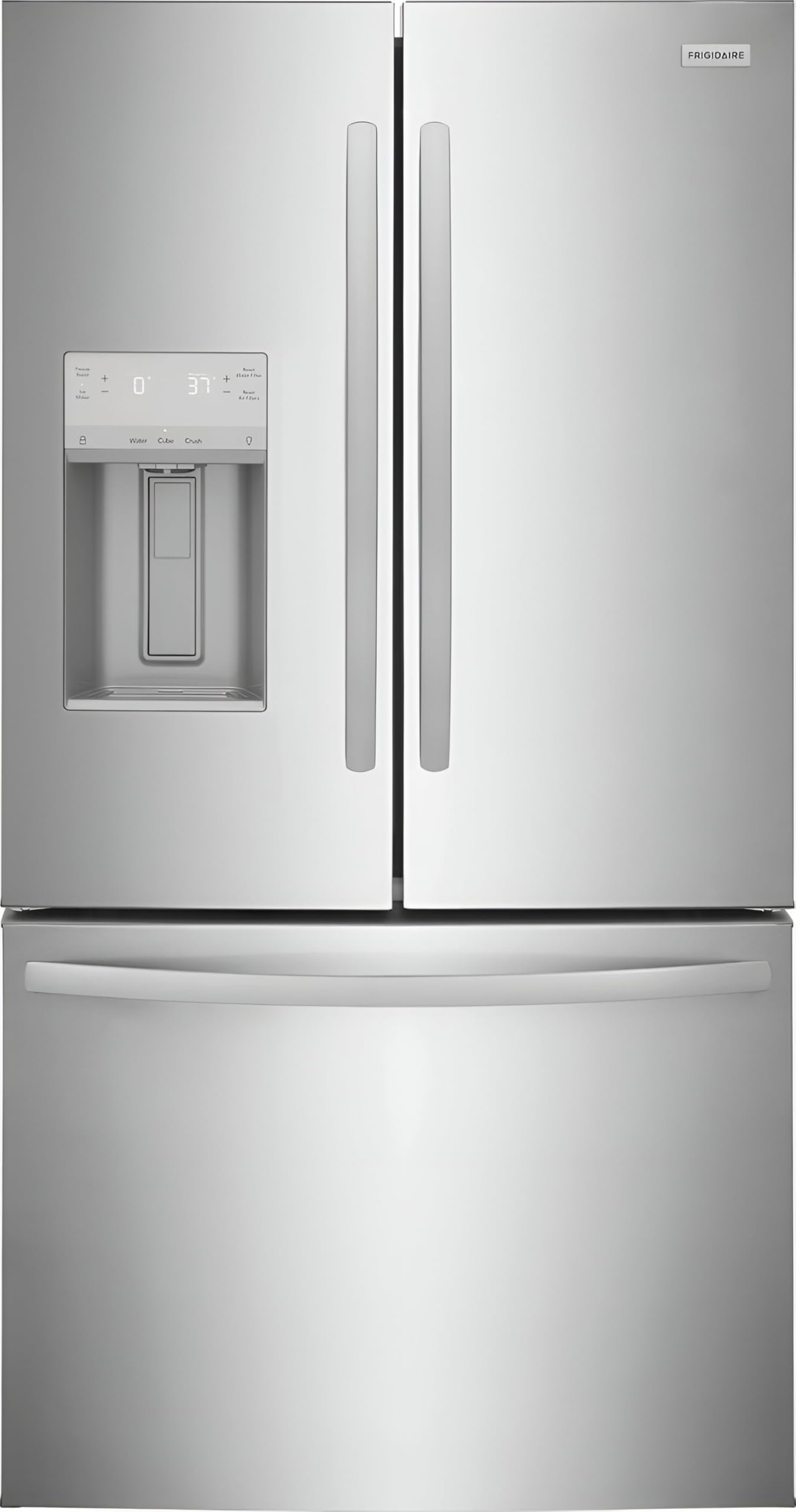
Nine door shelves — versus the GE Profile’s six — make this the bottle-organization champion for households with lots of jars and cartons.
This Frigidaire packs 27.8 cubic feet of total capacity into a familiar stainless steel body with an external water and ice dispenser (a tap and icemaker on the door). The fridge portion measures 18.8 cubic feet, while the freezer drawer adds another 9 cubic feet. It is ENERGY STAR certified (meets federal energy-efficiency standards) with LED lighting and includes door alarms plus a Sabbath mode (a setting that disables lights and sounds for religious observance).
The downside is that owner reports raise real concerns about reliability. The “ice maker breaks every three months” is a recurring verbatim complaint, and reviewers report water dispenser splashing, inconsistent fridge temperatures that freeze items at the back, and freezer seal leaks. At 725 kWh per year, it also uses more energy than the competing GE GNE27JYMFS, which uses 633 kWh.
Storage advantage
- 9 door shelves — 50% more than the Profile, class-leading bottle storage
- Generous 9 cu. ft. freezer section for bulk frozen goods
Reliability watch
- Ice maker failures reported frequently — buyers call it a recurring issue
- Mixed temperature consistency in the main fridge compartment
This Frigidaire is ideal for a household that stores many bottles and jars and accepts a higher chance of ice maker repairs. It is not for you if long-term reliability is your top priority — it draws the most repair complaints in this lineup.
4. Forno Moena 36″

It draws only 238 kWh per year — compared to the next most efficient at 633 kWh — making it the energy sipper of the bunch.
The Forno Moena is a counter-depth, pro-style unit (designed to look like a built-in restaurant fridge) with a 12.1 cubic foot fridge section and a 7.1 cubic foot freezer, making it the smallest overall capacity in this list. The inverter compressor (a variable-speed motor that adjusts cooling power) and frost-free design (no manual defrosting needed) pair with a multi-air flow cooling system. You get a child lock, vacation mode, Sabbath mode, and a manual ice maker (a 4.3-liter ice tray inside the freezer drawer).
Owners who love it call it “beautiful” and “much nicer than expected,” noting it is quieter than a Sub-Zero (a high-end brand) and maintains constant temperature. The trade-off is significant: only two freezer drawers, a small freezer space that softens ice cream faster than a Sub-Zero, and limited shelf options. Reviewers also report flimsy build on the French door latch and some units arriving with dents or compressor failures. This is a niche pick for someone who wants a sleek, compact profile with ultra-low energy use and is willing to accept a smaller freezer.
The energy story: At 238 kWh, this Forno uses less than half the energy of any other fridge here — a real long-term saving if you live in a high-electricity-cost area.
The catch: You lose total capacity and some build quality; the reviewer pages note the French door latch can fail to close properly.
Best suited for a small household, apartment, or kitchen that demands counter-depth fit and the lowest possible electric bill. skip it if you need a full-sized freezer for bulk frozen goods or expect heavy daily door use from a large family.
5. GE GYE22GYNFS

It sits flush with standard countertops — 43.37 inches deep with the door open, the tightest fit here for a built-in look without custom cabinetry.
The GE GYE22GYNFS is designed for the kitchen where aesthetics matter as much as function. Its counter-depth profile (about as deep as your kitchen counters) sits flush with standard countertops, and the fingerprint-resistant stainless steel keeps the front clean. The interior features Showcase LED lighting that makes every item easy to spot, and the Space-Saving Ice Maker fits into the door to boost shelf space. At 22.1 cubic feet, it is a mid-sized option — plenty for a family of three or four, but not for heavy bulk-stocking.
What owners consistently like is the sleek, modern look and the fact that it resists smudges well. The door-shelf count matches the Profile at six, and depth with the door open is a manageable 43.37 inches — the tightest here. The 665 kWh annual consumption is middle-of-the-pack. The concern surfaced by a reviewer: a complete cooling system failure after five months, taking all the food with it. While many owners mention a year or more of trouble-free use, that single failure report combined with the rotary scroll compressor (a simpler motor type) means there is no inverter unit for long-term efficiency.
Aesthetic edge
- Counter-depth design achieves a built-in look without custom panels
- Space-Saving Ice Maker frees up interior shelf space
Risk factor
- Some failures reported — potential for complete cooling system loss
- Rotary compressor is simpler than the inverter type found in the Forno
Choose the GE GYE22GYNFS if your kitchen layout demands a counter-depth fit and you want the cleanest, most integrated look possible. Consider the Forno Moena instead if you also want an inverter compressor for long-term efficiency and an even smaller energy footprint.
6. Kenmore 28.6 cu. ft.
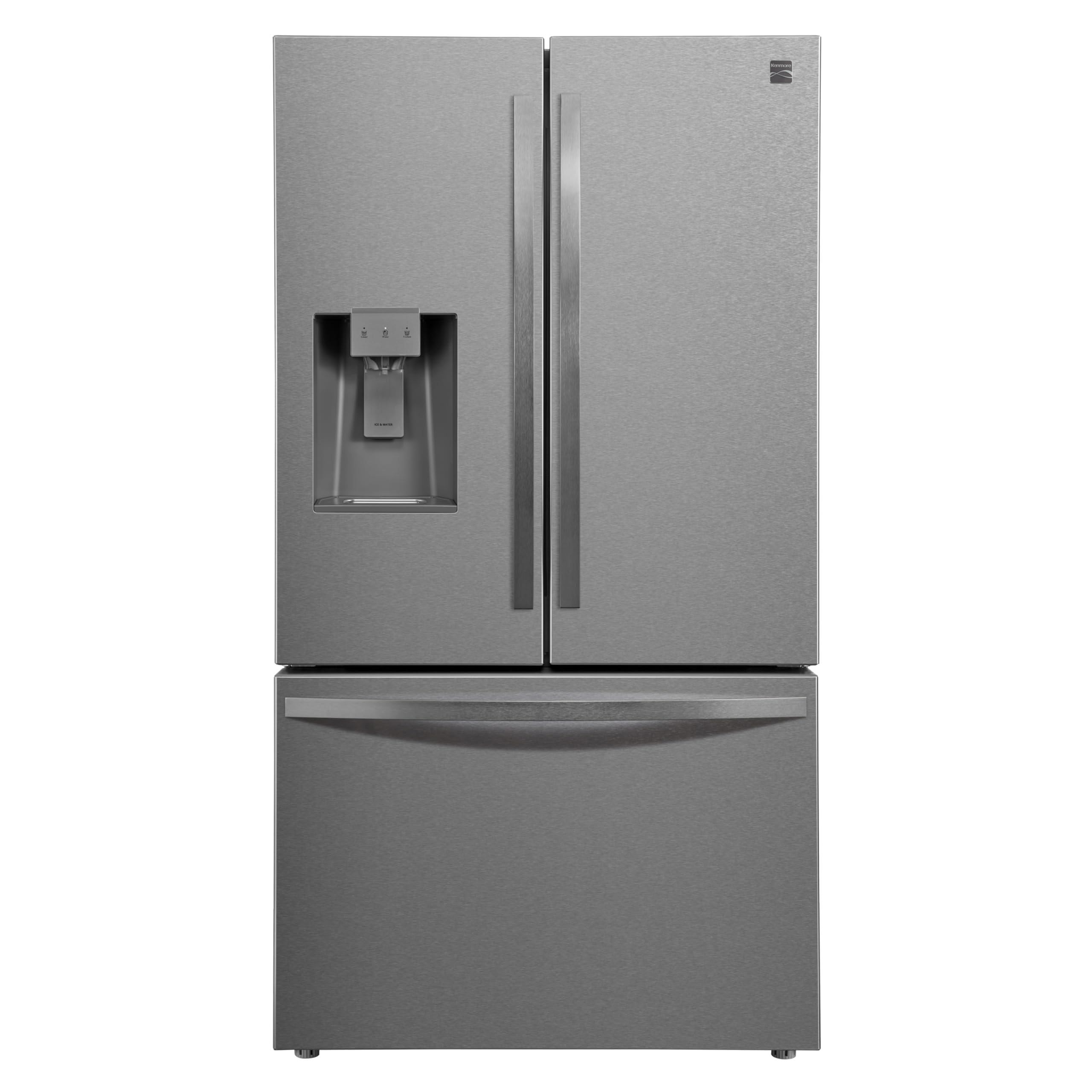
It holds the biggest capacity in the lineup at 28.6 cubic feet, with a 10 cubic foot freezer that dwarfs every other model here.
The Kenmore uses an inverter compressor (a variable-speed motor) combined with Accela Chill (a fan-speed boost that cools groceries quickly) and dual evaporators (two separate cooling coils) plus a Multi-Flow Air System to keep fridge and freezer at optimal separate temperatures. The filtered water and ice dispenser is NSF-certified (tested by a safety organization) and delivers up to 3 pounds of ice per day. A foldable sliding shelf creates vertical space for tall items, and humidity-controlled crispers (produce drawers with moisture settings) handle fruits and vegetables.
Owners rave about the spaciousness — the French doors double the fridge’s organization potential, and the front dispenser is a favorite feature. The energy draw is 740 kWh per year, the highest here, but the inverter compressor helps moderate long-term wear and noise. On the caution side, some report the unit failed within two years, with one owner facing a one-time repair or a monthly unlimited plan. Delivery complaints about the driver refusing to bring the unit inside are also noted.
The space story: 28.6 cubic feet and a 10 cubic foot freezer means this Kenmore holds more frozen food than any other pick here — ideal for bulk-buying families.
Worth noting: The highest energy consumption in the group at 740 kWh, and some durability concerns after the second year.
Best for large families who stock up in bulk and need the biggest possible freezer drawer. Look at the GE Profile if you want a convertible drawer instead of just raw capacity, or skip this Kenmore if your kitchen has a tight delivery path.
Understanding the Specs
Capacity (Total Cubic Feet)
This is the overall interior volume of the fridge and freezer combined. A larger number (27+ cubic feet) means more room for groceries, but also means the fridge will stick out further from your counters (full-depth). A counter-depth model (around 22 cubic feet) sits flush with cabinets for a built-in look.
Annual Energy Consumption (kWh)
This tells you how many kilowatt hours the fridge uses in a year. Lower numbers (like 633 kWh) are better for your electric bill and the environment. Higher numbers (725-740 kWh) cost more to run. The Forno’s 238 kWh is an outlier because of its much smaller size.
Door Shelf Count
This is simply the number of bins or shelves on the inside of the French doors. A higher number (8 or 9) lets you store more bottles, jars, and cartons within easy reach. A lower number (6) means you’ll rely more on the main shelves and drawers inside.
Depth with Door Open
This measurement tells you how far the fridge sticks out when its doors are fully open (usually at 90 degrees). A larger number (48+ inches) means you need a wide kitchen aisle. A smaller number (under 44 inches) is better for tight spaces. Always measure your kitchen before buying.
FAQ
Will a 36 inch French door refrigerator fit in my kitchen?
How much energy does a 36 inch French door refrigerator use?
How many cubic feet do I need in a French door fridge?
Is an inverter compressor better than a rotary compressor in a fridge?
How long do French door refrigerators typically last?
What is the difference between counter-depth and full-depth?
Do I need an external ice and water dispenser?
Is the Frigidaire FRFS2823A reliable?
How often should I replace the water filter in a GE French door fridge?
Can I adjust the middle drawer in the GE Profile PVD28BYNFS?
Final Thoughts: The Verdict
For the majority of shoppers, the top pick is the GE Profile PVD28BYNFS because it pairs a huge 27.9 cubic feet capacity with a convertible drawer that is genuinely useful for large households — and it is backed by the strongest owner satisfaction in this selection. If you want the most energy-efficient full-size model and an abundant eight door shelves, grab the GE GNE27JYMFS. For a pro-style, compact footprint with the lowest energy draw in the lineup, the Forno Moena is the one to reach for.
How We Picked
We do not accept paid placement. Every pick is matched to a real buyer and a real use-case; we do not hands-on test units.
Sources & Methodology
Specifications: manufacturer listings and product documentation. Review insights: verified customer reviews, as of July 2026. Pricing: not shown on this page (it changes often); check the current price via the retailer link.
As an Amazon Associate, Gadgets Feed earns from qualifying purchases. This does not affect which products we feature.