
Our readers keep the lights on and my morning glass full of iced black tea. As an Amazon Associate, I earn from qualifying purchases.
Specs are compiled from manufacturer listings and verified buyer reviews and can change over time — please confirm the key details on the product page before buying.
Picking the right plant food for your vegetable patch often feels like gambling with chemistry sets and confusing numbers. The real trick is understanding that your tomatoes, peppers, and squash each want a different balance of nutrients at different times — and the one-size-fits-all bag might actually be holding them back. This guide cuts through the fertilizer jargon to show you exactly which mix gets you the healthiest harvest, based on what thousands of real gardeners have discovered.
I’m Min — the founder and writer behind Gadgets Feed. This guide is built by comparing the manufacturers’ published specifications and the patterns across verified customer reviews, so you get each pick’s real strengths and trade-offs instead of marketing spin.
The crowd settled on one clear winner for the all around fertilizer for vegetable garden that consistently outpaces the rest, and we have found the top alternatives for every garden style and budget.
Our Picks at a Glance


How To Choose The Best All Around Fertilizer For Vegetable Garden
A vegetable garden isn’t a single crop — it’s a collection of very hungry plants with different appetites. A leafy green wants nitrogen, a tomato needs phosphorus and calcium, and a carrot prefers a lighter touch. The best all-around fertilizer delivers a balanced meal that covers the whole patch without making you mix ten different bags.
N-P-K: The Three Big Numbers
The three numbers on every bag (like 4-6-2 or 10-10-10) stand for Nitrogen, Phosphorus, and Potassium. Nitrogen makes leaves green and bushy, phosphorus drives root growth and flowers, and potassium boosts overall plant health and fruit quality. An all-purpose vegetable fertilizer generally works best with a ratio that is slightly heavier in phosphorus (the middle number) to encourage blossoms and fruiting.
Organic vs. Synthetic Release
Organic fertilizers like fish bone meal or worm castings feed the soil microbes first, which then release nutrients slowly over weeks. Synthetic fast-release formulas give plants a quick energy jolt but can burn roots if over-applied and don’t build long-term soil structure. For a vegetable garden you eat from, an OMRI-listed organic bag is the safer, more sustainable route.
Extra Nutrients for Common Problems
Many vegetable patches run into specific trouble like blossom end rot on tomatoes or yellowing leaves on squash. A good all-around fertilizer often includes calcium (to prevent rot) or beneficial soil microbes that help roots absorb water and nutrients more efficiently. Check the label for these add-ons — they can mean the difference between a sad harvest and a bumper crop.
Quick Comparison
| Model | Best For | NPK Ratio | Weight | Form | Amazon |
|---|---|---|---|---|---|
| Down To Earth All Purpose Mix★ Best Overall | Best Overall | 4-6-2 | 5 lb | Granules | Amazon |
| Back to the Roots Worm CastingsBest Soil Booster | Best Soil Booster | — | 5 lb | Granules | Amazon |
| Gardenera 10-10-10Budget Friendly | Budget Friendly | 1:1:1 | 64 oz | Granules | Amazon |
| Cz Garden Calcium Nitrate | Blossom End Rot Fix | 15.5-0-0 | 5 lb | Granules | Amazon |
| Espoma Garden-tone 3-4-4 | Tomato & Pepper Pro | 3-4-4 | 4 lb (Pack of 2) | Granules | Amazon |
| Espoma Plant-tone 5-3-3 | All Purpose Organic | 5-3-3 | 4 lb (Pack of 2) | Granules | Amazon |
| FoxFarm Happy Frog | Pot & Container Star | — | 4 lb | Granules | Amazon |
| GreenView 10-10-10 | Big Area Coverage | 1:1:1 | 33 lb | Granules | Amazon |
| Jobe’s Organics 4-4-4 | Long Season Feeder | 4-4-4 | 16 lb | Granules | Amazon |
In‑Depth Reviews
1. Down To Earth All Natural Fertilizers Organic All Purpose – 4-6-2
Our pick — over 4.5★ from 950+ verified ratings; the strongest balance of quality and price.
The revival specialist that turned pale, flimsy tomato plants into heavy producers in two weeks.
Down To Earth’s 4-6-2 mix is what you reach for when you want a single bag that handles everything from tomatoes and peppers to eggplants and container herbs. The formula combines Fish Bone Meal, Blood Meal, Feather Meal, Rock Phosphate, Langbeinite, Greensand, Humates, and Kelp Meal — a kitchen sink of premium organic ingredients that build soil while feeding the plant. Buyers report that it “revived pale, flimsy tomato plants within two weeks of application,” which is the kind of turnaround that saves an entire season.
The gentle, non-burning formula means you can apply it directly around transplants without worrying about root shock, and because it is listed by the Organic Materials Review Institute (OMRI), it works for certified organic gardens and conventional beds alike. The 5-pound box covers a respectable area for a small-to-medium patch, though some gardeners in the reviews mention the fishy odor can linger for a few days after application — working it into the soil helps. For the sheer quality of ingredients and the measurable results, this is the crowd’s top pick and ours too.
What Makes It Shine
- Rich 4-6-2 ratio encourages heavy fruiting and flowers (phosphorus-focused)
- OMRI listed for organic production — safe for the vegetable patch you eat from
- Eight premium organic ingredients feed both plants and soil microbes
The Only Trade-Off
- Fishy smell for the first few days, especially if left on the soil surface
Reach for this if: You want one proven organic bag that does it all — tomatoes, peppers, herbs, containers — and you want OMRI-certified ingredients you can trust.
Look elsewhere if: You need a zero-odor formula or your garden is large enough that a 5-pound box would go fast.
2. Back to the Roots Organic Worm Castings
Pure worm castings that bring soil to life without any risk of burning your plants.
Worm castings are the closest thing to a soil superfood — they are packed with beneficial microbes that protect seedlings from pathogens and slowly release nutrients as the worms’ work breaks down. This 5-pound bag from Back to the Roots is pure USA vermicompost with no filler, which means it spreads easily into chunky mixes like coco chips and perlite without compacting the root zone. As buyers put it, these are “high quality worm castings for the money,” and they work beautifully as a top dressing around milkweed, tomatoes, and flowers alike.
That makes it perfect for mixing into potting soil at planting time or sprinkling around established beds in the spring. Owners love that there is no bad odor (just an earthy soil smell) and no risk of over-fertilizing. The 80-ounce bag is 25% more product than the 64-ounce synthetic option below, giving you more coverage per bag for a similar price.
Best paired with: Another granular fertilizer for a balanced NPK punch — use it as a base soil builder and top up with a fruit-focused blend.
The honest caveat: A rare review noted a small piece of steel cable in a batch — worth sifting if you are being extra cautious for delicate seedlings.
Great for: Gardeners focused on long-term soil health, raised beds, and organic purists who want zero chemical risk.
skip it if: You need a high-nitrogen, fast-acting solution for a mid-season growth slump.
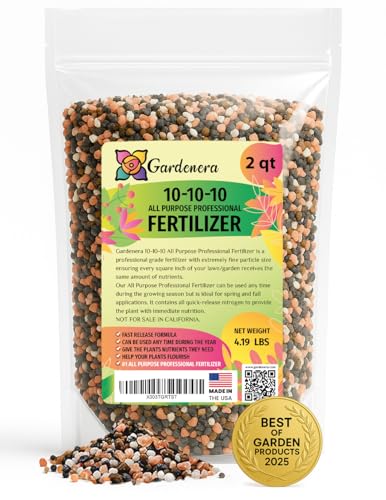
3. 𝐁𝐄𝐒𝐓𝐒𝐄𝐋𝐋𝐄𝐑 10-10-10 Plant Fertilizer Fast Release (Gardenera)
A balanced 1:1:1 ratio that gives every plant a quick, even start for pennies per feeding.
This Gardenera 10-10-10 delivers the classic all-purpose NPK ratio that beginners and seasoned gardeners alike recognize. “Just need a few pellets around the plants and they grow healthy with lots of new growth and blooms,” is how one owner describes it — and the simplicity is the real draw here. The granules are fast-release, so you see results within days, especially on leafy greens and young transplants that need a nitrogen boost. The 64-ounce bag covers roughly 100 square feet, making it a solid entry-level choice for a small vegetable patch or a container garden.
Compared to the Down To Earth organic pick, which has a 4.0x difference in mixing ratio (4:6:2 vs. 1:1:1), this is a more generic feed with a lower phosphorus-to-nitrogen ratio — fine for general growth but not as targeted for fruiting vegetables. A fair number of owners also note the bag can arrive torn in transit, and the value-for-money sentiment is mixed, with some feeling it runs out quickly for larger gardens. For a small plot or a budget starter kit, though, it does the job without fuss.
Simple and fast: Sprinkle lightly around the plant base every month — no mixing, no measuring, no mess.
Not perfect for: Those who want an organic, slow-release option that builds soil — this is a synthetic fast feed that requires re-application.
Go for it if: You have a small garden, need quick greening results, or want an easy-to-understand 10-10-10 without the premium price tag.
Pass if: Your garden is certified organic or you prefer a single application that lasts months.
4. Calcium Nitrate 15.5-0-0 (Cz Garden Supply)

The greenhouse-grade calcium boost that stops blossom end rot dead in its tracks.
If you have ever watched a beautiful tomato develop a black, leathery bottom, you know the frustration of blossom end rot — and this product is the targeted fix. Cz Garden’s calcium nitrate provides 15.5% nitrogen and 19% calcium in a highly water-soluble, greenhouse-grade formula that dissolves cleanly without leaving the oily residue that lower-grade agricultural calcium leaves behind. “It really prevented blossom end rot of my zucchini and tomato plants” after two years of the issue, one gardener confirms, and the 5-pound resealable pouch makes it easy to store and pour.
This is not a general all-purpose fertilizer — it has zero phosphorus and zero potassium, so it is meant as a supplement rather than a standalone feed. Use it in tandem with a balanced organic mix like the Down To Earth 4-6-2 above. The premium purity is the selling point: it is 100% water-soluble greenhouse grade, made in the USA, and works fast on vegetables, fruit trees, and even hydroponic setups. A few owners find it a bit pricey for a 5-pound bag, but the focused results on calcium-hungry crops like tomatoes, peppers, and apples make it tough to top.
Key scenario: Apply at planting time and again at first fruit set to prevent calcium deficiency before it starts.
Know before you buy: Not a complete fertilizer — pair with a balanced NPK or a compost top dressing.
Perfect for: Tomato and zucchini growers who have battled blossom end rot and want a clean, fast-absorbing calcium source.
Not for: Anyone looking for a single-bag all-in-one solution.
5. Espoma Organic Garden-Tone 3-4-4 (Pack of 2)

Designed from the ground up for the heavy feeders — tomatoes, peppers, squash, and melons.
Espoma has been making natural organics since 1929, and the Garden-Tone 3-4-4 formula reflects that heritage. The slightly higher phosphorus (4) and potassium (4) compared to nitrogen (3) is ideal for fruiting vegetables that need to set blossoms and produce heavy yields. It also contains 5% calcium, which helps prevent the blossom end rot that plagues tomatoes and peppers. “Works very well for my tomatoes and peppers,” is the consistent chorus from owners, and one gardener in zone 10b reported harvesting over 400 pounds of tomatoes after switching to Espoma.
The bag comes as a pack of two 4-pound bags, giving you 8 pounds total for a medium-sized garden. Apply monthly throughout the growing season — just sprinkle around the drip line and water in. The Bio-tone formula includes beneficial microbes that continue breaking down organic matter even after you apply. It is approved for organic gardening and a registered Organic Input Material, so it meets the same standards as the Down To Earth pick but with a ratio that is more calibrated for fruiting crops.
What Gardeners Love
- 3-4-4 ratio tailors to flowering and fruiting vegetables
- 5% calcium built in to fight blossom end rot
- Pack of two bags gives good coverage for the price
The Minor Gripes
- Has a noticeable organic smell (earthy manure-like) for a day or two
- Not as high-nitrogen as some leafy green growers might want
the balance: Vegetable gardeners who grow a mix of fruiting crops (tomatoes, peppers, squash) and want an organic, calcium-rich formula that encourages heavy yields.
Consider something else if: You are mostly focused on leafy greens that need more nitrogen or you need a single very large bag for a sprawling garden.
6. Espoma Organic Plant-Tone 5-3-3 (Pack of 2)

The high-nitrogen organic that gives your greens a growth spurt without synthetic chemicals.
Where the Garden-Tone above leans into fruiting, this Plant-Tone 5-3-3 swings the needle back toward nitrogen for lush foliage and strong stems. That makes it the better fit if your vegetable garden is heavy on lettuce, kale, cabbage, and other leafy greens, or if you want a general-purpose organic feed that also handles flowers, trees, and shrubs. “I use this twice a year and it works like a champ,” one owner says, noting the immediate response in spring foliage. The 5-3-3 ratio includes 5% calcium just like the Garden-Tone, which is a nice bonus for soil health.
The pack of two 4-pound bags gives you 128 ounces total — the same volume as the Gardenera 10-10-10 but in organic form with Bio-tone microbes. It is OMRI-listed and approved for organic gardening. The main difference from the Garden-Tone is the nitrogen priority: use Plant-Tone for a balanced landscape feed and Garden-Tone for a fruiting-vegetable focus. Owners do warn about the smell, describing it as “foul smelling as chicken poop,” so plan to work it into the soil and water it in quickly.
Best use: Apply monthly from spring through fall on vegetables, or twice a year on trees and shrubs.
The honest callout: Higher nitrogen means it pushes foliage growth — if your tomato plants are already all leaves and no fruit, lean toward Garden-Tone instead.
Ideal for: Mixed gardens with many leafy greens and flowers, where you want one organic feed for everything.
Skip it for: A patch that is exclusively tomatoes, peppers, and squash — the 5-3-3 may encourage too much leaf at the expense of fruit.
7. FoxFarm Happy Frog All Purpose Fertilizer

A gentle, microbe-packed feed that revived yellow tomato plants within a week.
FoxFarm is famous in the container-gardening world, and this Happy Frog All Purpose Fertilizer lives up to the reputation with a formula that is packed with beneficial soil microbes and mycorrhizal fungi to enhance nutrient uptake. “Revived yellow tomato and zucchini plants within a week; monthly application led to the healthiest garden ever,” one owner reports, and the same formula is noted for working well with finicky Monstera plants indoors. It is OMRI Listed for organic use and comes ready to spread — no mixing required.
The 4-pound bag is smaller than many competitors, but the concentrated microbe content means a little goes a long way — one owner says a half bag lasts a year. The major downside owners point to is the smell: it carries a strong, lingering manure-like odor that becomes noticeable after watering, so it is best for outdoor containers and beds rather than any indoor setup. Compared to the Down To Earth and Espoma picks, this one leans more into the biology of the soil than the NPK numbers, making it a companion product as much as a standalone feed.
Best for: Container gardens, raised beds, and Green Stalk vertical planters where soil health matters as much as the numbers on the bag.
Fair warning: The odor is the most commented-on trait — expect a barnyard scent for a day or two post-application.
Choose this if: You grow in pots or a Green Stalk system and want a microbe-rich organic that supports root health and bounces back stressed plants quickly.
Think twice if: You have a large in-ground garden with many beds — you would go through the 4-pound bag fast.
8. GreenView Multi-Purpose Fertilizer 10-10-10 (33 lb)

A 33-pound juggernaut that covers 3,300 square feet for a single-season feed.
When your vegetable garden stretches beyond a few raised beds into a full plot, this 33-pound bag of GreenView 10-10-10 is the practical choice. The balanced NPK formulation is a classic all-purpose feed for vegetables, flowers, trees, shrubs, and ornamental gardens, and owners highlight that it is “an amazing product, multi-purpose so you can use it almost anywhere.” The well-formed granules are non-dusty and non-clumping, making them easy to spread by hand or with a broadcast spreader — a huge convenience for older gardeners who do not want to haul multiple small bags.
The trade-off with such a massive bag is that it is synthetic fast-release, not organic — so it feeds the plant directly rather than building long-term soil biology. Compared to the Down To Earth organic pick (4-6-2), this 1:1:1 ratio has less phosphorus and more nitrogen relative to potassium, which may not be as targeted for fruit-heavy crops. Several owners note it greens up lawns within days, so it is a dual-purpose garden-and-lawn solution. If you need sheer volume and immediate results for a large area, this is tough to beat.
Value angle: 33 pounds for a single purchase that covers the entire season — no reordering mid-summer.
Not for purists: Not OMRI-listed, not organic, and the fast-release formula means you need to reapply regularly for lasting effect.
Perfect for: Large vegetable plots, mixed landscaping, and gardeners who want one bag for both the vegetable patch and the lawn.
Better options exist if: You are committed to organic growing or need a phosphorus-heavy feed for fruiting vegetables.
9. Jobe’s Organics Granular All Purpose Fertilizer 4-4-4 (16 lb)

The organic workhorse whose granular feed turned a single squash plant into a gluttonous harvest.
Jobe’s 4-4-4 is the organic alternative to the GreenView behemoth above — same balanced 1:1:1 NPK, but made from natural ingredients that feed the soil rather than just the plant. The 16-pound bag is the biggest organic option in this lineup, ideal for gardeners who want to avoid synthetic chemicals but still need to cover a substantial area. “My family got really sick of eating squash last summer,” one owner jokes, describing a mix of Jobe’s granular fertilizer steeped in water to create a liquid feed that produced a massive harvest of squash, cucumbers, and eggplant.
It is OMRI listed for organic gardening and contains no synthetic chemicals, with a 4-4-4 analysis that works well across vegetables, flowers, shrubs, and trees. The granules are small and friable, breaking down into humus in about a week when watered in. The main downside noted by many owners is the pungent smell (described as similar to chicken manure), which lingers for a couple of days before dissipating. Apply every 2-3 weeks during the growing season, and you can also steep it into a liquid tea for a faster-acting boost when plants look sluggish.
Why Gardeners Stock Up
- 16 pounds of OMRI-listed organic at a price that competes with synthetic options
- Balanced 4-4-4 ratio is safe for almost any vegetable or flower
- Can be used dry or brewed into a liquid tea for faster absorption
What to Expect
- Strong barnyard smell for the first few days after application
- Needs reapplication every 2-3 weeks for consistent feeding
Best for: Organic gardeners with medium-to-large beds who want a single, affordable bag that keeps feeding all season long.
pass on it if: You need a zero-odor fertilizer or you prefer a once-and-done slow-release formula.
Understanding the Specs
NPK Ratio — the Three Numbers
The first number is Nitrogen (for leafy growth), the second is Phosphorus (for roots and flowers), and the third is Potassium (for fruit quality and disease resistance). A balanced all-around vegetable fertilizer often has a higher middle number — like 4-6-2 — because phosphorus drives the blossoms that turn into tomatoes, peppers, and squash. A 1:1:1 ratio like 10-10-10 is more general and works better for lawns or mixed landscapes than for a fruit-heavy vegetable patch.
OMRI Listing for Organic Gardens
OMRI (the Organic Materials Review Institute) independently verifies that a product meets the USDA’s organic production standards. If you are growing vegetables you plan to eat without synthetic pesticides or fertilizers, an OMRI-listed bag gives you the confidence that the ingredients are plant- and soil-safe. Many organic fertilizers also include beneficial soil microbes or mycorrhizal fungi that help roots absorb nutrients more efficiently — look for those extras on the label.
FAQ
What does 4-6-2 mean on a fertilizer bag?
Is 10-10-10 fertilizer good for vegetable gardens?
How often should I fertilize my vegetable garden?
What is the difference between organic and synthetic fertilizer?
Can I use worm castings as my only fertilizer?
What causes blossom end rot and how do I fix it?
Should I fertilize seedlings or wait until they are established?
How much fertilizer do I need for a 10×10 foot garden?
What does OMRI listed mean?
Can I make fertilizer tea from granular organic fertilizer?
Final Thoughts: The Verdict
For most gardens, the all around fertilizer for vegetable garden winner is the Down To Earth Organic All Purpose 4-6-2 because its premium OMRI-listed ingredients, targeted phosphorus-heavy ratio, and proven ability to revive struggling plants make it the most complete single-bag solution. If you want a dedicated soil booster, grab the Back to the Roots Worm Castings. And for large organic patches that need long-season feeding, the Jobe’s Organics 4-4-4 is the one to reach for.
How We Picked
We do not accept paid placement. Every pick is matched to a real buyer and a real use-case; we do not hands-on test units.
Sources & Methodology
Specifications: manufacturer listings and product documentation. Review insights: verified customer reviews, as of July 2026. Pricing: not shown on this page (it changes often); check the current price via the retailer link.
As an Amazon Associate, Gadgets Feed earns from qualifying purchases. This does not affect which products we feature.