
Our readers keep the lights on and my morning glass full of iced black tea. As an Amazon Associate, I earn from qualifying purchases.
Specs are compiled from manufacturer listings and verified buyer reviews and can change over time — please confirm the key details on the product page before buying.
Finding a pair of $50 headphones that actually sounds good and lasts longer than a weekend is a rare win. Too many options at this price promise big bass but deliver tinny, hollow sound that falls apart the moment you step outside. This guide cuts through the noise by stacking the top contenders head-to-head — real battery hours, real Bluetooth versions, and real owner feedback — so you walk away with a pair that genuinely feels like a steal.
I’m Min — the founder and writer behind Gadgets Feed. This guide is built by comparing the manufacturers’ published specifications and the patterns across verified customer reviews, so you get each pick’s real strengths and trade-offs instead of marketing spin.
Whether you commute daily, need a reliable work-from-home headset, or want gym-friendly wireless on a budget, these $50 headphones deliver way more than their price tag suggests.
Our Picks at a Glance


How To Choose The Best $50 Headphones
At $50, you can get real performance — not just “good enough.” The trick is knowing which specs actually matter for your daily routine — battery life matters if you forget to charge, driver size (the part that makes sound) matters if you crave real bass, and Bluetooth version matters if you hate dropouts. These specs separate the keepers from the return pile.
Battery Life and Charging Speed
More hours between charges means fewer late-night cable scrambles. Look for anything above 40 hours for confidence — and a quick-charge feature (like 5 minutes of charging giving you 3 hours of playback) is a lifesaver when you are already out the door.
Driver Size and Sound Profile
Larger drivers (the speakers inside the earcups) push more air for deeper bass and fuller sound. Most budget over-ear headphones pack 40mm dynamic drivers — that is the balance for getting punchy low-end without making the cans bulky.
Bluetooth Version and Multipoint Pairing
Bluetooth 5.3 and newer deliver better range, lower power draw, and more stable connections. If you bounce between a laptop and phone all day, multipoint pairing — switching between two devices without re-pairing — is a feature you will use every hour.
Quick Comparison
| Model | Best For | Battery Life | Bluetooth | Driver Size | Amazon |
|---|---|---|---|---|---|
| JBL Tune 520BT★ Best Overall | Everyday wireless with quick charge | 57 hours | 5.3 | — | Amazon |
| Soundcore by Anker Q20iAlso Great | Noise cancelling on a budget | 45 hours (ANC on) | 5.0 | 40mm | Amazon |
| JBL Tune 720BTBattery Beast | Giant battery for heavy listeners | 76 hours | 5.3 | 40mm | Amazon |
| Sony WH-CH520L | Lightweight all-day wear | 50 hours | 5.2 | — | Amazon |
| Sony WHCH520B | Sony quality at entry level | 50 hours | 5.2 | — | Amazon |
| MAONO MH700 | Studio wired monitoring | — | — | 50mm | Amazon |
| Skullcandy Icon 180 | Sweat-resistant workouts | 50 hours | 5.3 | 30mm | Amazon |
| OneOdio A71D | Wired guitar and DJ work | — | — | 40mm | Amazon |
| acer Bluetooth Headphones | Maximum battery for less | 70 hours | 6.0 | 40mm | Amazon |
In‑Depth Reviews
1. JBL Tune 520BT
Our pick — over 4.5★ from 15,500+ verified ratings; the strongest balance of quality and price.
The wireless benchmark that balances battery, sound, and price with precision.
This model shares the JBL Pure Bass DNA of the 720BT, but at a slightly lower price point with a 57-hour battery instead of 76. That is still enough for two to three weeks of daily listening. The 2-hour full recharge and the 5-minute quick charge (giving 3 hours) keep you topped up with minimal downtime. Sound quality is the top praise from owners — clear, well-detailed across genres, with deep, satisfying bass. The on-ear design is comfortable for sessions of three hours or more, according to frequent reports.
Bluetooth 5.3 streams high-quality audio without stuttering, and the ear-cup buttons give you hands-free call control with Voice Aware so you hear your own voice during conversations. The free JBL Headphones App allows EQ tuning. The thing owners mention most after sound quality is the value for money — they feel this punches above its price. On the downside, the head tightness can feel slightly firm for some, and there is no active noise cancellation, so you rely on passive isolation. As the seller notes, if the headset is too tight, leaving it stretched over a ball for 24 hours can help.
What Shines
- 57-hour battery with a 5-minute quick charge for 3 extra hours
- JBL Pure Bass sound praised for clarity and detail
- Bluetooth 5.3 for stable, low-latency streaming
One Thing to Check
- Head tightness can feel firm — stretch over a ball for 24 hours if needed
- No active noise cancellation; passive isolation only
Your everyday wireless companion: If you want reliable all-around performance with great sound and long battery, this is the safe bet.
Skip if: You absolutely need active noise cancellation or a looser on-ear fit.
2. Soundcore by Anker Q20i
The ANC kingpin that makes public transport feel like your private studio.
The Q20i is the crowd favorite for a simple reason: it brings active noise cancellation to a price point where that feature barely exists. Four built-in microphones filter out office chatter, engine hum, and street noise — so your playlist stays front and center. The sound is punchy and rich straight from the start, with 40mm dynamic drivers that deliver deep bass without distorting at higher volumes. Buyers report the ANC is genuinely effective for commuting and flights, punching well above its price bracket.
Battery life reaches 45 hours with ANC switched on, and here is the trick — a 5-minute quick-charge gives you 4 more hours, so you are never stuck waiting. The transparency mode lets you hear announcements without removing the headphones, and the soundcore app lets you customize the EQ or flip between ANC and normal modes on the fly. The biggest real-world trade-off is that the fit runs large for smaller heads — some owners find them a bit loose. No carrying case is included, which is a minor miss for a travel-focused headphone.
What Wins People Over
- Active noise cancellation at a budget price — the thing everyone raves about
- 45-hour battery life with a 5-minute quick charge for 4 extra hours
- Multipoint pairing switches smoothly between laptop and phone
Consider This First
- Fit may be too large for smaller heads — some owners find them loose
- No carrying case included despite travel-friendly profile
Your daily commuter companion: If you want to block out the world on a bus, train, or open-plan office without spending more, this is the one.
Not for you if: You have a smaller head and struggle to find a secure, snug fit with over-ear cans.
3. JBL Tune 720BT
A week of commutes stuffed into a single two-hour charge.
The Tune 720BT demolishes the battery anxiety that comes with budget wireless headphones. At 76 hours of playback, you can go a full month of daily use before reaching for the USB-C cable — and when you do, it recharges in just 2 hours. A 5-minute top-up gives you 3 extra hours, which is perfect for that moment you realize the battery is low right before a call. The JBL Pure Bass sound signature is lively and punchy, with the free companion app letting you tweak the EQ to your taste.
Bluetooth 5.3 keeps the connection rock-solid up to 10 meters, and the ear cups feature comfortable memory foam padding. Owners consistently praise the fit for staying on during exercise and the multipoint connection for working with both a laptop and phone simultaneously. The main caveat: the over-ear design can feel snug on larger ears, and it leans toward on-ear rather than a full over-ear embrace for some. One recurring gripe is the lack of a carrying case — treat the foldable design as packable, not armored.
Standout Strengths
- 76-hour battery — the highest in this roundup by a wide margin
- JBL Pure Bass sound with app-based EQ customization
- Bluetooth 5.3 with multipoint pairing for laptop + phone
Worth Noting
- Fit feels more on-ear than over-ear for some — test the snugness
- No carrying case; foldable design is your only protection
The endurance pick: If you want to charge once a month and never think about battery levels again, this is your headphone.
Look elsewhere: If you need active noise cancellation, the passive isolation here only goes so far.
4. Sony WH-CH520L

Sony’s featherweight entry that disappears on your head during all-day wear.
The WH-CH520L is designed for people who keep headphones on for hours without thinking about them. It weighs only 310 grams total (including the plastic carrying case), and the soft ear pads and adjustable headband make it a strong candidate for long listening sessions or even gym workouts. The 50-hour battery is standard for this class, but the 3-minute quick charge that gives you 1.5 hours of playback is genuinely handy. Battery life is the second-most praised feature after sound quality — owners mention it lasting nearly a month with moderate use.
Sound quality benefits from Sony’s Digital Sound Enhancement Engine (DSEE), which restores high frequencies and detail lost during compression. The on-ear design keeps things compact, and Bluetooth multipoint connection lets you pair with two devices at once. Voice control and easy button operation add convenience. The downsides are real but manageable: there is no noise cancellation beyond passive isolation, so room noise is audible when music is paused. A few owners note the build feels a bit fragile and the included charging cable is short and non-USB-C, which feels dated. No carrying case is included in the box.
What Makes It Great
- Ultra-lightweight 310g design with comfortable ear pads for all-day wear
- 50-hour battery with 3-minute quick charge for 1.5 hours of listening
- DSEE engine restores compressed audio detail
Honest Trade-offs
- No active noise cancellation; audible room noise without music
- Short non-USB-C charging cable and no carrying case included
Reach for this if: You prioritize lightweight comfort above all else — for long days at a desk or calls that run for hours.
Not for you if: You need ANC or want a premium-feeling travel case from the start.
5. Sony WHCH520B
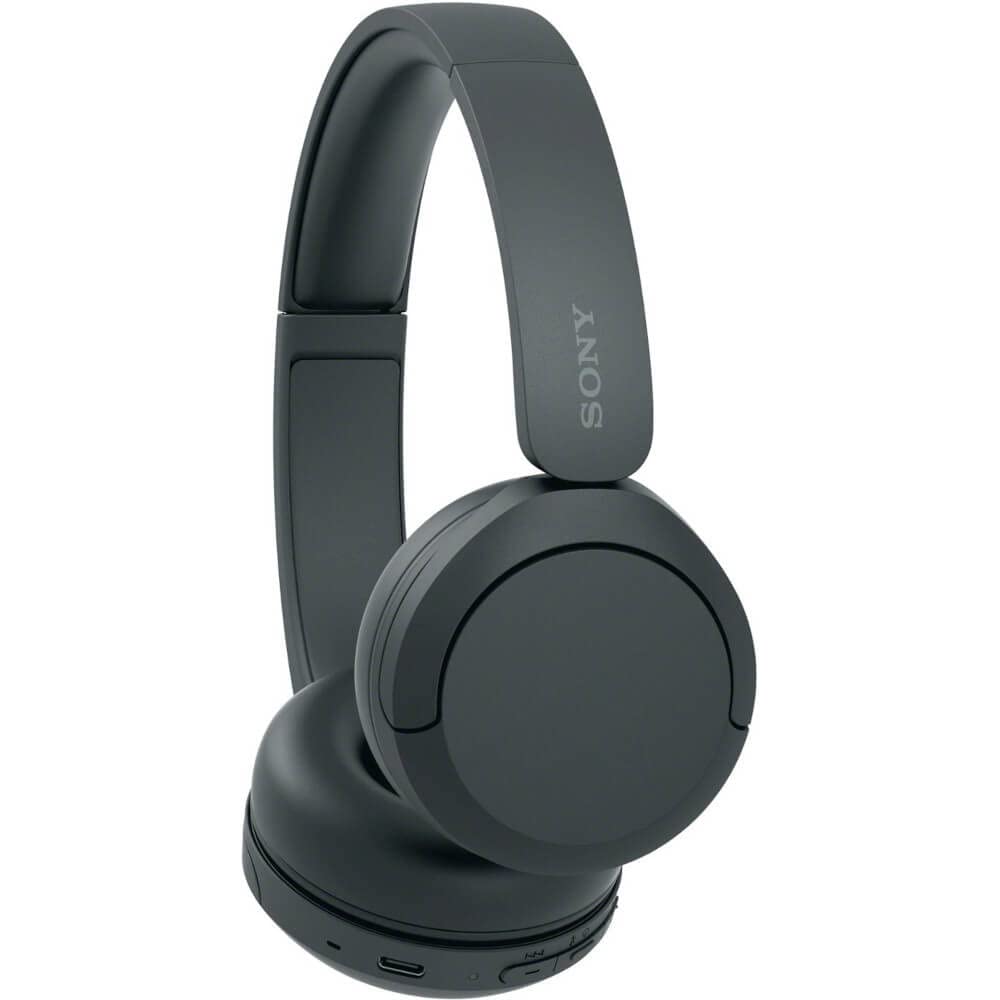
Sony grade at the entry level — simple, dependable, and easy on the wallet.
The WHCH520B strips away premium extras and keeps the core Sony experience: 50-hour battery life, lightweight build, and decent sound that works reliably from the start. Owners consistently call these “good quality” and “affordable,” highlighting quick Bluetooth pairing with phones and tablets. The on-ear design is comfortable enough for a long flight or an afternoon of yard work — several buyers mention using them for gym sessions, walks, and everyday errands. The call quality is clear on both ends, making them a solid work-from-home option.
Battery life at 50 hours is generous for this class, and the quick charge via USB-C keeps you from being stranded. The long Bluetooth range is a nice touch, letting you wander away from your phone without losing signal. The honest trade-offs: there is no noise cancellation, the build feels basic (plastic construction), and some customers note receiving the wrong color when ordering — a packaging error, not a product flaw. The sound profile is decent but not audiophile-grade; it works well for podcasts, calls, and casual music listening.
Strengths at This Price
- 50-hour battery with USB-C fast charging
- Lightweight and comfortable for extended wear
- Quick and easy Bluetooth pairing with phones and tablets
Limitations
- No noise cancellation; basic passive isolation only
- Plastic build feels less premium than pricier models
The no-fuss buy: If you want a reliable pair of Sony headphones for calls, podcasts, and gym days without spending a cent more, this is it.
Consider something else: If you crave deep bass or need active noise cancellation for loud environments.
6. MAONO MH700

The wired underdog that brings studio-grade monitoring to the bargain bin.
The MAONO MH700 is the oddball in this lineup — a wired headphone in a wireless world — and that is exactly its superpower. It packs 50mm dynamic drivers, the largest in this roundup, delivering balanced highs, clear mids, and lows with minimal distortion. The closed-back design isolates noise effectively, making it ideal for vocal tracking, podcast recording, or mixing where accurate monitoring matters. Owners compare it favorably to professional Shure headphones costing three times as much, calling it “certifiable giant killers” in the budget space.
Comfort is a strong suit: the over-ear cups with skin-friendly padding and an adjustable lightweight metal headband suit large heads and long sessions. The detachable cables give you flexibility — a 1.2-meter straight 3.5mm cable for portable use and a 3-meter coiled 6.35mm cable for connecting to audio interfaces or guitar amps. A storage bag is included. The recurring theme in owner accounts is that the sound is flat and accurate, not bass-boosted for fun listening — perfect for critical work, less notable for casual music enjoyment. The headband padding could be better, and the cables, though durable, can be a bit annoying to manage.
Why It Stands Out
- 50mm drivers deliver balanced, low-distortion sound for critical monitoring
- Detachable cables with both 3.5mm and 6.35mm options + storage bag
- Comfortable for long sessions — fits large heads and ears well
One Caveat
- Wired-only — no Bluetooth, no on-board controls for calls
- Sound profile is flat and analytical, not bass-heavy for casual listening
For creators and musicians: If you need an accurate, affordable monitoring headphone for recording or mixing, this punches far above its weight.
Skip it: If you want wireless freedom or a fun, bass-forward sound for daily listening.
7. Skullcandy Icon 180

The gym-friendly wireless that laughs at sweat and drops right back into your bag.
The Icon 180 is built for active lifestyles. A protective nano-coating makes it sweat and water resistant, so rain and gym sessions don’t spell disaster. The 50-hour battery is generous, and the Rapid Charge feature gives you 4 hours of listening from just 10 minutes plugged in — perfect for when you realize your headphones are dead right before heading out. Multipoint pairing lets you switch between your phone and laptop without re-pairing, and the flat-folding, collapsible design tucks neatly into a bag. An included 3.5mm AUX cable means you keep listening even if the battery runs out.
Bluetooth 5.3 keeps the connection stable, and the Skullcandy App lets you customize the EQ, enable low-latency audio for gaming, and more. Owners appreciate the sturdy build and easy setup. Sound quality is the trickiest aspect — some find it decent for the price, others note it lacks volume and bass punch. The fit also splits opinion: some praise the secure on-ear feel, while others find it too small or too tight. A few reviewers point out the power button is hard to turn off, requiring a long press that isn’t immediately obvious.
What It Does Well
- Sweat and water resistant nano-coating for low-maintenance workouts
- 50-hour battery with 10-minute Rapid Charge for 4 hours of play
- Flat-folding, collapsible design with included AUX cable
Where It Falls Short
- Sound quality is mixed — decent but not impressive for bass lovers
- Fit may feel too small or tight for larger heads
Your workout buddy: If sweat resistance and a secure on-ear fit for exercise are your top priorities, the Icon 180 is the natural choice.
Think twice if: You prioritize audiophile sound quality or need a roomy over-ear fit for all-day comfort.
8. OneOdio A71D

The wired workhorse that guitarists and podcasters keep coming back to.
The OneOdio A71D is a no-frills wired headphone built for a specific job: monitoring. The 40mm drivers deliver a clear sound signature with good low-end and high-end extension, though it is a little light on bass — perfect for instruments and vocals, less ideal for bass-heavy music listening. The impedance is 32 ohms, meaning it works straight out of a guitar amp, mixer, or laptop without needing a separate amplifier. The 90-degree swiveling ear cups let you do single-ear monitoring, a must-have for DJs and recording engineers. It comes with a 7.2-foot audio cable and a 3.5mm-to-6.35mm adapter, so you can plug into almost any device.
Owners consistently praise the comfort — the ultra-soft padded ear muffs and adjustable headband make long sessions fatigue-free — and the foldable design aids portability, even if the folding mechanism feels a bit clunky. The noise isolation is surprisingly effective for a closed-back at this price, cutting down ambient noise noticeably. The long cable (7.2 feet) gives you freedom of movement in a studio but can be cumbersome for portable use. A coiled cable would be preferred by some. At the core, as one buyer put it: “really nice for under ” — the sound quality competes with more expensive models, making this a budget studio staple.
What It Excels At
- 40mm drivers with clear, balanced sound — great for guitar amps and monitoring
- Swiveling ear cups for single-ear DJ monitoring
- Excellent noise isolation and all-day comfort with soft padding
The Downsides
- A little light on bass — not for bass-heavy casual listening
- Long 7.2-foot cable is awkward for portable use; no coiled option
- Folding design feels clunky
Musicians and podcasters: If you need a comfortable, wired monitoring headphone for your guitar amp or audio interface, this is the budget winner.
Not for: Casual listeners who want wireless freedom or deep, thumping bass.
9. acer Wireless Bluetooth Headphones

The battery champ that charges once and lasts half a work month.
In real-world terms, one full USB-C charge of about 3 hours powers you through two or three work weeks of mixed use. The 40mm dynamic drivers deliver punchy bass and clear mids, and owners specifically mention hearing every instrument clearly across genres. The memory foam earpads keep things comfortable for long sessions, and the foldable design makes them easy to stash in a bag.
Multipoint pairing lets you switch between two devices (phone and laptop) with a single tap. The wired/wireless versatility with an included 3.5mm AUX cable means you never fully lose sound if the battery dies. Owners highlight the lightweight build and easy connectivity. Connectivity is the most-discussed mixed point: many find it quick and easy, but a few report hiccups with Windows 11 laptops and persistent phone re-pairing. A couple of owners mention the bass, while present, is not exceptionally loud at higher volumes. Some units may require a full charge before first-time pairing works.
What You Get
- 70-hour battery — the highest in the entire roundup, beating the JBL 520BT by 13 hours
- Bluetooth 6.0 for faster pairing and stable connection up to 10 meters
- 40mm drivers with deep, punchy bass and clear mids
Areas to Consider
- Connectivity can be finicky with Windows laptops and persistent phone re-pairing
- Bass is deep but not exceptionally loud at max volume
The battery-first buyer: If your top priority is going weeks between charges, the Acer is the clear winner here.
Look elsewhere if: You need flawless cross-platform connectivity, especially with Windows laptops.
Understanding the Specs
Battery Life and Charge Time
Battery life (in hours) tells you how long one full charge lasts during continuous playback. The real-world number varies with volume level and codec, but bigger numbers always mean fewer charges. Charge time is the full recharge time — a 2-hour charge is fast, 3 hours is average. Quick-charge features (like 5 minutes for 3 hours) are the practical MVP: they save you when you forget to charge.
Bluetooth Version
Bluetooth version (5.2, 5.3, 6.0) dictates connection stability, range, and power efficiency. Newer versions like 5.3 and 6.0 have better resistance to interference and lower latency, which means fewer stutters when you walk through a busy area. The version number also affects battery drain — newer chipsets use less power, stretching your listening time.
Driver Size
The driver (measured in millimeters) is the speaker inside the headphone that produces sound. Larger drivers generally push more air, giving you deeper bass and fuller volume. Most budget over-ear headphones use 40mm or 50mm dynamic drivers. Bigger is usually better for bass, but driver tuning matters just as much for clarity.
Active Noise Cancellation (ANC)
ANC uses built-in microphones to sample ambient noise and produce an opposite sound wave that cancels it out, reducing low-frequency drone (engines, air conditioners, traffic). Passive noise isolation (the physical blocking from ear cups) does the rest. ANC is rare at this price, which is why the Soundcore Q20i stands out — it offers real ANC where most others do not.
Impedance
Impedance (measured in ohms) tells you how much electrical resistance the headphones present to your audio source. Lower impedance (like 32 ohms) is easier to drive with a phone or laptop and will play loudly without a headphone amplifier. Higher impedance (like 250 ohms) needs a dedicated amp to reach full volume. For $50 headphones, low impedance is standard and practical.
Frequency Response
Frequency response (measured in Hz to kHz) describes the range of sound frequencies the headphone can reproduce. A wider range (like 20Hz to 20kHz) covers the full audible spectrum. 20Hz is the lowest bass you can feel, 20kHz is the highest treble you can hear. Most music lives between 80Hz and 8kHz, so a response spanning 20Hz-20kHz is more than enough.
FAQ
Can I use $50 headphones for mixing and recording music?
How long does a 50-hour battery actually last with daily use?
Do $50 headphones have active noise cancellation?
What is Bluetooth multipoint pairing and do I need it?
How does Bluetooth 5.3 differ from Bluetooth 5.0 or 5.2?
Are wired headphones better than wireless at $50?
Will $50 headphones fit a larger head comfortably?
How do driver size and sound quality relate in budget headphones?
Can I use the included microphone for calls and Zoom meetings?
Do these headphones work with gaming consoles?
Final Thoughts: The Verdict
If you want one dependable pick, the $50 headphones winner is the Soundcore by Anker Q20i because it brings real active noise cancellation (ANC) to a price bracket where that feature is almost non-existent, backed by solid 45-hour battery life and a crowd-pleasing sound profile. If you want maximum battery endurance, grab the JBL Tune 720BT with its 76-hour battery — that is over three days of nonstop playback. And for musicians or podcasters who need accurate wired monitoring, the MAONO MH700 offers the largest drivers (50mm) and best value for critical listening.
How We Picked
We do not accept paid placement. Every pick is matched to a real buyer and a real use-case; we do not hands-on test units.
Sources & Methodology
Specifications: manufacturer listings and product documentation. Review insights: verified customer reviews, as of July 2026. Pricing: not shown on this page (it changes often); check the current price via the retailer link.
As an Amazon Associate, Gadgets Feed earns from qualifying purchases. This does not affect which products we feature.