
Our readers keep the lights on and my morning glass full of iced black tea. As an Amazon Associate, I earn from qualifying purchases.
Specs are compiled from manufacturer listings and verified buyer reviews and can change over time — please confirm the key details on the product page before buying.
Every home owner dreads the sound of a burst pipe or the bill from a plumber wielding a torch. The modern fix is simpler, cheaper, and far more forgiving: 1/2-inch PEX tubing. This flexible plastic pipe bends around corners, shrugs off freezing weather, and connects with a simple crimp ring rather than solder and flux. The trick is choosing the right type and length for your project without overpaying for brand names. This guide cuts through the alphabet soup of PEX-A versus PEX-B and finds the real standouts for potable water, radiant heat, and DIY repairs.
I’m Min — the founder and writer behind Gadgets Feed. This guide is built by comparing the manufacturers’ published specifications and the patterns across verified customer reviews, so you get each pick’s real strengths and trade-offs instead of marketing spin.
The goal is simple: point you to the coil that will not fight you during installation and will hold up for decades. This is the total guide to the best 2 pex tubing options for any home project, ranked by real-world performance not shelf price.
Our Picks at a Glance


How To Choose The Best 2 Pex Tubing
Half-inch PEX looks similar on the shelf, but the wrong choice means a stiff coil that fights you around tight studs or a pipe that can not handle your hot water recirculation loop. Focus on PEX type, length, and certifications.
PEX-A vs PEX-B: The Bending Difference
PEX-A is made with the Engel method, which cross-links the polyethylene during extrusion. The result is a pipe that bends in a tighter radius — as little as 3-1/2 inches on a 1/2-inch tube — and has elastic memory. If it freezes, PEX-A expands and then shrinks back to its original shape, drastically cutting the chance of a burst. PEX-B uses a different cross-linking process that makes the pipe stiffer and a bit cheaper per foot. PEX-B holds its shape better for long straight runs and costs less, but you need more fittings around tight corners. For a homeowner who wants the most forgiving install, PEX-A wins; for a pro running miles of straight lines, PEX-B saves serious money.
Oxygen Barrier or Not
An EVOH (ethylene vinyl alcohol) layer wrapped around the pipe stops oxygen from diffusing through the plastic wall. This matters only for closed-loop systems like radiant floor heating, where oxygen in the water corrodes metal components (pumps, valves, boilers). If you are running potable water — sinks, showers, fridge lines — skip the barrier pipe. It costs more and adds a layer that can delaminate over time in a non-heating system.
Length and Pressure Ratings
Standard 1/2-inch PEX is rated at 160 psi at 73 °F and 80 psi at 200 °F. That covers typical residential water pressure (40 to 80 psi) and standard water heater temps (120 to 140 °F). Buy a single long coil for a whole house re-pipe — fewer joints mean fewer potential leak points. For a short repair or a single fixture run, a 100-foot roll is plenty. Check that the pipe is marked every few feet with the standard (ASTM F876 / F877) so inspectors and future you know exactly what is in the wall.
Quick Comparison
| Model | Best For | Type | Length | Pressure Rating | Amazon |
|---|---|---|---|---|---|
| Likeem PEX-B 2-Roll★ Best Overall | Best Overall Value | PEX-B | 2 x 100 ft | 160 psi | Amazon |
| SUPPLYGIANT PEX-ATight Radius Ace | Tightest Bend Radius | PEX-A | 100 ft | 160 psi | Amazon |
| VEVOR PEX-A Twin PackBest Value PEX-A | Budget PEX-A Pair | PEX-A | 2 x 100 ft | 160 psi | Amazon |
| Happybuy EVOH PEX-B | Long Radiant Heat Run | PEX-B | 300 ft | 160 psi | Amazon |
| EFIELD PEX-B | NSF-Certified Value | PEX-B | 200 ft | 160 psi | Amazon |
| SharkBite PEX-B 300ft | Pro-Grade Brand Trust | PEX-B | 300 ft | 160 psi | Amazon |
| ZELCAN PEX-B Twin Pack | Massive 600-ft Supply | PEX-B | 2 x 300 ft | 160 psi | Amazon |
| SharkBite PEX-A 300ft | Premium PEX-A Confidence | PEX-A | 300 ft | 160 psi | Amazon |
In‑Depth Reviews
1. Likeem PEX-B 2-Roll Pack (Red + Blue)
Our pick — over 4.5★ from 500+ verified ratings; the strongest balance of quality and price.
The two-roll bundle that saves serious cash on a whole-house repipe.
You get 100 feet of red and 100 feet of blue PEX-B (crosslinked polyethylene tubing for hot and cold water lines), plus a pipe cutter and a couple of clamp rings — everything to start a hot/cold water project in one box. Buyers report it saved them over a thousand dollars compared to a plumber’s quote. The pipe carries a 160 psi (pounds per square inch) rating at 70 °F and handles up to 200 °F at 80 psi, which covers standard water heater temps without sweating. The 0.7 mm wall thickness feels sturdy, and the 5-inch minimum bend radius is typical for PEX-B — workable in most stud bays but not as floppy as PEX-A (a more flexible type of PEX).
What wins people over is the quality-to-price ratio. With 22 owners praising quality and 19 calling out value, the pattern is clear: this is not cheap tubing that fails; it is good tubing at a great price. The cutter in the pack is basic but gets the job done for the first project. The main trade-off is that PEX-B is stiffer than the premium PEX-A options, so you will have a harder time coaxing it into a very tight 180-degree turn around an obstacle. Give it a warm room and a few minutes to relax, and it bends fine.
What Owners Love
- Two full 100-ft rolls for hot and cold lines in one buy
- Included pipe cutter and clamp rings reduce startup cost
- Withstands -40 °F to 200+ °F without deforming
The Real Trade-Off
- PEX-B stiffness means tight-radius bends need extra patience
- Not for closed-loop radiant heat (no oxygen barrier)
Reach for this if: you are repiping a house or camper and want two color-coded coils that cost less than a single premium roll.
Look elsewhere if: you need the ultra-flexible, freeze-memory of PEX-A for tight attic or crawlspace runs.
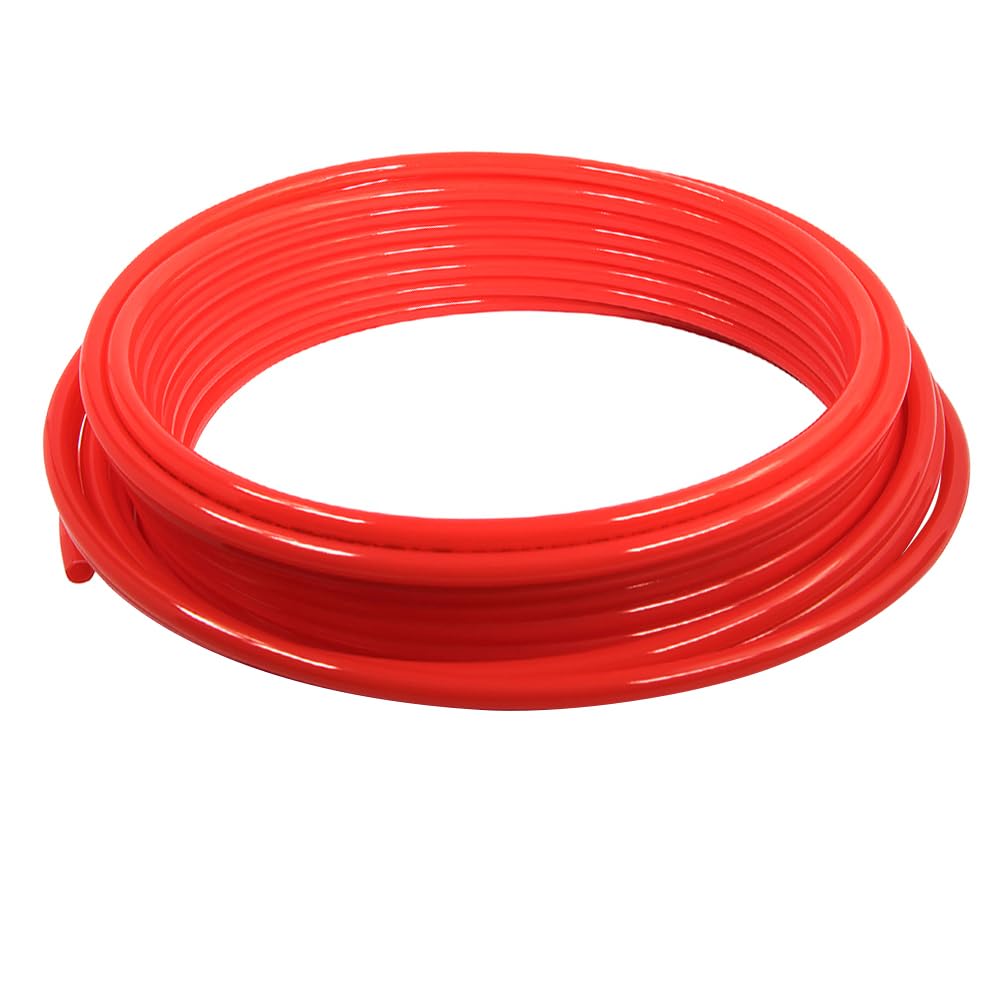
2. SUPPLYGIANT PEX-A (Red, 100 ft)
The most flexible 1/2-inch tubing you can buy — bends like an extension cord.
PEX-A is the premium tier of PEX, and this 100-foot red coil from SUPPLYGIANT shows why. It has a bend radius as little as 3-1/2 inches, meaning it wraps around a soda can without kinking. That tight bend cuts the number of fittings you need, which reduces both cost and potential leak points. The material meets F1960 (expansion ring) and F1807 (crimp) standards, so you can use whichever connection system you prefer. It is rated for burial under concrete and for continuous hot water recirculation. Buyers who used it to bypass old galvanized pipes say the water pressure improvement was immediate and dramatic.
One experienced owner notes that while the value is good for bib-cock plumbing, the pipe is noticeably less flexible than premium brands like Uponor Aquapex for tight curves in very small spaces. For most home runs — through a crawlspace or inside a wall cavity — the flexibility is excellent. The pipe carries a 160 psi rating at 73 °F and 80 psi at 200 °F. If you want that freeze-expansion memory that makes PEX-A famous for surviving a hard winter, this delivers it at a fair mid-range price.
For the PEX-A curious: The tight bend radius (3-1/2 inches) lets you snake around obstacles where PEX-B needs a fitting. Single-coil — buy two if you want hot and cold runs.
Best for: rerouting water lines through tight floor joists or around sharp corners.
skip it if: you only run long straight lines — PEX-B is cheaper and does the same job.
3. VEVOR PEX-A Twin Pack (Blue + Red, 2 x 100 ft)
PEX-A flexibility at a PEX-B price — the DIYer’s shortcut to premium tubing.
VEVOR gives you two 100-foot coils (red and blue) of proper PEX-A, which is the forgiving type that expands and contracts with temperature changes. The elastic memory is real: bend it into a circle, and it returns to its original shape without a permanent kink. That is a massive advantage when you are working alone and need the pipe to cooperate. The outer markings are clearly imprinted with the type, diameter, and production date — a small detail that matters if a building inspector asks questions. It handles the same pressure range as the big brands (160 psi at 73 °F, 100 psi at 180 °F) for a lower entry cost.
The stiffness of the tubing gets mixed reactions — a few owners find it stiffer than the PEX-A they expected. PEX-A should feel noticeably softer than PEX-B; if this one seems board-stiff straight from the start, warming it up (room temperature or a few minutes in the sun) usually resolves it. The included pipe cutter is a basic model, and the worm-drive clamps in the pack are not designed for PEX connections, so invest in proper stainless steel crimp rings. For the price of a single premium roll, you get two color-coded coils that behave like proper PEX-A once they reach working temperature.
Wins on Paper
- Two 100-ft PEX-A rolls cost less than one name-brand equivalent
- Elastic memory lets the pipe spring back after bending
- Clear imprint markings meet code-inspection requirements
Reality Check
- Tubing arrives coil-stiff; needs warmth to reach full flexibility
- Included clamps are not PEX-rated — buy separate crimp rings
Grab this for: a whole-house repipe where you want PEX-A advantages without paying Uponor prices.
Think twice if: you need it for a closed-loop radiant floor — this has no oxygen barrier.
4. Happybuy EVOH PEX-B (Red, 300 ft)

The 300-foot single coil built specifically for in-floor heating loops.
This red PEX-B pipe has an EVOH oxygen barrier, which is essential for radiant floor systems where oxygen in the water would corrode the circulator pump and boiler components. The barrier is a thin layer that stops oxygen molecules from diffusing through the tube wall. You also get the full 300 feet on one coil, so you can run a continuous loop under a slab without a splice. The 5-inch bend radius is typical for PEX-B and works fine for the gentle curves of a radiant layout.
Buyers in cold climates (Texas pier-and-beam houses, for example) used this to replace burst PVC lines and report the DIY job cost around in materials versus thousands for a plumber. The pipe carries a 160 psi / 200 °F rating that handles both standard water heaters and high-temp boiler systems. The main hesitation: ease of installation gets mixed feedback, with some owners finding the coil memory makes the first few feet hard to straighten. Let it rest in the sun or unroll it the night before and weigh it down. At this length and with the oxygen barrier, it is the right tool for the radiant job.
Worth noting: The EVOH layer stops radiator corrosion but adds cost — do not buy this for plain sink or shower lines.
Pick this for: radiant floor heat, snow-melt systems, or any closed-loop hydronic project.
Pass if: you are running potable water — the oxygen barrier is unnecessary and the coil is long enough to be a pain for small jobs.
5. EFIELD PEX-B (Red, 200 ft)

NSF certification (a safety standard for drinking water) gives confidence for the drinking water lines in your kitchen bath.
This 200-foot coil of red PEX-B carries NSF certification, meaning independent testing confirms the material does not leach harmful chemicals into your drinking water. For anyone plumbing a new kitchen or bathroom, that certification is often required by local building codes. The pipe resists chlorine, which is the main chemical in municipal water that degrades PEX over time. At 200 feet, it splits the difference between a short repair roll and a full-house coil. It handles 160 psi, which covers any residential pressure.
The most-discussed issue is stiffness — PEX-B is inherently less flexible than PEX-A, and this roll arrives with strong coil memory. A few owners mention that short pieces (under 2 feet) are a bear to straighten, and the ends curl up stubbornly. The workaround is to pull the needed length the night before and weigh it down, or warm it in the sun for an hour. For long straight runs (the main use case), the curl is a non-issue once the pipe is secured. This is solid PEX-B at a fair mid-range price, and the NSF stamp makes it inspector-friendly.
confidence
- NSF certification ensures safe potable water contact
- Chlorine-resistant for long-term municipal water use
- 200-ft coil is a practical length for a full repipe
Hands-On Reality
- Very stiff when cold — short pieces fight to stay straight
- No oxygen barrier, so skip it for radiant floor systems
Choose this for: code-required potable water installs where an NSF-certified material is mandatory.
Avoid if: you need to bend around tight 90-degree corners — pick a PEX-A roll instead.
6. SharkBite PEX-B (Blue, 300 ft)

The name every plumber trusts — PEX-B with a 25-year warranty and no-leak reputation.
SharkBite is the household name in push-to-connect fittings, and their own PEX-B pipe is built to match that standard. This 300-foot blue coil is ASTM F2023 certified for oxidative-resistance in hot water recirculation systems, which is the toughest endurance test for PEX. That means it is rated for continuous circulation of hot water without the pipe wall degrading. It handles burial under concrete and direct exposure to sunlight for up to six months during construction. The maximum working pressure is 160 psi at 70 °F, dropping to 80 psi at 200 °F.
Buyers consistently mention that the pipe is well-packaged and pulls off the coil cleanly without fighting. One owner noted that 125 feet pulled out the night before and weighted down was perfectly straight by morning. The 25-year limited warranty adds a layer of confidence that budget brands do not offer. The only real complaint is that it costs more than generic PEX-B — the premium for the SharkBite name is noticeable. But if you are plumbing a house you plan to live in for decades, the engineering pedigree and warranty history justify the upcharge.
Bottom line on the brand premium: The 25-year warranty and F2023 recirculation certification mean this pipe is tested harder than most — worth the extra dollars for a primary residence.
Ideal for: main water lines, hot water recirculation loops, or any buried application where failure is not an option.
pass on it if: you need maximum flexibility (PEX-A) or you are on a tight budget for a workshop or barn.
7. ZELCAN PEX-B Twin Pack (Red + Blue, 2 x 300 ft)

600 feet of pipe across two colors — one delivery covers your entire build.
You get a 300-foot red coil and a 300-foot blue coil of PEX-B, totalling 600 feet of 1/2-inch tubing. That is enough to run all the hot and cold water lines in a 2,000-square-foot house, plus a radiant floor loop or two. The pipe carries the standard 160 psi / 200 °F rating and has a 5-inch bend radius that works fine for most framing layouts. Each coil has measurements printed along the tube surface, so you can cut exactly the length you need without guessing.
Buyers find the quality consistent with other mid-range PEX-B — it is stiff from the start and needs a little coaxing for tight bends, but it holds pressure and does not leak. For a two-story house project, owners say it is easier to work with than PVC because you can run a single continuous line rather than gluing joints. The biggest downside is the sheer coil size: a 300-foot roll is heavy (the set weighs notable pounds) and awkward to handle in a small crawlspace. Unroll what you need in the garage and leave the bulk behind. If your project needs this much pipe, buying a twin pack is cheaper per foot than individual rolls.
Why the Bulk Works
- 600 ft total covers entire house hot and cold lines
- Printed length markings help avoid waste
- Withstands -40 °F to 200+ °F for year-round use
The Bulk Trade-Off
- Large, heavy coils are hard to maneuver in tight spaces
- Stiffer PEX-B requires effort for tight-radius bends
Buy it for: new construction, a whole-house repipe, or a large radiant system where you need hundreds of feet of hot and cold lines.
Pass if: you only need a short repair run — 300 feet of coiled pipe is overkill for a single sink.
8. SharkBite PEX-A (Blue, 300 ft)
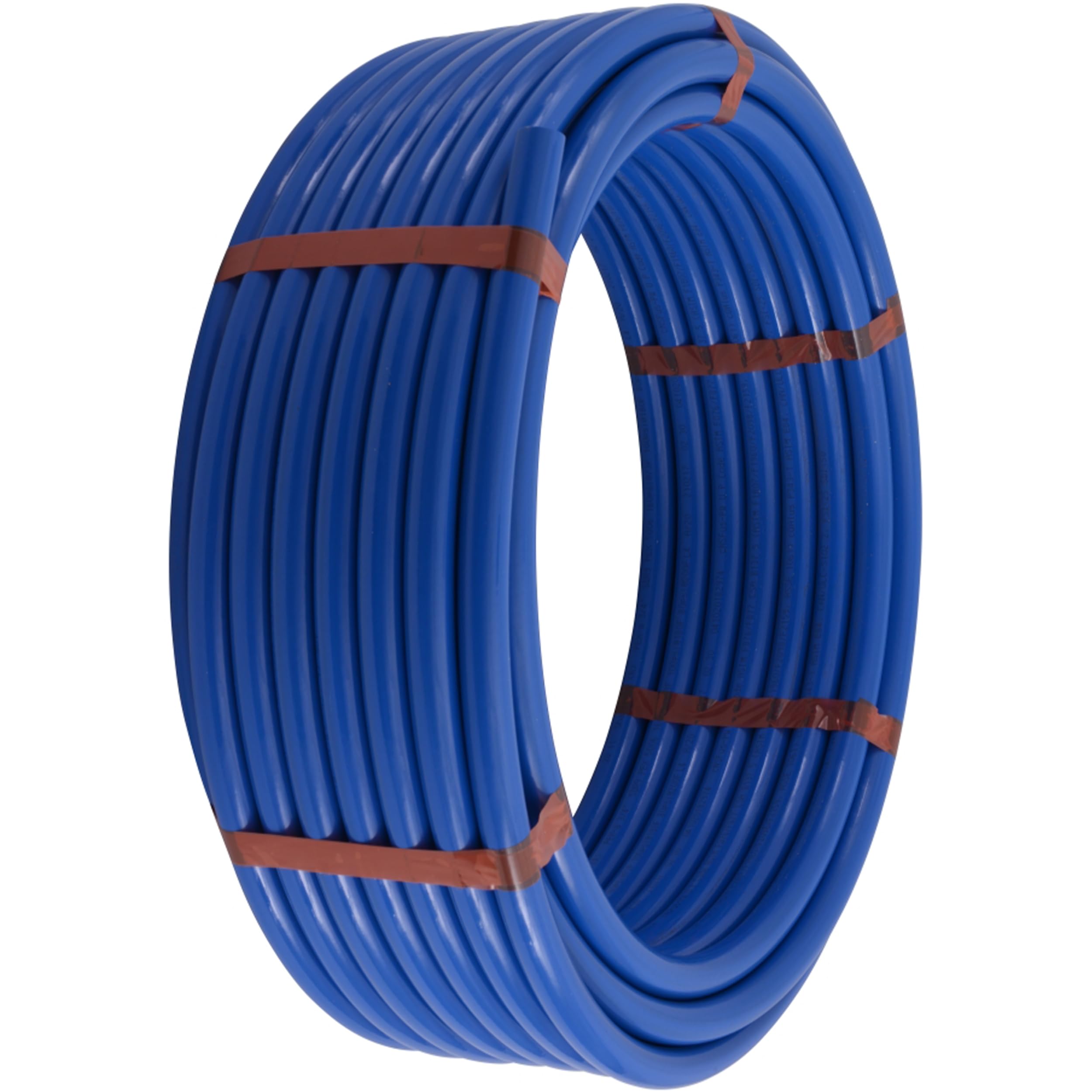
The gold standard PEX-A straight from the USA — flexible, durable, and leak-proof.
This is 300 feet of proper PEX-A tubing manufactured in the USA by the company that invented the push-to-connect fitting. PEX-A bends around corners without elbows, which simplifies installation and improves water flow by eliminating restrictive fittings. It is compatible with cold expansion (F1960) rings, push-to-connect connectors, and standard crimp methods. The UV tolerance is six months, so you can stub it out of a foundation and finish the connection later. Buyers using it for compressed-air systems and house water lines report zero leaks and easy handling.
The flexibility of this PEX-A gets high marks — one owner described snaking it through an existing wall without cutting any access holes. It does come with a premium price tag that puts it above the VEVOR and SUPPLYGIANT options. A few owners find it slightly stiffer than other PEX-A brands, though still far more pliable than any PEX-B. The pipe is certified per ASTM F2023 for oxidation resistance in hot water recirculation, so it is built for continuous duty. If you want the most forgiving, easiest-to-install 1/2-inch PEX and you need a long 300-foot run, this is the benchmark.
The honest take: SharkBite PEX-A is not the cheapest way to get a flexible pipe, but it is the most proven — the 300-foot coil, USA manufacturing, and F2023 certification (a standard for PEX tubing) make it a set-and-forget choice for a forever home.
Best for: a whole-house repipe where you want one continuous run with zero splices and the known reliability of a major brand.
Skip if: you are covering a small project like a single vanity or toilet — the 300-ft coil is more than you need and the premium price stings on a short job.
Understanding the Specs
PEX-A vs PEX-B
PEX-A is made using the Engel method, which creates a more flexible material with elastic memory — it can freeze, expand, and shrink back to its original shape without cracking. PEX-B is made with a silane process that produces a stiffer, cheaper pipe that holds its shape better on long straight runs. For a DIY install around studs and joists, PEX-A is easier; for a contractor running miles of exposed pipe, PEX-B saves money. Both are rated for 160 psi at 73 °F — the difference is in how they bend.
EVOH Oxygen Barrier
An EVOH (ethylene vinyl alcohol) layer is bonded to the pipe wall to stop oxygen from the air from seeping into the water inside the pipe. That matters only for closed-loop hydronic systems like radiant floor heating or snow-melt, where oxygen would rust the metal pump, valves, and boiler. For potable water lines — sinks, showers, toilets — an oxygen barrier is unnecessary and adds cost without benefit. The barrier pipe also tends to be stiffer because of the extra layer. Buy the barrier only if you are feeding a heating loop.
FAQ
Can I use 1/2 inch PEX for a shower or whole house?
Is PEX-A worth the extra cost over PEX-B?
Can I bury PEX tubing underground or under concrete?
Will PEX work with my existing copper or PVC pipes?
Is PEX safe for drinking water?
How do I straighten PEX that comes in a tight coil?
What is the maximum water temperature PEX can handle?
Can I run PEX through a wall or attic in a cold climate?
Do I need special tools for PEX installation?
How long does PEX tubing last before it needs replacement?
Final Thoughts: The Verdict
If you want one dependable pick, the best 2 pex tubing winner is the Likeem PEX-B 2-Roll Pack because it gives you two full color-coded coils (100 feet red, 100 feet blue), a pipe cutter, and proven quality at a price that undercuts the big-box stores by a wide margin. If you want the most flexible pipe that bends around corners without fittings, grab the SUPPLYGIANT PEX-A. And for a full-house radiant floor system, the Happybuy EVOH PEX-B is the one to reach for. The crowd favorite — the Likeem pack — holds a stellar 4.8 stars across 500+ owners, proving that good PEX does not have to come from a premium brand.
How We Picked
We do not accept paid placement. Every pick is matched to a real buyer and a real use-case; we do not hands-on test units.
Sources & Methodology
Specifications: manufacturer listings and product documentation. Review insights: verified customer reviews, as of July 2026. Pricing: not shown on this page (it changes often); check the current price via the retailer link.
As an Amazon Associate, Gadgets Feed earns from qualifying purchases. This does not affect which products we feature.