
Table-topping arm wrestling isn’t just about brute arm power—it’s a whole-body kinetic chain that starts in the fingers, twists through the forearm, and locks at the shoulder, and most general gym gear completely misses that rotational specificity. The right training tools isolate the exact pronation, supination, and cupping motions that win matches.
I’m Min — the co-founder and writer behind Gadgets Feed. I spend hours evaluating the construction, resistance systems, and sport-specific design of arm wrestling gear to separate gimmicks from genuine training upgrades. (And Homer 🐱 gave the spinning burn machine a suspicious paw-swat test before grudgingly approving it).
Whether you’re a weekend warrior looking to dominate casual challenges or a competitive puller refining your cup and pronation, this guide cuts through the noise to present the top-tier arm wrestling equipment that will actually develop the tendon-hammering strength you need on the table.
How To Choose The Best Arm Wrestling Equipment
Arm wrestling training gear falls into two broad families: implements that isolate the specific finger-wrist-forearm chain and full tables that simulate the actual competition platform. Choosing wrong means buying a tool that develops muscle in the wrong planes.
Isolate Rotational Strength Over Crushing Grip
Many beginners load up on grippers and crush-style tools, but match-winning arm wrestling strength comes from pronation (driving the opponent’s hand down) and cupping (flexing the wrist to gain top-roll leverage). Look for equipment with a 360-degree rotating axis—burn machines, wrist wrenches, and hand-shaped pulley attachments—that let you resist and apply torque through full range of motion.
Match the Resistance Type to Your Stage
Linear weight-stack resistance builds baseline strength, but rotational inertia (like the 4.45 kg iron flywheel on premium burn machines) forces your forearm flexors and extensors to work in eccentric concert. Budget-friendly nylon strap trainers like the C-shaped finger-wrist device create an open-hand stimulus that climbers and cupping specialists both value, while heavy steel wrench-style handles let you load supination work with standard plates.
Stability and Table Fit
If you’re buying a full table, look for 1.77-inch diameter tubing with reinforced pins and a multi-layer wooden board topped with EVA and PU padding—this eliminates the wobble that makes a real match feel different from training. Adjustable elbow-pin positions (multiple holes) let you train either hand without buying a second unit. For solo gear, check that the carabiner or mounting hole can integrate with your cable tower or loading pin, and that the grip texture is aggressive enough to hold under chalk rather than rotating in your palm.
Quick Comparison
On smaller screens, swipe sideways to see the full table.
| Model | Category | Best For | Key Spec | Amazon |
|---|---|---|---|---|
| Exura Spinning Rotator | Rotational Burn Machine | Rotator cuff and pronation power | 4.45 kg solid iron build | Amazon |
| QUSKLISU Professional Table | Full Competition Table | Live sparring and standard practice | 2,200 lb static load capacity | Amazon |
| GRIPZILLA Dynamo | Wrist Roller Device | Isolated wrist and finger burnout | 360° rotation with adjustable tension | Amazon |
| EILISON Rotating Burn Machine | Spinning Resistance Machine | Explosive rotator work and boxing endurance | 12 adjustable resistance levels | Amazon |
| Elymays Arm Wrestling Handle | Steel Attachment | Heavy-load cable pronation and supination | 2.2-inch wide fat grip knurling | Amazon |
| Complete Hand Control Grips | Hand-Shaped Pulley Attachment | Natural cupping position for pulleys | ABS core with silicone grip shell | Amazon |
| WristMax Fingers & Wrist Trainer | Nylon C-Shape Strap | Open-hand stimuli and climbing transfer | Stainless steel D-ring, nylon strap | Amazon |
In‑Depth Reviews
1. Exura Spinning Rotator Burn Machine
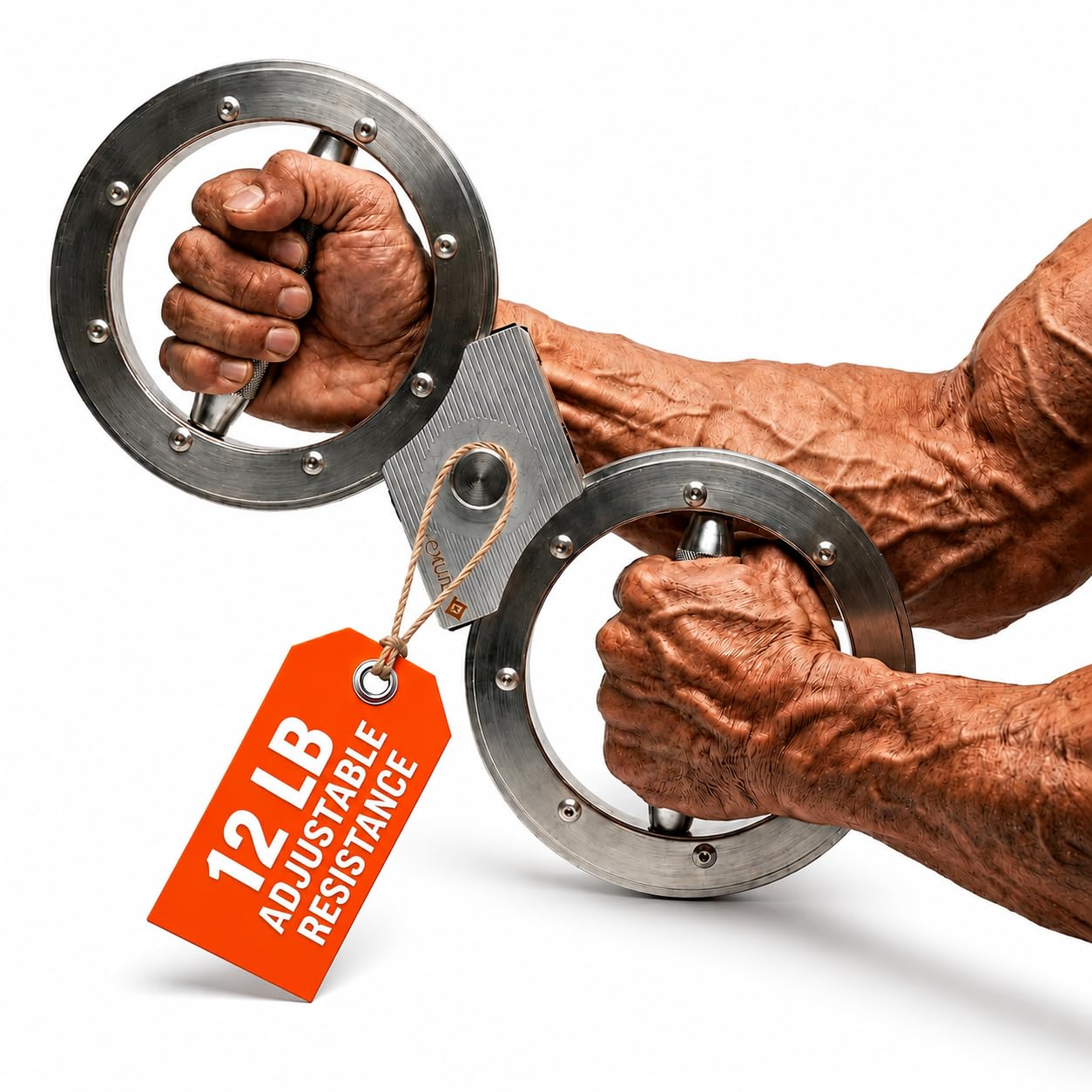
At 4.45 kilograms of solid iron with zero plastic parts or spring-loaded gimmicks, the Exura Burn Machine delivers pure rotational inertia that targets the forearm in a way dumbbell wrist curls cannot. The pronation-supination axis trains the exact kinetic pattern of a top-roll and hook, and the heavy-duty resistance dial lets you progress from rehab-light tension to bone-crushing overload without changing the device.
Customer feedback repeatedly highlights the smooth spinning dual-ring mechanism and the fact that grip strength improves noticeably within weeks—reviewers call it a “forearm masterpiece” that hacks the forearm flexors and extensors that cable work often misses. The round, 14.17-inch diameter design fits on a desk or gym shelf without dominating space, and the lack of rubber bands means nothing degrades over time.
Boxers and BJJ athletes also gravitate to this unit because the rotational pattern doubles as shoulder mobility work for the rotator cuff. If you want one piece of gear that builds match-winning pronation directly and can also serve post-injury rehab, this is the device to beat.
Why it’s great
- All-metal construction with 4.45 kg inertial resistance for genuine rotational work
- Adjustable dial suits beginners, rehab patients, and advanced athletes on the same unit
- Portable enough for a home gym yet durable for a commercial boxing gym
Good to know
- The spinning axis requires focused control—not ideal for distracted, passive training
- Some users prefer a wider base for knee stability during seated workouts
2. QUSKLISU Professional Arm Wrestling Table
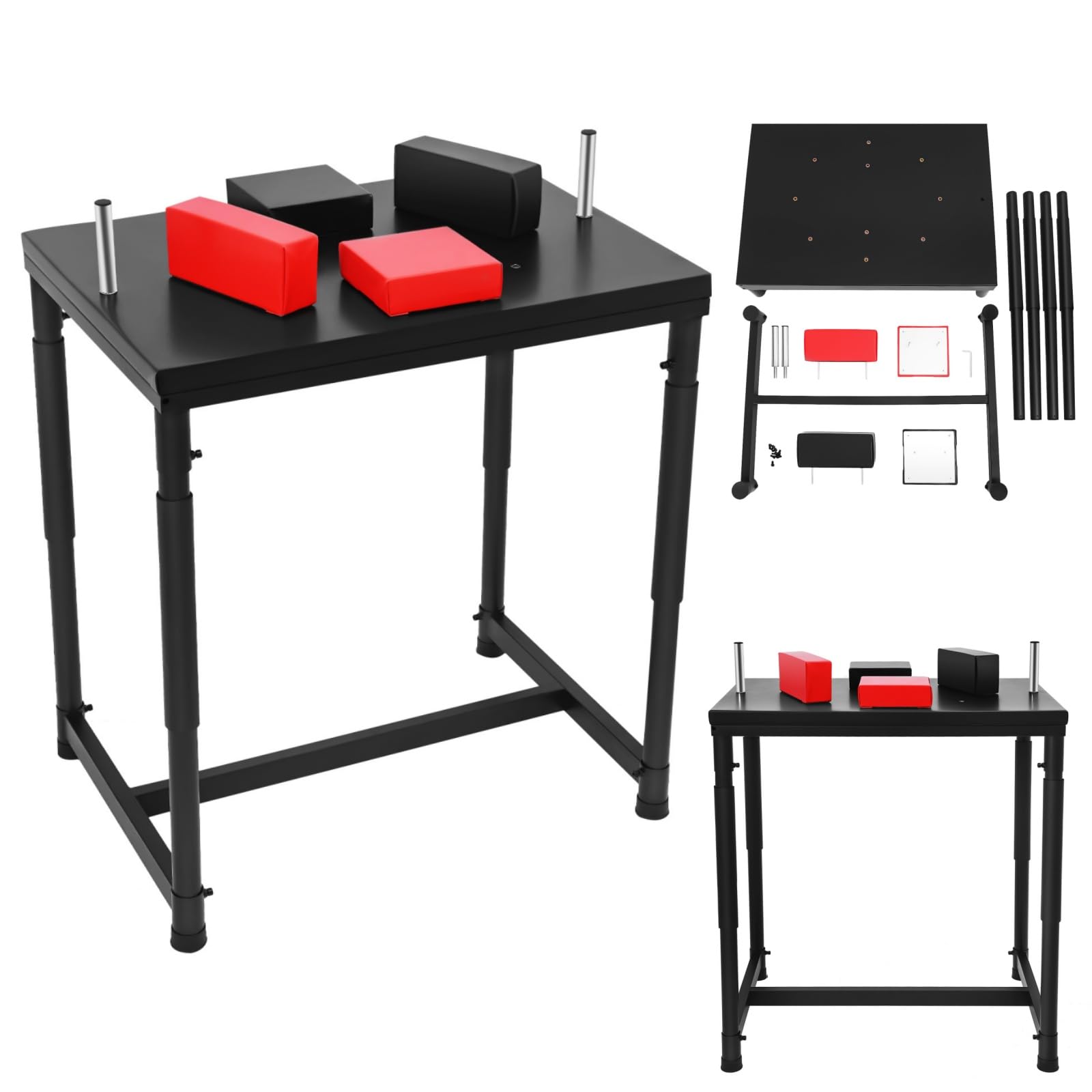
The QUSKLISU table is a regulation-sized platform built from multi-layer wooden boards and plastic-sprayed stainless steel tubing with a 1.77-inch diameter and 1.2 mm wall thickness, delivering a static load rating of over 2,200 lbs. That means zero frame wobble even when two heavy pullers battle hard—a make-or-break feature for anyone preparing for actual competition where table feel matters.
Multiple adjustment holes let you move the elbow pads to your preferred stance and switch between left and right arm training without extra hardware. The surface uses EVA foam and PU padding with a black-and-red vinyl wrap that looks professional and stands up to chalk and sweat. Reviewers note the assembly is straightforward and the final product feels comparable to tables costing twice as much.
A few buyers reported bent pieces during shipping or incorrect instructions, but those were resolved quickly, and the consensus is that the table’s stability and size make it the best value for a serious home or club setup. If you plan to host sparring sessions or need a reliable platform for competition prep, this table anchors your training room.
Why it’s great
- 2,200 lb static load capacity eliminates wobble during intense matches
- Adjustable elbow-pin positions accommodate both hands and personal stance
- Commercial-grade materials at a mid-range investment point
Good to know
- Some units have arrived with minor shipping damage (fixable with simple tools)
- Included instructions can be unclear, though assembly is intuitive
3. GRIPZILLA Dynamo Forearm Strengthener

The GRIPZILLA Dynamo is a compact wrist-roller-style device that uses a 360-degree rotating axis with ergonomic anti-slip handles to isolate the forearm flexors and extensors independently of grip crush. The tension adjustment mechanism lets you dial in resistance from warm-up levels through balls-to-the-wall burnout, and the knurled handles provide secure feedback even when chalk is fresh on your hands.
Physiotherapists trust this design for wrist rehab because the rotational resistance is smooth and can be controlled through full range without loading the elbow or shoulder. At just 0.8 kg, it is the most portable premium device in this lineup—toss it in a gym bag for a forearm finisher after every workout. Buyers report measurable improvements in wrist stability and forearm size within a few weeks of consistent use.
The only friction point is that the adjustment keys protrude and can interfere with forearm clearance during extended sets. Still, for targeted tendon-strengthening work and match-ready wrist flexion endurance, this is the strongest finisher on the list.
Why it’s great
- Compact 0.8 kg design fits any gym bag and needs no setup
- Knurled handles and 360° rotation train extensors and flexors equally
- Trusted for rehab—smooth resistance reduces joint stress
Good to know
- Adjustment keys don’t fold flush and can brush against the forearm
- No notch or gauge for repeatable resistance settings between sessions
4. EILISON Rotating Burn Machine 12 LB

The EILISON Burn Machine runs on a steel frame with a side-mounted knob that cycles through 12 distinct resistance levels, giving you granular control over the rotational tension without swapping out parts. The compact footprint (roughly the size of a small desktop speaker) means it fits in cramped home gyms, and the corded-electric operation means zero battery or charging concerns—just plug and spin.
While the action isn’t as buttery smooth as the solid-iron Exura unit, the incremental resistance dial is a genuine training tool for progressive overload. Reviewers note the machine weighs a solid 12 lbs at zero resistance, which means even the lightest setting involves some baseline inertial work. Boxers use it for speed-bag-like shoulder endurance, and older users appreciate that low-resistance settings provide a joint-friendly pump.
The metal handles can trigger hand odor after extended sessions without gloves, and the rotation isn’t perfectly uniform at every resistance click, but for the price point, this is an accessible entry into rotator-specific training that delivers clear overload progression.
Why it’s great
- 12 incremental resistance levels for step-by-step overload planning
- Heavy alloy steel frame stays planted during aggressive spinning
- Quiet operation allows use during TV or podcast sessions
Good to know
- Rotation not perfectly smooth at every resistance stop
- Metal handles can cause hand odor—use gloves for longer sessions
5. Elymays Arm Wrestling Exercise Handle
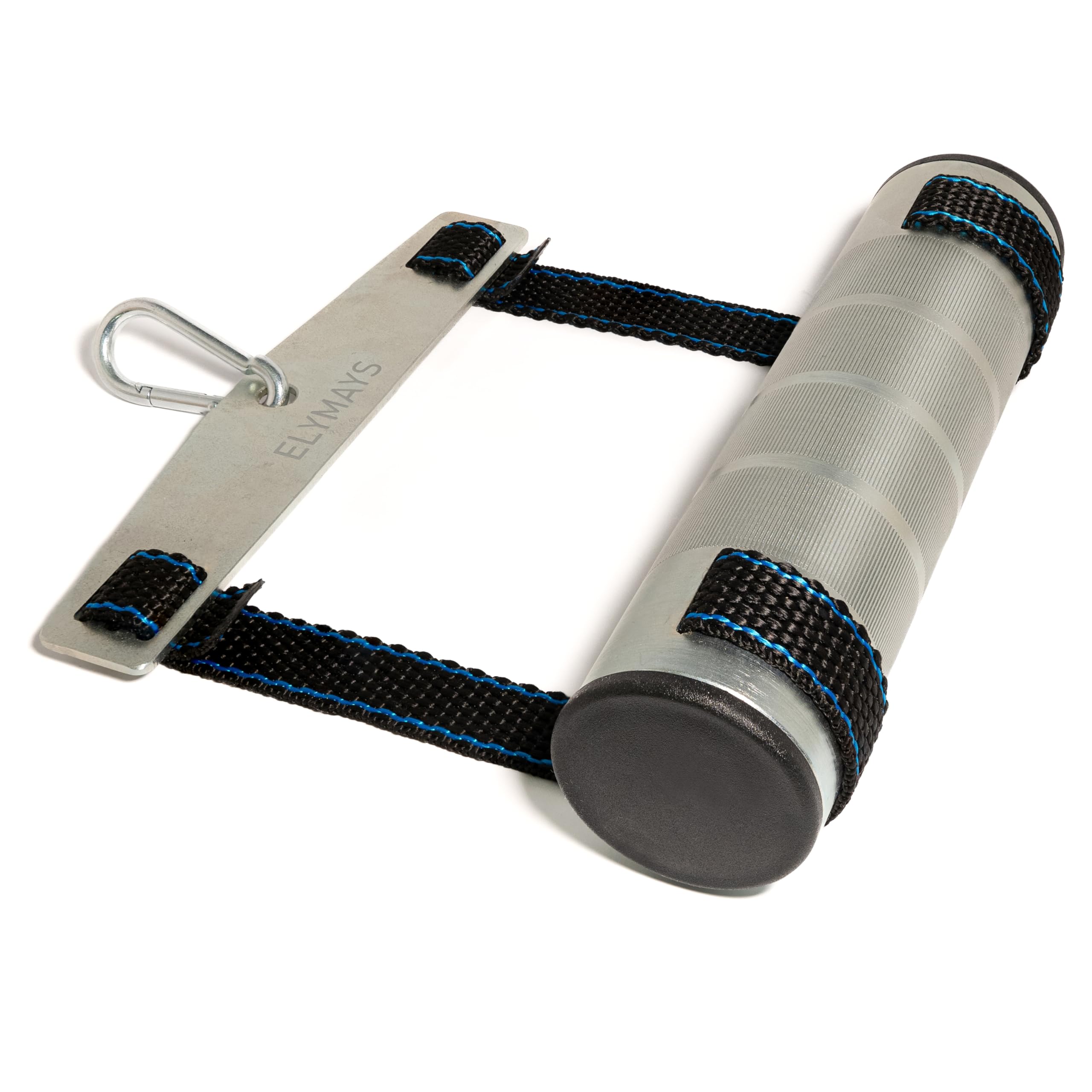
The Elymays handle uses aviation-grade galvanized steel with an extra-wide 2.2-inch fat grip design that forces your hand, wrist, and forearm to work harder than standard d-handles. The carabiner-compatible loop integrates with any cable tower or loading pin setup so you can load up real plates and execute heavy pronation and supination work through full range of motion.
The knurling is present but conservative—reviewers note that if the handle starts to rotate in your palm during heavy pulls, squeezing harder locks it in place. The wide grip channel also gives your thumb and fingers a stable shelf that mimics the feel of pulling on an actual arm wrestling table peg. The exclusive web application with training programs is a bonus for structure-driven athletes who want programmed progression.
Some users wish the carabiner hole was larger for faster swap between attachments, and the handle can feel a bit slick without chalk for max-effort sets. Still, for plate-loaded pronation and supination training that challenges your grip right where it matters most, this is the most durable steel handle in the lineup.
Why it’s great
- Aviation-grade galvanized steel withstands endless plate-loaded sessions
- 2.2-inch fat grip challenges the entire hand-wrist chain
- Exclusive training app adds programming structure
Good to know
- Carabiner hole could be larger for quicker rig changes
- Knurling is mild—chalk is recommended for heavy sets
6. Complete Hand Control Training Grips (Pair)
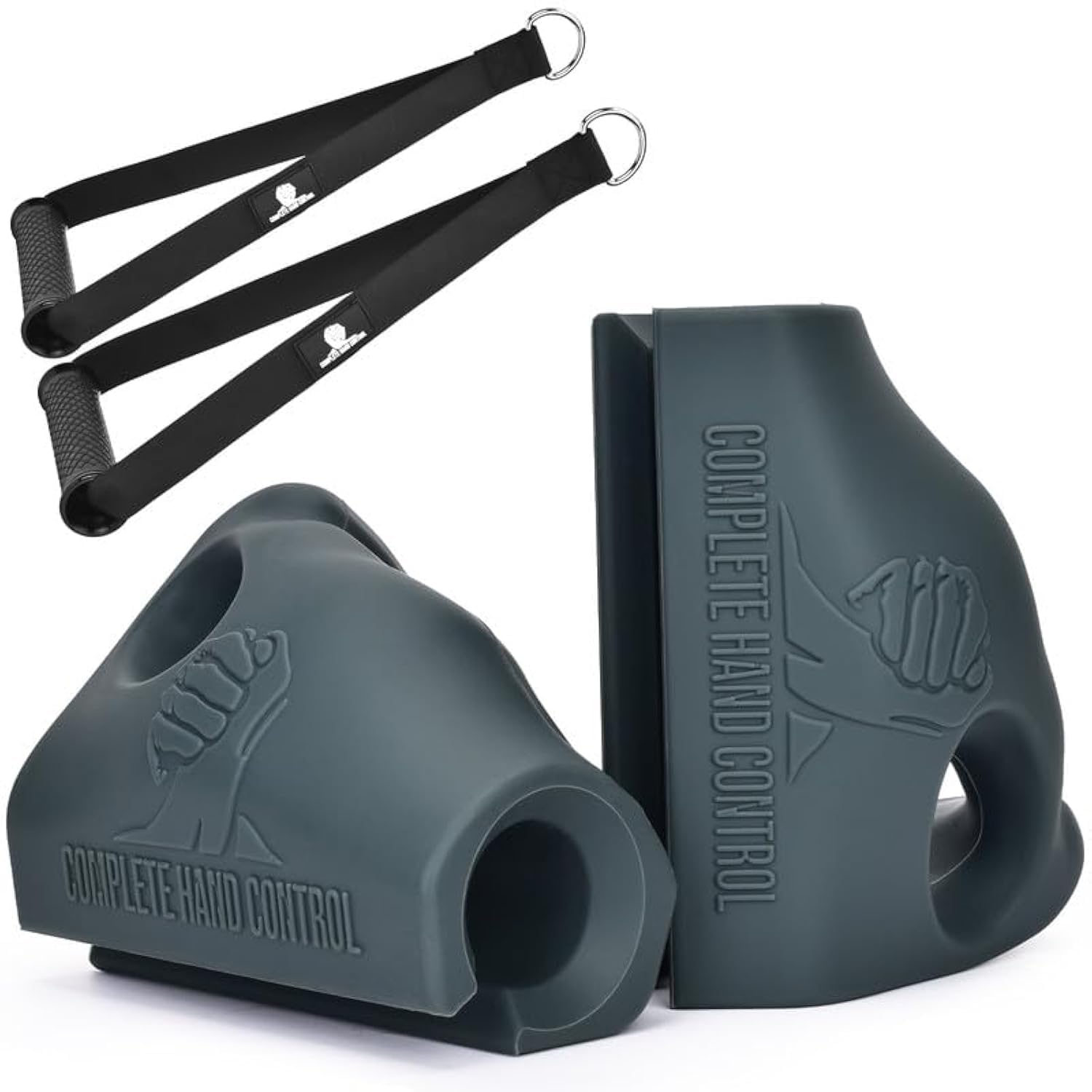
Designed by a doctor of physical therapy, the Complete Hand Control grips feature an ABS core wrapped in silicone that creates a hand-shaped form factor with a thumb-through opening. This geometry allows your hand to assume a naturally cupped position during pulling movements—critical for arm wrestling, where cupping the wrist drives the top-roll and hook. The pair comes with custom handles that attach to most dumbbells, barbells, or exercise bands.
Reviewers with smaller hands and thumbs specifically praise how the thumb-through design feels more natural than wrapping around a typical fat grip. The silicone outer layer offers enough friction to eliminate worrying about the handle rotating mid-pull, and the internal ABS core provides a solid anchor that won’t deform under load. The 1.08 kg pair is substantial without being bulky.
One minor adjustment tag from the community: the included belt straps are longer than necessary and may require a simple knot to shorten for optimal cable-station placement. Beyond that, for replicating the hand-wrist angle of an actual table pull on a pulley system, this is the most anatomically accurate attachment available.
Why it’s great
- Hand-shaped silicone core creates a natural cupping position for supination work
- Thumb-through design feels secure for smaller hands and thumbs
- PT-designed form reduces injury risk compared to standard handles
Good to know
- Included straps are long for cable integration—tying a knot fixes it
- ABS core is durable but not suitable for unlimited plate-stacking abuse
7. WristMax Fingers & Wrist Trainer

The WristMax trainer is a minimalist nylon strap and stainless steel D-ring loop that creates a C-shape tension zone across your fingers and wrist. Unlike closed-hand grippers, the open-finger position simulates the open-hand drag you encounter during a top-roll, and the unique geometry distributes load evenly across all four finger slots and the thumb. Weighing just 0.53 kg, it’s the most portable option here—slide it into a pocket for desk-side finger extension work.
Climbers and bodybuilders both endorse this device, noting it provides a distinctly different stimulus from standard wrist curls. The heavy tension rating is appropriate for intermediate to advanced trainees, and the ABS core frame keeps the shape stable even under aggressive pulling. Customers consistently call it “simple but effective,” with the main trade-off being comfort—the nylon can dig during prolonged use, but that’s inherently part of grip training.
If your goal is to build finger flexor endurance and open-hand cupping strength without adding bulk to a gym bag, and you want to start with a proven, no-moving-parts design, the WristMax is the most accessible entry point. It won’t load supination or pronation directly, but it develops the finger connection that every table pull begins with.
Why it’s great
- Ultra-portable 0.53 kg design with no moving parts
- Open-finger position trains cupping and finger extension simultaneously
- Stainless steel D-ring and nylon strap are highly durable
Good to know
- Nylon webbing can become uncomfortable during long sessions
- Does not provide rotational or supination-specific resistance
FAQ
Can I build arm wrestling strength using only a spinning burn machine?
Is a full competition table worth the space for a home gym arm wrestler?
Why do many arm wrestling tools focus on fingers instead of biceps?
Final Thoughts: The Verdict
For most users, the arm wrestling equipment winner is the Exura Spinning Rotator Burn Machine because its solid iron inertial resistance builds the specific pronation, supination, and tendon resilience that win matches, all in a compact package with no assembly. If you need a competition-grade platform to train with a partner, grab the QUSKLISU Professional Table. And for a compact finisher that zeroes in on wrist and grip endurance, nothing beats the GRIPZILLA Dynamo.