
Our readers keep the lights on and my morning glass full of iced black tea. As an Amazon Associate, I earn from qualifying purchases.
Specs are compiled from manufacturer listings and verified buyer reviews and can change over time — please confirm the key details on the product page before buying.
A 35mm lens is the Swiss Army knife of photography — wide enough for a street scene, tight enough for a candid portrait, and bright enough to shoot indoors without a flash. But the choice here is brutal: do you go for the fastest autofocus of your life, the creamy bokeh of an F1.4 classic, or the compact size that lets you carry it everywhere? We have lined up 11 lenses across every major mirrorless mount — Fuji X, Sony E, Canon RF, Nikon Z, L-Mount, and Sigma SA — so you can match the right glass to your camera body and your shooting style.
I’m Min — the founder and writer behind Gadgets Feed. This guide is built by comparing the manufacturers’ published specifications and the patterns across verified customer reviews, so you get each pick’s real strengths and trade-offs instead of marketing spin.
The crowd favorite across all mounts lands here: the fujinon xf35mmf2 r wr, praised by over 800 owners for lens quality, lightning-fast AF, and weather sealing that lets you shoot through a drizzle without worry.
Our Picks at a Glance


How To Choose The Best 35mm Lens
Picking a 35mm prime is more personal than a zoom because you live with one focal length. The right choice depends on your camera mount, your need for speed, and whether you shoot indoors or out in the weather.
Your Camera Mount Is the Gatekeeper
A 35mm lens must match your camera’s lens mount — Fujifilm X, Sony E, Canon RF, Nikon Z, L-Mount, or a DSLR mount like Nikon F or Sigma SA. The glass is only as useful as the connection. Make sure you are shopping for your specific system; an F-mount lens will not fit a Z-mount camera without an adapter.
F-Stop: Brightness and Depth of Field
F1.4 lenses let in twice as much light as an F2, which matters in dim rooms and for blurring the background (that soft, dreamy look called bokeh). But F1.4 lenses are heavier, larger, and cost more. An F2 lens is smaller, focuses faster, and is sharp enough for most real-world shooting — the trade-off is one stop of light.
Build Quality and Weather Sealing
A weather-resistant lens (WR) has rubber gaskets that keep dust and light rain out of the electronics. If you shoot street photography in any weather or travel a lot, WR is a real advantage. Plastic-bodied lenses without sealing save weight and money but are best kept indoors or in dry conditions.
Autofocus Speed and Noise
Stepping motors (STM) and ultrasonic motors (HSM) are near-silent and fast — ideal for video and quick street shots. Older systems can be louder and hunt in low light. If you shoot video, quiet autofocus is non-negotiable because the camera mic picks up that grinding sound.
Extra Features: Macro and Image Stabilization
Some 35mm primes double as a macro lens, letting you focus as close as 0.17m (about 6.7 inches) to shoot small objects like flowers or food. A few also include optical image stabilization in the lens itself, which keeps your handheld video smooth and your stills sharp at slow shutter speeds.
Quick Comparison
| Model | Best For | Max Aperture | Weight | Weather Sealed | Amazon |
|---|---|---|---|---|---|
| Fujinon XF35mmF2 R WR★ Best Overall | Street / All-Weather | F2 | ~170g | Yes | Amazon |
| Fujifilm XC35mmF2Best Value | Budget Fuji Optics | F2 | 300 g | No | Amazon |
| Tamron 35mm f/2.8 Di III OSDMacro Prime | Macro / Budget Sony | F2.8 | 7.4 oz | Moisture resistant | Amazon |
| VILTROX 35mm F1.8 II EVO | Value AF / Sony E | F1.8 | 0.33 kg | No | Amazon |
| Canon RF 35mm F1.8 IS Macro | Canon RF / Close-Up | F1.8 | 305 g | No | Amazon |
| Panasonic LUMIX S 35mm F1.8 | L-Mount / Video Hybrid | F1.8 | 10.4 oz | No | Amazon |
| Fujifilm XF35mmF1.4 R | Fuji Classic / Low Light | F1.4 | 187 g | No | Amazon |
| Nikon NIKKOR Z 35mm f/1.8 S | Nikon Z / Weddings | F1.8 | 370g | No | Amazon |
| Sigma 35mm F1.4 Art DG HSM | DSLR / Sigma Art | F1.4 | 665 G | No | Amazon |
| Sigma 35mm F1.4 DG DN Art | Mirrorless Sigma Art | F1.4 | 454 g | No | Amazon |
| Sony FE 35mm f/1.4 GM | Pro Sony / Low Light | F1.4 | 1.2 pounds | Yes | Amazon |
In‑Depth Reviews
1. Fujinon XF35mmF2 R WR – Black
Our pick — over 4.5★ from 800+ verified ratings; the strongest balance of quality and price.
The weatherproof Fuji prime that snaps into focus faster than your eye can blink.
This is the lens that convinced countless Fuji shooters to sell their F1.4. The autofocus hits in 0.08 seconds — nearly silent, no hunting, just instant lock. That speed comes with 8 weather-sealing points, so a light rain or dusty trail does not force you to pack up. The 9-blade aperture creates smooth, circular bokeh that looks creamier than what most F2 lenses can deliver.
The Nano-GI coating kills ghosting and flare when you shoot into the sun. At about 13 inches minimum focus, you can get close enough for detail shots without switching lenses. Buyers consistently call out the lens quality as the top reason to buy it — far ahead of any other praise. The build is metal, the weight is balanced, and the aperture ring has solid hard stops between f-stops.
The only honest skip is if you absolutely need the extra stop of light that an F1.4 provides for shooting in near-darkness.
What Wins Owners Over
- Lightning-fast, silent autofocus — 0.08 seconds
- Weather-resistant design with 8 sealing points
- Nano-GI coating cuts flare and ghosting
- 9-blade aperture for smooth bokeh
- Metal build feels premium and durable
The Only Trade-Off
- One stop slower than an F1.4 in extreme low light
Best for: Fuji X shooters who want a fast, quiet, all-weather lens for street and travel.
Think twice if: You shoot in near-darkness without a tripod and need every photon that an F1.4 gathers.
2. Fujifilm XC35mmF2
Same sharp glass as the XF version, wrapped in plastic to save you money.
The XC35mmF2 uses the exact same optical formula — nine elements in six groups with two aspherical elements — as its metal XF sibling. The images are edge-to-edge sharp with excellent chromatic aberration control. The stepping motor drives focus quickly and nearly silently, just like the pricier version.
Where the savings show up is the build. The body is all plastic, there is no aperture ring, and there is no weather sealing. It also lacks a lens hood in the box. The weight drops to 300g, which owners call perfect for street photography when the XF lenses feel too heavy. As buyers put it: “the glasses are very sharp.” This lens is a no-brainer if you keep your gear indoors and want the same optics for less.
Right move if: You are building a Fuji kit on a tighter budget and do not shoot in rain or dusty environments.
The hard no: No weather sealing, no aperture ring, and a plasticky feel that will not survive a drop well.
Ideal pick for: Everyday indoors and sunny street work where weight and price matter more than ruggedness.
Not the one if: You need weather sealing or a metal lens mount for heavy professional use.
3. Tamron 35mm f/2.8 Di III OSD M1:2 Lens for Sony
An incredibly compact Sony prime that takes close-up shots at 1:2 magnification.
At just 7.4 ounces, this is one of the lightest 35mm lenses you can put on a Sony E-mount camera. It focuses as close as you would expect from a macro lens, making it a dual-purpose tool for both everyday street scenes and detailed product shots. Image quality earns high praise for its sharpness and absence of chromatic aberrations.
The catch is the autofocus. Owners describe it as “old school” — noisy, slow, and prone to losing track of moving subjects. The build includes a moisture-resistant construction, but it is not fully weather-sealed. For price-conscious Sony shooters who shoot still life or landscapes, the value is unbeatable. Image quality is what owners talk about most, with sharpness right behind it.
Standout strength: Close-focusing macro ability in a tiny 35mm body — no other lens here does 1:2.
Honest downside: The AF is loud and slow. This is not a lens for fast-moving kids or street candids.
Best suited for: Sony photographers who want a sharp, compact prime that can double as a macro for flowers, food, and small products.
Skip for: Action, video, or any scenario where you need quiet, reliable autofocus.
4. VILTROX 35mm F1.8 II EVO FE APO
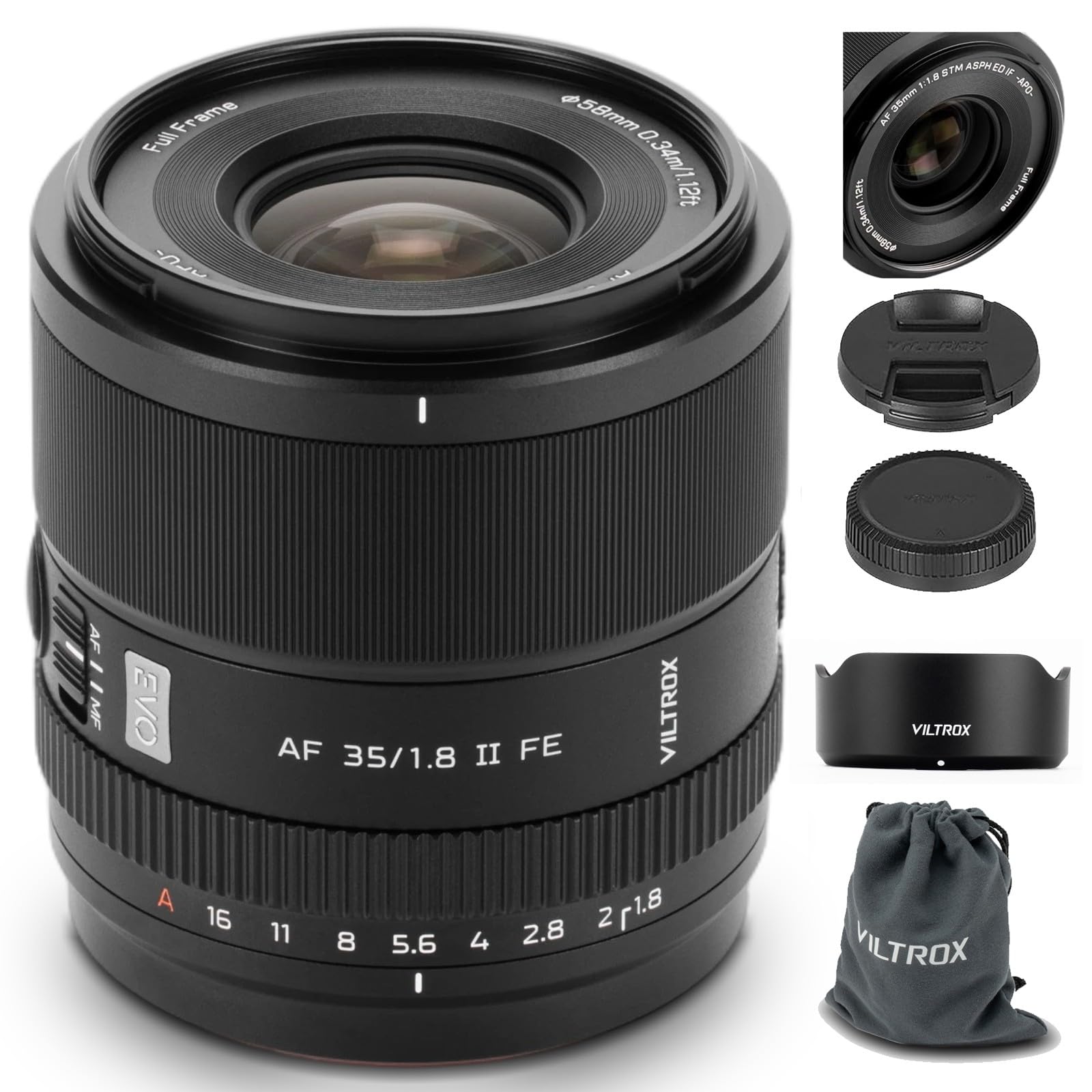
A third-party Sony lens that punches way above its price with APO glass.
VILTROX packed an advanced APO (apochromatic) design into this lens — 13 elements in 10 groups, including 2 ED (extra-low dispersion) and 3 HR (high refractive) elements. The result is sharp details with no color fringing, even at F1.8. The STM stepping motor delivers fast, accurate autofocus that owners say is precise enough for pets and street scenes.
The F1.8 aperture excels in low-light conditions, and the minimum focusing distance of 0.34m lets you get close to your subject. Physical controls include an Fn button, a CLICK switch for de-clicking the aperture ring (useful for video), and an AF/MF switch. Build quality is the most-mentioned positive aspect — it feels more solid than its price suggests.
Best feature: The APO optical design eliminates chromatic aberration — something lenses twice its price still struggle with.
Watch out: Image stabilization is not built into the lens, so you rely on your Sony body’s IBIS (in-body image stabilization).
Great for: Sony E-mount shooters who want F1.8 speed and APO-level sharpness without paying Sigma or Sony money.
Not for: Shooters who need weather sealing or optical stabilization in the lens itself.
5. Canon RF 35mm F1.8 IS Macro STM

A lightweight Canon RF prime that stabilizes your shot and gets your nose close to the subject.
This lens does two things no other 35mm in this list can: it has optical image stabilization rated at up to 5 stops of shake correction, and it focuses down to 0.17m (about 6.7 inches) for 1:2 macro shots. That combination makes it a dream for handheld video and for photographing small objects like jewelry or flowers.
The F1.8 aperture gives you a nice background blur without the weight of an F1.4. At 305g, it is easy to carry all day. Owners adore it for receptions and as a relief lens after shooting with heavy telephotos all day. The control ring on the lens lets you adjust settings directly without diving into menus. It is compatible with all Canon EOS R series cameras including the R100, R50, R10, R6, and R8.
The killer combo: Image stabilization plus macro focusing — no other RF 35mm does both.
One thing: The build is not weather-sealed, so keep it dry.
Ideal for: Canon RF shooters who shoot handheld video and want a compact prime with close-up capability.
Not the pick if: You need a rugged, weather-sealed lens for outdoor work in rain or heavy dust.
6. Panasonic LUMIX S 35mm F1.8

A rugged, freeze-resistant L-Mount prime built for hybrid shooters who need video and stills.
The S-S35 is one of the few 35mm lenses with a dust/splash/freeze-resistant design, meaning it keeps working in cold weather and dusty environments. At 10.4 ounces (295g), it is light enough to carry all day on a Lumix S5II or S9. The F1.8 aperture delivers high resolution from the center to the corners, with beautiful bokeh separation.
For video shooters, this lens is a standout. It has minimal focus breathing — the image does not “wobble” when you change focus — and smooth aperture control. The programmable focus ring lets you set the rotation speed so manual focus feels consistent. Owners call it “clinically perfect” and “the best Panasonic lens on the market.” The AF works best on newer bodies like the S5II.
Video advantage: Minimal focus breathing makes this lens a go-to for cinematic L-Mount video work.
Heads-up: No built-in optical stabilization on this lens — you rely on your Panasonic body’s stabilization.
Best for: Panasonic L-Mount users who shoot both video and stills in challenging weather conditions.
Think twice if: You prefer a lens with built-in stabilization for handheld video on older bodies.
7. Fujifilm XF35mmF1.4 R
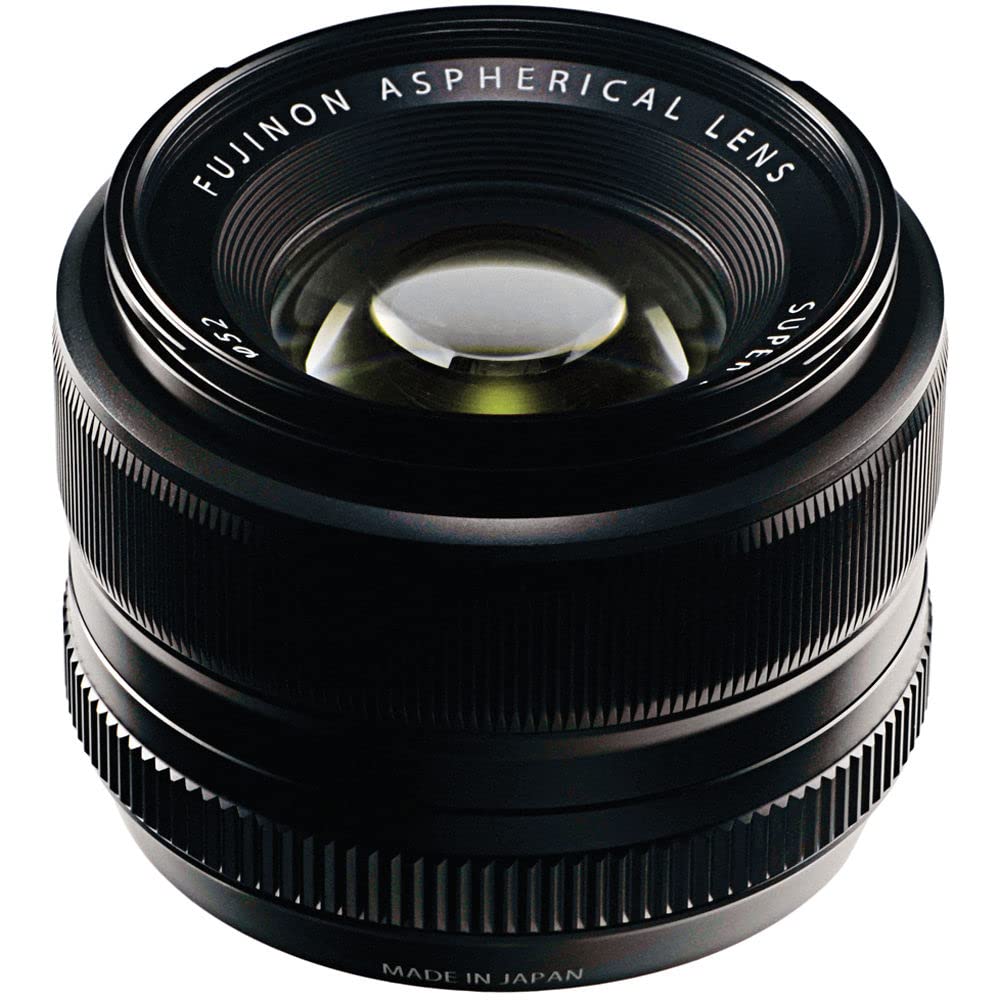
The original Fuji legend that still delivers stunning F1.4 bokeh and colors.
This is the lens that made Fuji’s X-series famous for its “look” — rich colors, sharp center at F1.4, and a bokeh quality that owners describe as outstanding. The 8-element, 6-group design includes one aspherical element to control distortion. At 187g, it is remarkably light for an F1.4 lens, feeling closer to a point-and-shoot.
The elephant in the room is the autofocus. It is slower and louder than the newer F2 version. Owners describe it as “sluggish” and “noisy” — especially compared to the 18-55 or 55-200 zoom lenses. It also lacks weather sealing. But for image quality, it remains the most-discussed positive: optical quality (106 mentions) and image quality (77 mentions) dominate the praise. “Stunning image quality that rivals the best on the market” is how one owner sums it up.
What Makes It Special
- Stunning image quality and bokeh at F1.4 — sharp even wide open
- Lightweight at 187g for a fast prime
- All-metal housing with a proper aperture ring
The Honest Reality
- Autofocus is slow, noisy, and hunts in low light
- No weather sealing
- No lens case included
Best for: Fuji shooters who chase the classic F1.4 rendering and do not mind slower AF.
skip it if: You need fast, quiet autofocus for street candids, video, or shooting in the rain.
8. Nikon NIKKOR Z 35mm f/1.8 S
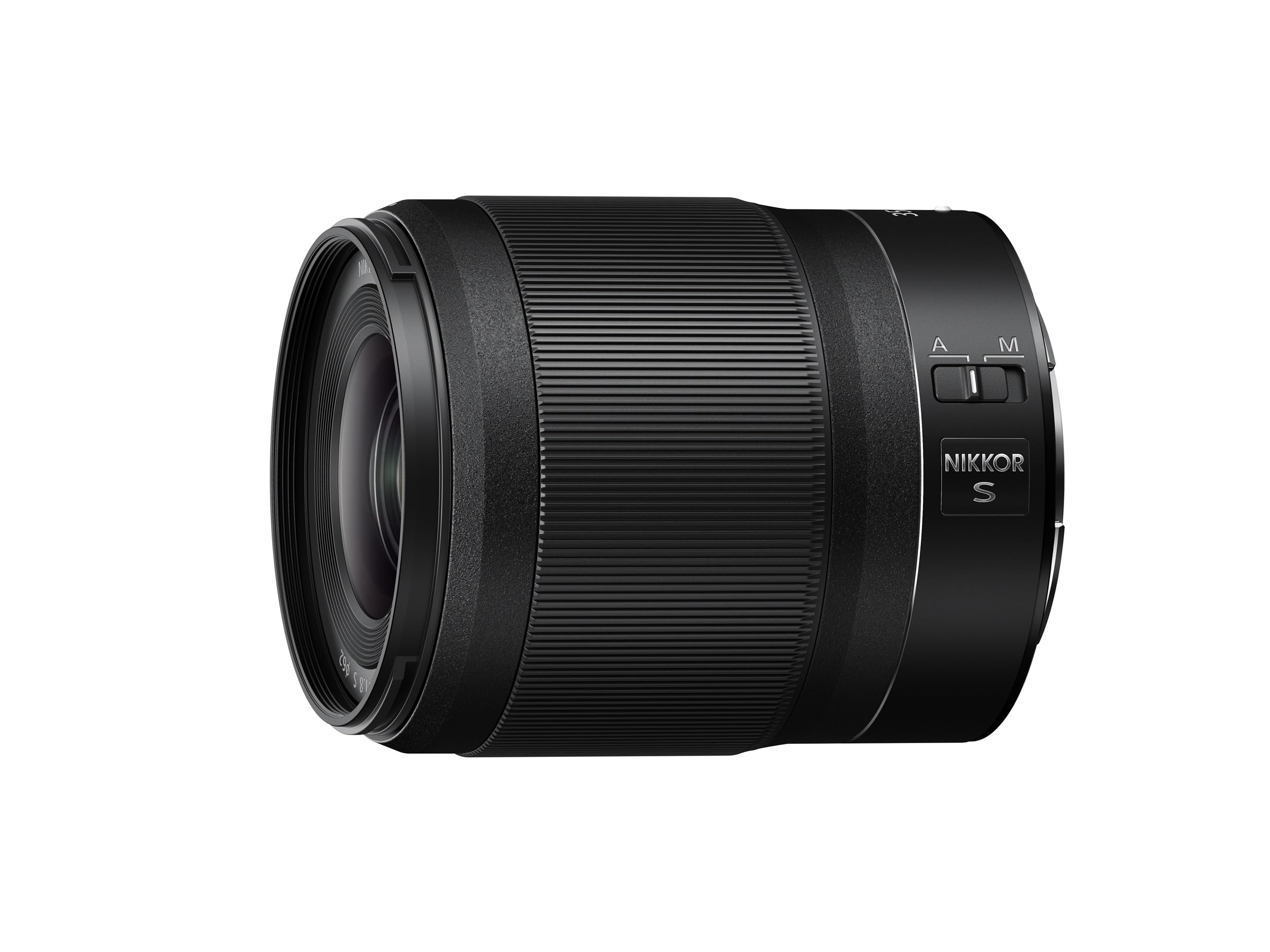
The Nikon Z lens that delivers extreme sharpness from the center to the edges at F1.8.
The NIKKOR Z 35mm f/1.8 S is built for Nikon’s Z-series mirrorless cameras and lives up to the S-Line promise of uncompromising optics. The 11-element, 9-group construction includes a Nano Crystal Coat that suppresses reflections, flare, and ghosting. Owners call it “spectacularly sharp” and praise its low distortion, making it a favorite for both photo and videography.
The stepping motor keeps autofocus near-silent, though some owners note it can feel slightly sluggish compared to faster lenses. At 370g, it is large but light for an F1.8 prime. The lens works with all Nikon Z-series cameras and supports the Z system’s full-frame sensor. “Just buy it already” is a common refrain from owners. For weddings and family portraits, it is a top choice, paired with the 85mm Z for tighter shots.
Standout optical spec: Nano Crystal Coat and 11-element design chase flare away better than any Nikon Z lens at this price.
The honest note: The 35mm focal length is wide on full frame — be sure you want that field of view before buying over a 50mm.
Great for: Nikon Z owners who want a versatile, sharp prime for video, events, and everyday carry.
Not for: Those who prefer a wider perspective like 24mm or a tighter one like 50mm.
9. Sigma 35mm F1.4 Art DG HSM for Nikon

The legendary Art-series lens that was the sharpest 35mm F1.4 for years.
This Sigma Art lens defined what a third-party prime could achieve. With 13 elements in 11 groups and a ring-type ultrasonic AF motor, it delivers sharpness that owners still call “the best 35mm lens ever.” At F1.4, the center is already tack-sharp, and by F1.8 it is very sharp corner to corner. The bokeh is creamy and buttery smooth.
The build quality is solid — metal base, sturdy lens hood, and a smooth focus ring. It works with all current Nikon cameras (both DX and FX) via the Nikon F mount. The minimum focus of 0.30m (11.81 inches) lets you get fairly close. Owners praise lens quality (108 mentions) and sharpness (75 mentions) most. The only catch: autofocus can require fine-tuning from the start on some bodies, and the lens is heavy at 665g. It is also not weather-sealed.
The sharpness benchmark: Sigma’s Art series set the standard for resolution and micro-contrast that rivals cost twice as much.
Real-world heads-up: You may need to dial in AF fine tune on a DSLR body — some buyers report it arriving with a slight focus offset.
Best fit: Nikon DSLR shooters who want F1.4 speed and Sigma Art image quality at a lower price than the Nikon equivalent.
Not ideal: For mirrorless Z-mount shooters — you would need an adapter, or look at the native Z 35mm f/1.8 S.
10. Sigma 35mm F1.4 DG DN Art for Sony E

The mirrorless-native evolution of the Art classic, lighter and built for E-mount.
Sigma redesigned its most popular Art prime specifically for mirrorless cameras — lighter (454g vs 665g), more compact, and with an optical design tune for shorter flange distances. The 35mm F1.4 DG DN Art delivers the same outstanding optical quality that made the DSLR version famous: extremely sharp images, minimal distortion, and good color rendition.
Autofocus is fast and quiet, driven by Sigma’s latest stepping motor. The wide F1.4 aperture excels in low-light conditions, so you can shoot indoors without a flash. Owners love the build quality and appearance, calling it “extremely sharp” and noting it is a creative tool for both photo and video. The weight is the most common mixed point — some find it heavy for daily carry. It also lacks built-in optical stabilization, relying on your Sony body’s IBIS.
The big upgrade: 200g lighter than the original DSLR Art and native to E-mount — no adapter needed.
One caution: Be sure to order the “DG DN” version for mirrorless, not the older “DG HSM” DSLR version.
Perfect for: Sony E-mount owners who want F1.4 Sigma Art quality in a lighter, native mirrorless package.
Skip if: Weight matters a lot for airline travel or all-day walking — consider a lighter F1.8 or F2 lens instead.
11. Sony FE 35mm f/1.4 GM

Sony’s most compact F1.4 GM lens that delivers razor-sharp images and blazing-fast AF.
The Sony 35mm F1.4 GM (G Master) is the full-frame premium choice. It uses two XA (Extreme Aspheric) elements for stunning resolution and an ED (Extra-low dispersion) element to kill chromatic aberration. The Nano AR Coating II suppresses reflections, flare, and ghosting. Despite being an F1.4 lens, it remains compact and lightweight at 1.2 pounds — a major engineering achievement.
Autofocus is blazing fast, making this lens ideal for street photography, portraits, and events. Owners highlight image quality (30 mentions) and lens quality (23 mentions) most, noting it is “sharp throughout its focal range” with “beautiful rendering.” The fluorine front element coating repels water and oil, and the dust- and moisture-resistant build means you can shoot confidently in light rain. For video, it supports Sony’s lens breathing compensation, which keeps the frame steady when you focus.
Why Pros Choose It
- Two XA elements and ED glass for extreme sharpness and no color fringing
- Blazing-fast, silent autofocus
- Dust- and moisture-resistant with fluorine coating
- Compact and lightweight for an F1.4 GM lens
- Nano AR Coating II virtually eliminates flare
The Premium Trade-Off
- Autofocus can be almost too fast for video — it may jump quickly between subjects
- Premium price reflects professional-grade optics and construction
Best for: Professional Sony shooters who need the absolute best image quality, speed, and weather resistance in one F1.4 lens.
Not for: Budget-conscious buyers or those who do not need the extreme resolution of a G Master lens.
Understanding the Specs
F-Stop and Aperture
The F-number tells you how wide the lens opens. A lower number (F1.4) lets in more light for shooting in dim conditions and gives you a blurrier background (bokeh). An F2 lens is one stop darker — it lets in half the light. F1.8 is between the two. For most everyday shooting, F2 is plenty bright. For indoor events or night streets, F1.4 gives you a real advantage.
Weather Sealing (WR)
A weather-resistant lens has rubber seals at every joint — the mount, the rings, and the buttons — to keep out dust, light rain, and snow. A lens marked “WR” or “moisture-resistant” can survive a drizzle, but not a downpour or submersion. Lenses without WR should be kept dry and away from dusty environments. If you shoot outdoors in bad weather, WR is a must.
Autofocus Motor Types
Stepping motors (STM) are quiet and smooth, making them ideal for video. Ultrasonic motors (HSM USM) are also fast and quiet. Older DC motors can be loud and vibrate. A lens with a ring-type ultrasonic motor lets you override the autofocus by simply turning the focus ring — a feature video shooters and manual-focus enthusiasts love.
Image Stabilization (IS/VR/OSS)
Image stabilization in a lens counteracts small camera shakes, allowing you to shoot at slower shutter speeds without blur. A 5-stop stabilization means you can handhold the camera at a shutter speed five times slower than normal. Not all 35mm lenses have it — many rely on the camera body’s built-in stabilization (IBIS). If your camera lacks IBIS, a lens with stabilization helps a lot for handheld video.
Macro Capability
A lens with macro capability focuses closer than a standard lens, letting you fill the frame with a small subject like a flower or coin. The magnification ratio is given as 1:2 (half life-size) or 1:1 (life-size). A 1:2 macro means the subject appears half its actual size on the sensor — still enough for most close-up work. True 1:1 macro lenses are rarer and more expensive.
Minimum Focusing Distance
This is the shortest distance between the subject and the camera sensor (or film plane) at which the lens can still focus. A shorter distance — like 0.17m — means you can get your lens very close to the subject, which is useful for detail shots and small objects. A longer distance — like 0.30m — gives you more working room for portraits and general shooting.
FAQ
Is a 35mm lens good for portraits?
Should I buy an F1.4 or F2 35mm lens?
Can I use a 35mm lens on a crop sensor camera?
What is the difference between a 35mm and a 50mm lens?
Does a 35mm lens need image stabilization?
Is weather sealing important in a 35mm lens?
What does a 35mm lens look like on a full-frame camera?
How much does a good 35mm lens weigh?
your tolerance for carrying weight all day — a compact F2 or F1.8 lens is noticeably easier on long walks than a heavy F1.4.
What is the best 35mm lens for beginners?
Can I use a 35mm lens for video?
Final Thoughts: The Verdict
For the majority of shoppers, the best 35mm lens is the Fujinon XF35mmF2 R WR because it balances lightning-fast autofocus, weather sealing, and beautiful F2 bokeh in a compact metal build — making it the crowd favorite by a wide margin. If you are on a Sony E-mount and want F1.4 speed in a native mirrorless lens, the Sigma 35mm F1.4 DG DN Art is the sharpest value around. And for Canon RF shooters who want one lens that does everyday photography plus macro, the Canon RF 35mm F1.8 IS Macro STM is the compact hybrid that surprises every owner.
How We Picked
We do not accept paid placement. Every pick is matched to a real buyer and a real use-case; we do not hands-on test units.
Sources & Methodology
Specifications: manufacturer listings and product documentation. Review insights: verified customer reviews, as of July 2026. Pricing: not shown on this page (it changes often); check the current price via the retailer link.
As an Amazon Associate, Gadgets Feed earns from qualifying purchases. This does not affect which products we feature.