
The difference between a good TV and a great one is usually hidden in plain sight—it’s the way a football cuts across a green pitch without a trace of judder, or how a dark scene in a thriller reveals every shadow without a hint of gray wash. When you restrict your search to OLED panels paired with a 120Hz (or higher) refresh rate, you are essentially demanding the absolute best in contrast, color fidelity, and motion clarity. This sweet spot of display technology ensures that every pixel turns on and off independently, delivering infinite blacks, while the high refresh rate keeps fast-paced action perfectly fluid.
I’m Min — the co-founder and writer behind Gadgets Feed. I’ve spent countless hours analyzing panel architectures, processor roadmaps, and real-world HDR performance across dozens of models to separate the spec-sheet heroes from the daily-use champions.
This buying guide is built for anyone who refuses to compromise on image quality. Whether you are setting up a dedicated home theater, upgrading your gaming rig, or simply want the most future-proof television in your living room, understanding the interplay between OLED’s per-pixel lighting and a 120Hz panel’s motion handling is critical. After weighing hundreds of user reports and technical datasheets, we have distilled the market down to the models that genuinely deliver on their promise of a true 4k oled 120hz tv experience.
How To Choose The Best 4K OLED 120Hz TV
Choosing the right television at this intersection of technology requires understanding a few non-negotiable pillars. You are not just buying a screen; you are investing in a display engine that must handle next-generation gaming, streaming, and broadcast content for years to come.
Panel Type: WOLED vs. QD-OLED
The core debate in the OLED world is between traditional WRGB (White OLED) panels, championed by LG Display, and the newer Quantum Dot OLED (QD-OLED) panels from Samsung Display. WOLED uses a white sub-pixel plus color filters to achieve brightness, while QD-OLED uses a blue emissive layer with quantum dots to convert light to red and green. QD-OLED generally delivers higher color volume and peak brightness, especially in bright rooms, while modern WOLED (including LG’s ‘evo’ panels) offers excellent brightness and superior near-black uniformity. Your room’s ambient light and tolerance for potential color shifts will guide this choice.
Refresh Rate Authenticity
Not all 120Hz specifications are created equal. Look for native 120Hz or 144Hz panels, which physically refresh 120 or 144 times per second. Some budget models achieve higher effective rates through backlight scanning or frame interpolation, which can introduce artifacts. For gaming, a native 120Hz panel with HDMI 2.1 bandwidth is mandatory to receive a full 4K/120Hz 10-bit HDR signal without chroma subsampling. Models advertising “Motion Xcelerator 120Hz” or “Game Motion Plus” are excellent, but confirm they have the HDMI 2.1 ports to back it up.
Processor Power and AI Upscaling
An OLED panel is only as good as the processor driving it. The best models from Sony (Cognitive Processor XR), LG (α11 AI Gen2), and Samsung (NQ4 AI Gen3) use neural networks to upscale lower-resolution content to near-4K quality. This is crucial because most broadcast and streaming content is not native 4K. A superior processor also handles motion interpolation, noise reduction, and HDR tone-mapping more intelligently, preventing the stutter common on OLEDs with low-frame-rate content. Never solely judge a TV by its panel; the brain inside it determines the daily viewing reality.
HDMI 2.1 Port Allocation
For a true 4K/120Hz gaming experience, your television must have HDMI 2.1 ports that support full 48Gbps bandwidth. Verify that the ports are not limited to 24Gbps or 40Gbps, as this caps color resolution. The LG G5 and Sony A95L typically offer four dedicated HDMI 2.1 ports, while some Samsung models only allocate two with full bandwidth. If you own a PlayStation 5, Xbox Series X, and a PC streaming box, port count becomes a critical logistical factor.
Brightness and Room Environment
OLED brightness is measured in nits, and for a 120Hz TV, peak brightness typically ranges from 800 nits on entry-level models to over 2,000 nits on flagship QD-OLEDs like the Sony A95L. If your TV will sit in a living room with large windows, prioritize models with high peak brightness and effective anti-glare coatings. For a dedicated dark room theater, absolute brightness matters less than black level stability and near-black detail. The Panasonic Z8 Series and Sony Bravia XR8B are optimized for dimmer environments, while the Samsung S90F and LG G5 are built to fight ambient light.
Quick Comparison
On smaller screens, swipe sideways to see the full table.
| Model | Category | Best For | Key Spec | Amazon |
|---|---|---|---|---|
| Sony A95L (77 inch) | QD-OLED | Cinema & PS5 Gaming | 177% DCI-P3 Color Volume | Amazon |
| LG G5 (77 inch) | OLED evo | Bright Rooms & Gaming | α11 AI Gen2 Processor | Amazon |
| Panasonic Z8B (77 inch) | OLED | Dolby Vision Filmmaking | HCX Pro AI MKII Processor | Amazon |
| Samsung S90F (77 inch) | QD-OLED | Vibrant Color & Gaming | NQ4 AI Gen3 128 Networks | Amazon |
| Sony XR8B (77 inch) | OLED | PS5 Auto HDR Mapping | XR Cognitive Processor | Amazon |
| LG C1 (77 inch) | OLED | Value 77″ OLED Entry | α9 Gen4 AI Processor | Amazon |
| Samsung S90F Bundle (77 inch) | QD-OLED | Bundled Protection Plan | Motion Xcelerator 144Hz | Amazon |
| Samsung S85D (55 inch) | OLED | Entry-Level OLED | NQ4 AI Gen2 Processor | Amazon |
| LG G4 (55 inch) | OLED evo | One Wall Design | Brightness Booster Max | Amazon |
| Samsung 98″ Crystal UHD | LED | Supersize Screen | Motion Xcelerator 120Hz | Amazon |
| TCL QM7K (65 inch) | Mini-LED | Bright Room HDR | QD-Mini LED LD2500 Dimming | Amazon |
| Hisense U7 (75 inch) | Mini-LED | High Refresh Gaming | Native 165Hz Panel | Amazon |
| Samsung S90F (65 inch) | QD-OLED | Mid-Size Premium | NQ4 AI Gen3 Upscaling Pro | Amazon |
In‑Depth Reviews
1. Sony QD-OLED 77 inch BRAVIA XR A95L

The Sony A95L represents the absolute pinnacle of consumer OLED technology, utilizing a QD-OLED panel that delivers the widest color gamut available—covering roughly 177% of the DCI-P3 color space. The Cognitive Processor XR analyzes and optimizes every scene in real-time, mimicking human sight by focusing attention on the focal point of the image, resulting in a depth and realism no other processor achieves. This is the only television in this list that combines pure OLED blacks with quantum dot color volume capable of exceeding 2,000 nits peak brightness.
For gamers, the four full-bandwidth HDMI 2.1 ports support 4K/120Hz, VRR, and ALLM, but the exclusive integration with the PlayStation 5 is staggering—Auto HDR Tone Mapping and Auto Genre Picture Mode eliminate all setup guesswork. The built-in Acoustic Surface Audio+ turns the screen itself into a center channel, offering remarkable dialogue clarity without a soundbar. Owners report that the backlit aluminum remote and gesture control add a tangible sense of luxury to daily use.
Some users have noted minor quirks like the Bravia camera being largely unnecessary and the USB-C port’s power behavior being inconsistent, but these are trivial compared to the overall performance. The included BRAVIA Core streaming service provides 10 credits for high-bitrate 4K UHD movies. If your budget allows and you demand the absolute best for both cinema and gaming, this is the benchmark against which all other 4K OLED 120Hz TVs are measured.
Why it’s great
- Industry-leading QD-OLED color volume and brightness
- Best-in-class Cognitive Processor XR for upscaling and motion
- Exclusive PS5 Auto HDR Tone Mapping and Genre Picture Modes
Good to know
- Premium price point reflects flagship status
- USB-C port behavior can be inconsistent with power
- Bravia camera accessory offers limited utility
2. LG 77-Inch OLED evo G5

The LG G5 is a significant generational leap for LG’s ‘Gallery’ series, featuring the new α11 AI Gen2 processor that supercharges every aspect of picture and sound. Its Brightness Booster Max technology pushes the OLED evo panel to over 2,000 nits for sustained highlights, making it one of the brightest OLEDs available and perfectly suitable for living rooms with significant ambient light. The One Wall Design leaves virtually no gap when mounted, creating a stunning architectural focal point.
Gamers benefit from four HDMI 2.1 inputs, native 120Hz (with support up to 144Hz for PC), Nvidia G-Sync, and AMD FreeSync Premium, ensuring tear-free gameplay across all consoles. The webOS Re:New program promises five years of software updates, future-proofing the smart platform. The anti-glare coating has received specific praise from users who place the TV in rooms with large windows, confirming its UL-verified Discomfort Glare Free rating.
Potential drawbacks include the absence of a stand in the box—this is designed for wall mounting, requiring a separate purchase if you prefer a tabletop setup. The Magic Remote remains functional but some users miss direct input buttons that were present in older models. For those seeking a high-brightness OLED with a premium aesthetic and exceptional gaming specifications, the G5 is a formidable choice.
Why it’s great
- Brightness Booster Max exceeding 2,000 nits
- Five years of webOS updates via Re:New program
- Four full HDMI 2.1 inputs with G-Sync and FreeSync
Good to know
- No stand included; designed for wall mounting
- Remote lacks dedicated input buttons
- Optical output volume can be low with some receivers
3. Panasonic Z8 Series 77-inch OLED
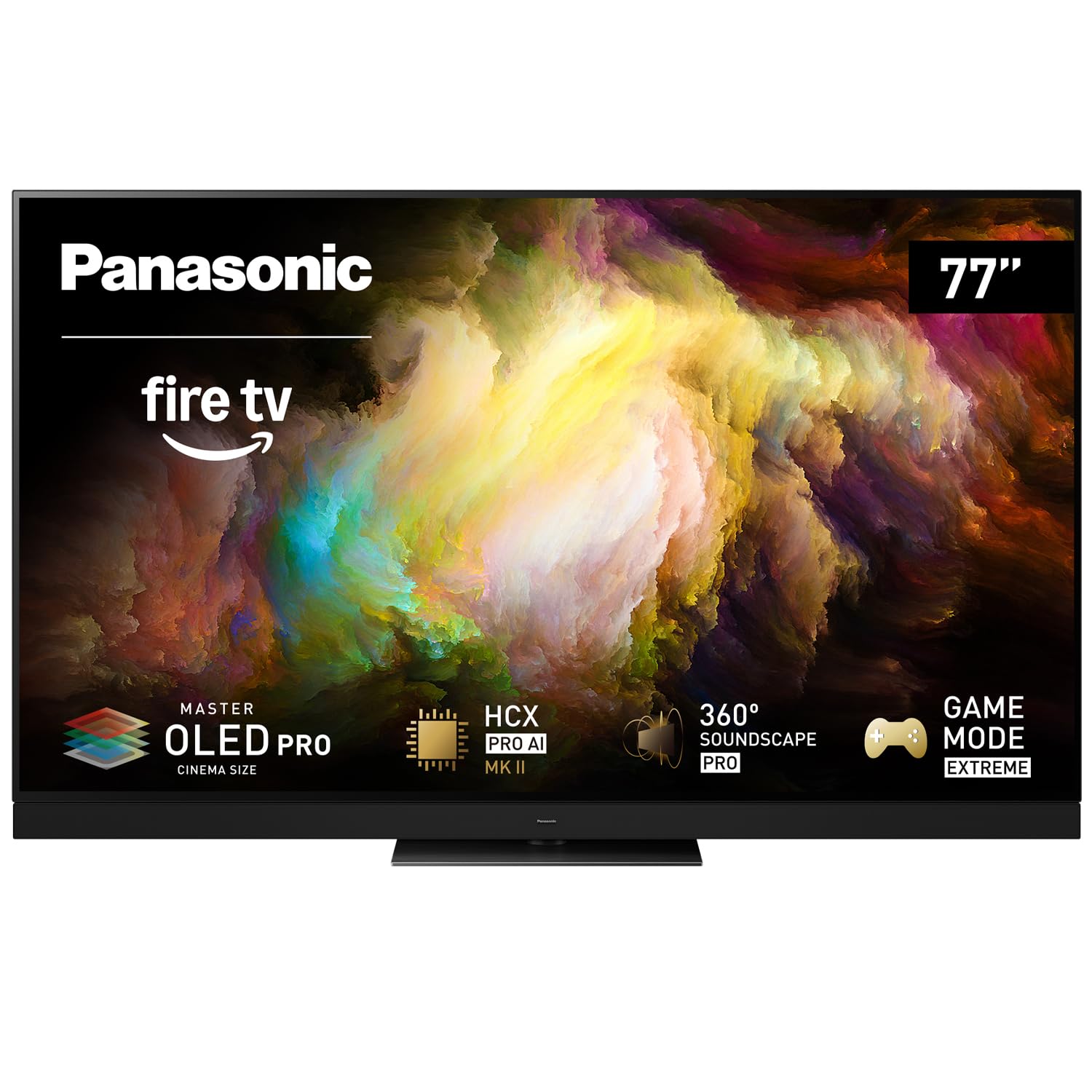
The Panasonic Z8 Series is a surprising entry in the US market, offering a massive 77-inch OLED panel for a price that undercuts many 65-inch competitors. Its Master OLED PRO panel with micro-lens-array technology and the HCX Pro AI MKII processor deliver exceptional color accuracy, Dolby Vision IQ, and HDR10+ Adaptive support. The 170W 360 Soundscape Pro sound system, tuned by Technics, provides immersive audio that genuinely reduces the need for an external soundbar.
Gaming performance is solid with a 144Hz refresh rate, HDMI 2.1 support, VRR, AMD FreeSync Premium, and Nvidia G-Sync. The Fire TV built-in platform offers hands-free Alexa and broad app support. Users consistently praise the Filmmaker Mode for preserving the director’s intent and the anti-glare coating that minimizes reflections in moderately lit rooms. The HCX Pro processor handles SD upscaling better than most competitors at this price.
Be aware that this television is quite heavy—over 100 pounds—requiring a sturdy stand or a strong wall mount. It is also not the brightest OLED in the lineup; peak HDR brightness is decent but falls short of the Samsung S90F or LG G5, making it best for rooms where you can control ambient light. The remote lacks a dedicated input button and the Fire OS interface can feel cluttered to some. For a cinema-centric experience at a remarkable size-to-price ratio, the Z8B is unbeatable.
Why it’s great
- 77-inch OLED at a size-disruptive mid-range price
- Excellent 170W built-in audio tuned by Technics
- Supports Dolby Vision IQ, HDR10+ Adaptive, and Filmmaker Mode
Good to know
- Very heavy (over 100 lbs) requiring robust mounting
- Not as bright as premium QD-OLED competitors
- Fire OS interface and remote input handling could be improved
4. Samsung 77-Inch S90F Smart TV

The Samsung S90F is the company’s latest QD-OLED masterpiece, equipped with the NQ4 AI Gen3 processor that deploys 128 neural networks to upscale content to 4K and optimize HDR in real-time. Its QD-OLED panel delivers vibrant colors and inky blacks with peak brightness that challenges the very best in the market. The Real Depth Enhancer adds a three-dimensional quality to images that is immediately noticeable when watching nature documentaries or high-budget films.
Gaming performance is top-tier with Motion Xcelerator 144Hz support, a 0.1ms response time, and a dedicated Game Bar that puts all settings at your fingertips. The Tizen smart platform is responsive and clutter-free, and the SolarCell Remote eliminates the need for disposable batteries. Q-Symphony synchronizes with compatible Samsung soundbars for a cohesive audio experience, and the Dolby Atmos and Object Tracking Sound Lite provide decent spatial audio from the internal speakers.
Some users have reported that the anti-reflective coating can be delicate and prone to marking if cleaned aggressively. The panel also shows slight blacks elevation in very bright rooms—this is a characteristic of QD-OLED rather than WOLED. The stand provides excellent stability, but VESA mounting requires careful attention to the low-set mounting holes. For a QD-OLED experience that rivals the Sony A95L at a more accessible price, the S90F is the smart choice.
Why it’s great
- Stunning QD-OLED color volume and deep blacks
- NQ4 AI Gen3 processor with 128 neural networks
- 144Hz Motion Xcelerator with Game Bar for fine control
Good to know
- Delicate anti-reflective coating requires careful cleaning
- Modest brightness uplift in very bright room conditions
- Low-mounted VESA holes complicate some wall mount setups
5. Sony 77 Inch BRAVIA XR8B OLED

The Sony BRAVIA XR8B is the most affordable entry into Sony’s premium OLED lineup and is specifically tuned for PlayStation 5 integration. The XR Cognitive Processor provides exceptional upscaling, especially for streaming and broadcast content, breathing new life into lower-quality feeds. The panel supports Dolby Vision, IMAX Enhanced, and DTS:X, making it a versatile home theater hub, and the Acoustic Surface Audio+ vibrates the screen to produce localized sound that follows on-screen action.
Exclusive PS5 features include Auto HDR Tone Mapping, which optimizes the console’s output to the TV’s capabilities, and Auto Genre Picture Mode, which automatically switches to Game Mode when launching a game and reverts to standard settings for streaming. The Google TV interface is widely regarded as the most intuitive smart platform, with personalized recommendations and Chromecast built-in. Two of the four HDMI ports support full 4K/120Hz, VRR, and ALLM.
The television is best suited for darker room environments as its peak brightness, while respectable, does not match the LG G5 or Samsung S90F. The optical audio output works well for legacy soundbars, but the built-in speakers are merely adequate—most users will want an external audio system. The XR8B represents fantastic value for a 77-inch Sony OLED, especially if you are deeply invested in the PlayStation ecosystem and prioritize processing over peak brightness.
Why it’s great
- Best PS5 integration with Auto HDR and Auto Genre modes
- XR Cognitive Processor delivers top-tier upscaling
- Google TV platform is responsive and intuitive
Good to know
- Lower peak brightness; best for dim rooms
- Only two HDMI 2.1 ports at full bandwidth
- Built-in audio is average; soundbar recommended
6. Samsung QN77S90FAFXZA with Amber Protection Plan
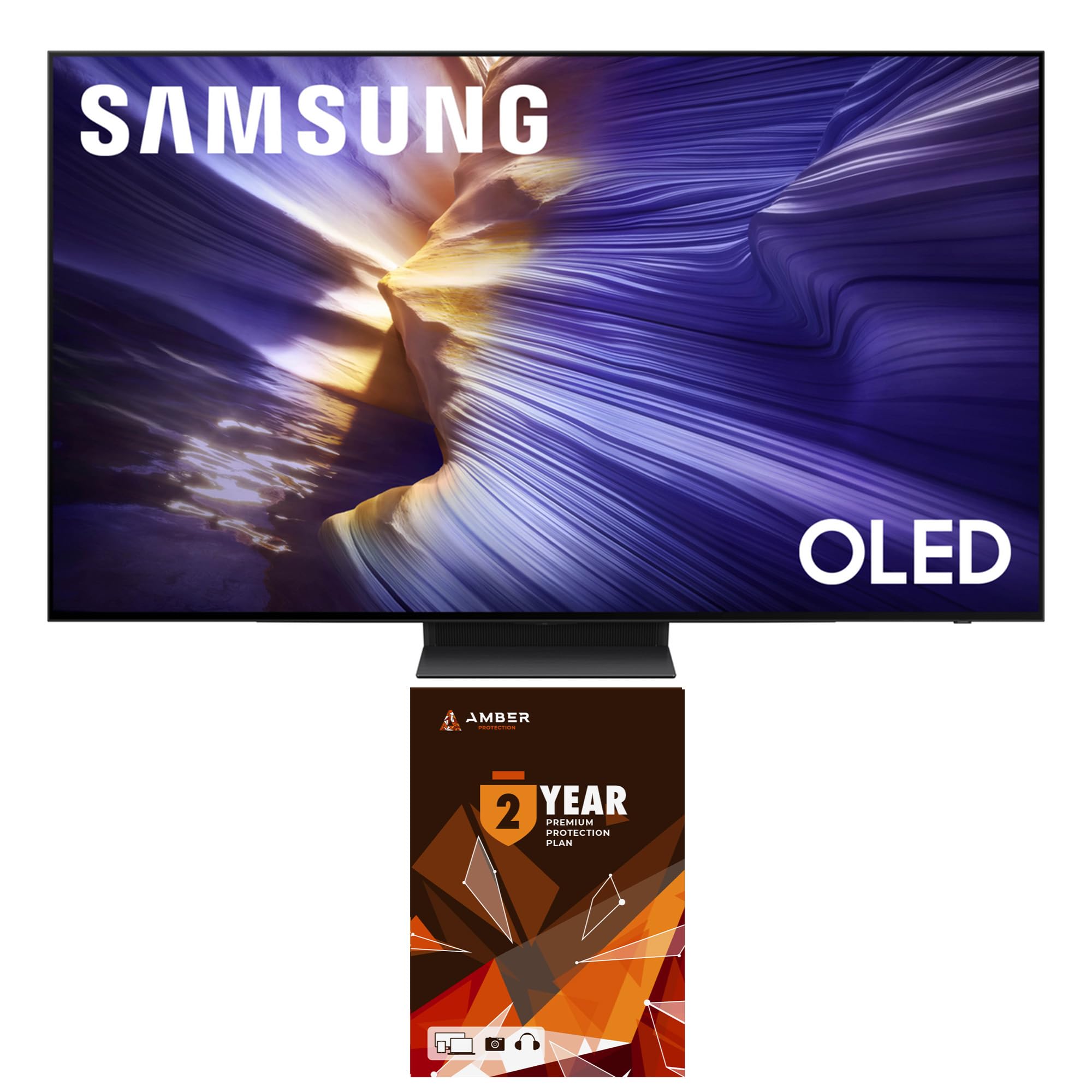
This bundle pairs the same exceptional 77-inch Samsung QD-OLED platform found in the standalone S90F with a two-year Amber Protection plan, providing peace of mind for a high-value investment. The NQ4 AI Gen3 processor, OLED HDR+, and Motion Xcelerator 144Hz ensure that picture quality is virtually indistinguishable from the standard model, while the bundled screen cleaning kit helps maintain the delicate anti-reflective coating.
The panel offers the same stunning QD-OLED characteristics: deep blacks, vibrant colors, and excellent gaming features including four HDMI 2.1 ports. The Tizen smart platform and SolarCell Remote are included. The standout advantage here is the extra year of warranty coverage bundled at no additional visible cost, which mitigates one of the primary concerns buyers have with large OLED panels—long-term reliability and repair costs.
Bear in mind that the bundle protection plan is through a third-party seller (Walt’s TV) and terms should be reviewed carefully. Users have reported that the standard manufacturer’s warranty remains valid but the claim process for large screens can still be challenging. For buyers who want the flagship QD-OLED 77-inch experience and prefer the security of an extended warranty, this bundle is a wise choice that weighs performance and protection equally.
Why it’s great
- Identical QD-OLED performance as the standalone S90F
- Includes two-year Amber Protection plan for peace of mind
- Screen cleaner kit included for proper maintenance
Good to know
- Protection plan terms need careful review
- Bundled through third-party seller Walt’s TV
- Large 77-inch panel requires sturdy mounting or stand
7. LG OLED C1 Series 77 inch

The LG C1 is a previous-generation marvel that remains incredibly relevant due to its stellar picture quality and aggressive pricing. With the α9 Gen4 AI Processor, it handles upscaling and motion admirably, and the 77-inch display delivers the classic OLED experience of infinite contrast and rich blacks. The four HDMI 2.1 ports support 4K/120Hz and VRR, making it a fully capable gaming television that supports both Nvidia G-Sync and AMD FreeSync.
The C1’s WebOS platform may show its age slightly compared to the newest Google TV or Tizen versions, but it remains snappy and supports all major streaming apps. The sleek design and slim profile ensure it looks contemporary on any stand or wall mount. Users consistently praise its performance with 4K HDR physical media, highlighting the Dolby Vision and Dolby Atmos support. The ‘Evo’ panel variant present in some units provides brightness benefits over the standard LG OLED.
Be aware that the smart hub interface includes advertisements that some users find intrusive, and the gyro-enabled Magic Remote can feel disorienting for traditional remote users. The C1 lacks the latest Brightness Booster Max technology found in the G4/G5 series, so its HDR peak brightness is lower. For buyers seeking a massive 77-inch OLED experience with proven performance and a lower entry cost, the C1 remains a compelling option that punches above its age.
Why it’s great
- Proven OLED picture quality at 77-inch size
- Four full HDMI 2.1 ports for multi-console gaming
- Excellent value for a large-screen OLED
Good to know
- WebOS interface contains ads
- HDR peak brightness is lower than current-gen models
- Magic Remote gyro can feel disorienting for some
8. Samsung 55-Inch S85D OLED

The Samsung S85D is the most affordable way to get into OLED technology without sacrificing the 120Hz refresh rate. Its NQ4 AI Gen2 processor does a commendable job upscaling content to 4K and offers Motion Xcelerator 120Hz, ensuring smooth playback for sports and gaming. The Pantone-validated color and Real Depth Enhancer provide a picture that is surprisingly close to the higher-end S90D series, making it a fantastic choice for the bedroom or a secondary viewing space.
The slim Contour Design looks elegant on a stand, and the SolarCell Remote is a nice sustainability touch. Object Tracking Sound Lite and Dolby Atmos provide decent spatial audio, and the Tizen smart platform offers all major streaming services. The 55-inch screen size is ideal for closer viewing distances, maximizing the 4K resolution’s visible benefit. Motion handling at 120Hz is genuinely smooth, with minimal stutter on 24fps film content.
Some users have reported reliability concerns, with a small number experiencing complete failure within the first six months, though these appear to be isolated instances rather than a widespread defect. Samsung’s post-purchase support has been criticized as difficult to navigate, so buying from a retailer with a generous return policy is advisable. The brightness is lower than premium QD-OLEDs, making this best for darker rooms. For a first-time OLED buyer who wants the 120Hz gaming benefit without the premium price, the S85D is a solid entry point.
Why it’s great
- Most affordable OLED with native 120Hz support
- NQ4 AI Gen2 processor delivers strong upscaling
- Pantone-validated color accuracy and Real Depth Enhancer
Good to know
- Lower peak brightness compared to higher-tier models
- Some reliability concerns reported in early units
- Samsung support process can be challenging
9. LG 55-Inch OLED evo G4

The LG G4 is a stunning piece of industrial design, offering a flush-to-wall mount that transforms the television into a digital art frame when not in use. The A11 AI Processor powers Brightness Booster Max, significantly increasing brightness over the previous G3 generation, and its self-lit pixels provide perfect blacks and 100% Color Fidelity. The Dolby Vision and Filmmaker Mode integration ensures that HDR content is presented with the director’s intended color grading.
Gaming performance is exceptional with four HDMI 2.1 ports, 120Hz native refresh, Nvidia G-Sync, AMD FreeSync Premium, and a 0.1ms response time. The webOS Re:New platform promises five years of updates, ensuring the smart interface remains current. The Magic Remote offers intuitive point-and-click navigation. Users love the G4’s ability to handle bright room conditions better than older LG OLEDs, making it a versatile choice.
The main trade-off is that the G4 does not include a traditional stand—it ships with a wall bracket only, requiring a separate stand purchase for tabletop use. Additionally, the remote, while functional, is not backlit, which some users find annoying in dark home theater setups. The G4 is a fantastic choice for design-conscious buyers who want the brightest LG OLED evo picture and appreciate a gallery-like installation.
Why it’s great
- Gorgeous flush wall-mount design with art mode
- Brightness Booster Max for bright room viewing
- Four HDMI 2.1 ports with G-Sync and FreeSync
Good to know
- No stand included; requires separate purchase
- Remote control is not backlit
- Some users received the next-gen G5 instead, causing confusion
10. Samsung 98-Inch Crystal UHD DU9000

The Samsung 98-inch DU9000 is for the buyer who prioritizes sheer screen real estate above all else. While it uses a Crystal UHD (LED) panel rather than OLED, its Motion Xcelerator 120Hz ensures motion is handled smoothly, and the Supersize Picture Enhancer uses AI to reduce noise and sharpen details on the massive 98-inch canvas. The Crystal Processor 4K provides decent upscaling for a screen this large, where pixel density can be a concern at normal viewing distances.
The PurColor technology and Mega Contrast offer a wider color spectrum and improved contrast compared to basic LED panels, but cannot match the per-pixel lighting of OLED. The Tizen smart platform supports all major apps and the Q-Symphony feature is useful for owners of Samsung soundbars. The Game Bar provides convenient gaming settings adjustments, and the massive size creates an undeniably immersive viewing experience for movies and sports.
The drawbacks are significant for an OLED-focused guide: the blacks are not pure due to the LED backlight, the contrast ratio is lower, and the viewing angles are narrow compared to OLED technology. There are also reports of damage during shipping due to the sheer size of the box, and Samsung’s customer service has been criticized for handling large TV claims. This is a niche option for those who must have a 98-inch screen and are willing to compromise on contrast and blacks for that monumental size.
Why it’s great
- Massive 98-inch screen for immersive viewing
- Motion Xcelerator 120Hz ensures smooth motion
- Supersize Picture Enhancer optimizes large-scale picture
Good to know
- LED panel cannot match OLED black levels or contrast
- Narrow viewing angles compared to OLED
- Shipping damage risk is high; check return policy carefully
11. TCL 65-Inch QM7K Mini-LED QLED
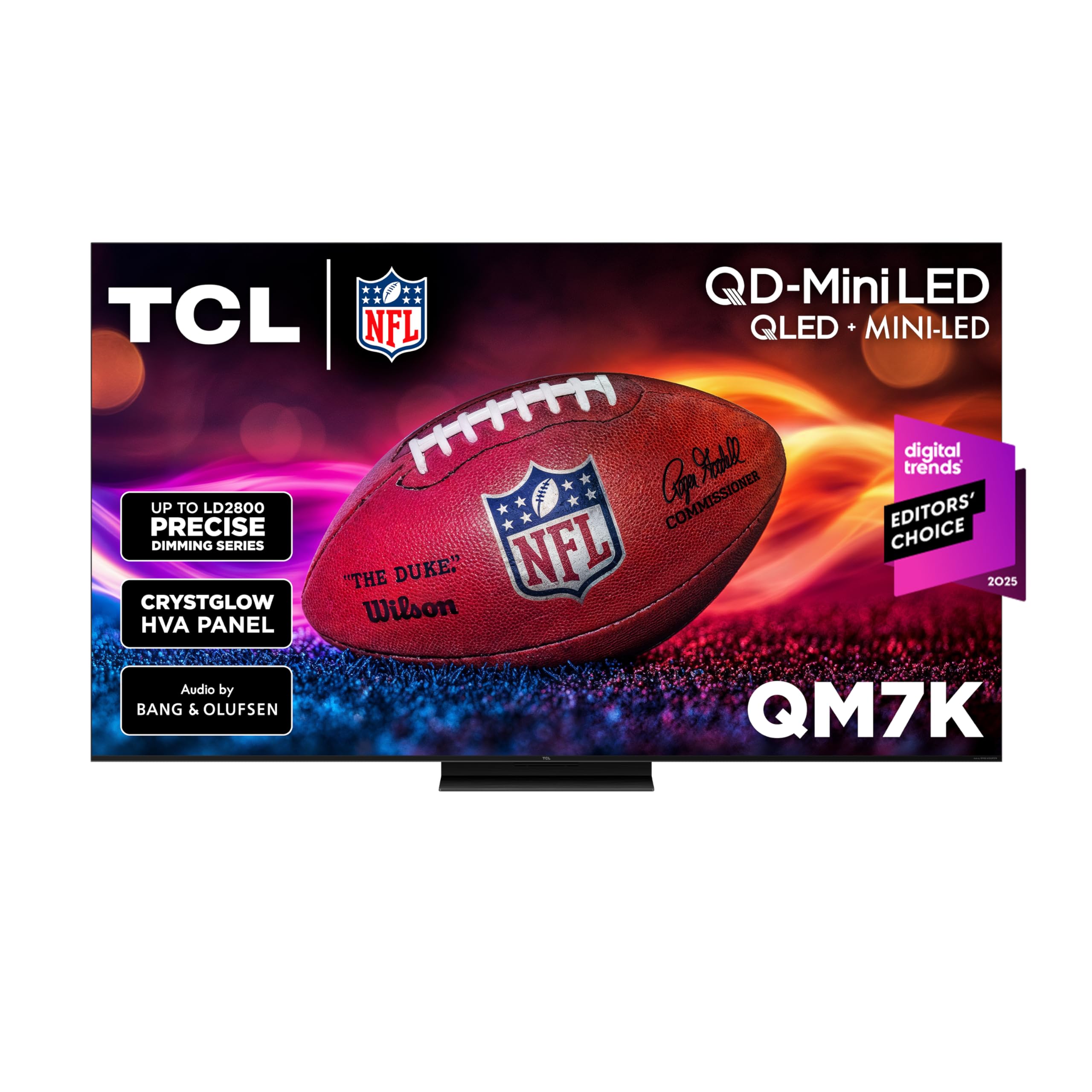
The TCL QM7K is a Mini-LED QLED that brings exceptional HDR brightness and localized dimming to a price point traditionally occupied by entry-level OLEDs. With up to LD2500 local dimming zones and a peak brightness that can exceed 2,000 nits, it excels in bright rooms where OLEDs can appear dim. The CrystGlow HVA Panel effectively blocks reflections, and the QD-Mini LED technology provides deeper blacks and richer colors than traditional LED-LCD panels.
The native 144Hz refresh rate supports up to 288Hz VRR for gaming, making it an excellent choice for console and PC gamers who prioritize high frame rates. The Google TV interface is responsive and supports all major streaming services. The Bang & Olufsen-tuned audio system delivers better-than-average built-in sound, though a dedicated soundbar will still improve the experience. The anti-reflective screen is a standout feature, maintaining image clarity even with direct light sources.
The remote control feels cheap compared to the premium competition, and the Google TV platform includes some bloatware that cannot be removed. While the local dimming is excellent for an LCD, it cannot match the per-pixel perfection of OLED, meaning some blooming is visible around bright objects on black backgrounds in dark room conditions. For buyers in bright living rooms who want a 120Hz+ panel with high brightness and don’t want to pay the OLED premium, the QM7K is a fantastic value proposition.
Why it’s great
- Extremely bright with up to 2,000 nits HDR peak
- Effective anti-reflective CrystGlow HVA Panel
- 144Hz native with up to 288Hz VRR for gaming
Good to know
- Some blooming around bright objects in dark scenes
- Remote control feels cheap and lightweight
- Google TV contains some unavoidable bloatware
12. Hisense 75-Inch U7 Mini-LED ULED
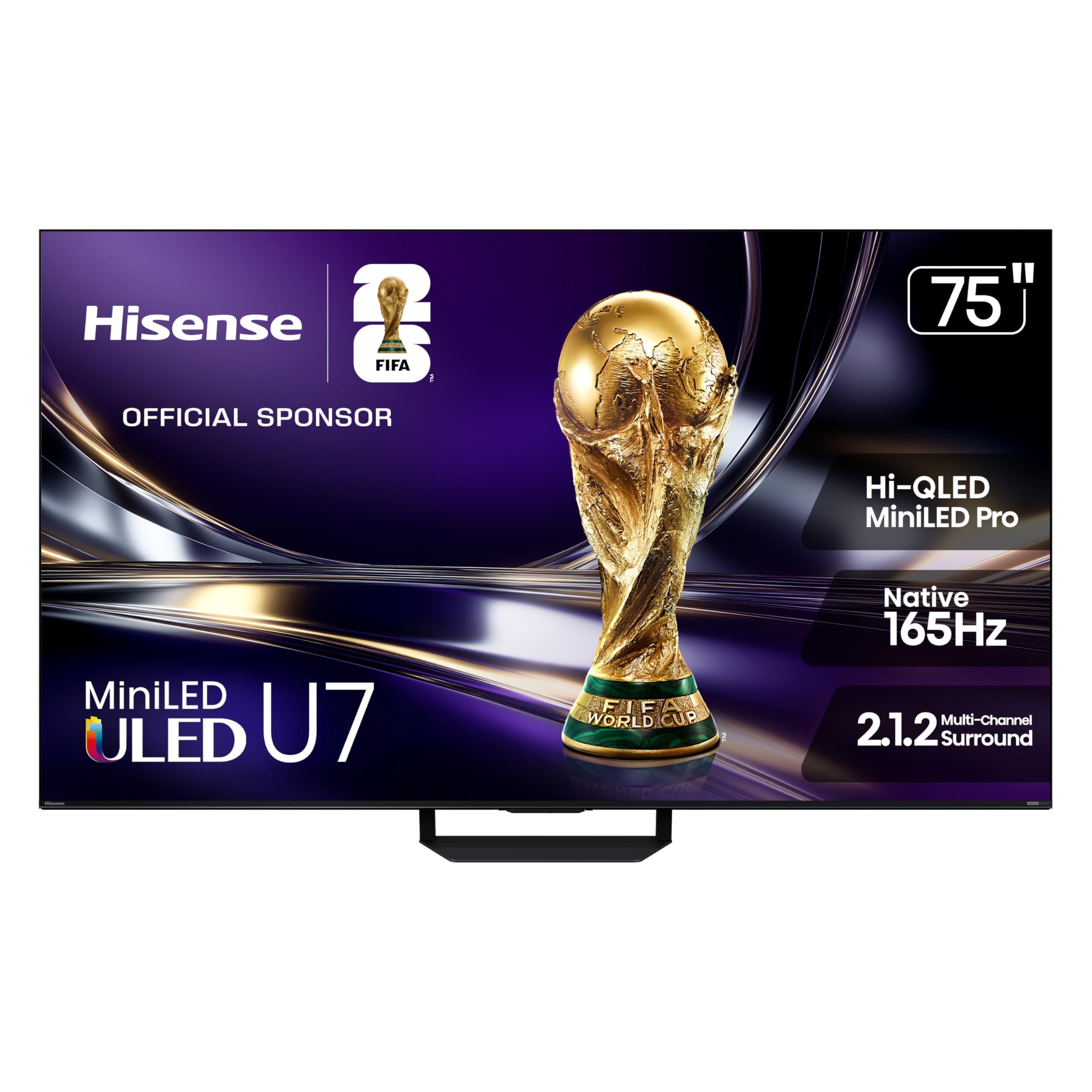
The Hisense U7 is a disruptor in the high-refresh market, offering a native 165Hz panel with VRR up to 330Hz—the highest refresh rate in this roundup. Its Hi-QLED MiniLED Pro backlight with up to 3,000 local dimming zones delivers exceptional contrast and brightness, exceeding 3,000 nits in peak HDR highlights. The Hi-View AI Engine Pro processor constantly optimizes color, contrast, and detail in real-time, producing an image that rivals far more expensive televisions.
The anti-reflection layer is highly effective, making the U7 an excellent choice for brightly lit rooms or even outdoor use. Dolby Vision IQ and HDR10+ Adaptive work with the room’s ambient light sensor to deliver optimized HDR regardless of environment. The 2.1.2 channel sound system is the best built-in audio in this comparison, with decent bass and a wide soundstage that can fill a medium-sized room without a soundbar. Google TV integration is seamless and app navigation is fast.
While the Mini-LED technology eliminates most blooming, it’s not completely gone—very subtle halos can appear in the most demanding torture-test scenes. The build quality is not as premium as Sony or LG offering; the chassis feels more utilitarian. For buyers who want a 75-inch screen with a native 165Hz panel for competitive PC gaming and HDR brightness that crushes even the brightest OLEDs, the Hisense U7 is a unique and compelling option.
Why it’s great
- Native 165Hz panel with VRR up to 330Hz
- Up to 3,000 nits peak brightness with 3,000 dimming zones
- Best built-in audio in this comparison
Good to know
- Subtle blooming still visible in extreme dark scenes
- Build quality feels less premium than major brands
- Can produce judder on low-frame-rate content
13. Samsung QN65S90FAFXZA 65 Inch OLED
This 65-inch variant of Samsung’s S90F series brings the flagship QD-OLED experience to a smaller (and more affordable) screen size without compromises. The NQ4 AI Gen3 processor provides 4K AI Upscaling Pro and AI Motion Enhancer Pro, ensuring that even standard-definition content looks sharp on the high-resolution panel. The Motion Xcelerator 144Hz support makes it an excellent choice for fast-paced gaming, and the OLED HDR+ delivers bright, impactful highlights with deep, inky blacks.
The bundled Amber Protection plan and screen cleaner kit add practical value, and the Tizen smart platform offers a clean, ad-light experience. The Real Depth Enhancer provides a three-dimensional feel to images that is particularly impressive with 4K HDR content. The slim design and VESA compatibility make it easy to mount or place on a stand. Users upgrading from older Samsung LED models report being blown away by the color volume and contrast.
The same QD-OLED quirks apply: it is not ideal for very bright rooms unless you can control the light, and the anti-reflective coating is delicate and can be damaged by improper cleaning. The remote is minimalistic and functional, but some users miss dedicated buttons. For buyers who want the best possible picture quality in a 65-inch form factor without stepping up to the 77-inch premium, this model delivers the core Samsung QD-OLED experience at a significantly lower entry cost.
Why it’s great
- Full QD-OLED performance in a more accessible 65-inch size
- NQ4 AI Gen3 processor with 4K AI Upscaling Pro
- 144Hz Motion Xcelerator with OLED HDR+
Good to know
- Best performance in controlled lighting conditions
- Anti-reflective coating requires careful handling
- Remote lacks some dedicated input buttons
FAQ
Will a 4K OLED 120Hz TV improve my PS5 gaming experience significantly?
What is the difference between Samsung’s Motion Xcelerator 120Hz and LG’s 120Hz native refresh rate?
Can I use a 120Hz OLED TV as a PC monitor for competitive gaming?
Why do some 4K OLED 120Hz TVs cost significantly more than others with similar specs?
Final Thoughts: The Verdict
For most users, the 4k oled 120hz tv winner is the Sony BRAVIA XR A95L because it combines the best QD-OLED panel with the most intelligent processing, delivering unmatched color volume and lifelike picture quality for both cinema and PS5 gaming. If you want the highest brightness and best gaming feature set for a bright living room, grab the LG G5. And if you prioritize massive screen size without breaking the bank on a 77-inch OLED, the Panasonic Z8 Series offers incredible value and impressive built-in audio, making it the smart choice for a dedicated home theater setup.