
Our readers keep the lights on and my morning glass full of iced black tea. As an Amazon Associate, I earn from qualifying purchases.
Specs are compiled from manufacturer listings and verified buyer reviews and can change over time — please confirm the key details on the product page before buying.
Biofeedback devices take a vague goal — “relax more” or “focus better” — and give you a concrete number, a changing light, or a sound to chase. Instead of guessing whether a breathing exercise is working, you watch your heart rate variability climb or your brainwave graph shift.
I’m Min — the founder and writer behind Gadgets Feed. This guide is built by comparing the manufacturers’ published specifications and the patterns across verified customer reviews, so you get each pick’s real strengths and trade-offs instead of marketing spin.
if you need a tool for pelvic floor rehabilitation, a wearable to quiet a racing mind before bed, or a headband that tracks your brainwave states, these biofeedback devices each serve a specific kind of training, and knowing which sensor type and target area fits your goal is the real shortcut to making them work.
Our Picks at a Glance


How To Choose The Best Biofeedback Devices
Biofeedback is a broad category. You need to match the sensor type to your goal. A headband that reads brainwaves (EEG) is great for meditation depth, but useless for pelvic floor rehab, which needs a pressure sensor. A heart-rate-variability trainer helps with stress and blood pressure, but won’t tell you about your brain state. Start with your everyday goal, then check which kind of feedback the device measures.
Sensor Type and Your Target
Think about what you want to change. For pelvic floor strength and bladder control, look for a connected probe with dual sensors that measure contraction force. For stress, anxiety, or meditation, an EEG headband (which detects Alpha, Beta, Theta, Gamma waves) or a vagus nerve toning device that uses infrasonic resonance may be better. For blood pressure and general relaxation, a guided-breathing device with a chest belt that measures breathing rate is the proven approach.
App Quality and Data Feedback
The app that translates your body’s signals into a game, a score, or a graph is what keeps you training. Look for an app that gives real-time feedback during a session, not just a summary afterward. Gamification is powerful — games that respond to your contractions or calm state can turn a chore into a habit. Check whether the best features require a paid subscription; some devices lock deeper analysis or content behind a recurring fee.
Comfort and Consistency
For headphones, weight matters — some are under 30 grams and feel like nothing, while others get annoying on the forehead during long sessions. For probes, material and shape affect comfort during daily use. For neck-worn devices, weight and fit around the collar matter. Look at battery life, too; an 8-hour battery means a weekly charge, while a 5-year non-rechargeable cell is set-and-forget but requires eventual replacement.
Quick Comparison
| Model | Best For | Sensor Type | Weight | Battery Life | Amazon |
|---|---|---|---|---|---|
| Perifit Care +★ Best Overall | Pelvic Floor Rehab | Dual Pressure Sensor | 1.76 ounces | 5 years (non-rechargeable) | Amazon |
| Perifit Pelvic Floor TrainerValue Pick | Pelvic Floor Training | Pressure Sensor | 5.61 ounces | 5 years (non-rechargeable) | Amazon |
| Reflect OrbUnique Design | Stress Awareness | Fingertip Sensor (Galvanic Skin Response) | — | — | Amazon |
| Flowtime | Meditation & Brainwave Tracking | EEG (Alpha, Beta, Theta, Gamma) | 29 grams | 8 hours / 50 days standby | Amazon |
| SereniBrain | EEG Neurofeedback Training | EEG (Alpha, Beta, Theta) | 50 grams | 8 hours | Amazon |
| MUSE 2 | Guided Meditation | EEG + Heart Rate | — | — | Amazon |
| Pulsetto FIT (V2) | Stress & Sleep Support | Vagus Nerve Stimulation | 15.1 ounces | — | Amazon |
| RESPeRATE Ultra | Blood Pressure Reduction | Breathing Sensor Belt | 1.46 pounds | — | Amazon |
| Sensate | Vagus Nerve Toning | Infrasonic Resonance | 13.76 ounces | — | Amazon |
In‑Depth Reviews
1. Perifit Care +
Our pick — over 4.5★ from 800+ verified ratings; the strongest balance of quality and price.
The gold standard for pelvic floor training that actually feels like a game.
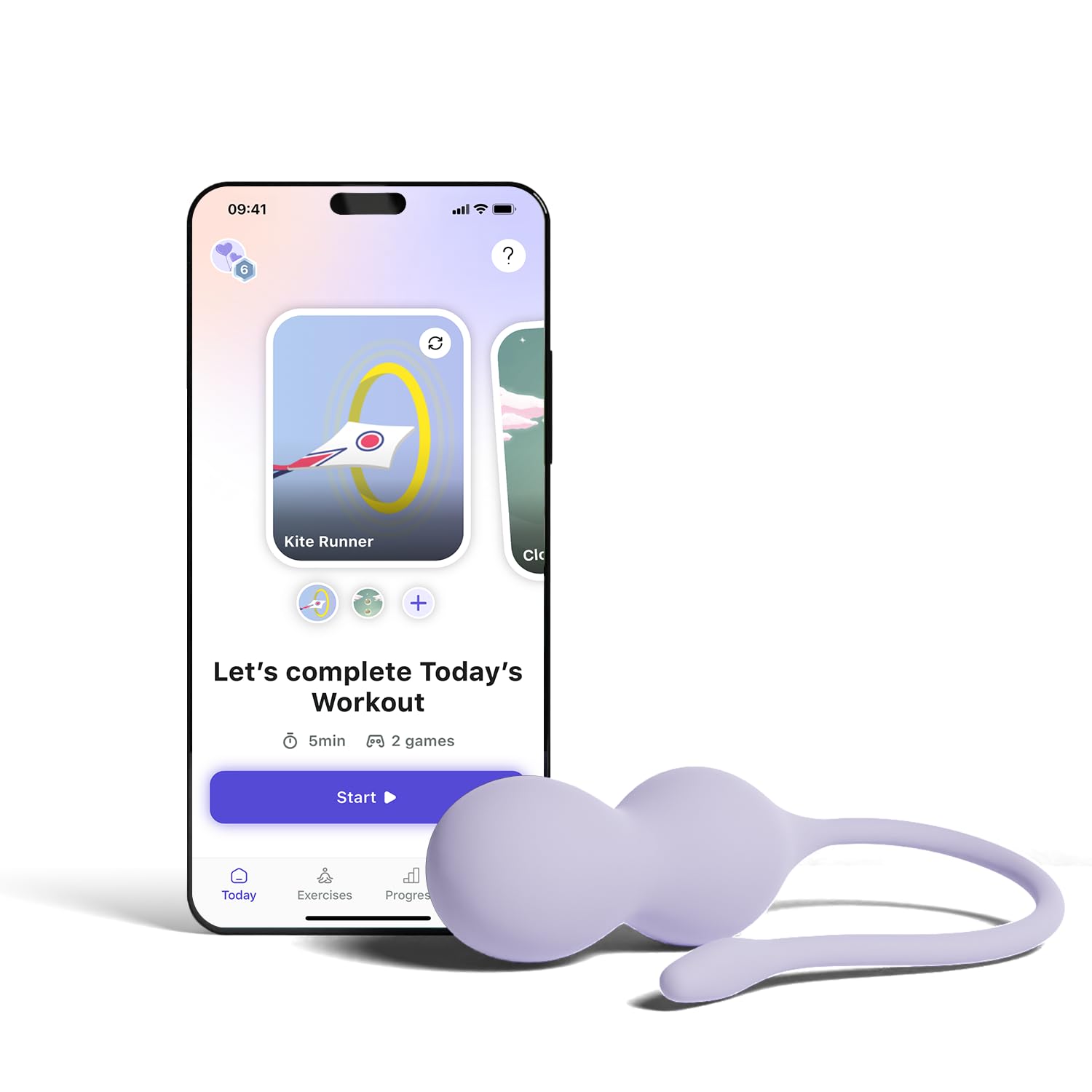
Your pelvic floor is a muscle, and like any muscle, it responds best to consistent, correct exercise. The Perifit Care + uses a patented dual-sensor system that identifies incorrect contractions — the kind that nearly 30% of women do without realizing it, which can be ineffective or even harmful. The probe itself weighs just 1.76 ounces, making it light and comfortable enough for any position, and its 5D analysis system tracks strength, endurance, precision, contraction quality, and speed.
The app is where this device shines. It offers seven customized reinforcement programs and turns your daily reps into games like Floppy Bird. Real-time feedback shows your force in grams, contraction quality, and progress. Buyers report noticeable improvements fast — one mentioned improvement in urinary urgency and reduced nighttime urination within the first two weeks. The single practical catch: the batteries are non-rechargeable, but they are designed to last about five years before needing replacement.
What wins people over
- Dual pressure sensors catch incorrect form, ensuring every contraction is effective
- Gamified app with progressive challenges keeps motivation high over months of use
- Extremely lightweight design (1.76 oz) is comfortable for any position
The practical trade-off
- Batteries are non-rechargeable; they last about 5 years but require eventual replacement
Best for: Women seeking a clinically-validated, engaging tool for pelvic floor strengthening, bladder control, and postpartum recovery who want to ensure they are doing the exercise correctly.
Think twice if: You prefer a subscription-free experience with a rechargeable battery; the non-rechargeable cell is a long-term consideration.
2. Perifit Pelvic Floor Trainer
An FDA-cleared way to turn Kegel exercises into something you look forward to.
This is the founding Perifit model, and it still delivers a powerful experience. It weighs in at 5.61 ounces — notably heavier than the Care +, which is 1.76 ounces — a difference you will feel if portability is your priority. You control the on-screen bird in the Floppy Bird-style game by contracting and relaxing your pelvic floor, and seven distinct exercise programs guide your training. Many owners mention it condenses what used to take 12 minutes into 4-5 shorter, more focused sessions.
Why it works
- FDA-cleared for stress and mixed urinary incontinence.
- Gamified app with seven exercise programs and progress tracking
- Strong effectiveness feedback, with many users seeing real improvement
The honest trade-off
- Weighs 5.61 oz — significantly heavier than the 1.76 oz Care + model
- Non-rechargeable battery and occasional app stability reports
Grab this if: You want an FDA-cleared biofeedback solution for urinary incontinence and prefer the slightly larger, original form factor.
Look elsewhere if: You need the lightest possible device for travel; the Care + is the better choice for portability.
3. Reflect Orb
A small orb that mirrors your stress level back to you through color.
The Reflect Orb takes a different, more tactile approach than a headband or probe. You simply hold it, and the light shifts color to show your body’s real-time stress level. It reads signals from your fingertips and translates them into a visual cue you can watch change as you breathe and focus. Setup takes about two minutes via the free Reflect app for iPhone or Android.
What owners praise is how intuitive it feels — you do not need to learn any special technique to start building stress awareness. The Orb’s core light biofeedback works on its own, without needing the app. The catch is that the app’s guided programs, insights, and community features are included for the first year, then a paid membership is required to access the premium content. A handful of customers note Bluetooth connectivity frustrations and syncing hiccups, which can break the smooth flow. The Orb measures about 6.7 x 6.6 x 6.3 inches, making it a substantial desktop object rather than a pocket companion.
At-a-glance verdict: A visually elegant tool for building immediate stress awareness, held back by occasional app connectivity issues and a subscription model for premium content after the first year.
Reach for this if: You want a simple, visually engaging way to see your stress level in real time, especially for short mindfulness sessions.
skip it if: You cannot tolerate app connectivity problems or dislike subscription-based features for what is already a mid-range investment.
4. Flowtime

A lightweight headband that turns your meditation into a detailed data report.
At just 29 grams, the Flowtime headband is the lightest brainwave tracker on this list. You forget you are wearing it within seconds. It tracks brainwaves across Alpha, Beta, Theta, and Gamma bands, plus heart rate, heart rate variability (HRV), relaxation, and pressure levels. After each session, you get a minute-by-minute report showing exactly when you entered a meditative state and how your performance compares to the last seven sessions.
The device offers scientifically validated lessons in the app for beginners, plus an unguided mode for experienced meditators. The battery lasts about 8 hours of active use or 50 days on standby, so you can charge it weekly. The most common issue reviewers point out is connectivity — the headband can lose Bluetooth connection during a session, sometimes multiple times. While the data presentation is strong, the app’s connectivity reliability is a common point of frustration. Some users also note that the device uses continuous Bluetooth and internet, raising privacy preferences for offline use.
The short of it: Incredibly light and packed with rich brainwave and HRV data, but Bluetooth dropouts during sessions are the recurring price you pay for that insight.
Best for: Meditation enthusiasts who want deep, data-rich session breakdowns and a feather-light headband they can wear anywhere.
Consider alternatives if: A stable, uninterrupted Bluetooth connection during every session is non-negotiable for you.
5. SereniBrain EEG Neurofeedback Headband
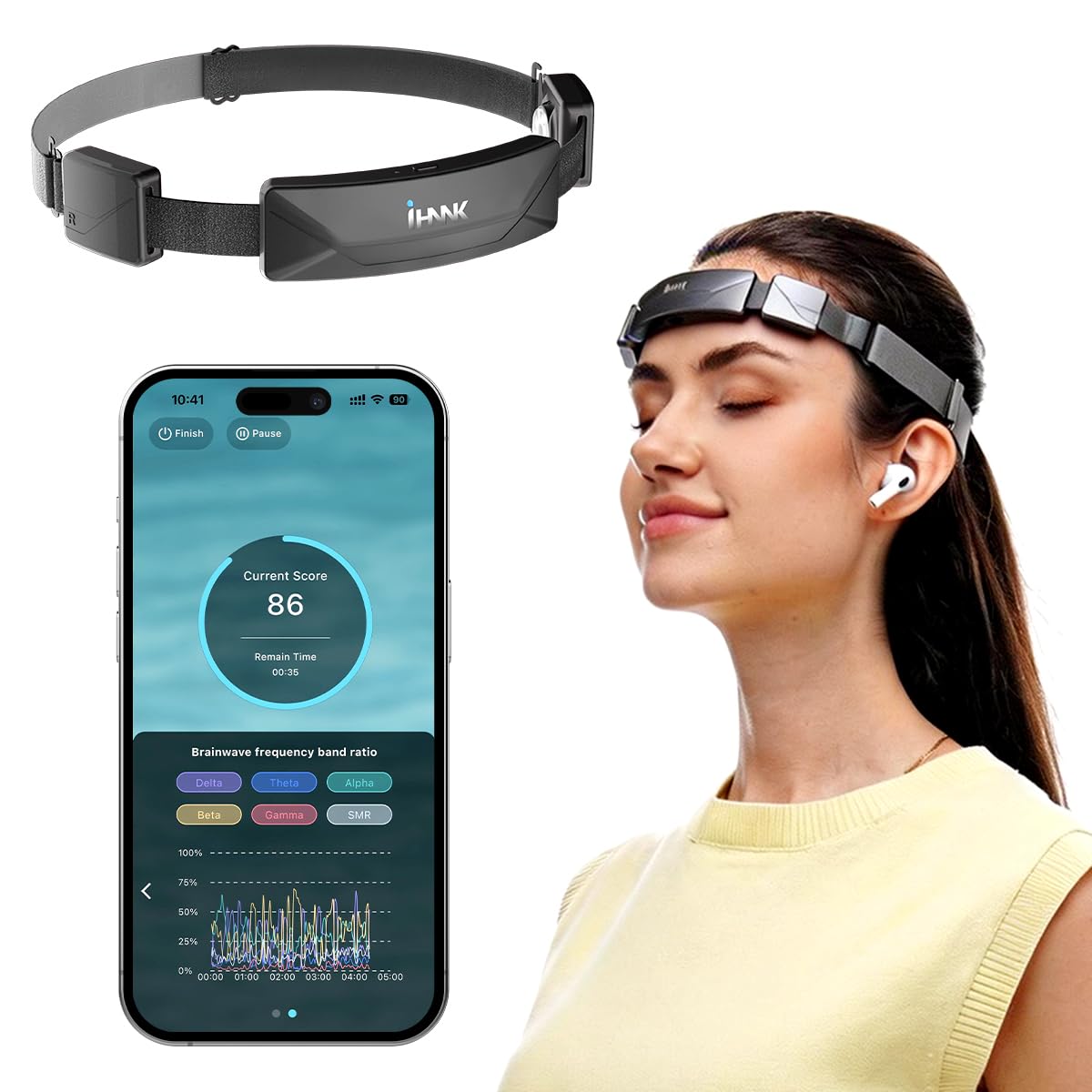
An EEG headband with no subscription fees and soft hydrogel sensors for comfort.
The SereniBrain headband offers a refreshing approach in the EEG space by not locking core features behind a recurring subscription. It uses flexible hydrogel sensors that adapt to your forehead, providing stable signal transmission and more comfort than stiff metal sensors. The app tracks Alpha, Beta, and Theta brainwaves in real time, with visuals and sound that become clearer as your mind calms. You can download your session data freely to track progress over time.
The battery lasts about 8 hours. The included kit comes with a carrying case, USB charging cable, and six replacement signal-collecting pads. Early buyers praise the stable Bluetooth connection and the accuracy of the real-time graph, which reacts instantly to movement. The main drawback reported by a small number of users is that some found the initial setup unintuitive, and a few experienced the device stopping after two weeks of use, though the reliability feedback is mixed rather than consistently negative.
Standout features
- No subscription fees for the core brainwave tracking experience
- Soft hydrogel sensors improve comfort and signal stability
- Real-time graph and free data export for progress tracking
The catch
- Initial setup can feel unintuitive for some users
- Reliability feedback is mixed, with occasional reports of early failure
Choose this if: You want a comfortable, subscription-free EEG headband for real-time brainwave training and meditation feedback.
Pass if: You need a proven, widely-reviewed device with a longer track record of reliability.
6. MUSE 2
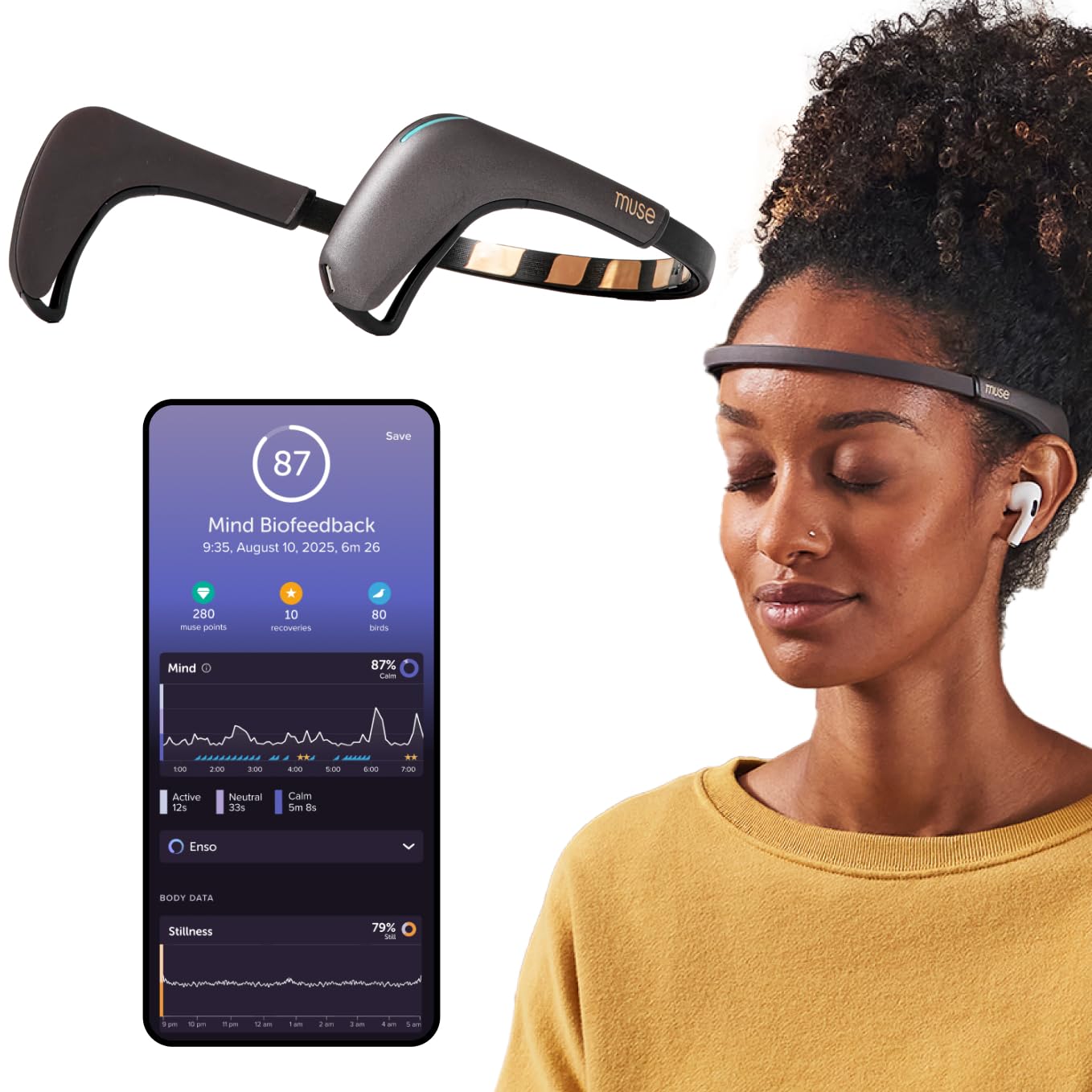
The research-backed EEG headband that made neurofeedback mainstream.
MUSE 2 is the device you will see in research papers and neuroscience labs. It uses EEG sensors to track brain activity and adds a heart rate monitor to give you a “Calm Score” after each session. You can use it from the start for core EEG-powered feedback and session tracking. An optional Premium subscription open up an AI Coach, deeper brain insights, and access to over 500 meditations.
Owners who stick with it say it helps re-establish a meditation routine and reveals when a busy mind is actually a sign of heightened awareness rather than failure. It tracks brainwaves, heart rate, and Alpha peak. Some users find the real-time feedback motivating for building consistency. However, the product has a lower satisfaction rate than some competitors. A few long-term users note that build quality has declined over successive units they have purchased for clinical use, with some units failing within months. The subscription model for the premium features is also a point of consideration, as the basic experience is functional but limited without it.
In short: A scientifically credible tool for deepening meditation practice, but warranty and durability concerns from repeat buyers are worth factoring in.
Best for: People who want a research-grade EEG headband to deepen their meditation practice and track progress over time.
Consider carefully if: You prioritize long-term build quality and a one-time purchase over a subscription-locked premium experience.
7. Pulsetto FIT (V2)
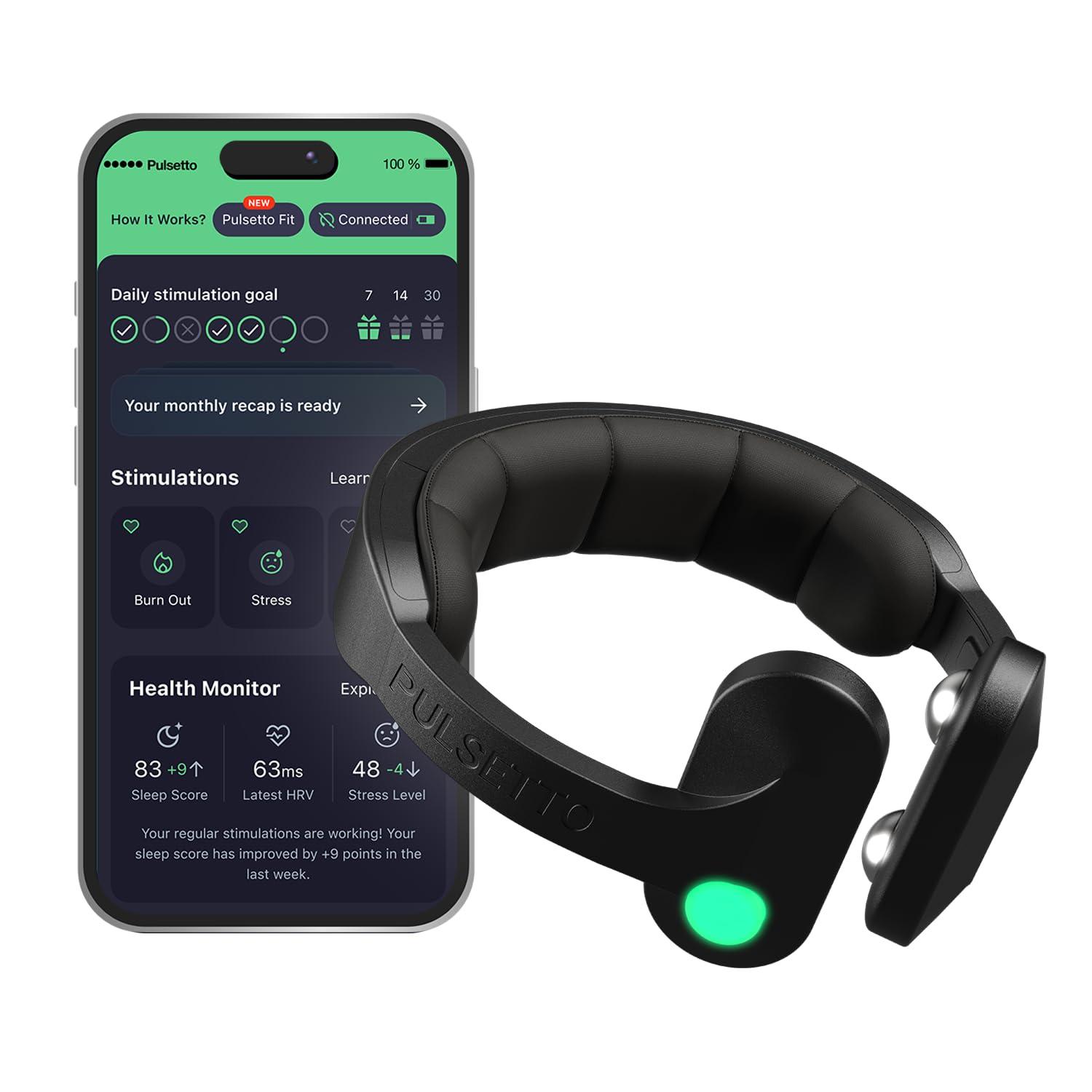
A neck-worn wearable that delivers short, calming vagus nerve sessions.
Pulsetto FIT is designed for brief sessions — 4 to 10 minutes is all it needs. The device sits comfortably on your neck and uses non-invasive pulses intended to support relaxation and daily balance. It connects to the Pulsetto App, which offers five core programs for stress, relaxation, and sleep, with optional premium features available in-app for those who want more. The device weighs 15.1 ounces and is built with a lightweight, ergonomic frame designed for European engineering standards.
What owners consistently report is that consistent daily use leads to noticeably deeper sleep and a calmer state after stressful events. The app is described as simple and fast to set up. One practical tip from reviews: using a conductive gel on the pads is crucial for feeling the stimulation at lower intensities. The device itself is premium-feeling, with a solid build and long battery life. The main hesitation from some is the price point and the fact that the more advanced app features come with a subscription, though the core programs are free. A small number of units have been reported to stop working over time, and the value-for-money aspect gets mixed marks from those who found the effect subtle.
Bottom line: An effective relaxation wearable for daily wind-down, with the strongest praise coming from users who pair it with the conductive gel and use it consistently for a few weeks.
Reach for this if: You want a dedicated, non-invasive device for short stress-relief and sleep-support sessions as part of your evening routine.
Look elsewhere if: You are sensitive to upfront costs for wearable wellness tools or dislike needing a conductive gel for optimal results.
8. RESPeRATE Ultra

RESPeRATE is an FDA-cleared, non-drug medical device with a specific claim: 82% of users significantly reduced high blood pressure in clinical trials.. It works by using personalized guiding tones to slow your breathing and prolong your exhalation, which helps relax blood vessels over time. You use it for just 15 minutes a day, 3 to 4 times a week. The effect is cumulative — your blood vessels gradually relax, leading to sustained reductions within a few weeks.
Over 250,000 Americans have used it, and its safety has been demonstrated in over 20 published clinical studies. The device comes with a 1-year warranty plus an additional 12-month sensor warranty, and US-based product specialists are available for support. One consistent user tip: wearing a thicker shirt or folded sweatshirt under the sensor belt helps avoid the “tighten/loosen” loop that some owners experience. The belt sensor is the most common point of frustration — it’s sensitive to placement and clothing thickness. A few shoppers say the belt can malfunction after a few weeks of daily use, which is note if you plan on heavy daily sessions.
what separates it
- FDA-cleared with a published 82% success rate in clinical trials.
- Only 15 minutes per day, 3-4 times a week, with cumulative effect
- Physician-recommended and backed by 20+ clinical studies.
The practical caveat
- The sensor belt can be finicky; proper clothing thickness under the belt resolves most issues
- Some users experience belt malfunction after several weeks of daily use
Think twice if: You want a truly set-and-forget experience; the belt’s placement sensitivity requires a bit of trial and error to get right consistently.
9. Sensate Relaxation Device
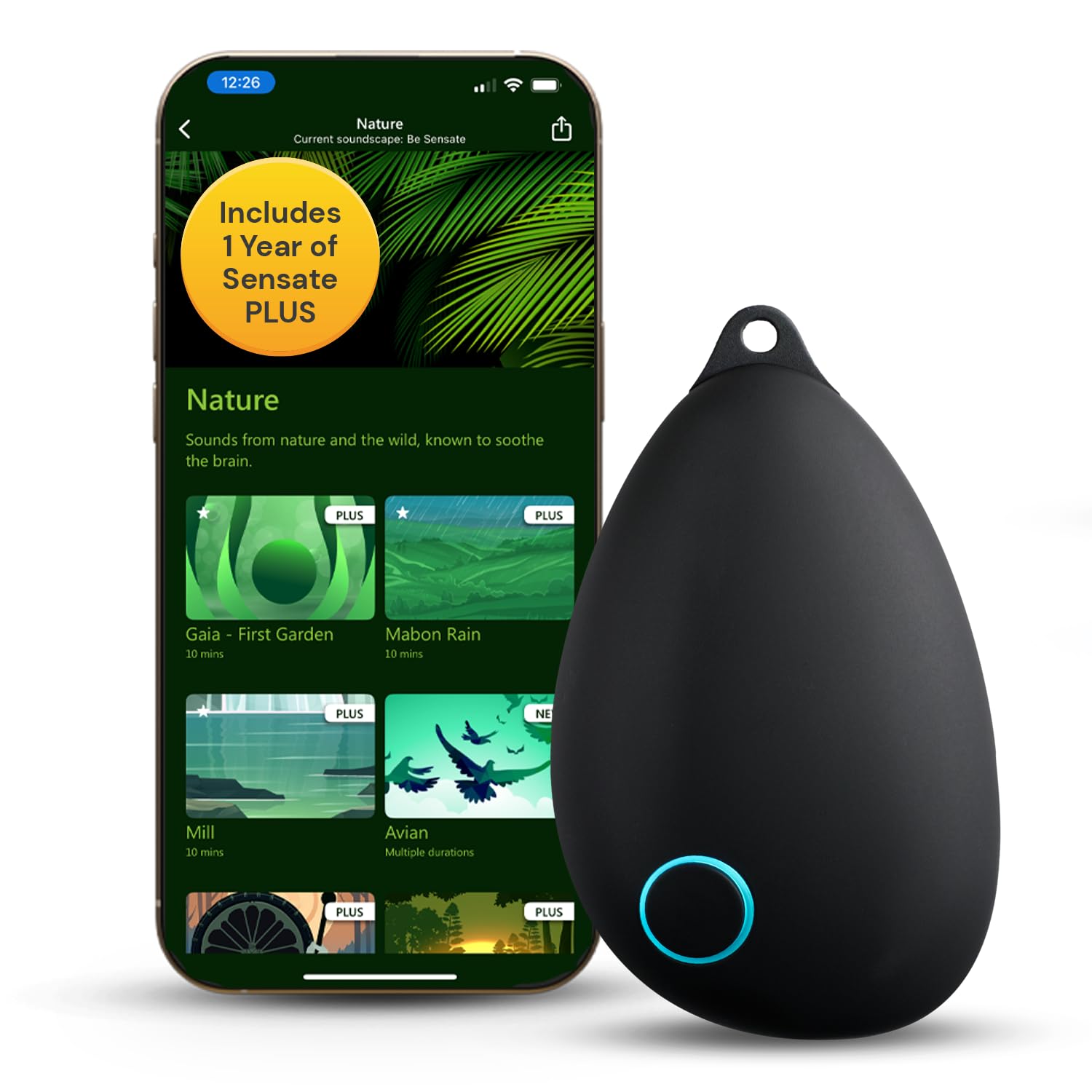
A non-invasive vagus nerve toner that uses sound waves through your sternum.
Sensate works differently from electrical pulse devices. It uses patented infrasonic resonance — gentle, soothing vibrations that travel through your sternum to shift your body from a “fight or flight” state to deep relaxation in as little as 10 minutes. There are no shocks; just tactile sound, which many owners find instantly calming. The device weighs 13.76 ounces and measures about 6 x 5 x 3 inches, making it a bedside companion rather than a wearable.
The device comes with a 12-month Sensate Plus subscription that open up a library of rich soundscapes. Owners who love it call it “life-changing” for sleep, with one reporting their heart rate dropped to 53 bpm during a 10-minute session. The app is intuitive, and the vibration quality is praised. The recurring complaints are Bluetooth connectivity issues with the app (some units fail to pair), the fact that the subscription is essentially required for most of the content, and a few customers mention a rattling noise from the device itself. The price point is the highest on this list, so it’s an investment that demands consistent use to justify.
Verdict: A genuinely effective and pleasant relaxation aid for those who value non-electrical vagus nerve toning, but the subscription model and occasional hardware quirks are the trade-offs.
Reach for this if: You want a non-invasive, vibration-based relaxation tool for sleep and anxiety, and you are comfortable with a subscription for premium content.
Consider alternatives if: You are put off by the high upfront cost plus ongoing subscription, or need a device that works flawlessly offline without Bluetooth pairing.
Understanding the Specs
EEG vs. Other Sensors
Real-Time Feedback vs. Summary Reports
The difference between a device you use and one you abandon is often in the feedback loop. Real-time feedback means you see a light change, hear a tone shift, or watch a graph move *while* you are breathing or contracting. That immediate signal helps you correct in the moment. Summary reports are useful for tracking trends but do little to teach you the skill during the session. Look for devices that combine both: instant cues to guide you during training and a post-session graph to show your progress over days or weeks. An app that locks the best real-time data behind a subscription is worth checking before you buy.
FAQ
What is the difference between biofeedback and neurofeedback?
Do I need a prescription to use a biofeedback device at home?
Will a biofeedback headband work if I have long or thick hair?
How long does it take to see results with a pelvic floor biofeedback device?
Can a biofeedback device help with anxiety without medication?
What does a “Calm Score” or a biofeedback number actually measure?
Are there hidden costs after buying a biofeedback device?
Is it safe to use a vagus nerve stimulator like Pulsetto or Sensate every day?
What is HRV and why do biofeedback devices track it?
Which device is best for someone who has never tried biofeedback before?
Final Thoughts: The Verdict
How We Picked
We do not accept paid placement. Every pick is matched to a real buyer and a real use-case; we do not hands-on test units.
Sources & Methodology
Specifications: manufacturer listings and product documentation. Review insights: verified customer reviews, as of July 2026. Pricing: not shown on this page (it changes often); check the current price via the retailer link.
As an Amazon Associate, Gadgets Feed earns from qualifying purchases. This does not affect which products we feature.