
Stepping up from a smartphone to a dedicated point-and-shoot is the single fastest way to improve your photography — not because the phone is bad, but because a real camera gives you an optical zoom lens, a larger sensor, and physical controls that let you frame a shot before the moment passes. For a beginner, that difference shows up immediately in sharper portraits, distant subjects that stay crisp instead of turning into digital mush, and a tactile learning curve that builds confidence with every click.
I’m Min — the co-founder and writer behind Gadgets Feed. I’ve spent years analyzing the technical specifications and real-world image quality of compact cameras across every price tier, and my deep dives into sensor performance, optical zoom ranges, and autofocus systems help new buyers make the right choice without costly mistakes..
Whether you are grabbing your first dedicated camera for travel, family events, or a creative hobby, the camera for beginners point and shoot market in 2025 offers more genuine value than ever, with models ranging from ultra-zoom bridge cameras to pocketable powerhouses that deliver optical reach a phone simply cannot match.
How To Choose The Best Camera For Beginners Point And Shoot
Choosing your first dedicated camera can feel overwhelming with so many specs to compare. But for a point-and-shoot, three factors dominate the buying decision: optical zoom range, image stabilization, and ease of use. Here is exactly what to prioritize and what to ignore.
Optical Zoom vs. Digital Zoom — The Dealbreaker
Optical zoom uses the camera’s lens to physically magnify a subject, preserving full image quality at every focal length. Digital zoom crops and enlarges the image inside the camera, discarding detail the moment you zoom past the optical limit. For a beginner, a camera with at least 4x to 10x optical zoom delivers real reach that a smartphone cannot replicate. Bridge cameras with 40x or 60x zoom turn distant wildlife and stadium seats into clear, frame-filling shots.
Image Stabilization Is Non-Negotiable at High Zoom
As you zoom in, even tiny hand movements shake the frame noticeably. Optical Image Stabilization (OIS) uses floating lens elements to cancel out that shake optically, producing sharper handheld photos at the telephoto end. Without it, you will either need a tripod or accept blurry results. Every camera on this list below the most budget-friendly tier includes some form of OIS for this exact reason.
Battery System and Memory Card Compatibility
Entry-level point-and-shoots split between AA batteries and proprietary rechargeable lithium-ion packs. AA-powered cameras let you buy fresh batteries anywhere in the world, a real advantage for travel. Rechargeable lithium-ion packs offer longer runtime per charge and faster recycling, but you need to plan charging access. Also confirm the camera uses standard SD or microSD cards — the included card in most bundles is just enough to start shooting, but a UHS-I or UHS-II card ensures smooth video recording and fast photo transfer.
Quick Comparison
On smaller screens, swipe sideways to see the full table.
| Model | Category | Best For | Key Spec | Amazon |
|---|---|---|---|---|
| Canon EOS R100 Kit | Mirrorless | First interchangeable lens system | 24.1MP APS-C sensor | Amazon |
| Panasonic LUMIX FZ80D | Bridge | Superzoom versatility | 60x optical zoom | Amazon |
| Kodak AZ528 | Bridge | Wi-Fi sharing | 52x optical zoom | Amazon |
| Nikon COOLPIX P950 | Bridge | Extreme telephoto reach | 83x optical zoom | Amazon |
| Panasonic LUMIX ZS99 | Compact | Pocketable travel zoom | 30x Leica zoom | Amazon |
| Canon PowerShot ELPH 360 HS | Ultra-Compact | Pocket-sized family camera | 12x optical zoom | Amazon |
| Kodak AZ405 | Bridge | Value superzoom | 40x optical zoom | Amazon |
| Minolta 56MP Dual Lens | Compact | Social media content | 5K video recording | Amazon |
| Kodak PIXPRO FZ45 | Compact | Budget-friendly entry | 4x optical zoom | Amazon |
In‑Depth Reviews
1. Canon EOS R100 Mirrorless Camera with RF-S18-45mm Lens Kit

The Canon EOS R100 is technically a mirrorless interchangeable-lens camera, but it functions as a pure point-and-shoot right out of the box with its bundled RF-S18-45mm lens. The 24.1-megapixel APS-C sensor is significantly larger than the 1/2.3-inch sensors found in most superzoom compacts, which translates directly to richer color depth, better separation between subject and background, and noticeably cleaner images when the light drops below indoor levels.
Canon’s DIGIC 8 processor enables Dual Pixel CMOS AF with 143 autofocus zones, covering human face, eye, animal, and vehicle detection — a level of autofocus precision that simply does not exist on traditional entry-level point-and-shoots. The 6.5 fps burst rate in One-Shot AF captures fast-moving kids or pets with reliable sharpness, and the compact body weighs less than 1 pound with the kit lens attached, making it genuinely portable for daily carry.
Where the EOS R100 truly shines for beginners is the guided menu interface that explains shooting modes without assuming prior knowledge. The lack of a fully articulating screen and in-body stabilization are the main trade-offs, but the lens-based Optical IS and natural bokeh from the APS-C sensor make this the most future-proof pick for someone who wants room to grow beyond auto mode.
Why it’s great
- APS-C sensor delivers superior low-light images and background blur
- Dual Pixel AF with face/eye/animal detection is beginner-friendly and accurate
- Expandable lens system lets you grow without buying a new camera
Good to know
- No in-body image stabilization; relies on lens-based OIS only
- Battery charger is not included in the box
- 4K video is capped at 24 fps, limiting slow-motion flexibility
2. Panasonic LUMIX FZ80D Point and Shoot Digital Camera

The Panasonic LUMIX FZ80D is the camera that redefines what a beginner can reach. Its 60x optical zoom lens spans from a 20mm wide-angle for sweeping landscapes to a 1200mm super-telephoto that brings the moon’s craters, a bird at the feeder, or a performer on stage into a single frame with real optical sharpness. The 2,360K-dot Live View Finder eliminates glare in bright sunlight, something a rear LCD alone cannot do.
POWER O.I.S. is the critical enabler here — without effective stabilization, a 1200mm handheld shot would be hopelessly shaky. The FZ80D’s system actively cancels hand-shake vibration at the tele-end, and the Post Focus feature lets you tap a different area of a captured image to refocus after the shot, a clever training tool for understanding depth of field. The 4K Photo mode extracts 8-megapixel stills from 4K video bursts, ensuring you never miss a fast-moving moment.
The trade-off is the 1/2.3-inch sensor, which produces grainier images in low light compared to larger-sensor competitors, and the menu system requires some initial learning. But for a brand-new photographer whose primary goal is extreme reach and versatility without carrying multiple lenses, the FZ80D delivers a zoom range that would cost thousands more in interchangeable-lens gear.
Why it’s great
- 60x optical zoom (20-1200mm equivalent) is unmatched at this price
- Post Focus mode is a fantastic learning tool for depth-of-field concepts
- High-resolution LVF works beautifully in direct sunlight
Good to know
- Small 1/2.3-inch sensor struggles in dim indoor or evening lighting
- No built-in Wi-Fi or Bluetooth for wireless transfer
- Battery drains quickly with heavy zoom use; buy a spare pack
3. Kodak PIXPRO Astro Zoom AZ528-BK
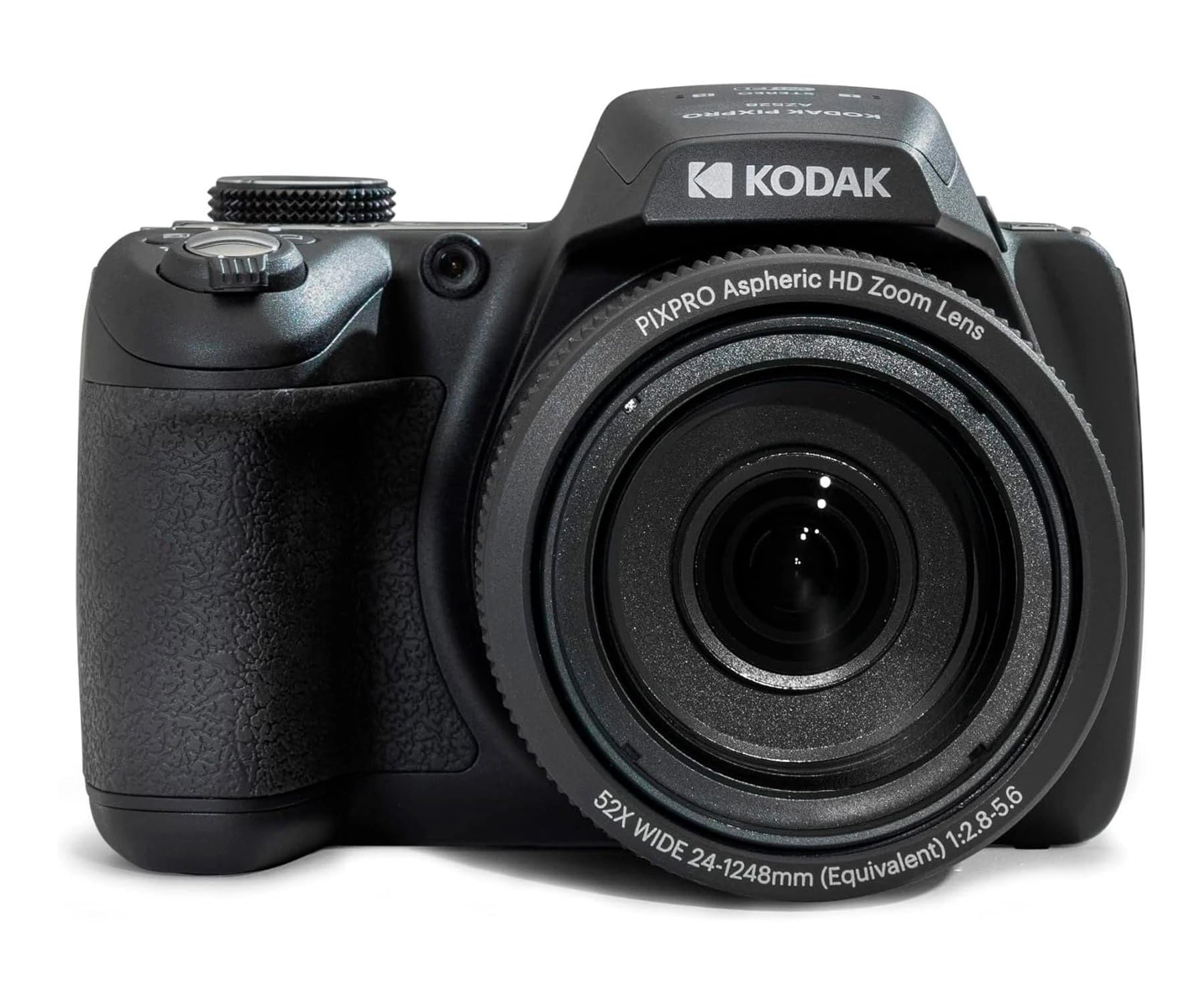
The Kodak AZ528 is the most feature-rich bridge camera in the mid-range tier, pairing a 52x optical zoom lens with a 16-megapixel BSI CMOS sensor that improves light capture over traditional CCD sensors. The 24mm wide-angle end covers group shots and interiors, while the telephoto reach pulls in birds, wildlife, and stadium action from across the field. The 6 fps burst mode is useful for capturing fast-moving subjects, and the 3-inch LCD gives you a clear, bright preview.
What sets the AZ528 apart for a beginner is the built-in Wi-Fi that connects directly to your smartphone for wireless photo transfer and remote viewfinder control. You can frame and shoot from a distance using your phone as a live remote, which is especially helpful for group selfies or shy wildlife. The rechargeable Li-Ion battery lasts a full shooting day, and USB-C charging is fast and convenient.
As with all cameras in this sensor class, image quality drops noticeably above ISO 800, and the battery life suffers with constant zoom motor activity. But the combination of 52x reach, OIS, and wireless connectivity at a mid-range price makes the AZ528 the best-connected superzoom for a beginner who wants to share photos immediately without plugging into a computer.
Why it’s great
- 52x optical zoom with effective optical image stabilization
- Built-in Wi-Fi enables wireless photo transfer and remote control
- USB-C charging is fast and travel-friendly
Good to know
- BSI CMOS sensor still produces grain above ISO 800
- Battery drains noticeably with heavy zoom use
- Body scuffs easily; a protective case is recommended
4. Nikon COOLPIX P950 Superzoom Digital Camera

The Nikon COOLPIX P950 is the zoom champion of the beginner point-and-shoot world. An 83x optical zoom lens with a Dynamic Fine Zoom push to 166x delivers a 24-2000mm equivalent focal range, which is absolutely mind-bending for a single lens. You can photograph the full moon with visible craters from a handheld position using the dedicated Moon Scene mode, or capture a bird in flight at distances that make other cameras give up entirely.
The 16-megapixel sensor is paired with Nikon’s Dual Detect Optical Vibration Reduction, which works hard to stabilize the image at extreme telephoto lengths. The rotating 3.2-inch LCD screen flips out for overhead and ground-level shots, and the high-resolution electronic viewfinder (2.36 million dots) provides a clear, glare-free composition tool. Dedicated Bird and Moon modes remove the guesswork, letting beginners achieve spectacular telephoto results without manual configuration.
Autofocus can be inconsistent, sometimes hunting for contrast on low-contrast subjects, and the smartphone app is notoriously unreliable for wireless transfers. But the sheer optical reach of the P950, combined with Nikon’s stabilization and beginner-friendly scene modes, makes it the ultimate tool for anyone whose primary photography interest is distant wildlife, celestial photography, or long-range observation.
Why it’s great
- 83x optical zoom is the most reach available in a beginner-friendly package
- Dedicated Bird and Moon scene modes deliver pro-level results automatically
- Dual Detect Vibration Reduction makes handheld telephoto shots usable
Good to know
- Autofocus hunts on low-contrast and backlit subjects
- Smartphone app connectivity is frustrating and unreliable
- Larger and heavier than other bridge cameras at over 2 lbs
5. Panasonic LUMIX TZ/ZS99 Compact Camera

The Panasonic LUMIX ZS99 proves that a 30x optical zoom can genuinely fit in your pocket. The Leica DC Vario-Elmar lens spans 24-720mm equivalent, compressing a level of reach that would require a dedicated superzoom backpack into a body barely larger than a deck of cards. The 1,840k-dot tiltable touchscreen adds flexibility for waist-level and overhead compositions, and USB-C charging means you travel with one cable for camera, phone, and tablet.
Bluetooth 5.0 and the dedicated Send Image button make wireless transfer effortless — press the button, and photos flow to your paired smartphone without fiddling with menus. The 4K Photo mode captures 30 fps bursts for extracting perfect frames from fast action, and 120 fps high-speed HD video unlocks smooth slow-motion playback. The lens stepping zoom feature lets you snap through frequently used focal lengths instantly, and Lens Position Resume remembers your last used zoom setting after power-off.
Image quality from the 1/2.3-inch sensor is very good up to ISO 1600, but optical corner softness and chromatic aberration are visible at the wide-angle end. The autofocus can be slow in dim light compared to phase-detection systems. But for a traveler who needs one compact device that covers everything from wide landscapes to concert seats without changing lenses, the ZS99 is the most pocketable high-zoom solution available.
Why it’s great
- 30x Leica optical zoom fits completely in a pants pocket
- Bluetooth 5.0 with dedicated Send Image button for seamless wireless sharing
- Tiltable touchscreen and USB-C charging are travel-ready features
Good to know
- Small sensor shows grain above ISO 1600 and in low light
- Autofocus can hunt in dim or low-contrast scenes
- Optical corner softness and purple fringing visible at wide-angle end
6. Canon PowerShot ELPH 360 HS Digital Camera
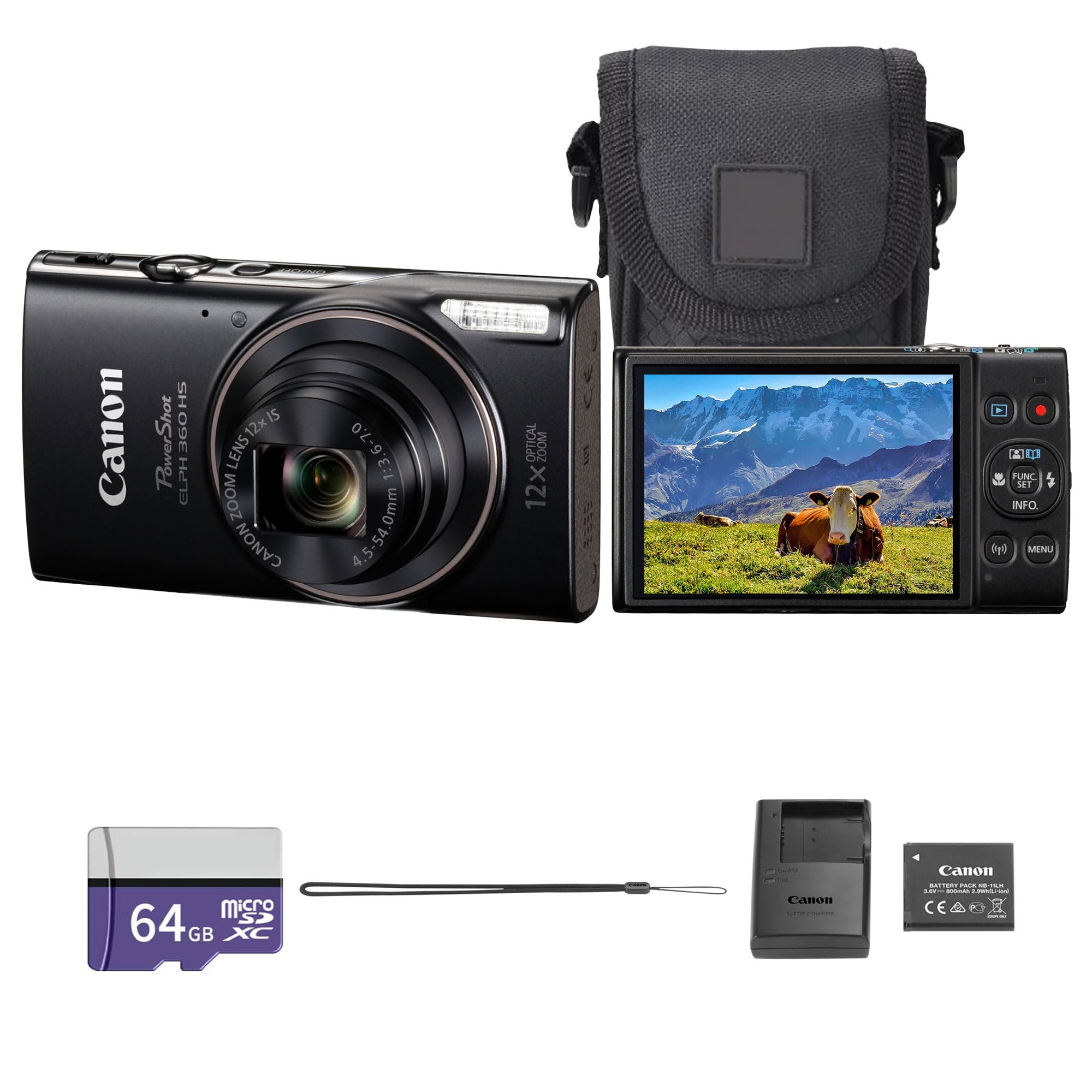
The Canon PowerShot ELPH 360 HS is the quintessential pocket point-and-shoot for everyday family photography. Its 20.2-megapixel CMOS sensor paired with the DIGIC 4+ processor delivers sharp, vibrant 12x optical zoom images from a 25-300mm equivalent lens that slips into a jeans pocket. The Intelligent IS system automatically selects from six stabilization modes to match panning, macro, or static shooting, keeping handheld shots crisp across the zoom range.
Creative Shot and Hybrid Auto modes are genuinely fun for beginners — Creative Shot automatically generates artistic variations of each photo, while Hybrid Auto records a short video clip before each still and compiles them into a daily highlight reel. The 7.2 fps burst rate is fast enough to capture a toddler’s unpredictable sprint across the yard, and the 3-inch PureColor II G LCD provides a clear view even in bright outdoor conditions. Built-in Wi-Fi and NFC enable one-touch connection to a smartphone for instant sharing.
The main limitation is the 1/2.3-inch sensor, which cannot match the low-light performance of larger-sensor competitors. The lack of a dedicated flash and the use of microSD cards instead of full-size SD may also be minor inconveniences. However, the ELPH 360 HS delivers a proven formula — pocketable size, reliable optical zoom, and Canon’s trustworthy image processing — that has made the PowerShot line a beginner favorite for years.
Why it’s great
- Ultra-compact body fits easily in a pocket or small bag
- 12x optical zoom with Intelligent IS delivers sharp handheld photos
- Creative Shot and Hybrid Auto modes produce fun, unique images
Good to know
- Small sensor limits low-light quality above ISO 800
- Uses microSD cards instead of standard SD cards
- No built-in flash; relies on available light
7. Kodak PIXPRO AZ405-WH 20MP Digital Camera
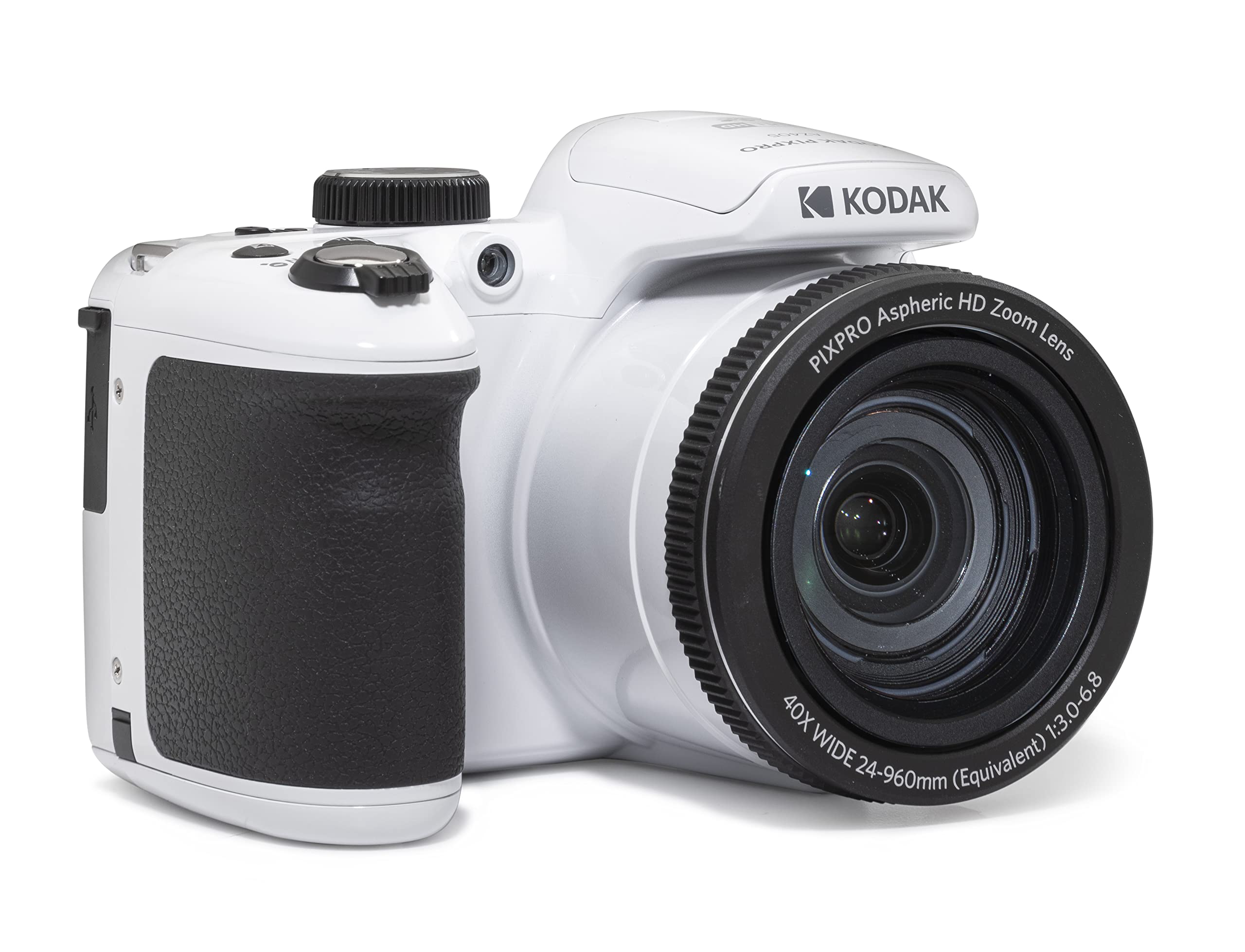
The Kodak PIXPRO AZ405 is the budget-conscious beginner’s gateway to superzoom photography. Its 40x optical zoom lens with a 24mm wide-angle end provides genuine telephoto reach that puts smartphone digital zoom to shame, capturing distant subjects with real optical clarity. The 20-megapixel CMOS sensor produces detailed, colorful images in good light, and optical image stabilization helps counteract hand shake at the full 40x extension.
The most practical feature for a beginner traveler is AA battery compatibility — you can buy fresh batteries at any convenience store in the world, eliminating the anxiety of a dying proprietary pack during a long day of shooting. The automatic scene detection mode handles exposure decisions, and the 3-inch LCD provides a clear composition preview. Full 1080p HD video records smooth footage, and the camera accepts SD cards up to 512 GB for all-day storage.
Image quality in low light is noticeably limited by the 1/2.3-inch sensor, and the camera can feel slow when writing consecutive shots to the card. Some users report that removing the SD card resets settings to default, and the two-second delay between shots can cause missed candid moments. But as an entry-level superzoom that prioritizes reach, convenience, and global battery availability over pixel-level perfection, the AZ405 delivers impressive value.
Why it’s great
- 40x optical zoom for real telephoto reach at an entry-level price
- AA battery power means you can buy fresh cells anywhere in the world
- 20MP CMOS sensor produces vibrant, detailed images in daylight
Good to know
- Low-light image quality is poor compared to larger-sensor alternatives
- Slow shot-to-shot speed; may miss fast-moving moments
- Removing the SD card resets camera settings to factory defaults
8. Minolta 56MP Dual Lens Digital Camera

The Minolta 56MP Dual Lens camera targets the younger beginner who wants a compact all-in-one device for social media content creation. Interpolated 56-megapixel stills from a CMOS sensor give a resolution headroom for cropping, while the built-in selfie lens eliminates the need to flip a screen or guess your framing — the second forward-facing lens is ready for vlogging and group selfies immediately. The 2.8-inch LCD touchscreen makes navigation intuitive for a generation raised on smartphones.
5K Ultra HD video recording at 30 fps delivers higher resolution than standard 4K cameras in this price tier, and the 5x optical zoom with digital image stabilization provides enough reach for travel shots and event clips. The bundle includes a rechargeable lithium-ion battery and a 32 GB MicroSD card, allowing immediate use out of the box. At just 0.3 grams for the battery weight, the camera body itself is exceptionally light and portable for everyday carry.
Performance consistency is the camera’s weakest point. Several users report blurry image quality, slow startup times, accidental power-on in pockets, and a weak flash that rarely improves low-light shots. The MicroSD card slot requires an adapter for standard readers. For a very budget-conscious teen or pre-teen who prioritizes selfie convenience and video resolution over polished photo quality, this camera can work, but serious beginners should consider higher-tier options.
Why it’s great
- Dual-lens design includes a dedicated selfie lens for vlogging
- 5K video recording at 30 fps is unusual at this price tier
- Lightweight, compact body with intuitive touchscreen controls
Good to know
- Image quality is inconsistent; many users report blurred photos
- Slow startup and accidental power-on drain the battery in a pocket
- Uses MicroSD card requiring adapter; no flash for dark scenes
9. Kodak PIXPRO FZ45 16MP Digital Camera Bundle
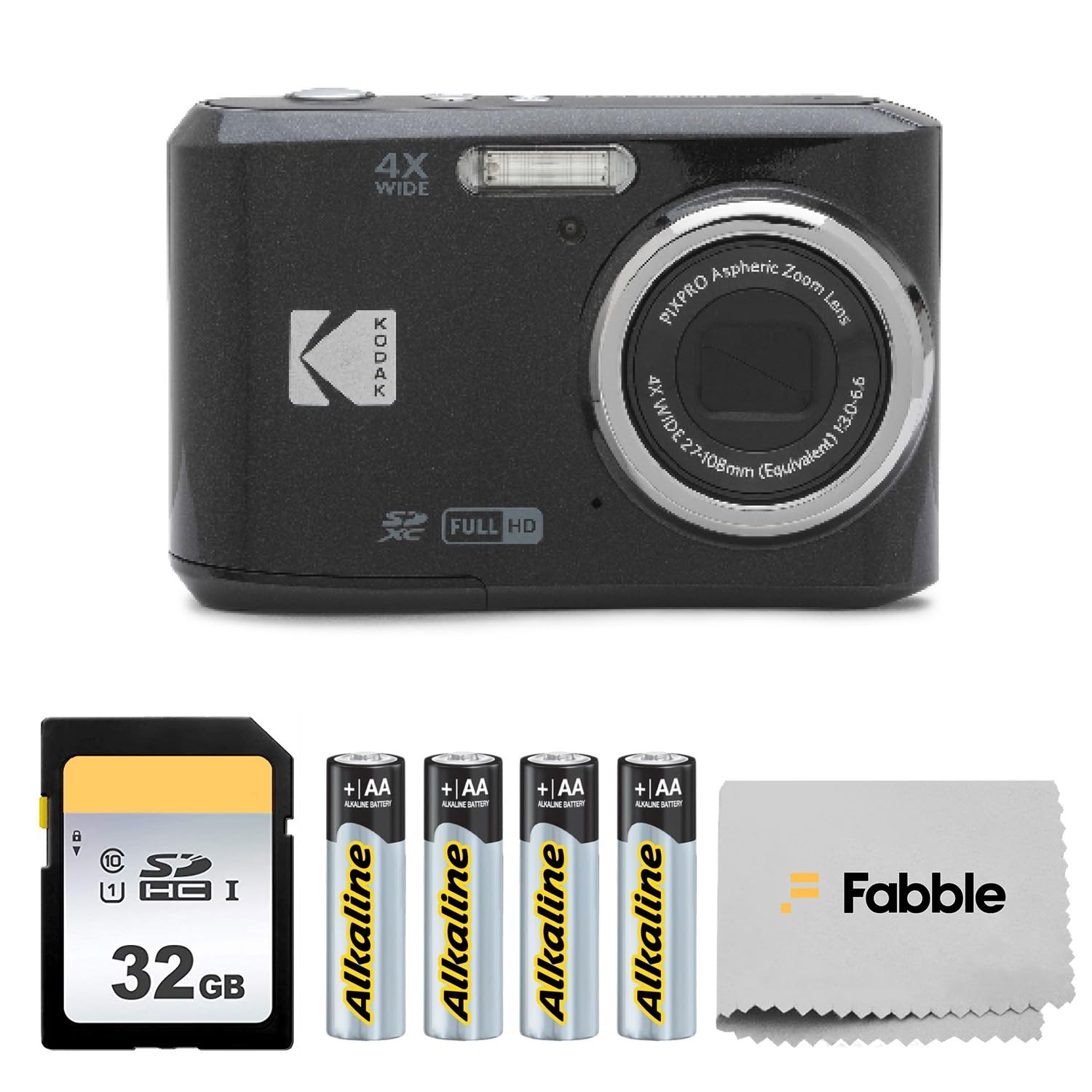
The Kodak PIXPRO FZ45 is the purest entry-level point-and-shoot on this list — no superzoom, no 4K video, no Wi-Fi, just a straightforward 16-megapixel camera with a 4x optical zoom 27mm wide-angle lens and a 2.7-inch LCD screen. The bundle includes four AA batteries, a 32 GB SD card, a wrist strap, and a lens cleaning cloth, meaning a beginner can open the box and start shooting immediately without any additional purchases.
For an absolute first-time buyer who has never owned a dedicated camera, the FZ45 removes all complexity. The zoom dial and shutter button are the only controls needed for most shots, and the 1080p Full HD video mode captures decent clips for a basic backup. The AA battery system is the most beginner-friendly power solution — no worrying about proprietary rechargeable packs; just swap in fresh cells and keep going. The 27mm wide-angle lens fits more people into group shots than a standard smartphone field of view.
The camera slows down significantly after consecutive shots, and the 1.5 to 2 hours of battery life with active video and flash use means you will want to carry spare AA pairs. Low-light image quality is limited by the smaller sensor and modest F3.0 maximum aperture. But for a child, a teenager, or an adult who simply wants a tactile, affordable learning tool without any intimidating features, the FZ45 bundle is exactly what the beginner experience should be: simple, affordable, and ready to go.
Why it’s great
- Complete bundle with batteries, SD card, and strap included
- AA power system is universally replaceable and zero-stress
- Simple, intuitive controls ideal for absolute beginners and children
Good to know
- Significant lag between consecutive shots; not for fast action
- Battery life is limited to 1.5-2 hours with flash and video use
- Small sensor and F3.0 aperture produce noisy low-light images
FAQ
Is a 16-megapixel sensor enough for a beginner point-and-shoot?
Should a beginner buy a point-and-shoot or a mirrorless camera?
Final Thoughts: The Verdict
For most users, the camera for beginners point and shoot winner is the Canon EOS R100 Kit because its APS-C sensor, Dual Pixel autofocus, and lens expandability offer a learning curve with no immediate ceiling. If you want extreme optical reach in a single lens, grab the Panasonic LUMIX FZ80D. And for a true pocket-sized companion that fits everywhere and delivers reliable zoom, nothing beats the Panasonic LUMIX ZS99.