
Our readers keep the lights on and my morning glass full of iced black tea. As an Amazon Associate, I earn from qualifying purchases.
Specs are compiled from manufacturer listings and verified buyer reviews and can change over time — please confirm the key details on the product page before buying.
To keep a round diamond safe for a lifetime, you need six prongs gripping it — two extra claws compared to a four-prong setting mean the stone is caught from more angles if it snags on a sweater or hits a countertop. But not all six-prong rings are built equally.
I’m Min — the founder and writer behind Gadgets Feed. This guide is built by comparing the manufacturers’ published specifications and the patterns across verified customer reviews, so you get each pick’s real strengths and trade-offs instead of marketing spin.
The right 6 prong round engagement ring balances stone security, band durability, and everyday comfort in a way that matches your actual life, not an Instagram filter. A GIA-certified (Gemological Institute of America — the standard grading body for diamonds) natural diamond in 14K white gold wins for most buyers, but a larger simulated stone or a certified lab-grown diamond also has its place.
Our Picks at a Glance


How To Choose The Best 6 Prong Round Engagement Ring
A six-prong ring gives you the safest grip on a round stone possible in a traditional solitaire (a single-stone ring) — the extra claws (compared to a four-prong setting) act like seatbelts, catching the stone from more angles if it snags on a sweater or bumps a countertop. But within that shared design, three things separate a ring that will still feel solid on your twentieth anniversary from one that will need repairs by year two.
Band Material and Construction
The metal you choose — 10K, 14K, or 18K gold — affects how hard-wearing the band is over decades. 14K white gold is the most common balance because it is strong enough for a thin band without bending yet soft enough for a jeweler to resize later. A band that measures 2.2mm or wider at the bottom tends to stay true to its original shape through daily knocks; anything narrower risks warping around the stone if you are hard on your hands.
Stone Type and Quality Grades
You will see natural diamonds, lab-grown diamonds, moissanite (silicon carbide — a stone that sparkles with rainbow fire), and cubic zirconia (CZ — a synthetic gemstone made of zirconium dioxide) in the 6-prong world. A natural or lab-grown diamond comes with a GIA or IGI certificate that tells you its exact color (D is top, Z is warm) and clarity (FL is flawless, SI2 has visible inclusions — inclusions are tiny internal flaws). Moissanite tests differently on a diamond detector and throws more rainbow fire than a diamond does, which some buyers love and others find a tell. Cubic zirconia is the softest option — it scratches over time and loses its polish, so it works best as a temporary or fashion ring.
Prong Height and Everyday Snagging
The higher the prongs sit above the stone, the more light hits the diamond from the sides (that is where the sparkle gets its depth). But a tall setting — anything above 7.5mm from finger to top of the stone — can catch on knitwear, seatbelt straps, and hair. If you plan to wear the ring every day without taking it off, a moderate prong height (around 7.3mm) is a quieter, more practical choice that still delivers plenty of brilliance.
Quick Comparison
| Model | Best For | Center Stone | Band Width | Metal | Amazon |
|---|---|---|---|---|---|
| Houston Diamond District Solitaire★ Best Overall | Certified natural diamond on a budget | ~0.5 CT Diamond (J-K Color, I2 Clarity) | ~2.0mm | 14K White Gold | Amazon |
| Pure 14K 2.0 CT SimulatedBest Sparkle | Maximum size for the price | 8.0mm (2.0 CT equivalent) Simulated Diamond | 2.3mm | 14K White Gold | Amazon |
| 14K 1.0 CT Graduated Side Stones | A classic look with extra shoulder sparkle | 6.5mm (1.0 CT equivalent) Simulated Diamond | 2.2mm | 14K White Gold | Amazon |
| 10K Yellow Gold CZ Solitaire | Warm gold tone on a budget | ~1.5 CT Cubic Zirconia | Ultra slender | 10K Yellow Gold | Amazon |
| NAOKETEN 3CT Moissanite | Near-diamond hardness with rainbow fire | 9.0mm (3.0 CT equivalent) Moissanite | 2.2mm | 10K/14K/18K Gold (choice) | Amazon |
| Houston Diamond District Lab Grown | The most secure long-term investment | 1-5 CT Lab Diamond (E-F Color, VS2-SI1) | — | 14K White Gold | Amazon |
In‑Depth Reviews
1. Houston Diamond District Round Cut Solitaire
Our pick — over 4.5★ from 100+ verified ratings; the strongest balance of quality and price.
The GIA-certified natural diamond in a 14K white gold band — and it costs less than retail jewelry-store prices.
This is the ring that buyers consistently describe as a smart alternative to retail-store pricing. The center diamond is graded J-K in color and I2 in clarity — neither of which is top of the chart, but on a finger at arm’s length that warm, slightly included stone looks entirely natural, and the 14K white gold band gives it a clean, traditional silhouette.
The honest trade-off here is stone grade. An experienced friend of one buyer spotted a yellowish tint right away. But the crowd favorite take is simpler: “Great value 1/2 carat 14k gold ring vs. overpriced 10k retail.” That sums up how most owners feel — they are getting certified diamond quality at a price that makes the “real thing” accessible without years of saving.
Houston diamond standout: A legitimately certified natural diamond in a classic six-prong setting that looks and feels like a piece you would see in a jewelers’ display case — at a fraction of the usual price.
Top splurge pick: you want the confidence of a GIA-certified natural diamond and a classic solitaire look that will never date.
Skip if thrifty: color perfection matters to you — this diamond runs warm (J-K), so if you want icy D-color white, a moissanite or simulated stone will match your expectations better.
2. Pure 14K White Gold 2.0 CT Classic 6-Prong Simulated Diamond
At 8.0mm across (equal to a 2.0-carat diamond), this simulated stone is the largest center piece in the lineup — and owners say it sparkles like nothing else.
At 8.0mm across (the same as a 2-carat diamond), this stone is the largest center piece in the whole lineup, and it is set on a solid 2.3mm band that owners say has held up to everything from daily typing to gym bags. Buyers report it is “stunning” and “unreal sparkle,” with one owner writing that the ring “has held up to everything I’ve thrown at it — both the band and the stone have held up very well.” The 14K white gold is stamped genuine, and the band gets praise for being well made and smooth.
One owner did return the ring because the stone “looked like glass,” so the simulated-diamond experience depends on how closely you inspect it in direct sun versus room light. For most owners, the magic of a 8.0mm D-color, flawless stone with that rainbow flash is well worth the trade-off. The band itself is comfortable and the prongs are sturdy, which is exactly what you want from an everyday engagement ring. Compared to the Houston Diamond District Solitaire, this ring gives you a center stone 3.0mm wider (8.0mm vs ~5.0mm) for a fraction of the cost.
White gold value: The biggest, sparkliest center stone among these picks, set on a band that owners confirm handles daily abuse without bending or loosening — an honest showstopper for anyone who prioritizes size and fire over natural origin.
This ring is for you if maximum carat-equivalent size and a diamond-like sparkle that gets compliments every day are your priorities — it delivers both at a mid-range price. But if you need a natural diamond with a lab certificate, this is a simulated stone, not a real diamond.
3. 14K White Gold 1.0 CT Classic 6-Prong Simulated Diamond with Graduated Side Stones

Six smaller simulated diamonds on each shoulder frame the 6.5mm center stone — giving you an heirloom look without a full halo (a ring of small stones around the main diamond).
This ring takes the classic 6-prong solitaire and gives it a subtle upgrade: six smaller graduated simulated diamonds run down each shoulder, framing the 6.5mm center stone without overwhelming it. The band is a slender 2.2mm at the bottom and 7.3mm high. Owners consistently call it “sparkly” and “stunning.” One buyer wrote that after 5 years of wear “it looks absolutely perfect,” which is the kind of long-term durability most rings in this price range cannot claim.
The band is dainty enough that one owner did note it bent a little over time. If you are someone who works with your hands or tends to catch rings on things, this may be a factor. But the side stones add a refined touch that is rare at this price point. Another owner says it “passes for real diamond up close” and that she gets compliments on it everywhere she goes. The 14K white gold is stamped, and the simulated diamond comes with a certificate. Compared to the Pure 2.0 CT simulated stone above, this ring’s center stone measures 6.5mm versus 8.0mm — but the side stones make up for the visual gap in sparkle.
Classic white gold: A beautifully proportioned six-prong with shoulder stones that create a more elaborate look than a plain solitaire — and owners confirm it holds up for years of daily wear.
Solid mid-range: you want a classic 6-prong silhouette but with extra sparkle on the shoulders — the graduated side stones give it a finished, heirloom feel that a plain solitaire lacks.
Skip for natural: your daily life involves heavy manual work — the band is on the dainty side and some owners mention slight bending over time.
4. 10K Yellow Gold Round Brilliant Cut CZ Solitaire 6 Prong

The 10K yellow gold band gives a warmer, more vintage feel than the white-gold picks — and the 1.5-carat cubic zirconia (CZ) stone fools almost everyone.
This ring breaks the white-gold mold with a 10K yellow gold band, which gives it a warmer, more vintage feel than the other picks here. The center stone is a 1.5-carat cubic zirconia (CZ — a synthetic gemstone) in a six-prong claw setting. Some owners describe the ring as gorgeous and shiny — one said “the photo doesn’t truly capture the sparkle” and that “nobody would know it isn’t a real diamond.” Another buyer gave it to replace a ring lost after 40 years, and the recipient “loved it more.”
The durability of this ring is a real mixed bag, however. Several customers note prongs bending within weeks, and one described a stone detaching from the setting entirely after two weeks. The ultra-slender band is the culprit — it is thin enough that it cannot hold the prongs rigid under daily stress. If you plan to wear this ring moderately (not while gardening, not while lifting weights) and keep an eye on the prongs, it is a genuinely beautiful option for its price tier. But as an everyday engagement ring for someone who works with their hands? The feedback suggests this one is better as a fashion piece or a ring for special occasions.
Yellow gold classic: A gorgeous yellow gold look that photographs beautifully and fools almost everyone — but the slender band and CZ stone mean this is better suited to occasional wear than hard daily use.
Affordable starter: you love the warm tone of yellow gold and want a budget-friendly ring for dates or evenings out — it sparkles beautifully in restaurant lighting.
Skip for premium: you need a ring that can survive daily wear, typing, dishwashing, and the gym — the band and prongs are too delicate for that level of abuse.
5. NAOKETEN 3CT Round Cut Moissanite Solitaire 6 Prong
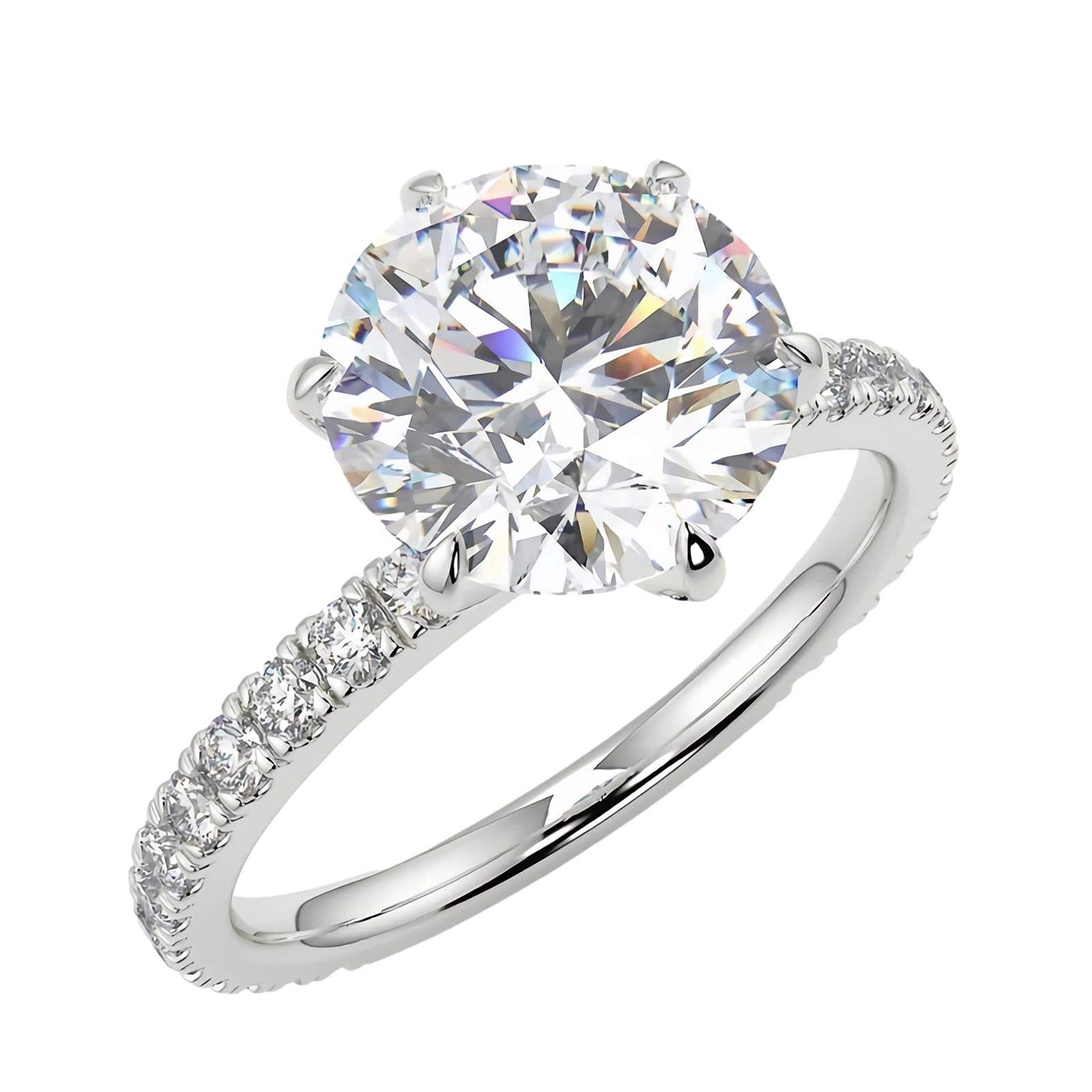
At 9.0mm across, this is the largest center stone here — and moissanite (silicon carbide) throws a rainbow fire that many owners say is more brilliant than a natural diamond.
At 9.0mm across, this center stone is larger than anything else in this guide, and the moissanite throws a distinctive rainbow sparkle that many owners describe as more brilliant than a natural diamond. The ring is available in 10K, 14K, or 18K gold in yellow, white, or rose — so you can customize the metal. One owner wrote that the ring is “stunning” and that she wears it as a travel engagement ring to avoid wearing the real thing, adding that “people think it’s the real thing. Take that, would-be muggers!” The 2.2mm band is thin but has been praised as strong by owners who wear it daily.
A few owners have a different view — one wrote that the stone appeared “dull” and “yellow” compared to the side stones, and another described it as looking like “cheap CZ.” The high six-prong setting snags on clothing and hair easily, which is note if you plan to wear it every day. This ring has only a small sample of reviews (15 total), so the picture is less settled than the multi-hundred-review picks above. If the moissanite stone is a good one, you get world-class sparkle at a fraction of a diamond’s price. But the quality variation between individual stones is a real variable.
Moissanite brilliance: An enormous, D-color moissanite with customizable gold options that delivers a jaw-dropping visual impact — but the small review sample and reports of stone inconsistency mean it is a bit of a lottery.
This ring is for you if you want the biggest possible, most brilliant stone your budget can buy and you are comfortable with the more rainbow-like sparkle of moissanite versus a diamond’s white flash. But if you need a proven track record — with only 15 ratings, the long-term durability data on this specific ring is thin, and the reviews are split on stone quality.
6. Houston Diamond District Lab Grown Diamond Solitaire 6 Prong (IGI Certified)
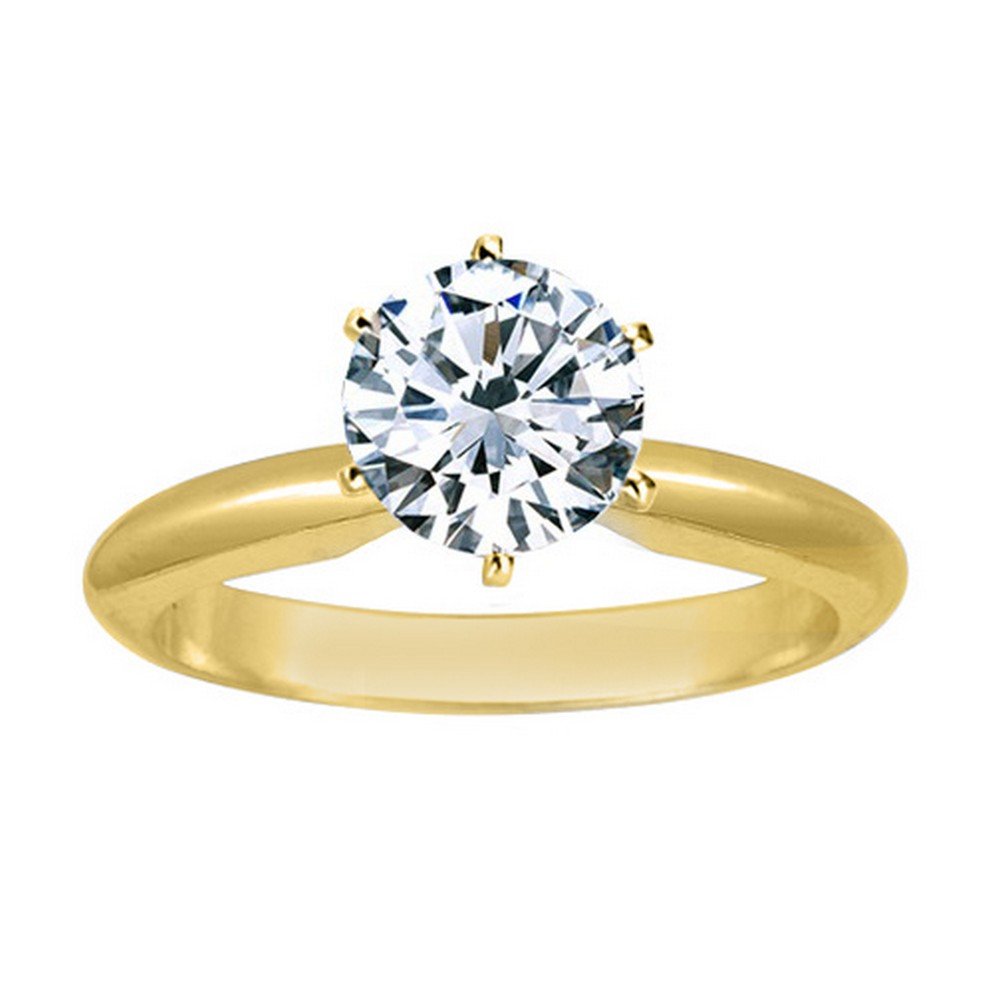
The IGI-certified (International Gemological Institute — another top grading body) lab diamond with E-F color and VS2-SI1 clarity — excellent grades by any jewelry counter standard.
This is the closest thing to a “forever ring” in this list. The diamond is lab-grown (chemically and optically identical to a mined diamond, just without the environmental cost) and comes with an IGI certificate confirming E-F color and VS2-SI1 clarity (VS2 = very slightly included, SI1 = slightly included — very tiny inclusions not visible to the naked eye). Owners say the stone “sparkles like a real diamond” (because it is one), and the 14K white gold band is described as well-made. One repeat buyer noted they have purchased three rings from this company, which is a trust signal. Another wrote that the “perfect combination of diamond and setting” made the proposal a success.
The band could be wider — a few owners mention it is on the slender side but has not bent with wear. The center stone is available in 1 to 5 carats, so you can scale up the size to your budget. This ring costs more than any other on this list, but you are paying for what is essentially a retail-level lab diamond with full certification, not a simulated stone. That trade-off — a smaller, certified real diamond versus a larger, flashier moissanite like the NAOKETEN 3CT — is the core decision this pick forces.
Lab grown quality: A genuine IGI-certified lab diamond with excellent color and clarity grades, set in solid 14K gold — the pick for anyone who values certification and stone quality above all else.
This ring is for you if you want a real, certified lab-grown diamond that will pass any jeweler’s inspection and has a paper trail — it is for buyers who care about the 4 Cs (cut, color, clarity, carat). But if a larger stone is your priority over certification, the moissanite options above give you more carat-equivalent visual impact for less money.
Understanding the Specs
Center Stone Diameter (mm) vs Carat Equivalent
The diameter of the center stone (measured in millimeters across the top) is the single best predictor of how large the ring looks on the finger. A 6.5mm stone roughly equals 1.0 carat, an 8.0mm stone equals 2.0 carats, and a 9.0mm stone equals 3.0 carats. Moissanite and cubic zirconia are less dense than diamond, so the same carat weight produces a slightly larger stone — an 8.0mm moissanite faces up bigger than an 8.0mm diamond would.
Band Width and Bottom Thickness
The bottom width (the part of the band under the stone) determines how much the ring can resist bending during everyday wear. A bottom width of 2.2mm or more is considered safe for daily use; anything below that (ultra-slender bands around 1.5mm) risks warping. The overall band width (measured across the top near the stone) affects how the ring looks proportionally next to the center stone — larger stones look better on wider bands.
Prong Height and Wearability
The height of the six prongs (measured from your finger to the top of the stone) controls both sparkle and snagging. A 7.3mm to 7.5mm height is the common balance — enough clearance for light to hit the stone from all sides, but low enough that the ring does not catch on knitwear or hair constantly. A higher setting (8mm+) gives more brilliance but needs careful daily wear.
FAQ
What is the difference between a simulated diamond and a real diamond?
How do I know my ring size before ordering?
Can I shower or swim while wearing a 6 prong engagement ring?
Will a simulated diamond or moissanite pass a diamond tester?
How often should I check the prongs for looseness?
What does the “Bottom Width” measurement mean for daily wear?
Is 10K gold or 14K gold better for an engagement ring?
Can I resize a 6 prong engagement ring later?
What is the difference between D color, E color, and F color for diamonds?
Should I choose a 6 prong or 4 prong setting?
Final Thoughts: The Verdict
For most buyers, the 6 prong round engagement ring winner is the Houston Diamond District Solitaire because it delivers a GIA-certified natural diamond in a classic 14K white gold six prong setting at a price that beats retail jewelry stores by a wide margin. If you want the biggest, most brilliant center stone your finger has ever seen, grab the Pure 14K 2.0 CT Simulated Diamond. And for a certified lab diamond that will make any jeweler nod with approval, the Houston Diamond District Lab Grown is the one to reach for.
How We Picked
We do not accept paid placement. Every pick is matched to a real buyer and a real use-case; we do not hands-on test units.
Sources & Methodology
Specifications: manufacturer listings and product documentation. Review insights: verified customer reviews, as of July 2026. Pricing: not shown on this page (it changes often); check the current price via the retailer link.
As an Amazon Associate, Gadgets Feed earns from qualifying purchases. This does not affect which products we feature.