
Our readers keep the lights on and my morning glass full of iced black tea. As an Amazon Associate, I earn from qualifying purchases.
Specs are compiled from manufacturer listings and verified buyer reviews and can change over time — please confirm the key details on the product page before buying.
You need a drop a standing tree safely and efficiently. That depends on one tool and how well it fits you. You want an edge that bites deep, a handle that transfers all your force, and a head weight you can control for hours. These nine axes stay sharp and swing true in the woods, with real owner feedback backing every recommendation here.
I’m Min — the founder and writer behind Gadgets Feed. This guide is built by comparing the manufacturers’ published specifications and the patterns across verified customer reviews, so you get each pick’s real strengths and trade-offs instead of marketing spin.
Finding the right axe for felling trees starts with understanding the steel, the handle, and the geometry that makes a real difference swing after swing.
Our Picks at a Glance

How To Choose The Best Axe For Felling Trees
Picking the right tree-felling axe is not complicated, but a few core specs separate a tool that works from one that frustrates. Focus on the head weight, the handle material and length, the steel quality, and the head pattern.
Head Weight and Handle Length: The Power Equation
A heavier head delivers more momentum, but only if you can swing it accurately for an hour. Most full-size felling axes land between 3.5 and 4.5 pounds. The handle length usually runs from 28 to 36 inches — longer handles amplify swing speed but require more clearance around the tree. Match the weight and length to your own strength and the size of timber you typically cut.
Steel: Carbon Content and Edge Retention
High carbon steel (around C50 grade, heat treated to 53-56 HRC) holds a sharp edge through many impacts. Cheaper steel may dull quickly or chip on knots. A hand-forged or drop-forged head generally has a more consistent grain structure and better durability than a cast alternative.
Handle: Hickory Grain and Fit
American hickory is the standard for a reason — it absorbs shock and resists splitting. Look for straight, vertical grain running the full length of the handle. A double-wedged or epoxy-secured head fit prevents the head from loosening over time.
Head Pattern: American, Jersey, Dayton, or German
Each pattern has a different cheek geometry and bit profile. American and Dayton patterns are versatile all-rounders. Jersey patterns have pronounced lugs for more secure handle attachment. German patterns like the Rheinland have a slim, wide bit that excels at deep cutting on standing timber.
Quick Comparison
| Model | Best For | Head Weight | Handle Length | Steel Type | Amazon |
|---|---|---|---|---|---|
| Fiskars A-Series 28″★ Best Overall | All-day swing comfort | 3.5 lb | 28″ | Alloy Steel | Amazon |
| Council Tool Dayton 36″Pro Heritage | Traditional USA craftsmanship | 3.5 lb | 36″ | High Carbon Steel | Amazon |
| Draper Yankee PatternBudget Champion | Budget-friendly British classic | 2.5 lb (1.1 kg) | 28.5″ | Forged Carbon Steel | Amazon |
| Council Tool Jersey 36″ | Secure head-to-handle bond | 3.5 lb | 36″ | Forged Tool Steel | Amazon |
| THRWCLUB Racing Axe | Timbersports and heavy splitting | 3.9 lb | 27.8″ | High Carbon Steel | Amazon |
| Helko Forester 31″ | Premium all-round fell & split | 3.5 lb | 31″ | C50 High Carbon Steel | Amazon |
| Helko Bavarian Woodworker 31″ | Deep-cutting German pattern | 3.5 lb | 31″ | C50 High Carbon Steel | Amazon |
| Helko Expedition 35″ | Heavy timber and big swings | 4.5 lb | 35″ | C50 High Carbon Steel | Amazon |
| Hultafors Qvarfot | Swedish heritage and 50-year guarantee | — | — | High Carbon Steel | Amazon |
In‑Depth Reviews
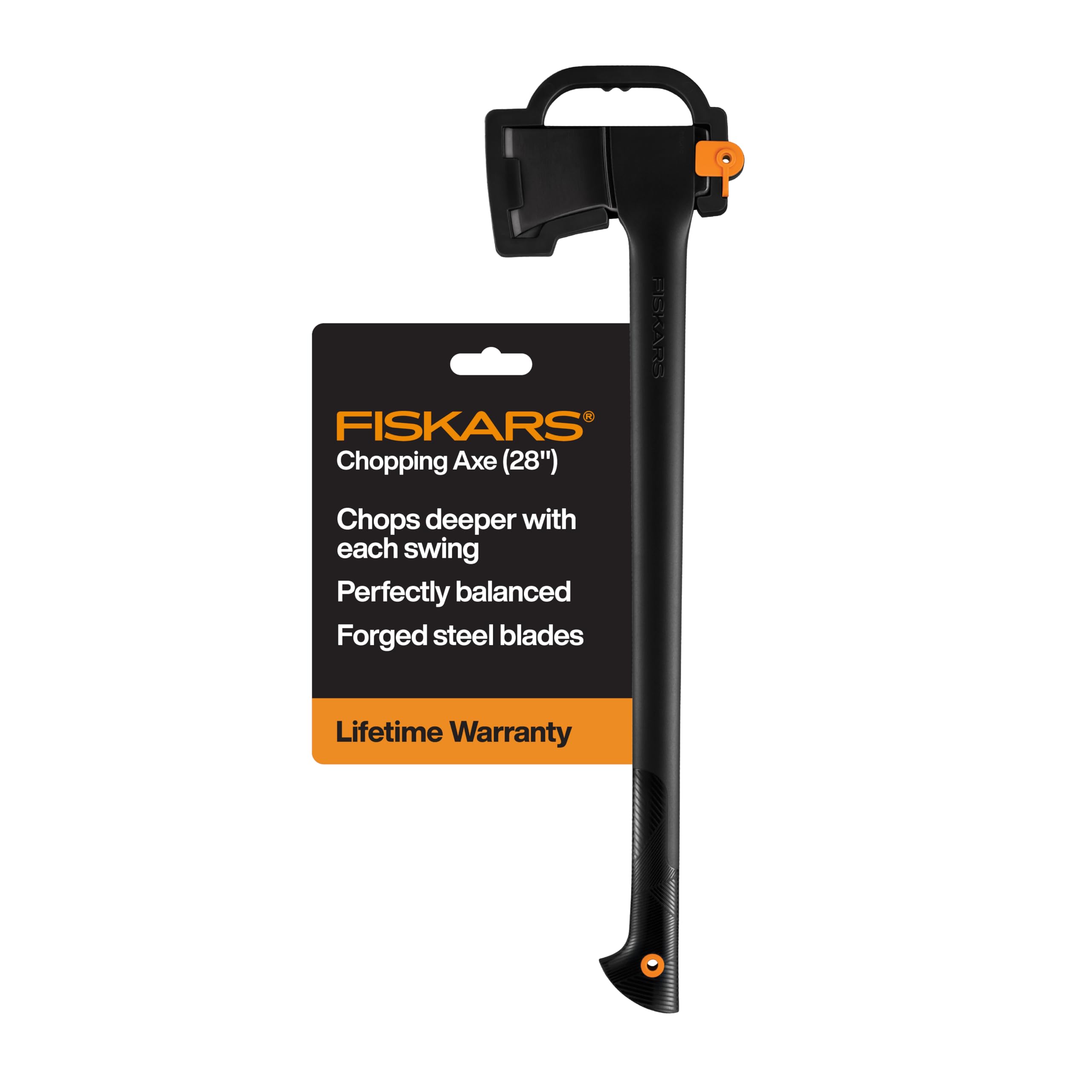
1. Fiskars A-Series Chopping Axe 28″
Our pick — over 4.5★ from 850+ verified ratings; the strongest balance of quality and price.
The lightweight feller that makes a full day in the woods feel like half a day.
Over a hundred shoppers praise the build quality here. The 3.5-pound head on a 28-inch handle hits a balance: heavy enough to bite deep into a standing trunk, but light enough that you are not exhausted after an hour of chopping. Buyers report it came “very sharp, making felling of trees simple and quick,” with a handle that “keeps the felt impact to a minimum which totally helps lower fatigue.”
The low-friction coating on the blade stops the axe from sticking in the cut. That means fewer wrenching pulls and a cleaner rhythm. At just 3.5 pounds total weight, this is the one to grab if you want to carry it in a pack or split kindling without a second tool. The lifetime warranty seals the deal for anyone who wants one axe and wants it to last.
What wins people over
- Ultra-sharp edge from the start — owners mention it stays that way through many swings.
- Low-friction coating prevents sticking in green or seasoned wood.
- Lightweight enough for backpacking, powerful enough for small to medium trees.
The honest trade-off
- The 28-inch handle gives less leverage than a full 36-inch felling axe for very large timber.
- Not designed for heavy splitting; it is primarily a chopping/felling tool.
Reach for it if: you want the best balance of sharpness, weight, and all-day swingability for clearing small to medium trees.
Look elsewhere if: you regularly fell massive old-growth timber where a longer handle and heavier head make a real power difference.
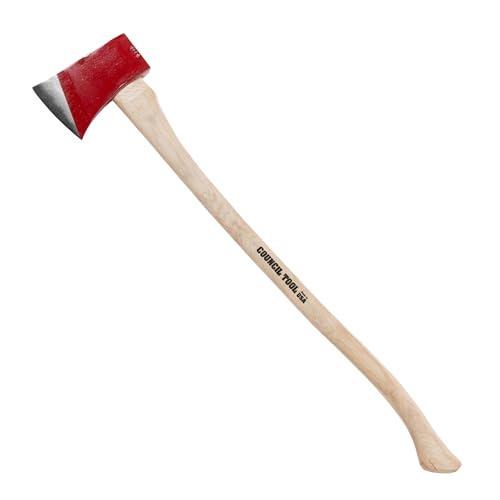
2. COUNCIL TOOL 3.5 lb Dayton Pattern Axe
American hickory, a hand-sharpened bit, and 3.5 pounds of pure Dayton tradition.
This is the axe for people who believe a tool should be made in the same country it is used in. The 3.5-pound Dayton head has a 4.75-inch cutting edge and a square poll, making it a solid general-purpose felling axe that also handles splitting in a pinch. The hand-sharpened tapered bit bites aggressively. Owners confirm the “quality steel takes a very sharp edge and holds it well after felling 5 trees.”
The 36-inch curved American hickory handle is kiln-dried to reduce shrinkage — a common failure point on cheaper axes. Council Tool pairs it with a heat-treated, red enamel-coated head that resists rust. At 36 inches long versus the Fiskars’ 28 inches, this handle gives you significantly more swing speed and leverage for big timber. The trade-off is a heavier overall feel and a bit more fatigue on a long day.
Craftsmanship that lasts: Customers note performance nearly identical to axes costing three times as much. The Dayton head design is not tune for pure splitting — stick to felling and chopping. The occasional negative mentions that the head finish can wear, but the steel itself is consistently praised.
Best for: the traditionalist who values USA-sourced materials, a long handle for leverage, and a head that sharpens fast on a stone.
Who might pass: backpackers or anyone who needs a lighter, shorter tool — this one is built for the woodshed, not the pack.
3. Draper 9946 FA/L Expert Yankee Pattern Felling Axe
A 2.5-pound British import that punches well above its entry-level price.
Draper’s Yankee Pattern axe brings forged carbon steel and a straight-grained hickory shaft to the table at a price that leaves room in the budget for a good file and a leather mask. The head weighs 1.1 kg (about 2.5 pounds), which feels light and maneuverable for smaller users or those who do not want to wrestle a heavy head all afternoon. One owner reports it “cuts sleepers like butter, good balance and weight,” and another notes the steel is “well heat-treated with pronounced hardness zone in the cutting edge.”
The dimensions sit at 28.5 inches long by 6.69 inches wide, putting it in the compact-to-medium range. It is not the axe for a full day of felling mature oaks, but for limbing, small tree work, and campsite prep it is a smart, value-conscious pick. The handle has a double ring-wedge system for secure head retention, a detail you rarely see at this price point.
The honest take: It may require a bit of filing from the start to reach peak sharpness, as one owner noted. But once dialed in, it is a “real workhorse” that holds its edge and does not break the bank.
Reach for this if: you want a lightweight, well-balanced felling axe for occasional use without spending a premium.
skip it if: you need a heavy hitter for large diameter trees — the 2.5-pound head lacks momentum for deep cuts in big timber.
4. COUNCIL TOOL 3.5 lb Jersey Pattern Axe
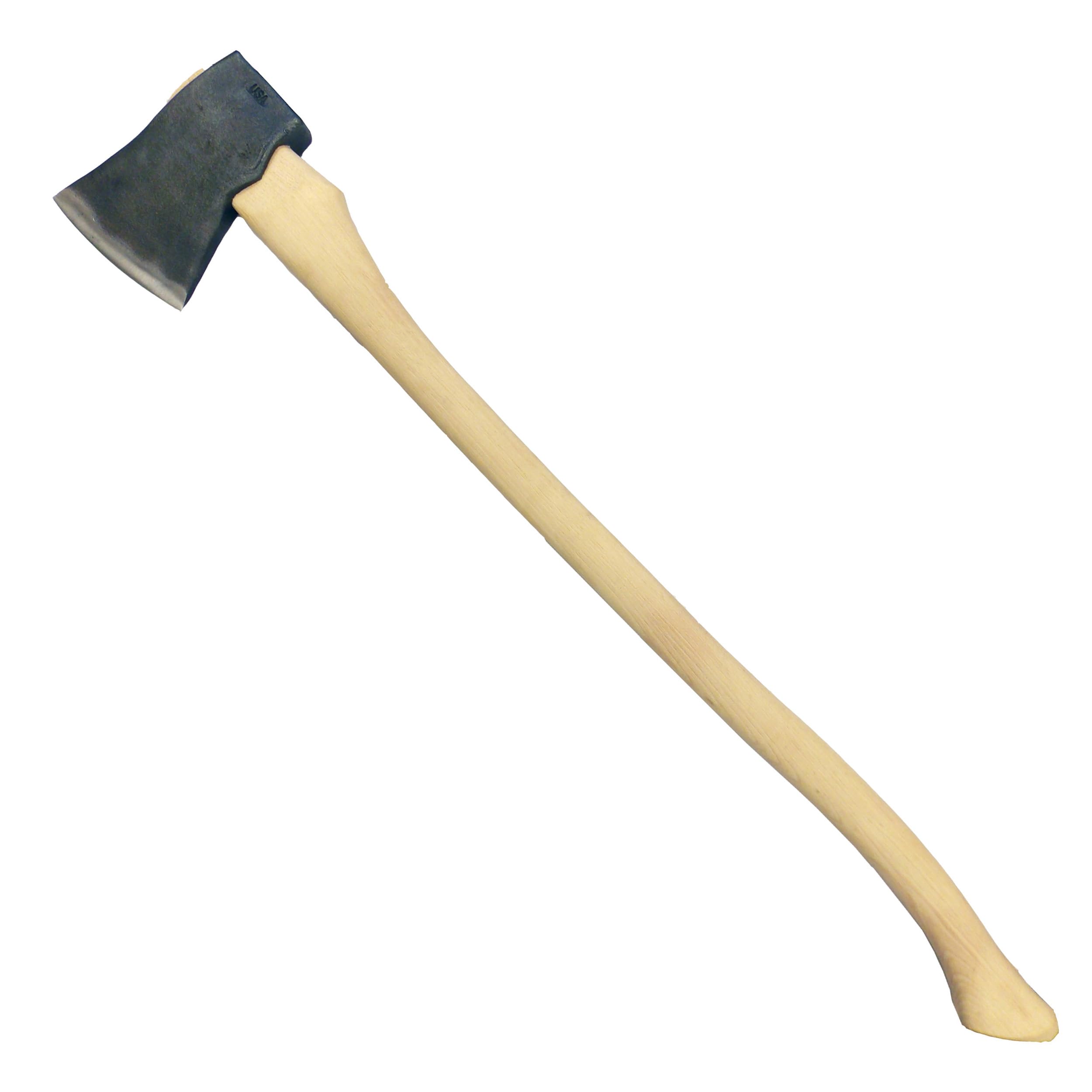
The Jersey pattern’s prominent lugs lock the head to the handle like a handshake that never loosens.
Council Tool’s Jersey pattern axe is designed for serious forest work. The 3.5-pound head has a 5-inch tapered bit and a square poll, all heat-treated to the company’s internal standards for maximum edge retention. The defining feature here is the Jersey lugs — those ears of metal at the eye of the head increase the contact surface with the handle, creating a bond that resists loosening even after hard use. Owners confirm it felled a 40-foot red oak and “it’s still sharp.”
The curved American hickory handle is dried below 10% moisture content and secured with a traditional double wedge system. At 36 inches, it provides the leverage needed for full-power swings. The quality and value for money are the most-praised aspects, but sharpness and durability get mixed feedback — some units arrive with a rough grind or a head that may need minor tuning. One owner noted the edge “lost edge quickly on seasoned ash” before they filed it to a better geometry.
Built for the long haul
- Jersey lugs create the most secure head-to-handle attachment in its class.
- 5-inch cutting edge gives a wide bite on each swing.
- Full 36-inch handle for maximum swing speed and power.
Minor fit and finish quirks
- Some heads arrive with a rough hollow grind that benefits from a quick file session.
- Handle grain is not always perfectly vertical — inspect yours before use.
Best for: the owner who wants a rock-solid American-made felling axe and is comfortable tuning the edge with a file.
Think twice if: you expect a perfectly ready-out-of-the-box edge — this one may need a little love before its first tree.
5. THRWCLUB Professional Wood Splitting Axe 27.8″
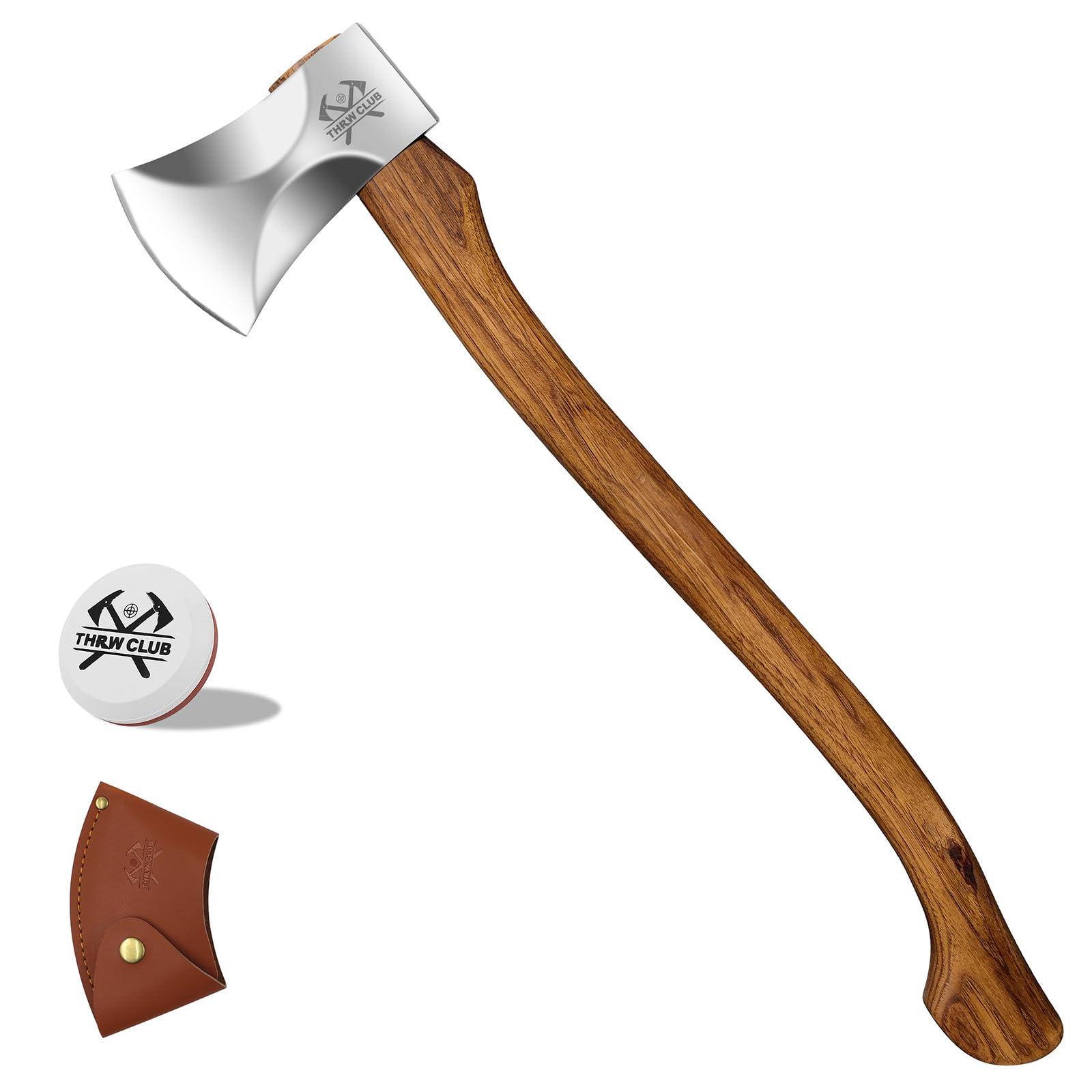
A 3.9-pound racing axe with a polished head that screams timbersport, but do not expect a perfect fit every time.
This one is built for speed and show. The THRWCLUB axe comes with a highly polished, hand-forged high carbon steel head that is designed for competition-style cutting. It includes a premium leather sheath, a dual-sided sharpening stone, and two extra handle inserts — a nice kit for the money. The total weight sits at 5.51 pounds with the 27.8-inch beech wood handle.
The catch is consistency. While some reviewers point out it “razor sharp out of box” and great for splitting a cord of wood, others note the head loosened after 15 minutes of use, and one found the head mounted upside down. The quality score is strong among those who got a good unit, but the mixed feedback on sharpness and fit means this is more of a gamble than the established brands above it. Owners also mention that the head rusts quickly without immediate oiling.
Bottom line: A visually striking axe that performs well when the stars align, but quality control is uneven. The included accessories add value, but the head fit and finish issues are real.
Who it is for: the buyer who wants a competition-style tool with extras and is willing to check and potentially remount the head.
pass on it if: you need a reliable, ready-to-work felling axe without tinkering — the Council Tool or Fiskars options are safer bets.
6. 1844 Helko Werk Germany Classic Forester Felling Axe

German hand-forged steel meets American hickory in a 3.5-pound felling axe that owners call outstanding.
Helko Werk’s Forester is the entry point to genuine German drop-forged quality. The head is made from C50 high carbon steel, individually forged by hand and heat treated to 53-56 HRC (a hardness scale for steel) for a tough, long-lasting edge. The 31-inch Grade A American hickory handle is sanded to 150 grit and finished with boiled linseed oil for a smooth, comfortable grip. Shoppers say it “cuts through logs like butter” and that the “edge stayed sharp with quick 600 grit buff” even after heavy use including swamping and driving wedges.
At 5.5 pounds total weight, it feels substantial but not unwieldy. The included full-grain leather sheath and 1 oz bottle of Axe Guard protective oil mean you are set up for proper maintenance from day one. The Forester fills the gap between budget axes and the ultra-premium Expedition — it has the head weight and geometry for serious felling without the intimidating heft of a 4.5-pound head.
The craftsmanship case
- Hand-forged C50 carbon steel holds a convex edge exceptionally well.
- 31-inch handle is a versatile length for most users (around 6 feet tall).
- Complete accessory package: sheath and protective oil included.
Real-world nuance
- Some owners find the handle slightly rough — 400 grit sanding and tung oil improve it.
- Heavier than expected compared to synthetic-handle options like the Fiskars.
Best for: the buyer who wants German hand-forged steel and American hickory in a do-it-all 3.5-pound package.
Pass on it if: you need a lighter, lower-maintenance tool — this one benefits from periodic oiling and care.
7. 1844 Helko Werk Germany Traditional Bavarian Woodworker Felling Axe

The Rheinland pattern’s slim, wide bit slices deeper than most American axes — a serious tool for serious timber.
This is the axe for the person who wants the absolute best cutting geometry for felling. The Bavarian Woodworker uses the Rheinland pattern — a traditional German forest axe with a 5.5-inch wide, slim bit that outperforms most American pattern axes on straight cutting work. The 3.5-pound head is hand-forged from C50 high carbon steel, and owners consistently praise the quality and the razor-sharp factory edge. One owner says it “came razor sharp from the factory” and “handles splitting tasks as well.”
The 31-inch Grade A hickory handle is sanded to 150 grit and pairs with a full-grain leather sheath. Durability gets mixed feedback — a few buyers report the head coming loose over time, though Helko Werk’s customer service is noted as responsive. The shallow cheeks and large bit make this an excellent choice for precision cuts and hewing (shaping wood with an axe), not just brute-force felling.
The word from owners: “Hand-forged axe bites deep, ideal for felling and hewing. Shallow cheeks enable precision cuts.” The quality is the most-praised aspect by a wide margin, but check the handle fit when it arrives — an occasional unit may need a wedge adjustment.
Reach for it if: cutting performance and heirloom-quality hand forging matter more than price.
Think twice if: you want a low-maintenance tool — the Bavarian Woodworker benefits from attentive care and occasional handle checks.
8. 1844 Helko Werk Germany Classic Expedition Felling Axe

A 4.5-pound German workhorse with a 35-inch handle for the heaviest felling jobs you will tackle.
When the trees are big and the daylight is short, the Expedition is the tool that steps up. The 4.5-pound head on a 35-inch handle delivers serious striking power, and owners say it “chops hickory well” and “holds edge” through heavy use. The C50 high carbon steel is hand-forged in Germany, and the double wedge system keeps the head locked to the handle. One owner who bought it for splitting straight-grain ash reports the polished head “frees easily” from the cut, reducing friction.
The catch is that this is not a beginner’s axe. At 6.5 pounds total weight, it demands stamina and proper technique. The lacquer coating on the head is tough to remove, and some owners find the handle unfinished on arrival. It is “great for pine, oak, cedar” but “high maintenance” — the head may loosen after a season if not wedged properly. This is a specialist’s tool for those who know they need the extra mass.
The power argument
- 4.5-pound head delivers class-leading momentum for large-diameter timber.
- 35-inch handle gives tall users a natural, powerful swing arc.
- Double wedge system prevents head loosening under heavy impact.
What to know before buying
- Too heavy for beginners or casual use — requires strength and control.
- Lacquer coating and unfinished handle may need initial work before use.
- Edge profile may benefit from a quick pass with a file.
Best for: experienced woodcutters who need maximum mass and leverage for felling large, dense trees.
Look elsewhere if: you are new to felling or want a versatile tool for mixed tasks — the Forester or Fiskars will serve you better.
9. Hultafors / Hults Bruk Qvarfot Felling Axe

A Swedish icon with a 50-year guarantee and a fit and finish that owners call near-perfect.
Hultafors (formerly Hults Bruk) has been making axes in Sweden for centuries, and the Qvarfot is a distillation of that heritage. It arrived treated with linseed oil — no plastic coating to scrape off — and owners say it is “razor sharp and polished” and “the fit could not be any better.” One long-time owner who has used axes for over 30 years calls it “one of the finest axes you’ll ever own” and notes it has “outperformed all others.” The 50-year guarantee is a strong vote of confidence.
The steel is high carbon, though the exact alloy is not specified in the listing. Some owners note that the steel behind the edge is thick, making it better suited for felling than for splitting — one buyer mentions that thinning the edge would “make it a monster” for cutting. The handle is wood, and the overall style is traditional. At this price point, you are paying for Swedish craftsmanship and a tool that, with proper care, may outlast you.
The honest appraisal: Fit and finish are exceptional from the start. The edge geometry is conservative — great for durability, but a file can open up its cutting performance significantly. Owners who tune it are delighted.
Best for: the collector or serious user who values Swedish tradition, a 50-year guarantee, and a tool that arrives ready to work.
it’s not for you if: you want the absolute thinnest, fastest-cutting edge without modification — the Helko Bavarian Woodworker has a more aggressive geometry from the factory.
Understanding the Specs
Head Weight and Balance
The head weight is the single most important number for felling. A 3.5-pound head is the balance for most users — heavy enough to carry momentum through a cut, light enough to control for a full day. A 4.5-pound head like the Helko Expedition hits harder but requires real arm strength and proper technique. Lighter 2.5-pound heads are easier to maneuver for limbing and small trees. The balance point between the head and handle determines how the axe feels in a swing.
Steel: Carbon Content and Heat Treatment
High carbon steel (C50 grade, heat treated to 53-56 HRC) is the standard for premium felling axes. This hardness range allows the edge to hold sharpness through multiple trees while remaining tough enough to resist chipping on knots. Lower carbon steel may dull faster. Hand-forged or drop-forged heads have a denser grain structure than cast heads, which translates to better edge retention. A convex grind (like on the Helko axes) creates a stronger edge than a flat grind.
FAQ
What is the difference between a felling axe and a splitting axe?
Is a 3.5-pound head enough for large trees?
How long should a felling axe handle be?
What is the best steel for a felling axe?
Should I buy a wooden or synthetic handle?
How do I maintain a felling axe?
Can I use a felling axe for splitting firewood?
What is a convex edge grind?
How do I know if the handle grain is good?
Is a leather sheath necessary?
Final Thoughts: The Verdict
If you want one dependable pick, the axe for felling trees worth reaching for is the Fiskars A-Series because it combines a dangerously sharp edge, a fatigue-fighting low-friction coating, and a 3.5-pound weight that disappears in your hands over a long day. If you want hand-forged German steel and a heirloom-quality feel, the Helko Forester delivers stunning craftsmanship with a convex edge