
Our readers keep the lights on and my morning glass full of iced black tea. As an Amazon Associate, I earn from qualifying purchases.
Specs are compiled from manufacturer listings and verified buyer reviews and can change over time — please confirm the key details on the product page before buying.
If you get a sulfur or rotten egg smell from your hot water, the culprit is almost always a depleted anode rod inside the tank. That rod is the only thing standing between your water heater and rust, but in well water the rod itself can react with bacteria and create that nasty odor. Replacing it with the right material is the fix.
I’m Min — the founder and writer behind Gadgets Feed. This guide is built by comparing the manufacturers’ published specifications and the patterns across verified customer reviews, so you get each pick’s real strengths and trade-offs instead of marketing spin.
Below you will find the best anode rod for well water, broken down by material type and ease of installation so you can stop the smell and protect your tank.
Our Picks at a Glance


How To Choose The Best Anode Rod For Well Water
To stop rust and extend your water heater’s life, you need an anode rod made of the right material for your water chemistry, in the right length (most are 42 to 44 inches), and in either a flexible or solid design depending on your ceiling clearance above the tank.
Material: Magnesium vs. Aluminum-Zinc vs. Powered
Magnesium rods provide the strongest electrochemical protection for your tank, but they can react with sulfur bacteria common in well water and create a rotten egg smell. Aluminum-zinc rods are a popular alternative that reduces that odor for many households. For the most stubborn sulfur problems, a powered anode rod uses a low-voltage electric current to stop corrosion without any sacrificial metal — meaning no smell-producing reaction at all.
Length and Flexibility
If your water heater sits in a basement or closet with low overhead clearance, a flexible rod (one that bends at hinged segments) lets you snake it into the tank without removing the whole heater. Solid rods need several feet of clearance above the tank to install. Most standard rods are 42 to 44 inches long.
Fit and Thread Size
Nearly every residential water heater in the US uses a standard 3/4-inch NPT thread for the anode rod port. The hex head on the rod is typically 1-1/16 inches, so a standard socket or wrench will work. Always double-check your tank’s height before buying to make sure the rod is long enough to reach the bottom.
Quick Comparison
| Model | Best For | Material | Length | Flexible | Amazon |
|---|---|---|---|---|---|
| Camco Aluminum Anode Rod★ Best Overall | Best Overall | Aluminum | 42 inches | No | Amazon |
| Eau 44″ Flexible Magnesium KitPremium Pick | Premium Pick | Magnesium | 44 inches | Yes | Amazon |
| 44″ Flexible Magnesium Anode RodBest Value Kit | Best Value Kit | Magnesium | 44 inches | Yes | Amazon |
| Kelaro Aluminum Zinc Rod | Odor Fighter | Aluminum-Zinc | 44 inches | Yes | Amazon |
| Eau Aluminum Zinc Rod Kit | Value Odor Fighter | Aluminum-Zinc | 44 inches | Yes | Amazon |
| Podoy 29″ Magnesium Rod | Compact Tank | Magnesium | 29 inches | No | Amazon |
| Ozek 44″ Magnesium Rod | Flexible Classic | Magnesium | 44 inches | Yes | Amazon |
| VATTCEEL 42″ Magnesium Rod | DIY Starter Kit | Magnesium | 42 inches | Yes | Amazon |
| HertzEagle Powered Anode Rod | Top Performer | Titanium | Universal | N/A | Amazon |
In‑Depth Reviews
1. Camco Aluminum Anode Rod for Hot Water Heater – 42-Inch
Our pick — over 4.5★ from 800+ verified ratings; the strongest balance of quality and price.
The 42-inch aluminum rod that well-water owners trust most — backed by over 800 ratings.
This Camco rod is the standard 42-inch design with a 3/4-inch NPT thread that fits nearly every residential water heater. It is built from high-quality aluminum with a plated hex bushing for long-lasting performance. The aluminum material makes it a smart pick for well water because it is less likely to cause the sulfur smell that magnesium rods can trigger. The crowd favorite — 4.7 stars across 800+ owners — speaks volumes.
The thing owners praise most is how straightforward the install is. As one buyer put it, the nut comes off with just one hand. A buyer who replaced an 8-year-old rod said this one “fit perfectly” and was easy to install. Another owner reported swapping it after 4 years and felt it did its job well. At 42 inches compared to some flexible 44-inch models, but that is still enough to cover most standard tanks without modification.
The one trade-off is the solid rod design — you need at least 42 inches of clearance above your tank to drop it in. For tight basements or narrow utility closets, you will want to look at a flexible option. Also, the odor reduction feedback is mixed; some buyers still experienced smell depending on their specific water chemistry.
What owners love
- Installation is easy — the single most praised feature among owners
- Value for money is a strong point at a budget-friendly price for a solid rod
- Quality aluminum construction stands up well to well water conditions
The fit note
- Solid rod requires overhead clearance for installation
- Odor reduction results are mixed depending on water chemistry
Reach for this if: you have good ceiling clearance and want the most trusted, straightforward aluminum replacement for well water.
Look elsewhere if: your water heater is in a tight space or you need a flexible rod to snake in.
2. Eau 44 Inch Flexible Magnesium Water Heater Anode Rod with Install Kit
The 44-inch flexible design that solves low-clearance problems and comes with everything you need.
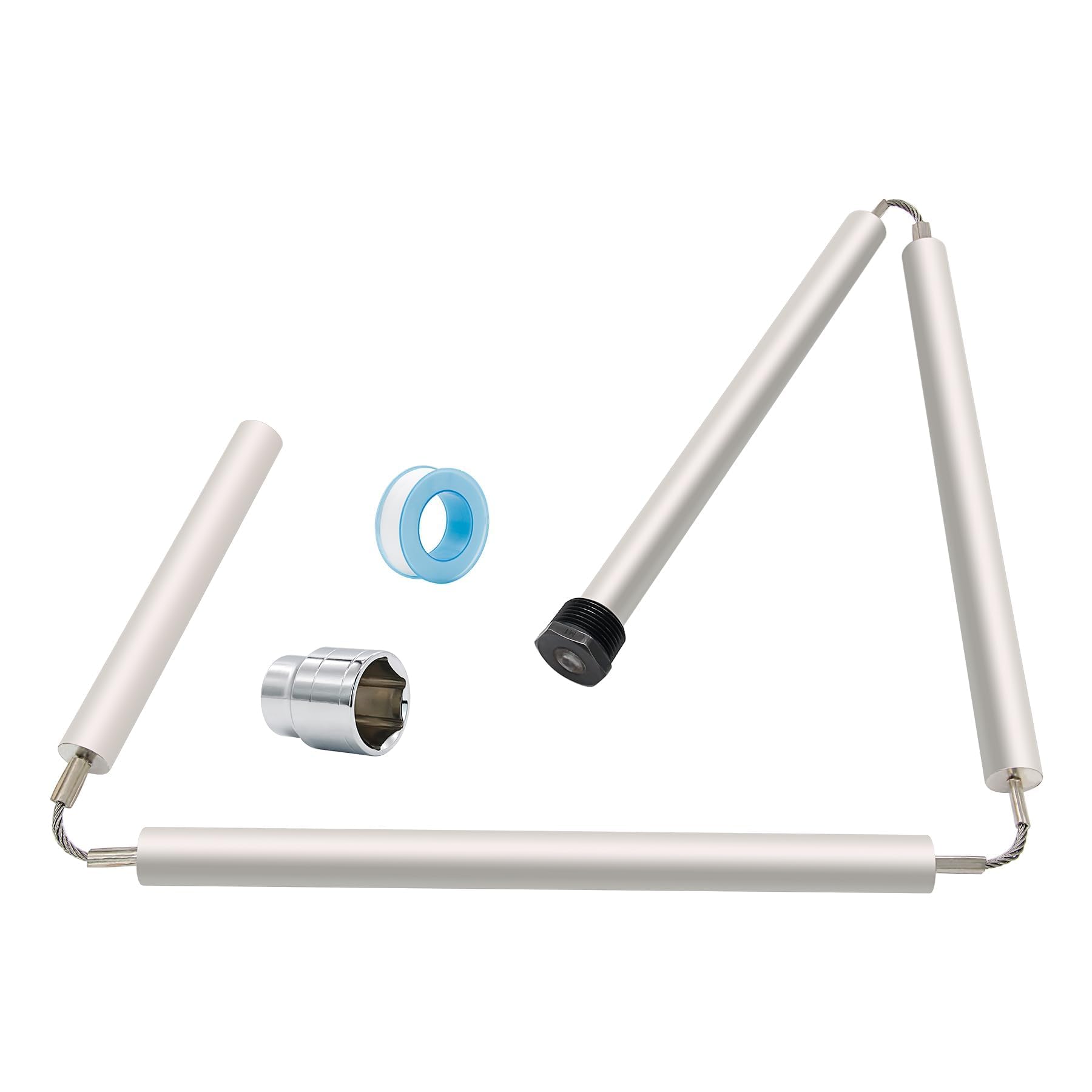
This Eau kit is built for the installer who has limited overhead room. The rod is segmented into four hinged parts, each less than 12 inches, which lets you feed it into the tank even in tight spaces. The kit includes Teflon sealing tape and a 27mm chrome-finished socket — so you do not have to buy extra tools. A buyer who replaced a rod in a 3-year-old A.O. Smith water heater confirmed the articulated rod was easy to install after removing the old one with an impact wrench.
Being magnesium, this rod offers higher electrochemical activity than aluminum, which some say makes it a strong choice for well water that does not already have a severe sulfur smell. Owners repeatedly note the included socket is a thoughtful addition. One review emphasized that the screw-in part is heavily painted, so checking for electrical grounding between the cap and tank with a multimeter is smart before wrapping up.
The catch is that magnesium can trigger the rotten egg smell in certain well water conditions, and the included Teflon tape is on the thin side — several buyers swapped it for their own quality tape. Durability opinions are split, with some owners getting years of service while others found the rod wore faster than expected.
The strong point: The flexible 44-inch length makes this kit a lifesaver for any tank that sits under a low ceiling.
One honest note: The thin included tape and mixed durability reports mean you may want to buy your own thread tape and inspect the rod yearly.
Best suited for: anyone with a tight installation space who wants a complete kit and the premium protection of a magnesium rod.
Think twice if: you already have a strong sulfur smell — magnesium can make it worse.
3. 44″ Flexible Magnesium Anode Rod Replacement Kit
Nearly 500 ratings and a perfect 4.7-star average for a fully loaded flexible magnesium kit.
This kit matches the Eau rod segment-for-segment at a lower price point. The 44-inch rod hinges into four sections under 12 inches each, uses a standard 3/4-inch NPT thread and requires a 1-1/16 inch socket — which is included. The package also comes with Teflon tape, so you are ready to install right from the start. Owners of Rheem 50-gallon gas water heaters specifically report a perfect fit, and the smell disappears completely after installation, according to several buyers.
Buyers praise this flexible rod for its included six-sided socket (a 12-sided socket can strip the nut, one experienced DIYer warned). One owner who replaced a rod that was “completely bare wire” in a room with low headroom called it “the perfect fit.” Another buyer noted that straightening the rod as you push it in makes screwing in at the top easier.
The main downside reported is the included Teflon tape — several owners called it thin and chose to use their own. A few also noted the socket, while functional, does not feel as heavy-duty as a dedicated impact socket. If you have an impact wrench, use your own socket for the old rod removal, then swap to the included one for the final install.
What works well
- Complete kit with socket and tape saves a trip to the hardware store
- Flexible design solves tight-space installation perfectly
- Odor reduction is a standout — the smell is “completely gone” after install
Small compromises
- Included Teflon tape is very thin; plan to use your own
- Socket is adequate but not as sturdy as a pro-grade impact socket
Grab this if: you want a flexible magnesium rod, a full install kit, and strong odor control at an entry-level price.
skip it if: you prefer the specific aluminum-zinc chemistry for fighting sulfur smell.
4. Aluminum Zinc Water Heater Anode Rod (44-inch Flexible) by Kelaro

The flexible aluminum-zinc rod built specifically to remove the rotten egg smell from well water.
Kelaro designed this rod with one thing in mind: stopping the sulfur odor that plagues well water users. The aluminum-zinc alloy attracts bacteria away from the tank rather than letting it attack the metal. The 44-inch flexible rod is segmented to fit through tight spaces, requiring just over 12 inches of clearance to install — a major advantage if your water heater is tucked into a cramped closet. One buyer on well water reported the sulfur smell “would get pretty bad” until they swapped to this rod, and now the smell is gone.
The rod fits most major brands including AO Smith, Rheem, Kenmore, GE, Reliance, and Richmond. A common tip from owners: use an impact wrench for removal of the old rod, and go slowly when threading the new one in to avoid cross-threading. A separate review noted pairing this rod with 16 oz of hydrogen peroxide in a 40-gallon tank can help clear persistent odor. Replacement every 2-3 years is the recommended schedule.
The honest picture is that odor removal results are what sellers call mixed — meaning it works brilliantly for some and less so for others depending on water chemistry. It is not a guaranteed fix for every sulfur problem, though the positive experiences strongly outweigh the neutral ones. Also, this rod does not come with a socket or Teflon tape in the box, so you will need a 1-1/16 inch deep socket and your own thread sealant.
The biggest draw: The aluminum-zinc formulation is purpose-built for sulfur odor control, and many well water owners call it a complete fix.
One reality check: Odor results vary by water chemistry, and you will need to supply your own socket and tape for installation.
Reach for this if: you have a rotten egg smell in your hot water and want the best shot at eliminating it without switching to a powered rod.
Look elsewhere if: your odor is extremely persistent — you may need a powered anode rod instead.
5. 44″ Flexible Aluminum Zinc Anode Rod for Rotten Egg Smell
An aluminum-zinc kit that includes the socket and tape, designed for stubborn sulfur issues.
Very similar to the Kelaro in material but with a more complete package, this Eau rod uses a specially formulated aluminum-zinc alloy that the maker calls their “ROTTEN EGG technology.” The 44-inch flexible rod hinges into four parts for tight-space installation, and the kit includes the 27mm chrome-finished socket and Teflon tape. One owner described it as the cheapest kit they found and praised how it “fixed sulfur smell and black water” that their old magnesium rod had caused.
Owners praise the included socket for installation, though a few advise using a 1/2-inch drive breaker bar for removal since the old rod can be torqued in very tight. A buyer who replaced a magnesium rod that was half gone after 4 years switched to this zinc-aluminum version specifically to help with a slight odor on the hot side. The segmented design also lets you cut the rod shorter with a hacksaw if your tank is shallow.
As with the Kelaro, odor reduction results are mixed. Some buyers report the smell vanished in days; others found the improvement was partial. A note from one experienced installer: use hand tools only for threading the new rod in, as an impact tool can damage the threads. The included tape is passable but not premium.
Strong points
- Complete kit with socket and tape at a competitive price
- Aluminum-zinc alloy is effective for many sulfur odor cases
- Flexible design fits tight spaces and can be cut shorter
Points to know
- Odor results vary — not a universal fix for all well water chemistry
- Threads can be tight; hand-tighten only to avoid damage
Best for: homeowners who want the aluminum-zinc chemistry in a full kit so they do not have to buy extra tools.
Not for: tanks with extremely low clearance where the 44-inch length is still too long, or for water chemistry that does not respond to the alloy.
6. Podoy 29″ Magnesium Anode Rod for Hot Water Heater
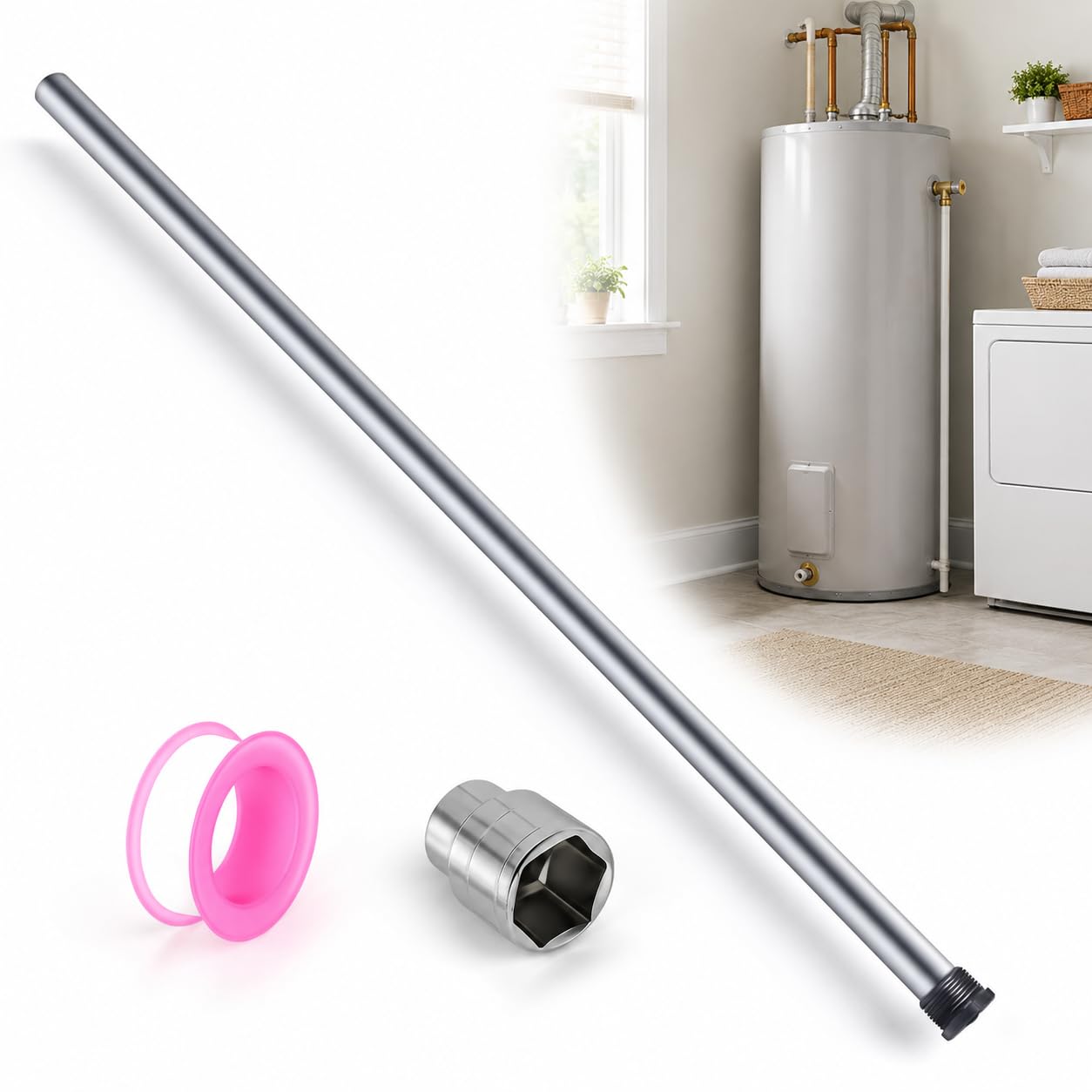
A shorter 29-inch magnesium rod for smaller tanks and tight utility closets.
Most anode rods are around 42-44 inches, but not every tank needs that reach. The Podoy 29-inch rod is designed for compact water heaters where a longer rod would bottom out or require cutting. It uses a standard 3/4-inch NPT thread and an 0.84-inch hex plug that fits standard wrenches. The rod is solid, but its shorter length naturally makes it easier to handle in spaces with limited overhead room.
Buyers with GE 30-gallon water heaters and A.O. Smith 50-gallon gas models report a perfect fit. The kit comes with a 27mm socket and Teflon tape, which several owners appreciated. One owner who replaced anodes that had been in the tank for over 12 years said the entire replacement took under 10 minutes. The solid magnesium construction provides strong corrosion protection, and the podoy maker claims it can reduce limescale buildup that slows heating efficiency.
The main concern among buyers is material authenticity — several owners received rods they felt were not actually magnesium as advertised, and the material aspect carries mixed feedback. The Teflon tape included is poor quality, so you will want your own. This rod is also not flexible, so the 29-inch length must fit your tank’s height exactly — the maker recommends your water heater casing be taller than 48 inches for this rod to work.
The standout feature: The shorter 29-inch length is perfect for smaller tanks where a 44-inch rod is overkill or physically impossible to install.
Honest heads-up: Material quality is mixed in reviews, and the included tape is not worth using.
Reach for this if: you have a compact 30- to 40-gallon water heater and need a shorter solid rod that screws in fast.
Look elsewhere if: you want a flexible rod for tight spaces or need guaranteed pure magnesium.
7. Ozek 44 Inch Magnesium Flexible Anode Rod for Hot Water Heater

A US-based brand offering a straightforward flexible magnesium rod for standard DIY replacement.
Ozek markets itself as a US business with an imported product, and the rod itself is a no-nonsense flexible magnesium design. The 44-inch segmented rod fits most major water heater brands including AO Smith, Sears, GE, Kenmore, State, Whirlpool, Reliance, Rheem, and Richmond — but the maker specifically notes it is not compatible with Bradford White units. The package includes PTFE sealing tape for installation.
What wins people over is the quality of the rod itself — buyers call it well-constructed and effective. One owner who replaced the anode in a 50-gallon gas water heater after 4 years found the old rod had only lost one lobe, suggesting the rod was doing its job. The flexible design is described as “definitely the best approach” for low-clearance heaters. A useful tip from the review pages: if the flexible sections hang up or cross-thread, bend them 180 degrees in the opposite direction before feeding them in.
The odor reduction feedback is mixed — some owners enjoy fresh water while others report the smell returns. The included Teflon tape also gets mixed reviews, with some finding it adequate and others replacing it. Ozek does not include the installation socket in this package, so you will need your own 1-1/16 inch socket or wrench.
What stands out
- Quality construction is consistently praised in reviews
- Flexible design is genuinely effective for low-clearance installations
- US-based customer support adds confidence
What to know
- No socket included in the package
- Odor reduction is not guaranteed for all water chemistries
- Not compatible with Bradford White water heaters
Best suited for: DIY homeowners who want a well-made flexible magnesium rod and already have their own socket tools.
Think twice if: you need a complete install kit, or you have a Bradford White tank.
8. VATTCEEL 42″ Flexible Magnesium Anode Rod for Hot Water Heater

A 42-inch magnesium rod kit with a clear height requirement to ensure you buy the right fit.
VATTCEEL is up-front about compatibility in a way that saves returns: it tells you that your water heater casing must be taller than 48 inches for this rod to work. The rod itself is 42 inches long and flexible, with a standard 3/4-inch NPT thread. The package includes one socket and two rolls of PTFE tape — a generous double supply compared to most kits. The 42-inch flexible shaft can be trimmed with a hacksaw if needed.
The kit fits over 95% of US residential water heaters including Rheem, A.O. Smith, GE Geospring, Richmond, Reliance, John Wood, Kenmore, Rinnai, RUUD, State, Whirlpool, U.S. Craftmaster, and Giant. Owners of 48-gallon tanks report a perfect length match. One buyer who replaced rods in two 48-gallon tanks confirmed the fit was identical to the factory originals. The smell reduction was noticeable — one owner said the odor “subsided” after changing to this rod, which means the new anode is working.
The honest trade-off is that some buyers found the rod too long for their specific setup, even with the warning — the size aspect earns mixed feedback. A few owners also mentioned the included socket is functional but not heavy-duty. If you have a tank that is borderline on height, measure carefully or choose a shorter rod.
The clearest feature: The upfront height requirement saves you the hassle of a wrong-size return.
One caveat: Some buyers still found the rod too long for their tank size despite the warning — measure your tank casing height.
Grab this if: you have a standard 48-gallon or larger tank and want a flexible magnesium rod with extra Teflon tape included.
pass on it if: your water heater is under 48 inches tall — go with the 29-inch Podoy instead.
9. HertzEagle Powered Anode Rod for Water Heater

The 4.8-star titanium powered rod that eliminates sulfur smell in 24 hours — no sacrificial metal needed.
This HertzEagle rod is a completely different approach. Instead of a sacrificial metal that corrodes away, it uses impressed current — a low-voltage electric charge — to stop corrosion. That means no metal is consumed, and more importantly, no chemical reaction with sulfur bacteria to produce the rotten egg smell. The maker claims it eliminates sulfur smell within 24 hours, and owners confirm it. One buyer described the transformation as “actual witchcraft” — after failed attempts with flushing and an aluminum-zinc rod, this unit killed the odor in a day.
The rod fits 40-89 gallon tanks and works with electric, gas, solar, hybrid, and geothermal water heaters. It is compatible with municipal and well water, plus water softeners and reverse osmosis systems. The only major brand it does not fit is Bradford White. Installation uses a 1-3/16 inch bolt (larger than the standard 1-1/16 inch), and the kit includes plumbers tape. A green LED confirms the unit is powered and working. The warranty is a standout: a 5-year base warranty with a 20-year extended warranty available.
The upfront price is higher than any sacrificial rod, but the trade-off is that it lasts over 20 years and uses just 10kWh per year in electricity. The hardest part of installation is removing the old rod — several owners needed a breaker bar and a 5-foot pipe to break the old one loose. Once the new unit is in, maintenance drops to zero because there is nothing to corrode.
The biggest wins
- Eliminates sulfur smell where sacrificial rods failed — a 24-hour fix for many
- Lasts over 20 years with no replacement needed
- 20-year warranty provides long-term confidence
What to consider
- Higher upfront cost than traditional anode rods
- Requires a nearby power outlet for the cord
- Uses a larger bolt size — your old socket may not fit
Reach for this if: you have persistent sulfur smell that no sacrificial rod has fixed, and you want a low-maintenance solution.
Look elsewhere if: your budget is tight, or you do not have a power outlet near your water heater.
Understanding the Specs
Magnesium vs. Aluminum-Zinc
Magnesium rods offer the highest electrochemical activity, meaning they protect your tank aggressively. But in well water with sulfur bacteria, that same activity can create hydrogen sulfide gas — the rotten egg smell. Aluminum-zinc rods are less reactive, so they often reduce or prevent that odor while still protecting the tank. For the worst cases, a powered anode rod uses a low-voltage current instead of a sacrificial metal, producing zero odor-causing reactions.
Flexible vs. Solid Rod
A solid rod requires overhead clearance equal to its full length — typically 42 to 44 inches. If your water heater is under a low ceiling or in a cramped closet, a flexible rod with hinged segments lets you tilt each section as you feed it in, needing only about 12 inches of clearance. Most flexible rods can also be cut shorter with a hacksaw to match smaller tanks.
FAQ
How often should I replace my anode rod in well water?
Will a magnesium anode rod make my well water smell like sulfur?
What size anode rod do I need for my water heater?
Can I install an anode rod myself?
What is the difference between a sacrificial and a powered anode rod?
Does a water softener affect my anode rod life?
Will an aluminum-zinc rod fix the rotten egg smell permanently?
Can I use a flexible anode rod in any water heater?
Final Thoughts: The Verdict
If you want one dependable pick, the anode rod for well water winner is the Camco Aluminum Anode Rod because it is the most trusted aluminum replacement with over 800 ratings and the easiest install. If you need odor control for sulfur problems, the Kelaro Aluminum Zinc Rod is a strong flexible option. And for the toughest well water smell that nothing else fixes, the HertzEagle Powered Anode Rod is the definitive solution with a 4.8-star average and a 20-year warranty.
How We Picked
We do not accept paid placement. Every pick is matched to a real buyer and a real use-case; we do not hands-on test units.
Sources & Methodology
Specifications: manufacturer listings and product documentation. Review insights: verified customer reviews, as of July 2026. Pricing: not shown on this page (it changes often); check the current price via the retailer link.
As an Amazon Associate, Gadgets Feed earns from qualifying purchases. This does not affect which products we feature.