
Our readers keep the lights on and my morning glass full of iced black tea. As an Amazon Associate, I earn from qualifying purchases.
Specs are compiled from manufacturer listings and verified buyer reviews and can change over time — please confirm the key details on the product page before buying.
That creeping dread when your phone hits 10% and you are nowhere near an outlet — it is the universal travel anxiety. A reliable battery cell phone charger removes that feeling entirely, turning a dead battery into a quick pit stop rather than a crisis. The right power bank keeps your phone alive through long flights, day hikes, commutes, and even multi-day camping trips, as long as you pick one that actually matches how fast your phone can charge and how much backup power you need.
I’m Min — the founder and writer behind Gadgets Feed. This guide is built by comparing the manufacturers’ published specifications and the patterns across verified customer reviews, so you get each pick’s real strengths and trade-offs instead of marketing spin.
The perfect battery cell phone charger for you balances charging speed, size, and capacity in a way that fits how you actually travel and use your phone every day.
Our Picks at a Glance
How To Choose The Best Battery Cell Phone Charger
Picking a power bank is more than just grabbing the one with the biggest number on it. You need to match three things: how much power you carry (capacity), how fast it refills your phone (charging speed), and whether it fits your daily routine or travel style.
Capacity (mAh) — How Many Full Charges You Get
Capacity is measured in milliampere-hours (mAh), which tells you the total energy the power bank holds. A 10,000mAh unit typically gives a modern smartphone about two full charges. If you only need a daily top-off for commuting, 10,000mAh is the balance. For multi-day camping or group trips, a 35,000mAh or 56,800mAh pack keeps multiple devices alive for days, but it will be heavier and larger.
Charging Speed (Wattage) — How Fast Your Phone Refills
The wattage (W) of a power bank determines how quickly it fills your phone. A standard 10W charger is slow but fine for overnight top-ups. A 22.5W or 30W fast charger can bring an iPhone from near-empty to 50% in about 30 minutes, which is a lifesaver when you are rushing between meetings. Just check that your phone supports the same fast-charging standard (USB-C Power Delivery or Qualcomm Quick Charge) to get those speeds.
Portability and Design — Built-in Cables vs. Separate Ports
Power banks with built-in cables save you from carrying extra cords, but if the cable breaks, you often lose the feature. Separate ports (USB-A and USB-C) let you use your own cables, which are easy to replace. Consider how often you forget a cable — if the answer is “every time,” a model with integrated leads might be your best bet.
Quick Comparison
| Model | Best For | Capacity | Charging Speed | Weight | Amazon |
|---|---|---|---|---|---|
| Anker Zolo Power Bank★ Best Overall | Everyday Carry & Speed | 10,000mAh | 30W | 212 g | Amazon |
| INIU 45W Portable ChargerTop Performer | Ultra-Compact Power | 10,000mAh | 45W | 160 g | Amazon |
| Orfeika Fast Charging Power BankAll-in-One Pick | All-in-One Convenience | 10,000mAh | 22.5W | — | Amazon |
| VEGER Portable Charger | Pocket-Sized Speed | 10,000mAh | 22.5W | 180 g | Amazon |
| charmast Built-in Cables | Multi-Device Charging | 10,000mAh | 22.5W | 240 g | Amazon |
| Miady 2-Pack Power Bank | Best Value Two-Pack | 2x 10,000mAh | 5V 2.4A | 230 g each | Amazon |
| Evopow 2 Pack Slim | Budget Slim Two-Pack | 2x 10,000mAh | Fast Charging | 170 g each | Amazon |
| SABANI 35000mAh | High-Capacity Travel | 35,000mAh | 22.5W | 335 g | Amazon |
| MaiVoz 56800mAh | Multi-Day Power Backup | 56,800mAh | 22.5W | 459.4 g | Amazon |
In‑Depth Reviews
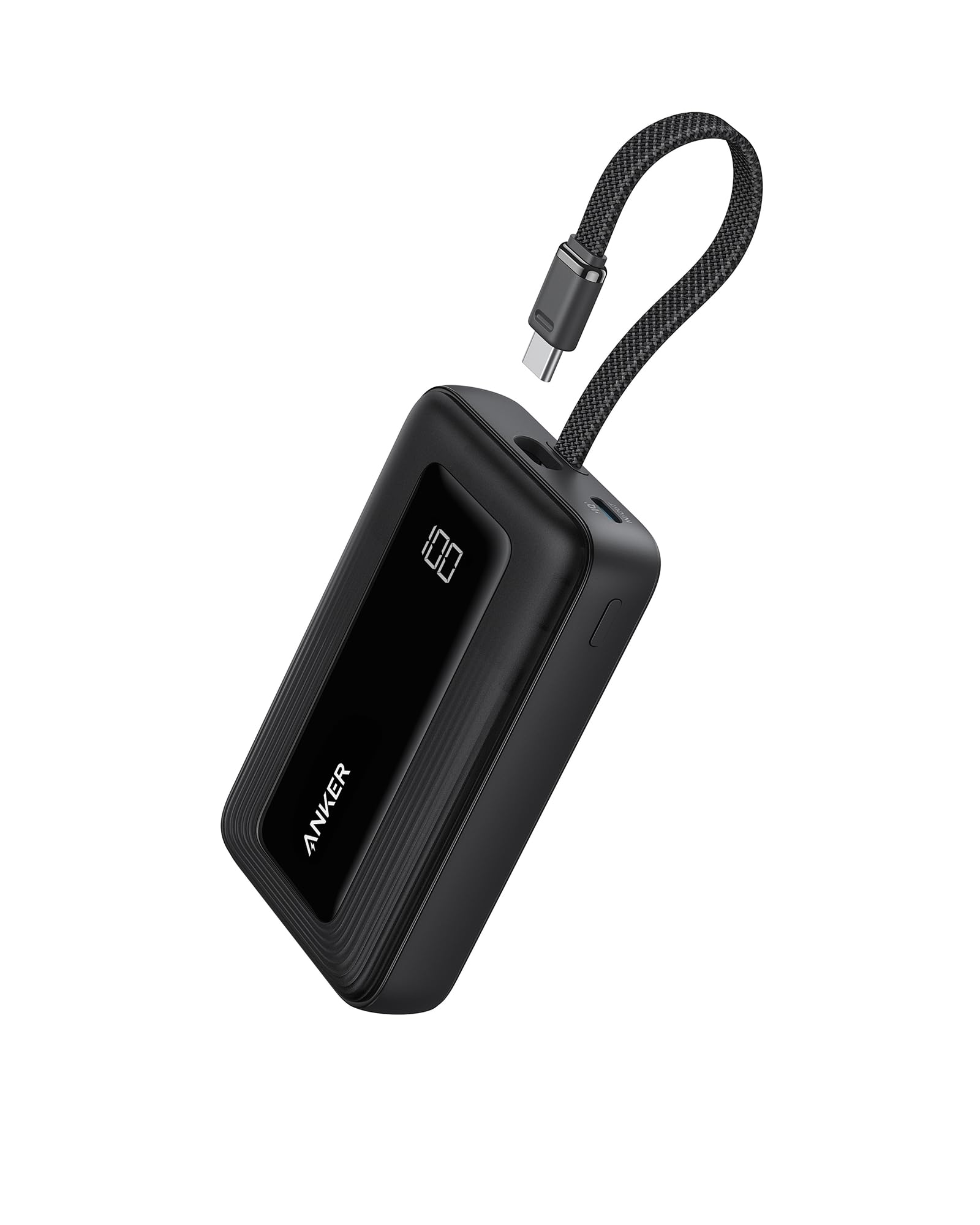
1. Anker Power Bank, 10,000mAh 30W
Our pick — over 4.5★ from 14,000+ verified ratings; the strongest balance of quality and price.
The pocket rocket that refuels an iPhone faster than most wall chargers.
This Anker Zolo bank delivers 30W of power, which means you can boost an iPhone 16 Pro Max to 50% in just 27 minutes — a speed once reserved for wall bricks. The 10,000mAh capacity gives you roughly two full charges for an iPhone 15. Buyers report the built-in USB-C cable is tested to endure over 10,000 bends, so it is ready for daily bag life.
The unit itself is compact at 4.32 x 2.58 x 0.98 inches, slipping easily into a small pocket. It also supports two-way fast charging (30W output, 20W input), meaning the power bank itself refuels fast too. The recurring feedback is that the integrated cable is convenient but cannot be replaced if it frays, so treat it with care.
Compared to the INIU below, the Anker is slightly heavier (223 g vs 160 g) but holds a higher output wattage for its 10,000mAh size — a meaningful edge if you own a modern iPhone or Samsung that supports Power Delivery.
What Wins People Over
- 30W charging — fastest in its capacity class for iPhone and Galaxy
- Ultra-compact frame fits any bag
- Built-in USB-C cable survives heavy use (10,000-bend test)
Worth Knowing
- Built-in cable cannot be swapped if it wears out
- Pass-through charging is slower than the main output
Grab this if: You want the fastest pocketable refuel for your iPhone or Galaxy without carrying extra cables.
Think twice if: You need to charge multiple devices simultaneously or prefer user-replaceable cords.
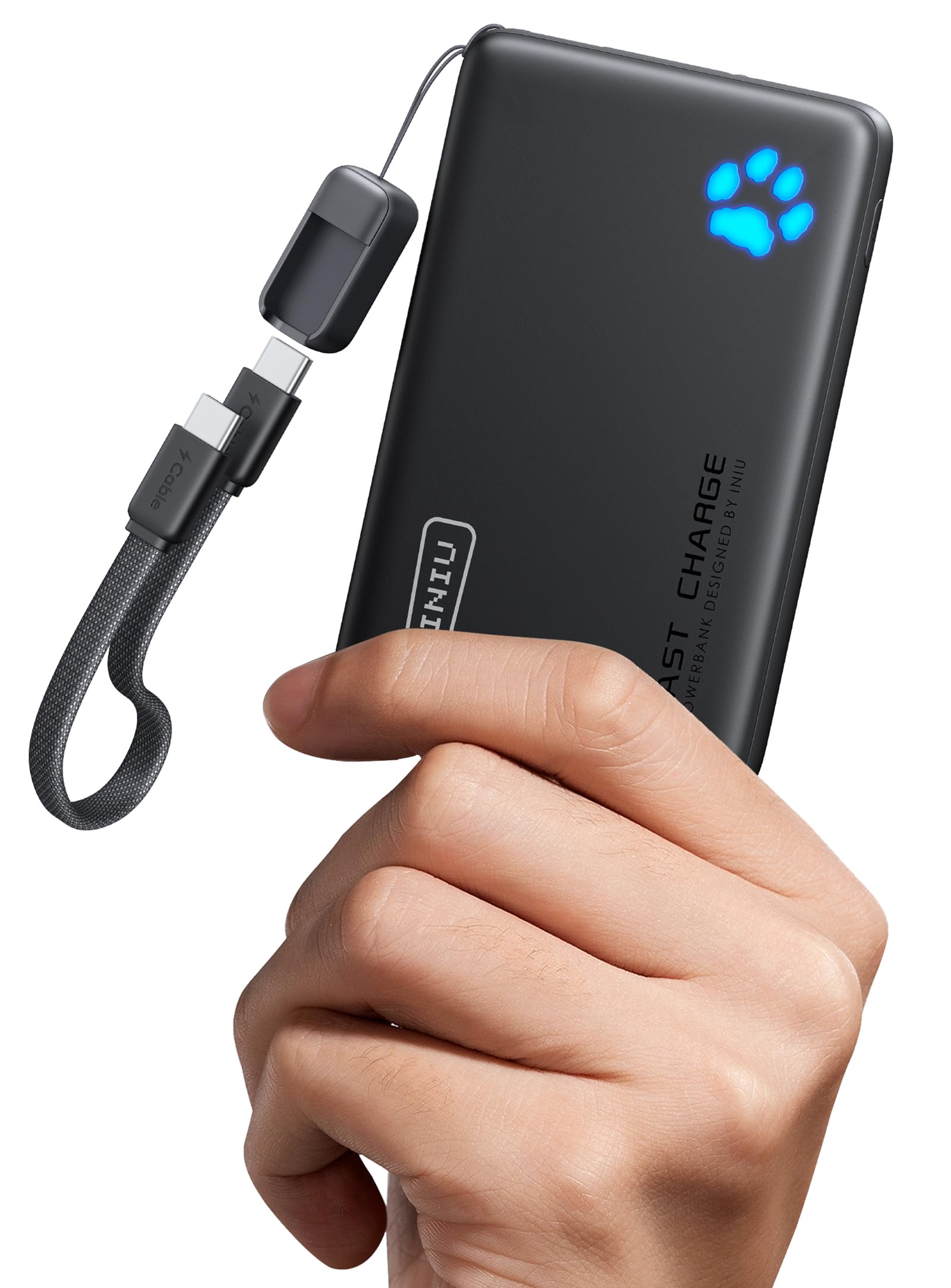
2. INIU 45W Fast Charging Portable Charger
The tiny titan that charges a Pro Max to 76% in 30 minutes.
This INIU bank is a physics miracle: it pushes 45W output from a body that is 40% smaller and 36% lighter than conventional 10,000mAh power banks. At only 160 g, it is lighter than most phones. That power translates to boosting an iPhone 17 Pro Max to 76%, a Galaxy S25 Ultra to 84%, or an iPad Pro to 60% in just 30 minutes — numbers that shame many larger packs.
The 0.4-foot detachable USB-C cable is a smart design choice. If the cord breaks, you simply replace it, unlike fixed-cable models. The bank itself is just 5.26 x 2.7 x 0.5 inches, and the crowd favorite here is the charging speed and quality, with over 2,300 positive mentions on speed alone. An occasional note is that it gets warm during fast charging, which is typical for this power level.
Real-world edge: The detachable cable means this is the most durable pick for heavy users — when any other power bank’s integrated cord fails, this one just gets a new cable.
Best for: Users who prioritize raw charging speed and want a bank that is truly pocket-sized yet can fuel a tablet quickly.
Consider this: The 10,000mAh capacity means you get about two phone charges; for multi-day off-grid trips, you need bigger.
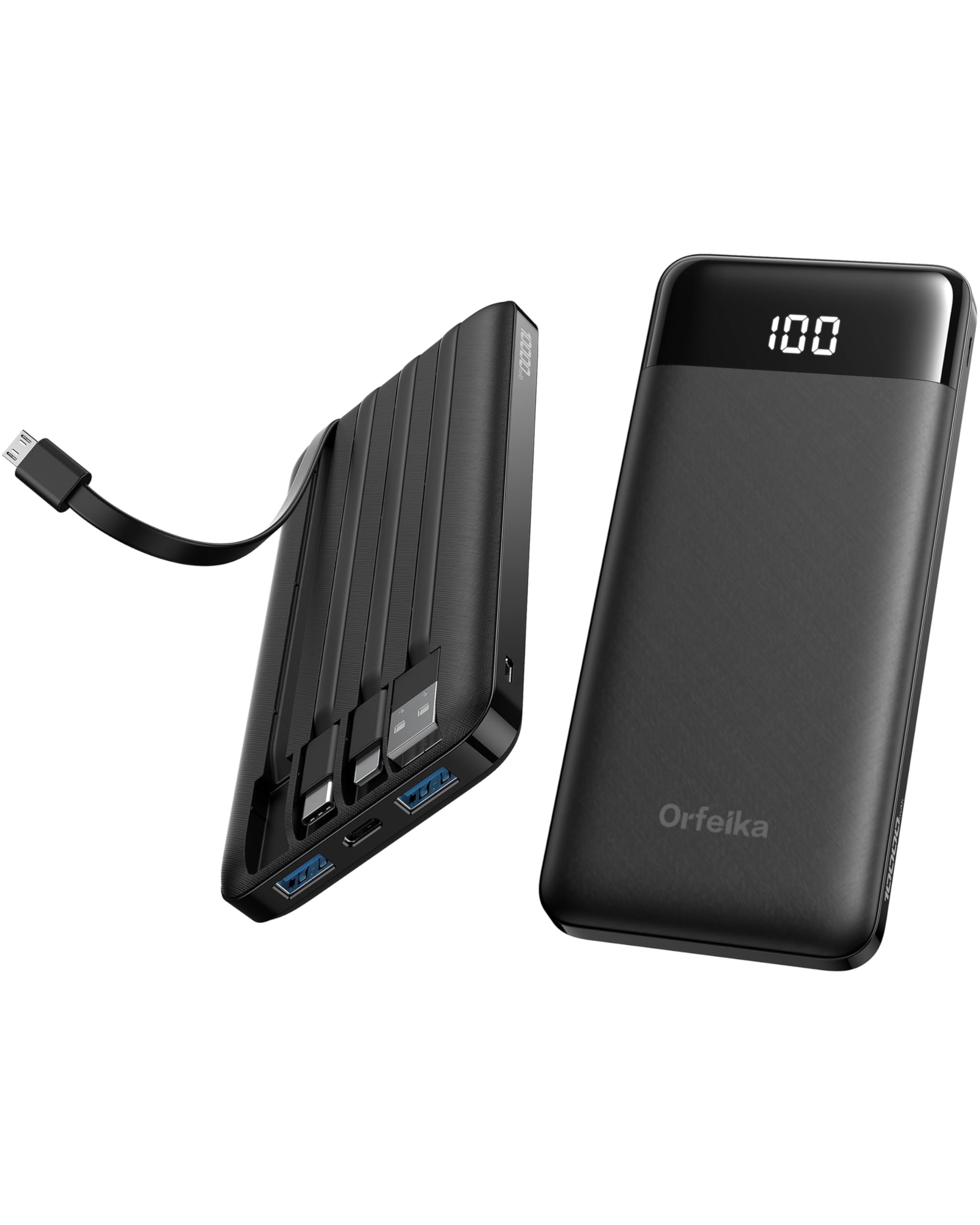
3. Orfeika Fast Charging Portable Charger with Built-in 4 Cables
Carry one brick, charge any device — no cable hunt required.
This Orfeika bank eliminates the “where is my cable?” scramble entirely. It packs four built-in cables (for iPhone/iPad, USB-C, USB-A, and Micro USB), so you are covered for nearly every device you or your travel companions own. The 22.5W output pushes an iPhone 17 to 50% in just 30 minutes, and the bank itself refills in 2.5 hours via its own USB-C input.
What wins owners over is the performance (77 positive mentions) and portability (71 mentions). You can charge 6 devices at once, making it the ideal group-travel companion for family trips or friends. The digital LED display shows exact remaining power. The honest replay is that the battery life feedback is mixed — some find it holds well, others note it needs recharging every 2-3 days with moderate use. It has a little weight to it, but the included travel pouch helps.
Best scenario: You are the designated “charger person” for a family trip or group outing — this one bank handles everyone’s cords.
Ideal for: Multi-device households and travelers who hate packing separate cables.
Something to note: The camera is not as slim a profile as single-cable models; check the 0.7-inch thickness before buying if you have a tight pocket.
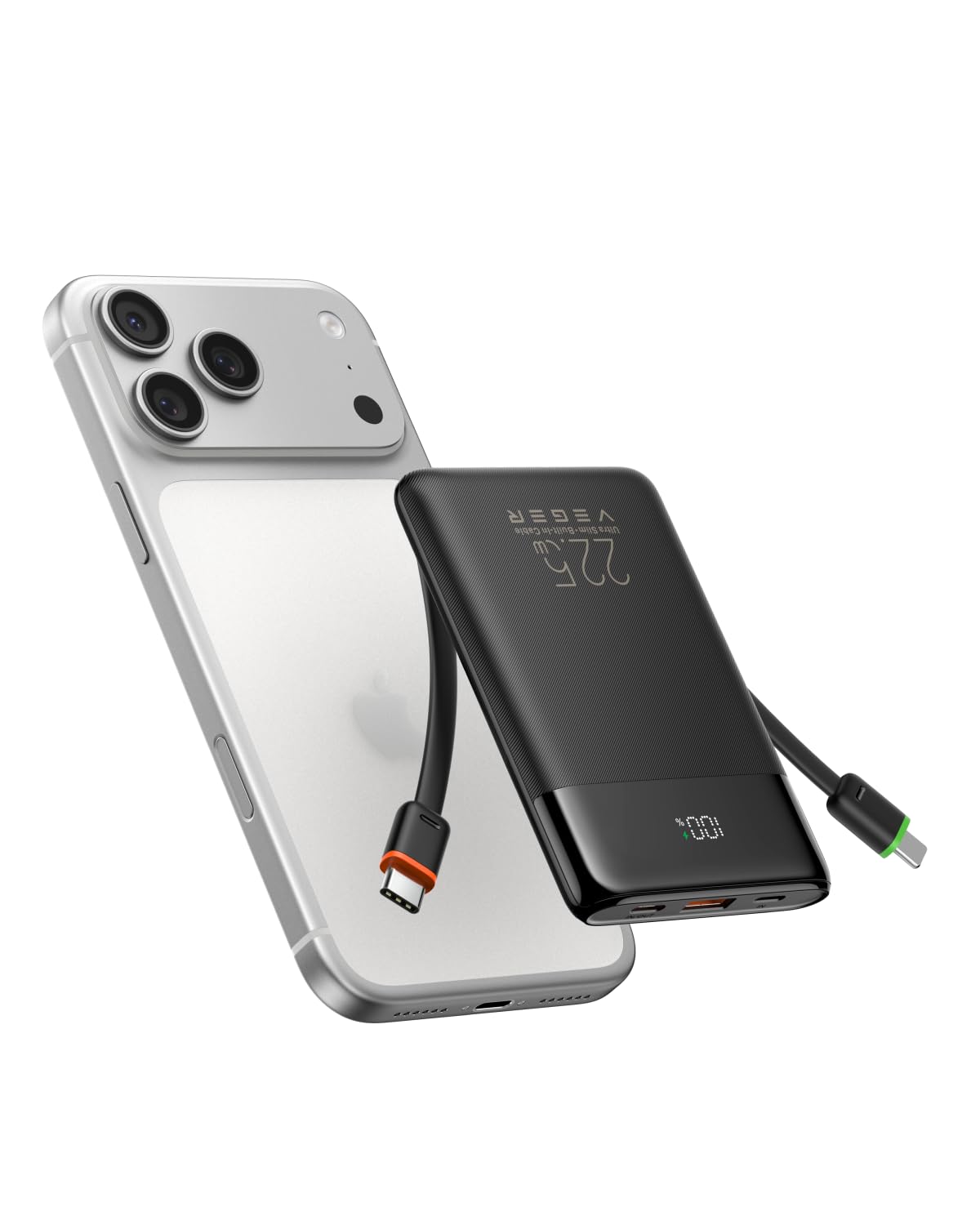
4. VEGER 10000mAh 22.5W Fast Charging Portable Charger
So light you forget it is in your pocket — until your phone hits 10%.
At just 180 g (6.35 oz), this VEGER bank is actually lighter than a standard iPhone 16 Pro Max. The dimensions are 4.57 x 2.83 x 0.66 inches, and the customer consensus is that it disappears into a bag or pocket. Despite its slim profile, it delivers 22.5W fast charging, bringing a phone to 60% in 30 minutes. The built-in cables (USB-C and a previous-iOS cable) mean no extra leads.
Owners specifically praise the charging speed (98 positive mentions) and quality (65). It can charge 4 devices at once (15W total), perfect for group trips. The 3-hour recharge time for the bank itself is reasonable. The main caveat from the reviews is that battery life is mixed — some users report it holds power well, while others find it drains faster than expected on extended trips. It gets warm during fast charging, as the maker notes is physics, but built-in temperature control manages safety.
Three Reasons to Buy
- Weighs only 180 g — lighter than most modern phones
- 22.5W fast charging refuels quickly
- Built-in cables eliminate cord clutter
One Trade-Off
- Small capacity means you may need to recharge the bank itself on longer weekends
Perfect for: Minimalists who want the lightest possible emergency backup that still charges fast.
Consider this: If you are a heavy user needing all-day backup for multiple devices, look at the 35,000mAh SABANI below.
5. charmast Portable Charger Built-in Cables

Six ports and a digital screen — the group-trip powerhouse that never leaves anyone stranded.
This charmast bank stands out for its sheer versatility. It packs 6 output ports plus built-in USB-C and Micro-USB cables, so you can charge a phone, tablet, earbuds, and a smartwatch all at once. The 22.5W PD fast charging gives you a significant boost in 30 minutes — ideal for a quick top-up before a meeting. The digital display shows exact remaining power from 0-100%, eliminating the guesswork of flashing LEDs.
Owners praise the charging speed (60 positive mentions) and portability (46). The 37Wh capacity is airline-friendly, staying well under the 100Wh carry-on limit. A buyer who bought over 15 as gifts called it a “never without power” device. The honest note from a few is that the weight is slightly noticeable at 240 g, and the battery percentage display sometimes lags. It charges in about 3 hours.
Bottom line from the reviews: It works for everything from iPhones to Atari Gamestation Go, and the active charging (no need to press a button) is a small but appreciated convenience.
Reach for this if: You juggle multiple devices daily and want one bank that handles them all without extra dongles.
Look elsewhere if: You need the lightest possible carry — this is one of the heavier 10K banks at 240 g.
6. Miady 2-Pack Portable Charger 10000mAh

Two quality banks for the price of one premium single pack.
This Miady two-pack is a crowd favorite for a reason — it has over 100,000 ratings and continues to sell strongly. Each 10,000mAh bank is slim at 5.51 x 2.64 x 0.63 inches and weighs 230 g. That is 28% thicker than the Anker above, but you get two units for a budget-friendly price, making it ideal for couples or for keeping one in your bag and one at your desk.
Each bank offers 2 USB-A outputs and 1 USB-C output, charging up to 3 devices simultaneously at up to 5V 2.4A. The USB-C port handles both input and output. Owners consistently highlight the quality (1,400 positive mentions) and value for money (1,200). The Li-polymer cells are flight-safe. The honest word from the community is that the charging speed gets mixed feedback — it is not a fast-charging powerhouse, so it is better for overnight or desk top-ups than an emergency 30-minute sprint.
Real value: You get two reliable backup banks that, as one long-time owner noted, are still functional after 5 years with minimal use.
Best for: Couples, families, or anyone who wants dedicated chargers for different bags without spending premium money.
A fair caveat: If you need 30W+ charging speed, this is not your pick — it tops out at standard 2.4A speed.
7. Evopow 2 Pack Portable Charger Slimmer 10000mAh
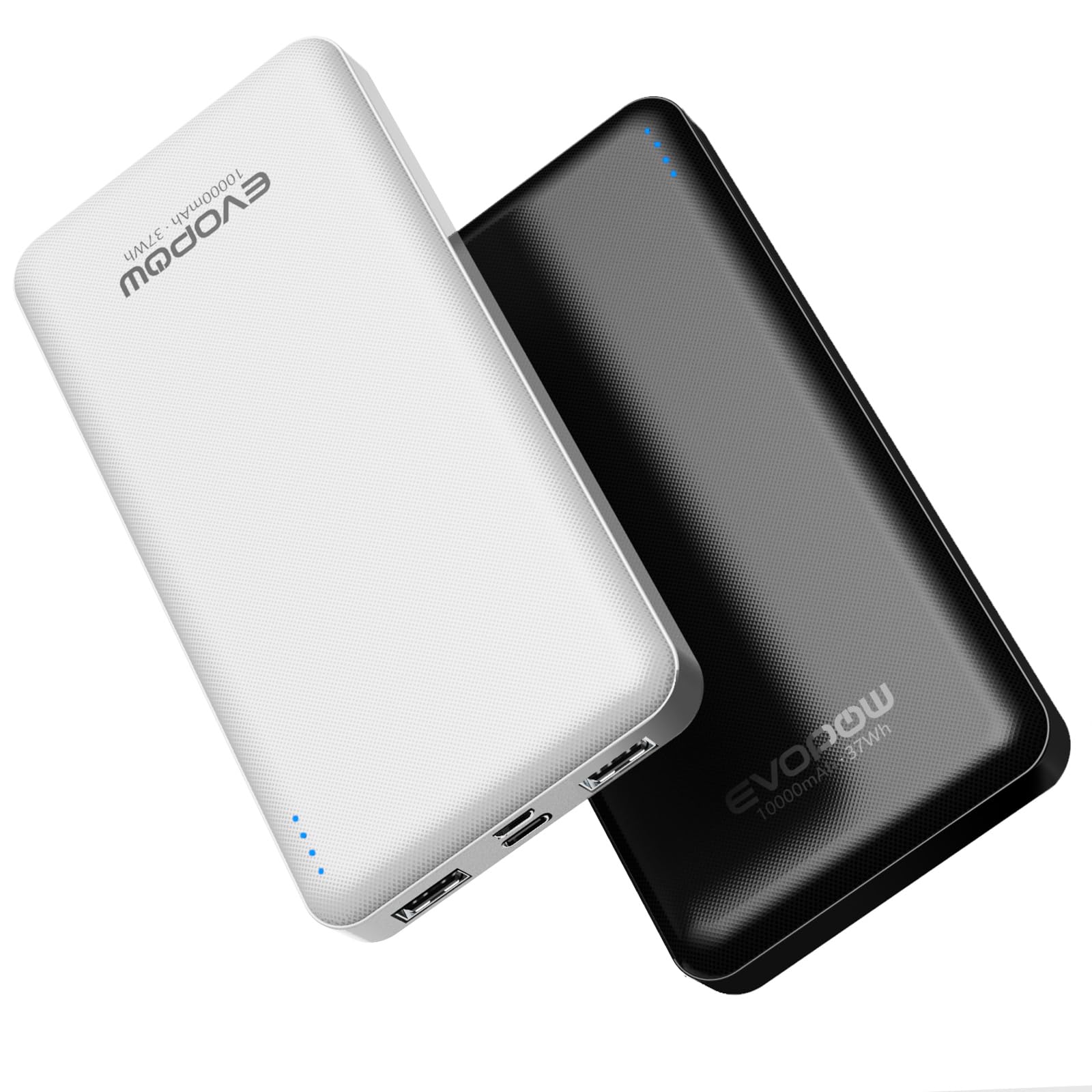
The thinnest 10K on the list — at 0.55 inches, it slips into any pocket.
These Evopow banks are marketed as the market’s thinner 10000mAh power bank, and at 0.55 inches thick, they live up to the claim. Each unit is 5.39 x 2.64 x 0.55 inches, and the two-pack offers incredible budget value. They support fast charging — the maker claims they fuel an iPhone up to 79% in just one hour — and include a plaid texture design for a non-slip grip.
Owners consistently highlight the functionality (58 positive mentions) and battery quality (43). A buyer described them as “lightweight, stay cool, last a while.” The honest feedback from the community is that the charging speed is mixed — while some find it quick, others report slower speeds. The battery life also gets mixed notes. They support both Micro and USB-C inputs for charging the bank itself.
Crowd note: The auto-shutoff timer (powers down after minutes of no draw) is helpful for battery saving but may be inconvenient if powering devices that draw very low current.
Ideal for: Shoppers on a tight budget who need a slim, functional backup for daily use without expecting ultra-fast speeds.
Who should skip: Anyone needing consistent fast charging for the latest Pro-series phones.
8. SABANI Portable Charger 35000mAh Power Bank
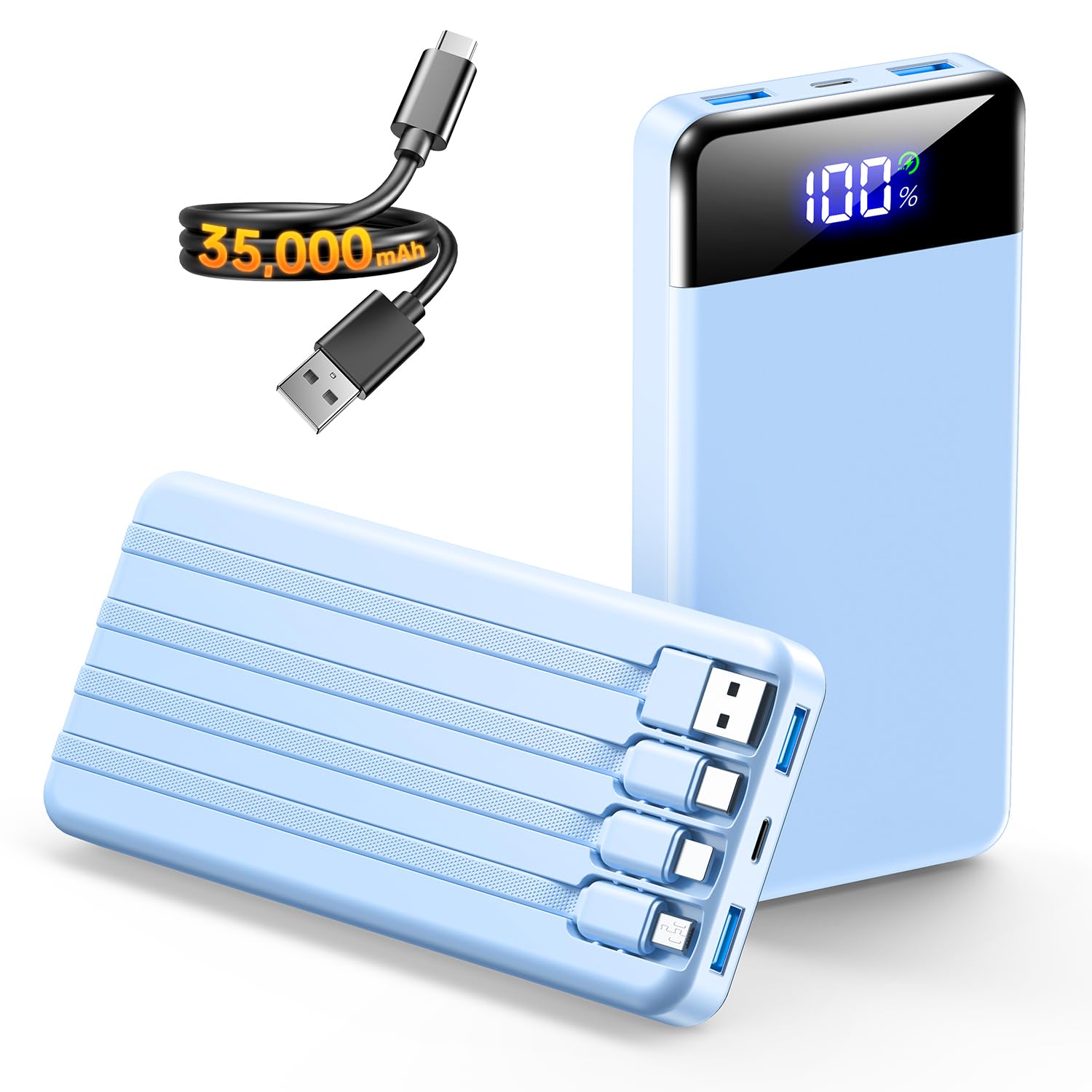
Three and a half times the capacity of a standard bank — but still slim enough for a backpack.
This SABANI bank packs a massive 35,000mAh capacity into a body that measures just 5.95 x 2.87 x 0.79 inches and weighs 335 g (11.8 oz). For reference, that is close to the size of an iPhone 15. It includes 4 built-in cables (iOS, USB-C, USB-A, Micro) and 3 extra ports, letting you charge up to 6 devices at once. The 22.5W PD fast charging brings an iPhone 15 to 50% in 30 minutes.
Owners describe it as a “powerhouse” — one reviewer noted charging an iPad Mini from 10% to 100% three times on a single charge. The digital LED display shows battery level down to the last 1%. The upgrade: using a new high-density polymer battery, it keeps the size reasonable for such huge capacity. A few note it is not lightweight, but for 35,000mAh, 335 g is impressive. The only recurring feedback is that recharging the bank itself is slow overnight.
Best Features
- 35,000mAh capacity for multiple full device charges
- 6 outputs mean everyone in the group can plug in
- Compact for its capacity — easily fits a backpack
Consider This
- Not airline-friendly — check TSA rules (over 100Wh restriction may apply)
- Takes a while to fully recharge the bank itself
Reach for this if: You are going on a road trip, camping, or any multi-day adventure where outlets are rare.
Think twice if: You need a pocket-sized daily carry or you fly frequently with carry-on only.
9. MaiVoz 56800mAh Portable Charger
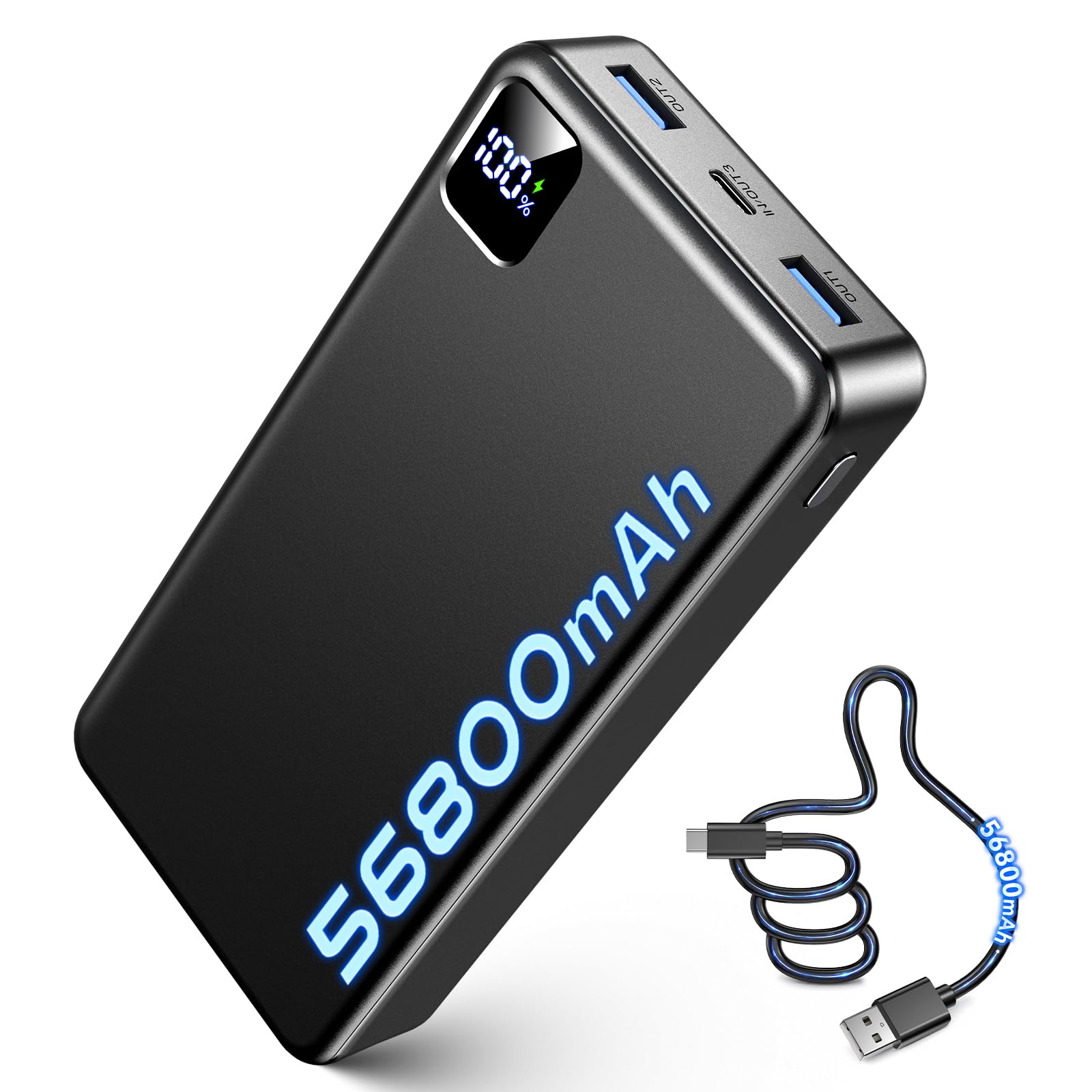
Nearly 57,000mAh — charge an iPhone 10+ times before the bank itself needs a wall.
This MaiVoz bank is the ultimate off-grid companion. With 56,800mAh of capacity, it can charge an iPhone 17 or Galaxy S25 more than 10 times (the maker says “10+ charges”). That is enough to keep a family’s devices running for a long weekend without any wall access. It delivers 22.5W PD fast charging, bringing an iPhone 17 to about 60% in 40 minutes. The LED digital display shows remaining battery clearly.
Owners rave about the charging speed (111 positive mentions) and quality (82). A buyer reported charging their iPhone 7 times and still having 40% power left. It handles up to 3 devices simultaneously via 2 USB-A outputs and a two-way USB-C port. The honest trade-off is weight — at 459.4 g (just over 1 lb), this is not a pocket item. It is built for backpacks, gear bags, or emergency kits. Note: it is NOT allowed on airplanes due to the large battery capacity.
From the reviews: One owner compared it to a 100W Jackery and said this budget bank outperformed it on battery life for camping, which is high praise.
Perfect for: Campers, van-lifers, outdoor workers, and anyone preparing for extended power outages.
Not for: Frequent flyers — this bank cannot go on a plane, and it is too heavy for daily pocket carry.
Understanding the Specs
Milliampere-Hours (mAh)
This is the total fuel tank of the power bank. Think of it like a water bottle: 10,000mAh is a standard 1-liter bottle that fills most phones twice. A 35,000mAh unit is like a 3.5-liter jug — heavy but lasts days. Your phone’s own battery is usually between 3,000mAh and 5,000mAh, so a 10,000mAh bank gives you about two full refills accounting for energy loss during transfer.
Wattage (W) and Fast Charging Standards
Wattage determines how fast the power bank pushes energy into your phone. Standard charging is around 10W. Fast charging at 22.5W or 30W can halve the time it takes to reach 50%. Your phone must support the same standard — Power Delivery (PD) for most modern iPhones and USB-C devices, or Quick Charge (QC) for many Android phones. A 30W charger with a phone that only accepts 15W will charge at 15W max, so check your phone’s specs too.
Built-in Cables vs. Separate Ports
Power banks with integrated cables are incredibly convenient — you have no excuse to forget a cord. But if that cable breaks, you either lose the feature or the whole bank. Units with detachable cables (like the INIU) or standard USB-A/USB-C ports let you swap cables easily. For group travel, separate ports also let everyone use their own preferred cable type.
Airline Safety (Wh vs. mAh)
Airlines limit lithium-ion batteries to 100 watt-hours (Wh) in carry-on luggage. You can calculate Wh roughly as (mAh × voltage) / 1000. Most 10,000mAh banks (around 37Wh) are well under the limit. Some 35,000mAh banks (around 130Wh) exceed it and are prohibited on flights. Always check the Wh rating — and never put a power bank in checked luggage.
FAQ
Can I take a 35,000mAh power bank on a plane?
How many times will a 10,000mAh power bank charge my phone?
What is the difference between 10W, 22.5W, and 30W charging?
How long does a power bank itself take to recharge?
Are power banks with built-in cables worth buying?
Can I charge my laptop with a power bank?
What does ‘pass-through charging’ mean?
How safe are these power banks? Can they overheat?
What is the difference between Li-ion and Li-polymer batteries?
Can I charge a smartwatch or earbuds with a power bank?
Final Thoughts: The Verdict
If you want one dependable pick, the battery cell phone charger winner is the Anker Power Bank 10,000mAh 30W because it combines the fastest charging speed in its size class with a compact, durable design — it is a crowd-pleaser with over 14,000 ratings. If you want the absolute fastest charging in the smallest possible body, grab the INIU 45W Portable Charger — its 45W output and 160 g weight is class-leading. And for multi-day trips or group travel where you need tons of juice, the SABANI 35,000mAh Power Bank is the one to reach for, offering huge capacity without the bulk you would expect.
How We Picked
We do not accept paid placement. Every pick is matched to a real buyer and a real use-case; we do not hands-on test units.
Sources & Methodology
Specifications: manufacturer listings and product documentation. Review insights: verified customer reviews, as of July 2026. Pricing: not shown on this page (it changes often); check the current price via the retailer link.
As an Amazon Associate, Gadgets Feed earns from qualifying purchases. This does not affect which products we feature.