
Our readers keep the lights on and my morning glass full of iced black tea. As an Amazon Associate, I earn from qualifying purchases.
Specs are compiled from manufacturer listings and verified buyer reviews and can change over time — please confirm the key details on the product page before buying.
The promise of a 10 hour office chair sounds like a fantasy until your lower back stages a revolt by 3 p.m. The real test isn’t what a chair looks like in a product photo — it is whether you can stand up after a full shift without wincing. The chairs here earn their keep through one thing: they solve the problem of long-term sitting, not just the problem of looking like you work at a startup.
I’m Min — the founder and writer behind Gadgets Feed. This guide is built by comparing the manufacturers’ published specifications and the patterns across verified customer reviews, so you get each pick’s real strengths and trade-offs instead of marketing spin.
Whether you are a remote programmer, a gamer who forgets to blink, or a 9-to-5 desk jockey, the 10 hour office chair you need is the one that keeps your spine in its natural curve across an entire workday.
Our Picks at a Glance
How To Choose The Best 10 Hour Office Chair
A chair that works for an hour in a store showroom can feel very different after week three. The things that matter for long sessions are the things that are harder to see from a listing photo: how the lumbar support actually behaves when you shift, what the seat cushion does after a month of weight, and whether the mesh traps heat or lets it go.
Seat Cushion Density vs. Thickness
A thick cushion that is too soft will feel great for the first week and then sag permanently, leaving you sitting on a hard base. The industry measure that matters is density — a 55D (55 kilograms per cubic meter) high-density foam, for example, resists flattening much longer than cheaper foams. If you see a chair boasting a thick cushion but no density number, it is worth digging deeper into reviews for how it holds up after several months.
Lumbar Support That Moves With You
The most comfortable lumbar is one that adjusts both up-and-down (height) and in-and-out (depth). Some chairs use a fixed bump that can dig into your spine if your height doesn’t match the chair’s design. A dynamic lumbar — one that changes shape as you lean forward or recline — is the gold standard for all-day wear because your posture is never static for ten hours.
Mesh vs. Foam Seat
Full mesh seats let air flow freely and prevent the sticky heat buildup that plagues foam seats in warm rooms or during summer. The trade-off is that mesh seats are often firmer and can feel less plush to people who prefer a pillowy sit. Foam seats feel softer initially but can trap heat and degrade faster. Some recent designs split the difference by using a mesh back with a dense foam seat cushion for breathability where you need it and support where you sit.
Armrest Adjustment Range
Armrests that only move up-and-down leave your elbows dangling if the chair is too low for your desk. A 3D armrest (up-down, forward-back, and swivel) or a 4D armrest (which adds width adjustment) lets you dock your arms at the exact height and angle for typing, resting, or gaming. Flip-up arms are a separate category — they are excellent for tucking the chair under a desk but offer less fine-tuned positioning.
Seat Depth Adjustment
If the seat pan is too long for your thighs, the front edge presses into the back of your knees and cuts off circulation. If it is too short, your thighs dangle unsupported. A seat depth slider (usually offering 1.5 to 2.5 inches of travel) is rare in budget chairs but makes an enormous difference for shorter or taller users who don’t fit a one-size-fits-all pan. This is the single most overlooked spec in the category.
Quick Comparison
| Model | Best For | Seat Type | Weight Capacity | Key Adjustability | Amazon |
|---|---|---|---|---|---|
| CASASIO Home Office Chair★ Best Overall | Best Overall | Virgin foam cushion | 300 lbs | 3D headrest, flip-up arms, tilt tension | Amazon |
| CabeVibe C3Premium Comfort | Premium Comfort | Mesh seat | 330 lbs | 630° arms, dual lumbar, seat depth | Amazon |
| ProtoArc EC200Seat Depth Focus | Seat Depth Focus | 55D foam cushion | 220 lbs | 5-pos seat depth, 3D headrest, 4-stage recline | Amazon |
| FLEXISPOT ErgoX | With Footrest | Mesh seat + Cloudtech foam option | 400 lbs | 3D arms, dynamic lumbar, retractable footrest | Amazon |
| SIHOO B100 | Mesh Breathability | Full mesh seat | 300 lbs | Adaptive lumbar, 3 lockable recline angles | Amazon |
| GABRYLLY GY1108 | SGS & BIFMA Certified | Mesh seat | 300 lbs | 13.4″ wide headrest, 95-115° tilt lock | Amazon |
| marrap Ergonomic Chair | Value Adjustability | Mesh seat | — | 3D armrests, 90-120° rocking, 4-way lumbar | Amazon |
| COLAMY Executive Chair | Leather Look & Plush Cushion | 6.7″ thick foam cushion | 300 lbs | Pop-out lumbar, flip-up arms, upgraded casters | Amazon |
| Branch Ergonomic Chair | 8 Adjustment Points | Foam seat | — | 8 adjustment points, mesh back, smooth wheels | Amazon |
| WorkPro Quantum 9000 | Mid-Back Workhorse | Mesh seat | 275 lbs | Ratchet back height, seat depth slide, 3D arms | Amazon |
| Steelcase Amia | Premium Longevity | Foam seat with flex edges | — | LiveLumbar, 4D arms, full recline lock | Amazon |
In‑Depth Reviews
1. CASASIO Home Office Desk Chair
Our pick — over 4.5★ from 300+ verified ratings; the strongest balance of quality and price.
The chair that makes 10 hours feel like a coffee break, not a punishment.
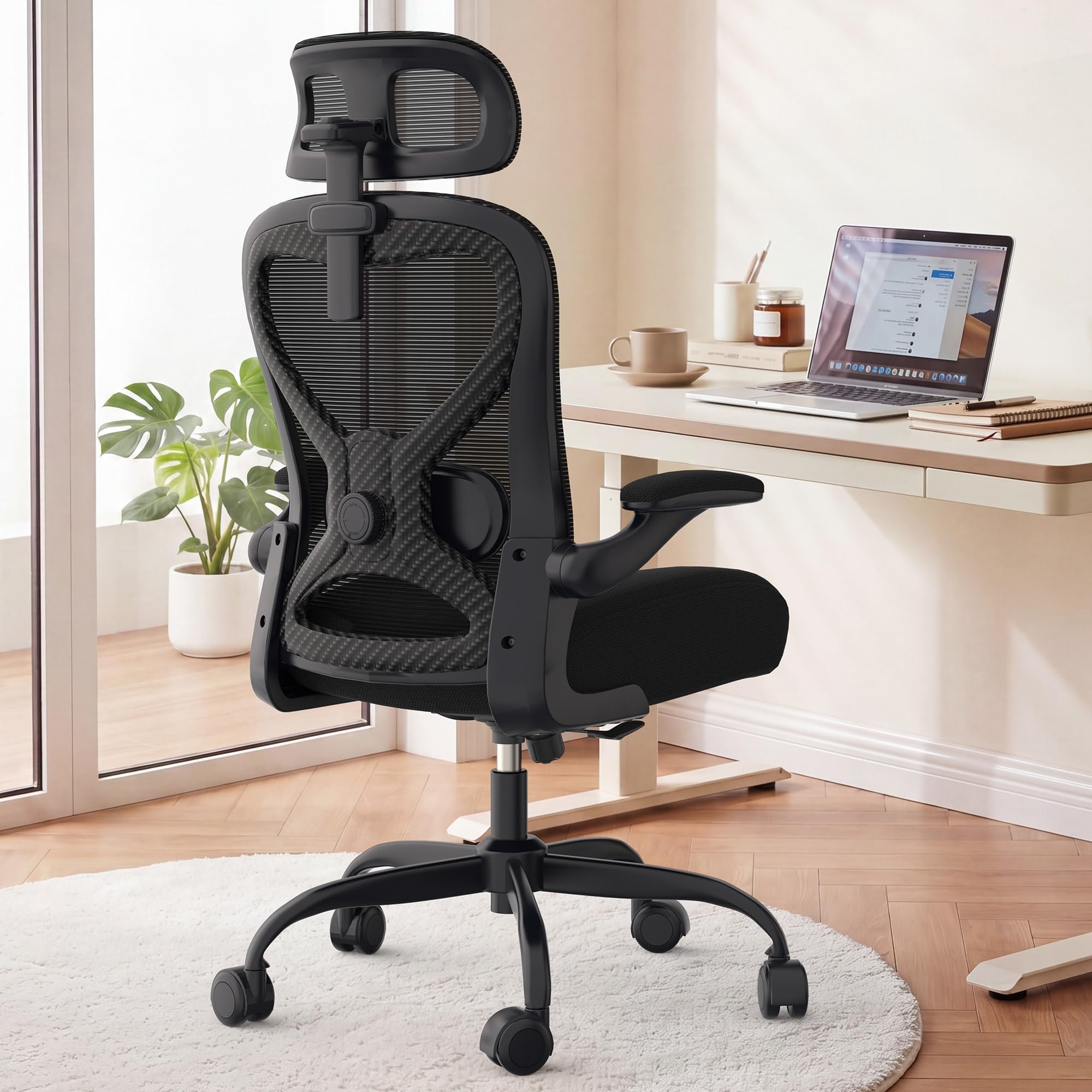
The defining feature here is the virgin foam seat — buyers report it “distributes weight evenly, providing long-lasting softness and resilience to prevent soreness even after 8+ hours of sitting.” That is the exact language the listing uses, and the 4.7-star crowd backs it up. Over 130 people have specifically praised the comfort, making it the most-discussed aspect by a wide margin, followed by over 100 more who highlight how easy the assembly is. The contoured mesh back and dual-direction adjustable lumbar cushion let you dial in lower back support precisely, while the 3D adjustable headrest (height, depth, and angle) cradles your neck whether you are typing or leaning back to think.
Unlike some chairs that skimp on the seat pan, this one uses a reinforced metal base that supports up to 300 lbs, and the flip-up armrests mean you can push it completely under a standing desk or shallow counter. The tilt-and-rock function with adjustable tension lets you gently recline without feeling like you are tipping over — a critical detail for the workday’s final stretch. The biggest trade-off is that the armrests are flip-up style, which trades multi-directional fine-tuning for space-saving convenience. If you need armrests that slide forward and back for precise typing position, you might find these too basic. But for the price-to-comfort ratio, this is the chair the room agrees on.
What Wins People Over
- Virgin foam seat resists sagging and spreads weight evenly for long sit sessions.
- Dual-direction adjustable lumbar supports both up-down and in-out positioning.
- Reinforced metal base and premium casters handle 300 lbs with stability.
The Honest Trade-Off
- Flip-up armrests lack forward-back and swivel adjustability for fine positioning.
- Some may prefer a mesh seat over the foam cushion for hotter climates.
Reach for this if: you want the most comfortable all-day foam seat at a price that undercuts chairs with far fewer features. The virgin foam and adjustable lumbar do the heavy lifting.
Think twice if: you need 3D or 4D armrests for precise arm positioning — the flip-up design is simpler and space-saving but less customizable.
2. CabeVibe C3 Ergonomic Mesh Office Chair
A 15-way adjustable monster built for bodies up to 6-foot-5.
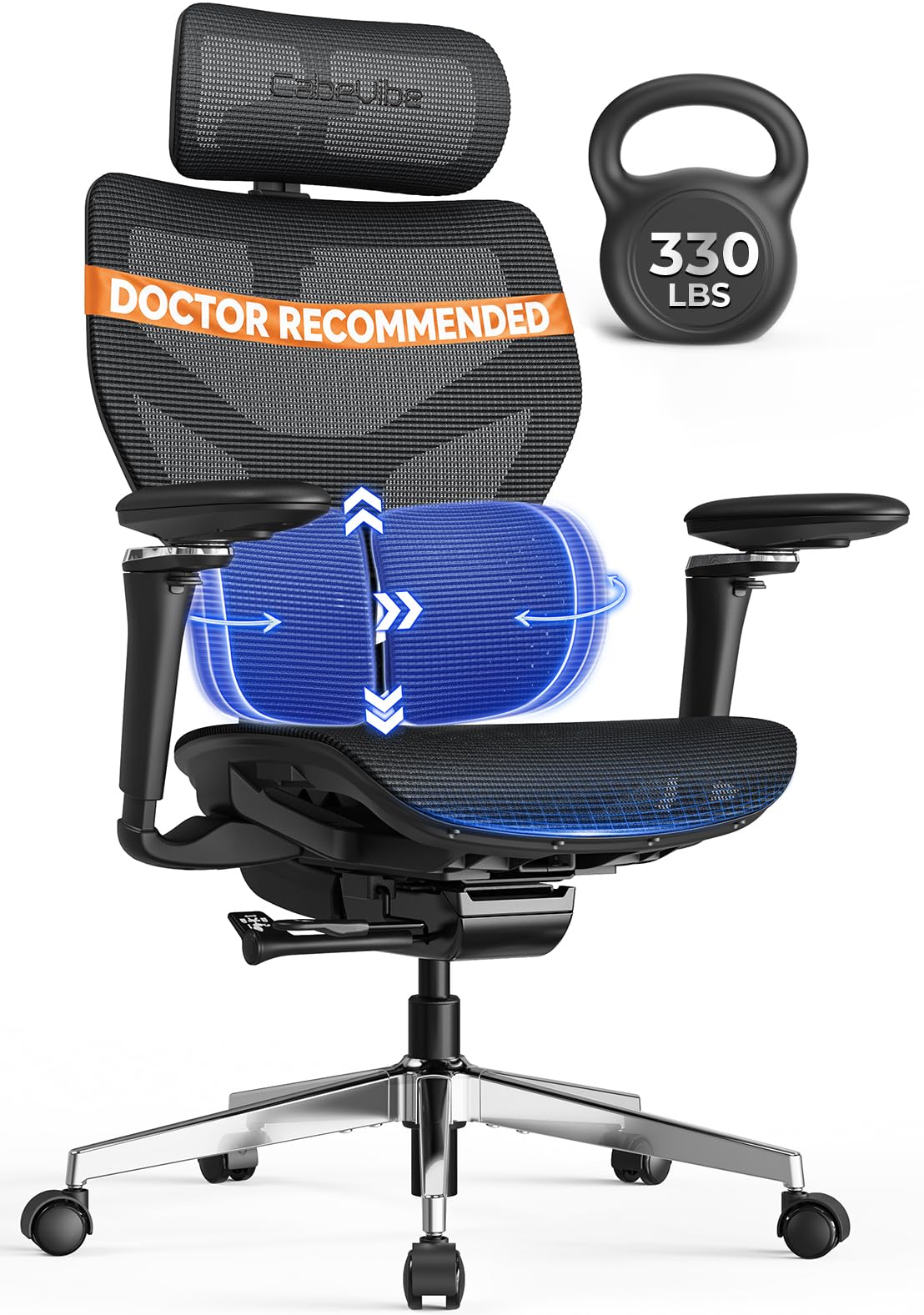
This chair’s name does not waste words: it is designed specifically for “over 10 hours of comfort,” and the spec sheet backs that up with a dual-wing adaptive lumbar system that moves with you — a 17.5-inch by 8.5-inch support surface that covers roughly twice the area of typical desk chairs. The lumbar adjusts automatically as you shift posture and also offers manual 3.5-inch height and 1-inch depth adjustments. Owners who use it for 8-to-12-hour desk stretches call it supportive and breathable, noting the mesh keeps air moving. It supports up to 330 lbs and fits users from 5’0″ to 6’5″, making it one of the rare picks that does not leave tall or strong builds hanging.
The 630° mechanical armrests (360° plus 270° rotation) are a standout — they move up and down by 3.6 inches and have soft PU padding to eliminate what the brand calls “hanging arm” and neck strain. The 4D oversized headrest adjusts in height, depth, and dual-axis tilt, so it catches your neck whether you are in full work mode or tilted back. The CabeVibe is heavier on adjustments than the CASASIO above, and the mesh seat keeps things cooler than foam in warm rooms. The catch is that shorter users at around 5’2″ have found the seat uncomfortable after two hours and reported that their feet did not sit flat, despite the chair’s wide height range. For tall or broad users specifically, this is the pick that leaves nothing on the table.
Standout Strengths
- 15-way adjustments including 630° rotating armrests for any working posture.
- Dual-wing lumbar covers 17.5×8.5 inches — roughly double the area of typical chairs.
- 4D headrest with dual-axis tilt keeps neck supported in work, reading, or recline.
A Fair Caveat
- Seat comfort reported as short-lasting for petite users around 5’2″.
- No included footrest for full-leg relaxation during breaks.
Built for the tall and the broad: if you are 5’10” to 6’5″ or over 250 lbs, the CabeVibe C3 delivers the adjustability most chairs lack. The dual lumbar and 630° arms are genuinely useful for long coding or creative sessions.
Look elsewhere if: you are under 5’4″ — a few owners found the seat uncomfortable and the foot position off after extended use.
3. ProtoArc EC200 Ergonomic Office Chair
The rare chair that adjusts the seat depth — a standout for leg support.
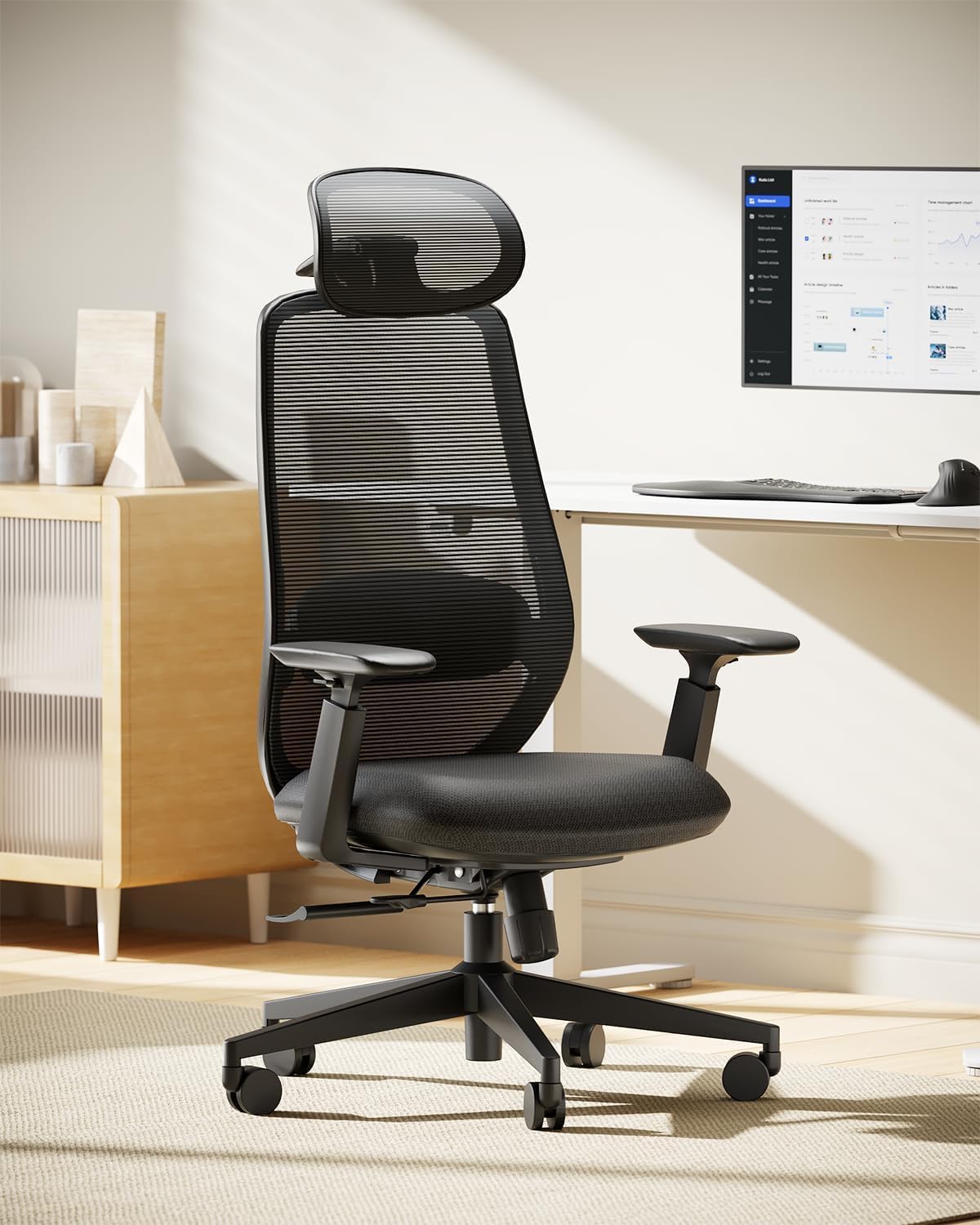
Most chairs in this price range ignore how the seat pan length affects your thighs. The ProtoArc EC200 fixes that with a 5-position sliding seat that moves 5 centimeters (about 2 inches) and locks instantly, so whether you are 5’4″ or 6’0″, your whole thigh rests on the cushion instead of dangling or pressing against the front edge. The seat uses 55D high-density foam — deliberately firm to resist collapse — and the brand warns that too-soft cushions “feel cozy at first but sag within months.” The overall fit is tune for users 5’4″ to 6’0″ and under 220 lbs, with the brand claiming up to 30% better body contouring within that range compared to one-size-fits-all chairs.
The 3-point support system aligns head, back, and lumbar, with the lumbar support adjusting 2.36 inches vertically and 0.8 inches in depth. The 3D headrest has 3.94 inches of vertical travel, 2.76 inches of depth, 75° of pivot, and 35° of rotation — enough range to keep your cervical spine supported without pushing your head forward. The 4-stage recline locks at 90°, 105°, 120°, and 130°, so you can switch from focused work to reading to calls to relaxation without losing support. Buyers praise the “fantastic and fully adjustable lumbar support” and the comfortable cushion that is supportive without being punishing. The honest limitation is the weight cap of 220 lbs — noticeably lower than the 300-330 lb capacity of several other picks here, meaning heavier users will want to look at the CabeVibe C3 or CASASIO instead.
The depth differentiator: the 5-position sliding seat is the feature that sets the EC200 apart, solving leg numbness and knee pressure for users who fall outside the average height. For your legs, this is the chair.
The honest cap: at 220 lbs max weight and a 5’4″-6’0″ height band, this is a medium-build chair — not for larger frames or very tall users.
Grab this if: your thighs never feel fully supported on standard seat pans. The depth slide and 55D foam are the fix you have been looking for.
skip it if: you are over 220 lbs or over 6’0″ — the chair’s optimal fit range is narrower than the competition.
4. FLEXISPOT ErgoX Premium Ergonomic Office Chair
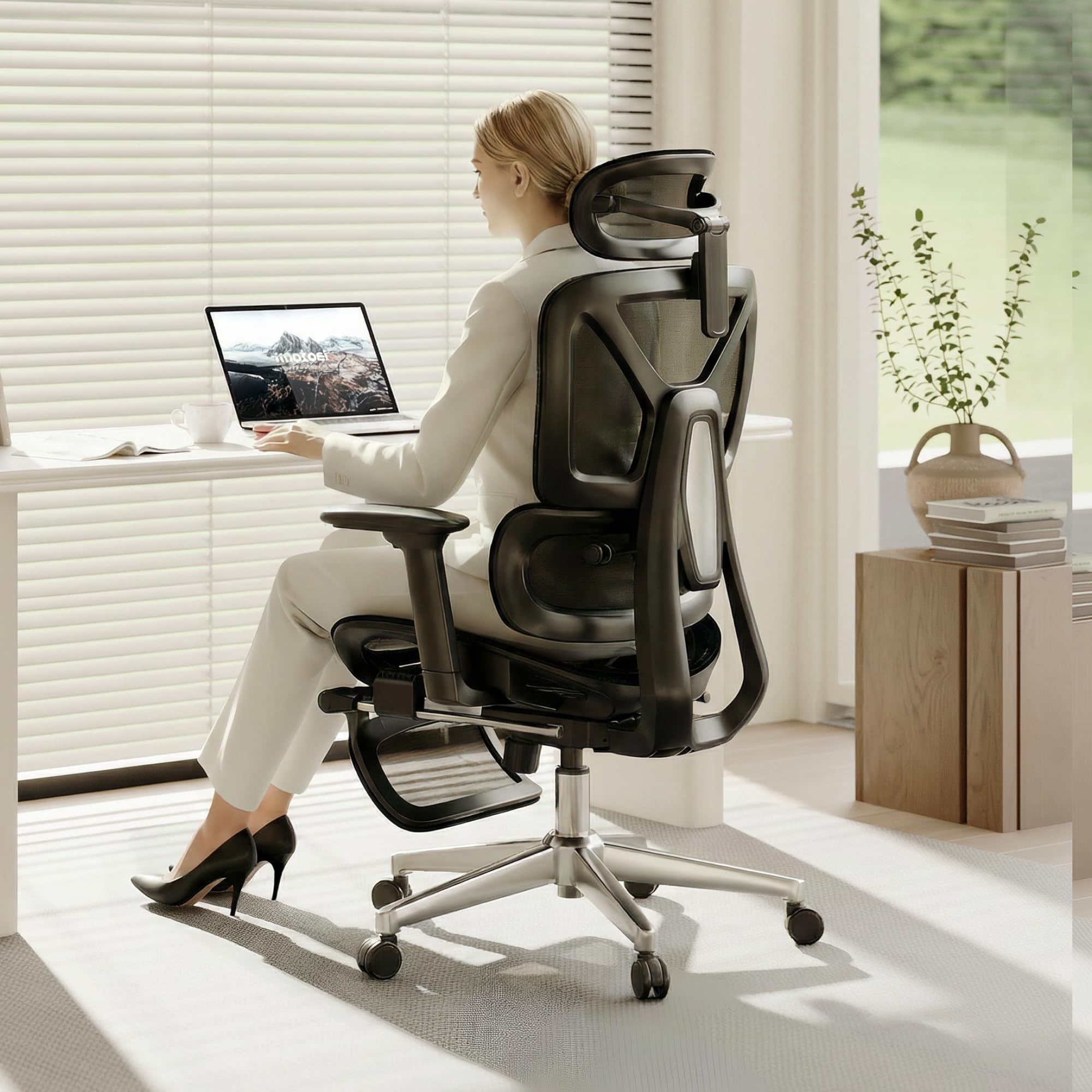
A built-in footrest transforms break time without leaving the chair.
The FLEXISPOT ErgoX packs a retractable footrest into an already adjustable frame, letting you stretch your legs fully during a timed break. It supports a maximum weight of 400 lbs and fits users between 5’1″ and 6’2″, with seat depth adjustable from 17 to 20 inches and height from 20.1 to 22.4 inches. You can choose between a Cloudtech foam cushion (responsive, pressure-relieving) or an AeroWeave mesh seat (breathable, cooling) — and the mesh version arrives stock. The dynamic lumbar support has 5 levels of back adjustment, and the 3D adjustable headrest tilts to follow your neck angle.
Buyers consistently call the ErgoX “Worth Every Penny” for its dynamic lumbar that “moves with you, reduces fatigue,” and the footrest gets its own section of praise — over 30 owners single it out for making reclined breaks more comfortable. The adjustable 3D armrests (height, forward/back, and swivel) reduce arm strain during long typing sessions. At this price point, the ErgoX undercuts the Branch and Steelcase picks below while offering features (footrest, higher weight limit, dual cushion choice) that more expensive chairs do not. The mixed feedback centers on the assembly instructions, which some find complicated, and the headrest that requires readjustment when you recline. But for the sheer breadth of adjustments plus the footrest, this is the premium pick that does not feel like a compromise.
what separates it
- Retractable footrest adds true relaxation during breaks — rare at this price tier.
- 400 lb weight capacity beats every other pick in this lineup.
- Two seat options (Cloudtech foam or AeroWeave mesh) let you pick your comfort style.
The Assembly Catch
- Mixed reviews on the complexity of assembly — some find the instructions challenging.
- Headrest positioning shifts when you recline, requiring a re-adjust on return.
Best for the big-and-tall: if you need a 400-lb-rated chair with a footrest and dynamic lumbar, the ErgoX is the only pick here that checks all three boxes.
Not for the impatient: assembly takes patience — factor in 30-45 minutes and set aside the instructions carefully.
5. SIHOO B100 Mesh Office Chair

The full-mesh chair that keeps you cool when the afternoon heat hits.
The B100 is among the most reviewed chairs here, with tens of thousands of owners contributing to a 4.3-star consensus. The adaptive lumbar support is the headline: it follows the natural curve of your spine as you lean forward, sit upright, or shift posture throughout the day — so your lower back does not feel like it is being jammed into a fixed bump. The seat height adjusts from 18.3 to 21.9 inches, and the full-mesh backrest keeps air circulating during busy afternoons or late-night sessions. Three lockable recline angles — 110°, 125°, and 135° — let you switch from work mode to full relaxation with a single lever.
Breathability is the B100’s strongest card. The mesh seat and back prevent heat buildup that makes foam chairs sweaty after hours of sitting, and owners consistently note the “widened seat cushion spreads your weight more evenly across your hips and thighs.” The SGS-certified Class 4 gas lift and reinforced metal base support up to 300 lbs, with quiet casters that glide over floors without distracting noise. The common honest note is that some units have a slight lean to the right — enough of a pattern that it appears in the customer feedback — and the lumbar support, while dynamic, is not as aggressive as some users with deep lordosis would like. For the price, the breathability and adjustability win the day, especially if your workspace runs warm.
Cool and adaptive: the full-mesh design is the standout here — if you hate swampy foam seats, the B100 is your ticket. The adaptive lumbar is a genuine plus for shifting postures.
The honest pattern: a number of owners noted the chair leaning slightly to the right. It is not universal, but it is worth checking on arrival and contacting support if you see it.
Reach for this if: your home office or dorm room runs hot in the afternoon. The mesh breathability and three locking recline angles keep you comfortable and ventilated.
Think twice if: you need aggressive, deep lumbar support that pushes into your back. The B100’s lumbar is adaptive and gentle, not pronounced.
6. GABRYLLY Ergonomic Mesh Office Chair (GY1108)

SGS and BIFMA certifications at a price that makes you double-check.
The GABRYLLY GY1108 arrives with both SGS and BIFMA certifications, meaning it has been tested to meet recognized safety and durability standards — something many chairs in this price bracket skip. The 13.4-inch wide adjustable headrest tilts and moves 3.5 inches vertically, accommodating users from 5’1″ to 5’9″ and supporting up to 300 lbs. The mesh back and seat keep things breathable, and the 45° flip-up padded armrests fold completely out of the way for tucking under a desk or playing guitar. The mesh back tilts from 95° to 115° with two locking positions, and the tilt lock turns the chair into a gentle rocker.
Owners praise the comfort and lumbar support for longer sessions, with over 100 buyers noting the comfort and nearly as many calling out the ergonomics as a strong point. The GABRYLLY’s customer support earns specific positive mention — one owner reported getting free upgraded blade wheels for carpet transition issues after reaching out. The flip-up arms are described as “surprisingly useful” in reviews. The recurring trade-off is that the headrest feels fragile when adjusting, and the all-mesh base collects dust that is harder to clean than a foam or fabric surface. For a budget-friendly chair with real certifications and solid lumbar support, this punches well above its weight.
Why It Stands Out
- SGS and BIFMA certifications verify safety and durability without a premium price tag.
- 13.4-inch wide adjustable headrest with 3.5-inch vertical travel for broad neck support.
- Flip-up armrests clear the desk entirely for storage or creative work.
The Minor Gripes
- Headrest adjustment feels a bit fragile — best to set it once and leave it.
- All-mesh base collects visible dust that needs frequent wiping.
Best for budget-conscious buyers: the certifications and adjustable headrest make this a safe bet for students or home office users who want verified quality without overspending.
Skip if you need aggressive recline: the 115° max tilt is conservative compared to the 130°+ options on other picks here.
7. marrap Ergonomic Office Chair
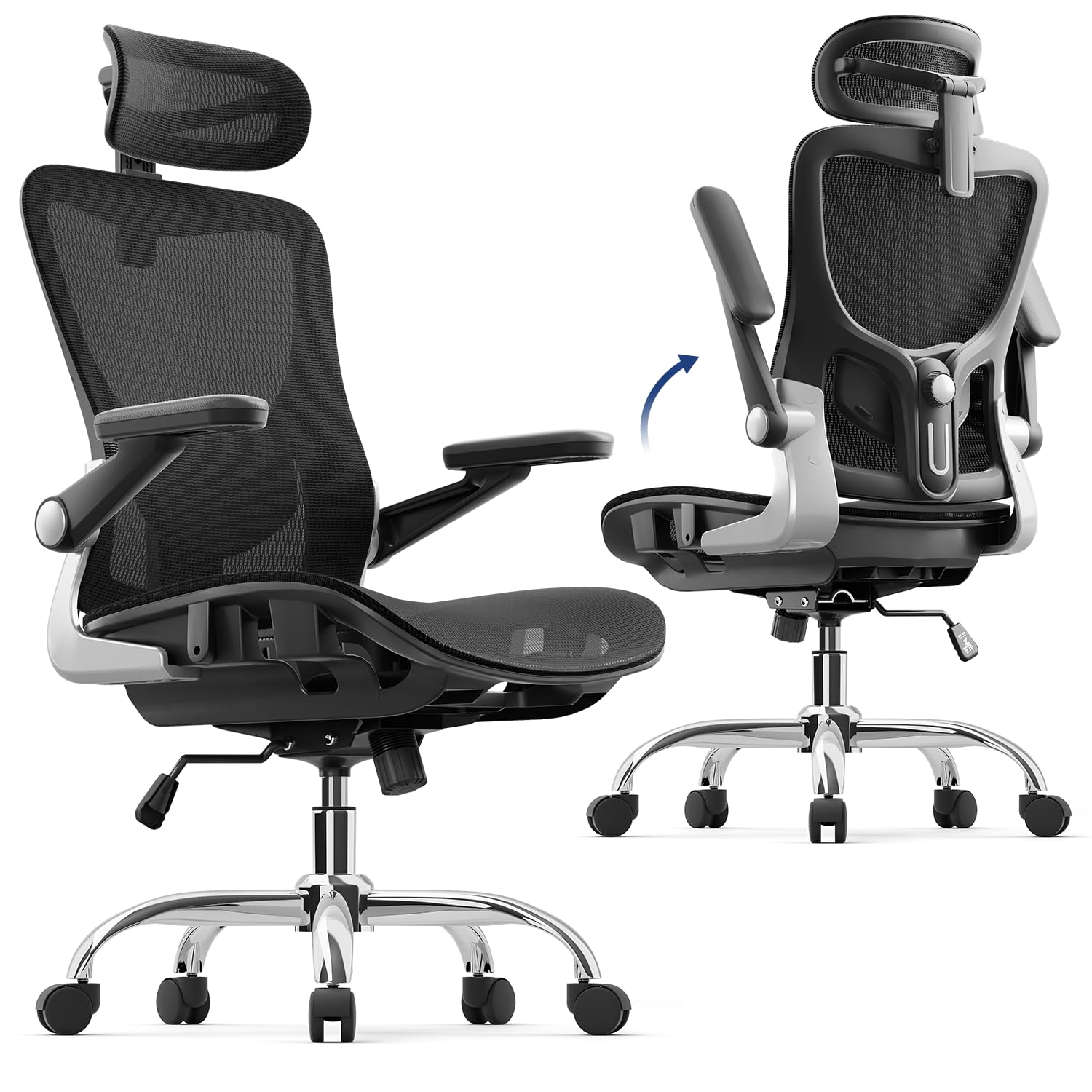
3D armrests, a rocking function, and 4-way lumbar — for under.
The marrap chair punches into a feature set that usually costs more. The lumbar support adjusts four ways — up, down, forward, and backward — so you can fill the exact gap in your lower back curve. The 3D armrests flip up, slide forward and back, and rotate 360°, a level of adjustability you typically see on chairs to higher. The rocking function moves smoothly from 90° to 120° with adjustable tilt tension, so you can find your own balance between upright focus and laid-back thinking. The all-mesh design covers both back and seat, keeping airflow moving during those long afternoon slogs.
Owners note the chair feels better than store brands, specifically comparing it favorably to Office Depot and Staples options. Assembly clocks in at about 15 minutes with instructions that one reviewer called “very easy to follow.” The mesh seat design gets specific praise for comfort without the heat buildup of foam. The honest mixed point is the fit — some shorter or narrower-hipped users found the seat too wide, requiring an additional cushion for proper support. The brand is less established than SI HOO or CASASIO, so long-term durability is less proven. For the price, though, the adjustment range is exceptional.
Feature density: 3D armrests, 4-way lumbar, and 120° rocking for this price is tough to beat. If you want adjustability without breaking into the premium tier, this is your chair.
The fit note: the seat is on the wider side. If you have narrow hips, you may find the edges press outward — an extra cushion may help.
Grab this if: you crave maximum adjustability for your dollar — 3D arms and 4-way lumbar at this price point are rare finds.
Pass if: you are a petite or narrow-hipped person. The wider seat pan may not cradle you as securely as a more tailored chair.
8. COLAMY Office Ergonomic Executive Chair

A plush leather executive chair with a pop-out lumbar that adjusts with a button.
The COLAMY goes for a different feel than the mesh chairs: a 6.7-inch thick seat cushion with high-density foam underneath, wrapped in selected leather that looks glossy and wipes clean easily. The pop-out lumbar support is activated with a push-button, letting you dial in lower back support that was hidden flush when you did not need it. The waterfall front edge of the seat is designed to relieve thigh pressure and improve blood circulation in the legs — a smart detail for long hours. The armrests are flip-up style and padded in leather, and the upgraded casters roll smoothly and quietly on carpet.
Buyers specifically praise the lumbar and headrest for reducing fatigue during long workdays, with over 120 owners calling the comfort excellent. The assembly is straightforward — one owner timed it at 20 minutes. The flip-up arms let you stash the chair under a shallow desk, and the leather finish gives it a more formal, executive look than mesh chairs. The honest downside: some taller users (5’6″ and up) reported a defective headrest button that caused the headrest to drop to its lowest position when bumped, and the lumbar support was described by some as “a flat, padded pillow with no contour.” It is worth checking the headrest mechanism on arrival. For someone who wants a padded, leather look and thick cushioning rather than mesh, this is the chair to consider.
What Makes It Unique
- 6.7-inch thick seat cushion with waterfall edge for thigh circulation.
- Pop-out lumbar with push-button adjustment — hides away when not needed.
- Upgraded silent casters roll smoothly on carpet without scratching floors.
What To Watch For
- Headrest button reported as defective on some units — test immediately on arrival.
- Lumbar pad described by some as flat and unshaped, lacking deep contour.
Choose this for the lounge: if you want a leather chair that looks executive and feels plush, with a hidden lumbar that pops out when you need it, the COLAMY delivers.
Avoid it for tall frames: users 5’6″ and taller have reported headrest stability issues — shorter users have fewer complaints.
9. Branch Ergonomic Chair
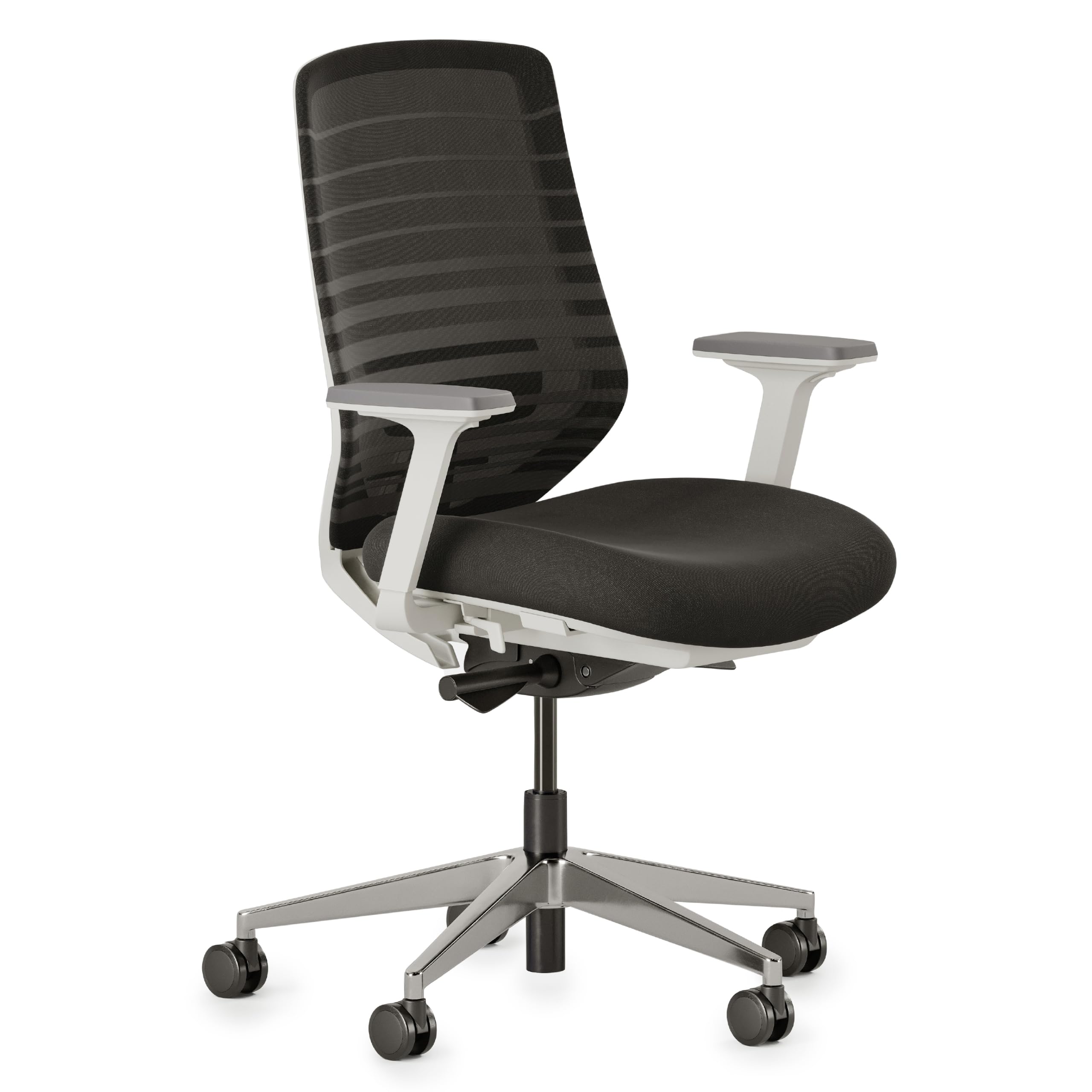
Eight adjustment points to dial in your perfect seating geometry.
The Branch chair is built around the concept that more adjustability points mean a better fit — and it delivers eight: recline angle, tilt tension, lumbar height, armrest height and width, seat height, and back angle. The breathable mesh backrest lets air circulate, while the cushioned foam seat provides a firmer, more supportive sit than a mesh-only seat. The anodized aluminum frame gives it a lighter, more refined look than the plastic-heavy competition, and the chair is designed to fit a wide range of body types. It works best for users who want to fine-tune every angle but do not need a headrest (the Branch does not include one).
Owners call it a “genuinely great chair” for 8-hour workdays and appreciate the high-quality wheels that roll smoothly on hard floors without needing a mat. The “critical structural parts are metal under plastic,” which reassures buyers about longevity. The honest mixed point is the lumbar support — it slides up and down but does not adjust in and out, and some users report it disappears when they recline. The armrests lack a lock and can slide forward under pressure, which annoys owners who want a set-and-forget position. For petite users (around 5’0″), the Branch works well at its lowest setting, but taller users may find the lack of a headrest a dealbreaker. It is a strong mid-tier choice for someone who values adjustability and aesthetics over lumbar depth or head support.
Polish and precision: the anodized aluminum frame and eight adjustment points make this a refined choice for buyers who prioritize fit and look. The mesh back keeps you cool while the foam seat offers support.
The lumbar gap: the lumbar support slides up-down only, with no depth adjustment, and it loses contact when you recline. If you need deep lumbar, the ProtoArc or CASASIO are better bets.
Ideal for smaller frames: at 5’0″, this chair fits perfectly at its lowest setting — rare for ergonomic chairs that often assume a taller user.
Not for headrest fans: there is no headrest option currently available on Amazon. If you need neck support, look at the CASASIO or CabeVibe.
10. WorkPro Quantum 9000 Series Ergonomic Mesh Chair
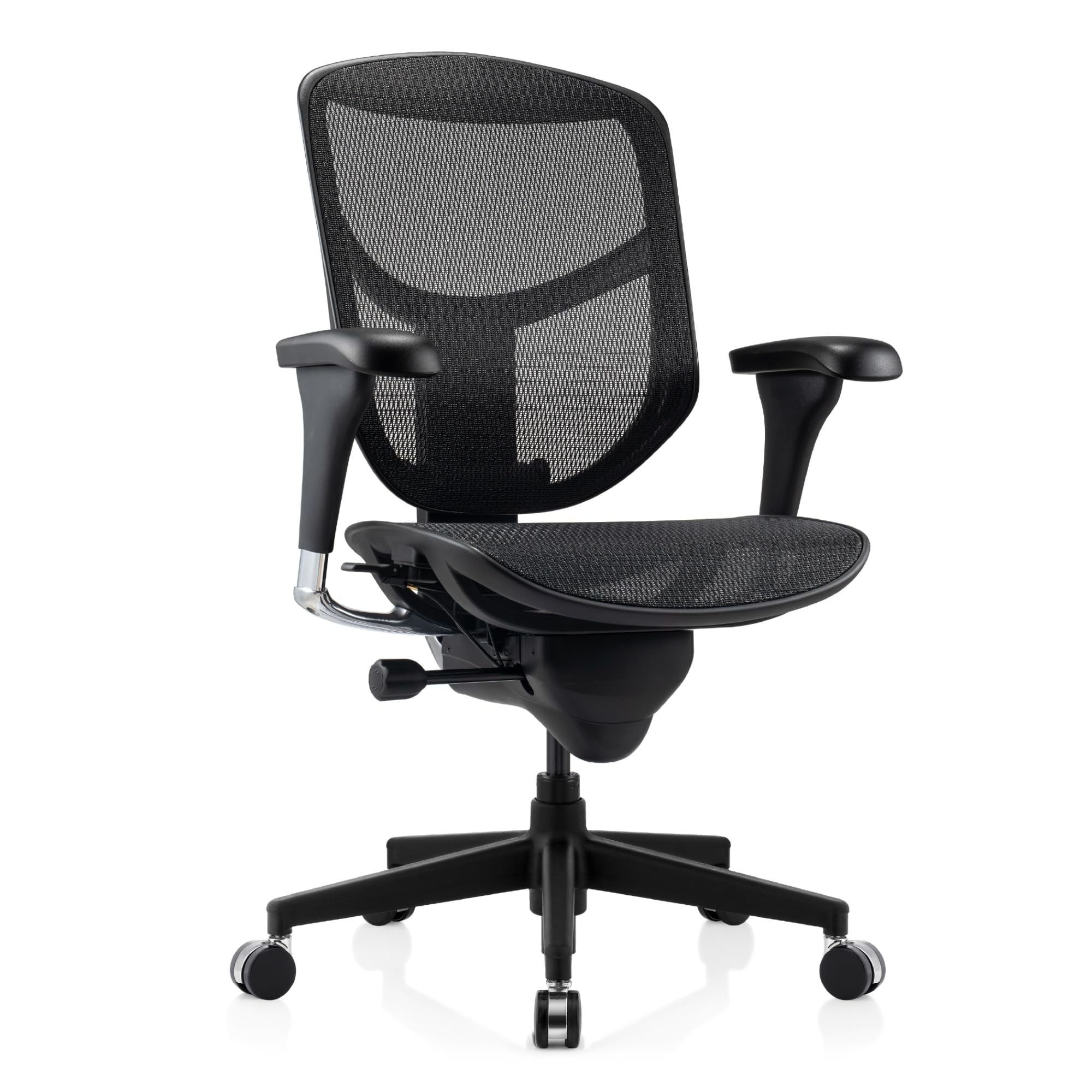
A professional-grade chair tested for 8-10 hour days, reviewed for 6 years.
The WorkPro Quantum 9000 is explicitly rated for 8-10 hours of professional use per day, with a mesh back and seat that promote airflow. The unique feature here is the ratchet back height adjustment — instead of a continuous slider, you raise or lower the back in discrete clicks, locking into place solidly. The seat depth also slides forward and back, letting you fine-tune thigh support. The mesh fabric covers both seat and back, and the lumbar support is built into the back structure rather than added as a separate pad. The chair supports 275 lbs and measures 37.5 to 43.75 inches high by 29.5 inches wide by 28 inches deep.
Six-year owners mention the chair is “definitely good enough,” with mesh that remains comfortable and adjustments that still work after half a decade. The only wear they note is the armrest cushions after 4-5 years. Assembly takes about 15 minutes with 8 bolts, and the seat slides forward for a custom fit — a feature some much pricier chairs lack. Buyers compare it favorably to the Herman Miller Aeron at one-third the price, calling it “a half-step down but a third of the cost.” The pragmatic trade-off: the value-for-money sentiment is mixed, with some feeling the chair is mediocre for its price tier, and the armrests pivot too easily without a lock. It is a no-frills ergonomic chair built for longevity rather than flash — exactly what a 10-hour workday chair should be.
The long-haul pick: a chair that still works after 6 years of daily use is the real evidence. The ratchet back and seat depth slider make this a low-maintenance tool for serious desk workers.
The wear note: armrest cushions show wear after 4-5 years, and the armrests pivot too freely with no lock. If you need locked-down armrests, look at the FLEXISPOT or CabeVibe.
Choose this for proven durability: the WorkPro’s 6-year track record and easy assembly (8 bolts, 15 minutes) make it a low-risk investment for long-term use.
Pass if you want premium materials: the plastic frame and foam armrests feel more utilitarian than the Branch’s aluminum frame or the Steelcase’s build quality.
11. Steelcase Amia Office Chair

A 70-year seating pioneer’s take on invisible, dynamic back support.
The Steelcase Amia enters the list as the most expensive pick and the only one from a brand with over 70 years of seating research. The hidden LiveLumbar system adjusts to your movement without visible knobs or levers — the back curves and flexes as you shift posture, providing dynamic lower back support in a clean, sleek package. The seat has flexible edges and extra cushioning, designed for pressure-free sitting during 8-10 hour days. The 4D arm support adjusts in height, width, pivot, and depth — the widest range of armrest movement in the entire list. The full recline range can be locked in an upright position, and the chair is Carbon Neutral certified.
Owners who spend 8-hour days in the Amia report no back or hip pain, calling it “a sound investment in comfort and value.” The chair holds up well — one owner reported zero mechanical issues after 2.5 years, unlike cheaper chairs that start squeaking within months. The 12-year warranty reinforces the message: Steelcase expects this chair to last. The honest trade-offs are the aggressive lumbar support (somefind it pushes too hard) and the lack of a headrest — the Amia is a mid-back chair with no head support. For the price, the Steelcase is a buy-it-for-decade proposition: you pay more upfront but likely spend zero on replacements. The squeaking issue reported by some on the recline mechanism is a known pattern, so test the tilt fully within the return window. For budget-focused buyers, the CASASIO or ProtoArc deliver 80% of the comfort at a fraction of the cost.
The Long Game
- Hidden LiveLumbar adjusts dynamically with your movement — no knobs, no levers.
- 4D arm support (height, width, pivot, depth) leads the category for arm adjustability.
- 12-year warranty and Carbon Neutral certification reflect a no-compromise build philosophy.
The Price You Pay
- No headrest included — this is a mid-back chair only, not for neck support.
- Lumbar support is aggressive for some; it pushes firmly rather than gently filling the gap.
- Squeaking on the recline mechanism reported on some units — test thoroughly.
Worth it for the decade: if you can budget for a chair that will last 10+ years and you do not need a headrest, the Amia is a genuine investment. The LiveLumbar and 4D arms are real differentiators.
Skip if: you need head support, dislike strong lumbar pressure, or are looking for the best value for today — the CASASIO or ProtoArc serve a similar function for much less.
Understanding the Specs
Foam Density (55D, Virgin Foam, etc.)
This is the number that tells you how long the seat cushion will hold up. 55D foam (55 kilograms per cubic meter) is on the firmer side — it resists collapsing even after months of daily use. “Virgin foam” means the material is made from new polyurethane rather than recycled scraps, which translates to better resilience and less sag. If a listing says “high-density foam” without a number, it is worth digging into reviews for how the cushion holds up over time. A 6.7-inch thick cushion sounds luxurious, but if the foam density is low, it will flatten out and you will feel the hard base underneath within a few months.
Seat Depth Adjustment
This is the spec most buyers miss and later regret. A seat pan that is too long presses into the back of your knees and cuts off circulation; one that is too short leaves your thighs dangling unsupported. Seat depth adjustment (sometimes called “seat slider”) lets you move the pan forward or backward by 1.5 to 2.5 inches. If you are 5’4″ or shorter, or 6’0″ or taller, look for a chair that explicitly lists seat depth adjustment. The ProtoArc EC200 and WorkPro Quantum 9000 are examples of chairs that include this feature — and they get specific praise for it from owners who fall outside the average height range.
Dynamic vs. Static Lumbar Support
Static lumbar support is a fixed curve or pad that stays in one position. It works fine if you stay in one posture all day, but most people shift between leaning forward to type, sitting upright in a meeting, and reclining to think. Dynamic lumbar support moves with you — either through a flexible back panel (like the Steelcase Amia’s LiveLumbar) or a spring-loaded pad (like the SIHOO B100’s adaptive lumbar). It adjusts automatically so your lower back always has contact, even as you change position. The trade-off is that dynamic lumbar can feel less “present” than a fixed pad that constantly pushes into your back. If you like a strong, constant pressure, a static 2D lumbar (up-down and in-out adjustment) might actually suit you better.
BIFMA and SGS Certification
BIFMA (Business and Institutional Furniture Manufacturers Association) and SGS are third-party testing organizations that verify furniture meets safety, durability, and structural integrity standards. A chair that is BIFMA certified has passed tests for stability, strength of the base, fatigue resistance of the gas lift, and endurance of the tilt mechanism. SGS certification is a similar independent verification. These certifications are not mandatory, but they are a strong signal that the chair was designed to survive daily use for several years rather than just the first return period. The GABRYLLY GY1108 is one of the few chairs in the budget-to-mid range that explicitly lists both certifications.
FAQ
How do I know if a chair is actually comfortable for 10 hours?
What is the difference between mesh and foam seats for all-day use?
Will a 10 hour office chair fit a 6’4″ person?
Do I need 3D or 4D armrests?
What does seat depth adjustment actually do for me?
Is a higher weight capacity always better?
How long should a 10 hour office chair last?
Can I get a chair with a headrest that actually works for reclining?
What is the best chair for a hot room or no air conditioning?
How important is the tilt lock feature?
Final Thoughts: The Verdict
If you want one dependable pick, the 10 hour office chair winner is the CASASIO Home Office Desk Chair because the virgin foam seat, dual-direction adjustable lumbar, and 3D headrest deliver proven all-day comfort at a price that undercuts chairs with fewer features. If you want the best seat depth adjustment on the list and a firm foam that resists sagging, grab the ProtoArc EC200. And for the tall or broad user who needs a chair that fits up to 6’5″ and supports 330 lbs, the CabeVibe C3 is the one to reach for.
How We Picked
We do not accept paid placement. Every pick is matched to a real buyer and a real use-case; we do not hands-on test units.
Sources & Methodology
Specifications: manufacturer listings and product documentation. Review insights: verified customer reviews, as of July 2026. Pricing: not shown on this page (it changes often); check the current price via the retailer link.
As an Amazon Associate, Gadgets Feed earns from qualifying purchases. This does not affect which products we feature.