
Our readers keep the lights on and my morning glass full of iced black tea. As an Amazon Associate, I earn from qualifying purchases.
Specs are compiled from manufacturer listings and verified buyer reviews and can change over time — please confirm the key details on the product page before buying.
The scariest moment for new parents is the silent pause while checking for a baby’s breath. Hospital-level baby monitors exist to ease that specific fear. A baby monitor with hospital-level features goes beyond a grainy video feed; it adds a medical-grade sensor layer that tracks breathing, oxygen, or pulse so you can rest easier.. This guide breaks down the nine strongest systems, from under-mattress movement sensors to FDA-cleared pulse oximetry socks, so you can match the tech to the level of confidence you need.
I’m Min — the founder and writer behind Gadgets Feed. This guide is built by comparing the manufacturers’ published specifications and the patterns across verified customer reviews, so you get each pick’s real strengths and trade-offs instead of marketing spin.
The most important thing to understand before you buy is that “hospital-level” can mean three completely different technologies, and each one fits a different family. So here is the essential breakdown of the best baby monitors with hospital-level features, starting with the one that combines a video screen and a breathing mat.
Our Picks at a Glance


How To Choose The Best Baby Monitors With Hospital-Level Features
Every monitor in this guide adds a medical-grade layer on top of a normal baby monitor. The key is figuring out which layer — movement, oxygen, or video — actually matches where your baby sleeps and how you want to be alerted.
Sensor Style: Under-Mattress vs. Wearable vs. Camera AI
Under-mattress sensors sit below the crib mattress and detect micro-movements from breathing, so the baby never touches them. Wearable clips or socks attach to the baby directly to track breathing rhythm or pulse. Camera-based AI uses computer vision to watch chest movement without any sensor at all. Each has a different false-alarm profile and a different set-up routine, so the “best” one is the one that fits your family’s habits.
Connectivity: Local Screen vs. Wi-Fi App
A non-Wi-Fi monitor with a dedicated parent unit offers a hack-free, secure connection that works even if your internet goes down. A Wi-Fi monitor lets you watch from anywhere on your phone but depends on your home network and app reliability. The right choice depends on whether you prioritize ironclad local security or remote access from work.
Oxygen and Pulse Tracking
If you want actual blood-oxygen (SpO2) and heart-rate numbers, you need a certified pulse oximeter, not a movement pad. The most advanced of these are cleared by regulators for home use, but they come with the responsibility of checking sensor placement to avoid false alarms.
Quick Comparison
| Model | Best For | Sensor Type | Video Display | Battery Life | Amazon |
|---|---|---|---|---|---|
| Babysense True Sleep HD★ Best Overall | Full crib coverage without wearables | 2 Under-Mattress Pads | 5″ HD Screen | 16 hours | Amazon |
| Nanit Pro & Flex StandPremium Pick | High-res video with breathing band | Sensor-Free Breathing Band | 1080p via App | Plug-In | Amazon |
| Owlet Dream Duo (Gen 3)Most Advanced | Medical-grade O2 and pulse tracking | Foot Sock Pulse Oximetry | 2K HD via App | ~16h Sock | Amazon |
| Manhero Continuous Pulse Oximeter | Spot-checking O2 and pulse | Finger Clip | Handheld LCD | 8 hours | Amazon |
| Manhero Overnight Pulse Oximeter | Overnight infant foot tracking | Foot + Finger Probes | 2.4″ HD Screen | 3 x AAA Batteries | Amazon |
| Sense-U AI 2.5K PTZ Camera | Smartphone monitoring with AI alerts | Camera AI / Sensor-Free | 2.5K via App | Plug-In | Amazon |
| Sense-U Pro Clip Monitor | Breathing & sleep position on the go | Diaper Clip + Temp | App via Bluetooth | 7+ Days | Amazon |
| Babysense Video & Breathing Bundle | Classic video + pad combo | 2 Under-Mattress Pads | 2.4″ Screen | — | Amazon |
| Bebcare iQ | Low-emission hybrid monitoring | Breathing Sensor Mat | 1080p via App + Unit | 3 Days (Unit) | Amazon |
In‑Depth Reviews
1. Babysense True Sleep HD FSA Baby Monitor
Our pick — over 4★ from 7,000+ verified ratings; the strongest balance of quality and price.
The two-in-one bundle that pairs a crisp video screen with a non-contact breathing mat for total crib coverage.
This is the rare monitor that solves both halves of the parenting equation. You get a 5-inch HD video screen with a remotely operated pan, tilt, and zoom camera, plus the Babysense 7 movement monitor, which uses two under-mattress sensor pads to track your baby’s micro-movements without ever touching them. The sensor pads cover the entire crib area, which means no wearable clip and nothing to irritate your baby’s skin.
Connectivity here is deliberately secure: it’s a non-Wi-Fi, hack-free connection, so you aren’t relying on your home internet or an app to stay in the loop. The parent unit runs on a 16-hour battery, and the camera adds a built-in adjustable night light, two-way audio, lullabies, and white noise so you can soothe your baby from the other room. Owners consistently call the picture quality the standout feature, with the split-screen view for multi-camera setups a close second.
The one honest caveat is reliability — it’s the most-discussed topic in the feedback, with the majority praising a stable connection while a smaller group reports the camera stopping over time. The flip side is that customer service has a fast replacement record; a defective parent unit was swapped for a working one the very next day. This is the best pick for parents who want a secure, wearable-free breathing monitor without a subscription.
What wins parents over
- Picture quality is the single most-praised feature — owners love the clear day and night video.
- Two under-mattress pads give full crib coverage with zero wearables.
- Non-Wi-Fi connection means no hack risk and no app required.
- FSA and HSA approved, making it a smart pre-tax purchase.
The trade-off to know
- Reliability gets mixed reviews — a minority report cameras stopping or connection drops.
- Battery life draws mixed feedback, so keep the parent unit near a charger.
- You can’t mute a single camera in split-screen mode.
Reach for this if: you want a wearable-free breathing monitor with a sharp local video screen and no monthly fees.
Look elsewhere if: you need remote viewing from work, since this is intentionally a non-Wi-Fi system.
2. Nanit Pro Smart Baby Monitor & Flex Stand
A premium 1080p camera that turns your phone into a full-featured video nursery with a breathing band.
Nanit takes a different route to hospital-level confidence: instead of sensors under the mattress, it uses a small sensor-free Breathing Band that wraps around your baby and a 1080p HD camera pointed at the crib. The camera offers a full 130-degree room view and two-way audio, plus sound and motion notifications, all streamed in real-time to the Nanit app on your phone.
The system is built for portability — the lightweight Flex Stand makes it easy to move from the nursery to the living room or on a trip, and the app lets you add multiple users so your whole parenting team stays connected. Security is a top priority here, with 256-bit AES encryption and two-factor authentication protecting your data. Owners call it the gold standard for video quality and alert sensitivity, with one noting it reliably detects crying from a remarkable distance.
This is one of the newer picks for a reason: the video and software experience is excellent when it works, but reliability feedback is mixed, with a minority reporting the camera stopping after a few months of use. At this level, it’s also priced as a premium device. It beats the Babysense True Sleep on remote access and video clarity — 1080p HD via app versus a 5-inch local screen — but it gives up the hardwired, no-internet-needed simplicity.
The standout spec: 1080p HD video with a full crib view and sensor-free breathing tracking via band.
The honest catch: an occasional unit fails within months, so buy with a good warranty in mind.
3. Owlet Dream Duo (Gen 3)
The only system here that pairs a 2K HD camera with an FDA-cleared sock tracking oxygen and heart rate.
If you want the closest thing to a hospital pulse-oximeter in a nursery, this is it. The Owlet Dream Duo combines the FDA-cleared Dream Sock, which uses medical-grade pulse oximetry to track your baby’s oxygen level and pulse rate while they sleep, with a 2K HD Dream Sight camera that delivers sharper detail than standard 1080p monitors. The camera’s 130-degree wide-angle lens and 4x zoom let you check for the tiniest chest rise from your phone.
The sock fits babies 1-18 months (6-30 lbs) and comes with four fabric socks, an ASTM-certified cable guard, and a base station that recharges the sensor — buyers report around 16 hours of battery per charge. You get real-time alerts if readings leave preset zones, plus customizable notifications for sound, movement, and crying. The app also tracks room temperature and humidity, and the whole system carries the SGS Cybersecurity Mark with 256-bit encryption, meaning your health data is verified secure. 94% of surveyed parents report better sleep with the sock in place., and it’s even HSA/FSA eligible.
This is the most feature-dense pick, but the trade-offs are real: connectivity gets negative feedback, with some owners hitting disconnects when moving away from the base, and the sock itself gets mixed reviews on fit. The key is proper sock placement — misplaced sensors are the most common cause of false alarms. If you want actual oxygen and pulse numbers rather than movement detection, this is the one to beat.
The decision-maker: medical-grade pulse oximetry on a baby’s foot is a level of tracking no under-mattress pad can match.
The fit note: it shines for anxious first-time parents, but only if you’re patient with setup and sock placement.
4. Sense-U AI 2.5K PTZ Baby Camera

A sharp 2.5K camera that uses AI to detect breathing, sound, and motion without any wearable sensor.
Here is a clever twist on hospital-level monitoring: instead of a pad or a sock, this camera uses advanced AI algorithms to detect sounds, human presence, and motion in real time, so your baby’s chest movement is tracked by software rather than a physical sensor. The 2.5K Pan-Tilt-Zoom feature offers a 345° pan and 50° tilt, covering nearly the entire room from your smartphone.
One of its biggest selling points is background audio monitoring with cry detection — the app keeps listening even when it’s running in the background, and owners note it responds instantly to noise or movement. It’s a one-time purchase with no hidden fees when you use a local SD card (not included), and optional cloud storage is available. Enterprise-level encryption and optional two-factor authentication keep your video secure, and a Private Mode lets you turn the camera off entirely for privacy.
Pan and tilt get consistent praise, and the camera quality is the most-discussed positive. The catch is that this is a Wi-Fi camera, so it depends on your home network, and a few owners mention connectivity hiccups. It beats the Babysense True Sleep on remote access and camera resolution — 2.5K via app versus 5-inch local — but it can’t match the True Sleep’s dedicated, non-Wi-Fi parent screen.
The smart-buy angle: you get a top-tier 2.5K camera with AI breathing detection at a mid-range price.
The one caveat: it lives and dies by your Wi-Fi strength, so a stable network is a must.
5. Sense-U Pro Baby Breathing & Sleep Monitor
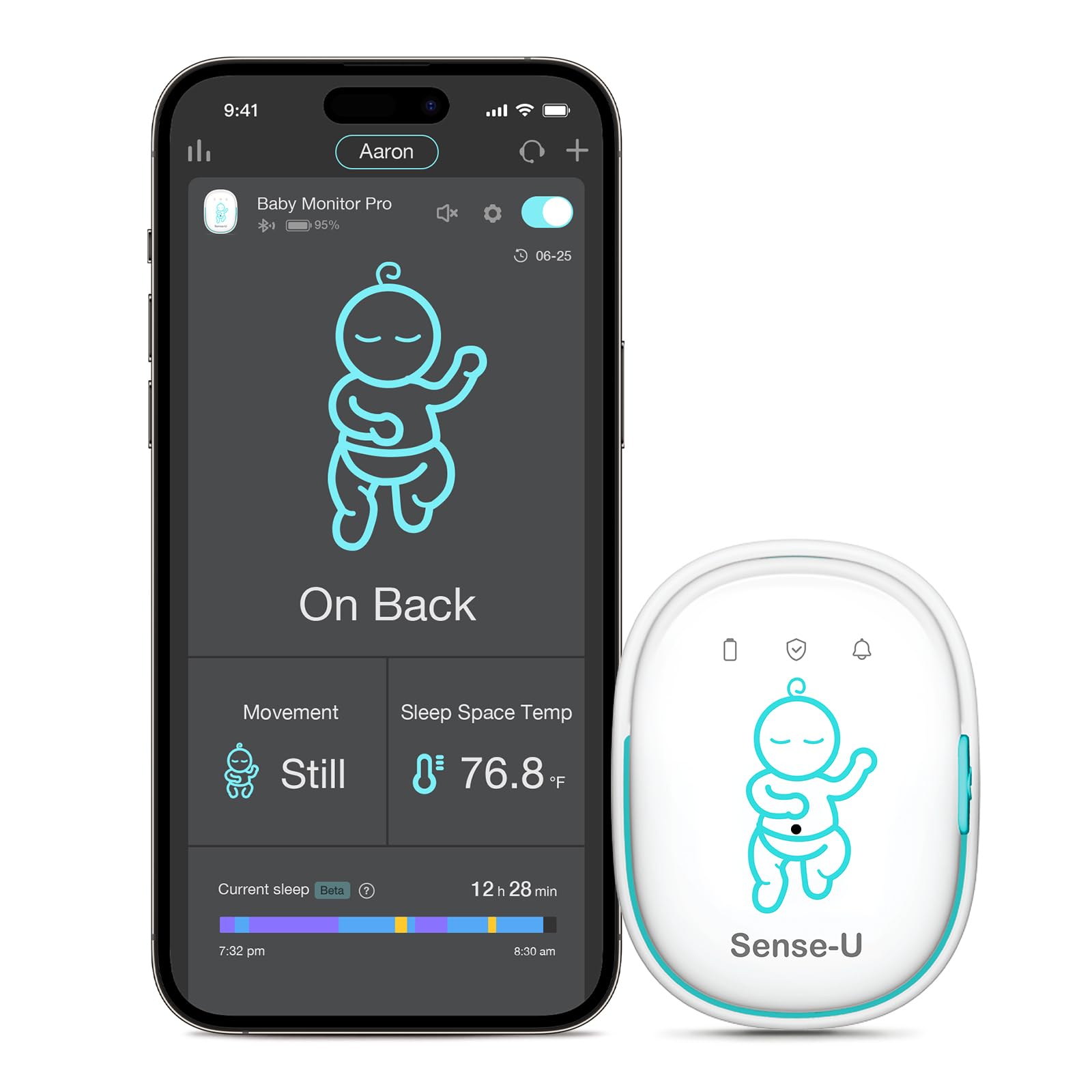
A wearable clip that tracks breathing rhythm, sleep position, and temperature for a week on one charge.
This is the pick for families who are constantly on the move. The Sense-U Pro clips onto your baby’s diaper with one hand and tracks abdominal movement, sleep position, and temperature trends, sending app notifications or audible alerts if your baby rolls over or shows signs of feeling warm. The lightweight, compact design makes it perfect for travel, and the battery lasts a genuinely useful 7+ days on a single charge.
The alert system is thoughtfully layered: if abdominal movement pauses for 15 seconds, the monitor gently vibrates to try to wake your baby first. If no movement is noticed afterward, an audible alert sounds and a notification goes to your smartphone. It uses Bluetooth Low Energy (BLE 4.0+) technology, which operates at a fraction of typical smartphone radiation levels, and it’s FSA/HSA eligible.
What wins people over is the sleep quality payoff — owners say it gives confidence and the detailed sleep cycle reports help them actually get more rest. The clip attaches reliably to the diaper, and it works over a swaddle, which is a real advantage over sensor mat systems. The one limitation is that the app can’t be used by both parents simultaneously unless you buy the right version, so check that before purchasing if you and your partner both want access.
The traveler’s choice: 7+ days of battery and a one-handed clip make this the easiest monitor to take anywhere.
The fit note: it’s Bluetooth-only, so you need your phone nearby rather than a dedicated parent screen.
6. Manhero Continuous Pulse Oximeter
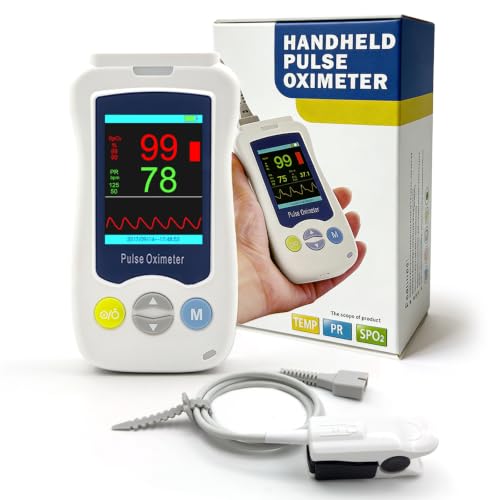
A handheld oximeter with hospital-grade SpO2 accuracy and a loud alarm for critical low readings.
This is a different kind of hospital-level tool — a continuous pulse oximeter rather than a baby monitor. It measures blood oxygen (SpO2) in a range of 70-99% with an accuracy of ±1%, and heart rate (PR) from 30-240 bpm accurate to ±1bpm. That’s the kind of precision you’d expect from medical equipment, and it’s designed to give parents instant alerts for critical lows like SpO2 below 90% or heart rate below 50 BPM.
You get 500 sets of data storage across two record modes — Point Test for spot checks and Trend Test for continuous data — so you can track long-term patterns. The large HD screen stays clear even at night, and the device is flexible on power: Micro USB, batteries, or plug-in. The included strap and comfortable finger probe make it practical for repeated use.
Owners praise the fast, accurate readings and the prompt adjustable alarm, with several noting it works well for pediatric use. The honest downside some mention is battery life — at 8 hours it drains fairly quickly, and it runs on 3 AAA batteries (included) rather than being rechargeable, with the USB-C port reserved for temperature probes. This is a strong pick if you want a reliable, portable spot-check device rather than a whole monitoring system.
The precise pick: ±1% SpO2 accuracy and ±1bpm heart rate make this a genuinely medical-grade tool.
The trade-off: not a full baby monitor — it’s a handheld device for on-demand readings, not overnight crib monitoring.
7. Manhero Overnight Pulse Oximeter
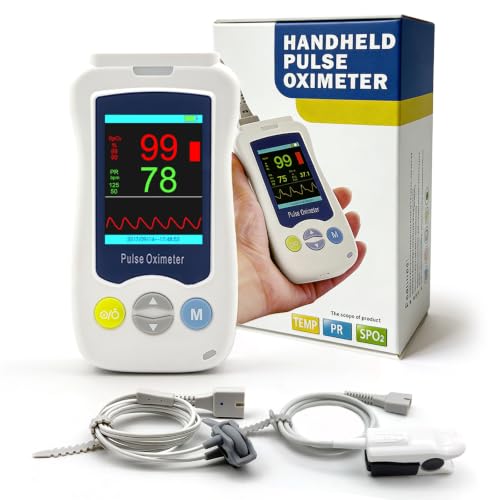
A family-focused oximeter that ships with both infant foot and adult finger probes for overnight tracking.
This version of the Manhero is built for the whole family. It delivers medical-grade SpO2 readings with a range of 70-100% and an error margin of ±1%, and it stores 500 spot-check records plus 24 hours of overnight logs for traceability. The 2.4-inch clear HD display makes it easy to read even in a dark nursery, and you get two flexible power options: disposable batteries or direct plug-in.
what separates it is the family set: dual specialized probes for adults and infants, with a secure adjustable strap designed to stay in place during a baby’s restless sleep. The customizable safe SpO2 levels trigger instant alerts, so you can set the threshold that matches your family’s health profile. It also includes a 1-year warranty, which is a useful safety net.
The biggest praise is the clear large screen and medical-grade precision, but the infant foot probe gets mixed feedback — one owner found the rubber pad slides off the foot, which affects reading consistency. Another notes the 3 AAA batteries last only about 6-7 hours at low settings, and none are included. If you want a system that covers both a baby and an adult in one device, this is a sensible pick, but budget for batteries and be patient with the foot strap fit.
The family angle: two probes mean one device covers your infant and an adult family member.
The honest catch: the infant foot strap needs careful fitting to avoid inconsistent readings.
8. Babysense Video & Breathing Movement Monitor Bundle

The original patented breathing mat paired with a compact 2.4-inch video screen for a simple, reliable bundle.
This is Babysense’s classic approach: a dedicated 2.4-inch video monitor combined with the Babysense 7 movement monitor, which uses two under-mattress sensor pads to detect micro-movements through the mattress. The non-contact design means nothing touches your baby or disturbs their sleep, and the pads cover the entire crib area.
The video monitor uses enhanced 2.4GHz FHSS technology for a stable, secure, interference-free connection. It packs in a surprising number of reach features for a compact unit: room temperature monitoring with high/low alerts, a remote night light, Eco Mode voice activation, sound-activated LED indicators, 2x digital zoom, multi-camera expandability up to four cameras, lullabies and white noise, digital pan/tilt, and auto scan view. It can even be mounted on a tabletop or wall.
Owners love the confidence the breathing sensor provides, with many saying it helped calm new-parent anxiety and actually let them sleep. The alarm functionality gets mixed feedback though — it’s very sensitive, and some owners find it triggers false alarms, particularly in environments with fans or strong airflow. There’s also a learning curve: the sensors are so sensitive that you’ll want to remember to switch it off when you lift your baby out of the crib. It’s a great budget-friendly bundle if you want the classic Babysense reliability in a smaller package.
The proven strengths
- Under-mattress sensors are the original patented non-touch design, The under-mattress sensor design has been in use since 1992..
- Multi-camera expandability up to four cameras for bigger homes.
- Room temperature monitoring with high/low alerts built in.
The reality check
- Alarm sensitivity gets mixed reviews — false alarms can happen with fans or drafts.
- The 2.4″ screen is noticeably smaller and lower-res than the True Sleep’s 5″ display.
Choose this for: a no-frills, compact bundle with the proven under-mattress sensor technology.
Consider the True Sleep instead if: you want the sharper 5-inch screen and don’t mind paying a bit more.
9. Bebcare iQ Smart HD Baby Monitor
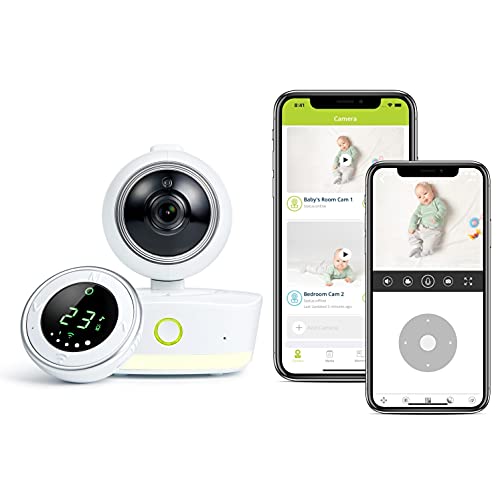
A hybrid system with a 1080p 360° camera and a breathing mat, marketed for ultra-low wireless radiation.
If reducing wireless radiation around your baby is a priority, this is the monitor built for that mission. The Bebcare iQ uses its own DSR Low Emissions Technology — the maker describes it as It’s marketed as the first ultra-low wireless radiation system of its kind. — and includes a breathing sensor mat alongside a 1080p HD camera with full 360-degree pan-and-tilt and advanced digital zoom. You get a complimentary digital audio parent unit so you can hear and interact with your baby even without the app.
The camera streams live or recorded video in brilliant detail to any iOS or Android device, with advanced night vision using invisible infrared LEDs so you can see your baby in total darkness. It also packs in music lullabies, a temperature sensor, and a comfort nightlight. Owners who like the concept specifically appreciate the safe/wireless mode switch to reduce EMF, and the parent unit offers a long 3-day battery with a The parent unit offers a 2000-foot radio range..
This is a niche pick with polarizing feedback. The low-emission concept wins loyal supporters, and the hybrid audio-plus-app design is genuinely useful, but the execution has drawn criticism: some customers note slow video loading and a clicking noise that startles the baby, and customer service has been flagged as unresponsive by a few. It’s the priciest option here, so it’s really for parents who prioritize the low-radiation feature above all else and are willing to troubleshoot.
The niche fit: ultra-low wireless radiation tech makes this the pick for EMF-conscious families.
The hard truth: reliability and app performance get sharp criticism, so this isn’t the safest bet for anxious first-timers.
Understanding the Specs
SpO2 and Heart Rate Accuracy
If you’re looking at a pulse oximeter, the two numbers that matter are the measuring range and the error margin. A range of 70-99% with ±1% accuracy means the device can reliably read oxygen saturation between 70 and 99 percent, off by no more than one percentage point in either direction. Heart rate accuracy works the same way — ±1bpm means the pulse reading is essentially as precise as a hospital monitor. These specs tell you whether the device is truly medical-grade or just a wellness gadget.
Sensor-Free vs. Wearable vs. Under-Mattress
There are three ways these monitors track your baby’s breathing. Under-mattress pads use sensors below the crib to detect micro-movements — nothing touches the baby. Wearable clips or socks attach to the baby directly to track movement or pulse. Camera AI uses software to watch chest movement through video. Under-mattress pads are ideal for babies who won’t tolerate wearables, while socks give you actual oxygen numbers. Camera AI is the least invasive but depends on a clear view of the crib.
FAQ
What is the difference between a breathing sensor mat and a pulse oximeter sock?
Are non-Wi-Fi baby monitors more secure than Wi-Fi monitors?
Will a breathing sensor mat work with any crib mattress?
How long does the Owlet Dream Sock battery last per charge?
Can I use a clip-on breathing monitor with a swaddle?
What does FSA or HSA eligible mean for a baby monitor?
Is the Owlet Dream Sock FDA-cleared for home use?
How many cameras can I connect to a Babysense monitor?
Final Thoughts: The Verdict
For most families, the winner among baby monitors with hospital-level features is the Babysense True Sleep HD because it pairs a sharp 5-inch screen with a wearable-free under-mattress breathing sensor and a secure non-Wi-Fi connection at a sensible price. If you need actual oxygen and pulse numbers, the