
Our readers keep the lights on and my morning glass full of iced black tea. As an Amazon Associate, I earn from qualifying purchases.
Specs are compiled from manufacturer listings and verified buyer reviews and can change over time — please confirm the key details on the product page before buying.
Shooting 35mm color film today means choosing between a nostalgic look, reliable handling, and a budget that doesn’t hurt. The best pick for most people balances all three: Kodak ColorPlus 200 wins because it delivers warm, forgiving tones, handles easy, and is priced for everyday shooting. For night scenes and city lights, you’ll want the speed of CineStill 800Tungsten instead.
I’m Min — the founder and writer behind Gadgets Feed. This guide is built by comparing the manufacturers’ published specifications and the patterns across verified customer reviews, so you get each pick’s real strengths and trade-offs instead of marketing spin.
Whether you’re loading your first roll or restocking your fridge, the 35mm color film on this list covers every shooting style, from bright daylight to neon nights.
Our Picks at a Glance


How To Choose The Best 35mm Color Film
The first question to answer is where you’ll be shooting. A bright park in the afternoon needs a slow, fine-grained film like ISO 200. A concert stage or a street at dusk needs a fast ISO 800 stock. Match the ISO to your shooting conditions, and the rest of your exposure decisions fall into place.
ISO Speed is Your Exposure Partner
ISO measures how sensitive the film is to light. A 200-speed film (like ColorPlus or Gold) loves sunshine and flash, giving you fine grain and crisp detail. An 800-speed film (like CineStill or Portra) lets you shoot handheld indoors or at night, with more visible grain as the trade-off. When in doubt, a 200-speed stock is the forgiving choice for beginners.
Color Negative vs. Slide Film
All the picks here are color negative film, developed in the standard C-41 process that any photo lab handles. Negative film has wide exposure latitude (it forgives mistakes) and produces prints that are easy to scan. Slide film is a different beast with punchier contrast and no forgiveness, which is why most casual shooters stick with negative stock.
Single Rolls vs. Multi-Packs
Film is a consumable, so the cost per roll matters. Buying a 3-pack of a 36-exposure stock usually lowers the price per shot and ensures you have fresh stock ready. If you’re still finding your style, a single roll lets you test the look before committing to a bulk buy.
Quick Comparison
| Model | Best For | ISO Speed | Exposures | Pack Size | Amazon |
|---|---|---|---|---|---|
| Kodak ColorPlus 200 (4-Pack)★ Best Overall | Everyday daylight shooting | 200 | 36 | 4 rolls | Amazon |
| CineStill 800TungstenNight Specialist | Night and cityscape shots | 800 | 36 | 1 roll | Amazon |
| Kodak Gold 200 (3-Pack) | Reliable budget color | 200 | 36 | 3 rolls | Amazon |
| Fujifilm Fujicolor 200 (3-Pack) | Vivid natural skin tones | 200 | 36 | 3 rolls | Amazon |
| Kodak ColorPlus 200 (3-Pack) | Vibrant colors on sunny days | 200 | 36 | 3 rolls | Amazon |
| Kodak Portra 800 (2-Pack) | Low-light portraits | 800 | 36 | 2 rolls | Amazon |
| Lomography Color Negative 800 (3-Pack) | Concert and action shots | 800 | 36 | 3 rolls | Amazon |
In-Depth Reviews
1. 4 Rolls of Kodak Colorplus 200 ASA 36 Exposure
Our pick — over 4.5★ from 950+ verified ratings; the strongest balance of quality and price.
The everyday roll that makes daylight colors look easily warm and forgiving.
If you want one film that handles birthdays, park walks, and travel snaps without fuss, this is it. At ISO 200 it needs bright light or a flash, but it rewards you with rich color reproduction and shadow detail that punches above its price. Buyers report that compared to Ektar 35mm it delivers warmer tones, excellent shadow detail, and that desirable sky blue — enough that some owners switched to it as their primary stock.
It’s also the friendliest film here for people new to the hobby. The grain is visible but charming, and the roll loads and unloads easily in any 35mm camera. A 4-roll pack at 36 exposures each means you can shoot a full weekend and keep a roll in reserve.
What wins people over is the image quality for non-professional use — it’s the aspect owners single out most, with strong praise for the value and color too. One owner’s honest take: “The colors look nice, its not bad quality grain or anything.”
Why It Leads
- Warm, filmic tones with strong shadow detail
- Easy to load and forgiving for beginners
- 4 rolls of 36 exposures stretches your budget
Keep In Mind
- Visible grain — ideal for a vintage look, not for pixel-peepers
- ISO 200 struggles in dim indoor light without flash
Grab it for: your everyday camera bag, sunny outings, and learning the craft.
Look further if: you shoot mostly after dark — you want an 800-speed stock instead.
2. CineStill 800Tungsten High Speed (ISO 800) Color Film, 36exp. 135 DX Coded
The roll built for neon signs, streetlights, and the blue hour that follows sunset.
When the sun drops and the city lights flicker on, most 200-speed films give up. This stock is tungsten-balanced, meaning it’s tuned for artificial light, so it renders neon and sodium lamps with moody, cinematic color. Owners mention: “When the sun drops below the horizon, you need extra stops! This film does wonders in city scapes where a wide variety of light sources exist.”
The look is its signature: it’s factory spooled into DX-coded cartridges and uses a motion-picture stock without the remjet backing, which creates a unique halation effect — a soft glow around bright lights that screams film. You can push it to 3200 if you need more speed, or shoot it at 500 with an 85B filter in daylight.
The thing everyone raves about is the exposure latitude — owners praise it most — along with the film quality and its suitability for evening work. The honest trade-off: in daylight the tones can lean very blue, so this isn’t the versatile all-rounder you’d pick for a sunny picnic.
Made for the night: cityscapes, concerts, and low-light scenes where its color and halation shine.
A fair caveat: the strong blue cast makes it a specialist, not your everyday daylight roll.
3. Kodak Kodacolor Gold 200GB 135-36 CN 3P Film

A dependable daylight stock that turns simple outdoor scenes into golden, vintage-toned memories.
You get that classic warm, saturated look Kodak Gold is known for, and the 3-pack at 36 exposures each makes the value the headline: customers note it’s “a great value for the price, and the photo quality came out crisp and clean.” It’s also a famously forgiving film for beginners — easy to load and reliable in the results, so your first rolls come out sharp without fuss.
The character is the draw. In natural daylight, the tones lean warm and nostalgic, with one first-time user describing a vintage, “LA” style effect in their photos. It’s not the sharpest or finest-grained stock in this list, but it makes ordinary scenes look pleasantly filmic.
Owners keep coming back to the combination of price and quality, calling it their favorite film and noting it has never let them down. If you want a dependable, affordable stock for sunny shooting and you like warm colors, this 3-pack is hard to argue with.
The case for it: reliable, warm-toned daylight results at a friendly per-roll cost.
Who should skip: anyone needing low-light speed or razor-sharp fine grain — this isn’t that film.
4. Fujifilm Fujicolor 200 Color Negative Film – Vivid Color Prints in Daylight & Flash (35mm Roll Film, 36 Exposures) – 3 Rolls
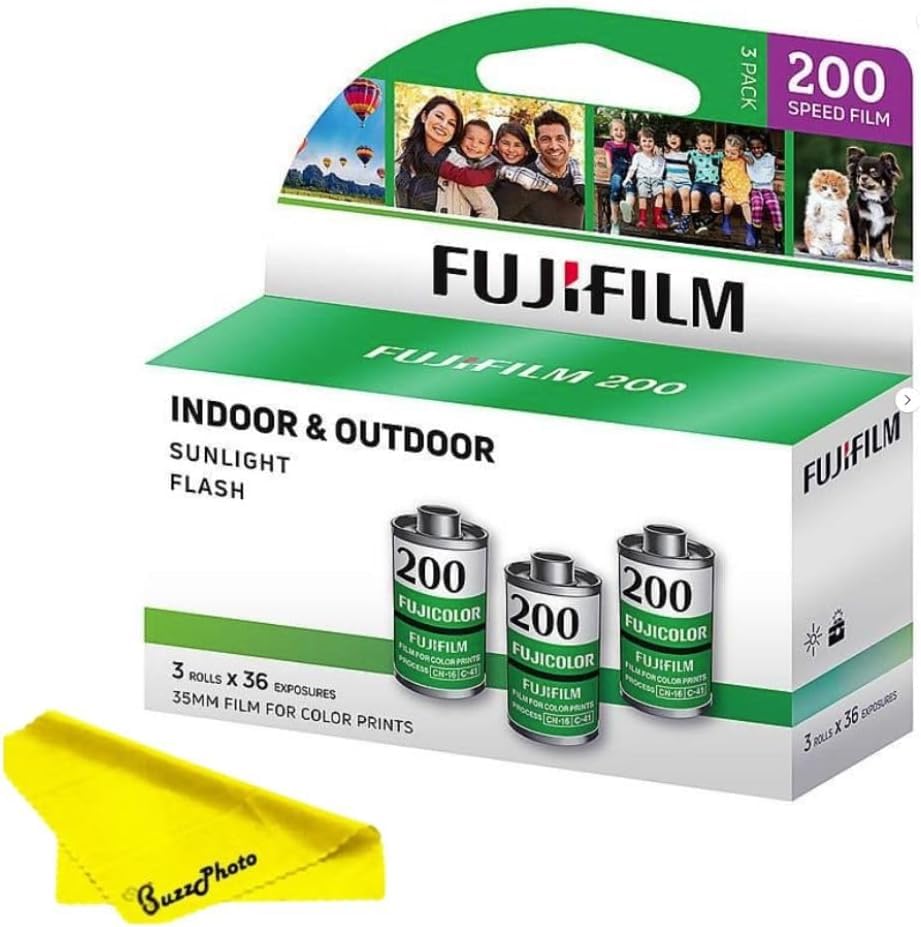
The daylight choice for crisp detail and natural skin tones that stay true to life.
Fujifilm’s 200-speed stock is tuned for bright outdoor light and flash, and it shows in the results. Buyers describe it as “a great choice for anyone looking to capture vibrant, natural-looking photos on film,” with excellent color reproduction, warm tones, and sharp detail. If skin tones matter to you — portraits, family candids, people at events — this is the film that flatters them.
At 36 exposures per roll and three rolls in the pack, it’s built for events, travel, and casual snapshots where you want plenty of shots and consistent quality. The fine grain keeps details crisp, and the smooth color transitions avoid the harsh look that cheaper stocks can have.
The film quality is what owners praise most, followed by picture quality, color, and value. It’s a well-rounded daylight performer that sits neatly between budget Kodak and premium Portra — a smart middle ground for everyday shooting.
What You Get
- Natural skin tones and warm, sharp detail
- Fine grain keeps printed photos crisp
- Solid for events, travel, and flash work
The Limit
- 200 speed means it struggles in low light without flash
- Some owners suspect it’s rebadged Kodak Gold — but the results speak for themselves
Choose it for: people-focused daylight shooting with true-to-life color.
Think twice if: you want heavy vintage character — this leans clean and natural instead.
5. Kodak ColorPlus 200 (Pack of 3)

A sunny-day favorite that makes colors pop with a soft, nostalgic filter you can’t fake digitally.
This is the film that gives you “vibrant colors and a bit of grain” on bright days — owners describe the photos as having a vintage, Hollywood-movie feel. It’s a classic beginner choice because it’s easy to load, forgiving, and delivers characterful shots right out of the lab. The 3-pack of 36-exposure rolls keeps the cost per shot friendly.
Color is the star here: it’s the second most-praised aspect after overall film quality. On sunny days the colors “really pop,” as one owner put it, while the grain adds a soft, blurred-filter effect that people find appealing. It’s not the sharpest or most neutral stock — it’s the one you pick when you want the photo to feel like film.
Owners consistently call it good value and note reliable Kodak quality, with some saying it’s their favorite film they’ve tried so far. If your camera comes out mostly in daylight and you love a nostalgic look, this 3-pack delivers exactly that.
For the sunny-day shooter: vibrant color and visible grain that screams classic film.
Not ideal for: low-light work or anyone wanting clinical color accuracy.
6. Pack of 2 Kodak 145 1855 Professional Portra 800 Color Negative Film (ISO 800) 35mm 36 Exposures

The pro-grade low-light portrait film with grain so fine you’ll forget it’s 800 speed.
Portra is the name photographers whisper when skin tones and low light both matter. This 800-speed version gives you all the advantages of a fast film with a fineness of grain that is unsurpassed in its class — ideal for long lenses, high action, and low light. It captures even background nuances in dim settings, and you can push it to 1600 when you need extra speed.
The color quality is the standout, with owners describing the results as dreamy, beautifully saturated, and “nostalgic without being cartoonish.” It’s a film that flatters people — the reason it’s a favorite for night and low-light portrait work. The honest downside: it’s expensive, and it’s a 2-pack rather than a 3-pack, so the per-roll cost is higher than anything else here.
Owners call it reliable and one of the best color negatives by far, praising the film quality and color quality most. If you shoot people in evening light and want the premium look, this is the roll to reach for — just know you’re paying for that class.
Why It’s Premium
- Fine grain at 800 speed for low-light portraits
- Beautiful saturated tones that stay natural
- Push to 1600 when the light gets really thin
The Cost
- Pricey per roll compared to 200-speed stocks
- Only 2 rolls in the pack
Reach for it when: skin tones and low light both matter and you want the best.
Look elsewhere if: you’re on a tight budget or only shoot in full sun.
7. Lomography Color Negative 800 ISO 35mm 3 Pack

An ultra-saturated 800-speed roll that turns concerts, bars, and night streets into a color show.
For fast, creative shooting after dark, this is the film that delivers “ultra-saturated” color with heavy blacks, cutting whites, and insane colors. It’s a super-fine grain color negative at a fast 800 ISO, so you can shoot indoors without a flash — owners note it works well for concert photography and action in low light. The 36-exposure 3-pack makes it a smarter value than most single premium rolls.
The look is distinct: strong colors with teal undertones in the shadows, which owners praise for that modern aesthetic feel. It’s grainier and bolder than the 100-speed films, so it’s a creative choice rather than a neutral one.
Quality and color are what owners praise most, along with versatility across concerts, night shooting, and even indoor day shots. One owner summed it up: “you can easily take photos indoors without a flash. There is also a great character to the colors.” If you want speed and personality, this pack delivers both.
Made for the creative night owl: saturated, characterful shots in low light without a flash.
Know before you buy: colors can be unpredictable and grain is visible — that’s the aesthetic, not a flaw.
Understanding the Specs
ISO Speed
ISO tells you how sensitive the film is to light. Lower numbers like 200 need bright sun or flash and give you fine grain and crisp detail. Higher numbers like 800 let you shoot in dim places without a flash, but you trade that for more visible grain. Match the ISO to the light you’ll be shooting in.
Exposure Count
This is simply how many photos you get per roll. All the picks here are 36-exposure rolls, which is the standard maximum for 35mm film. That’s plenty for a day out, an event, or a weekend trip before you need to reload.
FAQ
What is the difference between ISO 200 and ISO 800 film?
Can I develop 35mm color film at any photo lab?
Will 35mm film work in my camera?
What does 36 exposures mean and why does it matter?
Why does CineStill 800Tungsten look bluer than other films?
Is Kodak Portra 800 worth the higher price?
What does “push to 1600” or “push to 3200” mean?
Is the Lomography film grainy?
Final Thoughts: The Verdict
For most people, the 35mm color film winner is the Kodak ColorPlus 200 4-pack because it balances warm, forgiving tones with an easy, beginner-friendly nature at a price that doesn’t punish daily shooting. If you want night photography with cinematic character, the CineStill 800Tungsten is the one to load after sunset, and for premium low-light portraits with beautiful color, the Kodak Portra 800 is worth the splurge. Start with ColorPlus, learn the look you love, then branch out from there.
How We Picked
We do not accept paid placement. Every pick is matched to a real buyer and a real use-case; we do not hands-on test units.
Sources & Methodology
Specifications: manufacturer listings and product documentation. Review insights: verified customer reviews, as of July 2026. Pricing: not shown on this page (it changes often); check the current price via the retailer link.
As an Amazon Associate, Gadgets Feed earns from qualifying purchases. This does not affect which products we feature.