
Our readers keep the lights on and my morning glass full of iced black tea. As an Amazon Associate, I earn from qualifying purchases.
Specs are compiled from manufacturer listings and verified buyer reviews and can change over time — please confirm the key details on the product page before buying.
That rough 1-2 shift, the shudder at highway speed, the slow reverse engagement — a worn automatic transmission makes itself known in ugly ways. The right additive won’t rebuild worn clutches, but it can clean varnish, soften hardened seals, and smooth out shifting enough to feel like a new gearbox. This guide compares the top-rated additives by what they actually do, so you can match the fix to your symptom.
I’m Min — the founder and writer behind Gadgets Feed. This guide is built by comparing the manufacturers’ published specifications and the patterns across verified customer reviews, so you get each pick’s real strengths and trade-offs instead of marketing spin.
To fix a shudder, slip, leak, or hard shift, you need an automatic transmission additive that targets that exact symptom and matches your transmission fluid type.
Our Picks at a Glance


How To Choose The Best Automatic Transmission Additive
Before you pour anything into your dipstick tube, identify the exact symptom. A shudder at steady cruise is a torque converter clutch issue; a hard 1-2 shift is often varnish on the valve body; a puddle under the car points to a leak. Different additives target different problems, and the wrong one will do nothing or worse.
Match the Fix to the Symptom
If your transmission slips or shudders, you need a friction modifier or anti-shudder additive — these change how the clutch plates grip. If fluid is leaking, you need a seal conditioner that swells hardened rubber. If shifts are harsh, look for a cleaner that dissolves varnish and sludge buildup inside the valve body. No single product does all three jobs well, so read the label’s stated purpose before buying.
Check Fluid Compatibility First
Most additives are formulated for conventional automatic transmissions and will state they’re not for use in CVTs (continuously variable transmissions) or specific fluids like Ford Type F. Pouring a friction modifier into a CVT can damage the belt and pulleys. Always verify the additive matches your vehicle’s transmission type and fluid specification — a mismatch is the fastest way to turn a fix into a replacement.
Quick Comparison
| Model | Best For | Volume | Primary Action | Key Warning | Amazon |
|---|---|---|---|---|---|
| zMAX Transmission Formula★ Best Overall | Hard shifts & varnish | 6 oz | Cleaner / lubricant | Not for CVT | Amazon |
| ATP AT-202Shudder Stoppers | Shudder & heat | 8 oz | Protectant | — | Amazon |
| BG ATC PlusSeal Saver | Seal leaks | 11 oz | Conditioner / sealer | — | Amazon |
| Lubegard 50902 | Overheating & hard shifts | 32 oz | Protectant / coolant | Not for CVT | Amazon |
| CRC Trans-X | Stop leaks & slip | 15 oz | Leak fix / tune-up | — | Amazon |
| Muscle MT-10 | Extreme pressure wear | 8 oz | Anti-friction | Not for CVT | Amazon |
| Bars Leak Sealant | Transmission leaks | 200 ml | Seal restorer | — | Amazon |
| XADO AMC | Slip & shudder | 30 ml | Metal conditioner | — | Amazon |
| Lubegard Shudder Fix 6-Pack | Torque converter shudder | 59.2 ml (6 tubes) | Friction modifier | Not for CVT / Type F | Amazon |
In‑Depth Reviews
1. zMAX Transmission Formula 2-Pack
Our pick — over 4.5★ from 750+ verified ratings; the strongest balance of quality and price.
The varnish-busting cleaner that brings hard-shifting slush-boxes back to life.
If your gears clunk into place, the culprit is often varnish baked onto the valve body over years of heat. zMAX’s micro-lubrication soaks into metal surfaces to reduce gear wear while its cleaning action dissolves that varnish for smoother shifting. Owners of a 2014 GMC Acadia with hard 1-2 and 2-3 shifts after a flush report it shifted smoother within 30 minutes and felt like new in days.
It also keeps seals supple, which helps prevent leaks before they start, and it’s safe for both automatic and manual gearboxes. The catch is that it’s a maintenance and cleaning product — it won’t fix worn clutches or a slipping transmission, and it’s not for use in CVT transmissions. Add it every time you change your transmission fluid, and it does not void manufacturer warranties.
What wins people over is its effectiveness — the most-cited reason buyers give for liking it — followed closely by the quality of the shifting improvement. An owner of a 2016 Taurus SHO with hard shifts since 30k miles reported smoother shifts within 20 miles of adding it. It’s the most complete preventative option here, suitable for a broad range of vehicles.
Why it wins
- Cleans varnish for genuinely smoother shifts
- Softens seals to prevent future leaks
- Works in automatic and manual transmissions
Know the limits
- Not a fix for worn clutches or heavy slip
- Not for use in CVT transmissions
Reach for this if: you want a preventative cleaner that smooths hard shifts and guards seals during routine fluid changes.
Look elsewhere if: your transmission is actively slipping or you drive a CVT — this won’t rebuild hardware.
2. ATP Automotive AT-202 ATF Protectant
The heat-fighter that targets torque converter shudder and clutch chatter head-on.
A shudder at highway cruise is the torque converter clutch struggling, and ATP AT-202 is purpose-built for that. It eliminates torque converter shutter and clutch pack chatter while reducing internal heat and wear — heat being the main enemy of any automatic.
It resists fluid thermal breakdown, oxidation, varnish, and sludge, which keeps the fluid healthier for longer. The synthetic formula blends with fluid for immediate effectiveness and is compatible with all automatic transmissions, including 4×4 transfer cases. At 8 ounces, it’s a slightly smaller bottle than some rivals, but it’s a concentrated protectant rather than a top-off.
Transmission performance is the most-cited reason owners buy it, with smooth operation as the second. Owners note it shifts “as smoothly as butter” — though one honest account admits the effect fades after a few months, so you may need to re-dose it periodically. It’s the right pick when shudder, not hard shifting, is your primary complaint.
Best for shudder: targeted relief for torque converter shudder and clutch chatter, with the honest caveat that results may fade after a few months and need a re-dose.
3. BG ATC Plus
The professional-grade conditioner that softens hardened seals to stop leaks at the source.
Leaks happen when transmission seals harden and shrink with age, and BG ATC Plus reverses that process. It conditions hardened seals, keeping them soft and pliable to prevent leaks, while also improving fluid oxidation stability to prolong fluid life. An owner of a 2004 F250 reported two cans cured a torque converter shudder and stalls immediately — a fix that saved thousands in mechanic costs.
It controls transmission shudder, retards the formation of sludge and varnish deposits, and prevents foaming, which helps keep hydraulic pressure consistent. With 11 fluid ounces in a can, it treats a full transmission without needing a second bottle. It enhances both new and used automatic transmission fluid, making it useful at any service interval.
Quality is the thing buyers praise most, with transmission performance and effectiveness close behind. A 2009 Outback owner found smoother shifts after three fluid changes with it, noting it softens seals and replenishes friction modifiers. The recommended routine is to add it every 20,000 miles — a simple maintenance habit that keeps seals healthy.
Leak prevention: the go-to for older transmissions with weeping seals, with the added benefit of smoother shifts from refreshed friction modifiers.
4. Lubegard 50902 Automatic Transmission Fluid Protectant

The big-bottle heat manager that lowers operating temperatures and softens harsh shifts.
Heat is what kills automatic transmissions, and Lubegard 50902 directly attacks it — the maker claims it cuts improve operating temperatures by up to 40°F. It’s also the only protectant that increases the fluid’s ability to transfer heat, which keeps the whole unit cooler under load. Buyers report temperature drops of 8-10 degrees in real-world use.
It eliminates clutch chatter and torque converter shudder, and softens harsh shifts so they’re quicker in duration. The 32-ounce bottle is more than enough for a full transmission, and it protects new seals while restoring older ones to like-new condition. It’s not for use in CVT transmissions — standard automatics only.
Smoothness is the most-praised aspect, with effectiveness close behind. A neglected 96 F-150 with hard shifting and gear-staying issues felt like a new transmission afterward. One owner added it to four separate transmissions and saw smoother shifting in each, noting temperature changes were less noticeable since those vehicles cool through the radiator.
Standout strengths
- Largest bottle at 32 oz for multiple treatments
- Reduces operating temps up to 40 degrees F
- Restores old seals without adverse side effects
What to check
- Not for CVT transmissions
- Use exactly the amount called for
Grab this if: you run hot, tow, or want one bottle that handles heat, shudder, and seal conditioning.
skip it if: you drive a CVT — this is for conventional automatic transmissions only.
5. CRC 402015 Trans-X Slip-Stop Leak-Fix

The two-in-one that stops leaks and restores movement in a single pour.
When a transmission stops moving entirely, most owners assume the worst — but CRC Trans-X has a track record of reviving them. An owner of a 2007 Toyota Vanguard reported it fixed a no-movement issue hours after adding 250ml, with the fix lasting 3-4 months at a time over three years of use. That kind of repeated success builds real trust.
It works as both a stop-leak and a tune-up, addressing slipping and rough shifting while conditioning seals. It’s also compatible with power steering systems, so one bottle covers multiple jobs in your garage. At 15 fluid ounces versus the zMAX’s 6 ounces, the larger bottle delivers more treatment per purchase.
Performance is what buyers mention most, with shifting second. A 16-year-old Honda that vibrated at 40-50mph and 80mph for years was fixed with two bottles, after other additives failed — the suspicion being a gunked-up torque converter. Owners mention it’s saved them hundreds versus shop repairs, and it resolved 80% of shifting issues for many users.
Revival specialist: the pick when your transmission is slipping, lagging, or leaking and you want one product that attacks all three — with the caveat that results may be temporary and need periodic re-dosing.
6. Muscle Metal Treatment MT-10 Transmission
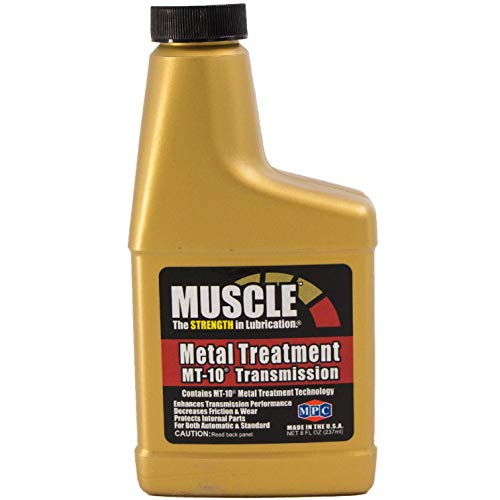
The anti-friction treatment for extreme-pressure gear areas that lowers operating temperatures.
MT-10 is an anti-friction additive aimed at extreme-pressure areas like gear systems, bushings, bearings, and shafts — the spots where metal grinds on metal. It polishes and protects internal moving parts while lowering operating temperatures, and it keeps oil passages and ball checks clean so the valve body works at its best. It contains no solid lubricants or chlorinated solvents.
It’s compatible with all petroleum fluids and most synthetics, and it can be applied directly to parts during a transmission rebuild. An owner of a 1966 Mercedes SL with a slight leak warmed the engine, poured a quarter of the container into the crankcase, and the leak stopped the next day — showing it also conditions seals. High load capacity is the core benefit here.
One reality check on the reviews: on a 2004 Ford Freestar with hard shifts and excess clutch material in the pan, MT-10 showed little difference after 100-200 miles — that vehicle needed a rebuild, not an additive. No additive can fix physically worn clutches, so buyer beware when hard metal failure is the root cause.
Best for wear: an anti-friction choice for high-mileage gearboxes with heat and wear issues, but not a miracle cure for mechanically failed clutches.
7. Bars BARSTAL2L91 Automatic Transmission Leak Sealant

The focused seal restorer that stops transmission fluid leaks without clogging passages.
If you have a confirmed transmission fluid leak, Bars Leak Sealant is purpose-built for that single job. It’s specially developed to restore worn seals and gaskets, keeping them flexible so they seal properly again. It’s non-corrosive and non-clogging, which matters because the last thing you want is a stop-leak that blocks a tiny hydraulic passage.
This is a 200 ml bottle designed for a focused application — it stops transmission fluid leaks in both manual and automatic transmissions. It’s a targeted solution rather than a multi-purpose additive. The reviews are brief but generally positive, with several owners confirming it does the job.
The honest caveat is that one owner reported it didn’t work for their situation — leaks can come from many places, and a cracked case won’t be fixed by any sealant. This is a cost-effective first attempt at a minor seep, not a guaranteed fix for major leaks. For minor seal weeping, it’s worth trying before a costly shop visit.
Simple fix: a dedicated, non-clogging seal restorer for minor transmission leaks — the sensible first try before a full reseal job.
8. XADO AMC Automatic Transmission Additive (Syringe 30ml)

The syringe-delivered metal conditioner that claims instant slip and shudder relief.
XADO takes a different approach — instead of a big bottle, you get a 30ml syringe for precise dosing into the transmission. It’s a metal conditioner that fortifies and replenishes worn surfaces, reduces noise and chattering, and is designed to stop slipping and shuddering for smoother, more responsive shifts. The precise application makes it easy to add exactly the right amount.
An owner of a 2011 Ford Fiesta with shutter from a stop in first gear saw immediate positive results, and another skeptic who expected snake oil found it worked on multiple cars over the long term. The atomic conditioner concept is about reducing friction and improving shifting while protecting against future wear.
The mixed opinions are worth noting: while many report improved shifting, some experienced extreme slipping after use, and there’s disagreement on whether it’s worth the price. One owner’s apparent transmission slipping turned out to be a blocked catalytic converter — not the transmission at all — so proper diagnosis matters before adding any product.
Precision dose: a concentrated metal conditioner for slip and shudder, with strong results for many but a genuine risk of worsening slip on already-failing units.
9. DR TRANNY Lubegard Automatic Transmission Instant Shudder FIX 6 Pack
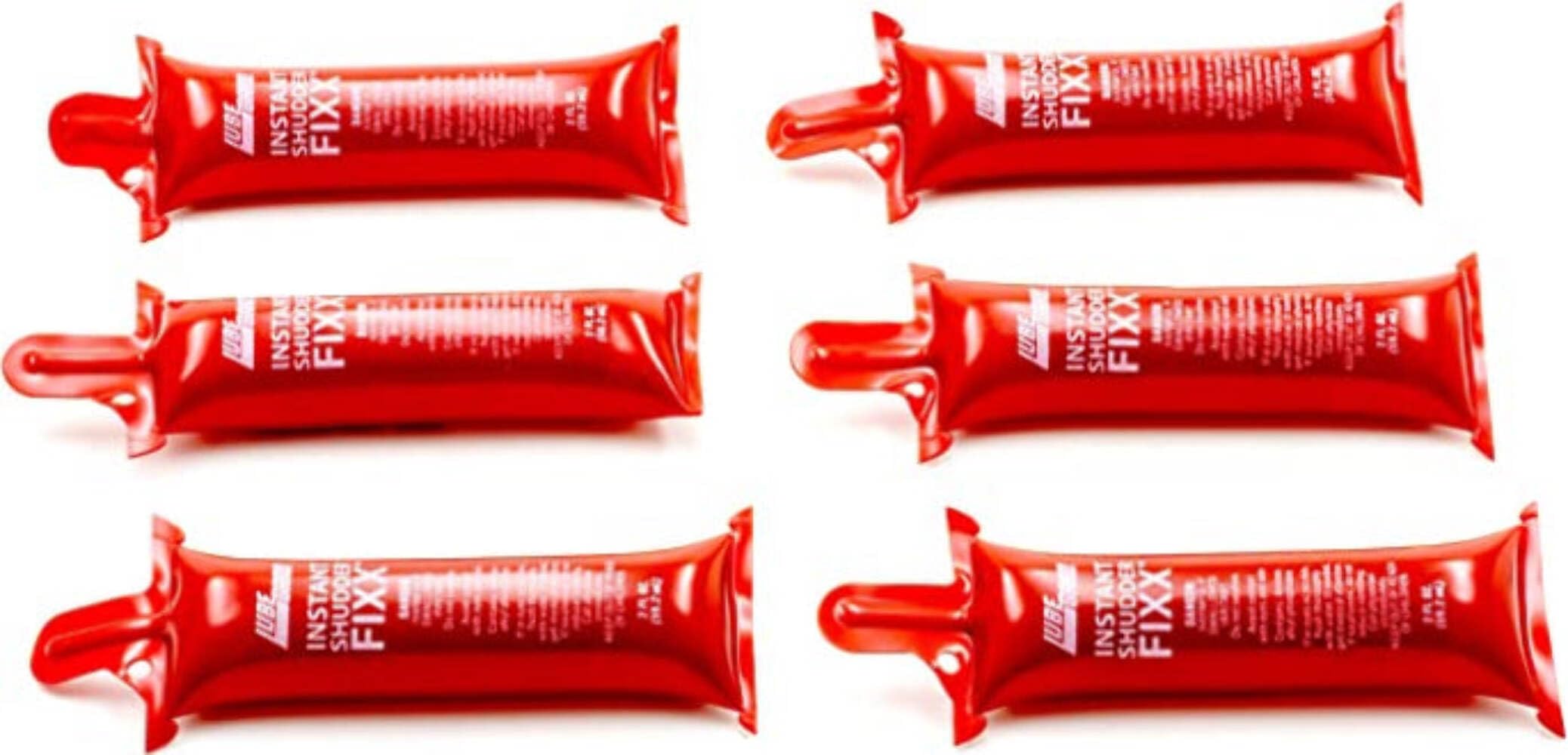
The torque converter shudder specialist that’s voted top by transmission pros.
Torque converter lock-up shudder is a specific, annoying vibration, and this is the specific fix for it. DR TRANNY is a concentrated friction modifier formulated to instantly eliminate that shudder. It’s the original transmission shudder fix, designed for use in any automatic transmission fluid.
The 6-pack gives you multiple doses for repeated treatments or multiple vehicles. A 2008 Expedition with 300k miles and three failed torque converters saw its shudder at 30-40mph disappear after adding three tubes over about a month — persistence paid off. A high-mileage Honda CRV with judder at 35-40mph was cured without even changing the fluid.
Effectiveness is the most-praised aspect, with quality and transmission performance close behind. It’s not for use in Ford Type F or CVT applications, so check compatibility first. Some customers note slipping issues, and severe cases need multiple tubes with slow results — but the manufacturer’s claim of a professional top-product vote adds credibility.
Why pros pick it
- Concentrated friction modifier for torque converter shudder
- Six tubes for multiple treatments
Not for everyone
- Not for CVT or Ford Type F fluids
- Severe cases need 3 tubes and slow results
Choose this if: torque converter shudder is your exact symptom and you want the fix that transmission pros reach for.
Look past it if: you run a CVT or Ford Type F — this formula is strictly for standard automatic fluids.
Understanding the Specs
Friction Modifiers vs. Cleaners
Friction modifiers like Lubegard Shudder Fix change how clutch plates grip, which directly addresses torque converter shudder and slip. Cleaners like zMAX dissolve varnish and sludge that cause hard shifts. Know which symptom you’re treating — a cleaner won’t fix shudder, and a friction modifier won’t clean a gunked-up valve body.
Seal Conditioners vs. Stop-Leaks
Seal conditioners like BG ATC Plus soften hardened seals so they flex and seal again, preventing leaks before they start. Stop-leaks like CRC Trans-X actively swell seals to close an existing leak. Both are non-destructive, but a cracked case needs a mechanic — no additive fixes physical damage.
FAQ
Can an automatic transmission additive fix hard shifts or only mask them?
Will a transmission additive fix a torque converter shudder?
Is it safe to use a transmission additive in a CVT transmission?
How often should I add a transmission treatment to my vehicle?
Can a stop-leak additive damage my transmission?
What’s the difference between a transmission flush and adding an additive?
Will an additive fix an automatic transmission that’s slipping badly?
Can I use a transmission additive in my manual gearbox?
Will adding a transmission treatment void my warranty?
Final Thoughts: The Verdict
For most people, the automatic transmission additive winner is the zMAX Transmission Formula because it combines the two highest-value jobs — cleaning varnish that causes hard shifts and conditioning seals that prevent leaks — into one pour. If you’re chasing a specific torque converter shudder, grab the Lubegard 50902 or the DR TRANNY Shudder Fix. And for a guaranteed leak problem, the BG ATC Plus is the professional-grade seal conditioner to reach for.
How We Picked
We do not accept paid placement. Every pick is matched to a real buyer and a real use-case; we do not hands-on test units.
Sources & Methodology
Specifications: manufacturer listings and product documentation. Review insights: verified customer reviews, as of July 2026. Pricing: not shown on this page (it changes often); check the current price via the retailer link.
As an Amazon Associate, Gadgets Feed earns from qualifying purchases. This does not affect which products we feature.