
Our readers keep the lights on and my morning glass full of iced black tea. As an Amazon Associate, I earn from qualifying purchases.
Specs are compiled from manufacturer listings and verified buyer reviews and can change over time — please confirm the key details on the product page before buying.
Picking a camping backpack is the single biggest decision you will make for your backcountry comfort. A pack that fits poorly turns a scenic 10-mile hike into a miserable shuffle, while the right suspension system makes a 30-pound load feel like a light daypack. The real question is not just how many liters you need, but how the frame transfers weight to your hips and how well the torso length matches your body.
I’m Min — the founder and writer behind Gadgets Feed. This guide is built by comparing the manufacturers’ published specifications and the patterns across verified customer reviews, so you get each pick’s real strengths and trade-offs instead of marketing spin.
You need a camping backpack that fits the trips you actually take, not one that looks good on a shelf. The right match hinges on capacity, weight, and how effectively the frame transfers load to your hips.
Our Picks at a Glance


How To Choose The Best Camping Backpack
Before you fall in love with a color or a pocket layout, you need to match the pack to your torso length and your trip type. A pack that is too long will ride on your neck, and one that is too short will fail to transfer weight to your hips, leaving your shoulders to take the brunt.
Capacity: Match Liters to Trip Length
For a day hike or an ultralight overnight, a 30-40 liter pack is enough. But if you are carrying a sleeping bag, tent, and cooking gear for multiple days, you need more room. A 60-70 liter pack handles most weekend trips well, while 80 liters and up suits longer expeditions where you pack a bulky tent or extra food.
The Suspension System: Where the Weight Goes
The frame and hip belt are the core of load transfer. A well-designed harness transfers the load from your shoulders down to your hips, which are built to carry weight. Look for adjustable torso lengths and padded hip belts that wrap around your iliac crest, not just sit on top of it. A correct fit routes weight to your hips, sparing your shoulders.
Quick Comparison
| Model | Best For | Capacity | Weight | Frame Type | Amazon |
|---|---|---|---|---|---|
| Osprey Rook 65L★ Best Overall | Best Overall | 65L | 3.7 lb | Internal Frame | Amazon |
| Ubon 60LBudget Champion | Budget Value | 60L | 2.65 lb | Internal Frame | Amazon |
| Mardingtop 60LTactical Modular Pick | Tactical Modular | 60L | 4.49 lb | Internal Frame | Amazon |
| MOUNTAINTOP 70L | Large Capacity | 70L | 4.4 lb | Internal Frame | Amazon |
| Naturehike 65L | Ultralight | 65L | 2.56 lb | Internal Frame | Amazon |
| Mardingtop 65+10L | Modular Storage | 65+10L | 5.18 lb | Internal Frame | Amazon |
| Kelty Coyote 105L | Expedition Hauler | 60-105L | 5.5 lb | Internal Frame | Amazon |
| Deuter Aircontact Lite 45+10 | Women’s Fit | 45+10L | 3.4 lb | Internal Frame | Amazon |
| Osprey Kestrel 48L | Technical Day Hikes | 48L | 4.62 lb | Internal Frame | Amazon |
In-Depth Reviews
1. Osprey Rook 65L Men’s Backpacking Backpack
Our pick — over 4.5★ from 500+ verified ratings; the strongest balance of quality and price.
The gold standard that makes a 26-mile day feel like a short stroll.
The Osprey Rook is the pack that keeps coming up in conversations with serious hikers, and for good reason. Its defining feature is the adjustable AirSpeed suspension — a tensioned backpanel that you can tune to your torso length while the LightWire frame (a lightweight metal support structure) shifts the load onto your hipbelt. The result is hip-borne weight that spares your shoulders on long trails.
At 3.7 lb for a 65L pack, it is not the lightest option here — the Naturehike 65L below is about 1.1 lb lighter — but the comfort payoff is what wins people over. Buyers report a “Longest day was 26 miles under 30lbs,” which says a lot about how well the harness distributes weight. The integrated, removable raincover stows in its own pocket when the sun comes back, and the zippered sleeping bag compartment with a floating divider keeps your gear organized.
Owners praise the sturdy zippers and tough fabric that endure trip after trip. It carries a 4-day load at 35 lbs including a bear canister fitted sideways, which is a real flexibility win. The trade-offs are honest: there is no outer mesh pocket, no back access to the main compartment, and at 3.7 lb it is not ultralight. One owner with a slimmer build found the waist strap cut into narrow hips, so it pays to try the fit.
What Wins People Over
- Adjustable AirSpeed suspension keeps your back cool and transfers weight to hips
- Integrated raincover stows in its own pocket
- Roomy lower pocket fits a sleeping bag and pad
- Comfortable to 35 lbs with a bear canister fitted sideways
The Honest Trade-offs
- No outer mesh pocket or back access to the main compartment
- At 3.7 lb, it is not ultralight
- Waist strap can cut into narrow hips
Reach for this if: you want a do-everything pack that handles weekend trips and multi-day treks without complaining.
Think twice if: you are counting every ounce or have a very slim waist — the Naturehike is lighter and the strap fit may not suit you.
2. Ubon 60L Internal Frame Hiking Backpack
A featherlight 2.65 lb frame that punches far above its price class.
The Ubon 60L saves your back on the climb without emptying your wallet. At 2.65 lb, it is a full 40% lighter than the Osprey Rook 65L, so you carry less dead weight on every step. The 7-stage height adjusters (seven preset positions for the shoulder straps) let you match the torso length to your body, and the steel frame holds the pack’s shape even when it is stuffed full.
The design is what everyone praises most, with multiple pockets including a padded hip belt pocket for small essentials and a separate bottom compartment for a sleeping bag or extra shoes. The integrated rain cover is a super bright orange, so you stay visible in any weather. A hydration bladder pocket (bladder not included) sits on the side, and there are gear loops for trekking poles on both sides plus a whistle on the shoulder strap for emergencies.
The durability gets mixed feedback, which is the honest caveat here. Some owners have used it hard through rain and rock without issue, while others report a plastic piece breaking after a week. The capacity also splits opinions — some find it roomy, others say the 50L version runs small. For a 3-5 day hike at weights up to 28 lbs, it holds up well and the mesh back airflow rivals packs costing three times as much.
Why It Stands Out
- Weighs just 2.65 lb, 40% lighter than the Osprey Rook
- 7-stage torso adjustment and steel frame keep shape under load
- Bright orange rain cover included for visibility
- Separate bottom compartment for sleeping bag or shoes
Where It Falls Short
- Mixed durability reports — some plastic pieces break early
- Straps and waist belt need more padding for heavy loads
- Zippers feel less sturdy than premium packs
Grab this if: you are a first-time buyer who wants a light, adjustable pack for short trips without a big investment.
skip it if: you plan to carry 40+ lbs regularly — the padding and load transfer are not built for that.
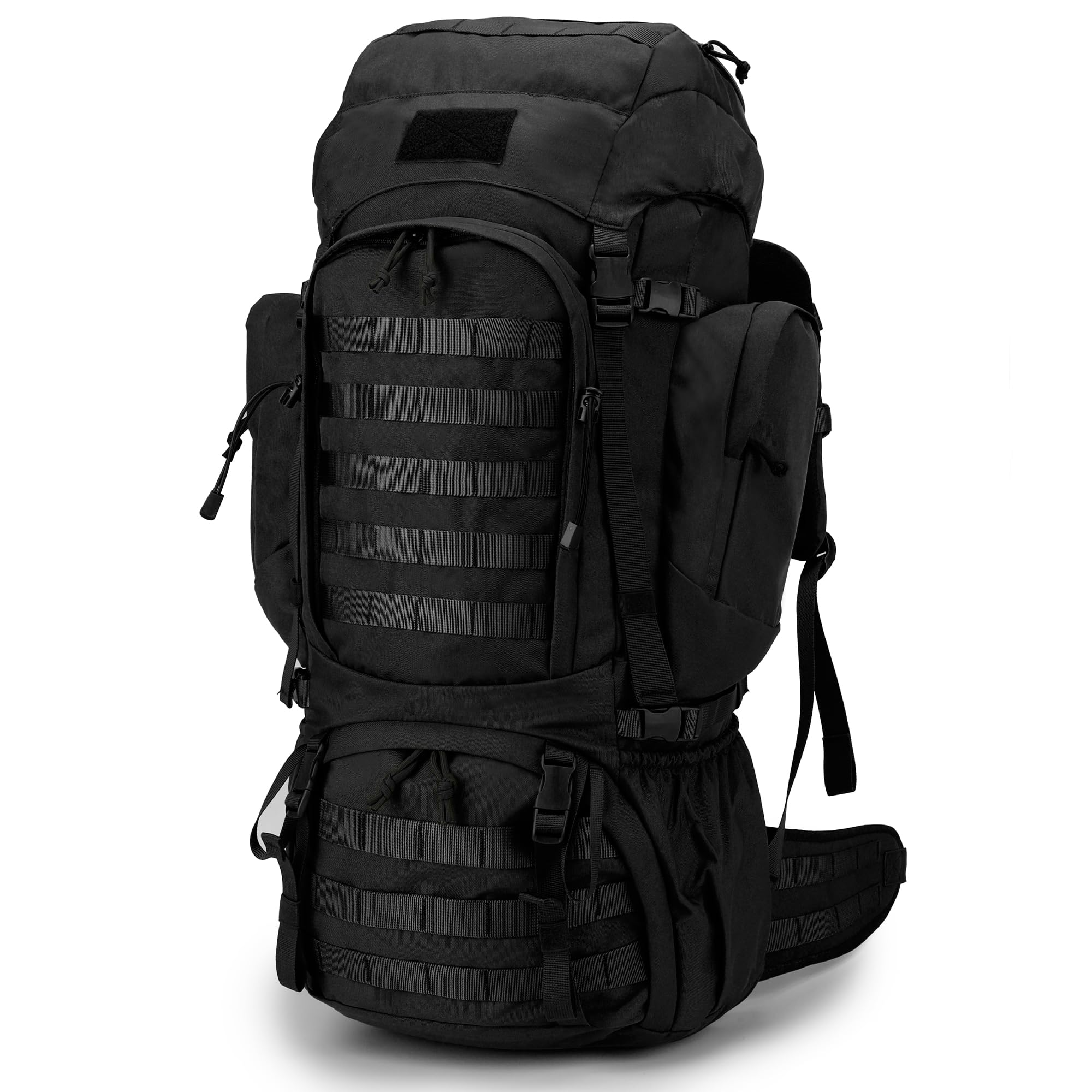
3. Mardingtop 60L Military Internal Frame Backpack
Built like a tank with MOLLE webbing for hanging everything you own.
The Mardingtop 60L is a tactical-style rucksack that brings serious modularity to the trail. Its defining feature is the MOLLE webbing — a grid of heavy-duty straps that covers the pack, letting you attach sleeping bags, tents, hammocks, or climbing gear to the outside. There is even a patch area for name tapes and flag patches, and a hiking pole attachment that can hold poles, an ice axe, or a selfie stick.
87 buyers praise the sturdy 600D polyester fabric and YKK zippers for heavy-use durability. The elastic compartment fits a 15.6″ laptop or a 2.5-liter hydration bladder (not included). One owner who used it for years of heavy brush and fishing reports zero seam failures, which is the kind of durability you want from a pack that gets thrown around.
Compared to the Osprey Rook above, this pack trades refined comfort for rugged modularity. The waist belt is the recurring weak point — it is thin and can chafe under heavy loads, and the cinches can loosen as you move. For loads under 50 lbs and trips of 10-20 miles, it performs well. The rain cover has cheap elastic but comes with 4 tie-downs to keep it secure. One owner noted the MOLLE loops are tempting but advises against swinging gear on them.
Best for: hunters, bushcrafters, and anyone who wants to strap gear to the outside of a bombproof pack. The quality per dollar is exceptional — owners call it the best value ruck they have owned.
The catch: the waist belt is thin and the cinches can slip under heavy loads, so it is better for moderate weights than for 50 lb hauls.
4. MOUNTAINTOP 70L Internal Frame Backpack

A 70L workhorse with an aluminum frame that shrugs off heavy loads.
The MOUNTAINTOP 70L is built for long-term travel and mountain hiking, and its defining spec is the lightweight aluminum alloy frame plate that boost load-bearing capacity. 101 buyers praise the build quality, while 64 highlight the generous 70L capacity. The YKK zippers are the same hardware you find on packs costing twice as much.
What sets this pack apart is the multi-position torso adjustment that fits a wide range of body sizes, including petite packers. The side zippered entry gives you quick access to the main compartment without unpacking everything, and the bottom compartment is sized for shoes or a sleeping bag. The soft, breathable mesh back pads keep your back cool on climbs.
The durability is mixed in the review data — some owners mention it lasting over 200 miles of backpacking, while others mention buckles breaking after three uses. It is an entry-level pack at heart, so the straps are decent but not premium. One owner found it top-heavy in smaller sizes. The built-in rain hood kept gear dry in a downpour, which is a solid real-world test.
The High Points
- 70L capacity with an aluminum alloy frame for heavy loads
- Side zippered access to the main compartment
- Adjustable torso fits petite to tall builds
- Waist and chest straps handle 45+ lb loads
The Low Points
- Some buckles have broken after just a few uses
- Water port is small and top seam can fray
- Can feel top-heavy in smaller torso sizes
Pick this if: you need maximum liters for the money and a frame that distributes weight well on multi-day trips.
Look elsewhere if: you want a pack that will survive years of weekly abuse — the durability record here is not as clean as the Osprey’s.
5. Naturehike 65L Internal Frame Hiking Backpack
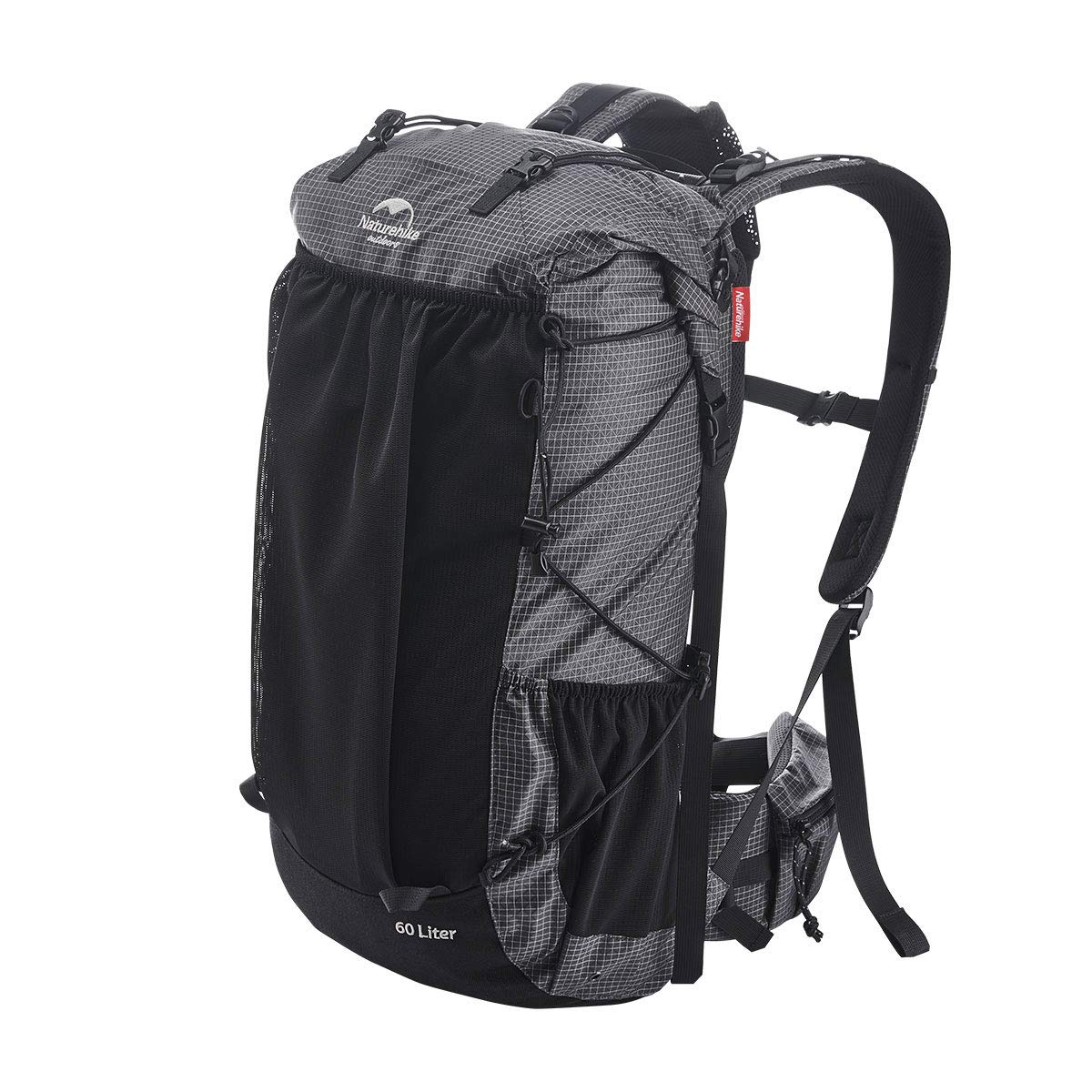
The 2.56 lb featherweight that survived a 108-mile Appalachian Trail section.
The Naturehike 65L is the pack for hikers who count every ounce, and its defining spec is the weight: just 2.56 lb for a 65L capacity. That makes it the lightest framed pack in this lineup, about 1.1 lb lighter than the Osprey Rook. The ergonomic back pad with mesh cushion structure keeps air flowing so your back does not get stuffy even on long, sweaty climbs.
25 buyers each praise the comfort and low weight. It is rated to carry up to 15kg (about 33 lb), and the 420D nylon fabric resists tears, scratches, and light rain. One owner took it on a 108-mile Appalachian Trail section hike totaling 150 miles and found it best at 30 lb total weight. The roll-top closure stays secure, though you lose the convenience of a brain pocket.
The honest trade-off is that this is a simple sack with a thin frame — it is not built for heavy loads. Owners note the hip belt can dig into the stomach on a moderately overweight frame, though one fixed it with wool and duct tape. Compared to a ultralight pack, owners say this one is sturdier and a better value. The frame can squeak occasionally, and the cinch pull loop has broken for some, but it is an easy knot fix.
Your best bet if: you prioritize a light pack for long-distance hiking and can keep your total weight around 30 lb.
The trade-off: minimal pockets and a thin frame mean you trade organization and heavy-load comfort for the low weight.
6. Mardingtop 65+10L Internal Frame Backpack
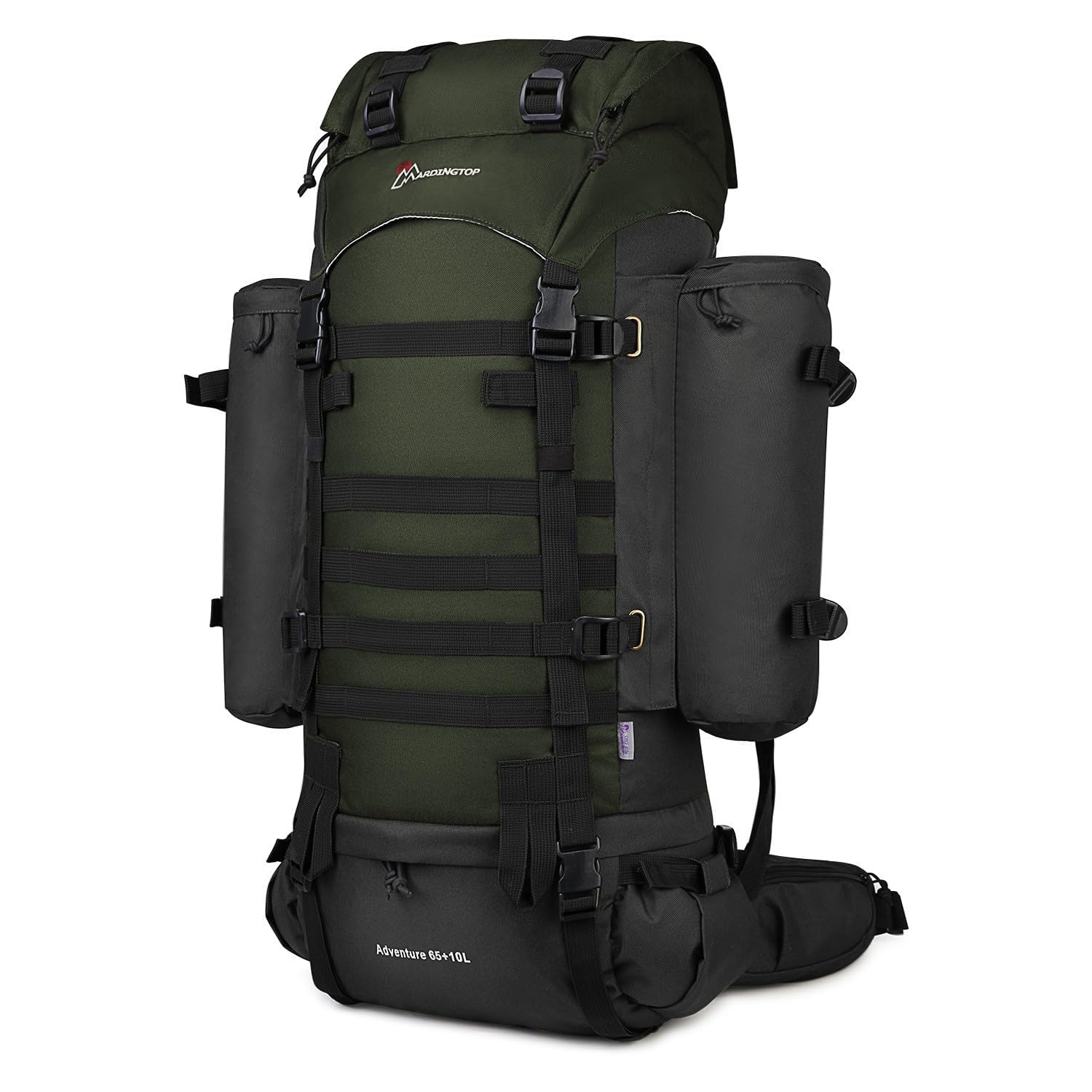
A 65+10L modular marvel that expands when your gear collection does.
The Mardingtop 65+10L gives you extra room exactly when you need it, thanks to detachable side pouches that add 10 liters of expandable storage. That capacity is what owners praise most — 66 buyers call it out in reviews. Durability holds up too: 41 customers note long-term use, including one who has put 5 years of heavy brush and fishing use into it without signs of wear.
The construction quality is genuinely impressive for the price. The 600D polyester fabric feels heavier and tougher than ultralight nylon, and the side pouches secure with velcro, a loop, and a zipper so your gear stays put. The internal drawstring divider and bottom access make organizing easy, and a military sleep system fits without a compression bag. One 50-year backpacking veteran with hundreds of miles on the pack says it still looks new.
The shoulder straps can slip under heavy loads, and the waist belt cinch is short for a 28-29 inch waist. For 2-3 day trips and car camping, it is rugged and reliable. For thru-hiking, the weight and strap issues make it a poor fit.
What Makes It Great
- 65+10L with detachable side pouches for expandable storage
- Proven 5-year durability through heavy brush and fishing use
- Side pockets secure with velcro, loop, and zipper
- Military sleep system fits without compression
What Holds It Back
- At 5.18 lb, it is the heaviest pack here
- Shoulder straps slip under heavy loads
- Waist belt cinch runs short for slimmer waists
Choose this if: you want a rugged, modular pack for weekend trips and car camping where weight is not your top concern.
Pass on it if: you are a thru-hiker or distance hiker — the 5.18 lb weight will wear you down.
7. Kelty Coyote 60-105 Liter Internal Frame Backpack
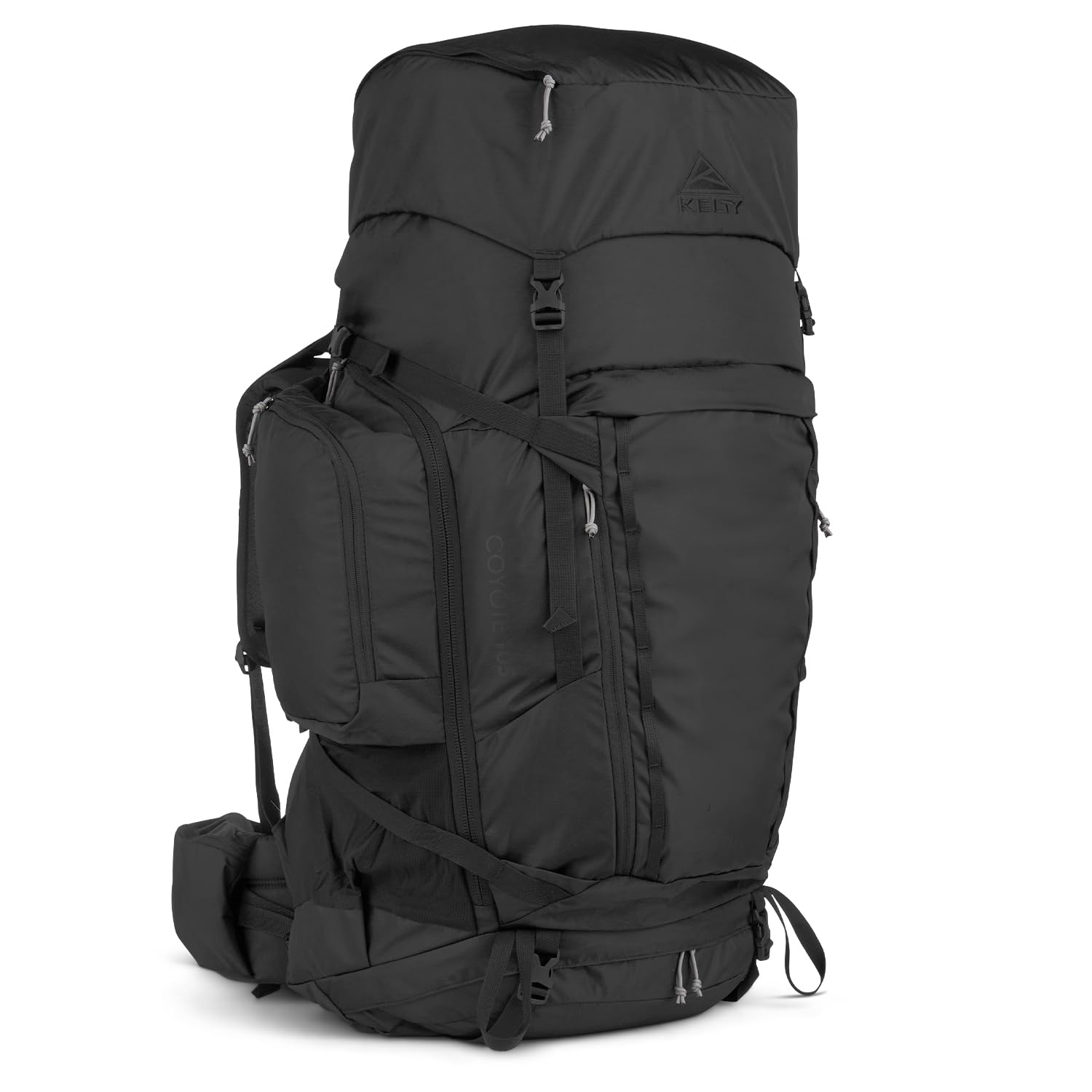
The flagship trekking pack that shrinks from 105L down to a 40L daypack.
The Kelty Coyote is the flagship trekking pack from Kelty, and its defining feature is the sheer versatility of its 60-105 liter adjustable capacity. The Fit Pro technology lets you dial in a customized torso fit on the fly, which is a godsend when you shed layers mid-hike or pass the pack to a buddy. The advanced perimeter frame and aluminum stay keep your load secure and balanced even on technical terrain.
The comfort is what owners rave about — one hiked 8 miles with 50 lb without fatigue, crediting the adjustable straps that shift weight to the waist. The coyote carries an optimal load of 50-70 pounds, which makes it a true expedition hauler. Kelty Signature wing pockets, two front zippered pockets, and a large J-zip top loading access keep everything organized, while the Amp Flow ventilated back panel keeps your back dry on long jaunts.
The honest catch is the hourglass shape, which makes packing a challenge until you master the technique. At 5.5 lb empty, it is lighter than pricier 75-85L packs, which is a real win. The belt pockets are small and one lacks a zipper, and the side pockets hold a Nalgene but are hard to reach while walking. One owner who replaced a Jansport D2 noted the 105L shrinks down to a 40L daypack, so it does not look oversized when not full.
Ideal for: expedition-length trips and travelers who need one pack that adapts from a 105L hauler to a compact daypack.
Know this: the hourglass shape demands careful packing, and the belt pockets are small — but the comfort at 50 lb is hard to match.
8. Deuter Women’s Aircontact Lite 45 + 10 SL
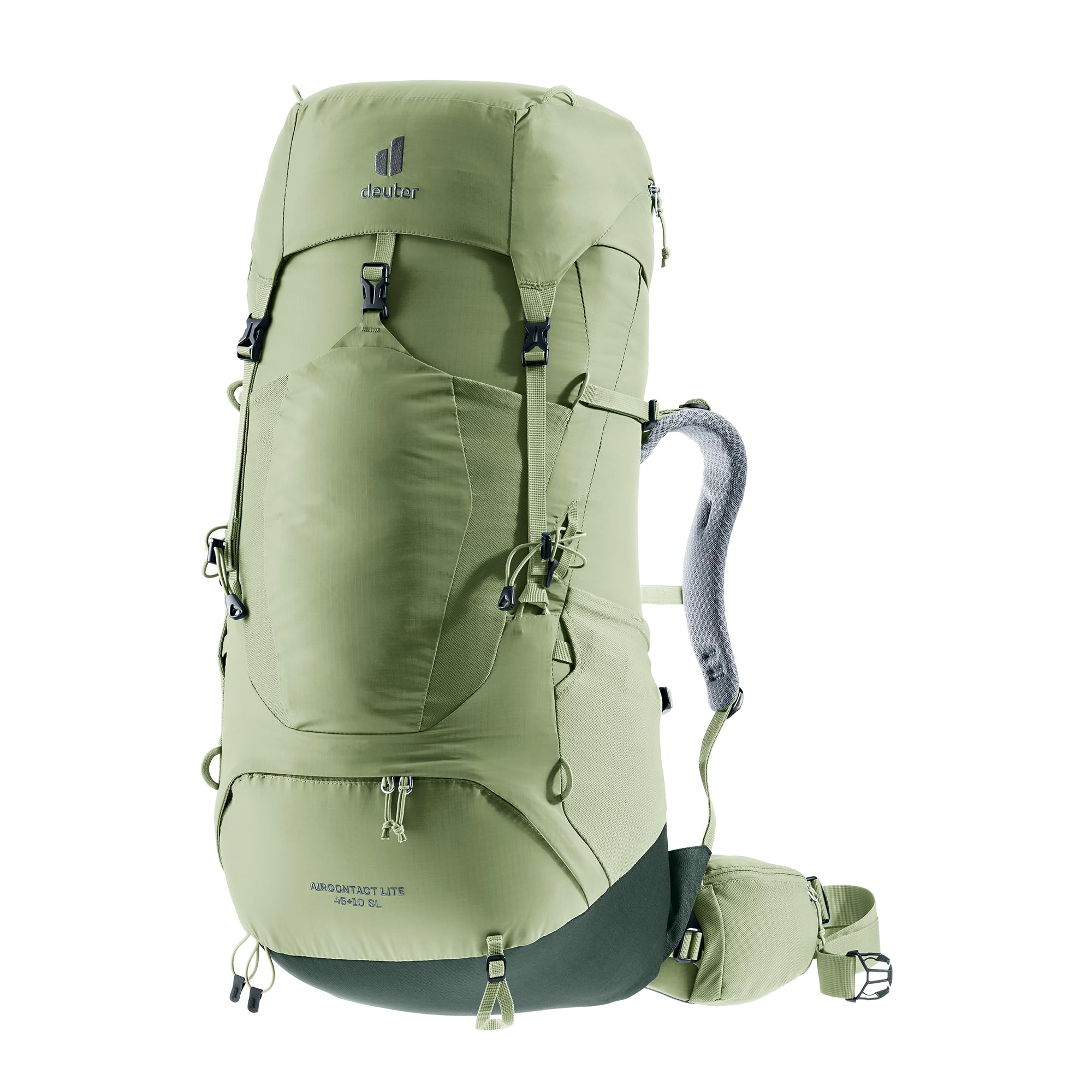
A women’s-specific fit that hugs narrow frames and vanishes on your back.
The Deuter Aircontact Lite is a women’s-specific pack, and its defining feature is the SL fit — a shorter cut with ergonomically shaped shoulder straps and conically shaped hip fins that hug narrower frames. At 3.4 lb for a 45+10 liter capacity, it is built for ambitious long-distance hikers who want light weight without sacrificing comfort. The Aircontact back system uses hollow chamber foam to pump air with every step, keeping your back cool.
The fit is the thing that wins people over. One owner took it to Havasupai in Arizona and carried 30+ pounds over 10+ miles each way with no hip or shoulder pain. The Vari Quick adjustable back length and continuously adjustable chest strap let you dial in the fit, and the two zippered hip fin pockets give easy access to snacks and phone while hiking. It fits more than its 55L effective volume suggests, and owners love the adjustability of the straps and compartments.
The honest trade-off is that the shoulder straps lack padding, which one owner fixed with aftermarket covers. At 3.4 lb it is slightly heavier than some competitors, but the comfort for heavier loads is worth it. The detachable lid and height-adjustable lid give you expandable volume, and it is compatible with a 3-liter drinking system (not included). The SOS label and internal valuables pocket are thoughtful touches for long trips.
Why It Wins
- Women’s SL fit with narrow shoulder straps and hugging hip fins
- Carried 30+ lb for 10+ miles with zero hip or shoulder pain
- Vari Quick adjustable back length for a custom fit
- Fits more than 55L effective volume despite the 45+10 rating
The Caveats
- Shoulder straps lack padding — some owners add covers
- Slightly heavier than ultralight competitors at 3.4 lb
Best for: women with narrower frames who plan long-distance hikes and want a pack that fits like it was custom-made.
Not for: anyone who wants the lightest possible pack — the 3.4 lb weight and unpadded straps are the trade-offs.
9. Osprey Kestrel 48L Men’s Backpacking Backpack

A 48L technical pack that compresses flat for day hikes and rugged for week trips.
The Osprey Kestrel 48L is built for big days with a focus on easy-access organization. Its defining feature is the injection-molded AirScape backpanel, which offers adjustable torso lengths and provides a stable, breathable carry that stays close to your body even on technical trails. The construction quality is the top praise among owners, with 15 buyers calling it out for the tough material and comfortable pads that beat the Talon 44.
The versatility is the real story here. Owners have used it as a carry-on for a week trip, rugged on a 4-day hike at Glacier National Park, and compressed flat for day hikes. The fixed hipbelt and integrated raincover mean you are covered in any weather, and the top lid with a large zippered pocket plus the under-lid mesh pocket with key clip keep small items organized. The bright green rain cover is easy to spot in a downpour.
The fit gets mixed feedback — some find it comfortable for larger frames, while others mention tight side mesh pockets. The review data notes the pack is better for bigger builds, with one owner praising it for fitting larger frames well. It held up to abuse and weather on a 3-day Allegheny forest trip, fitting all gear even when overpacked. The side access is used frequently by owners, which says a lot about the design.
Your pick if: you want a versatile Osprey that does double duty as a travel carry-on and a rugged hiking pack for shorter trips.
Know this: the fit leans toward larger frames, and the side mesh pockets can run tight for bigger water bottles.
Understanding the Specs
Torso Length and Fit
The most important measurement for a backpack is your torso length, not your height. It runs from the base of your neck to your hip bones. Most framed packs offer adjustable torso lengths, usually in a range like 15-20 inches. A pack that is too long rides on your neck and shoulders, while one that is too short fails to transfer weight to your hips, leaving you carrying everything with your back muscles.
Suspension and Hip Belt
The frame and hip belt are the machinery that makes a heavy load feel light. A good internal frame — often aluminum or a composite stay — keeps the pack’s shape and transfers weight down to the hip belt. The hip belt should wrap around your iliac crest (the top of your hip bones) with padding that distributes the load. When you tighten it correctly, you should feel the weight on your hips, not your shoulders.
FAQ
How do I measure my torso length for a backpack?
What liter capacity do I need for a weekend camping trip?
How much weight should I carry in a camping backpack?
What is the difference between an internal frame and external frame backpack?
Do I really need an integrated rain cover?
How do I adjust a backpack to fit my body?
What is MOLLE webbing and do I need it?
Why do some backpacks cost so much more than others?
Is a women’s-specific backpack worth it?
Can I use a camping backpack as a carry-on for flights?
Final Thoughts: The Verdict
For most people, the best camping backpack winner is the Osprey Rook 65L because it pairs a 65L capacity with an adjustable AirSpeed suspension that transfers weight to your hips, making 26-mile days feel manageable. If you want a featherlight pack for long-distance hiking, grab the Naturehike 65L at 2.56 lb. The crowd favorite for budget buyers is the Ubon 60L — it weighs just 2.65 lb and proves you do not need to spend a fortune for a functional internal-frame design.
How We Picked
We do not accept paid placement. Every pick is matched to a real buyer and a real use-case; we do not hands-on test units.
Sources & Methodology
Specifications: manufacturer listings and product documentation. Review insights: verified customer reviews, as of July 2026. Pricing: not shown on this page (it changes often); check the current price via the retailer link.
As an Amazon Associate, Gadgets Feed earns from qualifying purchases. This does not affect which products we feature.