
Our readers keep the lights on and my morning glass full of iced black tea. As an Amazon Associate, I earn from qualifying purchases.
Specs are compiled from manufacturer listings and verified buyer reviews and can change over time — please confirm the key details on the product page before buying.
You want a clean 6-3/8 inch hole for recessed lighting without the blade grabbing drywall or skidding across plaster. The right saw makes that cut feel smooth, whether you are boring through thick plaster and lath or just one layer of sheetrock. Your main choice is the cutting edge: carbide grit handles abrasive, messy materials like plaster and stucco, while bi-metal teeth suit wood, plastic, and steel.
I’m Min — the founder and writer behind Gadgets Feed. This guide is built by comparing the manufacturers’ published specifications and the patterns across verified customer reviews, so you get each pick’s real strengths and trade-offs instead of marketing spin.
Here are the best 6 3/8 hole saw models ranked by how cleanly they cut, how long they last, and what owners actually say about them daily.
Our Picks at a Glance

How To Choose The Best 6 3/8 Hole Saw
A 6-3/8 inch hole saw is the standard tool for installing 6-inch recessed light fixtures in ceilings. Before you buy, you need to know what your ceiling is made of, because that single answer decides which type of cutting edge you need.
Carbide Grit vs. Bi-Metal Teeth
Carbide grit saws have a rough, sandpaper-like edge that grinds through abrasive materials like old plaster, stucco, and cement board without dulling. Bi-metal saws use sharp steel teeth that slice through wood, plastic, and thin metal quickly, but they struggle with plaster and lath. For a typical modern drywall ceiling, both work; for older plaster homes, carbide is the safer bet.
Depth of Cut and Pilot Bit
The depth of cut tells you how thick a material the saw can pass through in one go. A 1-3/4 inch depth handles standard drywall and most plaster assemblies, while deeper cuts like 2-3/8 inches give you room for thicker stacks. The pilot bit centers the saw and prevents it from wandering, so a spring-loaded pilot that ejects the cut-out disc saves you a lot of prying.
Quick Comparison
| Model | Best For | Cutting Edge | Depth of Cut | Weight | Amazon |
|---|---|---|---|---|---|
| Milwaukee 49-56-0305★ Best Overall | Abrasive plaster & lath | Carbide Grit | 1-3/4 in | 1.4 lb | Amazon |
| HLOFIZI Carbide GritClean Cuts | Plaster & drywall ceilings | Carbide Grit | — | — | Amazon |
| Spyder 600117CFDeep Cuts | Fiber cement & tile | Tungsten Carbide | 2-3/8 in | 2.2 lb | Amazon |
| MK Morse MHS104 | Wood, steel, and plastic | Bi-Metal | — | 1.6 lb | Amazon |
| Klein Tools 31900 | Drywall, steel, 2x4s | Bi-Metal | — | 1.6 lb | Amazon |
| Spyder 600928CF | Steel & nail-embedded wood | Bi-Metal | 1-7/8 in | 2.2 lb | Amazon |
| Southwire BMHS6-3/8 | Plywood & vent installs | Bi-Metal | — | — | Amazon |
| PLG2SUPT Carbide Grit | Recessed light retrofits | Carbide Grit | 1 in | 0.7 kg | Amazon |
| Fivelake M42 Bi-Metal | DIY wood & plastic | Bi-Metal | — | — | Amazon |
In‑Depth Reviews
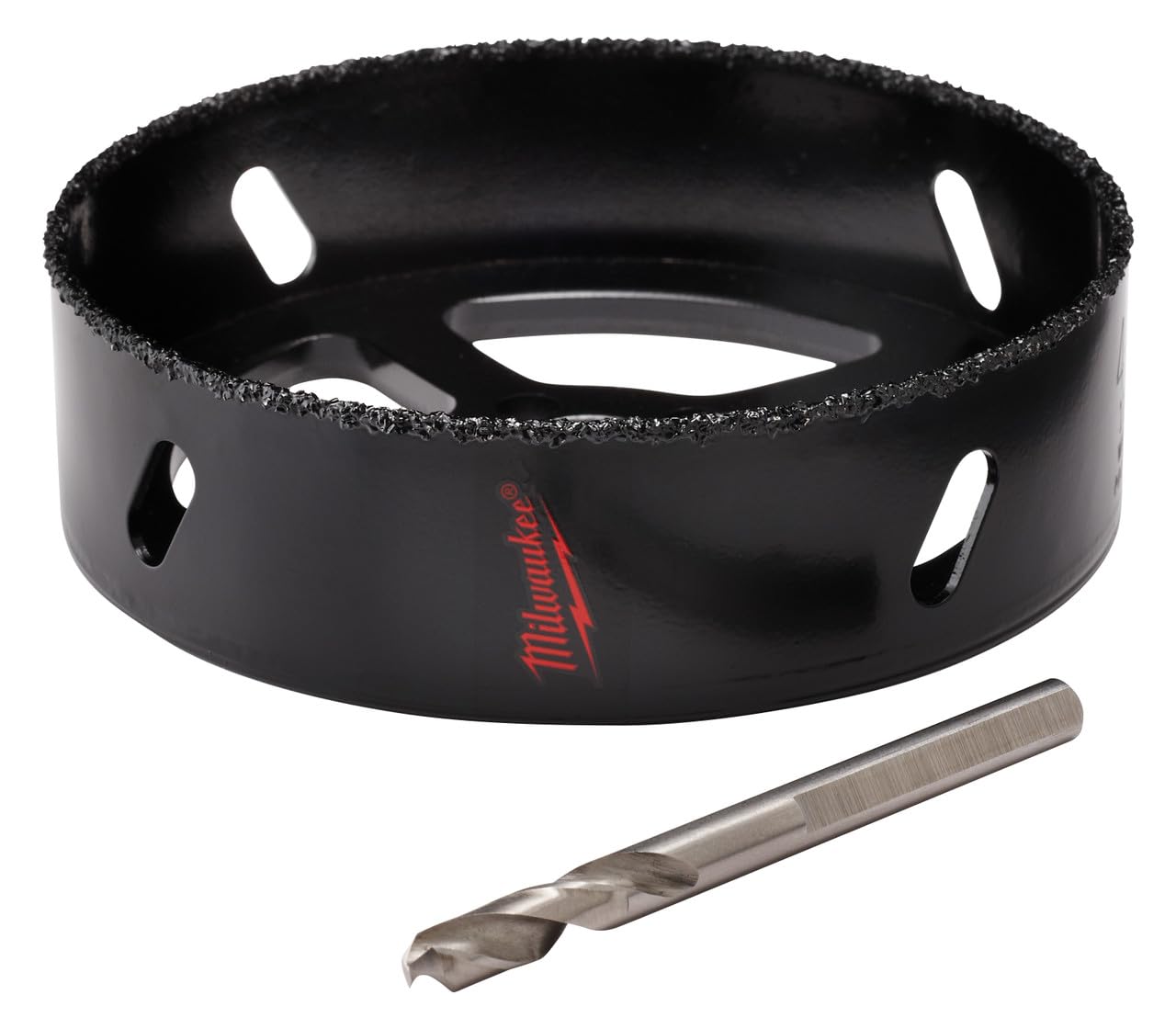
1. Milwaukee Electric Tool 49-56-0305 Recessed Light Hole Saw
Our pick — over 4.5★ from 250+ verified ratings; the strongest balance of quality and price.
The heavy-duty pick that chews through plaster and lath without slowing down.
This Milwaukee is the one you want when your ceiling is old, abrasive, and unforgiving. Its carbide grit cutting surface grinds through drywall, plaster, acoustical tile, ceiling tile, and stucco with wire mesh backing — materials that would instantly dull a toothed blade. The 6-3/8 inch diameter with a 1-3/4 inch depth of cut gives you enough reach for most ceiling assemblies, and Milwaukee recommends running this saw at 600 RPM for best results..
The owner reports back exactly what you hope for: one person bored 30+ holes through 1-inch plaster, steel mesh, galvanized ducts, and 3/4-inch plywood with no visible wear. Another cut through 1/2-inch drywall easily and handled 1.5-inch lath/plaster/mesh plus 1-inch tongue-and-groove with effort. Buyers report it is messy but efficient — typical Milwaukee quality that holds up to old cement-based plaster.
Why it wins
- Carbide grit surface survives abrasive materials that kill steel teeth
- 1-3/4 inch depth handles thick plaster and lath stacks
- Weighs only 1.4 pounds for a 6-3/8 saw
The honest catch
- Messy operation — you will want a dust collector or vacuum nearby
- Two-stage cutting needed for deeper than 1.5 inches
Reach for this if: your ceiling is plaster, lath, or stucco with wire mesh backing and you need a saw that will outlast the job.
Look elsewhere if: you only cut modern drywall and want the absolute cheapest option — a toothed bi-metal saw will do that job for less.
2. HLOFIZI 6-3/8 Hole Saw for 6″ Recessed Lights
The grit saw that leaves crisp, chip-free holes in plaster and drywall ceilings.
If a clean, finished-looking hole matters as much as speed, this HLOFIZI earns its place. It uses a hard tungsten carbide grit edge on a continuous rim, which means no chipping or cracking the plaster as you cut. The shank fits a 1/2-inch chuck, and the open back design lets you knock the plug out quickly between holes. Owners mention cutting through thick plaster like butter and finishing 7 holes in 10 minutes.
What sets this apart from the Milwaukee is the value and dust control. One owner cut 20 holes for 6-inch LED recessed lights and found it slightly dull by the end, but easy cutting the whole way. With a dust cup and shop vac, the job stays nearly dust-free — a real plus when you are cutting into a finished ceiling. The solid welded construction leaves just enough space that a 6-inch can light fixture fits perfectly.
Dust champ: the open back and clean-rim design make this the pick for finished rooms where you cannot afford ceiling texture damage.
Sizing note: it cuts accurately sized holes for recessed lights, leaving the exact clearance a 6-inch fixture needs.
Best for: DIYers installing multiple recessed lights in plaster or drywall who want minimal mess and crisp edges.
Not for: cutting wood, steel, or nail-embedded material — keep it to ceiling materials.
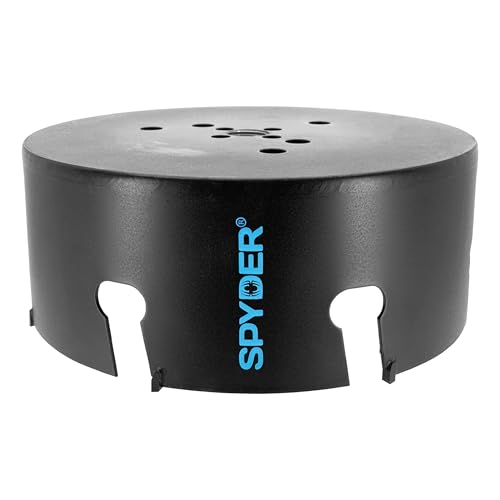
3. Spyder 6-3/8-Inch Carbide Tipped Hole Saw (600117CF)
The versatile carbide-tipped cutter that takes on fiber cement, tile, and concrete block.
This Spyder is the specialist for brutal materials. The tungsten carbide tips extend life and deliver clean cuts through wood, MDF, plywood, fiber cement board, porous concrete block, some brick, ceramic wall tile, plastic, and PVC. The maximum cut depth of 2-3/8 inches is the deepest on this list, letting you bore through thick assemblies in one pass where others need two.
Spyder rates this carbide-tipped saw for up to 10x more cuts and 5x faster cutting than standard bi-metal hole saws., and it pairs with Spyder’s Rapid Core Eject arbor system to remove cores without prying and enlarge existing holes. Owners confirm it cuts through plaster and lath effectively and handles cement board like butter. The universal thread works with Spyder arbor/pilot bits or other universal hole saw arbors.
Material king: this is the only pick here that handles ceramic tile and concrete block, not just wood and drywall.
Drilling tip: add water when drilling cement or the carbide tip can heat up and break off — keep the cut cool.
Choose this if: your job involves fiber cement siding, ceramic tile, or brick where a bi-metal saw would fail.
Skip if: you only cut wood and drywall — the carbide tips cost more than you need.
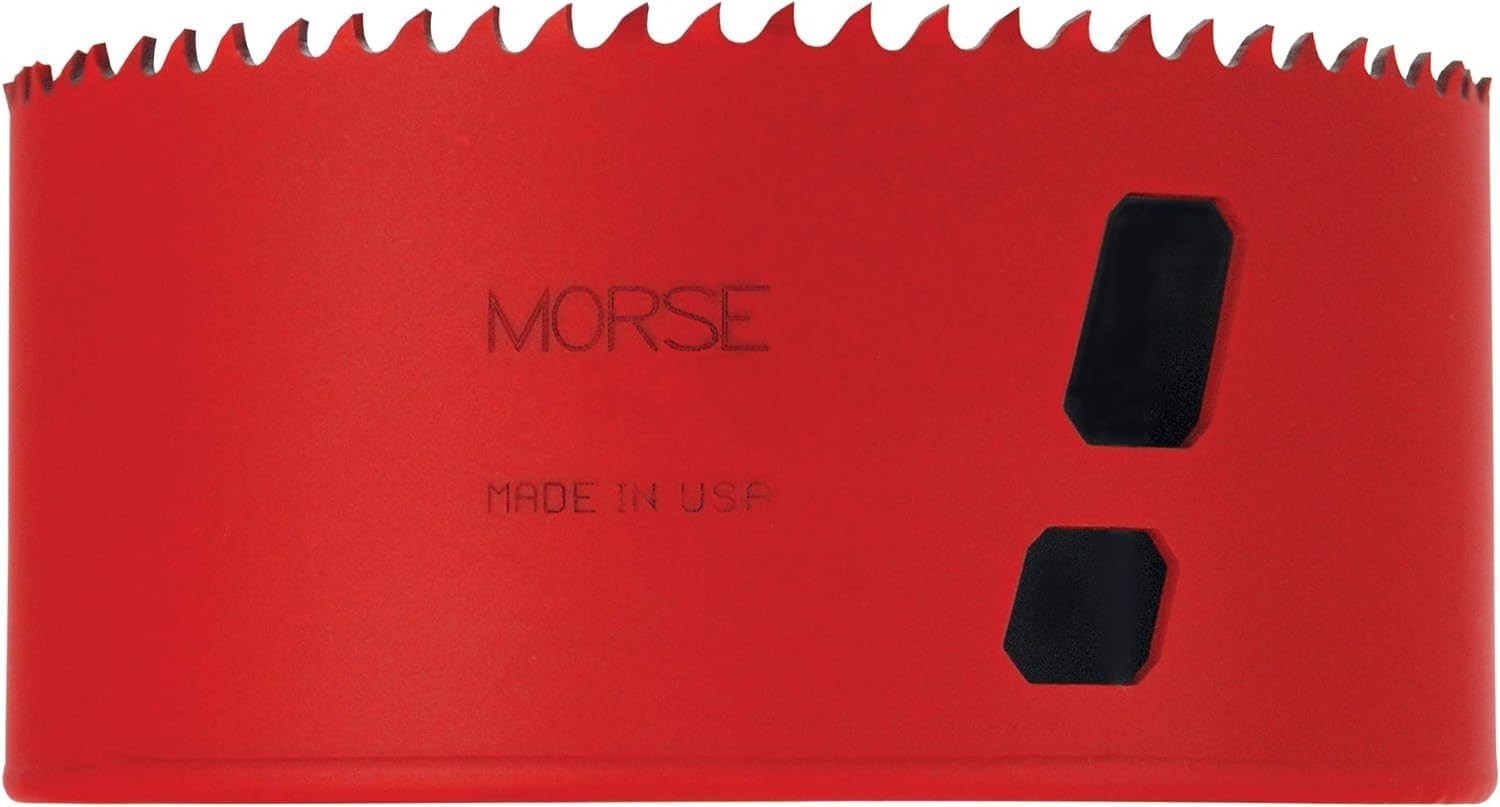
4. MK Morse MHS104 Bi-Metal Hole Saw
The USA-made bi-metal saw with a patent-pending tooth design that removes material faster.
Morse puts serious engineering into this 6-3/8 inch bi-metal saw. The patent-pending tooth set design removes material faster, a new cap reduces runout and vibration, and the exterior red coating cuts side wall friction for efficient cutting. The heavy-duty 0.050 side wall gives it greater stability than thinner competitors, and it weighs 1.6 pounds.
Customers note it slices through oak without issues and keeps its sharp teeth over time. One owner used it for a vacuum system installation and praised its durability, while another noted it cut schedule 40 2-3/8 inch oil field pipe with a solid drill — clean saddle cuts that dulled only after about 6 pipes. It works with 5/8″x18 universal arbors, including the Milwaukee 49-56-9100.
USA built: owners confirm it is still made in the USA, with durable construction and no chipping on thin stainless.
Comparison note: several owners rank it above Milwaukee, Dewalt, and Klein for cut quality and longevity.
Reach for it if: you want a premium bi-metal saw that cuts wood and thin metal cleanly and keeps cutting.
Know before buying: it is a saw only — you need a separate universal arbor to mount it.
5. Klein Tools 31900 Bi-Metal Hole Saw

The tough bi-metal that bores through 2x4s in a single pass.
Klein builds this 6-3/8 inch saw for the electrician who needs one reliable tool across many materials. Its 48 teeth with heavy-duty steel construction cut precise holes in drywall, ceiling tile, steel, wood, plastic, and stainless steel. Klein rates this saw to bore through 2x4s in a single pass., and owners confirm it cut 8 consecutive holes through treated 2x10s while working as good on the last as the first.
Klein recommends this saw for most major brands of 6-inch recessed lighting fixtures., and it works great for installing a 6-inch vent in the side of a house. One owner reported it cut through aluminum soffit and drywall with no problem. The trade-off is that it requires the Klein Tools Arbor (Cat. No. 31906), sold separately — several owners note that for the price, they expected the mandrel included.
Lumber eater: the aggressive teeth make short work of treated lumber and 2x material.
Metal care: on aluminum siding the aggressive teeth can grab and twist the drill — use reverse for siding.
Best for: pros who need one saw that handles drywall, wood, and thin metal on the same job.
Think twice if: you do not already own a Klein or universal arbor — factor that extra cost in.
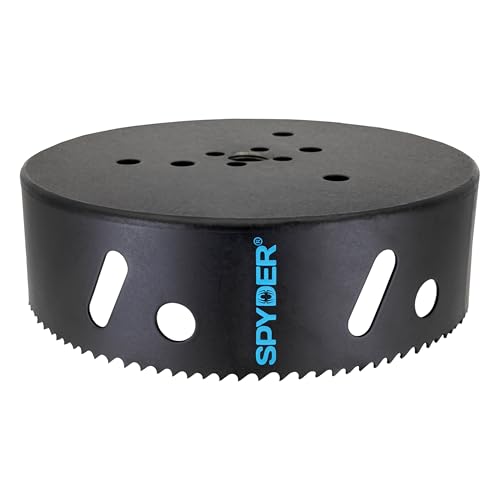
6. Spyder 6-3/8″ Bi-Metal Hole Saw (600928CF)
The sharp, fast-cutting bi-metal that handles steel and nail-embedded wood.
This Spyder is built for the jobs that wreck lesser saws: steel, stainless steel, nail-embedded wood, and plastics. The variable tooth pitch delivers a fast, clean cut through all material thicknesses up to 1-7/8 inches, and the tough bi-metal steel provides long life in demanding applications. At 2.2 pounds, it has a solid, heavy feel that inspires confidence.
Owners praise the build quality and sharp teeth, with one noting it cuts through material easily when paired with a heavy-duty construction drill with a stabilizing handle. Another buyer who owns several top-brand large hole saws reports these cut nearer to perfectly round than the pricier alternatives — the teeth appear set to a higher tolerance. Its universal thread accepts Spyder or any other universal hole saw arbor.
Roundness win: owners say the cut accuracy beats higher-priced big-name saws they own.
Setup note: pair it with Spyder’s Rapid Core Eject arbor to eject cores without prying and enlarge existing holes.
Choose this if: you regularly cut steel, aluminum, or wood with hidden nails and want a long-lasting edge.
Skip if: your work is all drywall and plaster — carbide grit will handle that better.
7. Southwire Bi-Metal Hole Saw (BMHS6-3/8)

The well-priced bi-metal that handles plywood and vinyl vents without complaint.
The Southwire is the straightforward choice when you need a reliable 6-3/8 inch hole saw for wood, plastic, and drywall without paying a premium. It is built for heavy-duty, fast cutting of steel, aluminum, brass, wood, plastic, and drywall, with a quick-release design for easy slug ejection. One owner used it to cut a hole for a kitchen range hood vent through drywall and exterior vinyl siding without catching or making a mess.
Reviewers point out it is much cheaper than buying at the big box store and performs just as well. One owner cut 14 holes through Sheetrock and circa 1923 tongue-and-groove 3/4-inch lumber for 6-inch can lights, and the saw was not slowing down or getting dull. Another found it not super heavy, just a bit unwieldy on a cordless drill — expect to use both hands.
Price-to-performance: owners consistently call it fantastic value, delivering cuts that rival pricier red-brand options.
Two-hand rule: for dimensional lumber over 2 inches thick, back off and chisel out the plug, then continue drilling.
Best for: homeowners cutting plywood, drywall, or vinyl for vents and recessed lights on a budget.
Not ideal for: heavy daily pro use or abrasive plaster ceilings — this is a capable occasional-use saw.
8. PLG2SUPT 6-3/8″ Carbide Grit Hole Saw Cutter

The segmented grit saw that cuts drywall and hardie board like butter.
This PLG2SUPT kit brings a segmented cutting edge to the 6-3/8 inch size, and PLG2SUPT rates this segmented saw as 1.2x faster than unsegmented designs.. It ships with 1 carbide grit hole saw bit, 1 mandrel for the chuck, and 2 silver HSS pilot drill bits for wood and soft metal. The max cutting depth is 1 inch, which suits standard drywall and plaster ceilings for recessed light installation.
Shoppers say it cuts right through a home wood wall in just a few seconds with a hand drill, and slices through hardie board easily. One buyer used it to install several LED wafers in a plaster ceiling — it worked great and held up through a dozen holes, though they would be surprised if it made another dozen. The manufacturer warns it cannot cut wood with nails or concrete, so keep it to clean material.
Ease of use: the segmented design cuts much smoother than typical toothed saws that bite and skate across the surface.
Life expectancy: plan for roughly a dozen holes in plaster — it performs well but is not built for marathon jobs.
Reach for this if: you need a complete kit with mandrel and pilot bits for a one-time recessed light project.
Look elsewhere if: you are cutting thick plaster and lath stacks or need a saw that lasts for many jobs.
9. Fivelake 6-3/8″ Bi-Metal M42 Hole Saw
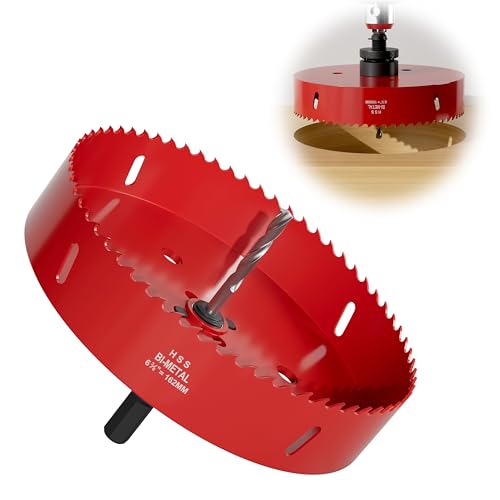
The hefty entry-level bi-metal that impresses on a Ryobi drill through stucco and wood.
This Fivelake is the budget-friendly bi-metal option that still brings real cutting ability. It is made from M42 high-speed steel with a hardness of at least 65 HRC, offering sharp teeth on a flexible bi-metal body. The spring-loaded pilot drill automatically ejects the cut-out disc after drilling, improving chip removal and reducing clogging on thicker materials, and the shank fits most electric and cordless drill chucks.
One owner, skeptical at first, used it to cut a hole in a Sprinter van door for a Dometic dome fan and reported it went through like butter with little to no damage to the cutter. Another found it works very well on a Ryobi drill for wood and plastic. The honest caveat from buyers: it started getting dull after only a few holes through plywood, so treat it as a solid occasional-use saw rather than a long-term workhorse.
Surprise performer: buyers report clean cuts through stucco, wood, and even van sheet metal on the first outing.
Durability alert: wear shows after a handful of holes in abrasive plywood — keep expectations in check.
Best for: a first-time buyer who needs a capable 6-3/8 inch saw for a couple of DIY projects.
Skip if: you have a long row of recessed lights to cut and need the edge to stay sharp all day.
Understanding the Specs
Carbide Grit vs. Bi-Metal
The single most important decision you will make. Carbide grit saws have an abrasive edge that grinds through plaster, stucco, and cement board without dulling quickly. Bi-metal saws use sharp steel teeth that slice wood, plastic, and thin metal fast, but they wear down fast on abrasive materials. Match the edge to your ceiling material: grit for old plaster, bi-metal for modern drywall and wood.
Depth of Cut
This spec tells you the thickest material the saw can pass through in one shot. A 1-3/4 inch depth handles standard drywall and most plaster assemblies. The deepest on this list is 2-3/8 inches, which lets you bore through thick stacks or fiber cement in a single pass. Deeper cuts are better for thick assemblies, but they add weight and cost.
Pilot Bit and Arbor Compatibility
The pilot bit centers the saw and stops it from wandering across the ceiling. A spring-loaded pilot ejects the cut-out disc automatically, saving you the prying. Check whether the saw uses a universal thread or a brand-specific arbor — some premium saws require a separate arbor purchase, which adds to the real cost.
Speed and RPM
Large 6-3/8 inch saws cut best at lower speeds. Milwaukee recommends 600 RPM for its carbide grit model, and running a big saw too fast causes heat buildup and premature dulling. Always use a drill with a support handle for control, and never use a hammer drill mode with any hole saw.
FAQ
What is the difference between a 6 inch and 6 3/8 inch hole saw?
Will this saw cut through old plaster and lath?
Do I need a special arbor for these hole saws?
What speed should I run a 6-3/8 inch hole saw?
How do I remove the cut-out disc from the saw?
Can I use a carbide grit saw on wood?
Will a bi-metal saw cut through metal?
How many holes can I expect from one saw?
Final Thoughts: The Verdict
For most buyers, the best 6 3/8 hole saw is the Milwaukee 49-56-0305 because its carbide grit edge survives the abrasive plaster and lath that destroy toothed blades, and it is a proven favorite among thousands of owners. If you want a clean, dust-controlled cut for recessed lights in drywall, grab the HLOFIZI. And for cutting fiber cement, tile, or concrete block, the Spyder carbide tipped is the one to reach for.
How We Picked
We do not accept paid placement. Every pick is matched to a real buyer and a real use-case; we do not hands-on test units.
Sources & Methodology
Specifications: manufacturer listings and product documentation. Review insights: verified customer reviews, as of July 2026. Pricing: not shown on this page (it changes often); check the current price via the retailer link.
As an Amazon Associate, Gadgets Feed earns from qualifying purchases. This does not affect which products we feature.