
Our readers keep the lights on and my morning glass full of iced black tea. As an Amazon Associate, I earn from qualifying purchases.
Specs are compiled from manufacturer listings and verified buyer reviews and can change over time — please confirm the key details on the product page before buying.
Burning toast in the kitchen shouldn’t feel like a five-alarm fire, and a silent, invisible gas leak shouldn’t go unnoticed until it’s too late. The best alarms on the market today combine smoke and carbon monoxide detection in one unit, so you cover both deadly threats without cluttering your ceiling with multiple devices. This guide breaks down the top combination detectors, focusing on what actually matters: false-alarm resistance, ease of installation, battery longevity, and real-world reliability.
I’m Min — the founder and writer behind Gadgets Feed. This guide is built by comparing the manufacturers’ published specifications and the patterns across verified customer reviews, so you get each pick’s real strengths and trade-offs instead of marketing spin.
Whether you’re replacing an aging unit or outfitting a new home, choosing the right carbon monoxide and smoke alarm means balancing smart sensor tech, power source, and interconnection features to fit your household.
Our Picks at a Glance


How To Choose The Best Carbon Monoxide And Smoke Alarm
Choosing a combo detector means deciding three things: how it detects danger, how it gets power, and whether it links with other alarms. Get these right, and brand, price, and design become simple tie-breakers.
Sensor Technology: Catching the Right Kind of Fire
Two main sensor types handle smoke detection. Ionization sensors respond fastest to fast-flaming fires, while photoelectric sensors are better at noticing the slow, smoldering fires that produce lots of smoke before bursting into flames. Many modern detectors use photoelectric technology because it cuts down on those annoying false alarms from cooking steam or burnt toast, yet still provides early warning. For carbon monoxide, an electrochemical sensor is the standard; it detects the gas chemically and triggers the alarm before it reaches dangerous levels.
Power Source: Battery vs. Hardwired vs. Sealed
Your installation effort depends on the power source. Basic battery-powered models like those running on AA batteries are truly plug-and-play—you mount them and forget them until the batteries need swapping. Hardwired units require a connection to your home’s electrical system but include battery backups so they still function during a power outage. the easiest option for many is a sealed 10-year lithium battery, which powers the device for its entire service life and removes the annual battery-change chore entirely.
Interconnection: One Alarm or the Whole House
Standalone detectors only sound in the room where the threat is detected. Interconnected systems link multiple alarms, so if one unit in the basement detects smoke, every alarm in the house goes off, warning you no matter where you are. While hardwired systems have traditionally offered interconnection, wireless models now link up to 18 devices without needing an electrician to run cables between rooms.
Quick Comparison
| Model | Best For | Power Source | Sensor Type | Interconnect | Amazon |
|---|---|---|---|---|---|
| First Alert SMCO100★ Best Overall | Everyday value & reliability | AA Batteries | Precision Detection | No | Amazon |
| X-Sense SC0610-Year Battery | 10-year sealed battery | 10-Year Sealed | Photoelectric, Electrochemical | No | Amazon |
| First Alert SMCO200Slim Profile | Discreet slim design | AA Batteries | Ionization | No | Amazon |
| BRK SC9120B | Hardwired replacements | Hardwired + 9V | Dual Ionization | Yes | Amazon |
| Kidde 30CUDR | Faster smoke detection | 2 AA Batteries | Advanced Sensing | No | Amazon |
| Kidde 900-CUDR-V | Voice alerts & clarity | 2 AA Batteries | Photoelectric, Electrochemical | No | Amazon |
| SimpliSafe CA002 | Smart home integration | Battery Powered | Dual Sensor | Yes (System) | Amazon |
| X-Sense SC01-W 3-Pack | Wireless whole-home link | 10-Year Sealed | Photoelectric, Electrochemical | Yes (Up to 18) | Amazon |
| SITERWELL A8612B-6AR | Hardwired 3-pack value | Hardwired + 2 AA | Dual Sensor | Yes | Amazon |
In‑Depth Reviews
1. First Alert Battery Combination Smoke & Carbon Monoxide Alarm (SMCO100)
Our pick — over 4.5★ from 900+ verified ratings; the strongest balance of quality and price.
A reliable all-rounder that minimizes cooking-fume false alarms.
This is the crowd favorite for a simple reason: it stops being a nuisance. First Alert’s Precision Detection technology is engineered to comply with new industry standards, which in plain terms means it won’t shriek every time you sear a steak, while still giving you early warning if a real fire starts. It protects against both smoke and carbon monoxide in one AA-battery-powered unit, so installation is a matter of minutes—no electrician, no wiring.
Reliability is the top reason owners pick this unit, and the battery life proves it: buyers report the same unit still running strong after two years without a battery change, with one calling the setup a 30-second job. The test/silence button makes weekly checks easy, and the end-of-life warning tells you when the unit itself needs replacing, so you’re never guessing if it’s still protecting you. It’s dependable, no-fuss performance you can trust in every room.
Compared to the slim-profile First Alert below, this unit is a touch deeper, but it offers better-established reliability feedback. If you value confidence over a barely-there profile, this is the one to beat.
battery backup basics
- Reliability is the most-praised trait — owners trust it to work when it matters
- Installation is genuinely simple, with AA batteries and no wiring
- Reduced cooking nuisance alarms mean fewer false scares
bulky plastic shell
- An occasional review notes it can still sound if you fry fish without a lid
- Durability feedback is mixed — some expect years of service, others plan for replacement
- No interconnection, so it doesn’t link to other alarms
budget buy: You want a proven, fuss-free combo alarm that balances cost, reliability, and easy installation for everyday home safety.
tight spaces: You need alarms that all sound together across the house, since this one works as a standalone unit.
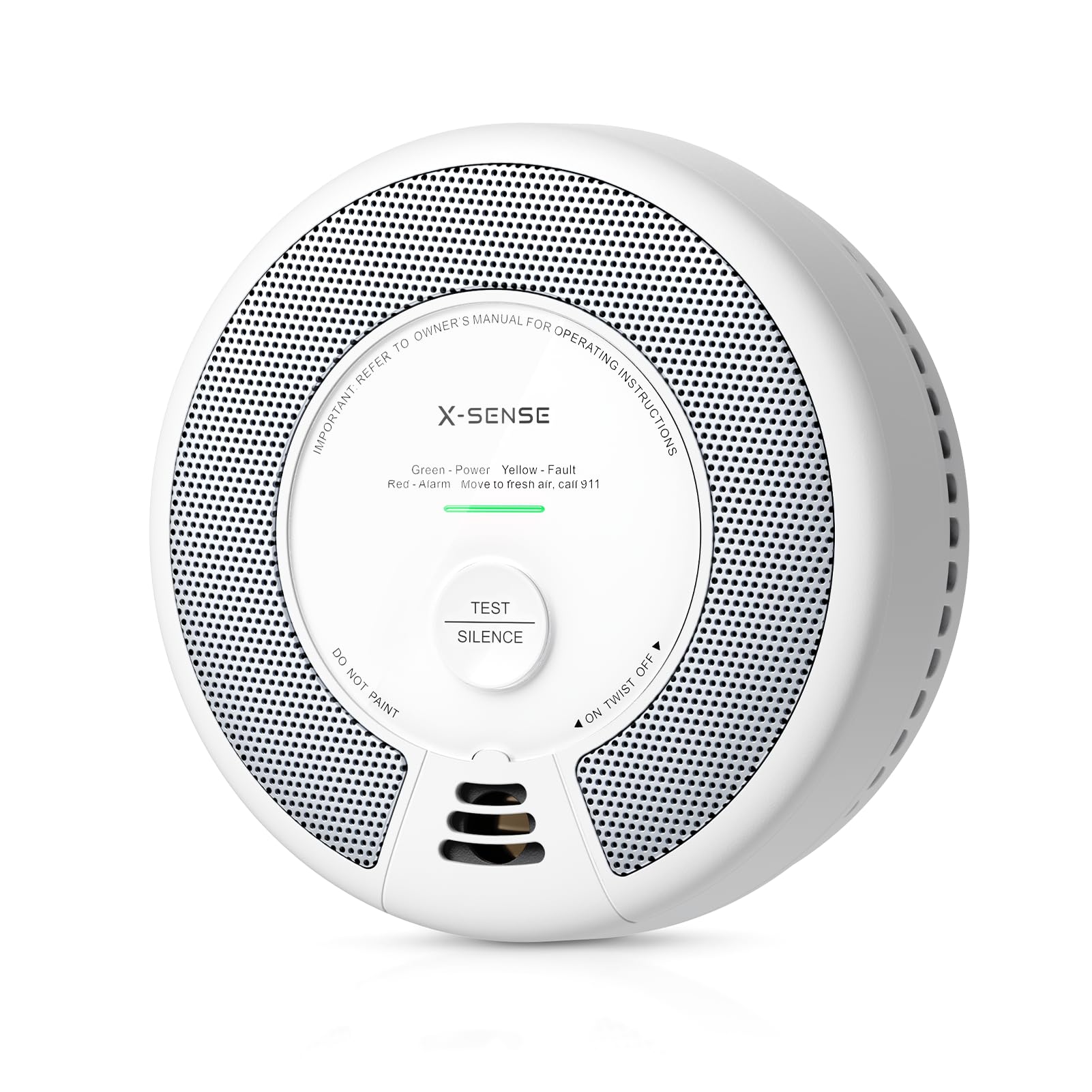
2. X-Sense Smoke & Carbon Monoxide Alarm (SC06)
A decade of protection sealed inside, so the battery chore simply disappears.
The defining feature here is the sealed lithium battery that powers this unit for up to ten years—no annual battery swaps, no midnight low-battery chirps. When the battery finally does run low, a warning lets you know it’s time to replace the whole alarm, which is the modern, maintenance-free approach to home safety. Upgraded photoelectric and electrochemical sensors work together for faster response while minimizing false alarms.
Installation is where this unit shines for everyday users; owners repeatedly describe the setup as quick and easy, with no wires to deal with and clear instructions. The heat-resistant PC material casing adds a layer of quality, and owners mention it looks solid and well-made rather than cheap. UL 217 and UL 2034 certifications confirm its safety compliance.
Weighing in at a similar footprint to the First Alert above (5.7″D x 5.7″W x 2″H), it trades the replaceable-battery convenience for a longer sealed lifespan. The trade-off is that reliability feedback is more mixed, with a few units reported as not working since installation, so check your unit promptly.
compact pick: You’d rather never think about changing batteries again — a full decade of protection from a sealed power source.
long haul: You want the option to replace just the batteries rather than the entire unit when it reaches end of life.
3. First Alert Battery Combination Smoke & Carbon Monoxide Alarm (SMCO200)
Ceiling presence that’s half the depth, so safety doesn’t have to be an eyesore.
Its slim profile sits nearly flush, minimizing visual impact. The slim profile is half the depth of a standard alarm, sitting nearly flush against the surface, and owners say it looks far nicer than the chunky units they replaced. Despite the sleek look, it still delivers full 2-in-1 protection against smoke and carbon monoxide using the same Precision Detection technology that reduces cooking nuisance alarms.
Setup takes about five minutes, per owner accounts, and the battery-powered design means no wiring is required—just mount, insert the AA batteries, and test. The audible alert and accessible test button make it straightforward to maintain. The ionization sensor inside responds well to fast-flaming fires, making it a solid choice for general-purpose rooms.
The honest caveat here is reliability: while many customers note flawless performance, a subset has dealt with false alarms on multiple occasions, and battery life feedback is similarly split. It’s a beautiful unit, but you’ll want to test it thoroughly right after installation.
multiroom deal: Aesthetics-conscious homeowners who want minimal visual impact on the ceiling without compromising on dual protection.
quiet zones: You prioritize absolute reliability above all else, since feedback on false alarms is more divided here than on the standard-profile model.
4. BRK SC9120B Smoke and Carbon Monoxide Alarm

The drop-in replacement that snaps onto your old base without rewiring the house.
If you have an aging hardwired alarm, this is the replacement you’ve been looking for. The standout feature is the universal mount bracket and base that matches existing installations—owners describe swapping it out as plugging the wires into the new unit and snapping it onto the original base, no bracket replacement or redo of wiring needed. It’s a true drop-in replacement that avoids rewiring.
At 10 ounces, it’s notably heavier than the 8.32-ounce First Alert SMCO100 above, but that heft reflects a superior carbon monoxide sensor paired with a dual ionization smoke alarm. The separate smoke and CO latching alarm indicators tell you exactly which hazard triggered the alert, and the silence/test button is simple to use. It runs on a 9V battery, which is included, and is backed by a 7-year limited warranty.
The big advantage is interconnection—it’s compatible with BRK and First Alert hardwired smoke and CO alarms, so it joins your existing whole-home network. Buyers consistently praise it as a perfect fit and a cost-effective way to update safety without touching the electrical panel.
powered homes: Anyone replacing an expired hardwired detector who wants a smooth swap that mounts on the existing base and links into the current alarm system.
outages: Renters or those who can’t access hardwired connections — this unit needs the wiring to function as designed.
5. Kidde Smoke & Carbon Monoxide Detector (30CUDR)

A louder, faster voice of warning that’s tested to the strictest modern standards.
Kidde claims its advanced sensing detects smoke over 25% faster while reducing false alarms from cooking and steam. The advanced sensing technology distinguishes real threats from a steamy shower, then sounds a loud 85-decibel alarm paired with a red LED for a clear visual cue. It meets UL 217 10th Edition, UL 2034 5th Edition, and FCC standards for code compliance.
Power comes from two included AA batteries for a no-wiring setup—though note it’s not compatible with the old mounting plate if you’re swapping from a different brand, so you’ll need to swap over the mounting plate. Owners find installation easy and value the dependable safety features, though reliability feedback contains some reports of random false alarms, a theme that’s common across this category.
Compared to the voice-alert Kidde below, this model skips the spoken warnings in favor of a more traditional but very loud siren. It’s the straightforward, standards-heavy choice for those who want a no-nonsense alarm with proven certification.
audible warning: Buyers who want a rigorously tested, AA-powered combo alarm with faster smoke detection and a loud, unmistakable siren.
small walls: You’re replacing an existing alarm and want a guaranteed match for your current mounting plate, which isn’t a given here.
6. Kidde Smoke & Carbon Monoxide Detector (900-CUDR-V)

A spoken warning that tells you exactly what’s wrong before you even open your eyes.
This alarm speaks clear voice alerts for fire, CO, and low battery. Instead of a generic siren, it announces “Fire!” for smoke or “Warning Carbon Monoxide” for CO gas, and even says “Low Battery” when power is running out. In a groggy 3 a.m. scenario, knowing instantly whether it’s a fire or a gas leak changes how you respond. The 85-decibel alarm still blares as backup, with LED indicators showing green for normal, amber for error, and red for an active event.
It’s powered by two AA batteries for reliable detection even during outages, and the included mounting bracket allows installation in four orientations. The photoelectric sensor catches slow, smoldering fires while the electrochemical sensor handles CO, giving you full-spectrum protection. UL Listed and backed by a 10-year limited warranty on the alarm itself, it’s a premium-feeling unit at a reasonable step up in price.
The trade-off is the recurring reliability theme: some reviewers point out false alarms after a few months, and a few units arrived with defects. The quality is praised, and owners love the voice alerts for clarity, but it’s worth testing immediately and keeping the warranty info handy.
long term: The clarity of voice alerts that distinguish between fire and CO, plus the confidence of battery-powered operation during outages.
tight budget: You can’t tolerate any risk of false alarms, since a subset of shoppers say occasional random triggers.
7. SimpliSafe Smoke & Carbon Monoxide Detector (CA002)

Phone alerts and pro dispatch that tell you about danger even when you’re miles away.
This one isn’t just an alarm; it’s a smart sensor designed for the SimpliSafe Gen 3 security system. The killer feature is instant phone alerts via the SimpliSafe app when dangerous smoke or CO levels are detected, even if you’re not home. With a compatible monitoring plan, it triggers 24/7 professional dispatch, so emergency response can be on the way while you’re still processing the alert. For anyone who travels or has a second property, this remote awareness is a genuine safety upgrade.
The built-in internal siren sounds locally, and it triggers the Base Station siren too, so the whole system gets loud. It’s engineered to ignore burning food, cutting down on false alarms from cooking, and setup requires no wiring—just screw the anchor to the ceiling and snap the detector in. Owners note it pairs easily with the existing system, and one buyer described replacing multiple units after losing confidence in another brand’s reliability.
The catch is that it only works within the SimpliSafe ecosystem, so it’s not a general-purpose replacement for your current alarm. It requires a SimpliSafe Gen 3 system to function, and some owners note reliance on a monitoring plan for the full dispatch benefit.
system users: Existing SimpliSafe owners who want smoke and CO detection folded into their smart home security with phone alerts and pro monitoring.
standalone: You don’t have a SimpliSafe system and don’t want to build your security around one — this requires the ecosystem.
8. X-Sense Interconnected Smoke and CO Detector Combo (SC01-W, 3-Pack)
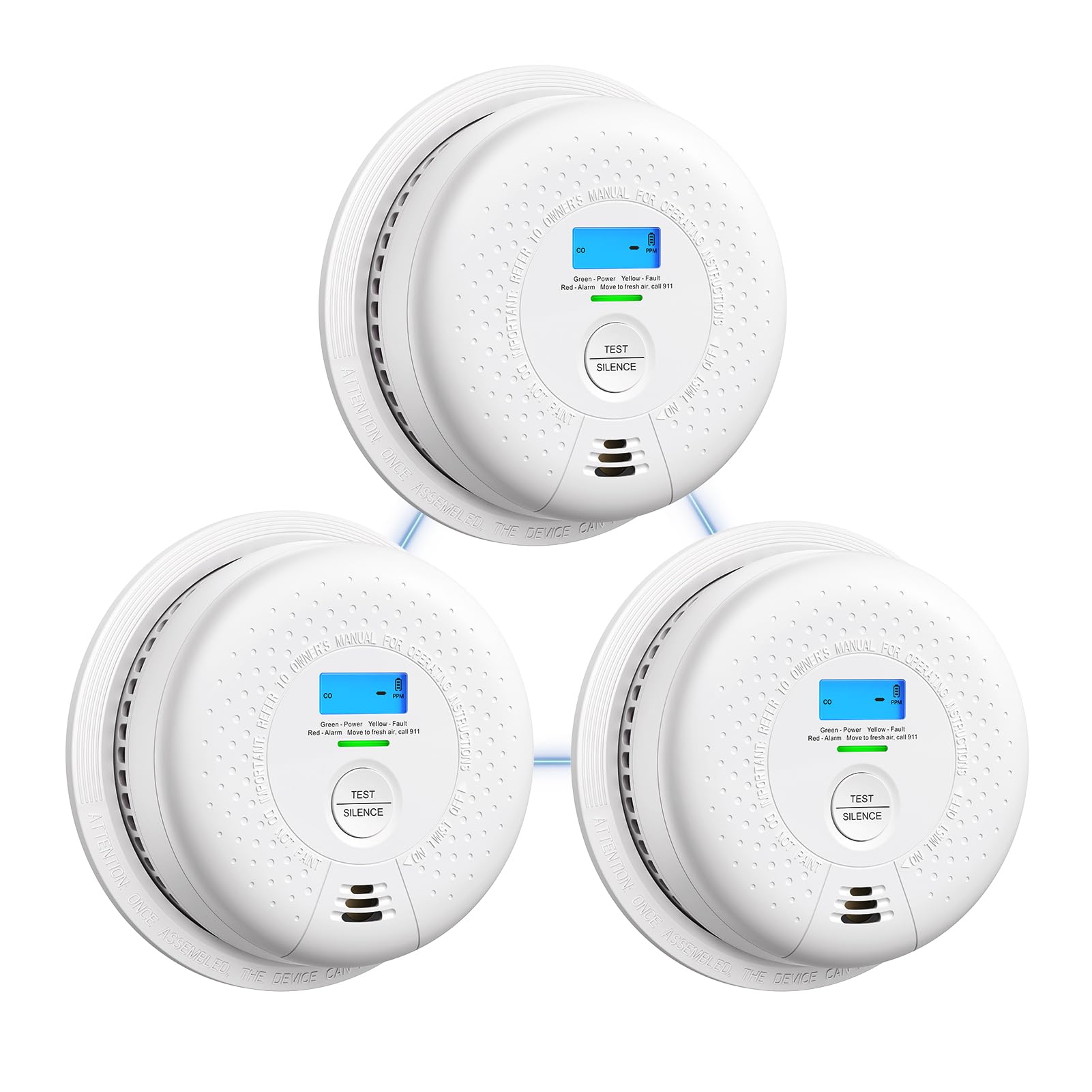
Wireless whole-home coverage that triggers every alarm when any one detects a threat.
This 3-pack solves the interconnection problem without an electrician. Each unit features wireless interconnection, so when one alarm detects smoke or CO, all linked alarms activate and sound the warning across the entire home. Up to 18 Link+ devices can be interlinked, making it a scalable solution for larger houses or multi-floor layouts. Owners find the synchronization process straightforward, and the units come pre-synced from the start, so they work together immediately.
Each detector runs on a 10-year sealed lithium battery, eliminating battery changes for its entire service life, and The combo unit is certified to UL 217 and UL 2034 standards. Installation requires no rewiring—mount with the included bracket, screws, and anchor plugs. It’s a strong value proposition for a whole-home system, with owners noting the cost-effectiveness, especially when bought as a bundle.
The honest trade-off is reliability: while many report flawless operation, some owners have experienced false alarms, and a few mention the LCD display is small and tricky to read at ceiling height. The included mounting fasteners have also drawn criticism—some buyers found them problematic and recommend using just the screws.
whole house: A complete, wireless whole-home safety network with 10-year sealed batteries and no wiring—ideal for DIY-friendly homeowners.
tech novices: You want a single standalone alarm, since this comes in a 3-pack and is best used as a linked system.
9. SITERWELL Hardwired Interconnected Smoke and CO Detector (A8612B-6AR, 3-Pack)
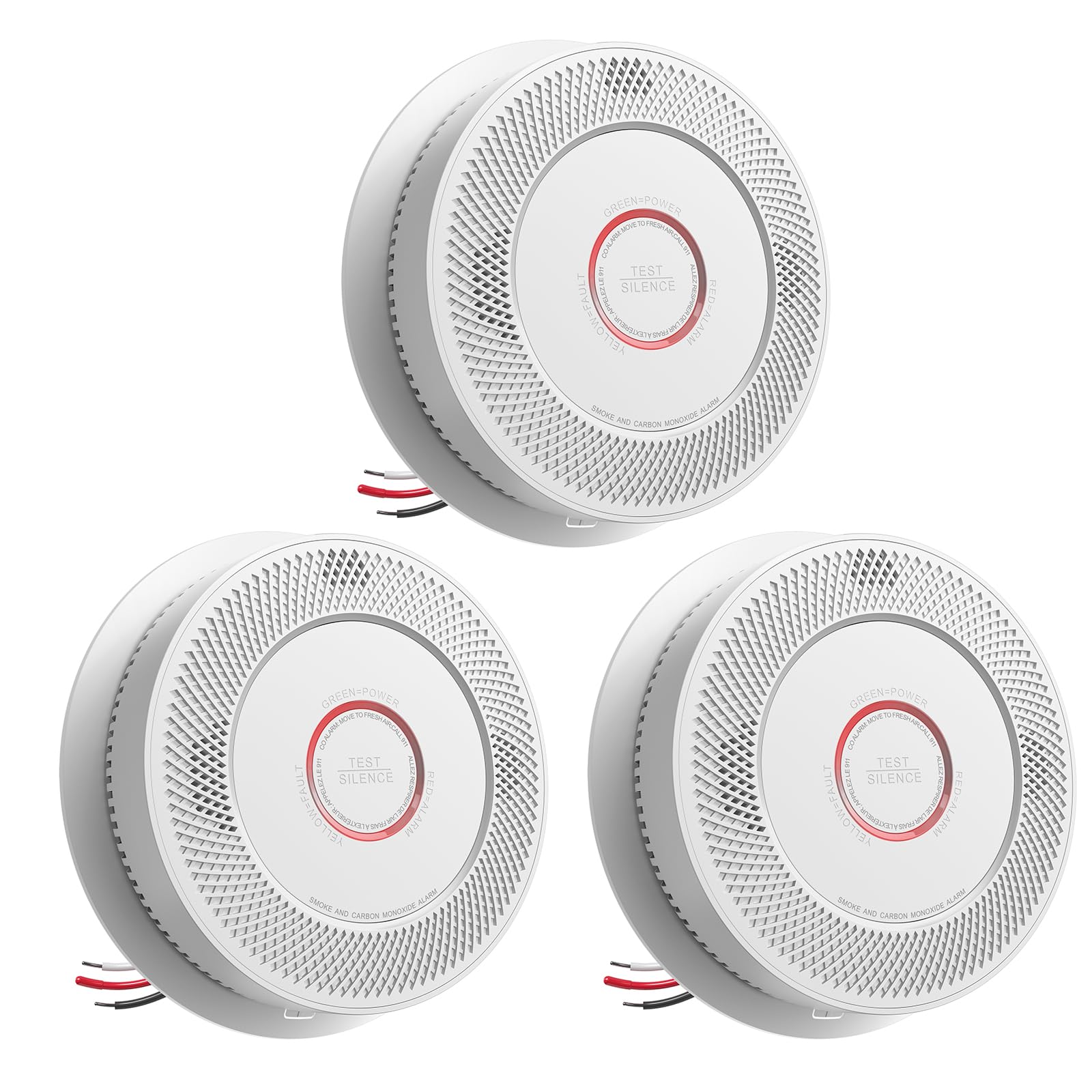
A hardwired trio with backup batteries and voice alerts in English or French.
This is a hardwired system designed for serious, code-compliant home protection. The standout feature is the dual-language voice alert, which lets you switch between English and French for alarm notifications—a thoughtful touch for bilingual households or anyone who wants family members to understand warnings instantly. The casing is made from 5VA flame-retardant plastic, withstanding high temperatures to protect the internal components.
It runs on 10-year product life with two AA batteries as backup, so it keeps working during power outages. The hardwired design allows interconnection across the home, and the wiring harness is easy to swap—owners note replacing their old Kidde alarms was straightforward, though you may need to replace the ceiling plates. Dual-light wave technology makes it more sensitive to slow, smoldering fires while distinguishing non-fire smoke to reduce false alarms, and it sounds an audible warning exceeding 85 decibels.
Here’s the honest concern: reliability feedback is the most divided of any product here, with a notable number of owners reporting multiple false alarms nightly that chain across all interconnected units. The build quality and value are praised, and many owners are happy, but this is the one to be most cautious about given the mixed track record.
electricians: You need a hardwired, interconnected 3-pack with battery backup and appreciate the bilingual voice alert feature at a competitive price point.
DIY quick: You prioritize maximum reliability, since this model has the most frequent reports of false alarms across the list.
Understanding the Specs
Sensor Types: Photoelectric vs. Ionization
These two sensors handle smoke detection differently. Photoelectric sensors use a light beam to detect smoke particles, making them faster at catching slow, smoldering fires that produce lots of smoke before bursting into flames. Ionization sensors use a small amount of radioactive material to detect fast-flaming fires quickly. Modern combo alarms often use photoelectric technology because it’s better at reducing nuisance alarms from cooking steam or burnt food, which is the most common source of annoying false triggers.
Power Source & the 10-Year Sealed Battery
Your alarm’s power source defines its maintenance routine. Standard battery-powered units run on AA batteries that you replace annually or when the low-battery chirp starts. Hardwired units connect to your home’s electrical system and include battery backups for outages. The increasingly popular 10-year sealed battery uses a lithium cell built into the unit, powering it for its entire service life—when it dies, you replace the whole alarm. This eliminates the annual battery-change chore and the dreaded 3 a.m. chirp, and it’s a major selling point for many modern detectors.
FAQ
What does UL 217 and UL 2034 certification mean for a combo alarm?
How often should I replace a 10-year sealed battery alarm?
What is the difference between an ionization and a photoelectric sensor?
Can I mix different brands of interconnected alarms?
Why does my smoke alarm go off when I cook or take a hot shower?
Is a hardwired alarm better than a battery-powered one?
How do voice alerts help in an emergency?
What is the end-of-life warning on a smoke and CO alarm?
Can a combo smoke and CO detector replace both my existing separate alarms?
Will a smart alarm like the SimpliSafe detector work without a monitoring plan?
Final Thoughts: The Verdict
For most people, the carbon monoxide and smoke alarm winner is the First Alert SMCO100 because it balances proven reliability, easy installation, and reduced false alarms at a price that makes whole-home coverage practical. If you want a decade of maintenance-free operation, grab the X-Sense SC06 with its sealed 10-year battery. And for a smart, connected system that alerts your phone when you’re away, the SimpliSafe CA002 is the one to reach for—provided you’re already in the SimpliSafe ecosystem.
How We Picked
We do not accept paid placement. Every pick is matched to a real buyer and a real use-case; we do not hands-on test units.
Sources & Methodology
Specifications: manufacturer listings and product documentation. Review insights: verified customer reviews, as of July 2026. Pricing: not shown on this page (it changes often); check the current price via the retailer link.
As an Amazon Associate, Gadgets Feed earns from qualifying purchases. This does not affect which products we feature.