
Our readers keep the lights on and my morning glass full of iced black tea. As an Amazon Associate, I earn from qualifying purchases.
Specs are compiled from manufacturer listings and verified buyer reviews and can change over time — please confirm the key details on the product page before buying.
Choosing Bermuda grass seed for North Texas means betting on a lawn that will face brutal summer sun, clay-heavy soil, and months of triple-digit heat. The right pick forgives a missed watering day or two, while the wrong one leaves you staring at bare dirt in August. This guide breaks down the top contenders by what actually matters here: germination speed, drought tolerance, and how aggressive the growth is.
I’m Min — the founder and writer behind Gadgets Feed. This guide is built by comparing the manufacturers’ published specifications and the patterns across verified customer reviews, so you get each pick’s real strengths and trade-offs instead of marketing spin.
The goal is simple: find the best Bermuda grass seed for North Texas that turns patchy, sun-baked yards into thick, resilient turf without wasting your time or money.
Quick Picks
- Pennington Bermudagrass Grass Seeds for Lawn — Best Overall
- Outsidepride Royal TXD Bermuda Grass Seed Blend — Fastest Establishment
- Hancock Seed Co. Common Bermuda Grass Seed — Budget Champion
- Outsidepride Maya (Blackjack II) Bermuda Grass — Luxury Lawn Pick
- Outsidepride Oasis Bermuda Grass Seed, 5 lbs — Heat & Drought Pick
- Outsidepride Full House Bermuda Grass Seed Mix — Premium Turf Blend
- Barenbrug 25045 Bermudagrass Grass Seed — Humid Climate Pick
How To Choose The Best Bermuda Grass Seed For North Texas
North Texas sits right at the edge of Bermuda’s comfort zone, so picking seed is about matching a blend to your specific yard conditions. The biggest mistake is ignoring soil temperature and planting too early, which guarantees failure no matter how good the seed is.
Match the cultivar to your sun and traffic
Hybrid blends like Royal TXD or Maya Blackjack II are bred for dense, fine-textured turf that handles heavy foot traffic, while common Bermuda is a more rugged, economical choice for pasture or large areas. If your yard gets full, blazing sun and kids or dogs run on it, a hybrid with drought tolerance is worth the step up.
Understand coating and seeding rates
Coated seeds are wrapped in a clay or polymer layer that holds moisture around the seed, which can help germination on dry spring days. Just remember the coating adds weight, so a 5 lb bag of coated seed covers less area than 5 lb of raw seed — always check the recommended rate per 1,000 square feet.
Quick Comparison
| Model | Best For | Bag Size | Type | Coverage Notes | Amazon |
|---|---|---|---|---|---|
| Pennington Bermudagrass | Wear-resistant family lawns | 5 lb | Cold-tolerant blend | Spreading turf | Amazon |
| Outsidepride Royal TXD | Fast establishment, sports turf | 1 lb | Coated hybrid blend | 2–3 lb / 1,000 sq ft | Amazon |
| Hancock Common Bermuda | Pasture & large areas | 5 lb | Common Bermuda | Full sun coverage | Amazon |
| Outsidepride Maya Blackjack II | Fine-textured luxury lawns | 5 lb | Coated hybrid blend | Spreader friendly | Amazon |
| Outsidepride Oasis | Heat & drought resistance | 5 lb | Hybrid blend of 3 | 2–3 lb / 1,000 sq ft | Amazon |
| Outsidepride Full House | Golf-course-grade density | 2 lb | Monaco & Hollywood blend | 2–3 lb / 1,000 sq ft | Amazon |
| Barenbrug Bermudagrass | Humid southern climates | 5 lb | Full sun variety | 80 oz coverage | Amazon |
In‑Depth Reviews
1. Pennington Bermudagrass Grass Seeds for Lawn, 5 lb

The tough turf that shrugs off backyard traffic and keeps its color through a Texas scorcher.
Pennington’s 5 lb bag is built for the reality of a North Texas family lawn: kids, dogs, and relentless sun. The blend leans on improved cold-tolerant varieties, so it holds up better than common Bermuda when a surprise cool snap rolls through in early spring. It also grows low, which means fewer grass clippings to bag during peak growing season.
What wins people over is the wear resistance — owners routinely describe a deep root system that bounces back after heavy use. The trade-off is real though: germination is the most-discussed topic in the reviews, and it swings both ways. Some see thick growth within a couple of weeks after proper soil contact and daily watering, while others report nothing sprouting at all. The seed is so tiny it looks like powder, so multiple seedings and annual overseeding are part of the deal.
To get this seed to thrive, you need to prep the soil first: dethatch (remove dead grass), scalp (cut low), add starter fertilizer, and water twice daily when temperatures sit between 70–80°F. One buyer turned a bare dirt patch into a lush tortoise enclosure and called it “the next best option” after native grass failed to grow there.
What Owners Love
- Aggressively self-spreading growth fills bare patches fast
- Low-growing habit cuts down on mowing clippings
- Penkoted coating technology helps protect each seed
The Honest Catch
- Germination results vary widely — prep work decides the outcome
- Goes dormant and turns brown in winter months
- Needs consistent watering for the first three weeks
Reach for this if: you want a proven, self-spreading Bermuda that handles wear and tear on a busy family lawn.
Think twice if: you are not prepared to follow the full seeding prep — this seed rewards effort and punishes shortcuts.
2. Outsidepride Royal TXD Bermuda Grass Seed Blend, 1 lb

The speed demon that hit 80% germination in under two weeks for patient, prepared planters.
Royal TXD, formerly LaPrima XD, is the pick when you want to see green fast. This coated blend combines Yukon, Royal Bengal, and Copperhead cultivars, all chosen for rapid germination and dense establishment. The genetic diversity means it adapts from temperate zones down to subtropical heat, which makes it a flexible choice for North Texas microclimates.
Buyers report the standout success story here: planted August 19, germinated in 7 days, and hit 80% germination by day 12. That kind of speed requires full commitment — scalping, raking, dethatching, and irrigation four times daily for 30 minutes each. The payoff is a golf-course-grade lawn that handles high-traffic areas and sports fields with ease.
Coverage guidance is clear: sow 2–3 pounds of coated seed per 1,000 square feet. The 1 lb bag is the right size for patch repair and overseeding existing Bermuda, not for a full-acre renovation.
Speed vs. patience: this blend germinates fast when conditions are right, but it demands heavy watering and full soil prep — the bare patches some owners saw were traced to sprinkler overshoot, not the seed itself.
Best for: homeowners overseeding an existing lawn who want rapid, dense fill-in this season.
Skip if: you cannot commit to twice-daily watering for the first two weeks — germination here is a sprint, not a stroll.
3. Hancock Seed Co. Common Bermuda Grass Seed, 5 lbs

The rugged workhorse for pasture, erosion control, and yards where hybrid finickiness is not welcome.
Hancock’s 5 lb bag of common Bermuda is a different animal from the hybrids above — it is bred for function over lawn-show looks. The intended uses say it all: lawn, pasture, livestock grazing, cattle forage, erosion control, and cover crop. If you need to stabilize a slope or feed grazing animals, this is the economical pick.
The brand’s own recommendation is the key to success here: plant in spring and summer when nighttime temperatures are consistently 65+ degrees, at least 3 months before the first frost. Owners mention that owners who followed this rule nailed solid growth on the first try, while those who sowed into cool soil saw nothing. One owner switched from a big-box brand after two patchy attempts and got full, solid growth with Hancock on the first pass.
The honest reality is a split decision: some report barely 15% germination after five weeks despite tilling, topsoil, compost, and twice-daily watering. Bermuda is a hot-weather grass, and this seed punishes anyone who jumps the gun on soil temperature.
Value play: the largest bag here for the money, but common Bermuda trades fine texture and rapid establishment for rugged, drought-hardy coverage — plan for slower fill-in than a hybrid blend.
Choose this for: large bare areas, pastures, or erosion-prone slopes where cost per pound matters more than golf-green looks.
Look elsewhere if: you expect a manicured front lawn — hybrid blends establish denser, finer turf.
4. Outsidepride Maya (Blackjack II) Bermuda Grass Seed, 5 lbs

The carpet-like Bermuda that turns a dirt yard into a dark green showpiece for Southern summers.
Blackjack II is all about texture — this coated seed produces fine, carpet-like dark green turf that feels more like a golf course fairway than a backyard. Owners describe going from “mostly dirt” to lush green, with one reporting germination within three days and the first mow needed just four weeks later.
The coated seeds are designed to retain moisture and spread easily with a standard broadcast spreader. That same coating opens up a powerful trick: a 7-day pre-germination soak in a bucket before sowing. Owners who used the soak method saw dramatically better results than those who sowed dry, a detail that separates this blend from the field.
Mowing height matters here — the manufacturer recommends keeping it at 0.5 to 2 inches for best establishment. It thrives in California, Texas, and Florida, making it a confident choice for North Texas heat.
The texture wins: this is the prettiest turf in the lineup, but the fine blades demand a lower mowing height and a willingness to pre-soak for best results.
Reach for this if: you want a dense, fine-bladed lawn and are willing to try the pre-germination soak for a head start.
Think twice if: you want a low-maintenance seed — this one rewards hands-on prep.
5. Outsidepride Oasis Bermuda Grass Seed, 5 lbs

The aggressive filler that crowds out weeds while holding its color through the driest stretch of summer.
Oasis is a hybrid blend of three top-performing Bermuda grasses engineered for one job: surviving heat and drought while looking good. The fast-growing, aggressive nature of this seed helps crowd out unwanted weeds, which can reduce your dependence on herbicides and extra maintenance through the season.
The planting recipe is straightforward: sow 2–3 pounds per 1,000 square feet once soil temperatures exceed 65°F, cover seeds no deeper than 1/4 inch, and keep the soil moist for 1–2 weeks. Customers note real results — one watched it germinate in seven days even in “horrible soil,” crediting the two-times-daily watering and humic charcoal.
Results still split on germination, with some reporting 60% germination within a week and others seeing nothing after two tries. The coverage claims draw some skepticism too, so measure your yard before buying.
Built for the heat: this blend’s whole identity is drought and heat resistance, making it a natural fit for full-sun North Texas lawns — just be ready to water religiously for the first two weeks.
Best for: sunny, high-traffic areas where you want dense coverage that suppresses weeds naturally.
Consider alternatives if: your yard has partial shade — this is strictly a full-sun grass.
6. Outsidepride Full House Bermuda Grass Seed Mix, 2 lbs
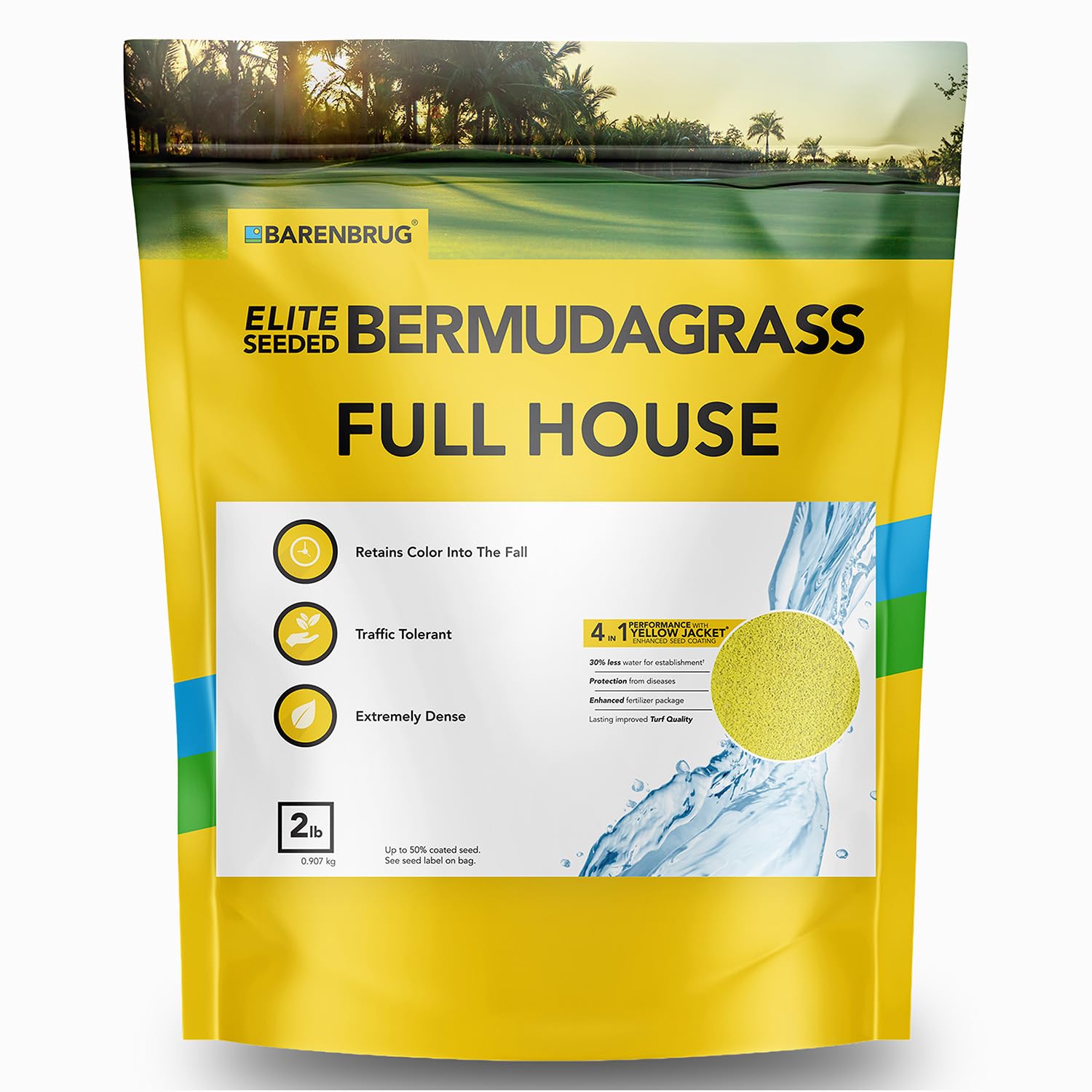
The golf-course-grade blend with coated seeds that promise full coverage in four to six weeks.
Full House pairs Monaco and Hollywood Bermuda cultivars — both known for traffic and drought tolerance — into a premium mix aimed at golf course fairways and demanding home lawns. The coated seeds retain moisture around each grain, which encourages more consistent germination than raw seed.
Reviewers point out the quality of this seed is the standout trait, with owners praising the germination and the overall seed quality when they followed a full soil-prep routine. The manufacturer claims germination begins within 7 days in ideal conditions, with full coverage in 4–6 weeks, and the recommended rate is 2–3 pounds per 1,000 square feet.
The catch is the same one that haunts this category: a few owners saw almost no germination despite scalping, leveling, overseeding, and keeping the soil moist. One owner also flagged dandelion seeds mixed into the bag, so inspect what you spread.
Quality on paper: this is the highest-end blend here, but the 2 lb bag is premium-priced and results still hinge on your prep work and watering discipline.
Choose this for: small, high-value areas like a front lawn or patch repair where you want professional-grade density.
Reconsider if: you are covering a large area — the 2 lb bag runs out fast at 2–3 lb per 1,000 sq ft.
7. Barenbrug 25045 Bermudagrass Grass Seed, 5 LB Bag
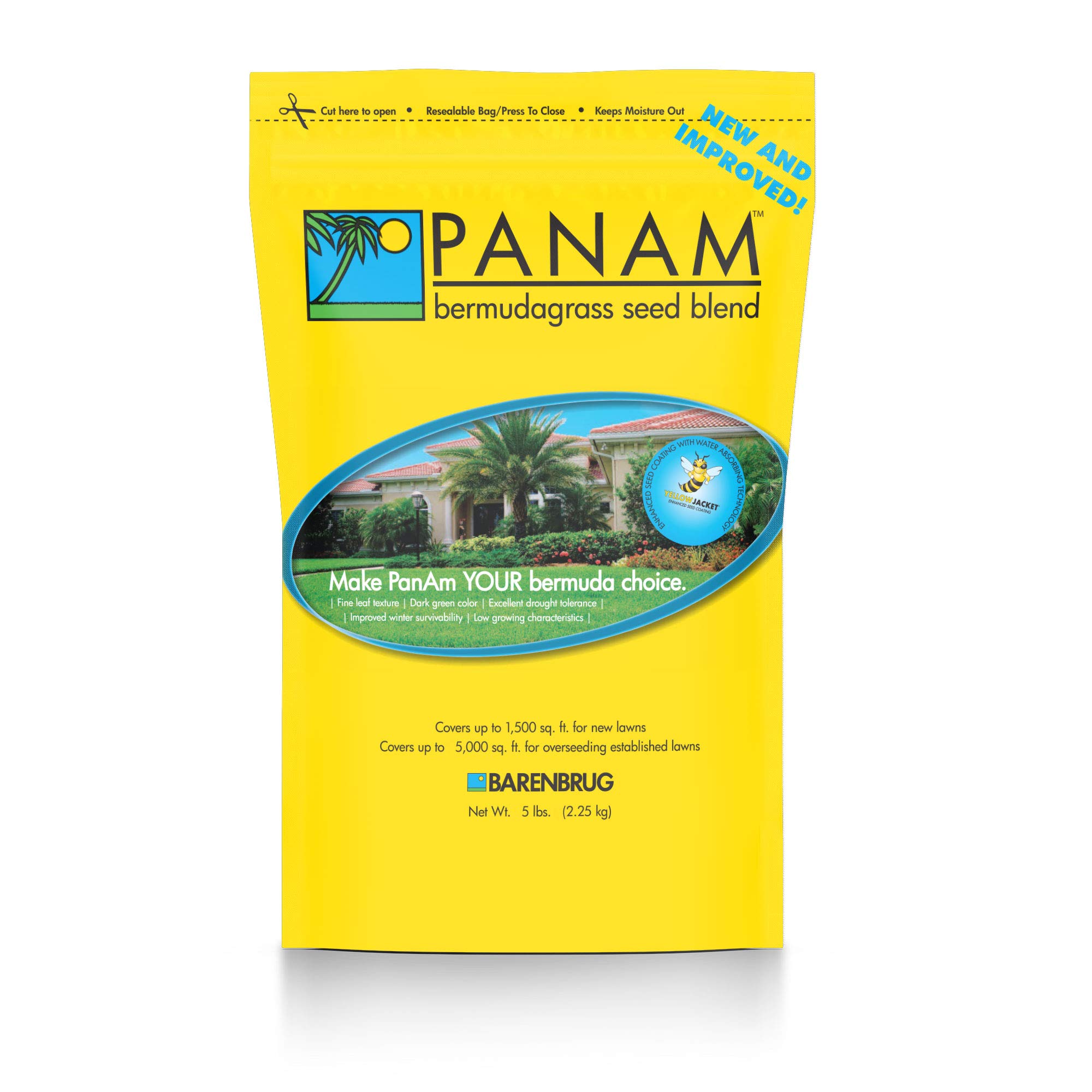
The Southern-region specialist that sprouted in a week even in waterlogged, shaded soil.
Barenbrug positions this Bermuda for the southern regions of the U.S., with a formula tuned for sunny areas and humid climates — a useful match for North Texas spring storms and muggy stretches. The 5 lb bag covers serious ground, though full sun exposure is a hard requirement.
Shoppers say a wide spread of experiences. The bright spot: one owner saw sprouts after 1 week even in waterlogged soil and shade, using a Jiffy greenhouse and potting soil. Another reported 75% germination quickly, with the rest filling in a bit later — “once started it took off and filled areas nicely.”
The low end is just as real: a buyer who planted 3 bags monthly from March saw nothing germinate, while others reported zero growth after 14 days of tilling, starter fertilizer, and twice-daily watering. This one is sensitive to soil temperature, so wait for consistent warmth.
Humidity helper: the Southern-region breeding makes this a logical fit for North Texas, but it needs warm soil and consistent moisture to deliver on its promise.
Pick this if: your yard sits in a humid microclimate or you want a full-sun Bermuda bred specifically for the South.
Skip if: you tend to plant early in the season — this seed demands warm soil and will not forgive a premature start.
Understanding the Specs
Germination Time & Rate
This is the single most important number in Bermuda seed. It tells you how many days until you see green and what percentage of the seed you planted actually sprouts. Fast germination (7 days) is great, but it usually comes with a catch: those seeds need consistent moisture, often twice-daily watering, for the first two weeks. A slower-starting seed is more forgiving of missed waterings but leaves your soil exposed to weeds longer.
Coated vs. Uncoated Seed
Coated seeds have a clay or polymer wrapper that holds moisture around each grain. This helps germination on dry days and makes the seed easier to spread evenly with a broadcaster. The trade-off is that the coating adds weight, so a 5 lb bag of coated seed covers less area than 5 lb of raw seed. Always check the recommended rate per 1,000 square feet on the label before calculating how many bags you need.
FAQ
When is the best time to plant Bermuda grass seed in North Texas?
How often should I water new Bermuda grass seed?
Will Bermuda grass seed grow in shade?
How much seed do I need for my lawn?
Is coated or uncoated Bermuda seed better?
Will Bermuda grass seed die in the winter?
How long does Bermuda grass take to germinate?
Can I mix Bermuda seed with topsoil before spreading?
Is hybrid Bermuda worth the extra cost over common Bermuda?
Why did my Bermuda seed not germinate at all?
Final Thoughts: The Verdict
For most North Texas homeowners, the winner is the Pennington Bermudagrass because it pairs wear resistance with a cold-tolerant, low-growing blend that handles family traffic. If speed is your priority, the Outsidepride Royal TXD is the fastest-establishing option here. And for pure drought and heat resistance on a sunny lawn, the Outsidepride Oasis is the one to reach for.
How We Picked
We do not accept paid placement. Every pick is matched to a real buyer and a real use-case; we do not hands-on test units.
Sources & Methodology
Specifications: manufacturer listings and product documentation. Review insights: verified customer reviews, as of July 2026. Pricing: not shown on this page (it changes often); check the current price via the retailer link.
As an Amazon Associate, Gadgets Feed earns from qualifying purchases. This does not affect which products we feature.