
Our readers keep the lights on and my morning glass full of iced black tea. As an Amazon Associate, I earn from qualifying purchases.
Specs are compiled from manufacturer listings and verified buyer reviews and can change over time — please confirm the key details on the product page before buying.
A spray can primer is often the deciding factor between a paint job that lasts for years and one that flakes off in months. The real question is which formula locks onto bare metal, plastic, and fiberglass to give your topcoat a fighting chance. This guide breaks down the best options by what they physically do—etching, bonding, filling, or sealing—so you can match the chemistry to your surface.
I’m Min — the founder and writer behind Gadgets Feed. This guide is built by comparing the manufacturers’ published specifications and the patterns across verified customer reviews, so you get each pick’s real strengths and trade-offs instead of marketing spin.
We’ve separated the true professional-grade performers from the commodity cans, so you can confidently choose the right auto primer in a spray can for bare metal, plastic trim, or a full restoration project without guessing.
Our Picks at a Glance


How To Choose The Best Auto Primer In A Spray Can
The first decision is the chemical job the primer must do on your specific surface, not color or brand. A bare steel fender, a scratched plastic bumper, and a sanded fiberglass hood each need a different type of bond to hold paint properly.
Match the formula to the surface
Self-etching primers use acid to bite into bare metal, creating a mechanical bond that resists corrosion. Bonding primers are formulated to grab slick, difficult surfaces like plastic, chrome, and aluminum trim. High-build primers lay down a thick, sandable layer that fills light scratches and pinholes before color goes on.
Check the spray hardware before the paint
The nozzle you choose decides whether you get a clean coat or a drippy mess. A fan nozzle (a wide spray tip) covers large panels fast, but you must overlap each pass carefully to avoid runs. A variable or comfort tip nozzle (an adjustable spray tip) gives you precise control for smaller jobs—so your skill matters less than the tip you pick.
Read the cure time, not just the dry time
“Dry to the touch” means the primer won’t smear, but it is still soft underneath. The full cure time is when chemical cross-linking finishes and the film hardens enough to sand without gumming up your paper. Ignoring cure time is the most common cause of a wavy, uneven final surface.
Quick Comparison
| Model | Best For | Capacity | Dry Time | Finish Type | Amazon |
|---|---|---|---|---|---|
| SEM Self Etching Primer★ Best Overall | Bare metal adhesion | 15.5 oz | 3 hours | Primer | Amazon |
| Krylon Rust ToughRust Fighter | Rusty surfaces | 12 oz | — | Aerosol | Amazon |
| Rust-Oleum Bonding PrimerBest Value | Plastic & trim | 12 oz | 30 min | Matte | Amazon |
| Seymour PBE Primer | Fast sanding | 15 oz | 0.08 hours | Matte | Amazon |
| Dupli-Color Sandable | Multi-surface fill | 12 oz | 30 min | — | Amazon |
| Custom Shop High Build | Filling scratches | 12 oz | — | Semi-Gloss | Amazon |
| Raptor Acid Etch | Galvanized metal | 13.2 oz | 1 hour | Matte | Amazon |
| SprayMax 2K Epoxy | Corrosion sealing | 12.5 oz | 15 min | — | Amazon |
In‑Depth Reviews
1. SEM 39683 Grey Self Etching Primer
Our pick — over 4.5★ from 550+ verified ratings; the strongest balance of quality and price.
The shop-grade acid primer that bare aluminum and steel actually hold onto.
For a bare-metal project, this is the primer that sets the bar. It uses a self-etching acid formula to bite into raw aluminum and tin, creating a corrosion-resistant base that topcoats can grip for the long haul. That’s why it earns the top spot over the Rust-Oleum option—the adhesion here is a different class, and the reviews are consistent about one thing: it sticks.
You get 15.5 oz versus the Krylon’s 12 oz—so you can spray longer before reloading. Buyers report the nozzle lays down a uniform wide pattern without the splotches they saw with cheaper cans, though a few noted light spitting if you don’t shake the can properly, and some were surprised the “Grey” can runs darker than expected. It dries in 3 hours, which is slower than the Seymour below, but you get a tougher, more reliable bond on bare metal in return.
Owners consistently praise the professional-grade feel and the smooth, durable surface it leaves behind. If you’re prepping raw metal for paint, whether a motorcycle mount or a full fender, this is the one to start with.
What wins people over
- Superior adhesion to bare aluminum and tin
- Excellent coverage from a 15.5 oz can
- Corrosion-resistant base for long-term protection
Heads-up before you buy
- 3-hour dry time is slower than quick-dry rivals
- Light spitting if you skip a thorough shake
Reach for this if: you’re working on bare metal and want the most trusted bond before your topcoat.
Look elsewhere if: you need to sand and spray color within the hour—this one needs patience.
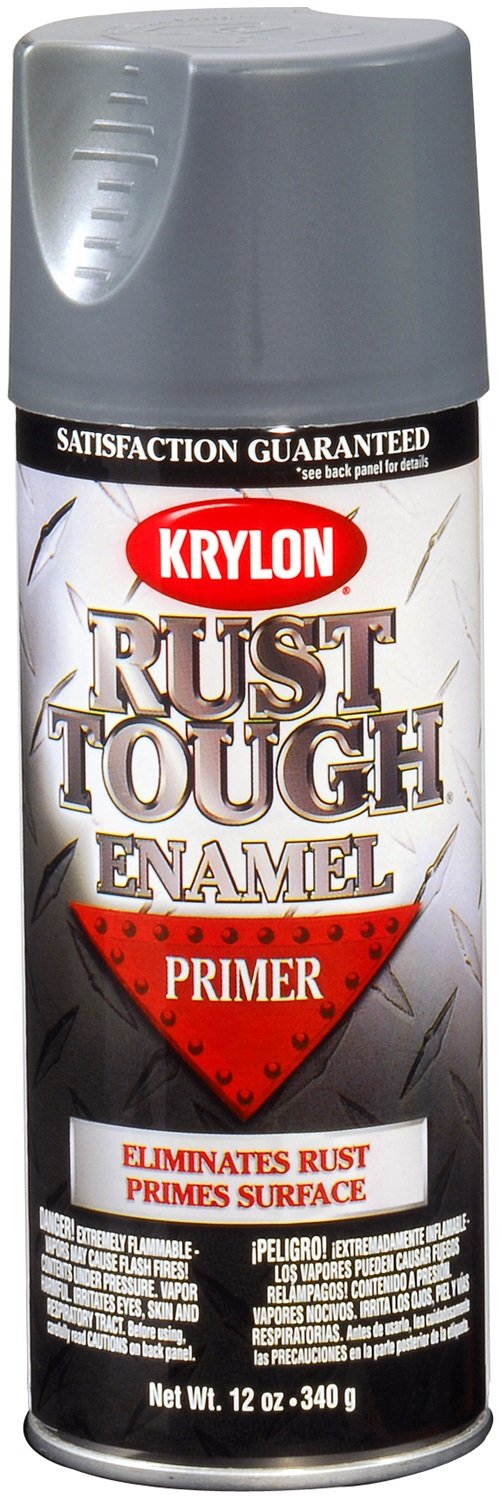
2. Krylon K09205007 ‘Rust Tough’ Gray Primer
The budget can that beats pricier rust primers at their own game.
If your panels already show rust, this is the primer to grab. Owners mention it “sticks to rusty surfaces much much better than any Rustolium primer,” and that kind of real-world claim is hard to argue with. Its Rust Tough formula halts corrosion on metal that’s already oxidizing, not just fresh steel.
The can covers up to 25 square feet, giving you solid value from a 12 oz aerosol. Owners also praise the appearance—one called the finish “polished silver”—and note it handles winter weather well. A welder flagged an important safety note: this is a zinc-based formula, so you should ventilate the area and wear a chem mask, because zinc exposure can cause a reaction.
It’s a clear budget champion at this price tier. Some buyers find it slightly pricey for the size, but most agree it’s worth it for the rust-stopping performance on an older vehicle.
Best for: anyone touching up rust spots on an older car or truck who needs a primer that actually bonds to corroded metal, not just clean steel.
The trade-off: the zinc formula demands proper ventilation and a respirator during application—skip the mask and you’ll feel it.
3. Rust-Oleum Automotive Universal Bonding Primer Spray
The trim and plastic specialist that cuts your sanding time way down.
Plastic bumpers, chrome trim, and fiberglass are the hardest surfaces to make paint stick to, and this is the bonding primer built for exactly that job. Its whole purpose is to create a lasting bond on those difficult surfaces so your topcoat doesn’t peel. One owner summed it up: “Completely surprised at how well this bonded and filled in the small defects. Cut down on sanding time.”
Unlike the SEM self-etching primer above, which is strictly for bare metal, this formula bonds to bumpers, trim, plastics, fiberglass, galvanized steel, and aluminum. It dries to the touch in 30 minutes and covers up to 10-12 sq. ft. per 12 oz can. The flat white finish reads well under any color topcoat, and it’s the pick that saves you the most prep time on mixed-material jobs.
Customers note this primer fills minor imperfections and bonds well, calling it “75% of a good paint job.” But the spray pattern is on the small side, so test it on scrap first and move quickly—it can run if you hesitate.
Why it earns its spot: it’s the most versatile bonding primer we ranked, handling everything a self-etching can can’t touch, all at a budget-friendly price.
Who should skip it: anyone spraying bare steel who actually needs acid etching for maximum corrosion protection—that’s the SEM’s job.
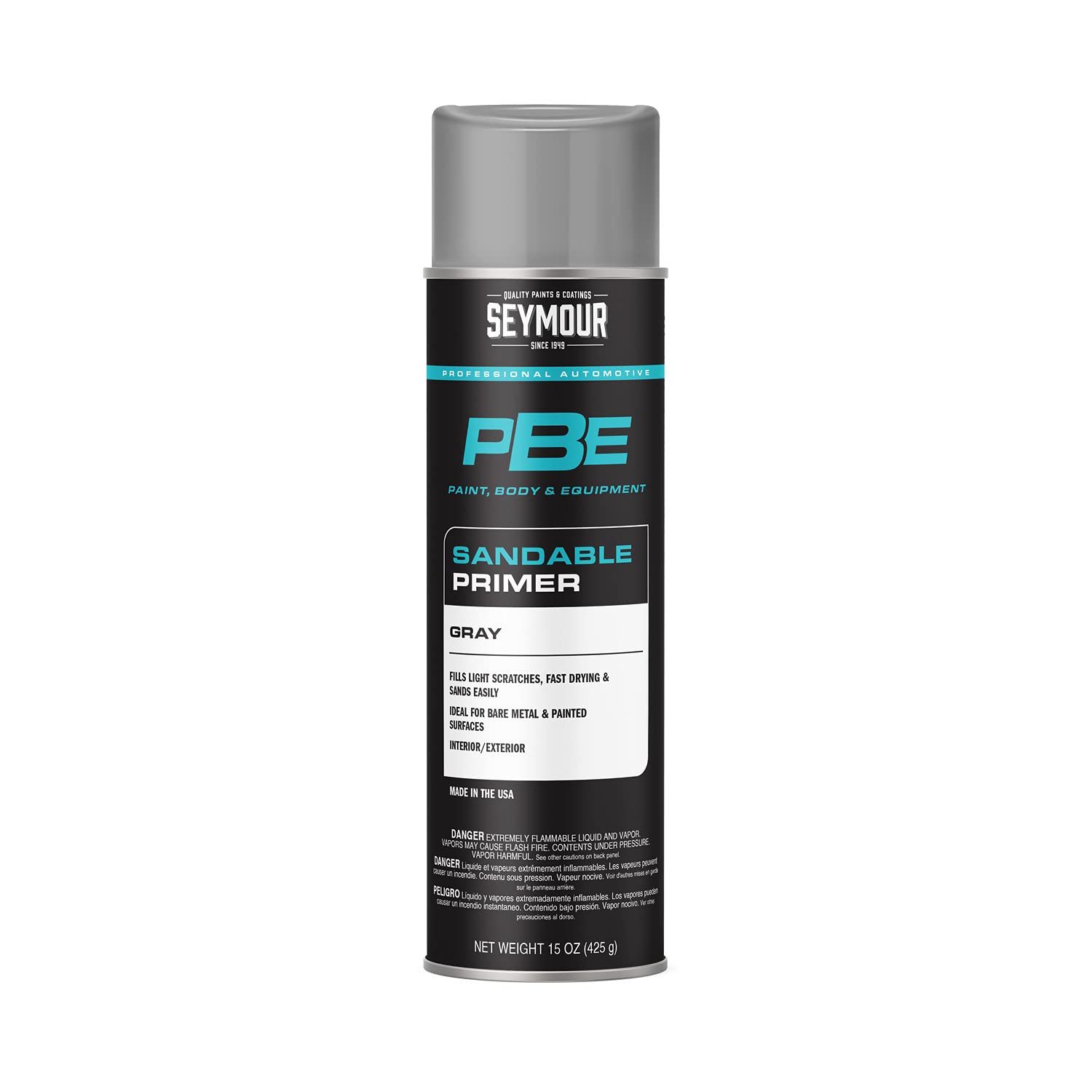
4. Seymour 20-1671 PBE Professional Primer
The body-shop favorite that fills scratches and sands smooth in minutes.
This is the primer that body shop professionals reach for when the panel needs to be flawless before color. It’s a high-build filler formula from a 15 oz can that covers approximately 10-15 square feet, and its claim to fame is how fast it turns around. It’s sandable in just 5 minutes—a massive speed advantage over the SEM’s 3-hour dry time.
Owners consistently praise how it fills low spots and light scratches in a single coat, with one noting it “fills imperfections flawlessly.” The gray color reveals sanded areas clearly, so you can see exactly where you’ve worked. It withstands heat up to 250°F, making it a solid pick for engine bay parts.
The grip here is that it sprays as a wide fan pattern—great for covering big panels, but less precise if you need to hit a small, tight spot. For 3D-printed parts, cosplay props, and plastic bumpers, it’s the primer that saves hours of hand-sanding.
Where it shines
- Sandable in 5 minutes for a fast workflow
- Fills scratches and pinholes in one coat
- Large 15 oz can covers 10-15 sq. ft.
Know before you spray
- Wide fan spray makes small-area work tricky
- Price is a step above hardware-store brands
The standout spec: sandable in 5 minutes—nothing else in this lineup gets you to sanding that fast.
Consider instead: the SEM if you need bare-metal corrosion resistance first; this one is about surface perfection, not etching.
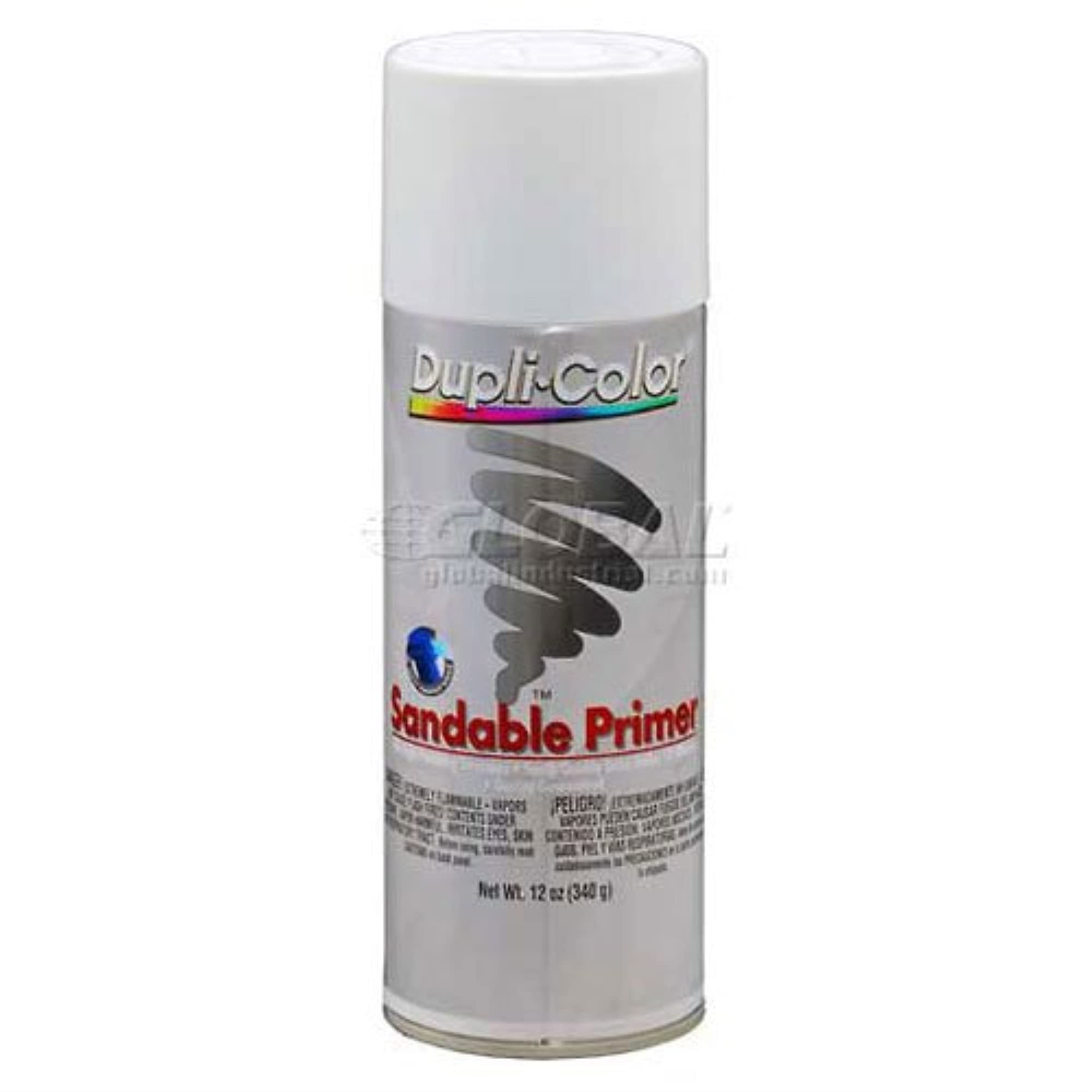
5. Dupli-Color DAP1689 White General Purpose Sandable Primer
The all-purpose filler that shines on resin, plastic, and model work.
This is the go-to can for mixed small projects where you need a primer that sands flat and plays nice with a variety of surfaces. It’s an all-purpose formula from the Dupli-Color automotive primer series, effective on metal, fiberglass, and wood, plus it’s a favorite among resin figurine and scale model builders. The functionality is what people praise most—it fills sanding marks and gives topcoats a uniform base.
It features an EZ Touch 360° Fan Spray Nozzle for maximum coverage, though a few owners note the cans can be “temperamental” at certain angles and prefer to keep them level while spraying. It’s dry to the touch in 30 minutes and can be handled in 1 hour, so it fits a quick-turnaround project better than the SEM’s longer cure.
The honest catch: primer quality gets mixed feedback, with some finding the paint thickness “fair but not spectacular.” It’s a good performer, not a show-stopper—choose it when you need a reliable, budget-friendly sandable base for several small parts at once.
Ideal for: model builders and DIYers juggling resin, plastic, and metal who want one can that works on them all.
Pass on it if: you demand heavy-build filling for major surface defects—this fills light marks, not deep gouges.
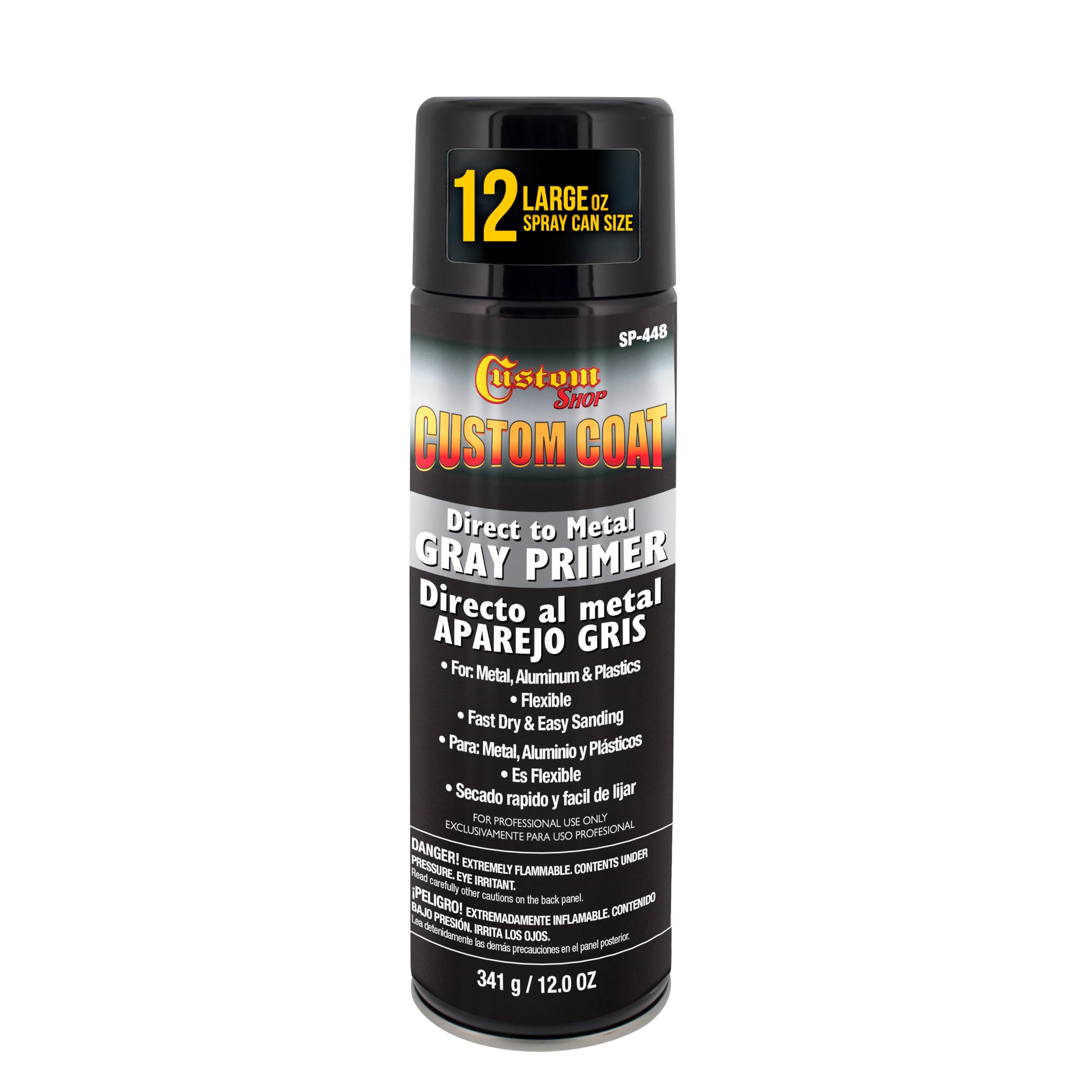
6. Custom Shop 1K High Build Primer Spray Paint
The high-build filler that lets you fine-sand away imperfections before base coat.
When your panel has light scratches you want gone before color, this high-build primer earns its place. It’s a 1K formula from Custom Shop that bonds directly to metal, steel, aluminum, and fiberglass, and its defining trait is the thick, sandable layer it lays down. That “high build” feature let one owner “fine-sand out minor imperfections before applying base coat”—exactly what this can is designed to do.
The flat fan high atomization nozzle delivers a large fan pattern for excellent coverage from a 12 oz can. It’s fast-drying and consistent, with owners noting it “sands great” and sprays smooth without clogging. For restoration work, the grey color works as an ideal base for any topcoat, and it’s suited for cars, wheels, and flexible or rigid substrates.
The fair warning: an occasional can has arrived with separation issues, spattering black chunks despite thorough shaking. It’s not a widespread failure, but it’s worth testing on a scrap piece first. The value also draws mixed opinions—some call it pricey, others say you get what you pay for with that filling power.
Reach for it if: you’re restoring a panel with minor scratches and want a thick sandable base that hides them before your topcoat.
The real trade-off: quality control varies between cans, so shake hard and test-spray before committing to a full panel.
7. Raptor Acid Etch Primer 1K Aerosol

The one-step etcher built for the toughest bare metal surfaces.
Galvanized steel and aluminum are notoriously hard to make paint stick to, and this Raptor formula uses a phosphoric acid ester to do the job in a single step. It etches and primes bare metal at the same time, creating a strong foundation while streamlining your workflow. It earns steady praise for aluminum surfaces and forms a durable anti-corrosive barrier that stops steel from rusting.
The 13.2 oz aerosol uses a flat fan high atomization nozzle that delivers a large, even spray pattern for superior coverage. No sanding is required, and it can be topcoated directly with most paint systems—a serious time-saver. Owners repainting running boards and rock rails found the finish held up well, with one noting it “didn’t bubble the existing paint.”
The honest catch: the nozzles are the weak point. Multiple buyers reported clogs during use, so treat the tip carefully and clear it after each pass. The quality of the primer itself is strong, but the dispensing mechanism needs a light touch.
Best for: bare metal panels and rub-throughs on galvanized steel, where a phosphoric acid etch gives you the strongest possible grip.
The catch: nozzle clogging is a known quirk—keep a can of cleaner handy and you’ll be fine.
8. SprayMax 2K Epoxy Primer Black
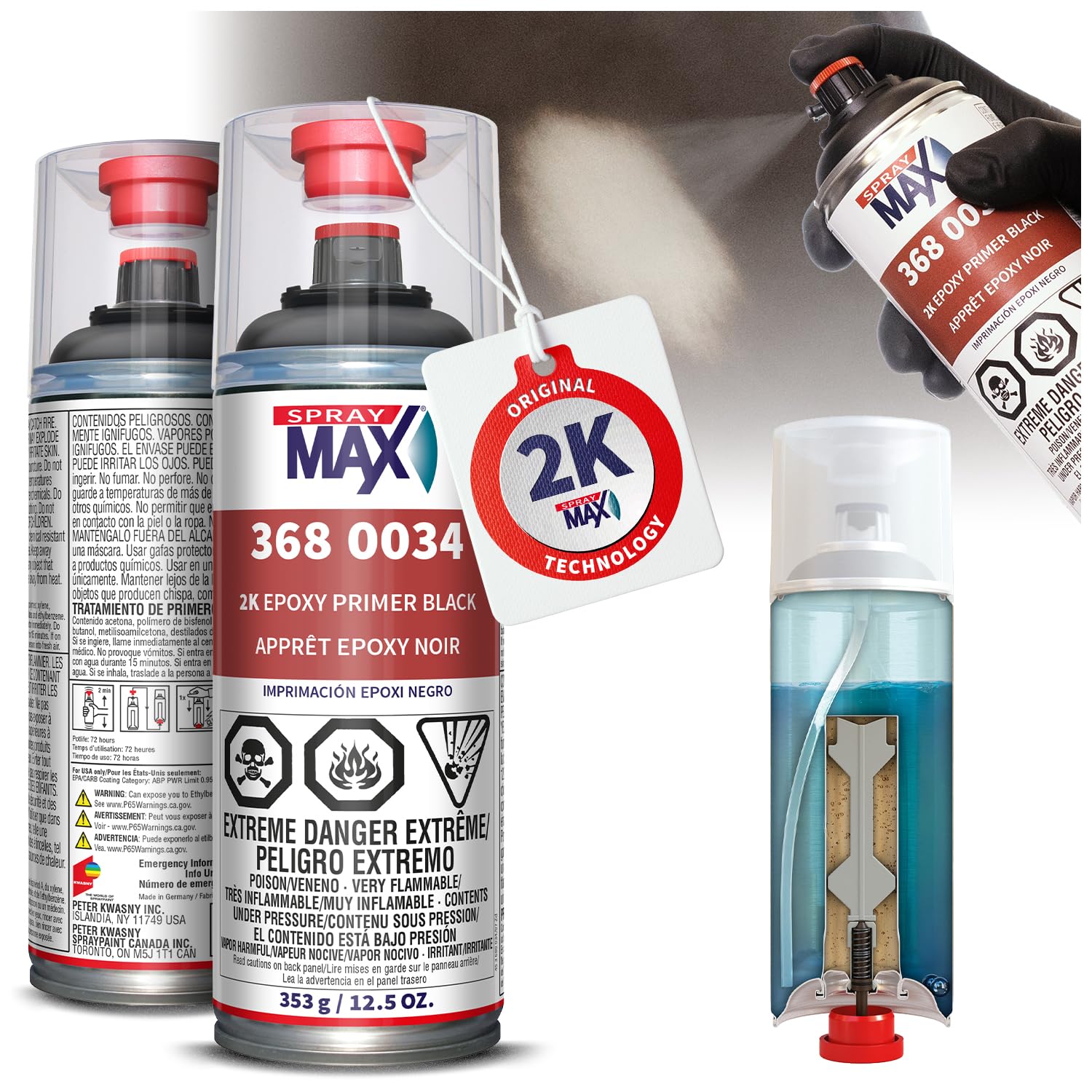
The professional 2K seal that locks out corrosion on steel, aluminum, and galvanized metal.
For the most demanding protection, this is the 2K epoxy primer that professionals trust. Unlike 1K cans that dry by solvent evaporation, this is a true two-part system—you activate a hardener inside the can, and the resulting chemical cross-link gives you professional-grade bonding and rust protection. The 2K technology delivers long pot life and smooth surface sealing, a favorite for restorations.
It’s dust-dry in just 15 minutes and ready to sand within hours, with a full cure time of 12 hours needed before heavy sanding. The variable nozzle gives you precise control, and owners found one can covered a door and rocker panel, with an estimate of 6-8 cans for an entire car. Over 50 owners single out the quality as the standout feature.
The fair trade-offs: spray performance is mixed—some get a nice fan pattern, others fight spatter. Durability varies too, with some reporting short pot life. It costs more per can, but for rust-critical bare metal, the corrosion resistance beats every other pick in this lineup.
The professional edge
- True 2-part epoxy for maximum corrosion resistance
- Dust-dry in 15 minutes for a fast workflow
- Variable nozzle for precise spray control
Before you commit
- Full 12-hour cure before heavy sanding
- Spray performance can vary from can to can
Choose this if: you’re restoring a vehicle and need the strongest possible rust barrier under your topcoat—this is the professional-grade answer.
Think twice if: you only need a quick touch-up; the 2K activation and long full-cure cycle are overkill for small jobs.
Understanding the Specs
Dry Time vs. Full Cure Time
These two numbers tell you when you can touch the surface versus when you can sand and paint it. “Dry to touch” means the film won’t smear, but it’s still soft underneath. The full cure time is when the chemical cross-linking finishes and hardens. Skip the cure and your sandpaper will gum up instantly.
Coverage per Can
This is the square footage a single can will lay down in one proper coat. A higher number means fewer cans to buy and less overspray waste. Check the specific square footage listed per can, and always buy one extra can if you plan on two coats—coverage estimates assume a single, even pass.
FAQ
What is the difference between self-etching and bonding primer?
Can I spray an auto primer directly over rust?
How long should I wait to sand after spraying primer?
Will a bonding primer work on bare metal?
What is a high-build primer used for?
Do I need a respirator when spraying automotive primer?
How much surface will one spray can cover?
Is a 2K epoxy primer better than a 1K primer?
Final Thoughts: The Verdict
For the majority of shoppers, the auto primer in a spray can winner is the SEM 39683 because it delivers the most trusted adhesion on bare metal—the foundation of any lasting paint job. If you want a budget-friendly can that tackles existing rust, the Krylon Rust Tough is the one to reach for. And for plastic trim, fiberglass, and those hard-to-bond surfaces, the Rust-Oleum Universal Bonding Primer is the most versatile pick of the group.
How We Picked
We do not accept paid placement. Every pick is matched to a real buyer and a real use-case; we do not hands-on test units.
Sources & Methodology
Specifications: manufacturer listings and product documentation. Review insights: verified customer reviews, as of August 2026. Pricing: not shown on this page (it changes often); check the current price via the retailer link.
As an Amazon Associate, Gadgets Feed earns from qualifying purchases. This does not affect which products we feature.