
Our readers keep the lights on and my morning glass full of iced black tea. As an Amazon Associate, I earn from qualifying purchases.
Specs are compiled from manufacturer listings and verified buyer reviews and can change over time — please confirm the key details on the product page before buying.
When you’re chasing a bounding dog, waiting for a rare bird to take flight, or hoping to catch a backyard fox at dusk, a keeper versus a blurry miss often depends on three things: how fast the camera locks focus, how many frames it fires per second, and how much detail its sensor pulls from difficult light. This guide ranks the best cameras for animal photography by those real-world demands, not just spec-sheet hype.
I’m Min — the founder and writer behind Gadgets Feed. This guide is built by comparing the manufacturers’ published specifications and the patterns across verified customer reviews, so you get each pick’s real strengths and trade-offs instead of marketing spin.
You’ll see which models handle moving subjects, which ones shine in low light, and which one fits your budget, all in plain English. cameras for animal photography demand fast autofocus, high burst rates, and rugged builds to capture fleeting moments.
Our Picks at a Glance

How To Choose The Best Cameras For Animal Photography
Animals rarely pose. They run, they fly, they disappear into shadows. So your choice of camera should start with how well it can keep up with motion and low light, not just how many megapixels it has.
Focus Speed and Autofocus Points
An autofocus system with more focus points can lock onto a moving eye or body more reliably. A camera with 61 autofocus points, for instance, has a much easier time tracking a subject that moves across the frame than one with just 9 points. Look for systems that track animal eyes or bodies specifically.
Burst Speed
Burst speed, measured in frames per second (fps), tells you how many shots the camera can take in one second while holding down the shutter. A model firing at 8 fps can capture the exact moment a bird takes off; a slower camera might only capture the moment after. More frames mean a better chance of catching the perfect wing position.
Sensor Size and ISO Performance
The sensor is the camera’s “film.” Full-frame sensors are larger and generally perform better in low light, letting you push ISO (the camera’s light sensitivity) higher without grainy noise. Crop-sensor cameras give you extra reach with telephoto lenses, making distant animals appear closer without needing an enormous lens.
Quick Comparison
| Model | Best For | Autofocus Points | Continuous Shooting | Megapixels | Amazon |
|---|---|---|---|---|---|
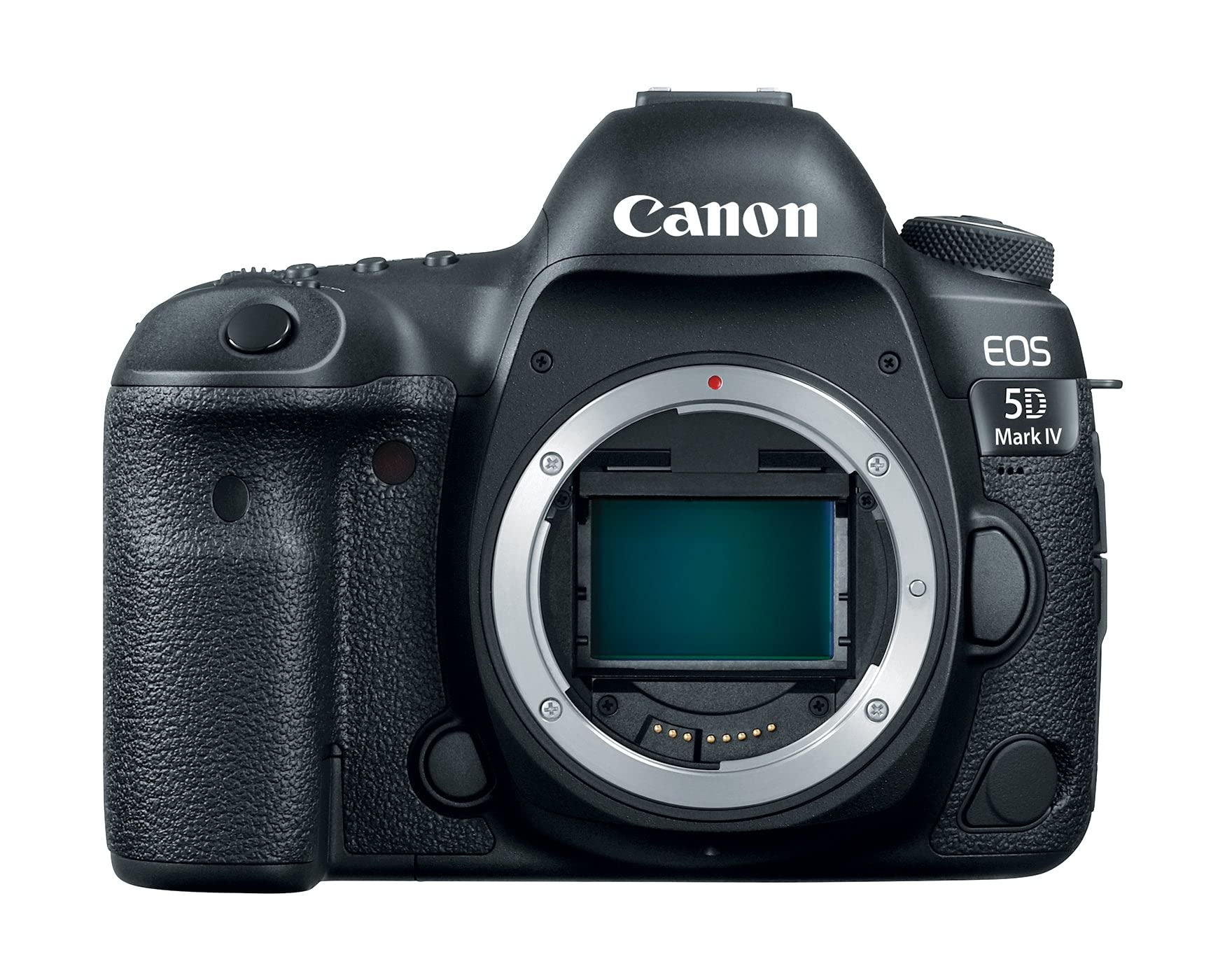
| Canon EOS 5D Mark IV★ Best Overall | Pro-grade full-frame versatility | 61 | 7 fps | 30.4 MP | Amazon |
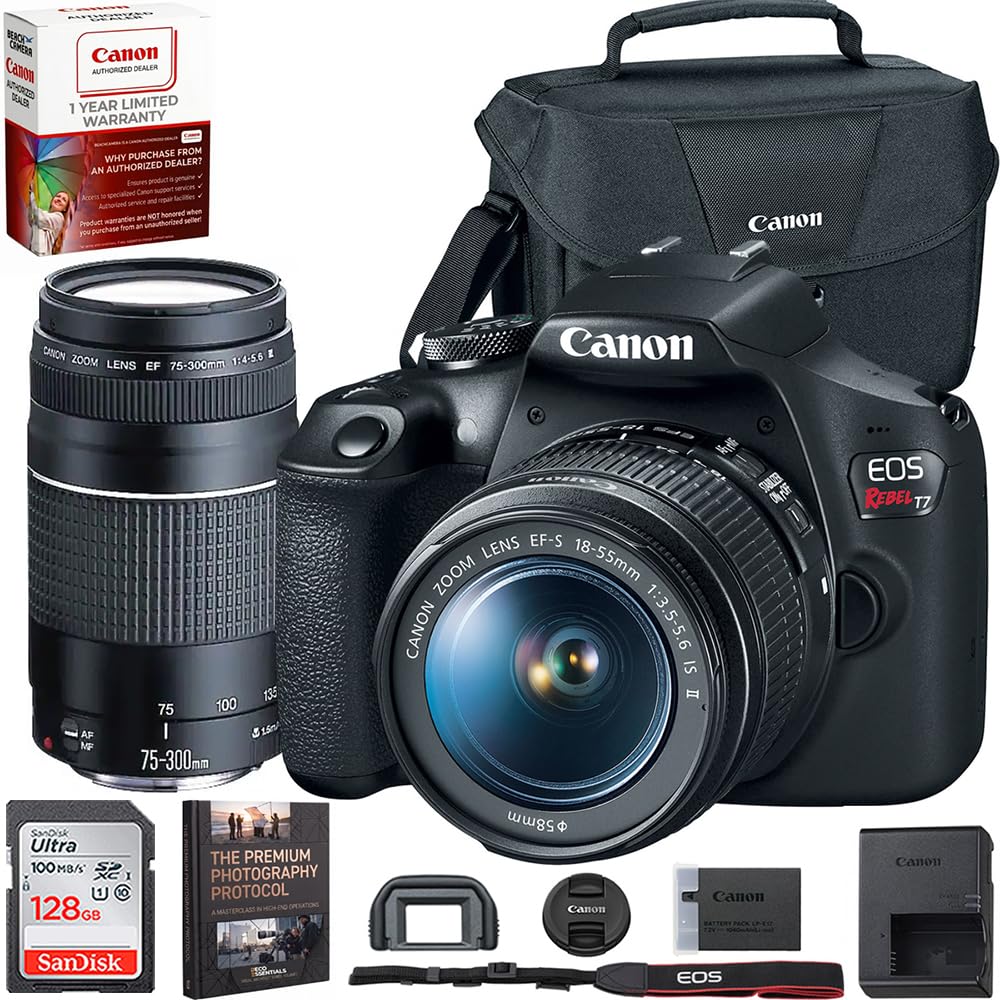
| Canon EOS Rebel T7Best Value | Budget-friendly starter kit | 9 | — | 24.1 MP | Amazon |
| Nikon D7500Fast Action Pick | Fast action tracking | 51 | 8 fps | 20.9 MP | Amazon |
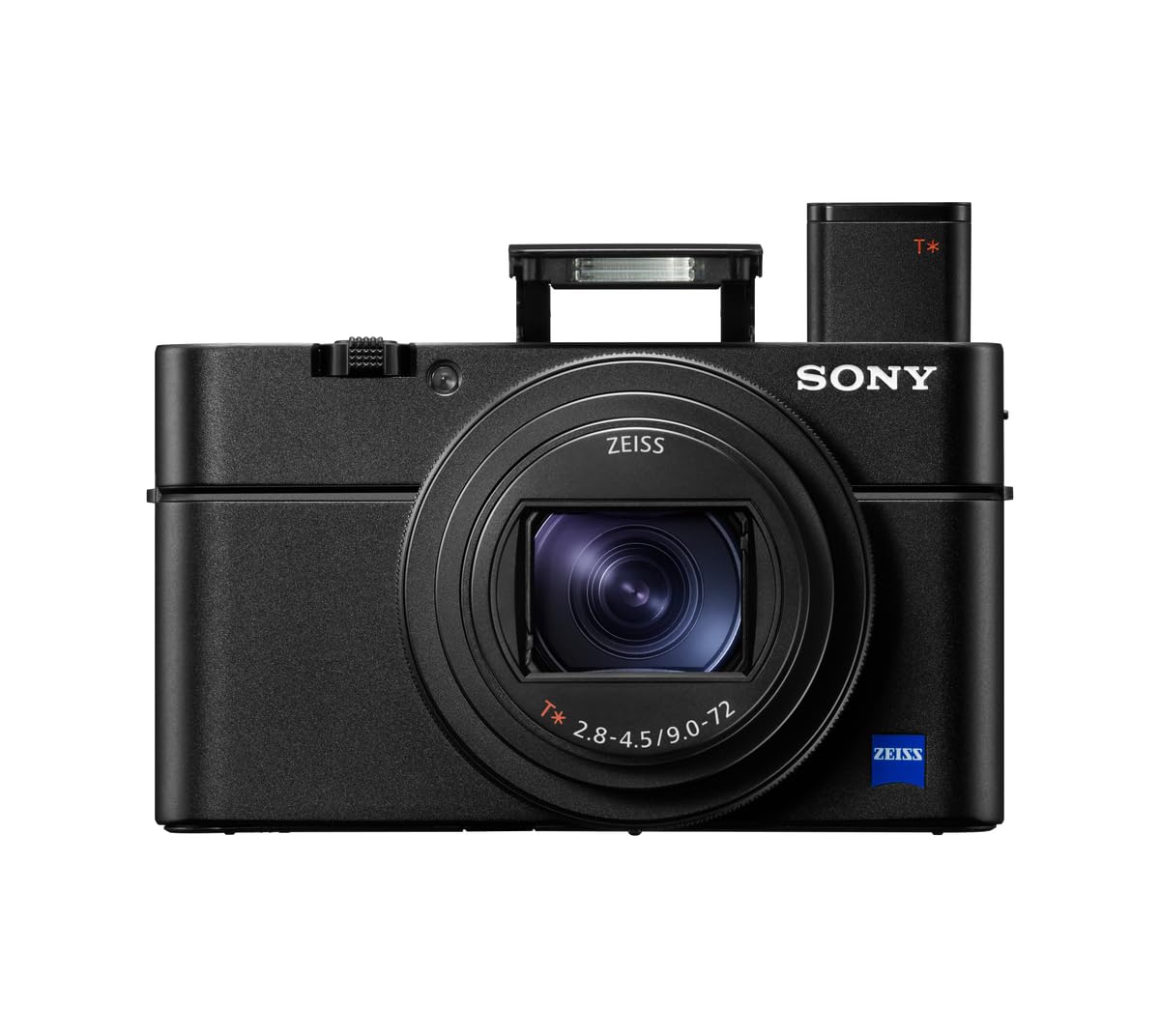
| Sony RX100 VII | Pocketable travel companion | 425 | 20 fps | 20.1 MP | Amazon |
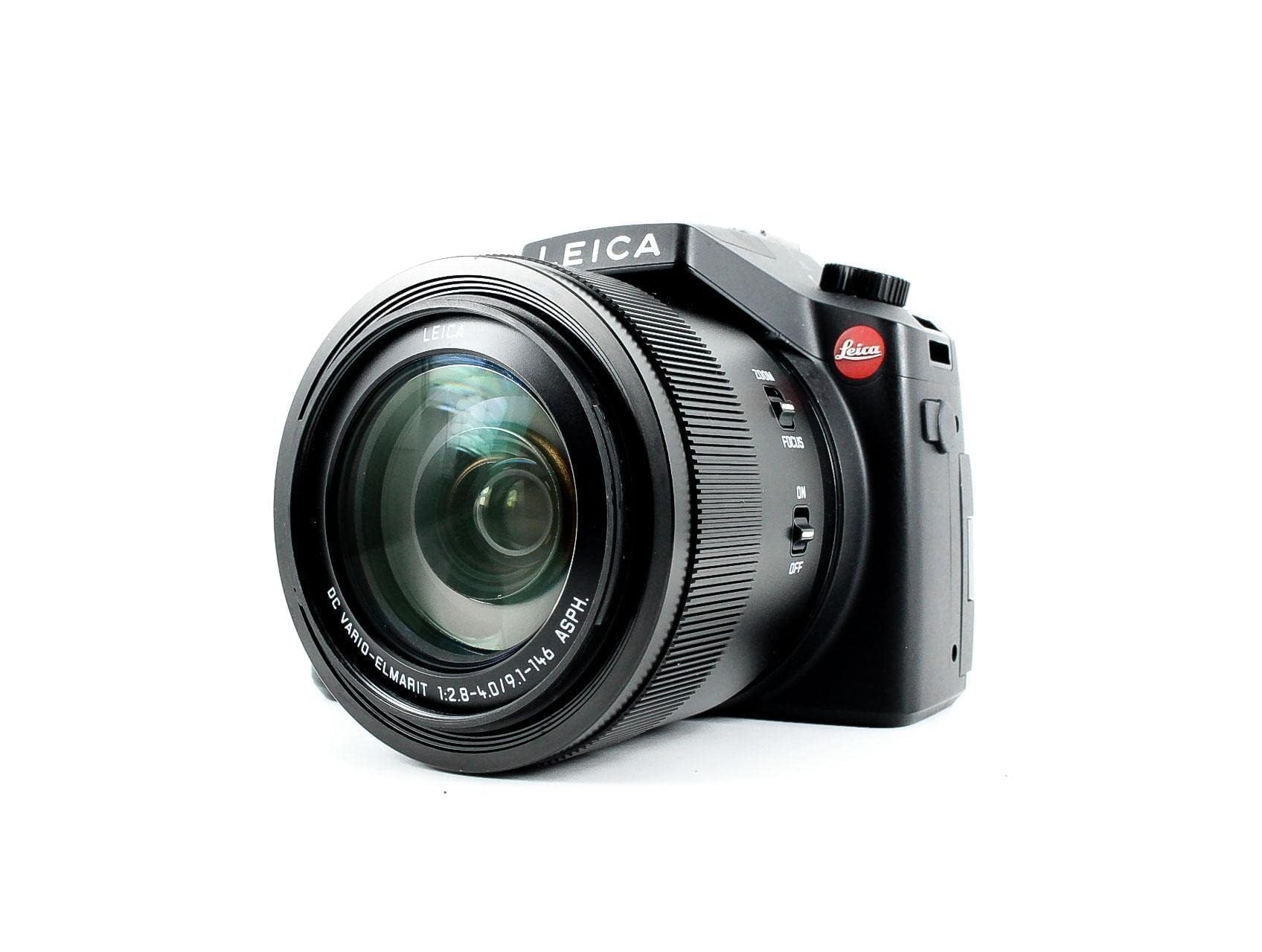
| Leica V-LUX | Long zoom in one lens | 1 | 50 fps | 20 MP | Amazon |
| Sony Alpha a7 III | Full-frame low-light hybrid | 693 | 10 fps | 24.2 MP | Amazon |
| Nikon D850 | High-resolution cropping power | 153 | 9 fps | 45.7 MP | Amazon |
| OM SYSTEM OM-1 Mark II | Wildlife with weather sealing | 1,053 | 10 fps | 20 MP | Amazon |
| Fujifilm X100VI | Street-style compact shooting | 425 | — | 40.2 MP | Amazon |
| Canon EOS R6 Mark II | Wildlife and sports hybrid | — | — | 24.2 MP | Amazon |
| Panasonic LUMIX S1RII | High-res 8K video hybrid | 399 | — | 44.3 MP | Amazon |
In‑Depth Reviews
1. Canon EOS 5D Mark IV
Our pick — over 4.5★ from 850+ verified ratings; the strongest balance of quality and price.
The full-frame workhorse that turns flitting motion into frozen, gallery-sharp frames.
Serious animal photographers graduate to this camera when they want a sensor that handles nearly any light. The 30.4-megapixel full-frame CMOS sensor (a larger imaging chip that soaks up light) lets you push the ISO to 100-32000 (expandable to 50-102400) and still keep detail in dusk or deep-shadow shots where fur and feathers hide noise.
For moving subjects, the 61-point autofocus system is the standout selling point — a huge advantage over entry-level cameras that makes tracking a bounding dog or a swooping bird far more reliable. That focus speed is a big part of why “Autofocus faster/accurate, customizable” shows up in owner accounts, and buyers sum up the experience as a camera that locks on and stays locked in servo mode. It fires at up to 7.0 fps, which is solid but not the fastest here — the Nikon D7500 beats it at 8 fps.
What wins people over is the combination of build quality and image output. The crowd favorite sits at 4.7 stars from 800+ owners, with quality being the most-praised aspect by a wide margin. The touchscreen is a favorite too, with owners noting it speeds up menu navigation and makes zooming into shots for sharpness checks a one-thumb job. The main gripe is the fixed LCD — it doesn’t flip out for awkward low angles, so a few owners add a glass screen protector and shoot from the hip.
The Full-Frame Payoff
- 30.4 MP full-frame sensor for clean high-ISO shots
- 61-point AF tracks moving animals well
- 4K video at 30 or 24 fps for action clips
What To Weigh
- Fixed LCD screen does not tilt or flip
- 7 fps burst is lower than some rivals
Your move: Reach for this if you want a pro-built full-frame body that grows with you — it is the safest long-term investment here.
Fair warning: If you need flip-out screens for ground-level wildlife shots, you will want an external monitor or a different body.
2. Canon EOS Rebel T7 Double Zoom Kit
An entry-level DSLR kit with telephoto reach already in the box.
If you are stepping into animal photography without a big budget, this kit is built to get you shooting immediately. The 24.1MP APS-C sensor paired with the DIGIC 4+ processor delivers sharp, vibrant images, and the included EF 75-300mm telephoto zoom lens gives you real reach for distant subjects — a lightweight 4x zoom with a 4.9 ft. minimum focus distance that is ideal for sports, wildlife, and far-off scenes.
The honest trade-off is the autofocus: it uses a 9-point AF system, which is a 6.8x smaller field than the 61-point system on the 5D Mark IV above. That means tracking fast, erratic animals takes more patience and practice — this is a camera that rewards a steady hand and pre-focusing on a spot where you expect the animal to appear. For beginners, though, buyers report it is easy to use and takes great pictures, with quality and value for money as the two most-praised aspects.
Buyers describe it simply: “Great starter kit takes wonderful photos always more to get but this is got lens for most shots.” The bundle also includes a SanDisk 128GB memory card, a Deco Essentials camera bag, and a photography guidebook, so you are ready to go without buying anything else. It holds a 4.6-star rating from 700+ owners. The most common hiccup mentioned is an occasional flash issue or autofocus trouble down the line, so treat it as a learning tool rather than a pro workhorse.
Best-for check: This is the pick for a first-time DSLR buyer who wants a full kit including telephoto reach and does not need pro-grade tracking speed. Skip-it logic: If you already know you need fast burst rates for birds in flight, save up for a higher-tier body.
Reach for this if: You want an affordable all-in-one starter kit with a telephoto lens and are happy to learn manual focus techniques.
Look elsewhere if: You plan to shoot fast-moving wildlife as your main subject — the 9-point AF will frustrate you.
3. Nikon D7500
A burst-shooting mid-range that keeps up with skittish, fast-moving animals.
Animal photography is a waiting game with sudden bursts of action, and the D7500 is built for exactly that. It fires at up to 8 fps continuous shooting — 14% more frames per second than the Canon 5D Mark IV’s 7 fps — giving you a measurable edge when a deer bolts or a dog sprints toward you. The 51-point AF system with 15 cross-type sensors and group-area AF locks onto subjects that dart unpredictably.
The included AF-S DX NIKKOR 18-140mm f/3.5-5.6G ED VR lens is a huge part of the appeal. Buyers consistently praise it as outstanding at all focal lengths, with the lens’s vibration reduction helping you hold steady at the long end. The camera body itself is class-leading in image quality and image processing, equivalent to the award-winning D500, which shows in sharp, low-noise photos even in tricky light. Owners who shoot indoor or dog photography specifically note the fast focus and burst shots handle the action well.
What is the catch? This is a 2017 model, so the tech is dated by mirrorless standards — but owners mention it is “near-perfect” for their needs anyway, with a 4.7-star rating from nearly 700 owners. The 20.9MP sensor is on the lower side compared to the Rebel T7’s 24.1MP, but owners find the extra burst speed and lens quality far more useful for animal work than raw megapixels. The tilting 3.2-inch touchscreen helps with low-angle shots of ground-dwelling animals.
Why It Wins
- 8 fps burst for action sequences
- 18-140mm lens covers wide to telephoto reach
- Weather-resistant build for outdoor shoots
Consider This
- 20.9MP is lower than some rivals
- Heavier body than compact mirrorless options
Your move: Choose this if you want a fast, dependable DSLR with a superb kit lens and do not care about having the latest tech label. Who it beats: It out-sprints the 5D Mark IV at 8 fps vs 7 fps, while being far more budget-friendly.
4. Sony RX100 VII
The pocket-sized powerhouse that slips into a bag and still tracks animals.
Not everyone wants to haul a full DSLR rig on a hike. This compact camera packs a 20.1MP 1.0-type stacked CMOS sensor and a Zeiss Vario-Sonnar T 24-200mm f/2.8-4.5 zoom lens into a body small enough for a pocket or purse. That is real optical reach in a package that is perfect for travelers who might spot wildlife on the trail without planning a dedicated shoot.
What makes it genuinely capable for animal work is the autofocus and burst combination. It has a 425-point phase-detection AF system, and it uses AI-based real-time tracking for animals in stills — meaning it can lock onto and follow an animal’s eye or body. It shoots up to 20 fps with blackout-free viewing, so you see the action continuously while the camera fires. That is the fastest burst rate in this lineup, outpacing the 7 fps of the 5D Mark IV and the 8 fps of the D7500.
The catch is size and light. Owners find the body needs an added grip because it is slippery, and the power and shutter buttons sit too close together. It also lacks weather sealing, so keep it out of heavy rain. Customers note picture quality is amazing, especially in natural afternoon light, and low-light shots came out great with some settings tweaks. It holds a 4.3-star rating from 600+ owners, with a minority reporting reliability issues after extended use — one detailed account mentioned the LCD screen developing blotches after two years, so consider an extended warranty.
Reach for this if: You want a take-everywhere camera with serious zoom and animal eye-tracking that fits in a jacket pocket. Look elsewhere if: You shoot in heavy rain or want a big grip for long lens work.
5. Leica V-LUX (Typ 114)
One lens that reaches from wide-angle scenery to far-off wildlife.
If your animal photography is mostly about distant subjects — deer at the tree line, birds on a far branch — this bridge camera gives you the reach without needing to buy and carry multiple lenses. Its Leica DC Vario-Elmarit f/2.8-4.0 lens covers a 25-400mm equivalent focal range with 16x optical zoom, which is a staggering amount of flexibility in a single fixed lens. The optical image stabilization helps keep those long shots steady.
The 20MP 1-inch MOS sensor is the same class of sensor found in premium compacts, and the 3-inch 920K-dot rotatable LCD lets you compose from awkward angles. Owners using it for stills and panoramas report results are good so far, though the Wi-Fi connection to the app can be finicky — a common theme in buyer feedback. Early accounts are positive, describing it as a “great camera very special,” but the review pool is small, so treat long-term reliability as unproven.
Here is the honest elephant in the room: some buyers point out this is essentially the same camera as a Panasonic model at a higher price because of the Leica badge. That badge is the premium you are paying. If you value the Leica name and a single do-everything zoom, it delivers; if you are purely chasing specs, you can find the same capability elsewhere for less.
The long-lens argument: 25-400mm in one camera means you never miss a shot swapping lenses, which matters when an animal appears suddenly. The value caveat: Reviewers point out you are paying a premium for the brand, so weigh that against the identical hardware under a different name.
Your move: Pick this if you want a single, all-in-one zoom for varied wildlife distances and appreciate the Leica lens heritage. Fair warning: The small owner base means fewer long-term reliability data points, and the badge carries a price premium.
6. Sony Alpha a7 III

The full-frame mirrorless that excels when animals come out at dawn and dusk.
Many animals are most active in the low light of early morning and evening, which is exactly where this camera shines. The 24.2MP back-illuminated full-frame sensor delivers a 15-stop dynamic range, meaning it captures detail in both the bright sky and the dark fur of a shadowed animal simultaneously. Its ISO range extends to 204,800, giving you the flexibility to shoot in conditions where other cameras would fail.
For tracking, the 693 phase-detection autofocus points cover 93% of the image frame, and the camera shoots up to 10 fps with silent or mechanical shutter while maintaining AE/AF tracking. That is a high-performance combination for capturing a fox mid-prowl or a horse mid-gallop. Owners explicitly call out the autofocus as fast and the low-light performance as great, describing the image quality as “amazing.”
The kit lens is competent but is the part owners most often upgrade. The 28-70mm f/3.5-5.6 is fine for urban and portrait work, but for serious animal photography you will want a telephoto lens with a wider aperture. Battery life gets mixed feedback — some shoppers say excellent life with no spare needed, while others find it drains quickly. At 4.5 stars from 900+ owners, it is a proven crowd favorite, with image quality and picture quality as the two most-praised aspects.
Strengths
- 15-stop dynamic range for high-contrast scenes
- 693 AF points with 93% frame coverage
- 10 fps burst with silent shutter option
Trade-offs
- Kit lens needs upgrading for reach
- Battery life reports are inconsistent
Reach for this if: You shoot animals primarily in low-light conditions and want a full-frame mirrorless with excellent autofocus. Look elsewhere if: You want a long telephoto lens included — this body needs a separate lens investment.
7. Nikon D850

A 45.7MP full-frame DSLR that lets you crop into distant animals without losing detail.
When an animal is too far away to fill your frame, high resolution becomes your best friend. The D850’s 45.7-megapixel back-side-illuminated (BSI) full-frame sensor lets you crop deeply into a distant subject and still have enough detail for a large print. Owners describe cropping as a superpower here — one buyer praised being able to crop heavily from a 45.7MP file and still get excellent results at high ISO. That is a massive advantage over the Rebel T7’s 24.1MP or even the 5D Mark IV’s 30.4MP for distant wildlife.
It is also fast. The D850 shoots up to 9 fps at full resolution with full autofocus performance, and its 153-point autofocus system is described by owners as industry-leading. It has no optical low-pass filter, which boost sharpness and detail, and the tilting touchscreen makes composition easier. Owners upgrading from the D750 or D810 consistently call it a compelling and big upgrade.
The price of all that resolution is heavy files and a demanding workflow. Owners note RAW files are large, requiring high-speed SD cards, and the camera needs quality glass to fully resolve its sensor. Autofocus gets mixed reviews — many find it fast and accurate, some report slower performance in certain modes. A few mention the battery drains faster in live view. It earns 4.7 stars from 800 owners, with image quality as the dominant praise point by a wide margin.
The crop advantage: 45.7MP means you can shoot wide and crop tight later, which is ideal for skittish animals you cannot approach. The workflow cost: Huge RAW files demand fast cards and a powerful computer.
Your move: Choose this if you want maximum resolution for cropping distant wildlife and pair it with top-quality glass. Who it is not for: Beginners who do not want to manage massive files and complex menus.
8. OM SYSTEM OM-1 Mark II

The rugged wildlife specialist built for rain forests, mountains, and skittish birds.
Some of the best animal photography happens in the worst weather, and this Micro Four Thirds camera is purpose-built for those conditions. It carries an IP53 rating, meaning it is dustproof, splashproof, and freeze-proof down to -10℃, so a sudden downpour in the field does not end your shoot. Owners who switched from full-frame for wildlife and travel specifically praise how it handles a rain forest environment without a second thought.
For animal tracking, the Cross Quad Pixel AF delivers 1,053 all cross-type focus points covering 100% of the frame — the highest count in this lineup, dwarfing the 61 points on the Canon 5D Mark IV and even the 693 on the Sony a7 III. Owners say the AF finds and sticks to birds hiding in tangled branches easily. There is also a pre-capture mode that records frames just before you fully press the shutter, which owners describe as capturing birds in flight exceptionally well. It shoots at 10 fps with the mechanical shutter.
The big advantage of the Micro Four Thirds system is weight. The body is roughly 0.5 lb lighter than full-frame alternatives, and the compact lenses mean you can handhold a 600mm-equivalent reach that would be a heavy tripod setup on a full-frame camera. Owners praise the in-body image stabilization as amazing, and the computational features — live ND filters, focus stacking, and high-res modes — are called unique and freeing. The 20MP sensor is the trade-off: it limits fine detail compared to 45.7MP full-frame, though high-res modes can push beyond. It holds 4.5 stars from a smaller 70+ owner base.
Built For The Field
- IP53 dust, splash, and freeze-proof build
- 1,053-point AF locks onto hidden birds
- Lightweight body with superb image stabilization
Know Before You Go
- 20MP sensor limits ultimate detail
- Complex menus have a learning curve
Reach for this if: You shoot wildlife in harsh weather and want a lightweight system with incredible lens reach and sticky autofocus. Look elsewhere if: You demand maximum megapixel resolution for huge prints.
9. Fujifilm X100VI

A fixed-lens rangefinder-style compact for the urban animal photographer.
This camera takes a different approach: instead of a big zoom, it pairs a fixed 23mm lens with a 40.2MP sensor and up to 6 stops of in-body image stabilization. That makes it a brilliant tool for photographing domestic animals, zoo residents, and urban wildlife where you can get close, rather than distant wildlife that needs long reach. The stabilization is the standout — internal gyro sensors detect movement across five axes, keeping shots sharp when the light is low.
It shoots video up to 6.2K/30P and 4K/60P, and it includes 20 built-in Film Simulation modes including the new REALA ACE — so you can get a distinctive film look straight out of the camera. Buyers report it makes travel easier and produces amazing photos. However, feedback is polarized on this one. Some describe it as a top-tier, must-have camera, while others find it feels less premium than the price suggests, with inconsistent autofocus. It has no zoom, so it is not a wildlife camera for distant subjects — think of it as the opposite of the Leica V-LUX above.
The deep-learning AI autofocus tracks objects even in low light, which helps with unpredictable subjects. But the fixed 23mm lens means there is no reach at all, so animal photography here means getting physically close. At 4.3 stars from 200+ owners, it is a niche pick for those who want a compact, premium-feeling camera for close-up animal encounters rather than far-off wildlife.
The stabilization story: 6-stop IBIS lets you shoot handheld in dim conditions where the 5D Mark IV would need a tripod. The reach reality: With no zoom, distant animals will be tiny in frame — this is for close encounters.
Your move: Pick this if you photograph pets, zoo animals, or urban wildlife up close and want a beautiful, portable camera. Fair warning: The fixed lens and mixed autofocus feedback make it wrong for distant wildlife.
10. Canon EOS R6 Mark II

A mirrorless hybrid with animal eye detection that works as hard as you do.
This is the modern Canon mirrorless that serious animal photographers are choosing. Beyond people, small animals, cars, and motorcycles, the R6 Mark II also detects horses, trains, and aircraft — and it can automatically select the subject type without you manually switching. The advanced head, face, and eye detection tracks an animal’s eye specifically, even the left or right eye,.
It is a true hybrid, recording 6K oversampled uncropped 4K movies up to 60 fps, and Full-HD high-frame-rate video up to 180 fps without overheating — with up to 6 hours of continuous Full-HD recording. Owners describe the focus tracking as amazing for wildlife, sports, and portraits, with the Dual Pixel AF II locking onto subjects reliably. The ISO range of 100-102400 keeps shots clean in low light, and the 8-stop image stabilization helps with handheld long-lens work.
The body uses Canon’s RF mount, so you will need RF lenses or an adapter for EF glass. Owners upgrading from other Canon bodies praise the battery life and weather-sealed build, calling it more future-proof than cheaper models. It holds a 4.7-star rating from 600+ owners, with quality, image quality, and autofocus as the leading praise points — a rare clean sweep with no major recurring negatives.
Why It Shines
- Detects and tracks animal eyes automatically
- 6K oversampled 4K video at 60 fps
- Weather-sealed with excellent battery life
Plan For
- RF mount needs new lenses or an adapter
- 24.2MP limits heavy cropping
Reach for this if: You want a modern mirrorless with top-tier animal eye autofocus and strong video capabilities for hybrid shooting. Look elsewhere if: You already own a big collection of EF lenses and want to avoid adapters.
11. Panasonic LUMIX S1RII

The 44.3MP full-frame hybrid with LUMIX’s first-ever 8K video recording.
If you want both stills and video for your animal work, this is the most future-proof option here. The 44.3MP full-frame sensor delivers lifelike detail, and this is LUMIX’s first camera to record 8K video — letting you pull a high-resolution still from a video frame, a powerful technique for capturing fast animal movements. Owners describe it as an incredible hybrid camera.
For action, the AFC 40 burst shooting is built for sports and wildlife, while the evolved Phase Hybrid AF with advanced AI technology keeps focus when multiple animals cross paths. The 399 autofocus points provide broad coverage, and the high-resolution sensor maintains speed while shooting. The hybrid AF is designed to boost animal recognition, making it a strong contender for dynamic wildlife scenarios.
The honest caveats are early-adopter issues. Follow-up feedback is mixed — owners mention overheating in video mode (one account of the camera shutting down within two minutes, though it may be an isolated dud), and one reviewer noted a sensor dust seal issue requiring repair before first use. Others describe missing features like low-light autofocus gaps and fewer lens options compared to Sony or Canon. It has a small owner base at 4.2 stars from fewer than 30 buyers, so reliability data is limited and worth a careful warranty check.
The 8K advantage: Record 8K video and extract frame-perfect stills — a genuinely different way to capture fast animals. The early-adopter risk: With so few owners, long-term reliability is unproven, and some report overheating in video.
Your move: Choose this if 8K video stills are your priority and you accept the risk of a new platform. Fair warning: The small owner base and reported overheating mean a thorough warranty and return plan is wise.
Understanding the Specs
Autofocus Points
Autofocus (AF) points are small sensors on the camera that detect contrast or phase to lock focus. More points, like 1,053 on the OM-1 Mark II, mean the camera can track a subject across more of the image frame. For moving animals, more points help keep the eye sharp as the animal darts around.
Continuous Shooting Speed
Measured in frames per second (fps), this is how many images the camera takes per second while you hold the shutter. The Leica V-LUX pushes 50 fps with its electronic shutter, while the Nikon D7500 manages 8 fps. A higher burst rate makes it far easier to catch the exact split-second of a jump or takeoff.
FAQ
Which autofocus point count is enough for photographing dogs?
Is a higher megapixel count better for wildlife?
What does frames per second (fps) mean for animal photography?
Do I need a weather-sealed camera for outdoor animal shoots?
What is the difference between a crop sensor and a full-frame sensor for animals?
What does frames per second (fps) mean for animal photography?
Do I need a weather-sealed camera for outdoor animal shoots?
What is the difference between a crop sensor and a full-frame sensor for animals?
Which is better for wildlife, a DSLR or a mirrorless camera?
How important is image stabilization for animal photography?
Is a high burst rate necessary for birds in flight?
Will a kit lens with 18-55mm be enough for animal photography?
What does ISO range mean for shooting animals in low light?
Final Thoughts: The Verdict
Across the board, the cameras for animal photography winner is the Canon EOS 5D Mark IV because it balances a 30.4MP full-frame sensor with a reliable 61-point autofocus system and a 4.7-star reputation across 800+ owners. If you want fast action tracking on a budget, grab the Nikon D7500 with its 8 fps burst and superb 18-140mm lens. And for the ultimate in weather-sealed wildlife shooting, the OM System OM-1 Mark II with its 1,053-point AF and IP53 build is the one to reach for.
How We Picked
We do not accept paid placement. Every pick is matched to a real buyer and a real use-case; we do not hands-on test units.
Sources & Methodology
Specifications: manufacturer listings and product documentation. Review insights: verified customer reviews, as of August 2026. Pricing: not shown on this page (it changes often); check the current price via the retailer link.
As an Amazon Associate, Gadgets Feed earns from qualifying purchases. This does not affect which products we feature.