
Our readers keep the lights on and my morning glass full of iced black tea. As an Amazon Associate, I earn from qualifying purchases.
Specs are compiled from manufacturer listings and verified buyer reviews and can change over time — please confirm the key details on the product page before buying.
A rolled ankle turns every step into a decision. You need a brace that locks the joint down without feeling like a ski boot, and this list cuts through the noise to the nine stabilizers worth your money.
I’m Min — the founder and writer behind Gadgets Feed. This guide is built by comparing the manufacturers’ published specifications and the patterns across verified customer reviews, so you get each pick’s real strengths and trade-offs instead of marketing spin.
From lace-up stabilizers for the court to stirrup splints for the clinic, here is the definitive lineup of the best brace for sprained ankle options that balance support, comfort, and everyday practicality.
Our Picks at a Glance


How To Choose The Best Brace For Sprained Ankle
Your ankle brace should match the injury you are guarding against. A mild twist needs compression and comfort; a torn ligament needs rigid side support that blocks the roll.
Match Rigidity to Your Sprain Grade
Grade 1 sprains have stretched ligaments and mild pain; a soft sleeve or a low-profile stabilizer usually suffices. Grade 2 and 3 injuries involve partial or complete tears, so you want a brace with hard side stays or shells that physically stop inversion — the inward roll that causes most re-injury.
Lace-Up vs. Stirrup vs. Wrap
Lace-up braces mimic athletic tape and give you fine-tuned tension across the whole arch and ankle. Stirrup designs use semi-rigid shells on both sides connected by straps, great for acute injuries and post-op. Simple wraps are easiest to put on but offer the least roll protection — fine for prevention, thin for recovery.
Quick Comparison
| Model | Best For | Closure Type | Weight | Support Style | Amazon |
|---|---|---|---|---|---|
| DonJoy Speed Pro★ Best Overall | Return-to-sport stability | Hook & Loop, Lace-Up | — | Articulated Stays | Amazon |
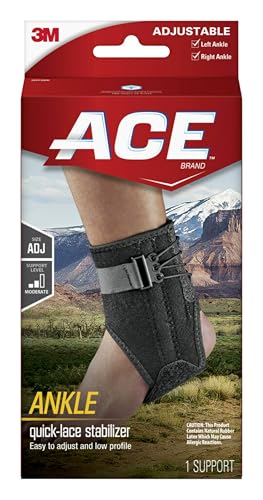
| ACE Side StabilizersEasy Everyday Pick | Mid-level everyday support | Adjustable Strap | — | Reinforced Stabilizers | Amazon |
| Aircast Air-StirrupClinic-Grade Choice | Acute sprain & swelling | Hook & Loop | — | Semi-Rigid Shells | Amazon |
| Velpeau Stirrup | Budget-friendly dual use | Hook & Loop | 9.44 oz | Bi-Injection Splints | Amazon |
| Med Spec ASO Speed Lacer | Fast on/off for athletes | Lace | 6.4 oz | Figure-8 Straps | Amazon |
| Fitomo Quick Lace | Everyday recovery comfort | Hook & Loop | 0.19 kg | Removable Splints | Amazon |
| McDavid Lace-Up | Durable field use | Lace-Up | 4 oz | Spring Steel Stays | Amazon |
| Active Ankle T2 | Volleyball & cheerleading | Strap | 4.8 oz | Rigid U-Shaped Shell | Amazon |
| Shock Doctor Ultra Knit | Low-profile high support | Hook & Loop | 4.16 oz | Figure-6 Strap | Amazon |
In‑Depth Reviews
1. DonJoy Stabilizing Speed Pro Ankle Support Brace
Our pick — 4.5★ from 200+ verified ratings; the strongest balance of quality and price.
The comeback brace for high-school athletes that stays in the gym bag
The DonJoy Speed Pro is built for one job: stopping a re-injury before it happens. Its 800D ballistic nylon shell shrugs off the punishment of practices and tournaments, and the full circumferential elastic strap adds tibia and fibula compression that feels like a firm grip around the whole lower leg.
This brace’s key feature is the removable, articulated medial and lateral stays — rigid supports on both sides of the ankle that boost your body’s position awareness (your sense of where the joint is in space) and lock down lateral rolls, the exact motion that ends a season. Buyers report a clear verdict: “He rolled his ankle hard in a game a year ago and has worn these since.”
The universal fit lets it work on either foot, which makes it a practical pick if you only want to own one brace. Owners note that it stays comfortable enough for people with chronically “loose” ankles, and the quality holds up to repeated washing between sessions.
What wins people over
- Support earns the most praise by far — 20 owners single it out
- Lace-up plus strap for a locked-in, adjustable fit
- Low-profile enough to slide into a normal shoe
The trade-offs
- Comfort reviews run mixed — some find it snug, others say it is not built for all-day lounging
- Hand-wash only, so no machine-friendly shortcut
Reach for it if: you are coming back from a serious roll and need dependable side-to-side stability for sports.
Look elsewhere if: you want a soft compression sleeve for mild daily aches — this is a stabilizer, not a sock.
2. ACE Ankle Brace with Side Stabilizers
The repeat-buy workhorse for pickleball courts and wobbly ankles alike
The ACE brace earns its following through pure familiarity — “This is my 3rd one of these,” owners mention. It is a mid-level support that reinforces both sides of the ankle to limit lateral motion, yet keeps enough flexibility that you barely notice it during a game.
Its biggest strength is breathability. The fabric lets air circulate to keep skin dry, which matters when you wear it under a shoe through a long shift or a full afternoon of court sports. The adjustable closure gives you customizable compression, so you can dial in the tightness as swelling changes.
The trade-off is in the fit. Some owners love the all-day comfort, while others find the sole a bit firm and the ankle area slightly loose. It is a moderate-support brace, not a rigid stabilizer, so it suits prevention and light recovery more than severe Grade 3 injuries.
Solid mid-tier choice: 65 owners praise the support and the quality gets its own wave of positive mentions, making this a crowd-favorite balanced pick.
Choose this if: you want a breathable, easy-to-adjust brace for sports and daily wear without a complicated lacing system.
Pass if: you have a severe sprain that demands hard plastic side shells — this one plays it softer.
3. Aircast Air-Stirrup Ankle Support Brace
The PT-recommended stirrup that shrinks swelling while you recover
The Aircast is the stirrup your physical therapist most often prescribes for acute sprains. Its semi-rigid shells use Duplex aircell bladders that compress the ankle to cut swelling during the first weeks of recovery.
Where it shines is the fit inside a shoe. The contoured shells conform closely to the ankle, so there is minimal bulk, and it resists inversion more than taping while leaving normal flexion virtually unrestricted. That means you can walk with a natural stride, not a stiff robot limp. Buyers rate it the “best comfort/support combo for ankle recovery (class 2/3 sprain).”
The honest catch: the strap can wear out after heavy use, and some customers note the shell shifting fore and aft, which puts plastic pressure on the ankle bone. It is anatomically designed for acute injury, post-operative use, and Grade I–III sprains, so expect to adjust the straps for the first few wears.
Effectiveness leader: 74 owners highlight how well it actually works for sprains, with 38 more crediting it for pain relief — a strong clinical-style record.
Best for: a recent, swollen sprain where swelling control matters as much as stability.
Think twice if: you need a brace for years of everyday sport — the straps are the weak link over time.
4. Velpeau Ankle Stabilizer Brace
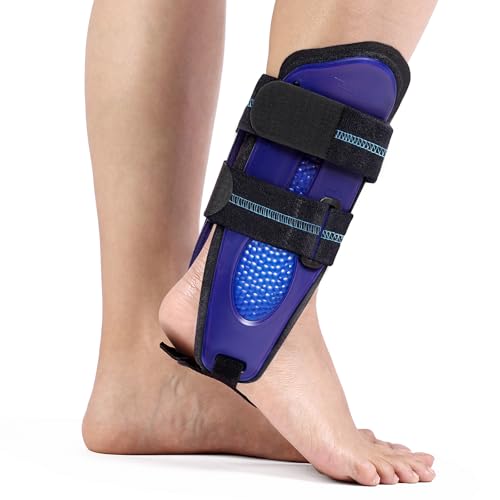
The budget stirrup that holds its own against name-brand rivals
The Velpeau brings the stirrup-splint design down to an entry-level price without gutting the feature list. Its plastic splints use Bi-Injection technology, so your ankle bones sit in shell holes cushioned by pads rather than pressing directly on the rigid frame — a detail that keeps it comfortable on the medial and lateral malleolus (the bony bumps on each side of the ankle).
You get two pad versions to pick from. The foam pads are breathable, soft, and dry quickly. The gel pads, meanwhile, can go in the freezer for a cold compress on acute swelling or in hot water for a warm compress. That dual-use flexibility is rare at this price.
Owners who converted from a doctor-issued brace found it outright superior — one noted it beat a premium German-brand brace that cost far more. The catch is bulk: it tightens up shoes noticeably, and the fit leans toward narrower ankles. A larger-calved buyer found the top strap’s fixed pin too restrictive.
Bang for the buck: ankle support is the most-cited strength at 46 mentions, with quality the next most-discussed positive — proof you are not sacrificing function for the lower price.
Grab it if: you want a stirrup splint on a budget and you have a narrow-to-average ankle.
skip it if: you have a wide calf or bulky shoes — the size range is the real limit here.
5. Med Spec ASO Speed Lacer Ankle Stabilizer
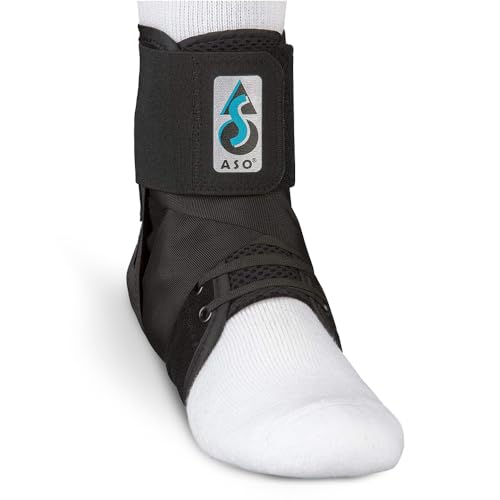
The quick-draw stabilizer that tightens evenly in seconds between drills
The ASO Speed Lacer exists for one frustration: laces that come loose mid-game. Its quick-pull hook-and-loop closure tightens the whole fit evenly in seconds, giving repeatable compression without re-tying — a godsend for practices, tournaments, and athletes who also coach and play in the same afternoon.
Stability comes from Figure-8 stabilizing straps that work with the speed-lace closure to secure the heel and resist both inversion and eversion (the inward and outward rolls). The low-profile shape slides into most athletic footwear, and oversized finger loops let you adjust tension one-handed as swelling changes throughout the day.
This is a brace owners keep for years — some report surviving well over 100 wears. One footballer summed it up as “buy once, cry once,” and a golfer wore it for a full 18 holes. The forefoot runs tight for some, so sizing up is the safe call if you are between sizes.
Ease-of-use standout: ease of use and support each pull 62 mentions, the most of any aspect, and the speed lacing is the reason so many athletes stick with it.
Choose this if: you play sports that demand fast, frequent brace changes.
Reconsider if: you have a wide forefoot — the snug fit there is the one recurring complaint.
6. Fitomo Quick Lace Up Ankle Brace

The lace-free stabilizer an 11-year-old can put on solo
The Fitomo brace answers a simple question: why should putting on a brace be a two-person job? Its upgraded hook-and-loop fasteners replace traditional laces, so you get a snug three-level strap system without the tying — and the removable side stabilizers let you adjust the rigidity as you heal.
Comfort is the headline here. The materials are designed for extended wear without chafing, and owners consistently say it is more comfortable than the version their doctor handed them. A basketball sideline story captures it: a daughter with a sprained ankle aided her return to play comfortably, and the brace was easy enough for her to apply herself each game.
The rigid plastic side supports protect against ankle rolling without being so stiff that walking feels unnatural — you do not have to over-tighten. The honest limit is that the side splints are more flexible than premium rivals, so if you need absolute maximal rigidity, this is not it. Sizing runs small, so measure carefully.
Support-and-comfort combo: support is the most-praised feature at 36 mentions, with ease of use close behind at 27 — a balanced profile for daily recovery.
Best for: pain-free everyday wear and easy self-application after a moderate sprain.
Look elsewhere if: you need the stiffest possible roll protection for high-impact competition.
7. McDavid Adjustable Ankle Brace
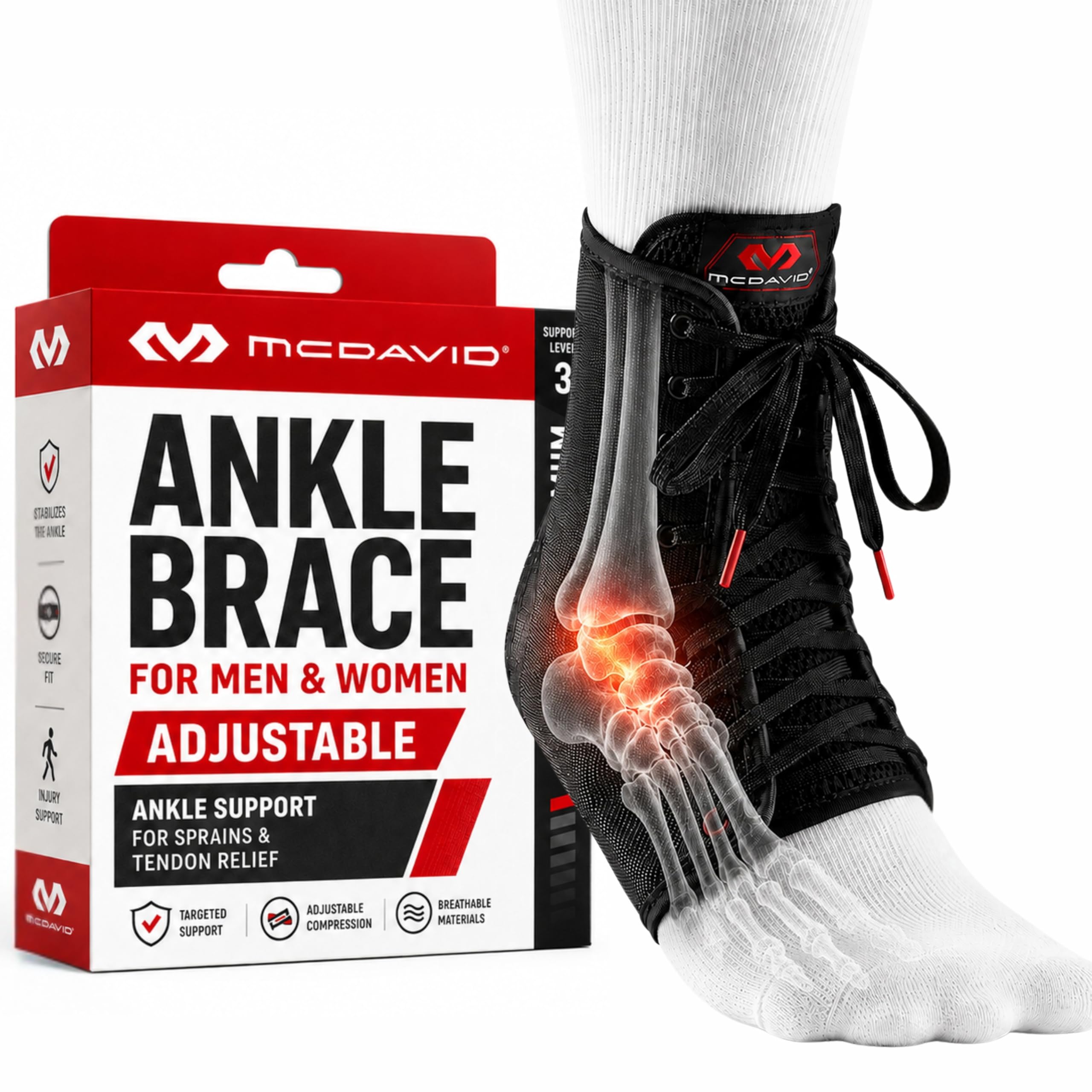
The lace-up tank with spring steel stays built for season-long abuse
The McDavid is the brace that simulates athletic tape with real laces, and its spring steel medical stays deliver a level of durability that softer braces cannot match. The reinforced eyelets keep the lacing secure, and the ventilated tongue lets your foot breathe when you are pushing through a workout.
Owners who tested it hard — a 4-mile run with no chafing or support issues — came away impressed. It distributes stress up the leg, which is key for weak ankles that need the load spread out. Post-surgery users found it gave better flexibility than a wrap while cutting down the limp.
The bulk is the honest trade-off. A few owners say it feels like wearing two pairs of shoes, and the fit runs snug across the top of the foot, especially if your ankle is swollen. Size up at the top of the range, and wear a thin sock to protect against the seam roughness some noticed against bare skin.
The praise it collects
- Support is the top mention by a wide margin at 75 owners
- Spring steel stays for class-leading structural rigidity
- Durable enough for a full season of soccer or basketball
The honest catches
- Bulkiness is a recurring theme — it crowds tighter shoes
- Comfort splits opinion, mostly over the tight arch area
Pick it if: you want a tank-tier lace-up for heavy field use.
Pass if: you need a slim, low-bulk brace for dress shoes or tight footwear.
8. Active Ankle T2 Ankle Brace
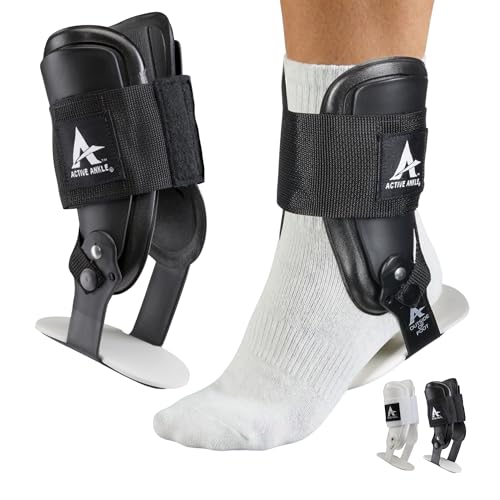
The rigid U-shell that volleyball middles swear by at the net
The Active Ankle T2 is a different animal: a rigid U-shaped shell that wraps the heel and minimizes side-to-side movement with a mechanical lock that soft braces cannot mimic. The feather-light EVA padding molds to the ankle, and at 4.8 ounces it slips into most athletic shoes without weighing you down.
This is the brace of choice for volleyball and cheerleading, where hard landings and sharp cuts test an ankle every possession. Owners who cover the net at the middle position found it stable and effective, with one crediting it for preventing a recurrence of a severe sprain. The anatomical bilateral hinge keeps a natural range of motion so you stay mobile.
The durability record is genuinely split. Some reviewers point out it lasting four years of protection, while others hit a snapped shell within a month of normal walking. It is also picky about shoes — the thick base plate means you may need to loosen laces fully or slip the foot pad under your insole for a stable hold.
Quality-first approach: quality is the most-discussed aspect with 84 mentions, and support follows at 76 — a brace built around rigidity rather than soft comfort.
Perfect for: volleyball, cheerleading, and high-impact sports demanding maximum lateral lock.
Not for: everyday casual wear — the rigid base is too bulky for tight shoes.
9. Shock Doctor Ultra Knit Ankle Brace
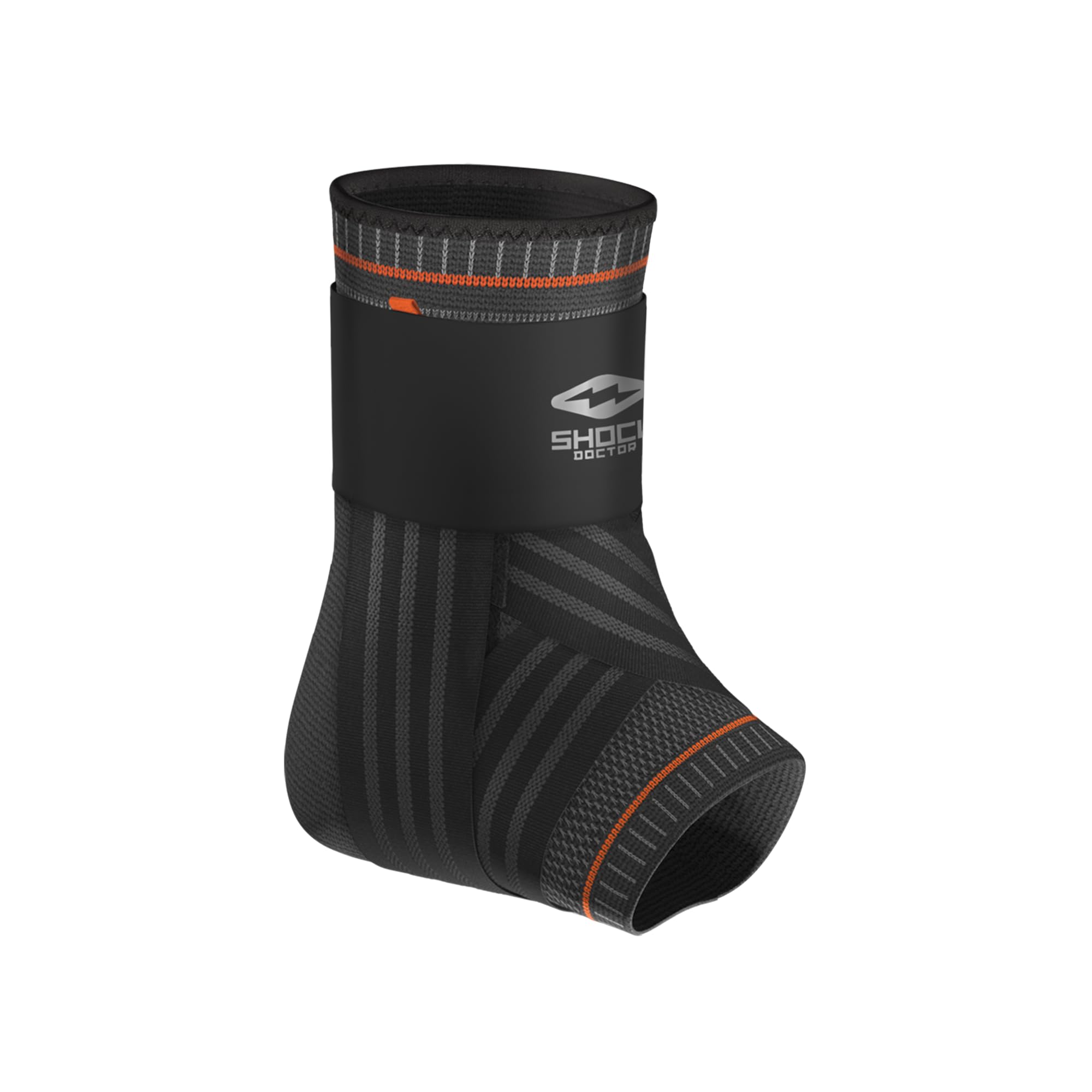
The slim knit brace that runners pick after trying four others
The Shock Doctor Ultra Knit solves the eternal brace problem: maximum support usually means maximum bulk. This one uses an ultra knit compression sleeve with flexible side stays integrated into comfort gel pads, so it grips the ankle like a second skin rather than a plastic cast. Owners coming off four torn ligaments called it the slimmest, most comfortable brace they tested.
Support comes from a figure-6 strap configuration that stabilizes the joint against both inversion and eversion. The compression knit boosts circulation and keeps muscles warm to help prevent re-injury. The anatomical, non-bunching design contours to the ankle for long-wear comfort, and it fits both the left and right foot.
Its target is Grade 2 and 3 sprains during active recovery, and it delivers strong support without the stiffness of a hinged brace. The catch is getting it on and off: the snug compression fit is a genuine struggle for anyone with limited ankle flexibility, and the straps have drawn some durability complaints. Size up — a down-sized fit caused strap misalignment for one runner.
Slim-support balance: support leads at 19 mentions and quality follows at 18, with a sock-like fit that disappears inside a running shoe.
Choose it if: you want high-grade compression support that fits in narrow shoes.
Avoid if: you have limited ankle mobility and need easy on-and-off access.
Understanding the Specs
Closure Type
Lace-up braces mimic athletic tape and let you dial in tension across the whole foot and ankle. Hook-and-loop (Velcro) straps are faster to adjust and easier to fine-tune as swelling changes. Your choice depends on how quickly you need to get the brace on and off, and how much control you want over tightness.
Support Style
Rigid shells and side stays physically block the ankle from rolling inward or outward — the motion that causes most sprains. Softer compression sleeves support through pressure but do little to stop a roll. For a fresh or severe sprain, look for semi-rigid shells or articulated stays. For mild aches, a compression wrap is plenty.
FAQ
How tight should an ankle brace feel?
Can I wear an ankle brace inside my shoe?
How long should I wear a brace after a sprain?
Is a lace-up brace better than a strap-on brace?
Can I sleep in an ankle brace?
How do I clean my ankle brace?
Do ankle braces help prevent future sprains?
What is the difference between a stirrup brace and a lace-up brace?
Final Thoughts: The Verdict
For the majority of shoppers, the brace for sprained ankle winner is the DonJoy Speed Pro because it pairs tournament-grade ballistic nylon with articulated stays that stop the roll that caused your injury in the first place. If you want the fastest on-and-off for game day, grab the Med Spec ASO Speed Lacer. And for a fresh, swollen sprain that needs active swelling control, the Aircast Air-Stirrup is the one to reach for. Whichever you pick, your ankle will feel the difference on the first uneven step.
How We Picked
We do not accept paid placement. Every pick is matched to a real buyer and a real use-case; we do not hands-on test units.
Sources & Methodology
Specifications: manufacturer listings and product documentation. Review insights: verified customer reviews, as of August 2026. Pricing: not shown on this page (it changes often); check the current price via the retailer link.
As an Amazon Associate, Gadgets Feed earns from qualifying purchases. This does not affect which products we feature.