
Our readers keep the lights on and my morning glass full of iced black tea. As an Amazon Associate, I earn from qualifying purchases.
Specs are compiled from manufacturer listings and verified buyer reviews and can change over time — please confirm the key details on the product page before buying.
Finding a toy that actually holds a two-year-old’s attention — and survives the chewing, throwing, and dropping — feels like a treasure hunt. You want something that builds real skills like counting and colors, not just another plastic gadget that gets ignored by day three. This guide focuses on the picks that consistently earn praise from parents for being durable, educational, and genuinely engaging for the toddler set.
I’m Min — the founder and writer behind Gadgets Feed. This guide is built by comparing the manufacturers’ published specifications and the patterns across verified customer reviews, so you get each pick’s real strengths and trade-offs instead of marketing spin.
Finding a toy that holds a 2-year-old’s attention longer than a few minutes is a win. The best 2yr old toys here mix learning with play, so your child stays engaged while building skills.
Our Picks at a Glance


How To Choose The Best 2Yr Old Toys
At two, toddlers are rapidly expanding vocabulary, strengthening fine motor skills, and exploring with boundless curiosity. The right toy channels that energy into learning; the wrong one ends up in the donation bin.
Prioritize Safety and Durability
A two-year-old tests everything — literally. Toys get thrown, chewed, and dropped from high chairs, so solid construction and non-toxic materials are non-negotiable. Look for smooth edges, large pieces that can’t be swallowed, and sturdy builds that can withstand daily roughhousing without breaking into sharp fragments.
Look for Learning Potential
At this age, play is the primary learning mechanism. The best toys introduce concepts like numbers, colors, shapes, and animals in a playful, engaging way. Whether it’s a wooden puzzle, a magnetic maze, or an interactive book, the toy should encourage active thinking and problem-solving rather than passive watching.
Match the Toy to the Child’s Interests
A child obsessed with dinosaurs won’t care about a flower-building set, no matter how well-made it is. Observe what your toddler gravitates toward — animals, music, building, or pretend play — and choose a toy that feeds that natural curiosity. The more a child loves a toy, the longer they’ll stay engaged and the more they’ll learn from it.
Quick Comparison
| Model | Best For | Skill Focus | Materials | Power | Amazon |
|---|---|---|---|---|---|
| LeapFrog Learning Friends 100 Words Book★ Best Overall | Bilingual vocabulary building | Language & Reading | Plastic | 2 AA Batteries | Amazon |
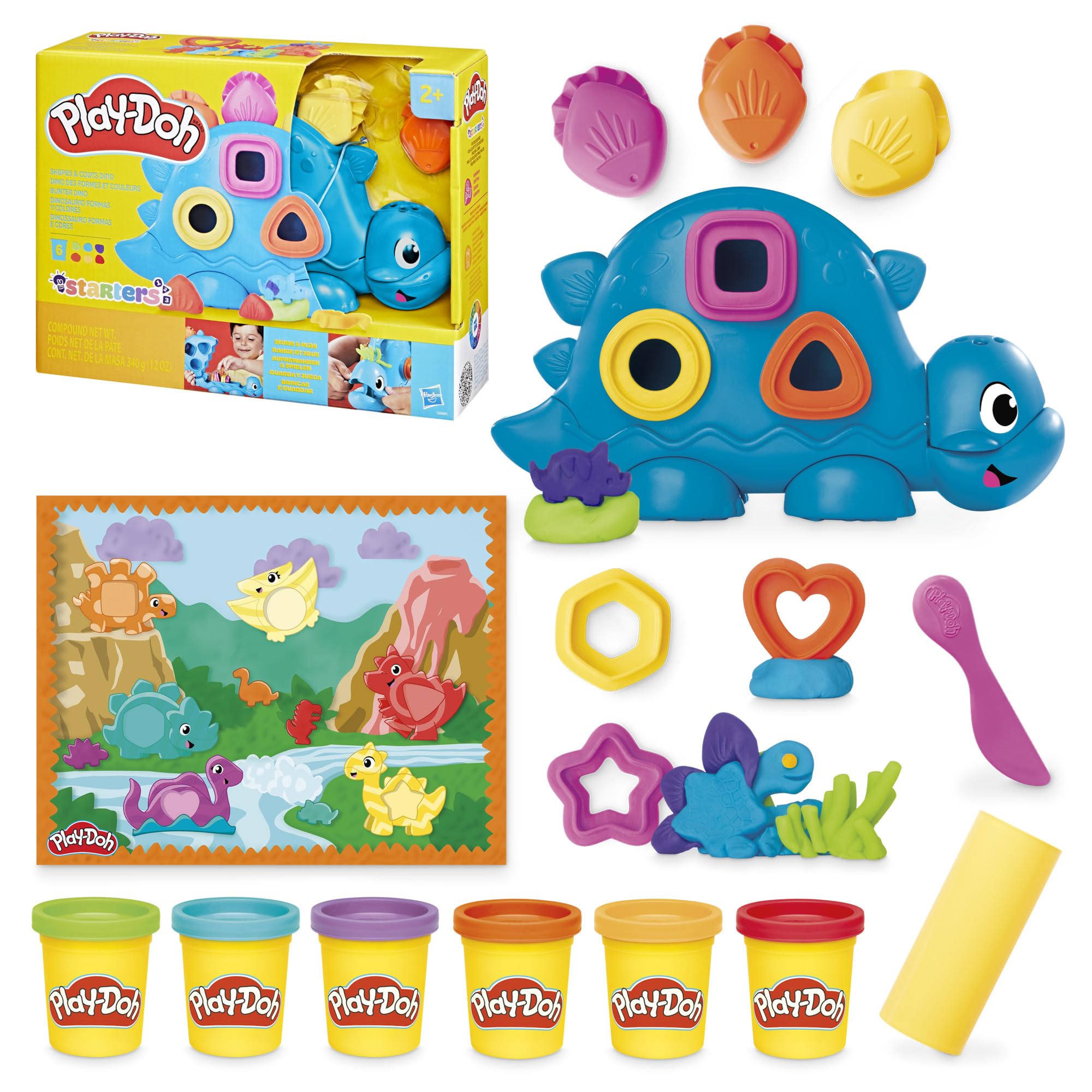
| Play-Doh Dino Starter SetSensory Pick | Sensory & fine motor play | Sensory & Creativity | Plastic & Dough | None | Amazon |
| wakeInsa Magnetic Color MazeBest Value | Counting & color sorting | Fine Motor & Math | Wood | None | Amazon |
| kidus Magnetic Fishing Game | Hand-eye coordination | Motor Skills | Wood | None | Amazon |
| LEGO DUPLO Creative Garden | Open-ended building | Imagination & Motor | Plastic | None | Amazon |
| LeapFrog Strum & Count Guitar | Musical introduction | Music & Numbers | Wood & Plastic | 3 AA Batteries | Amazon |
| JoyCat Ice Cream Set | Counting & stacking fun | Counting & Motor | Rubberized Plastic | None | Amazon |
| Mgtfbg Wooden Tool Set | Pretend construction play | STEM & Motor Skills | Wood | None | Amazon |
| SYNARRY Wooden Puzzles (6-Pack) | First animal puzzles | Problem-Solving | Wood | None | Amazon |
In-Depth Reviews
1. LeapFrog Learning Friends 100 Words Book
Our pick — over 4.5★ from 95,500+ verified ratings; the strongest balance of quality and price.
The crowd favorite that turns everyday words into a bilingual listening adventure.
Touch a picture of a dog, and the book says “dog” out loud, then adds a sound effect and a fun fact. That simple interaction is why this is the top pick — it introduces more than 100 age-appropriate words chosen by learning experts across categories like pets, food, colors, and opposites, all with friends Turtle, Tiger, and Monkey guiding the way.
The standout feature is the full bilingual experience. Words, songs, and instructions play in both English and Spanish, which families love for early language exposure. It’s also built for the rough stuff — the pages resist tearing and teething damage, and the reviews sum it up: “It’s incredibly durable and has held up well to daily use.”
Parents frequently report it supports early speech development., and the light-up star button plays the theme song and a “My Favorite Word” tune. It’s intended for ages 18+ months, needs 2 AA batteries (included for demo purposes only), and measures 9.4″ wide by 9.2″ tall — an easy size for little hands to hold and turn.
What Wins Parents Over
- Holds attention for long stretches of engaged learning
- Bilingual English/Spanish adds real value
- Praised for aiding speech-delayed toddlers.
Good To Know
- Batteries included only for demo — expect to swap in fresh ones
- More suited to word recognition than deep play
Reach for this if: you want a screen-free way to grow your toddler’s vocabulary in two languages.
Look elsewhere if: you’re after a hands-on, physical-building toy — this is a listening and touching experience.
2. Play-Doh Shapes & Colors Dino Starter Set
A prehistoric friend that grows silly hair while little fingers build strength and shape skills.
Fill the dino’s head with compound, press down, and watch hilarious Play-Doh hair sprout — the moment that keeps toddlers coming back. This set pairs that novelty with 11 big, chunky tools designed for kids 2 years and up, and it’s the sensory play that wins people over most.
The playmat adds a matching and storytelling layer, while the removable spikes double as rolling cutters and the shape cutters attach to the sides. Everything stores in the stegosaurus’s back, so cleanup is genuinely simple — one buyer whose grandson is 22 months old noted how much he loves it, and that the compact, all-together storage is a real plus. The one thing adults often help with is the hair-pressing mechanism, which takes more force than a toddler’s hands can manage.
You get 2-ounce cans in green, blue, purple, orange, yellow, and red, and the kit contains wheat — worth knowing for anyone with a wheat allergy in the house. At just over 0.83 kg, it’s noticeably more substantial than the magnetic maze below (which is only 0.49 kg), yet it stays neatly contained in the dino body for travel or storage.
Why Kids Love It
- The “grow hair” feature is endlessly entertaining
- Strengthens fine motor skills through squishing and cutting
- Everything stores together in the dino’s back
The Catch
- Hair-pressing mechanism needs adult help for small hands
- Contains wheat, so not for every child
Best if: you want a classic sensory material with a gimmick that toddlers find hilarious.
Think twice if: you need a fully mess-free activity — Play-Doh always brings crumbs.
3. wakeInsa Magnetic Color and Number Maze
A quiet, screen-free maze that keeps little hands busy sorting colors and counting.
This wooden board uses a magnetic stick to attract colored balls into the matching ice cream cones, which sounds simple but is quietly brilliant for focus. Kids get so absorbed in color sorting and counting that parents report it keeps them calm and quiet — a rarity at this age. The board measures 11.7″ x 10.3″ and is made of hardwood with water-based paint, so it’s sturdy enough for daily use.
What makes it a great value is the range of skills it touches: color recognition, number learning, fine motor control, and hand-eye coordination. The magnetic pen attaches to the board so the pieces never get lost, and it’s designed for one player, making it a good solo activity or a focused turn-taking game. Quality is the thing owners praise most, with the wooden construction feeling excellent in hand.
The honest trade-off is the magnet strength — it’s a mixed point, with some finding it perfect and others wishing the stick pulled harder. A few toddlers get frustrated when the balls are tricky to hold, and even some adults noted it takes a little effort. If your child has a low frustration threshold, this could be a supervised activity rather than free play.
Where It Shines
- Builds counting and color skills in one activity
- Screen-free and surprisingly quiet for parents
- Pen attaches to the board so nothing gets lost
One Mixed Point
- Magnetic strength is inconsistent — some find it weak
- Single-player focus limits group play
Grab it if: you want a portable, mess-free educational activity for car rides or quiet time.
Pass if: your child gives up quickly on tasks that need a steady hand.
4. kidus Montessori Magnetic Wooden Fishing Game

Two wooden poles and ten colorful fish that quietly build focus and fine motor control.
There’s a satisfying click when the magnetic pole catches a fish, and that moment of success is what keeps toddlers hooked. This set includes 2 real wood magnetic poles and 10 vibrant fish figures, each over 1.77″ high (4.5cm), which is deliberately sized to prevent choking hazards for ages 1-3. The pieces are painted and polished with smooth, rounded edges that protect little skin.
Parents report kids as young as 18 months catch on fast, and the toy stays in rotation well past age 2 — one family’s 19-month-old plays with it repeatedly, and another noted it still gets used at 2.5 years. It teaches colors, counting, and sequences while the magnetic catch boosts hand-eye coordination. The Montessori-style design means no noise, no lights, just focused play that works well for turn-taking.
The recurring note is size — several owners found it smaller than expected from the photos, and one flagged the pieces as a choke hazard requiring supervision. It’s genuinely compact, so it slips easily into a diaper bag for restaurant trips, but manage expectations on physical footprint before it arrives. The magnet strength, by contrast, earns consistent praise for being easy for small hands to use.
What’s Great
- Strong magnets make catching satisfying and easy
- Two poles encourage turn-taking with a sibling
- Quiet, no-mess play that’s easy to pack
Know Before Buying
- Smaller in person than product photos suggest
- Small fish pieces mean supervision is a must
Choose this for: a travel-friendly skill builder that grows attention span one catch at a time.
skip it if: you need a larger, table-filling activity — this one is pocket-sized.
5. LEGO DUPLO Town Creative Garden & Flowers

The set that grows with your child, from first stacking to full garden storytelling.
LEGO DUPLO bricks are chunky by design, and this nature-themed set is built for ages 2 and up. It comes with 3 figures — a frog, a butterfly, and a bee — plus bricks depicting numbers, flowers, and animals so toddlers can recreate the world they see around them. The open-ended nature means there’s no wrong way to build, which is exactly what imaginative play needs.
The age-appropriateness is what owners praise most, and the durability is exceptional. — parents report the blocks survive throwing and chewing from a 1-year-old while still engaging older siblings aged 3 and 5. One buyer’s grandson builds what the box shows and then invents his own ideas, which is the sign of a toy earning its keep. The set measures over 13.5 in. (35 cm) wide, giving plenty of surface for little creations.
A nice bonus is the included book with building ideas, which helps parents who aren’t naturally creative guide the play. It’s also washable — just rinse the bricks off after a particularly messy play session. This is the rare toy that genuinely works across a multi-age sibling group, making it smart value even at a higher price point than the other picks here.
Why It’s A Keeper
- Survives heavy toddler use — throwing and chewing included
- Open-ended building sparks real creativity
- Engages toddlers and older siblings alike
Consider This
- Fewer pieces than bigger DUPLO sets, so builds are smaller
- Requires adult involvement for the youngest toddlers
Buy it for: a long-lasting, multi-age toy that turns into hours of parent-child building time.
Not for: kids who prefer finished, ready-to-play characters over building their own.
6. LeapFrog Strum and Count Wooden Guitar

A real-wood guitar that turns strumming into counting practice with light-up frets.
Eight fret keys introduce an octave of colors and numbers while the guitar neck lights up, and strumming the strings finishes the songs. That combination — seeing the lights, hearing the notes, feeling the strum — is exactly what captures a toddler’s musical curiosity. The guitar is made with wood that is 100% FSC-certified from well-managed forests, so it’s a quality instrument feel rather than a flimsy plastic toy.
The versatility is the real draw. Move the squirrel’s tail to switch between games exploring vocabulary and musical styles, or create music with the sounds of acoustic guitar, electric guitar, or barnyard animals. One grandmother reported her granddaughter has had it for two years and it’s still her favorite at age 3 — proof of its durability.. Parents note the sound quality is clear and the size is perfect for small hands to maneuver.
It’s intended for ages 18+ months and requires 3 AA batteries (included for demo purposes only, so have fresh ones ready). The one thing to know is that, like the LeapFrog book, this is a battery-powered toy — so it’s not a silent activity. But the quality, cuteness, and entertainment value earn consistent praise, making it a reliable gift that won’t end up ignored.
The Highlights
- Real FSC-certified wood feels substantial, not flimsy
- Multiple sound modes keep it fresh for months
- Light-up frets teach colors and numbers musically
Before You Buy
- Needs 3 AA batteries — have spares on hand
- Musical toys aren’t for quiet households
Pick this if: you want to nurture a love of music while sneaking in number and color practice.
pass on it if: you need a silent toy or already own a similar electronic instrument.
7. JoyCat Ice Cream Preschool Learning Activities

Serve up counting practice with 20 scoops and 10 numbered cones that snap together.
Kids are naturally drawn to pretend ice cream, and this set turns that fascination into math practice. It includes 20 ice cream scoops and 10 cones with numbers 1-10 printed on them, plus a storage tub with a handle for easy portability. The bright colors and realistic design appeal to toddlers, while the rubberized plastic material is soft, food-safe, and built to withstand dropping, throwing, and chewing.
Kids can match scoops to the right number, stack them by color, or practice addition and subtraction by combining scoops — one parent described teaching both counting and basic math “while having fun.” A kindergarten teacher praised it for counting, patterns, and social play in the classroom, which speaks to its versatility across ages from 15 months to 5 years.
The honest downside is the secure fit of the scoops — some snap on well, others report they slide off easily, which can frustrate a toddler trying to build a tall cone. The storage tub lid also fits only with a specific arrangement. But the quality, durability, and playability earn overwhelmingly positive feedback, making this a strong value for the price.
What’s To Love
- Teaches counting, colors, and early math concepts
- Soft rubberized plastic survives rough play
- Storage tub makes cleanup and travel easy
The Trade-Off
- Scoop fit is inconsistent — some slide off easily
- Tub lid needs a specific arrangement to close
Reach for this if: you want a fun, hands-on way to introduce numbers before preschool.
Look elsewhere if: your child gets frustrated when pieces don’t stay stacked perfectly.
8. Mgtfbg Kids Tool Set

A 29-piece wooden workbench that lets toddlers take apart and rebuild like the grown-ups.
There’s a specific joy in watching a two-year-old “fix” things with their own tools, and this set delivers exactly that. The wooden toolbox flips upside down to become a workbench, adds handles to become a suitcase, and comes with 29 pieces: a saw, hammer, wrench, screwdriver, building blocks, 3 gears, 7 screws, 5 nuts, and 6 assembly pieces. Kids use the screwdriver to twist screws, the hammer to tap nails, and the wrench to build models like windmills and helicopters.
The safety-first design is the standout feature. The wood tools are made of high-quality, sturdy solid wood, sized for small hands, with smooth surfaces and rounded corners that protect little fingers. It’s a Montessori STEM toy that parents say builds fine motor skills, hand-eye coordination, and problem-solving — one grandmother reported her 2-year-old granddaughter plays with it every single visit and it’s holding up beautifully.
The honest limitation is size — several owners note it’s quite small, with the product photo making it look bigger than reality. It’s best for ages 2-3; kids under 5 might find it a bit petite. Durability is also mixed, with some pieces reportedly breaking after light use, so it’s not the most rugged option here. But for the price, it’s a charming introduction to construction play.
The Bright Side
- Teaches real tool use in a safe, rounded-corner design
- Box doubles as workbench, storage, and suitcase
- Builds fine motor skills through screw-and-nut play
Weight The Limits
- Smaller than photos suggest — best for ages 2-3
- Some pieces may not survive heavy abuse
Choose it for: the toddler who follows you around wanting to “help” with real tools.
Pass if: you want a larger, more sturdy set that will last for years of rough play.
9. SYNARRY Wooden Puzzles for Toddlers 1-3

Six vibrant animal puzzles with chunky pieces and a rack that keeps them all organized.
This is the perfect “first puzzle” experience — six different animal scenes with large, thick, solid pieces that are easy for small hands to grip. The pieces have handles that help with baby grip and coordination, and they’re big enough that nothing gets lost easily. The scratch-resistant, waterproof coating means these will survive the wear and tear of daily play.
The included storage rack is the unsung hero — it keeps all six puzzles organized and the desktop clean, which parents genuinely appreciate. The pieces are easy for a 2-year-old to handle, and the animal images are vibrant and adorable. One grandmother described her 2-year-old granddaughter being “enchanted” with the pictures, and another family’s two and three-year-old grandchildren race to the playroom to work on them.
This set earns praise for being age-appropriate, durable, and great value. The pieces have a small learning curve for the very youngest — they need to understand “put the animal back in its spot” — but once that clicks, it’s a satisfying independent activity. The frames are thin (0.04 inches deep), so they’re best used on a flat surface rather than held in a lap.
Why It Works
- Large pieces with handles perfect for tiny hands
- Rack keeps all six puzzles tidy and organized
- Durable, waterproof coating survives daily play
One Note
- Thin puzzle boards need a flat surface to work well
- Six separate puzzles means more pieces to track
Best for: introducing problem-solving and animal recognition in a contained, organized way.
Not for: kids who prefer building or moving toys over seated, focused activities.
Understanding the Specs
Fine Motor Skills Development
This is the physical control of small muscles in the hands and fingers — think pinching, stacking, and twisting. At age two, these skills are rapidly developing, and toys that require precise movements (like threading a puzzle piece or catching a magnetic fish) strengthen them. Look for toys that make these movements fun and rewarding, not frustratingly difficult.
Battery vs. Battery-Free Play
Battery-powered toys like the LeapFrog book and guitar add sound, lights, and interactivity that can hold attention longer and teach audio feedback. But they require fresh batteries (often not included beyond a demo set) and can’t be used in the bath or during quiet time. Battery-free wooden toys like the puzzles and mazes are quieter, more portable, and never run out of power — but rely on your child’s intrinsic motivation to play.
FAQ
At what age should I start giving my child puzzles?
Are wooden toys safer than plastic ones for toddlers?
How do I know if a toy is truly educational and not just marketed that way?
Will my 2-year-old need help using these toys?
What’s the difference between Montessori toys and regular toys?
How long should a toy keep a 2-year-old engaged?
Are battery-powered toys better for learning than manual ones?
How do I clean wooden toys without damaging them?
Final Thoughts: The Verdict
For most families, the best 2Yr Old Toys winner is the LeapFrog Learning Friends 100 Words Book because it delivers the strongest combination of durability, bilingual learning, and toddler engagement — the crowd favorite with nearly 100,000 owners.. If you want hands-on sensory play that builds fine motor skills, the Play-Doh Dino Starter Set is a hilarious hit. And for a screen-free, travel-friendly activity that quietly builds counting skills, the wakeInsa Magnetic Color Maze is the value pick to reach for.
How We Picked
We do not accept paid placement. Every pick is matched to a real buyer and a real use-case; we do not hands-on test units.
Sources & Methodology
Specifications: manufacturer listings and product documentation. Review insights: verified customer reviews, as of August 2026. Pricing: not shown on this page (it changes often); check the current price via the retailer link.
As an Amazon Associate, Gadgets Feed earns from qualifying purchases. This does not affect which products we feature.