
Our readers keep the lights on and my morning glass full of iced black tea. As an Amazon Associate, I earn from qualifying purchases.
Specs are compiled from manufacturer listings and verified buyer reviews and can change over time — please confirm the key details on the product page before buying.
You need a 3D DLP projector that does two jobs at once: it must show crisp, colorful movies and sports for everyday viewing, and it must handle active-shutter 3D (the type that uses battery-powered glasses that blink in sync with the screen) so it works with modern Blu-ray players and consoles. Pick the wrong one, and you get a flat, dim picture that makes “3D” pointless.
I’m Min — the founder and writer behind Gadgets Feed. This guide is built by comparing the manufacturers’ published specifications and the patterns across verified customer reviews, so you get each pick’s real strengths and trade-offs instead of marketing spin.
From laser-bright 4K flagships to long-throw workhorses, here are the top-rated machines that make a 3d dlp projector worth clearing out a wall for, matched to the room and budget you actually have.
Our Picks at a Glance

How To Choose The Best 3D DLP Projector
Every projector on this list uses DLP (Digital Light Processing) technology, which relies on a chip full of tiny mirrors to create the image. This is the same tech found in about 90% of the world’s cinemas, and it is the reason these machines tend to be sharper and longer-lasting than older LCD models. Your job is to figure out which extra features—like laser brightness or built-in streaming—matter for your room.
Match brightness to your room
Brightness is the number that decides whether you can watch with the lights on or need a blackout cave. It is measured in lumens, and on this list the range runs from 2450 up to 3100 ISO lumens. More lumens means a clearer picture in a living room with lamps or windows, while a dedicated dark home theater can get away with fewer. If you plan to watch daytime sports, aim higher.
Check the throw ratio before you measure
Throw ratio tells you how far the projector must sit from the wall to fill a given screen size. A long-throw model like the Optoma HD26 needs about 8 feet for a 71-inch image, while an ultra-short-throw like the Hisense sits just inches from the wall to hit 150 inches. Measure your room first, then pick a machine whose throw ratio matches, or you will be stuck with digital zoom that shrinks the image.
Understand 3D formats and glasses
Not all 3D is created equal. Some projectors support DLP-Link, which syncs with inexpensive battery-powered glasses, while others need an IR emitter and matching shutter glasses. If 3D is your main reason to buy, confirm the model supports the format your Blu-ray player outputs, and check whether glasses are sold separately. Owners of the Optoma HD26 specifically report that its 3D works impressively with IR glasses.
Quick Comparison
| Model | Best For | Brightness | Resolution | 3D Format | Amazon |
|---|---|---|---|---|---|
| Valerion VisionMaster Pro★ Best Overall | High-end cinema & gaming | 2500 ISO Lumens | 4K UHD (3840×2160) | Built-in 3D | Amazon |
| Optoma HD26Budget Champion | Budget 1080p 3D classic | 3200 ANSI Lumens | 1080p | DLP-Link / 3D-Sync | Amazon |
| JMGO N1S Ultra | Portable smart laser | 2800 ISO Lumens | 4K UHD (3840×2160) | Blu-ray 3D | Amazon |
| Dangbei DBOX02 | Streaming & Netflix fans | 2450 ISO Lumens | 4K UHD (3840×2160) | Blu-ray 3D | Amazon |
| BenQ TK800M | 4K sports & HDR | 3000 ANSI Lumens | 4K UHD (3840×2160) | 3D (DLP-Link) | Amazon |
| Dangbei MP1 Max | Daytime viewing power | 3100 ISO Lumens | 4K UHD (3840×2160) | Blu-ray 3D | Amazon |
| Hisense PX3-Pro | Ultra-short-throw spaces | 3000 Lumens | 4K UHD (3840×2160) | Active 3D | Amazon |
In-Depth Reviews
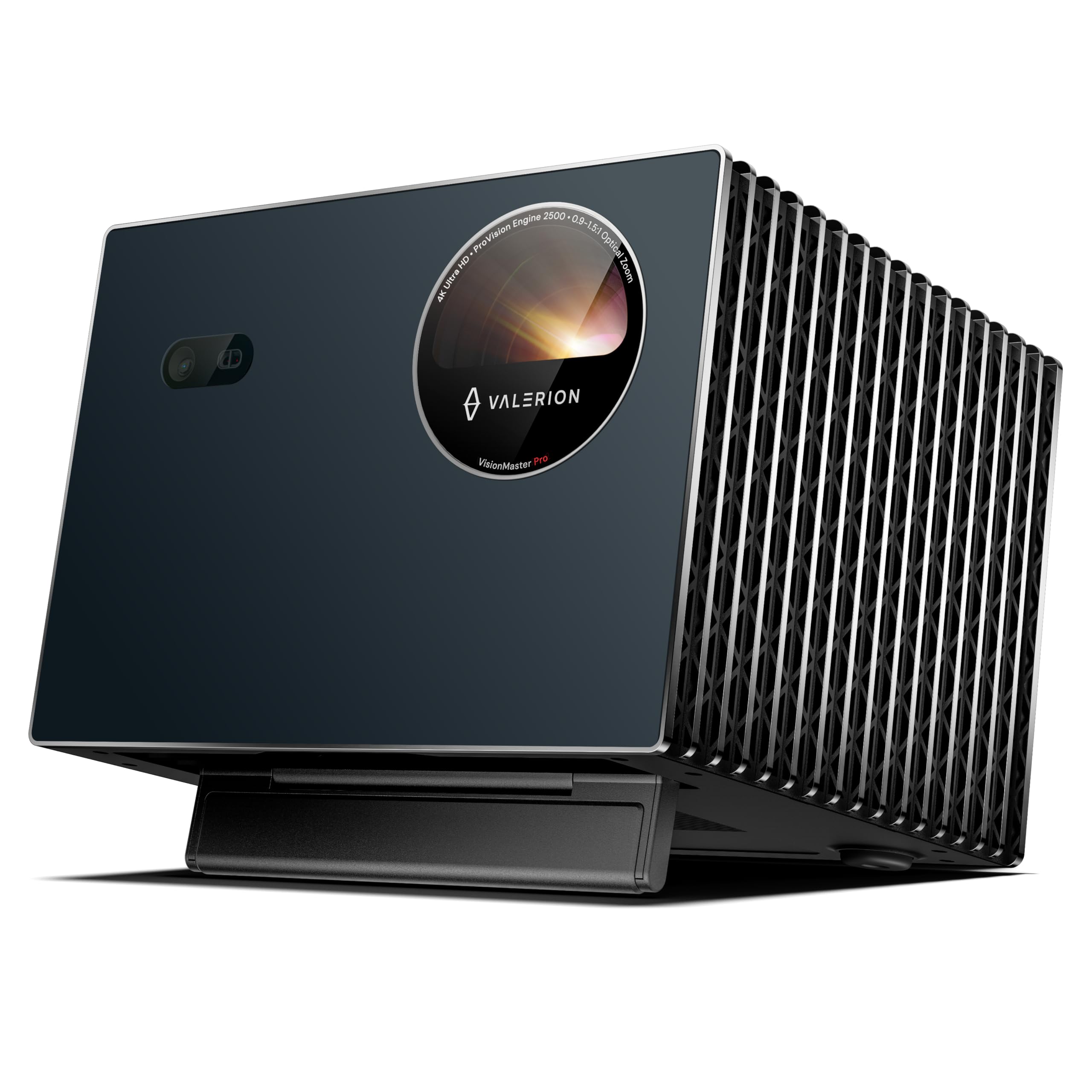
1. AWOL Valerion VisionMaster Pro 4K Laser Projector
Our pick — 4.5★ from 600+ verified ratings; the strongest balance of quality and price.
A 4K laser beast that wins on sheer picture quality, deep contrast, and console-speed response.
The VisionMaster Pro takes the top spot because it delivers 4K UHD clarity with a 15,000:1 contrast ratio and Enhanced Black Level (EBL) technology that makes dark scenes look genuinely deep instead of washed-out gray. Owners describe the 4K performance with Dolby Vision as outstanding, with colors that feel rich and lifelike in everything from a bright living room to a fully dark theater.
It is also a serious gaming machine. The 4ms input lag and 240Hz refresh rate mean your button presses register almost instantly, and gamer-friendly modes for RPG, FPS, and RCG let you tune the image to the game genre. The built-in AI SoC MT9618 chipset with 4GB RAM and 128GB ROM keeps streaming apps snappy, so you are not waiting on buffering mid-movie.
Its flexibility is the other headline. The OpticFlex Lens System with a 0.9–1.5 throw ratio plus auto focus and keystone correction means you can place it in a compact room or a large hall and still get a crisp image up to 300 inches. Buyers report that at 2500 ISO lumens it is noticeably brighter than the comparable Valerion Pro 2, and that the difference is well worth it.
Standout Strengths
- Deep blacks and rich colors with 15,000:1 contrast ratio and EBL
- 220V? No — 4ms input lag makes it a genuine gaming projector
- Large 4GB RAM / 128GB ROM means smooth 4K streaming
Things to Weigh
- A few find 3D playback a bit choppy compared to the 2D image
Best matched to: the home theater owner who wants one projector for cinematic movies, bright-room shows, and fast competitive gaming.
2. Optoma HD26 1080p 3D DLP Projector
A 1080p workhorse that proves 3D and big-screen thrills don’t need a four-figure budget.
The HD26 is the crowd favorite among budget-minded buyers for one simple reason: at 3200 ANSI lumens it is bright enough to look great even with lights on, yet it costs a fraction of the laser flagships. Owners who upgraded from older 720p units consistently report it is dramatically brighter and crisper, with rich colors that hold up in ambient light and look perfect in a dark room.
For reliable 3D, this projector is a top pick. It accepts HDMI 1.4a 3D input (the standard that carries 3D signals from Blu-ray players), has a 3D-Sync port (a socket that sends a timing signal to your glasses), and works with IR glasses (infrared-linked eyewear). Owners mention: “3D impressive with IR glasses.” You get a 71-inch image from just 8 feet away, or 107 inches from 12 feet, so it fits a typical living room or a dedicated theater space.
The 25,000:1 contrast ratio is the highest on this list, beating even the premium laser models, which translates to strong dark levels for a projector at this price. As with any DLP unit, a few owners notice a faint rainbow effect on bright gradients, but most say it is barely visible and quickly forgotten during movies or gaming.
Why It Wins Fans
- Bright 3200 ANSI lumens for daytime and ambient-light viewing
- Reliable IR 3D that owners call near-theater quality
- Highest contrast on the list at 25,000:1
The Trade-Offs
- 1080p resolution, not 4K — source quality matters
- Some owners find the remote and menu less intuitive
- Outdoor dusk viewing is a struggle even on overcast days
Reach for this if: you want a proven 1080p 3D setup that works with a console or PC via HDMI switch and won’t break the bank.
Look elsewhere if: you need 4K sharpness or plan to watch outdoors before full darkness.
3. JMGO N1S Ultra 4K Triple Laser Projector
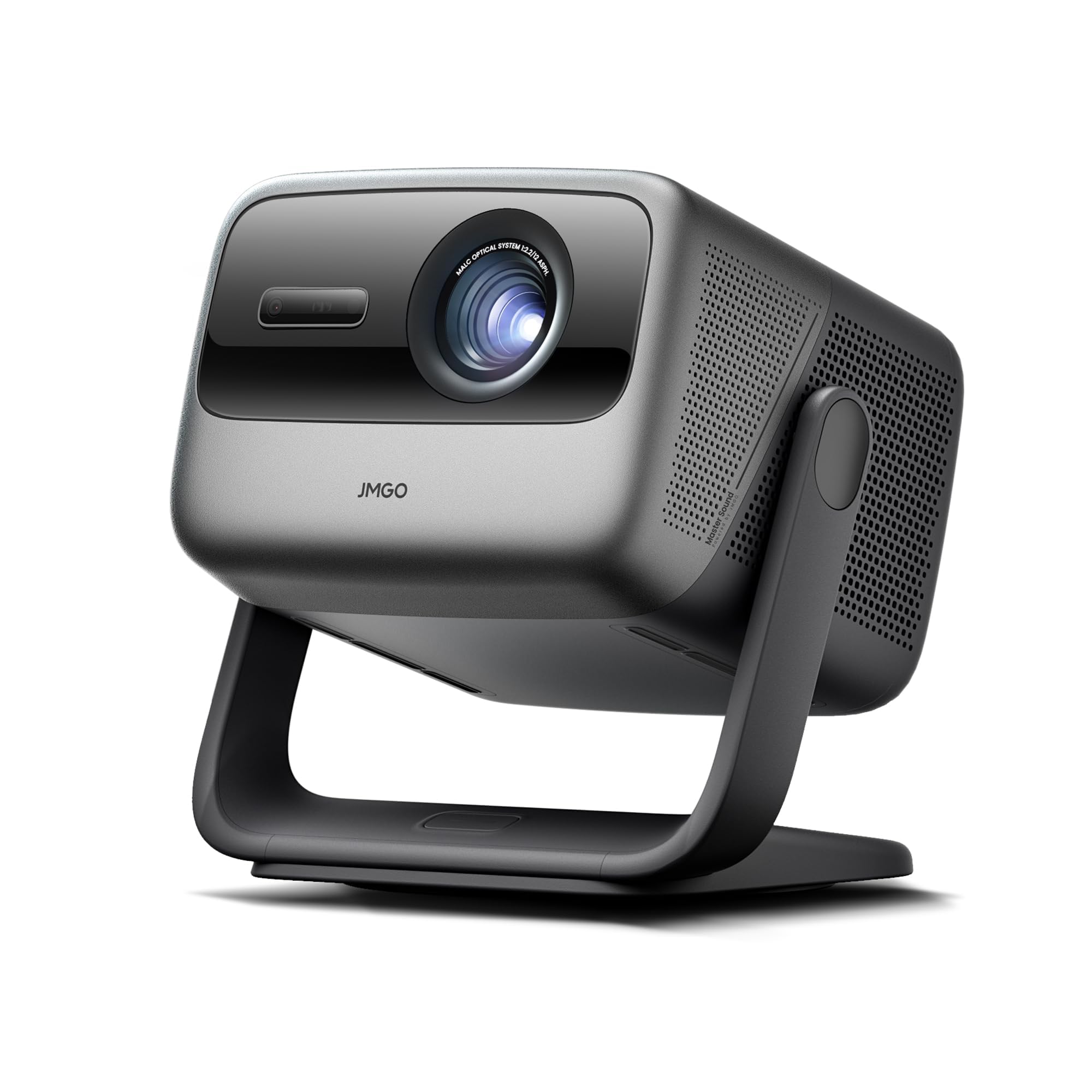
A triple-laser smart projector that pairs cinematic color with the convenience of built-in Google TV.
The N1S Ultra is built around its tri-color RGB laser engine, which delivers a wide color gamut with 1600:1 FOFO contrast and ΔE<1 color accuracy. In plain terms, colors look vibrant and true without the oversaturation you get on cheaper units, and owners say the image has an OLED-like depth and contrast that makes it viewable even in daylight.
At 2800 ISO lumens, it is 12% brighter than the Valerion VisionMaster Pro’s 2500 ISO lumens, giving it extra headroom in bright living rooms and moderately lit spaces. The built-in gimbal and 360° sensorless picture correction mean you can move it around, tilt it toward the ceiling, or project off-axis and the autofocus and keystone will keep the image sharp and square.
Streaming is easy: Google TV (the smart-TV interface) gives you access to 10,000+ apps and 800+ free live channels, plus built-in Chromecast (so you can cast from your phone) and Google Assistant voice control. It plays Blu-ray 3D discs for that rich pop, and the 20W dual speakers with Dolby Digital Plus (a surround-sound format) deliver full sound with bass down to 45Hz — though most owners still recommend external speakers for serious movie nights.
Loved For
- Triple laser produces vivid, accurate colors with OLED-like depth
- Autofocus and keystone stay sharp even when moved or tilted
- Google TV built in with 10,000+ apps and voice control
Consider First
- No Dolby Vision support — HDR10 only
- Some owners find soft focus persists on autofocus, needing a manual nudge
- Average black levels compared to dedicated cinema projectors
Perfect for: the renter or frequent mover who wants one portable box that streams, projects, and sounds good with zero extra gear.
Who might pass: home theater purists demanding Dolby Vision and reference-level black levels.
4. Dangbei DBOX02 Laser Projector 4K GTV

The rare laser projector with officially licensed Netflix, wrapped in a compact bright 4K body.
The DBOX02 is one of the few projectors where Netflix works straight from the start, no workarounds. It runs Google TV with one-touch Netflix activation, plus Chromecast sharing and Google Home voice control, covering YouTube, Prime Video, and Hulu too. Owners say the smart interface just works, and for backyard movie nights the 2450 ISO lumens stays bright and clear on a 120-inch screen even against a house wall.
Its ALPD (Advanced Laser Phosphor Display) engine is engineered to eliminate the speckle effect that plagues some laser projectors, giving a smoother, more consistent image. It projects up to 200 inches, and the InstanPro AI Image Setup handles autofocus, keystone, screen fit, and obstacle avoidance so you can move it between rooms quickly.
Audio is genuinely strong for a projector: dual 12W speakers with Dolby Audio and DTS:X produce room-filling sound, and the dual HDMI ports (including eARC) plus two USB ports make it easy to connect a console or soundbar. The recurring note from owners is that the default picture settings need a few minutes of adjustment — switching to Movie mode and turning off motion smoothing open up the real image quality.
High Points
- Officially licensed Netflix and full Google TV integration
- ALPD tech avoids the laser speckle effect for smoother images
- Dual 12W speakers with Dolby Audio and DTS:X
Minor Gripes
- Some customers note a light leak around the projected image edge
- Non-adjustable legs may need a stand to level properly
- Autofocus gets mixed feedback — occasional manual focus needed
Choose this when: streaming apps are your main source and you want Netflix, YouTube, and Prime all on one device without a separate stick.
Be aware that: you may need to spend a few minutes tuning picture settings and leveling the unit for the best image.
5. BenQ TK800M 4K UHD HDR Projector

A 4K HDR all-rounder with dedicated football modes that make game day feel like the stadium.
The TK800M is tailor-made for sports fans. It packs true 4K UHD resolution with 8.3 million pixels, a dedicated football mode, and a sport mode that boosts colors so the green pitch and team kits pop. At 3000 ANSI lumens it stays watchable with fair ambient light, and one owner runs a massive 160-inch 4K image from 18.5 feet away with excellent clarity and focus.
Its projector-tune HDR design handles HDR10 content without losing color detail, which owners say makes it excellent for both 4K movies and gaming on a console. The all-glass 4K-tune lens array (7 elements in 4 groups) increases light penetration for a sharper, cleaner image, and the 10,000:1 native contrast ratio delivers solid black levels for the class.
True 3D is supported via DLP-Link, so it fits the core criteria here, and the 96% Rec.709 color gamut keeps skin tones looking natural. As with many DLP projectors, a few owners note an occasional rainbow effect on high-contrast scenes — it is the trade-off for DLP’s sharpness and long lamp life. Built-in speakers are weak, so plan on external audio.
Winning Traits
- True 4K with 8.3 million pixels and dedicated sports modes
- 3000 ANSI lumens holds up in moderately lit rooms
- Flexible 1.1x zoom and auto keystone for easy placement
Before You Buy
- No lens shift, so vertical placement is critical
- Built-in speaker is weak — budget for external audio
- Occasional rainbow effect reported on some content
Best for: the sports-and-movie fan who wants one bright 4K projector for weekend games and HDR films in a dedicated theater room.
skip it if: your ceiling or shelf placement can’t work without lens shift.
6. Dangbei MP1 Max Triple Laser Projector 4K
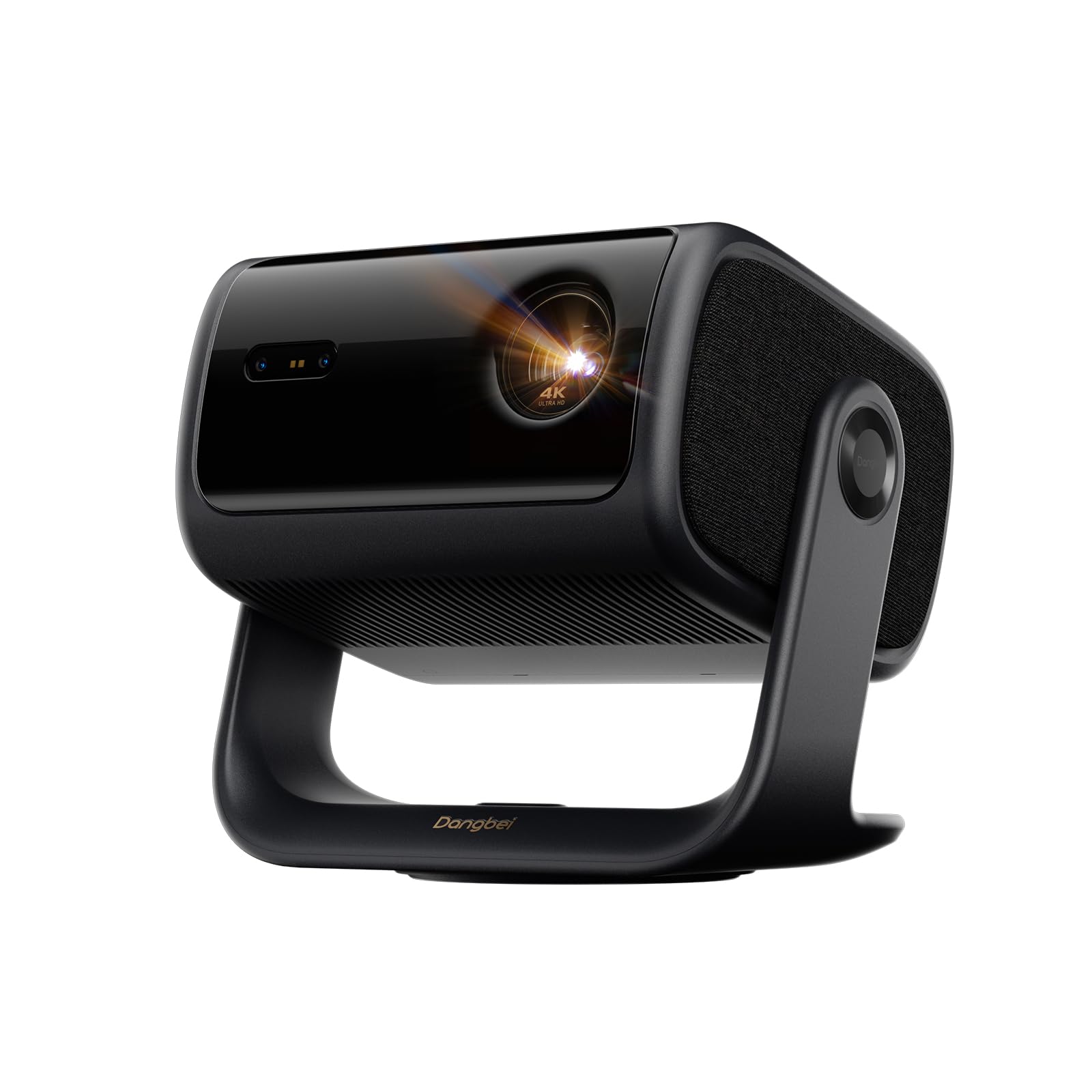
The brightest smart projector here, with a built-in stand that frees you from shelf placement.
The MP1 Max tops this list at 3100 ISO lumens, which owners describe as extraordinarily bright — one buyer calls it “like a TV” with exceptional 4K detail even with ambient light in the room. It uses a hybrid Triple Laser + LED engine with 110% BT.2020 color gamut and ΔE<1 accuracy, delivering vibrant true-to-life colors that one owner compared favorably to a QNED TV’s contrast.
Its defining a neat extra is the built-in stand with 360° horizontal rotation and 135° vertical tilt. You can set it on a table, shelf, or even a tripod and angle it exactly where you need, with no extra mounting accessories. The InstanPro AI handles autofocus, keystone, screen fit, and obstacle avoidance automatically, so setup is genuinely plug-and-play at any angle or distance.
Video game and movie audio gets a boost from dual 12W speakers inside a 750cc acoustic chamber with a bass-reflex system that reaches down to 45Hz, plus Dolby Audio and DTS:X support. Google TV with officially licensed Netflix covers your streaming, and connectivity includes HDMI 2.1 with eARC, USB, Bluetooth 5.2, and Wi-Fi 6.
Why It Shines
- Brightest on the list at 3100 ISO lumens for daytime clarity
- Built-in stand with 360° rotation and 135° tilt for any placement
- 110% BT.2020 color gamut for vivid, accurate color
Heads Up
- Some owners find the image slightly softer than the Dangbei DBOX02
- VPN apps won’t install on the built-in Google TV for some users
- Speakers are decent but not hi-fi — external audio recommended
Grab this for: bright living rooms or outdoor setups where raw lumens matter most and you want flexible placement with zero mounting gear.
Think twice if: absolute 4K sharpness edge-to-edge is your top priority — the DBOX02 is a touch sharper per owners.
7. Hisense PX3-Pro Ultra Short Throw Triple Laser Projector

An ultra-short-throw marvel that turns a TV stand into a 150-inch theater from inches away.
The PX3-Pro changes how you set up. You skip ceiling mounts and long cable runs: it sits on a TV stand near the wall and projects up to 150 inches from just inches away — ideal for compact rooms, apartments, or anyone replacing a large TV. Owners describe the image as stunning even on an off-white wall, with the 3000-lumen triple laser (a bright light source that stays vivid in lit rooms) delivering crisp detail.
Hisense’s LPU Technology (TriChroma) uses pure red, blue, and green lasers for a 110% BT.2020 color gamut and ΔE≈0.9 color accuracy, which means colors look rich and natural without oversaturation. The 4K AI Upscaler converts lower-resolution content up to 4K detail using a DLP system with 2.07 million micromirrors, so even older movies look sharper.
It covers the full premium feature set: Dolby Vision & Atmos, IMAX Enhanced, 240Hz high refresh rate, Google TV, and design-coded Xbox compatibility. Built-in Harman Kardon speakers earn praise for sounding great right from the start. Just know that auto keystone is a bit clunky — one owner found it easier to upload a phone photo to the device’s website for alignment — and a few people notice a slight rainbow effect.
Standout Features
- Ultra-short-throw projects 150 inches from inches away — no ceiling mount
- Dolby Vision & Atmos plus IMAX Enhanced for premium cinema
- 110% BT.2020 color gamut with ΔE≈0.9 accuracy
Know Before Buying
- Auto keystone is finicky — some owners use the phone-photo workaround
- No center speaker option for a full sound system
- Slight rainbow effect reported by a few on high-contrast scenes
Perfect for: apartment dwellers and small rooms where a long-throw projector simply won’t fit, or for replacing a big TV without a big space.
Who should pass: anyone who wants simple one-touch keystone or needs a center-channel speaker option.
Understanding the Specs
Lumens and Brightness
Lumens measure how much light the projector throws out. The number on the box is your best predictor of whether the image will look washed out in a bright room or punchy in a dark one. On this list, the range runs from 2450 to 3100 — the higher the number, the more comfortable the projector is in a living room with lamps or windows. Dark theater rooms can get away with less, but for flexible use, aim for 2800 or above.
Contrast Ratio
Contrast ratio describes the difference between the brightest white and the darkest black a projector can display. A higher ratio means deeper blacks and more detail in shadowy scenes. The Optoma HD26 leads here at 25,000:1, while the Valerion VisionMaster Pro sits at 15,000:1 — a 67% bigger gap in the Optoma’s favor. Keep in mind contrast is only part of the story; a laser’s color accuracy and black levels matter too.
3D Formats and Glasses
3D projectors support different sync methods, and the glasses you need depend on which one. DLP-Link uses a signal embedded in the image to sync with battery-powered glasses, while IR systems use an emitter that sends a separate signal to shutter glasses. The Optoma HD26 has a 3D-Sync port for IR glasses, and buyers confirm its 3D impresses. Others like the JMGO and Dangbei handle Blu-ray 3D. Always check what your 3D source outputs before buying glasses.
Throw Ratio
Throw ratio tells you how far the projector must sit from the wall to produce a given image size. A long-throw model needs the back of a room, while an ultra-short-throw like the Hisense sits inches away. The Valerion’s 0.9–1.5 throw ratio offers flexibility, and the Optoma needs 8 feet for a 71-inch image. Measure your room first — a projector that cannot reach the screen size you want will force you into digital zoom, which shrinks the image.
FAQ
What does DLP mean in a projector?
What is the difference between DLP-Link and IR glasses for 3D?
Will a 3D DLP projector work with my Xbox or PlayStation?
How many lumens do I need for a 3D DLP projector?
Can I watch 3D Blu-ray movies on these projectors?
What is the rainbow effect on a DLP projector?
Is an ultra-short-throw projector better than a long-throw one?
How long do laser projectors last compared to lamp models?
Final Thoughts: The Verdict
For most people, the best 3d dlp projector overall is the AWOL Valerion VisionMaster Pro, because it pairs stunning 4K laser picture quality with deep contrast and a 4ms gaming response (fast enough for console play). If you want a budget-friendly entry into reliable 3D, the Optoma HD26 delivers 3200 ANSI lumens (a brightness measure) and a 25,000:1 contrast ratio at a fraction of the cost. And for small rooms, the Hisense PX3-Pro is the one to reach for, projecting 150 inches from just inches away with Dolby Vision and Atmos (high-dynamic-range and surround-sound formats). The crowd favorite by volume of happy owners is the Optoma — it holds a strong 4.4-star average with hundreds of buyers praising its bright, clear picture — but the Valerion edges it out on pure 4K and gaming performance if your budget stretches.
How We Picked
We do not accept paid placement. Every pick is matched to a real buyer and a real use-case; we do not hands-on test units.
Sources & Methodology
Specifications: manufacturer listings and product documentation. Review insights: verified customer reviews, as of August 2026. Pricing: not shown on this page (it changes often); check the current price via the retailer link.
As an Amazon Associate, Gadgets Feed earns from qualifying purchases. This does not affect which products we feature.