
Our readers keep the lights on and my morning glass full of iced black tea. As an Amazon Associate, I earn from qualifying purchases.
Specs are compiled from manufacturer listings and verified buyer reviews and can change over time — please confirm the key details on the product page before buying.
You want a game that works with 2, 3, or 4 players, fits on a normal table, and finishes in under an hour—not a marathon. This roundup covers cooperative saves, head-to-head duels, and quick dice chases, all built for the 2-4 player count. One note on matching: the list uses flexible, human-like matching for player count, so not every pick is the exact number searched; the nearest same-type size serves the same purpose.
I’m Min — the founder and writer behind Gadgets Feed. This guide is built by comparing the manufacturers’ published specifications and the patterns across verified customer reviews, so you get each pick’s real strengths and trade-offs instead of marketing spin.
Need a tense team effort, a portable travel game, or a family favorite? These 2 to 4 player board games each earn their spot for a specific reason—read on to find your match.
Our Picks at a Glance

How To Choose The Best 2 To 4 Player Board Games
Before you pick a box, think about who is at the table and how long you want the session to last. A 70-minute engine-builder feels different on a busy weeknight than a 5-minute dice war, so matching the playtime to your group is the fastest way to avoid a shelf warmer.
Cooperative vs. Competitive
In a cooperative game, everyone works together against the game itself, which means no one gets eliminated and the group wins or loses as one. Competitive games put you directly against each other, which suits groups that enjoy a bit of rivalry and “take that” moments.
Playtime and Complexity
A 20-minute game can be a perfect filler between dinner and dessert, while a 45-minute strategy title gives you more room to plan. Check the age rating on the box, too, since a game rated for ages 8+ often needs more reading and logic than one aimed at younger kids, even if the theme looks playful.
Portability and Components
If you plan to play on a plane, train, or restaurant table, look for compact editions with trays that hold pieces in place. Games with hundreds of small tiles can be a chore to set up and pack away, so the storage solution matters as much as the gameplay if you travel with your games.
Quick Comparison
| Model | Best For | Playtime | Age Range | Player Count | Amazon |
|---|---|---|---|---|---|
| Pandemic★ Best Overall | Team strategy | 45 minutes | 8+ | 2-4 Players | Amazon |
| Tetris: The Board GameTop Performer | Classic puzzle fans | 20 minutes | 8+ | 2-4 Players | Amazon |
| Pokémon LabyrinthFamily Favorite | Kids and Pokémon fans | 20 minutes | 7+ | 2-4 Players | Amazon |
| Azul Mini | Travel and portability | 30 minutes | 8+ | 2-4 Players | Amazon |
| Dumpster Dice | Quick family fun | 5 minutes | 6+ | 2-4 Players | Amazon |
| Harmonies | Relaxing strategy | 30 minutes | 10+ | 1-4 Players | Amazon |
| Splendor Duel | Two-player battles | 30 minutes | 10+ | 2 Players | Amazon |
| Castle Panic | Tower defense co-op | 45 minutes | 8+ | 1-6 Players | Amazon |
| Wingspan | Deep engine building | 70 minutes | Adult | 1-5 Players | Amazon |
In‑Depth Reviews
1. Pandemic Board Game
Our pick — over 4.5★ from 18,500+ verified ratings; the strongest balance of quality and price.
The gold standard of teamwork, where the whole table races the clock to save the world.
Pandemic defined the cooperative genre, and it still holds the crown for good reason. You and up to three others take on specialist roles like the Medic or Scientist, each with distinct abilities that shape how you plan every turn. Your mission is to contain four global outbreaks and cure all four diseases before the game’s own timer runs out—and since you win or lose as a team, there is no “best player” bragging at the end. It is the pick for groups who want a shared challenge, not a competition.
The world map spans 48 cities, and the tension comes from epidemic cards that escalate the difficulty mid-game. Buyers report win rates shift dramatically with setup: 4 epidemics at 2 players is nearly always winnable, while 6 epidemics is effectively unbeatable. The strategy depth comes from card management and knowing when to trade, and the replay value is strong because role combinations change the puzzle each play.
At about 45 minutes for a session, it fits a family game night without dragging, and the box suggests ages 8 and up. The recurring note is that randomness can swing outcomes, and an occasional game feels decided by the shuffle — but that is part of the cooperative tension. If you want a game that rewards planning and communication, this is the benchmark.
Why It Wins Tables
- True teamwork with zero elimination
- Difficulty scales via epidemic card count
- High replayability from varied roles
Fair Trade-Offs
- Randomness can swing a session
- Small city spaces on the board
- One dominant player can steer decisions
Reach for it when: you want a collaborative night where everyone talks, plans, and loses together happily.
Look elsewhere if: you prefer games where players compete directly for a solo winner.
2. Spin Master Games Tetris: The Board Game
The video game classic jumps to your tabletop with a competitive “garbage” twist.
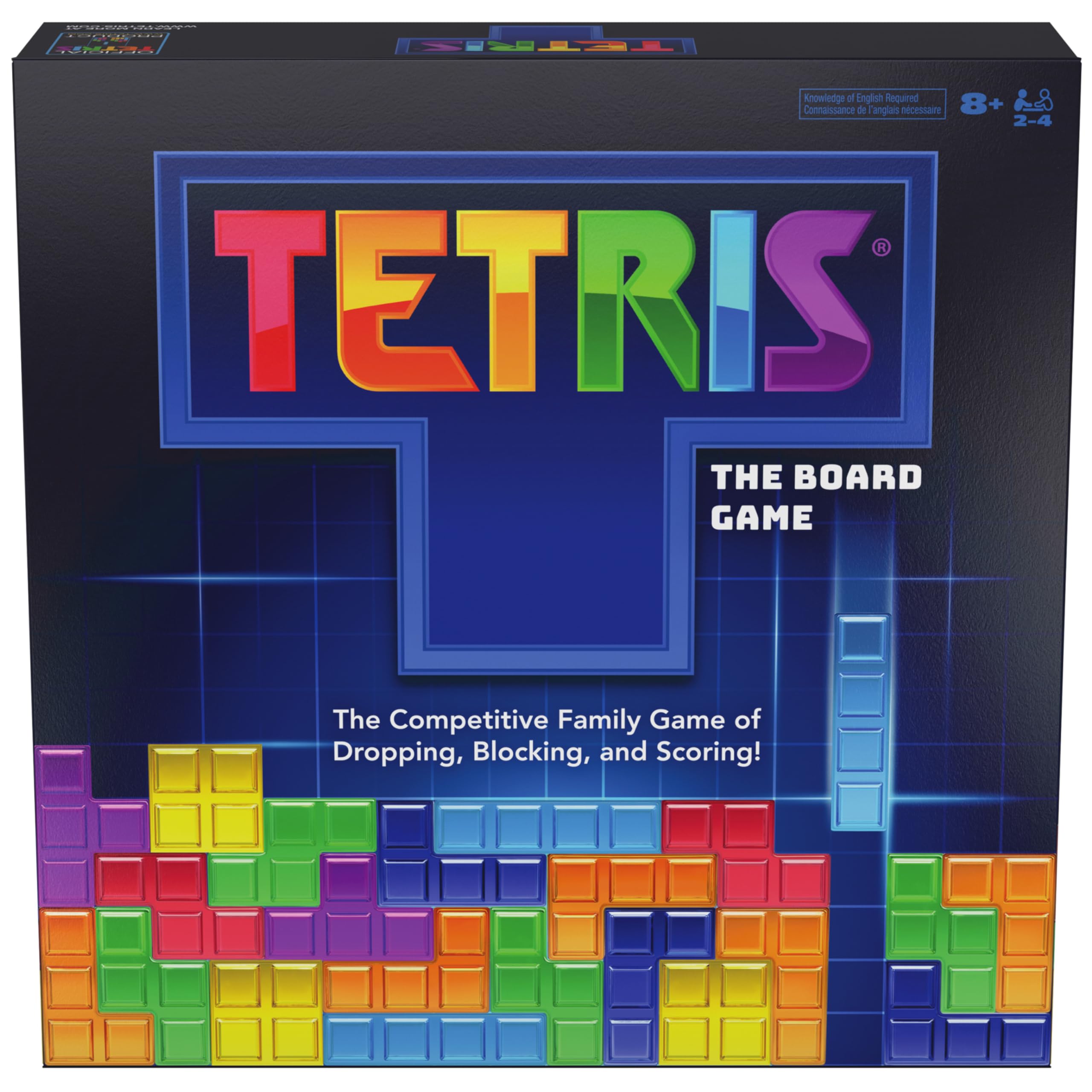
If you grew up stacking falling blocks, Tetris brings that exact satisfaction into a physical format. Players drop semi-translucent Tetrimino pieces into their own grid to complete lines and score, but the twist is that landing a piece on a black Garbage Drop Icon lets you add a piece to an opponent’s grid to block their path. It is area control and blocking wrapped in the most recognizable puzzle brand on earth—ideal for fans of the video game who want a tabletop duel.
The box supports 2-4 players at ages 8 and up, and a full game runs about 20 minutes — which makes it a perfect filler or a warm-up for a longer night. Owners mention the pieces feel quality-made and that it works well as a family activity, with parents noting kids as young as 10 dive right in. The set includes 4 grid bases, 128 Tetriminos, and 8 Minos, so there is plenty of physical material to keep everyone engaged.
The honest catch is the sheer number of pieces: 128 Tetriminos is a lot to sort and pack away, and the instructions take a minute to absorb because the black tiles carry special meaning. But once the rules click, the play is fast and chaotic in the best way.
Instant fun factor: the recognizability of Tetris makes it an easy sell for kids and nostalgic adults alike.
Grab this if: you want a tactile, high-energy puzzle that plays in 20 minutes flat.
skip it if: you dread sorting hundreds of small tiles after every session.
3. Ravensburger Pokémon Labyrinth Glow in the Dark
A 30-year maze classic gets a Pokémon glow-up that shines in the dark.
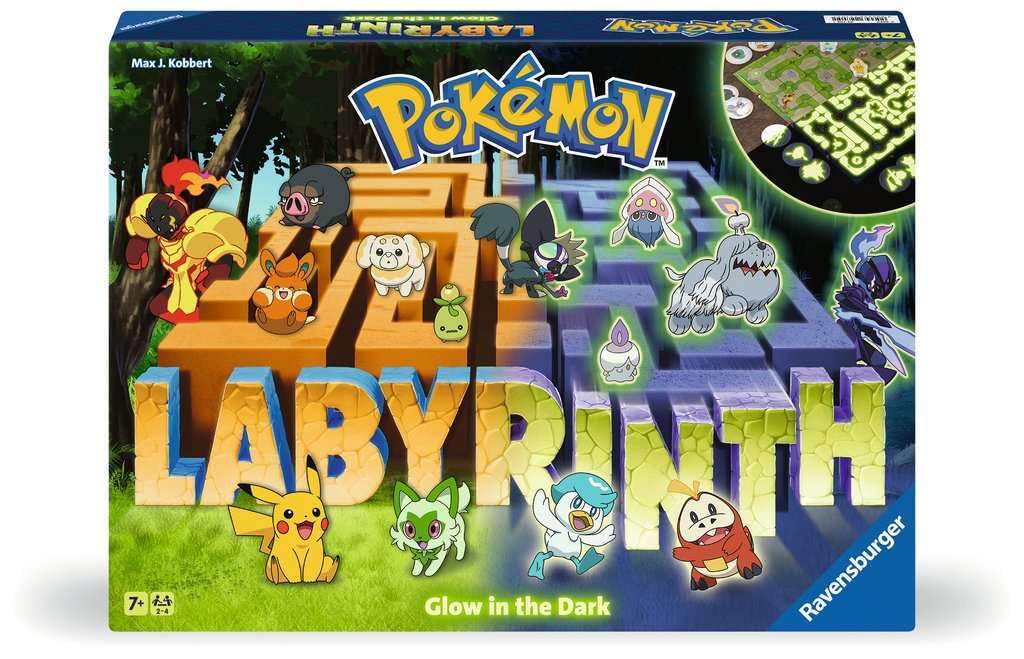
This is the beloved sliding maze game where you shift corridors to track down your favorite Pokémon before anyone else. What makes this edition special is the high-quality luminous paint: charge the pieces under a light and the maze becomes playable in complete darkness, which turns an ordinary hunt into a magical reveal. The core rules are identical to the Labyrinth fans already know, so returning players jump right in.
It supports 2-4 players at ages 7 and up, with a 20-minute playtime that suits younger attention spans. The box includes 34 maze tiles, 4 Pokémon figures, and both night and standard Pokéball chips, giving you two modes of play in one set. Buyers describe it as fun for all ages because it challenges spatial problem-solving while keeping the theme light and notable — and the glow feature is a big bonus for kids.
One note for parents: while the box says 7+, several buyers suggest the sliding maze logic clicks better for kids 9 and up. If your child enjoys spatial puzzles, they will love it; if they are on the younger side, expect to help with strategy.
Magic moment: turning off the lights mid-game is the kind of simple delight that makes this a repeat request.
Perfect for: young Pokémon fans who want a gentle strategy game with a wow factor.
Not for: kids under 9 who might find the shifting maze frustrating.
4. Asmodee Azul Mini Board Game

The award-winning tile game shrinks down without losing its strategic bite.
Azul is a modern classic where you draft colorful resin tiles from a central market and arrange them on your board to earn points for sets and patterns. Every tile you claim affects what your opponents can take next, so the “best” move is always shifting based on what others do. The Mini edition keeps all that tension but packs it into a box that fits on a tray table.
It supports 2-4 players at ages 8 and up, with sessions running about 30 minutes. The clever upgrade here is the built-in score tracker with a slider clip, plus indented plastic trays that keep tiles locked in place — so a bumpy plane ride or crowded café won’t scatter your game. Buyers repeatedly call it better than the full-size original because the tiles physically lock onto the boards, and many note it works brilliantly for solo play on a small surface.
The recurring trade-off is the box itself, which opens like a cereal box and can be awkward to close, and two shades of blue tiles that can confuse at a glance. But for a game you can actually take somewhere, this is the pick.
What Wins Travelers
- Tiles lock in place, no sliding mid-game
- Built-in score tracker with slider
- Compact enough for a tray table
The Small Gripes
- Box is hard to open and close
- Blue tile shades look similar
Reach for it when: you want a genuinely strategic game that survives travel and tight tables.
Think twice if: you want a bigger, more premium-feeling box for your shelf at home.
5. Big Discoveries Dumpster Dice
A 5-minute dice war where everyone races to complete a set before the bin claims them.
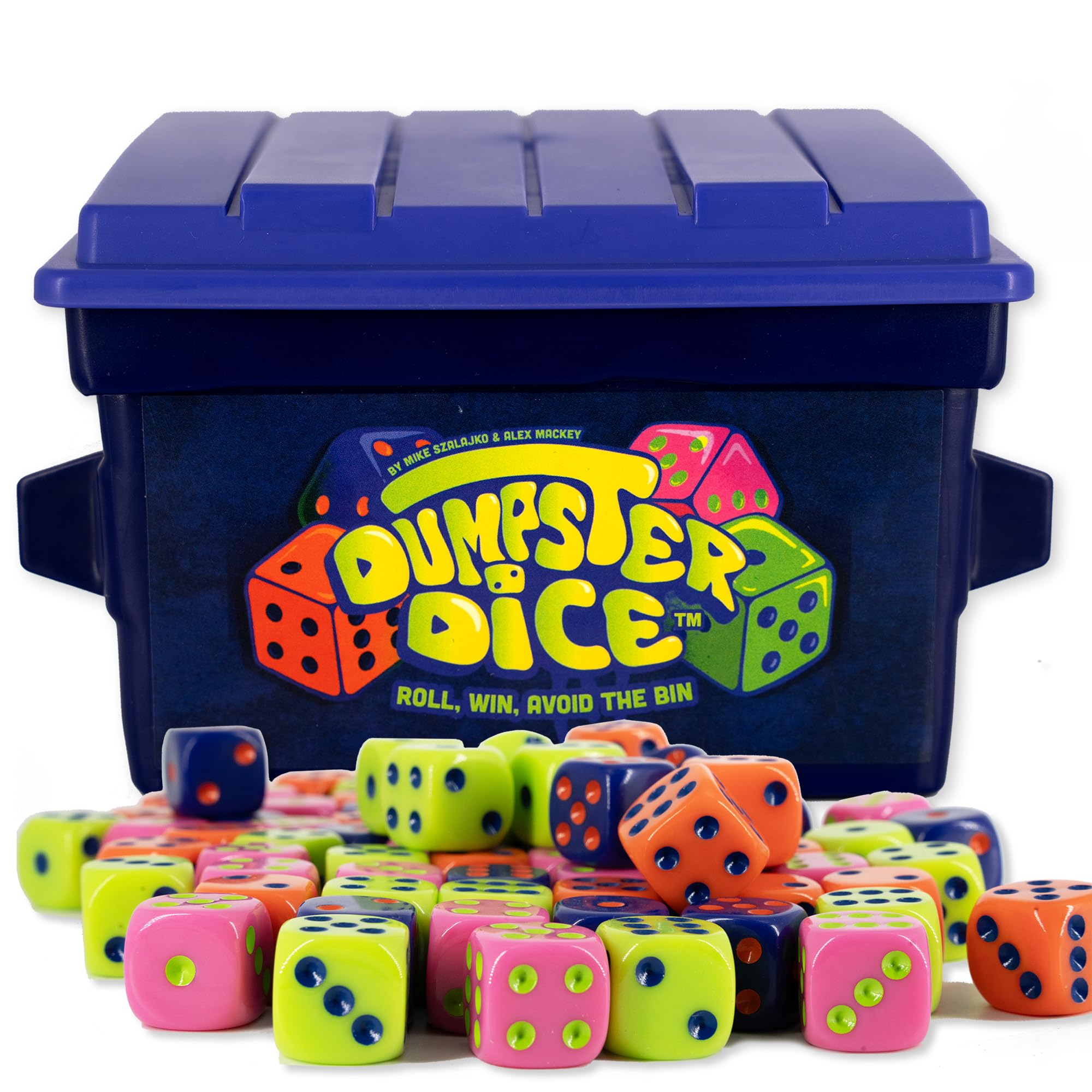
This is gloriously simple: roll the dice, try to complete a 1-6 set on the game board, and avoid duplicates that knock you out of play for that round. The whole thing unfolds in 5-10 minutes per game, making it the fastest game on this list and an ideal filler for parties, restaurants, or waiting rooms. The included dumpster doubles as the game board and storage container, with a removable lid that keeps all 80 dice neatly inside.
It supports 2-4 players at ages 6 and up, with the 80 dice split into four vibrant colors of 20 each. A graffiti sticker sheet and an instruction sheet with 5 gameplay variations add replay value without adding rules overhead. Customers note even 3- and 4-year-olds grasp it quickly, while keeping older kids on their toes with how fast rounds move, and the compact size makes it a go-to travel companion.
This is pure chaos and luck, not strategy — so it will not scratch a deep tactical itch. But as a casual, everyone-can-play filler that gets a table laughing in minutes, it delivers exactly what it promises.
Instant party starter: the speed and simplicity mean zero downtime and maximum chatter around the bin.
Pick it up if: you want a throw-in-the-bag game that works with kids, grandparents, and everyone between.
Pass it by if: your group wants meaningful decisions rather than lucky rolls.
6. Asmodee Harmonies Board Game

A poetic tile-laying puzzle where you build dreamlike worlds for animals to inhabit.
Harmonies is the rare game that feels calming while still engaging your brain. You lay tiles to create terrain, then place animal cubes and cards to match habitat patterns and score points — a blend of 3D landscape creation, pattern development, and tile placement that rewards planning without ever feeling punishing. The 120 wooden tokens and high-quality cards give it a premium, tactile feel that makes setup and play itself part of the enjoyment.
It supports 1-4 players (so a solo option is built in), with a 30-minute playtime that makes it an easy fit for a weeknight. The rules are straightforward to learn, but the depth comes from juggling terrain height, animal needs, and long-term scoring, which keeps each game feeling fresh. Buyers rave about the beautiful art and the relaxing rhythm, with many noting it is a favorite in collections of 200+ games.
The honest note is that player interaction is minimal — some call it “multiplayer solitaire” — and the game can end somewhat abruptly. If your group craves direct competition, this might feel too quiet; if you want a peaceful, beautiful puzzle, it is near-perfect.
Calm strategy: the gorgeous wooden pieces and gentle pace make it the anti-argument game.
Reach for it when: you want a relaxing, beautiful game that works just as well solo as with three friends.
Look elsewhere if: your group thrives on direct conflict and blocking each other.
7. Splendor Duel Board Game
A head-to-head gem battle that sharpens the original Splendor into a duel.
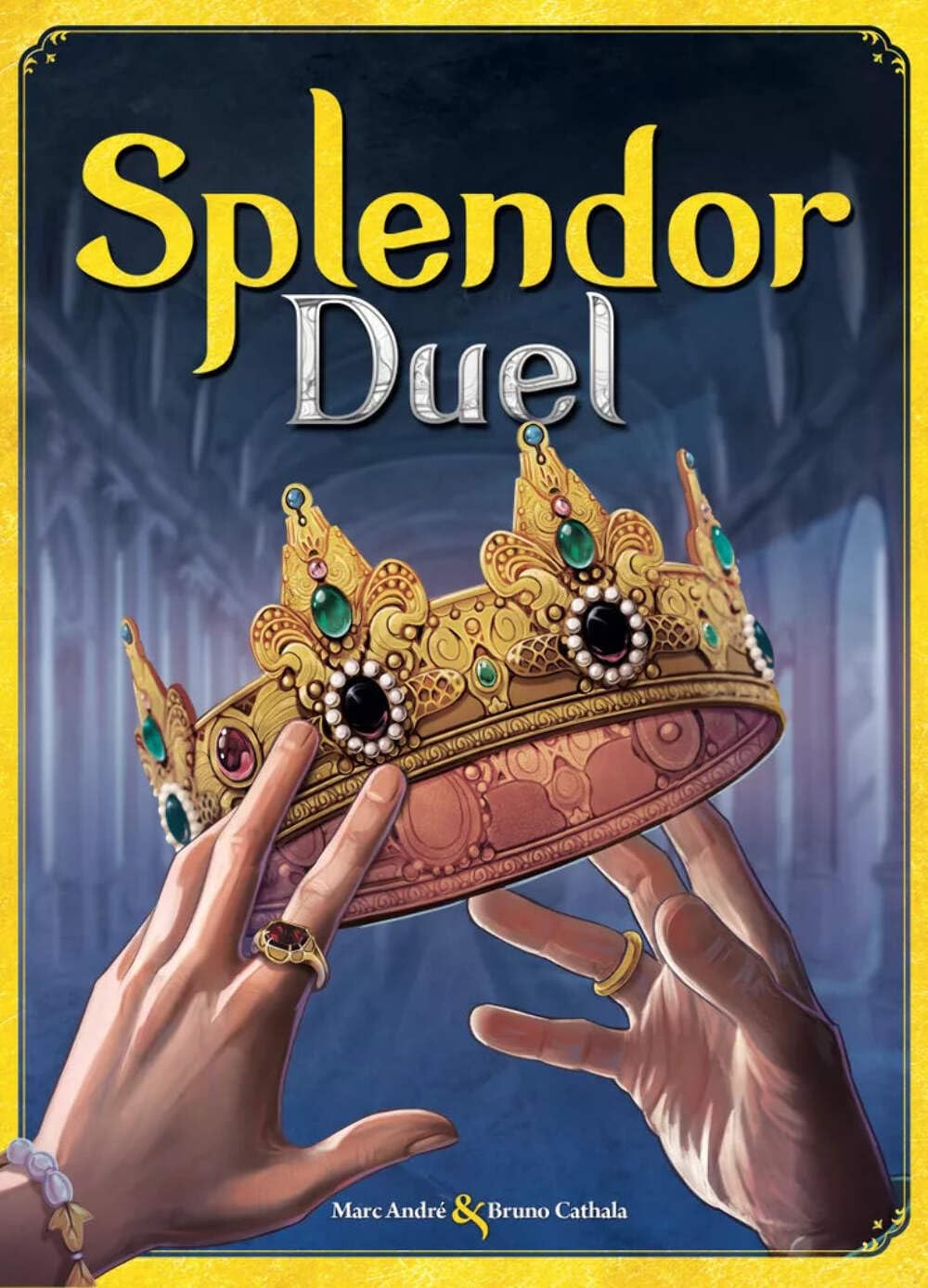
If your game nights are often just two people, this is the pick that turns a classic into a true duel. Splendor Duel is built exclusively for 2 players, adding a pearl token and special powers that the original lacks, which creates multiple victory paths and head-to-head tension on every turn. The goal is still to collect gemstones and buy development cards for prestige points, but the drafting feels more dynamic because every choice directly denies your opponent.
Sessions run about 30 minutes, and the compact box is easy to toss in a bag, which buyers repeatedly highlight for travel. The components feel premium — solid coin-like tokens and thick cards — and the rules are simple enough that an 8-year-old can grasp them while still offering deep strategy for veterans. Buyers consistently call it more fun than the original Splendor for two players, and it works as a standalone without owning the base game.
The trade-offs are the small card size, which some find fiddly, and the fact that the rules differences from original Splendor take a read-through to lock in. For couples or duos who want a fast, strategic battle, this is a standout.
The Duel Advantage
- More tension than original Splendor
- Compact and travel-friendly
- Multiple win conditions per game
Watch For
- Cards are quite small
- Rules differ from original Splendor
Perfect for: couples and duo gamers who want a deep but quick head-to-head challenge.
Not for: groups of 3-4, since this one strictly plays two.
8. Fireside Games Castle Panic 2nd Edition

Defend your castle together as monsters swarm from every direction.
Castle Panic puts your group in the role of defenders, working as a united team to keep Castle Bravehold standing as monsters attack from all sides. You trade cards, coordinate which threats to handle first, and pray the walls hold — all while plagues, boulders, and boss monsters throw your plans into chaos. It is tower defense translated to a tabletop, and it nails the “edge-of-your-seat” feeling of a desperate last stand.
The 2nd Edition expands to 1-6 players and offers four distinct modes: Co-op, Solo, Master Slayer competitive, and Overlord where one player controls the monsters. That variety is a big selling point because the same box serves a family night and a more competitive group. Sessions run about 45 minutes, and the 3D towers and vibrant monster tokens give it a physical presence kids love. Reviewers point out it is easy to learn, with a perfect difficulty curve for ages 8+, and families have played it 15 times in a month without fatigue.
If there is a caveat, it is that experienced gamers may find the strategic depth a bit shallow compared to heavier co-ops. But for a mixed-age group that wants teamwork and monsters, it is a table favorite.
Team spirit: the mode variety means you can replay the same box as pure co-op or as a competitive master slayer.
Reach for it when: you want an accessible co-op with real crisis moments and multiple ways to play.
Think twice if: your group wants deep, multi-hour strategic planning.
9. Stonemaier Games Wingspan

The award-winning bird engine-builder that pairs gorgeous art with deep strategy.
Wingspan won the Kennerspiel des Jahres award in 2019, and it earns that reputation. You are a bird enthusiast building a wildlife preserve, gaining food tokens via custom dice in a birdfeeder dice tower, laying eggs with miniatures, and drawing from over 170 unique bird cards to extend powerful combos across your habitats. The engine-building loop is satisfying: each bird you play chains abilities that generate resources, points, or new plays—so every turn feels like progress, not busywork.
It supports 1-5 players with a 70-minute playtime, and the components are outstanding — sturdy cards, wooden eggs, thick boards, and a 3D birdhouse dice tower that is a small joy on its own. A swift-start pack gets first-time players oriented in minutes. Buyers describe the artwork as stunning and note the game teaches real bird facts as you play, making it educational without feeling like homework. The Automa solo mode adds a full single-player option, and replay value is huge thanks to 26 bonus goal cards and 8 goal tiles that change scoring each session.
The caveat is the learning curve: some find the rules complicated at first, and the game is mildly interactive, leaning toward “multiplayer solitaire.” For a relaxed, beautiful, brainy evening, it is hard to top.
The masterpiece pick: between the dice tower and the watercolor art, the production value alone is worth the table time.
Choose this if: you want a premium, relaxing strategy game with gorgeous components and solo play.
pass on it if: your group prefers direct conflict over quiet engine building.
Understanding the Specs
Player Count
The number of people who can sit at the table is the first dealbreaker. A game labeled 2-4 players works for duos, trios, and full four-person groups, but some titles like Splendor Duel are strictly two-player, while others like Castle Panic stretch to 6. Always match the count to your most common group size before you think about anything else.
Playtime
This is the estimated minutes for one complete game, and it sets expectations for the night. A 5-minute dice game is a filler, a 30-minute tile game is a main course, and a 70-minute engine-builder is a commitment. On this list, playtime ranges from 5 to 70 minutes, so you can pick based on how long you want to stay at the table.
Age Range
The age rating hints at reading level, rule complexity, and small-parts hazards, not just maturity. A game rated 8+ often requires more logic and reading than a 6+, while an “Adult” rating like Wingspan signals a heavier ruleset. It is a useful starting filter, but the real test is whether your specific players can grasp the rules, since some 7+ games click better for kids a couple years older.
Cooperative vs. Competitive
This defines the social feel of the night. Cooperative games like Pandemic and Castle Panic make everyone work together against the game, so no one is eliminated and the group shares the win or loss. Competitive games like Azul and Splendor Duel put you against each other, rewarding clever moves that deny your opponents. Neither is better — it depends on whether your group wants to unite or clash.
FAQ
What does a cooperative board game mean?
Can I play games labeled 2-4 players with just two people?
What is the difference between a 20-minute and a 70-minute board game?
Are travel-sized board games worth it?
How do I know if a game is good for young kids?
What is engine building in a board game?
Is a game with 1-5 players any different at 2 or 4 players?
How important is replayability for a family game?
What does “take that” mean in board games?
Final Thoughts: The Verdict
For most people, the 2 to 4 player board games winner is the Pandemic Board Game because it turns every session into a shared mission where planning and communication genuinely matter. If you want a quick, recognizable puzzle that brings the video game magic to your table, grab the Tetris: The Board Game. And for a portable, tactile strategy fix that survives travel, the Azul Mini is the one to reach for, especially since its locked-in tiles make it the rare game that is better than the full-size original.
How We Picked
We do not accept paid placement. Every pick is matched to a real buyer and a real use-case; we do not hands-on test units.
Sources & Methodology
Specifications: manufacturer listings and product documentation. Review insights: verified customer reviews, as of August 2026. Pricing: not shown on this page (it changes often); check the current price via the retailer link.
As an Amazon Associate, Gadgets Feed earns from qualifying purchases. This does not affect which products we feature.