
Our readers keep the lights on and my morning glass full of iced black tea. As an Amazon Associate, I earn from qualifying purchases.
Specs are compiled from manufacturer listings and verified buyer reviews and can change over time — please confirm the key details on the product page before buying.
Choosing a central air system for a whole house is a high-stakes, high-cost decision that usually ends with a contractor’s quote. The real question isn’t just which unit cools best, but which one fits your ductwork, your electrical setup, and your budget without forcing you to overpay for a brand name. This guide breaks down the best whole-house systems by what actually matters: cooling capacity, efficiency, and how the unit connects to your existing home setup.
I’m Min — the founder and writer behind Gadgets Feed. This guide is built by comparing the manufacturers’ published specifications and the patterns across verified customer reviews, so you get each pick’s real strengths and trade-offs instead of marketing spin.
We compare packaged units, split systems, and mini-splits to help you find the best Air Conditioning Unit For House that delivers reliable comfort without the inflated installation quotes.
How To Choose The Best Air Conditioning Unit For House
Before you compare prices, you need to know which type of system your home can actually support. The three big categories are packaged units, split systems, and ductless mini-splits, and each connects to your home differently.
Match the system type to your ductwork
If your home has existing ductwork, a packaged unit or a traditional split system connects right into it. In a packaged unit, everything sits in one outdoor cabinet. In a split system, the compressor sits outside while a separate air handler inside pushes air through the ducts. If you have no ducts at all — common in older homes or additions — a ductless mini-split mounts indoor air handlers on the wall and runs refrigerant lines to an outdoor condenser, so you avoid duct installation entirely. A 1949 Texas home in the review data is a perfect example: owners there ditched window units for a ductless mini-split and cooled a large area with far less noise.
Read between the lines on capacity
Rating a central unit is very different from rating a window box. A whole-house system must handle every room at once, which is why capacity is expressed in tons and British thermal units (BTUs). One ton equals 12,000 BTUs. A 3-ton unit delivers 36,000 BTUs of cooling — enough for a typical mid-size home. But the floor area a system covers depends on layout and insulation, so don’t just shop by the biggest number. The smart move is to size the unit to your square footage; a system that’s too small runs nonstop, and one that’s too large short-cycles and never dehumidifies properly. Buyers of one 3-ton condenser noted it cools a roughly 2,000 sq ft two-story home with ease, which shows how a correctly sized unit handles real conditions.
Weigh upfront price against long-term efficiency
The efficiency rating — SEER2 for modern units — tells you how much cooling you get per unit of electricity. A higher SEER2 number means lower monthly bills, and in a hot climate that difference adds up fast. The trade-off is that higher-efficiency units cost more at purchase. The Goodman packaged unit we reviewed is a 13.4 SEER2, so it’s cheaper upfront but less efficient over years of use. If you plan to stay in the house for a decade, a higher SEER2 usually pays for itself. If you need cooling only occasionally, the lower-efficiency unit may be the smarter financial call.
Quick Comparison
| Model | Best For | Cooling Power | Efficiency | Coverage | Amazon |
|---|---|---|---|---|---|
| Goodman Packaged Unit★ Best Overall | Mobile homes with ducts | 36,000 BTU | 13.4 SEER2 | — | Amazon |
| DELLA 2-Zone Mini-SplitBest Value | Two rooms, no ducts | 20,000 BTU | 19 SEER2 | 800 sq ft | Amazon |
| DELLA 3-Zone Mini-Split | Large multi-room homes | 28,000 BTU | 20 SEER2 | 1,800 sq ft | Amazon |
| Goodman Split System | Ducted homes, cooling only | 36,000 BTU | 14.5 SEER2 | — | Amazon |
| Senville 4-Ton Split | Big homes needing heat | 48,000 BTU | — | 2,000 sq ft | Amazon |
| Goodman Heat Pump System | Ducted homes, heat + cool | 36,000 BTU | 15 SEER2 | — | Amazon |
In‑Depth Reviews
1. Goodman 3 TON 13.4 SEER2 Horizontal AC Only Packaged Unit (GPCH33631)
Our pick — over 4.5★ from 100+ verified ratings; the strongest balance of quality and price.
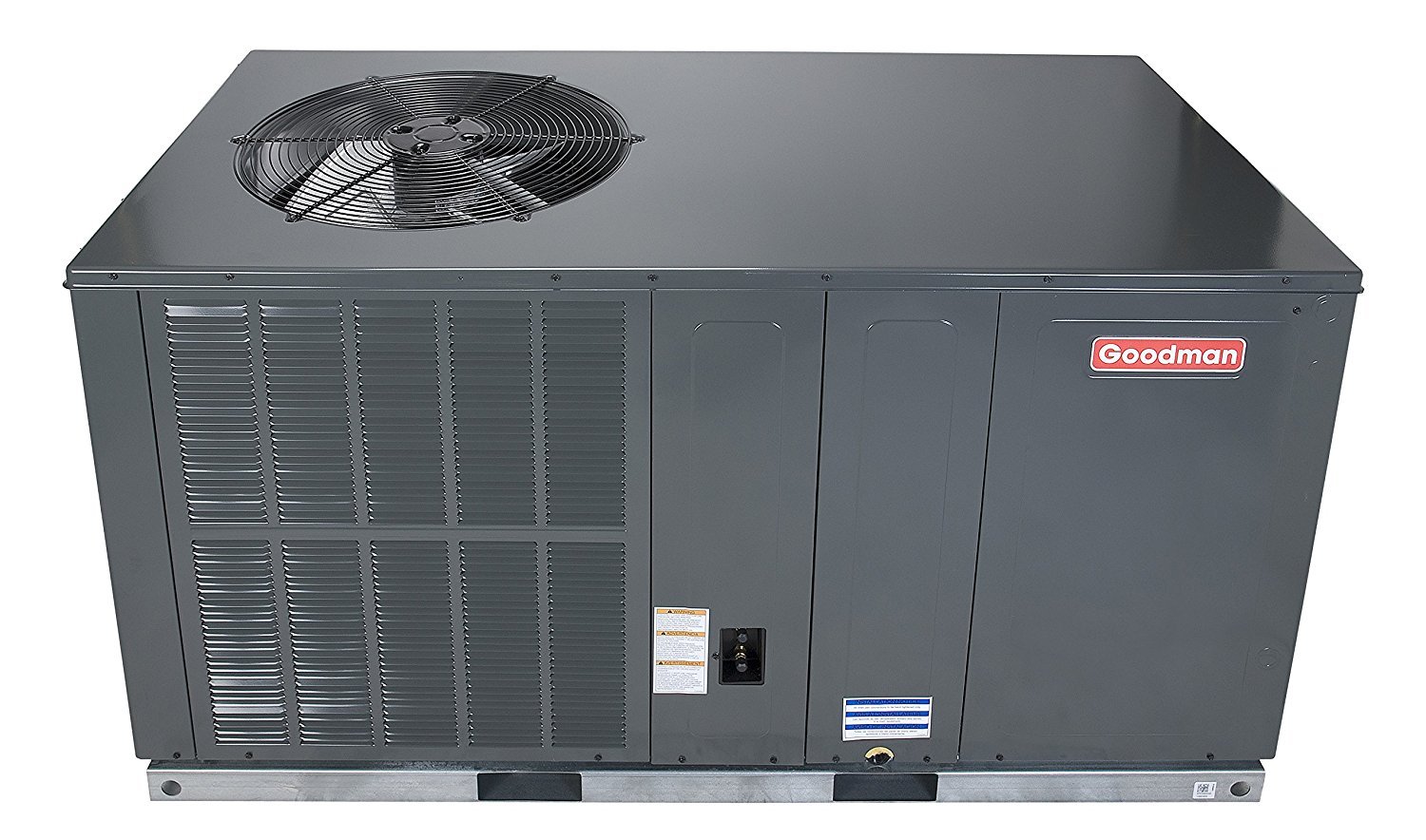
The all-in-one outdoor cabinet that cools a whole doublewide without eating indoor space.
This is the pick for manufactured and mobile homes with existing ductwork, because the entire heating and cooling system lives in one heavy-duty powder-painted steel cabinet that sits outside. You don’t need to clear room inside for bulky equipment, and the horizontal-discharge design connects straight to your ducts. The 3-ton capacity delivers 36,000 BTUs of cooling, enough to cool a typical mid-size home quickly. The unit is fully charged and tested at the factory, so a professional doesn’t have to braze, flush, or run copper lines, which simplifies installation and keeps that part of the cost down.
Efficiency sits at 13.4 SEER2, which puts the lower upfront price ahead of long-term savings. That makes the most sense if you don’t need heavy cooling year-round. Inside, you get an energy-efficient scroll compressor, an all-aluminum evaporator coil, a multi-speed ECM blower motor, and refrigeration-grade copper tubing. Service panels are easy to reach, so filter changes and maintenance stay quick. The crowd favorite holds a 4.7-star rating across 100+ owners, with reliability coming up as the most-praised aspect — 9 owners single it out — followed closely by performance.
One thing to know: this is an AC-only unit. It has no built-in heat. You can add a field-installed heat kit (sold separately), but Goodman points out those kits are for occasional or emergency use, not regular winter heating. Also, this machine is heavy — owners warn to have equipment ready to move it. As buyers put it, it “cools my house down quickly and is energy efficient,” which sums up the appeal: big cooling power, simple install, and a workhorse reputation.
Why owners trust it
- Reliability is the top-mentioned strength, with 9 owners calling it out
- Easy installation with no brazing, flushing, or copper running needed
- All-in-one design frees up indoor space and simplifies the setup
Read this before you buy
- AC only — heating requires a separate heat kit for occasional use
- It’s heavy; plan for equipment to lift and place it
- 13.4 SEER2 efficiency means higher long-term power use than premium units
Your best match if: you live in a manufactured or mobile home with ducts and want a simple, reliable, contractor-friendly swap that won’t consume indoor space.
Think twice if: you need year-round heating in a cold climate — this unit is cooling-only from the start.
2. DELLA 20K BTU ODU 2 Zone (2 * 9000 BTU) Wifi Mini Split AC Heat Pump
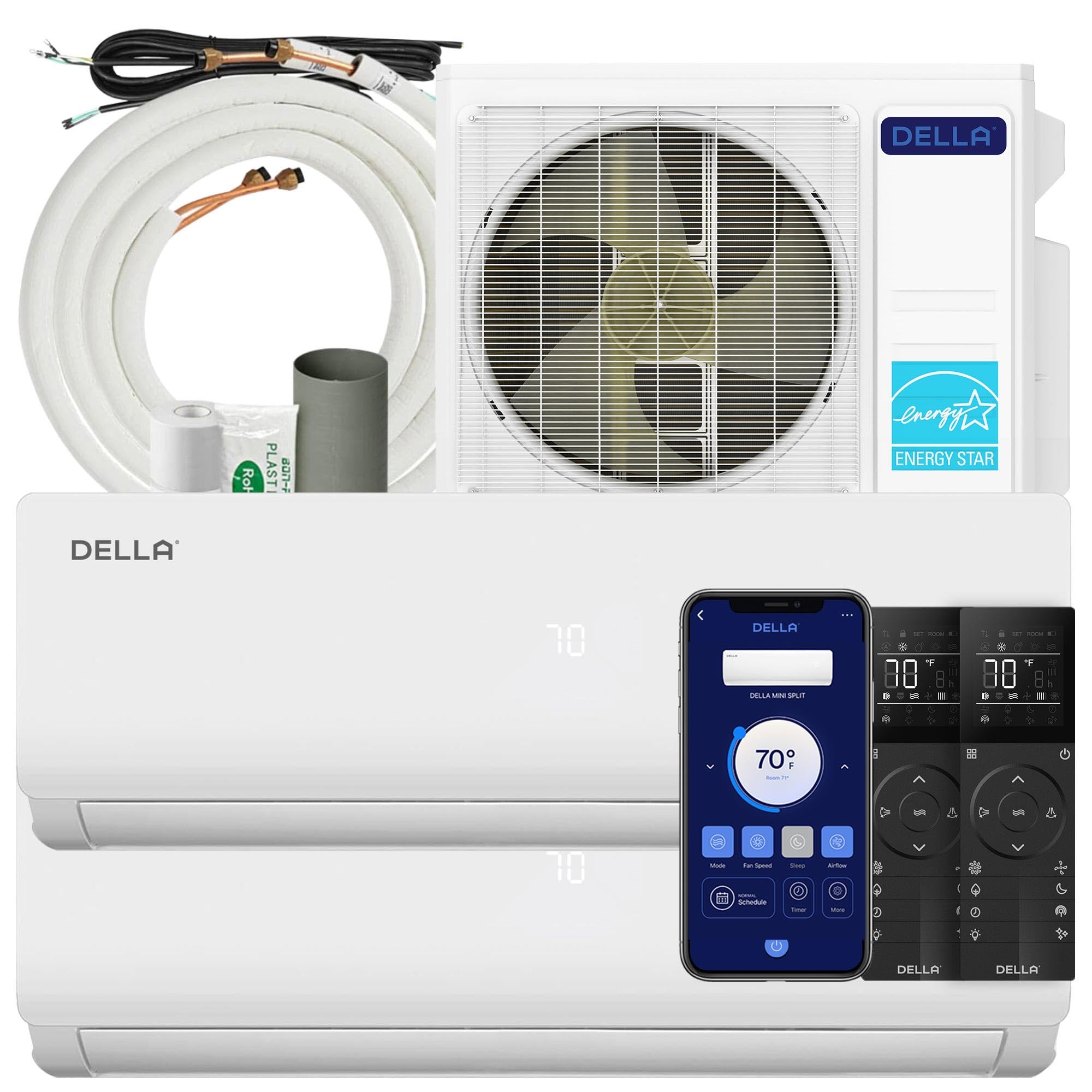
A ductless two-room system that brings app control and whisper-quiet cooling to homes without ducts.
This ductless mini-split is the answer for a house with no ductwork, replacing noisy window units with two indoor air handlers — one 9,000 BTU for each of two rooms — and a single outdoor condenser. Each room gets its own controller, so you set individual temperatures instead of fighting over one thermostat. The 20,000 BTU total output covers up to 800 sq ft (about 400 sq ft per indoor unit), and the heat pump keeps working in outdoor temps down to 5 degrees Fahrenheit. It uses the more environmentally friendly R454B refrigerant, which is note if you care about the newer standards.
The big efficiency story is the 19 SEER2 rating combined with DC Inverter technology, which the maker says it can cut power use by up to 30%. At just 29 dBa, it’s genuinely quiet — owners coming from window units notice the difference immediately. Alexa and WiFi controls mean you can adjust the temperature from your phone. Owners also praise the value, with 10 calling it out as the top positive aspect, and installation comes up as the second most-mentioned strength with 9 owners. A Texas homeowner replaced window units in a 1949 home and found it an affordable alternative to expensive central air. Another noted the easy install and excellent flares on the tubing.
The honest catch here is reliability, which gets mixed feedback in the review data — some buyers report smooth year-after-year operation while others say a unit never worked right. The lesson many owners share: hire a professional to vacuum and pressure-test the lines before opening the freon, since loose fittings cause low-pressure errors. The best value for money in a small ductless setup, this system requires professional installation, so don’t plan a weekend DIY unless you have the tools.
Who it serves: a ductless two-room household where quiet operation, app control, and lower power use matter more than raw output.
The catch: reliability is a coin flip in the reviews, so a pro install with proper line pressure-testing is non-negotiable.
3. DELLA 28K BTU ODU 3 Zone (2 * 9K+18K BTU) Mini Split AC Heat Pump
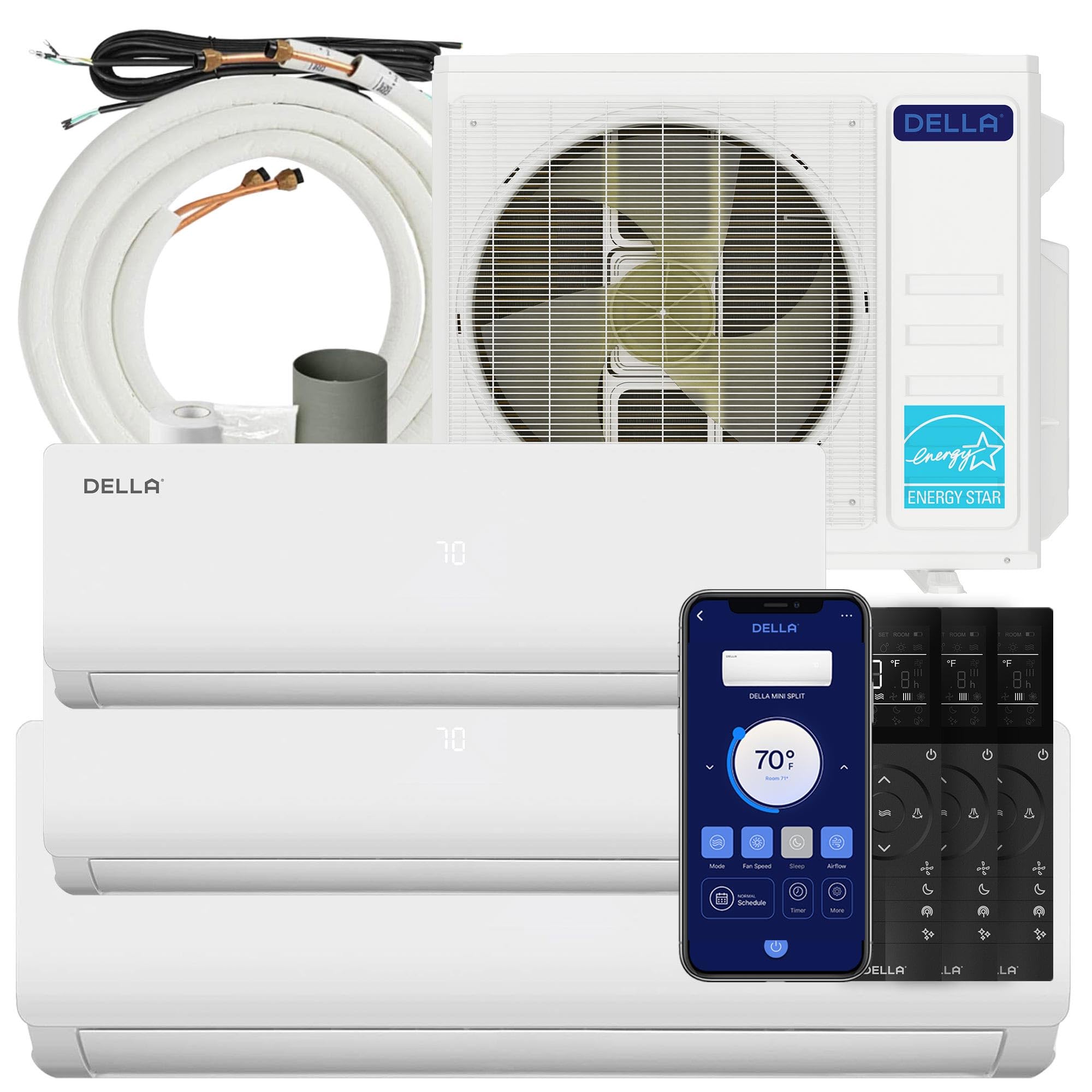
A 28,000 BTU three-zone ductless system that replaced an k central unit and beats it on bills.
For homes that need whole-house ductless cooling across three zones, this system pairs three indoor handlers — 9,000 + 9,000 + 18,000 BTU — with one outdoor condenser, for a combined 28,000 BTUs covering up to 1,800 sq ft. The 3-zone covers 1,800 sq ft, while the 2-zone above covers 800 sq ft, and that’s where the two systems diverge. Each room gets its own temperature control and controller, so you can cool a bedroom down while leaving a shared space warmer. The heat pump works in outdoor conditions down to 5 degrees Fahrenheit, and the 20 SEER2 rating is the most efficient on this list, with DC Inverter tech promising up to 30% power savings.
The review pages tell a striking story of replacing a failed central system with this unit across 1,800 sq ft and ending up more efficient with zoned temperatures and a whisper-quiet turbo fan. Another owner in 1,000 sq ft cut electric bills that had been over and found cooling better than window units, with the heat pump serving as backup to boiler heat. Even at the 28,000 BTU size, the outdoor unit stays quiet — owners mention the same 29 dBa silence as the smaller DELLA. The dehumidifier gets specific praise for working well.
The main planning hurdle is the included lines. The 16ft copper linesets and wiring aren’t long enough for every layout — owners in a 1,200 sq ft house found the wires couldn’t reach the condenser and had to buy longer lines and cables. The drain tubes also read as cheap, with owners recommending an upgrade. This system mandates professional installation, and like the 2-zone, line-set vacuuming is required. Position this as a 1.67-ton vs 2.34-ton decision: the 28K unit’s 1800 sq ft coverage compared to the 2-zone’s 800 sq ft, so it’s the one for genuinely open layouts.
The standout spec: 20 SEER2 efficiency and 1,800 sq ft of zoned ductless coverage make it the efficiency king of this list.
Plan for it: the 16ft linesets and wiring may not reach your condenser placement — budget for longer lines on bigger installs.
4. Goodman 3 Ton 14.5 SEER2 Condenser with Multi-positional Air Handler R32 GLXS4BA3610 AMST36CU1300
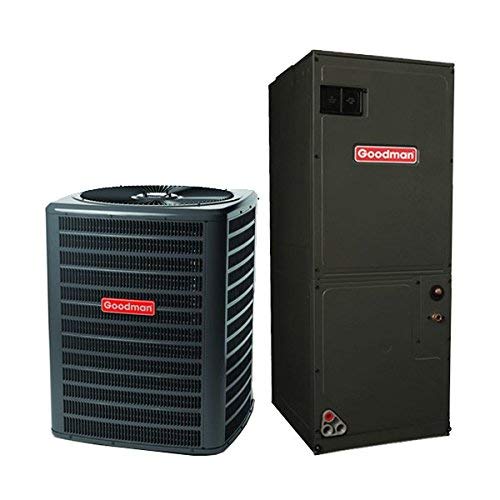
A split system built for oppressive Southern heat, cooling a 2,000 sq ft two-story with ease.
This is a traditional split system for homes with ductwork: the GLXS4BA3610 condenser sits outside while the AMST36CU1300 air handler inside pushes cold air through your existing ducts. The 3-ton capacity delivers 36,000 BTUs — the same cooling power as the packaged unit above, but in a split layout. The air handler features a direct-drive, 9-speed ECM blower motor and factory-installed thermal expansion valves, which tune cooling efficiency. It can be installed upflow, horizontal right, or horizontal left, so a contractor can adapt it to your attic or closet configuration. A free thermostat comes included.
The defining real-world story here comes from south Louisiana, where one owner with a 2,000 sq ft two-story home reports it cools with ease even in oppressive summer heat. Another owner who upgraded from a noisy system calls it super quiet — no more banging noises. The 14.5 SEER2 efficiency beats the packaged Goodman’s 13.4 SEER2, so you get better long-term power use for a modest efficiency step up. The system uses R-32 refrigerant and is pre-charged for 15 feet of tubing, and it comes with a 10-year parts warranty when installed by a qualified professional and registered online within 60 days.
The critical thing to understand: this system does not provide heat. If you want heating, you need either a heat-pump system or an added HKTS-series heat kit. One unverified buyer report describes an indoor coil leak that caused a freeze-up and a roughly refrigerant cost not covered under warranty — a reminder to use a careful installer. Owners who love it describe it as better than bigger brand names, which speaks to the value. At 36,000 BTUs of output, this unit delivers 36,000 BTUs versus the two-zone DELLA’s 20,000 BTUs, so it’s the choice when you have ducts and need serious, dedicated cooling.
Built for hot climates
- 36,000 BTUs cool a 2,000 sq ft two-story home with ease in Louisiana heat
- Multi-positional air handler fits upflow or horizontal installs
- Super quiet operation — no banging or rattling noises
Know before you commit
- No heat — you must add a heat kit or choose a heat pump system
- A rare coil-leak failure left a buyer covering refrigerant costs
- Requires a qualified installer to keep the 10-year parts warranty valid
Reach for this if: you have ducts and need a cooling-only powerhouse that handles brutal summers without noise.
Look elsewhere if: you need winter heat from the same system — this one is strictly for cooling.
5. Senville Central Air Conditioning System, Heat Pump, 4 Ton, 10kW Aux
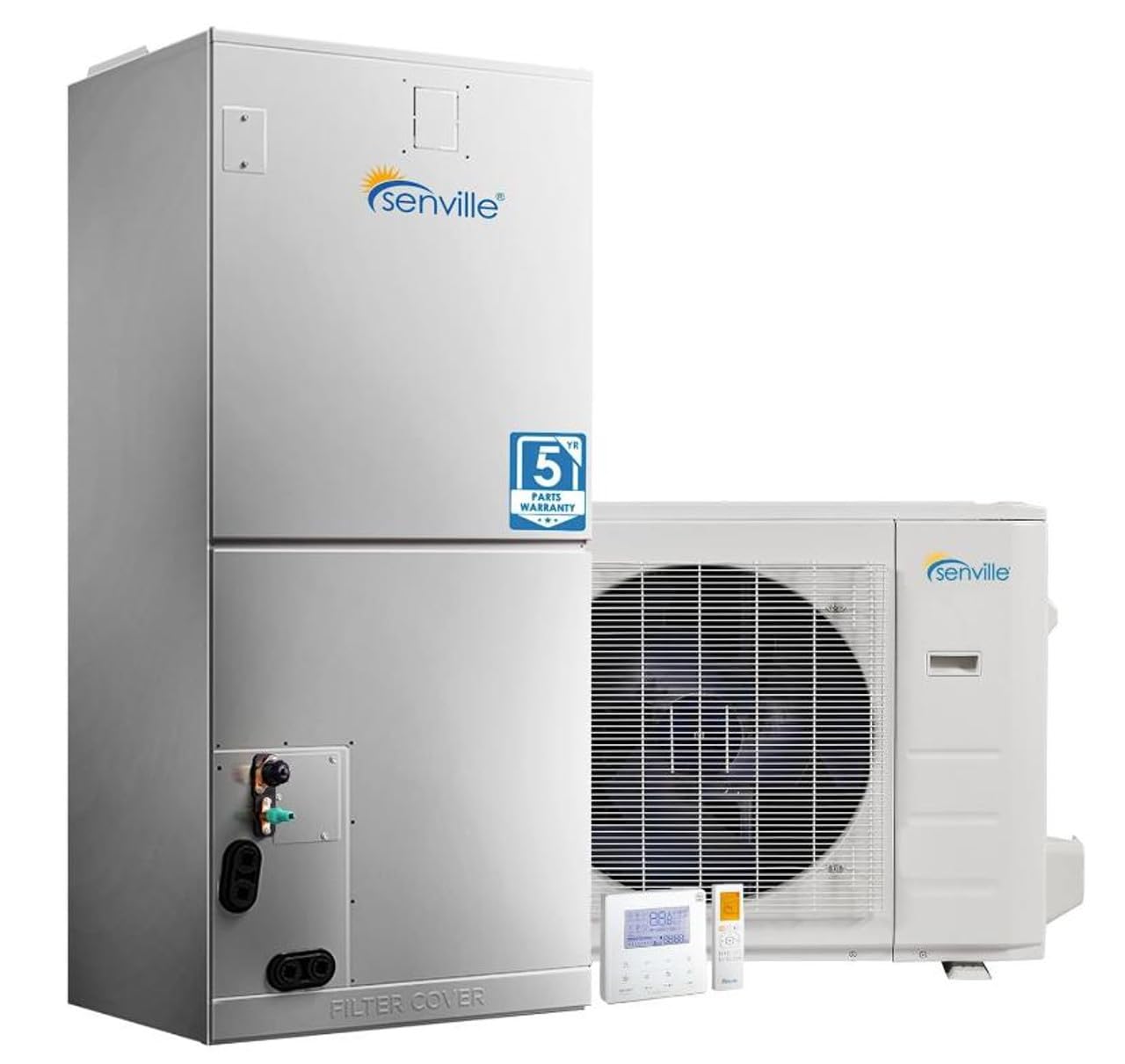
A 48,000 BTU heat pump that pairs serious summer cooling with -22°F winter heat.
This is the biggest, most powerful system on the list, built for large homes needing both heat and cooling. The 4-ton capacity delivers a massive 48,000 BTUs — enough to cool spaces up to 2,000 sq ft — and the inverter heat pump technology provides heating down to -22°F/-30°C, so it works in cold climates where many heat pumps struggle. The package includes the indoor air handler, outdoor condenser, 10kW auxiliary heat, thermostat, and a 16-foot installation kit. With a 10-year compressor warranty and 5-year parts warranty, the confidence behind it is solid.
Owners in Texas heat report it works well with a quiet outdoor unit, and one notes it kept rooms comfortable through variable spring weather. The variable-speed inverter compressor is the centerpiece, transforming an old central system into something far more efficient than a traditional single-stage AC — good news if you’re replacing an aging unit. One owner flagged that the included wire control doesn’t work with the unit and solved it by swapping to a 24V thermostat with 18/7 wiring, so expect a possible control quirk during setup.
The trade-offs come at install time. Owners describe the install manual as confusing, with odd duct sizing for a 4-ton unit and a filter that needs support. One reported a flare fitting leak that required extra refrigerant for long line sets. An occasional unit also arrives damaged, so inspect on delivery. But those who got it running report perfect cooling in 95-100°F heat and call it good value for the price. This is the pick when you need maximum BTUs and real cold-weather heating in one package.
Why it stands out: the only 4-ton option here, with 48,000 BTUs and heat down to -22°F for homes that need serious year-round climate control.
Set expectations: installation is the hard part — confusing manuals and possible wiring quirks mean a skilled HVAC pro is worth the money.
6. Goodman 3 TON 15 SEER2 Multi-Position R-32 Heat Pump System with Air Handler
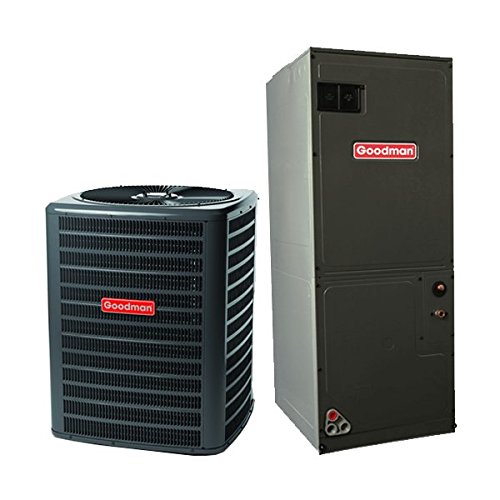
A heat pump that saves a Phoenix owner a month while cooling and heating through the seasons.
This split-system heat pump pairs the GLZS4BA3610 outdoor unit with the AMST36CU1300 air handler for a 3-ton system that both cools and heats your home through existing ductwork. The 15 SEER2 efficiency is the best of any ducted Goodman on this list, and the heat pump design means you get warmth in winter plus cooling in summer from one system. The multi-position air handler installs upflow, horizontal right, or horizontal left, and the system uses R-32 refrigerant. A 10-year parts warranty comes with professional installation and online registration within 60 days.
That’s the strongest evidence on this list that a higher-efficiency heat pump pays off in hot climates. A Florida buyer also reports it works great and calls it a necessity, praising Goodman’s warranty and customer service. The heat pump gives you both functions, which makes it the balanced choice for homeowners who want one system to handle the whole year.
Know the installation details before you commit. The heat kit series — HKSC/HKSX — is what this system uses, not the HKR series, and accessories like linesets, thermostats, and LP conversion kits are sold separately. The condensing unit’s valve take-offs are small, which one owner found hard to brace lines onto, so a skilled installer matters. An occasional buyer has had tech-support struggles with a unit that never worked, so choose your installer carefully. If you want the middle ground between the cooling-only Goodman split and the bigger Senville, this is the one — it adds heat without jumping up to 4 tons.
The payoff
- 15 SEER2 efficiency delivered approximately /month bill drop for an Arizona owner
- Heat pump gives you both heating and cooling from one ducted system
- Multi-positional air handler adapts to different install layouts
Install realities
- Small valve take-offs make line brazing fiddly for contractors
- Heat kits, linesets, and thermostats are sold separately
- A rare tech-support saga shows the value of a good installer
Grab it if: you have ducts and want one efficient system that handles both winter and summer without stepping up to a 4-ton unit.
Hesitate if: your contractor isn’t experienced with these tight valve fittings — brazing them needs a steady hand.
Understanding the Specs
BTUs and Tons — the true size of the system
A British thermal unit (BTU) measures heat output, and cooling capacity is expressed in BTUs or tons, where one ton equals 12,000 BTUs. A 3-ton unit delivers 36,000 BTUs, and a 4-ton unit pushes 48,000 BTUs. This number tells you how much space the system can handle — the 2-zone DELLA covers 800 sq ft while the 3-zone DELLA covers 1,800 sq ft. But bigger isn’t automatically better; an oversized unit short-cycles, which hurts dehumidifying. Match the BTU count to your square footage and layout.
SEER2 — the efficiency score that hits your bill
SEER2 (Seasonal Energy Efficiency Ratio 2) is the modern rating that measures cooling output per unit of electricity over a season. Higher numbers mean lower monthly power bills. On this list, ratings range from 13.4 SEER2 on the budget Goodman packaged unit up to 20 SEER2 on the 3-zone DELLA. The gap is real — an Arizona homeowner reported a monthly savings after upgrading to a 15 SEER2 heat pump. A higher SEER2 usually costs more upfront but can pay for itself in hot climates over a few summers.
FAQ
What size air conditioner do I need for my house?
What’s the difference between a packaged unit and a split system?
Which is better, a ductless mini-split or central air?
Is a higher SEER2 rating worth the extra cost?
Can a central air unit also heat my house?
Will a mini-split work for my whole house?
Do these units need professional installation?
How long should a whole-house air conditioner last?
Final Thoughts: The Verdict
The air conditioning unit for house that makes the most sense for most buyers is the Goodman 3 Ton Packaged Unit because it pairs a 4.7-star crowd-favorite rating with a simple, contractor-friendly install and reliable 36,000 BTU cooling. If you want ductless flexibility with app control, the DELLA 3-Zone covers 1,800 sq ft at a category-leading 20 SEER2. And if you need maximum power plus winter heat, the Senville 4-Ton delivers 48,000 BTUs and heats down to -22°F Buyers who most often land on the Goodman are the ones who want proven reliability without paying for more efficiency than a mild climate demands, while the DELLA systems reward those who value zoned control and quiet operation over traditional ducted looks.
How We Picked
We do not accept paid placement. Every pick is matched to a real buyer and a real use-case; we do not hands-on test units.
Sources & Methodology
Specifications: manufacturer listings and product documentation. Review insights: verified customer reviews, as of August 2026. Pricing: not shown on this page (it changes often); check the current price via the retailer link.
As an Amazon Associate, Gadgets Feed earns from qualifying purchases. This does not affect which products we feature.