
Our readers keep the lights on and my morning glass full of iced black tea. As an Amazon Associate, I earn from qualifying purchases.
Specs are compiled from manufacturer listings and verified buyer reviews and can change over time — please confirm the key details on the product page before buying.
You are here because a tiny finger needs a reading you can trust, and adult-sized clamps simply do not work on a baby or toddler. The real challenge in this category is not finding a monitor, but finding one whose sensor chamber is small enough to get a snug, accurate read on a child without the device sliding off or giving false alarms.
I’m Min — the founder and writer behind Gadgets Feed. This guide is built by comparing the manufacturers’ published specifications and the patterns across verified customer reviews, so you get each pick’s real strengths and trade-offs instead of marketing spin.
From continuous overnight monitors to simple spot-check clamps, we break down the best baby pulse oximeter options by fit, accuracy, and real-world ease of use.
Our Picks at a Glance

How To Choose The Best Baby Pulse Oximeter
The single biggest mistake parents make is buying a standard adult fingertip monitor and hoping it will work on a child. A loose fit means light leaks into the sensor, producing erratic readings that scare you for no reason.
Check the Finger Thickness Spec
Look for a stated finger thickness range in the spec sheet. A device designed for small fingers, like one recommending 0.2-0.6 inch (5-16 mm), is your clue it will actually grip a toddler’s digit. If the product mentions a big-toe alternative for children under two, that is a practical design sign.
Decide: Spot Check or Continuous?
A spot-check clamp gives you a quick number in seconds, ideal for checking a feverish child. A continuous monitor with a wrap probe or strap stays on overnight to track trends while they sleep. For overnight reassurance you need the latter, and you want adjustable alarm thresholds so you are not woken by false low readings.
Quick Comparison
| Model | Best For | Accuracy | SpO2 Range | Power | Amazon |
|---|---|---|---|---|---|
| Zacurate Cute Digital Fingertip★ Best Overall | Small-finger spot checks | Within 1-2% | — | 2 AAA (30 hrs) | Amazon |
| aosenwell Kids MonitorBest Value | Toddler finger fit | Small error margin | 70-100% | USB-C rechargeable | Amazon |
| Amemo Pediatric OLEDKids’ Favorite | Ages 2+ with alarms | Medical-grade sensors | 70-100% | 2 AAA (12 mo) | Amazon |
| YOUYME Wrap Probe | Infants & newborns | ±2% SpO2 | 0-100% | 1 AA (12 hrs) | Amazon |
| Manhero Overnight Monitor | Overnight trend tracking | ±2% SpO2 | 70-100% | Batteries or plug-in | Amazon |
| MugaTree Multi-user | Multiple family members | ±1% or 1 bpm | 70-100% | USB-C dock | Amazon |
| Manhero Continuous Handheld | Whole-family continuous | ±1% SpO2 | 70-99% | 3 AAA (60 days) | Amazon |
| HealthTree Dual Probe | Adult finger & small foot | ±1% SpO2 | 70-100% | USB-C (10 hrs) | Amazon |
In‑Depth Reviews
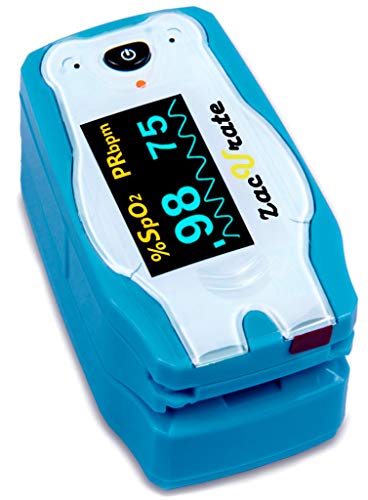
1. Zacurate Cute Digital Fingertip Pulse Oximeter
Our pick — over 4.5★ from 650+ verified ratings; the strongest balance of quality and price.
The polar-bear clamp built specifically for digits as thin as 0.2 inch (5-16 mm).
This is the pick parents reach for when an adult monitor slides right off a toddler’s finger. The whole design revolves around a chamber sized for small fingers, and it delivers readings in seconds with a one-button operation that skips the learning curve.
Accuracy is the story here — buyers report readings within 1-2% of hospital equipment, and some call it 99% spot-on against a clinical device. The plethysmograph (a waveform showing your blood flow strength) lets you see the pulse signal is solid before trusting the number on screen. You can flip the OLED display into 6 different orientations so you are never tilting your head to read it.
The box arrives ready to go with 2 AAA batteries, a silicone cover, a pouch, and a lanyard. It runs up to 30 hours on that pair, which is strong run-time for a spot-check tool. The package also carries a 12-month warranty with an extra optional free 12 months and US-based phone support if anything goes wrong.
cute and simple
- Functionality is the most-praised trait — owners call it quick, reliable, and easy to use
- Bright OLED screen readable in any orientation
- Includes batteries, cover, pouch, and lanyard from the start
limited features
- Not proven on infants under 18 months; one family found it unhelpful for their toddler with SVT
- The silicone cover can slip off during use
kids at home: you need a dependable spot-check clamp for a child whose fingers are big enough for the 0.2-0.6 inch range.
hospital use: you are monitoring a newborn or an infant whose fingers will not fill the chamber — you want a wrap-style probe instead.
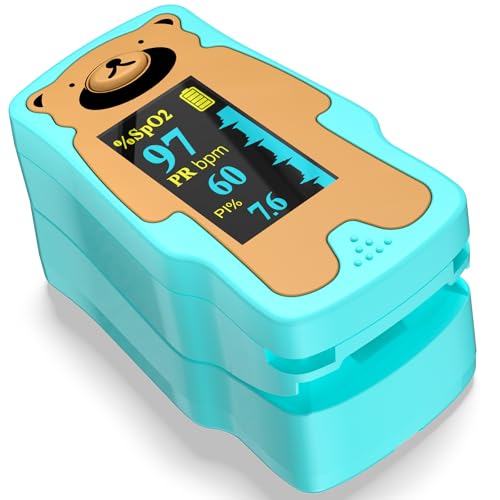
2. aosenwell Kids & Child Pulse Oximeter
A cartoon-faced monitor that turns an anxious finger clip into a game for restless toddlers.
Sometimes the hardest part of monitoring a child is getting them to stay still long enough. This yellow unit leans into that problem with a playful cartoon design, and the soft silicone chamber fits small fingers gently so there is no pinching to fuss about.
For parents, the draw is the USB-C rechargeable battery — no hunting for AAA cells at 2 a.m. The bright TFT display stays readable at different viewing angles, and a single button starts a reading, checks battery level, or rotates the screen. It shuts off automatically when no finger is detected to save power.
Be honest about the trade-off: this is an entry-level sports and aviation device, not a medical instrument. Some owners call the build flimsy, and durability is the most-discussed negative, so treat it gently and it will serve you fine. One buyer reports it failed to charge and never worked again, missing its stated accuracy.
smart fit band: The soft silicone chamber and cartoon character genuinely help with squirmy toddlers — a nurse reports it made checking a restless patient far easier than a standard adult clamp.
accuracy varies: Accuracy draws mixed feedback, so verify a reading against another device before acting on it.
active toddlers: a budget-friendly, USB-C rechargeable spot checker for a child aged 2 and up who dislikes medical gadgets.
precise readings: you need a rugged daily driver — this one is best handled with care.
3. Amemo Pediatric Pulse Oximeter
Reads a small finger in as little as 3 seconds and adds an alarm for low oxygen or pulse.
Designed for children over 2, this unit suggests measuring the big toe for ages 1-2 to get the most accurate result. That flexibility makes it more forgiving for younger kids than a strict finger-only clamp.
The standout is the adjustable alarm — you set your own blood oxygen and heart-rate thresholds, and it beeps if readings go outside them during sleep or play. A unique four-lock battery door keeps little hands from popping it open, which is a thoughtful safety touch for curious toddlers.
It claims a 12-month battery life on the included 2 AAA cells, and the package adds a carrying case, lanyard, and manual. Parents of kids with asthma specifically call it out as a recommended tool, and the cute design keeps children calm during checks.
pediatric focused: families who want alarm protection plus the option of a big-toe reading for younger toddlers.
bulky design: an occasional defective unit that fails to power off without pulling the battery — check the return process if yours misbehaves.
clinic visits: you want a spot checker with built-in alarm thresholds for a child over 2 with asthma.
night tracking: you need continuous overnight tracking — this is a spot-check tool, not a trend recorder.
4. YOUYME Handheld Wrap Probe Pulse Oximeter
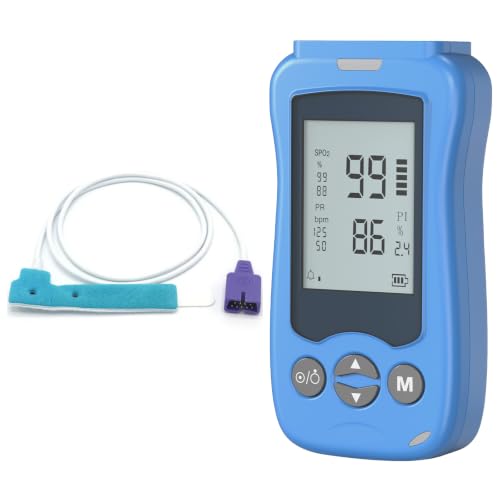
A wrap-around probe that clasps an infant’s foot or finger where a clamp cannot grip.
This is the pick for newborns and infants whose digits are simply too small for any fingertip clip. The wrap pulse sensor fits snugly around a foot or finger, and the device measures SpO2 across a full 0-100% range with 2% accuracy — wider than the typical 70-100% span of most consumers units.
Readings appear in 8 to 10 seconds, and it tracks respiration rate alongside oxygen and pulse. You can adjust the audio alarm volume all the way to mute, where a flashing light and text prompt still alert you without waking a sleeping baby.
It stays lightweight and portable with a secure strap, running about 12 hours on a single AA battery. The wrap-style design is what most parents say wins them over for infants, though accuracy feedback is mixed across owners, so cross-check against a clinical reading early on.
wiggly infants: parents of newborns and infants who need a gentle wrap probe for spot checks and continuous home monitoring.
continuous use: anyone who wants a simple finger clamp — this is a bulkier handheld format by design.
5. Manhero Overnight Pulse Oximeter
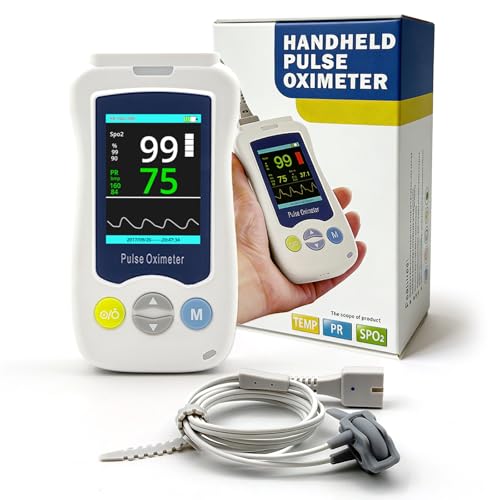
Tracks a whole night’s oxygen trend with ±1% accuracy and saves 500 spot-check records.
When you need to know what happens while a baby sleeps, this monitor is built for it. It stores 500 spot-check records plus 24 hours of overnight logs, so the morning reveals a trend curve instead of a single frozen number.
The 2.4-inch HD display is large and clear, and dual power options — disposable batteries or direct plug-in — mean it can run through the night without hunting for spares. It ships with both an adult probe and an infant probe, plus an adjustable strap meant to hold steady even during restless sleep.
Owners mention the overnight readings are accurate and the probe stays put on a finger. Battery life lands around 6-7 hours on 3 AAA cells, and the unit loses the date when you swap batteries.
sleep studies: overnight trend tracking with a clear screen and large data storage for a child who sleeps still.
quick checks: your baby moves a lot — the foot strap may not hold for consistent reads.
6. MugaTree Fingertip Handheld Pulse Oximeter

A monitor that remembers 10 different users and syncs every reading to your phone.
This handheld monitor with an adult probe is less about baby-specific fit and more about household-wide tracking. Up to 10 people can each store 300 sets of date-stamped data, and readings upload automatically to a mobile app over Bluetooth.
Measurements land in about 10 seconds, and SpO2 stays accurate to 1% between 70-100% while heart rate holds to 1% or 1 bpm. A perfusion score (a measure of your pulse strength) helps you judge whether the reading is reliable. The USB-C charging dock keeps it topped up, and smart alerts beep below factory or user-set thresholds, with volume adjustable or fully off.
Owners call the readings quick and accurate against other devices, and the graphing feature earns special praise from someone managing A-fib. Note this is explicitly a sports and aviation monitor, not a medical device. Battery life impresses — one buyer charged it just twice over months of use.
multi-user homes: you want one device to track several family members and see long-term trends in an app.
rough handling: you need an infant-specific foot probe — this ships with an adult finger sensor only.
7. Manhero Continuous Pulse Oximeter Fingertip
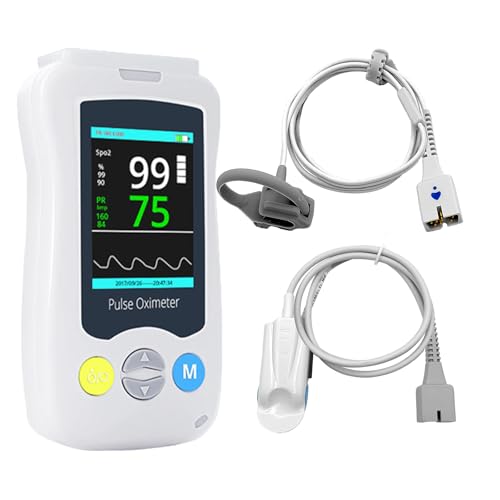
A 2.4-inch HD screen with 9 brightness levels, built for continuous family monitoring.
This whole-family unit pairs an adult finger probe with continuous detection, and it works for individuals from 0 to 18 months old. The 2.4-inch high-definition screen ramps through 9 brightness levels, so data stays readable in strong daylight and dim bedrooms alike.
SpO2 measures across a 70-99% range with up to 2% accuracy, and heart rate hits 30-240 bpm accurate to 1 bpm. It alarms automatically if oxygen drops below 90% or pulse falls below 50 bpm, and you can set your own thresholds. It stores 500 sets of data for trend analysis over time.
Power is flexible — 3 AAA batteries for emergency use or a data-cable connection for all-night monitoring. The 60-day battery claim is the headline, but real-world AAA endurance lands closer to 6-7 hours, and some units ship without batteries. One 88-year-old atrial flutter patient found it more accurate than miniature fingertip units.
long monitoring: a bright, adjustable continuous monitor covering infants through adults with strong data storage.
casual use: budget for your own AAA batteries and verify accuracy early, as owner feedback runs mixed.
8. HealthTree Fingertip Pulse Oximeter 2 Probes
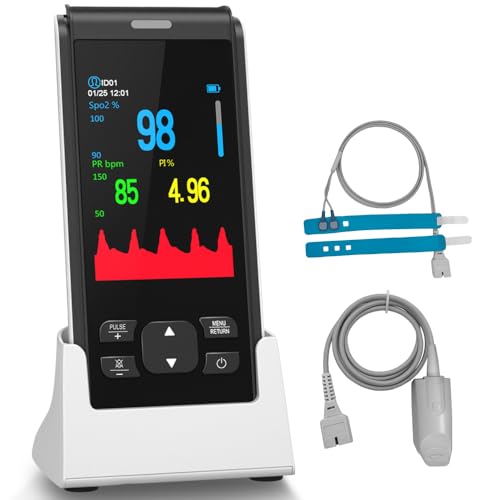
Ships with an adult finger probe plus a small foot probe, reading in 3-5 seconds.
This rechargeable unit solves the two-size problem by bundling both an adult finger sensor and a smaller foot probe for infants. SpO2 lands within ±1% across the 70-100% range, and pulse rate stays within ±1 bpm, with readings appearing in just 3-5 seconds.
It alerts with both sound and flashing numbers when SpO2 drops below 90 or pulse falls below 50. Ten user profiles each hold up to 300 groups of date-stamped data, and built-in Bluetooth supports up to 10 hours of continuous recording with charts and trend curves in the app. Auto power-off kicks in 10 seconds after the finger or foot leaves the sensor.
The USB-C charging dock and two included probes make this a strong one-box family kit. Accuracy is the most-praised trait among owners, and parents of infants specifically highlight reliable reads with the foot probe. One reviewer noted the device failed to read on their infant entirely, so test it early in your return window.
family sharing: you want one rechargeable kit that covers an adult finger and a baby’s foot with app trends.
portability: you want a dedicated medical-grade infant monitor — this one is labeled for sports and aviation use.
Understanding the Specs
SpO2 Accuracy Range
This is the number that tells you how much to trust the reading. A device rated ±1% SpO2 means the oxygen level shown can differ from your true level by about one point, which is the tightest consumer-grade you’ll find. A ±2% rating is still useful for spotting trends but leaves more room for variation. Devices that measure from 0-100% cover a wider span than the typical 70-100% consumer range.
Spot-Check vs. Continuous Monitoring
For a quick check on a feverish child, a spot-check clamp gives you a reading in seconds and then sits idle. If you need overnight confidence, a continuous monitor tracks for hours and stores the data so you can review the trend curve in the morning. For that use, choose a continuous unit with adjustable alarms and data storage over a basic clamp.
FAQ
Does a regular adult pulse oximeter work on a baby?
What is the difference between SpO2 and PR on the display?
What does an alarm threshold do on a baby pulse oximeter?
Can I use a baby pulse oximeter overnight for continuous monitoring?
How accurate are these fingertip monitors compared to hospital devices?
What is the best way to measure a baby under 2 years old?
How long do the batteries last on these devices?
Is a sports pulse oximeter safe for monitoring a baby?
Final Thoughts: The Verdict
If you want one dependable pick, the best baby pulse oximeter is the Zacurate Cute Digital because its small-finger chamber and proven 30-hour battery make daily spot checks easy. If you need overnight trend tracking and set alarm thresholds, the Manhero Overnight Monitor is the one to reach for. And for newborns whose feet are too small for any clamp, the YOUYME Wrap Probe fits where others simply cannot.
How We Picked
We do not accept paid placement. Every pick is matched to a real buyer and a real use-case; we do not hands-on test units.
Sources & Methodology
Specifications: manufacturer listings and product documentation. Review insights: verified customer reviews, as of August 2026. Pricing: not shown on this page (it changes often); check the current price via the retailer link.
As an Amazon Associate, Gadgets Feed earns from qualifying purchases. This does not affect which products we feature.