
Our readers keep the lights on and my morning glass full of iced black tea. As an Amazon Associate, I earn from qualifying purchases.
Specs are compiled from manufacturer listings and verified buyer reviews and can change over time — please confirm the key details on the product page before buying.
Your siding’s lifespan hinges on one number: the metal’s thickness. A thin coil bends like foil in your hands, but a thicker sheet resists weather and dings for decades. Most buyers miss this because listings hide the gauge in fine print—and the gap between 0.0078 inches and 0.032 inches is huge when covering an entire wall.
I’m Min — the founder and writer behind Gadgets Feed. This guide is built by comparing the manufacturers’ published specifications and the patterns across verified customer reviews, so you get each pick’s real strengths and trade-offs instead of marketing spin.
We break down six real products, from DIY flashing rolls to contractor-grade coils, to find the genuine best aluminum house siding for your project and your skill level.
Our Picks at a Glance
How To Choose The Best Aluminum House Siding
The hardest part of buying aluminum siding is that every roll looks the same in a photo. The real differences live in the thickness, the width, and the finish — and those three numbers decide how easy your weekend project becomes.
Thickness is everything
The thickness, measured in inches, tells you how stiff the metal is. A roll at 0.0078 inches is great for wrapping a roof edge, but it will dent if you press on it. A sheet at 0.032 inches feels like real armor and suits RV walls or trailer skins. Match the thickness to the job, not to the price tag.
Width and length control your waste
Coils come in set widths like 14 inches or 24 inches, and lengths of 50 feet. Measure your wall or fascia run first, then pick a roll that covers it with the fewest seams. A wider coil covers more area per pass, but a narrow one bends easier in a hand brake.
Quick Comparison
| Model | Best For | Thickness | Width | Length | Amazon |
|---|---|---|---|---|---|
| Eagle 1 Siding Coil★ Best Overall | Fascia & foundation covers | 0.02 in | 4 in | 50 ft | Amazon |
| Chocikick Flashing RollBest Value | All-in-one repair kit | 0.0118 in | 40 in | 50 ft | Amazon |
| Ripeng Flashing Roll | Budget DIY flashing | 0.0078 in | 24 in | 50 ft | Amazon |
| Blulu Trailer Skin | RV & trailer walls | 0.032 in | 24 in | 120 in | Amazon |
| Amerimax Trim Coil | Window & door trim | — | 14 in | 50 ft | Amazon |
| CoilRite Trim Coil | Contractor-grade trim | 0.016 in | 24 in | 50 ft | Amazon |
In‑Depth Reviews
1. Eagle 1 Aluminum/Vinyl Siding Coil
Our pick — over 4.5★ from 300+ verified ratings; the strongest balance of quality and price.
The crowd-pleasing workhorse that hides its strength under a smooth painted finish.
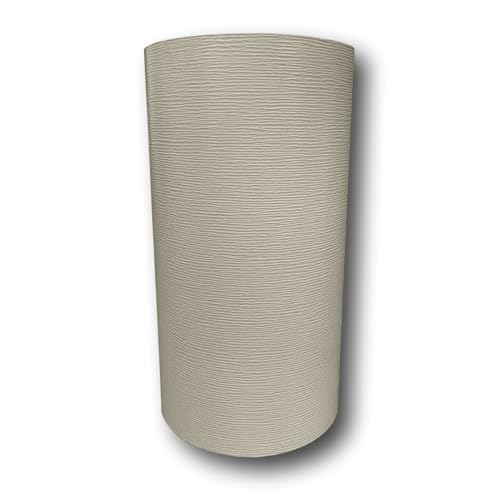
This is the roll people keep coming back to, and the reason is simple: it just works. At 0.02 inches thick with a smooth finish paint, it strikes the balance between stiff enough to hold a clean edge and flexible enough to bend by hand around fascia corners. It comes in the Wicker Woodgrain color, but the maker offers many colors and sizes if that shade is not your match.
The detail that wins people over is the free 1.25-inch stainless steel trim nails included in every roll. The review pages sum it up: “Easy to use and handle. Glued easily onto foam board. Bends and cuts easily.” Buyers regularly use it to cover foam on foundations, and the 4-inch width pairs with a 50-foot length to handle long runs of drip edge or concrete barrier without constant splicing.
Quality is the thing everyone raves about — owners consistently note the precise cut and consistent finish across rolls, and a few were so satisfied they ordered three more. Every roll is produced, cut, and shipped in the U.S., which matters if you want a domestic product with dependable support behind it.
Why it leads
- Matching stainless steel nails included free
- Bends and cuts easily with hand tools
- Multiple color and size options
- Thicker than budget flashing rolls
Know before you buy
- 4-inch width means more passes on wide walls
- One roll covers a 50-foot length only
- Rare delivery damage possible in transit
Grab it for: fascia covers, drip edge, and foundation foam wraps where a clean painted finish and easy hand bending matter more than raw panel coverage.
Think twice if: you need to sheath a large flat wall — the narrow 4-inch width will make that project painfully slow.
2. Chocikick Aluminum Flashing Roll
A wide 40-inch sheet that arrives as a complete kit, not just a bare roll.
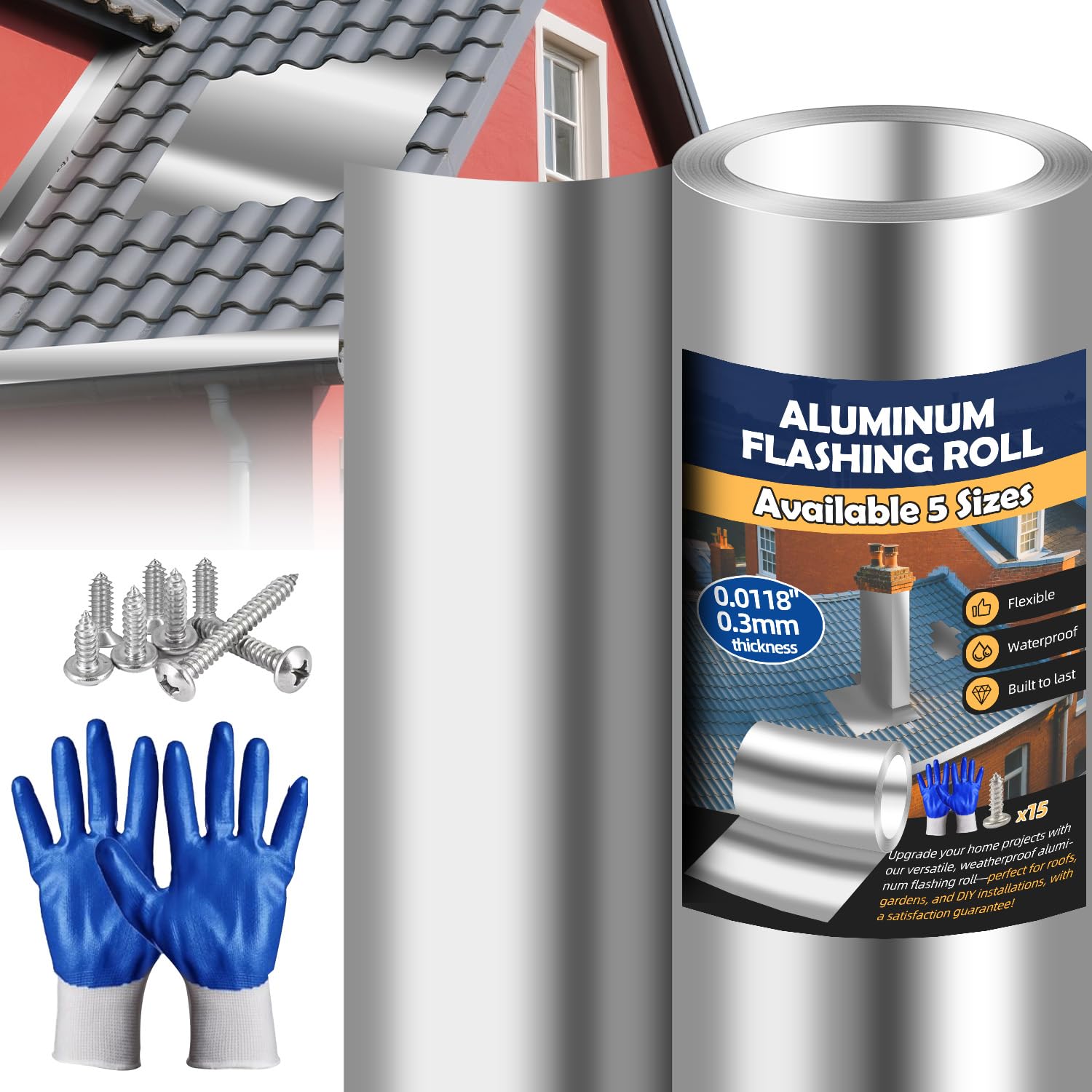
What makes this flashing roll different is what is in the box with it. You get one roll of aluminum at 40 inches wide and 50 feet long, plus a pair of cut-resistant work gloves and a pack of stainless steel self-tapping screws. That means you can start the job the moment it lands, without a separate trip for fasteners.
At 0.0118 inches thick (0.3 mm), it is noticeably sturdier than the thinnest budget coils, yet still flexible enough to cut with standard scissors. Owners use it to seal around windows, doors, skylights, and exterior walls, and one found it worked well along a bathroom wall base where water was seeping in. The 40-inch width is the widest in this lineup, so a single pass covers far more ground than a 14-inch trim coil.
The corrosion-resistant aluminum is built for long-term outdoor exposure on roofs, siding, and chimneys. Buyers report it cuts and bends to shape easily while still feeling durable, and for old-house repairs where windows were never flashed properly, having this roll on hand is a practical fix.
Wide coverage: the 40-inch width beats the narrower coils in this lineup at covering large surfaces in one pass.
Kit convenience: bundled gloves and stainless screws remove the friction of a second shopping trip.
Reach for this if: you want the widest flashing roll here plus everything needed to install it in one box.
Look elsewhere if: you need a stiff panel for walls — this is a flexible flashing roll, not a rigid siding sheet.
3. CoilRite by RiteScreen Aluminum Trim Coil

The American-made coil that professional contractors reach for when trim has to be perfect.
This is the pick for anyone who wants a professional-grade result without fighting the material. At 0.016 inches thick and 24 inches wide over a 50-foot length, it is rigid enough to hold a crisp fold but still workable in a brake. The smooth one-sided Colonial White finish is designed to wrap exterior trim surfaces: doors, windows, porch posts, garage doors, and roof fascia.
Aluminum trim coil resists weather and needs no painting, unlike wood or vinyl. It is more rigid than vinyl and won’t warp like wood, making it a durable trim choice. Once installed, it requires no painting or sealing, perfect for high or awkward spots. It ships pre-rolled in sturdy cardboard packaging, so the metal stays clean and dent-free until you unroll it.
Owners who fabricate custom soffit to enclose eaves found it bends and folds well and precisely. A homeowner even handed a roll to a carpenter for a remodel with zero complaints about the material. The one honest caveat: a contractor who expected heavier stock called this too thin for trim-out work, so if you are used to commercial-grade 0.024-inch material, this lighter coil may not match your expectations.
Pros that matter
- Bends and folds precisely for custom soffit work
- More rigid than vinyl, less prone to warping than wood
- Arrives pre-rolled in sturdy packaging
- American-made contractor grade
Fair warnings
- At 25.1 pounds, it is the heaviest roll here
- One pro called it too thin for heavy trim-out
- Smooth finish shows scratches more than textured coil
Best suited for: homeowners and carpenters wrapping fascia, eaves, and door trim who want a precise fold and a clean white finish.
Not for: anyone expecting heavy commercial sheet stock — this is a mid-weight trim coil, not armor.
4. Blulu Aluminum Trailer Skin

The thickest material in this lineup, built to armor a trailer shell rather than wrap a trim edge.
Here is the sheet for heavy-duty jobs, and the numbers prove it. At 0.032 inches thick (0.8 mm), the Blulu panel measures 24 inches wide, while the Eagle coil is 4 inches wide and the Ripeng flashing is 0.0078 inches thick. You feel that difference the moment you pick it up — this is stiff, structural metal, not flimsy coil stock. It is crafted from 1060 aluminum in a sleek white finish.
The panel measures 24 inches wide and 120 inches long, and it is rated Commercial grade. Buyers use it to enclose trailers, upgrade food trucks, replace RV side panels, and sheath dry vans. One owner replaced the skin on a tool trailer door and found it a tight fit that held up better than expected. The large sheet reduces the seams and connections you need, which leads to a cleaner finished look.
The honest trade-off shows up in the finish consistency. A buyer using this for the interior of a food trailer reported that larger sheets have a different sheen than smaller ones, and since appearances matter on a food truck interior, that variance was a real disappointment. If your project demands perfectly uniform reflectivity across multiple panels, confirm your sheets come from the same production batch.
True armor: at 0.032 inches it is the stiffest, most dent-resistant option in this roundup — ideal for RV walls and trailer shells.
Finish variance: the recurring gripe is sheet-to-sheet sheen differences, so order all panels together if looks matter.
Choose this for: trailer skins, camper walls, and food truck panels where rigidity and impact resistance beat easy bending.
Pass on it if: you need a flexible roll for fascia wrapping — this stiff panel will not fold around corners.
5. Amerimax Aluminum Trim Coil
A dependable 14-inch trim coil with a factory-baked finish that shrugs off the weather.
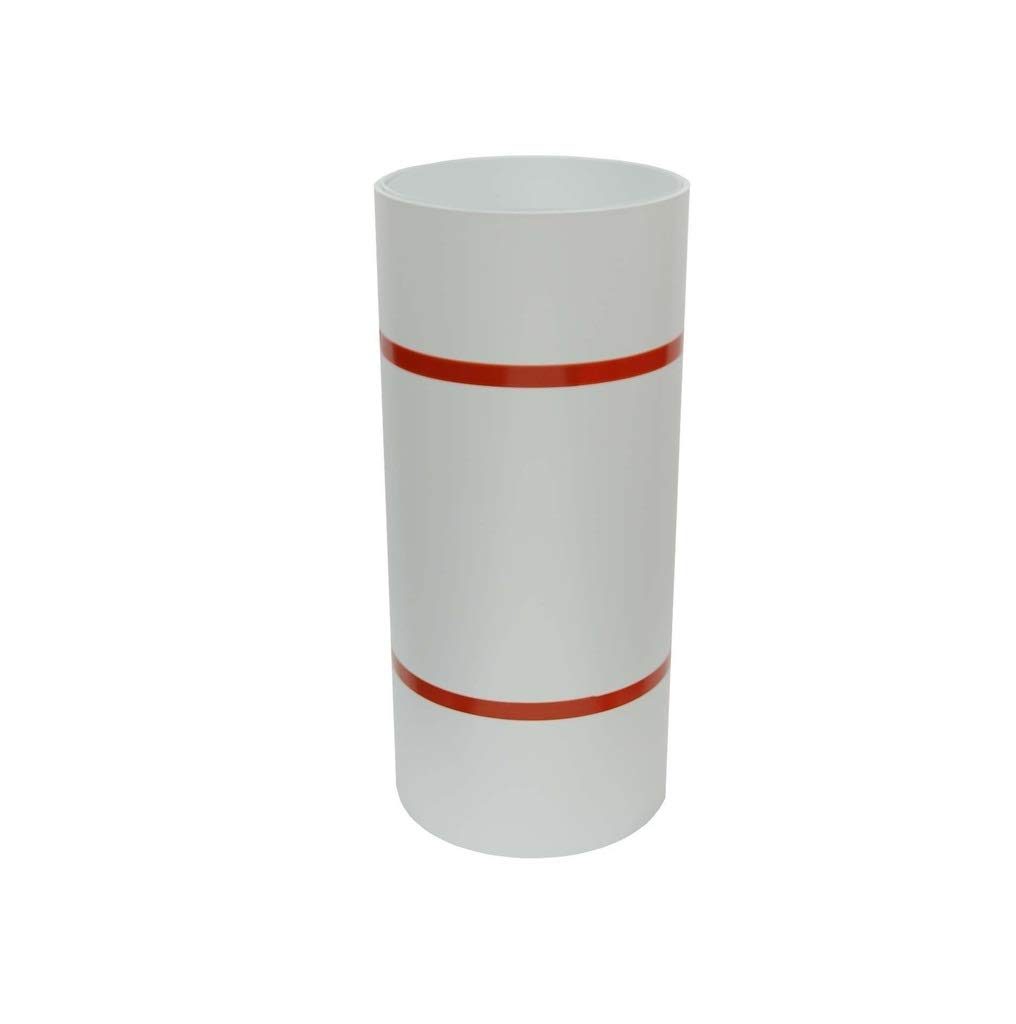
This coil targets a specific job — window and trim applications — and it does that job well. At 14 inches wide and 50 feet long, it is the narrowest coil here, which is actually a strength when you are working in tight spaces around windows and doors. The aluminum construction wears a factory baked-on bright white Polyester paint that is built for durability against sun and rain.
What sets this apart is how it works with a brake. The maker designed it to be formed with a hand-brake or press-brake, and buyers confirm it cut easily and bent easily when paired with a rented metal brake from a local building supply store. For soffit and fascia work, it is a very good product that gets the job done without drama.
The 14-inch width means you will make more passes on a wide wall than you would with a 24-inch coil. And as with any long metal coil, shipping is the wildcard — one buyer received their roll with no protective wrapping, arriving scratched and dented. Order from a seller known for careful packaging if you can.
Trim specialist: the 14-inch width and baked-on finish make this ideal for tidy window and door trim work with a brake.
Shipping gamble: occasional deliveries show up without protective wrap, so inspect your roll on arrival.
Reach for it if: you are renting a brake to bend clean window and door trim and want a paint finish that lasts.
Skip it for: covering large wall sections — the narrow width will make that job tedious.
6. Ripeng Aluminum Flashing Roll
A featherweight 24-inch flashing roll that is perfect for roofing edges, not for walls.
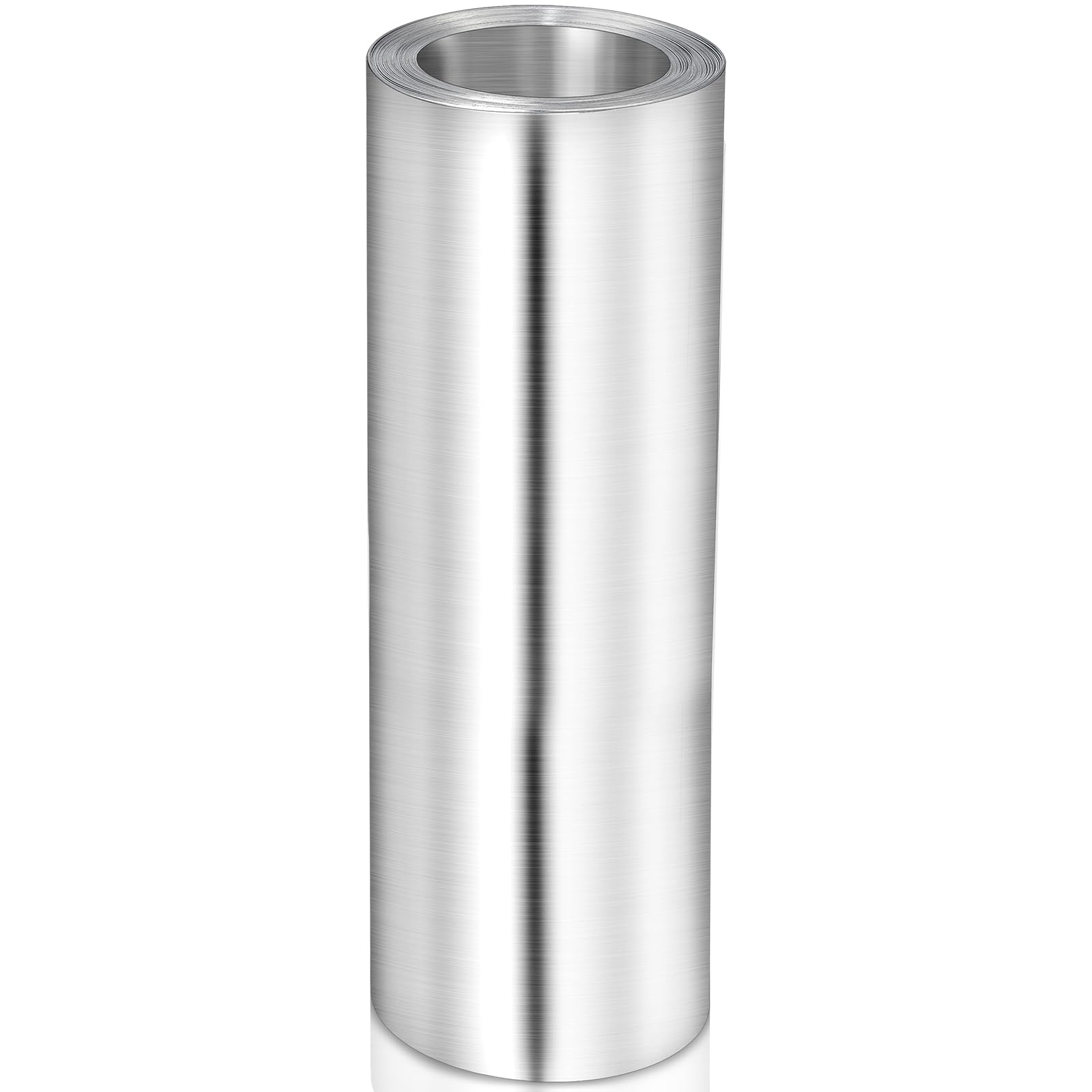
This is the budget-friendly entry point, and it is honest about what it is. At 0.0078 inches thick, 24 inches wide, and 50 feet long, the Ripeng roll is the thinnest material in this lineup at 0.0078 inches thick, while the Blulu panel is 0.032 inches thick. That makes it incredibly easy to cut and bend for roof flashing, garden edging, and moss-prevention strips, but it will not stand up to the kind of impacts a wall panel faces.
The real-world strength of this roll is its versatility. Buyers use it to weatherproof a shed, flash roof edges, and create aluminum veneer. It is rust and corrosion resistant, and it works with most construction materials including wood, brick, and concrete. The 9.53-pound weight means one person can manage the whole roll without help.
The thickness is the most-discussed topic here, and for good reason. Some owners found it totally fine for their applications, while others called it very very thin. As owners put it: “very sharp edges so use gloves.” If your project is a small to medium DIY task like sealing a shed roof, this is a great value. If you need structural siding for a wall, the thin metal will disappoint you.
Where it shines
- Lightweight 9.53-pound roll is easy to handle solo
- Cuts easily with standard tools
- Huge 24 x 50-foot coverage for the money
- Rust and corrosion resistant
Know the limits
- Thinnest material here — not for wall siding
- Very sharp cut edges demand gloves
- Won’t hold a dent-free shape under impact
Grab it for: roof flashing, shed waterproofing, and moss-prevention strips where thin, bendable metal is exactly right.
Not for: exterior wall siding — the 0.0078-inch thickness will dent and flex on any large flat surface.
Understanding the Specs
Metal Thickness in Inches
This is the single most important number on any aluminum siding product. It tells you how stiff and dent-resistant the metal is. A 0.0078-inch roll bends like heavy foil — great for wrapping edges. A 0.032-inch sheet feels like solid armor and suits trailer walls. Match the thickness to the job, not to the brand.
Coil Width and Length
The width decides how many passes you need to cover a surface, and the length decides how far one roll goes before you splice a new one. A 14-inch coil is nimble for trim work. A 40-inch roll covers large areas fast. Measure your wall or fascia run first, then pick the combination that leaves the fewest seams.
FAQ
What thickness of aluminum siding should I use for a house wall?
What is the difference between siding coil and flashing roll?
Can I cut aluminum siding with regular scissors?
Will aluminum siding rust over time?
How much area does a 50-foot coil cover?
Can I bend aluminum trim coil without a brake?
Is aluminum siding better than vinyl siding?
Do I need special nails for aluminum siding?
Final Thoughts: The Verdict
For the majority of shoppers, the aluminum house siding winner is the Eagle 1 Siding Coil because it pairs a practical 0.02-inch thickness with included matching nails and a strong owner following. If you want the widest coverage in a single roll, grab the Chocikick Flashing Roll. And for a rigid trailer or RV wall panel, the Blulu Trailer Skin at 0.032 inches is the one to reach for.
How We Picked
We do not accept paid placement. Every pick is matched to a real buyer and a real use-case; we do not hands-on test units.
Sources & Methodology
Specifications: manufacturer listings and product documentation. Review insights: verified customer reviews, as of August 2026. Pricing: not shown on this page (it changes often); check the current price via the retailer link.
As an Amazon Associate, Gadgets Feed earns from qualifying purchases. This does not affect which products we feature.