
Our readers keep the lights on and my morning glass full of iced black tea. As an Amazon Associate, I earn from qualifying purchases.
Specs are compiled from manufacturer listings and verified buyer reviews and can change over time — please confirm the key details on the product page before buying.
The single biggest upgrade you can make to your coding setup isn’t a second monitor or a mechanical keyboard—it’s the chair that holds your spine for 10+ hours a day. A poor chair that lacks lumbar support, proper seat depth, or adjustable armrests turns a productive sprint into a back-ache endurance test. This guide cuts through the spec-sheet noise to find the chair for programmers that genuinely supports long, focused sits without wrecking your body.
I’m Min — the founder and writer behind Gadgets Feed. This guide is built by comparing the manufacturers’ published specifications and the patterns across verified customer reviews, so you get each pick’s real strengths and trade-offs instead of marketing spin.
From an AI-powered lumbar system that tracks your every shift to budget mesh chairs with thick foam, these picks handle 8-hour workdays and 12-hour gaming sessions.
Our Picks at a Glance

How To Choose The Best Ergonomic Office Chair
Programmers sit longer than almost any other profession. That means your chair needs more than a cushy seat—it needs features that adjust to your body so you aren’t fighting the furniture while you fight a bug. Focus on four things: lumbar support, seat depth, armrests, and recline.
Lumbar Support Is Non-Negotiable
A fixed bump on the backrest isn’t enough for a full workday. Look for a pad that moves up and down, and ideally in and out, so it fills the curve of your lower spine no matter how you sit. A self-adapting system that moves with you is even better for marathon sessions.
Seat Depth Determines Leg Comfort
If the seat is too long, the front edge presses on the back of your thighs and cuts off circulation. A sliding seat pan that moves forward and backward lets you rest your whole thigh on the cushion. This detail matters more than most buyers realize, and it’s rare at budget prices.
Quick Comparison
| Model | Best For | Lumbar Support | Weight Capacity | Seat Depth Adjust | Amazon |
|---|---|---|---|---|---|
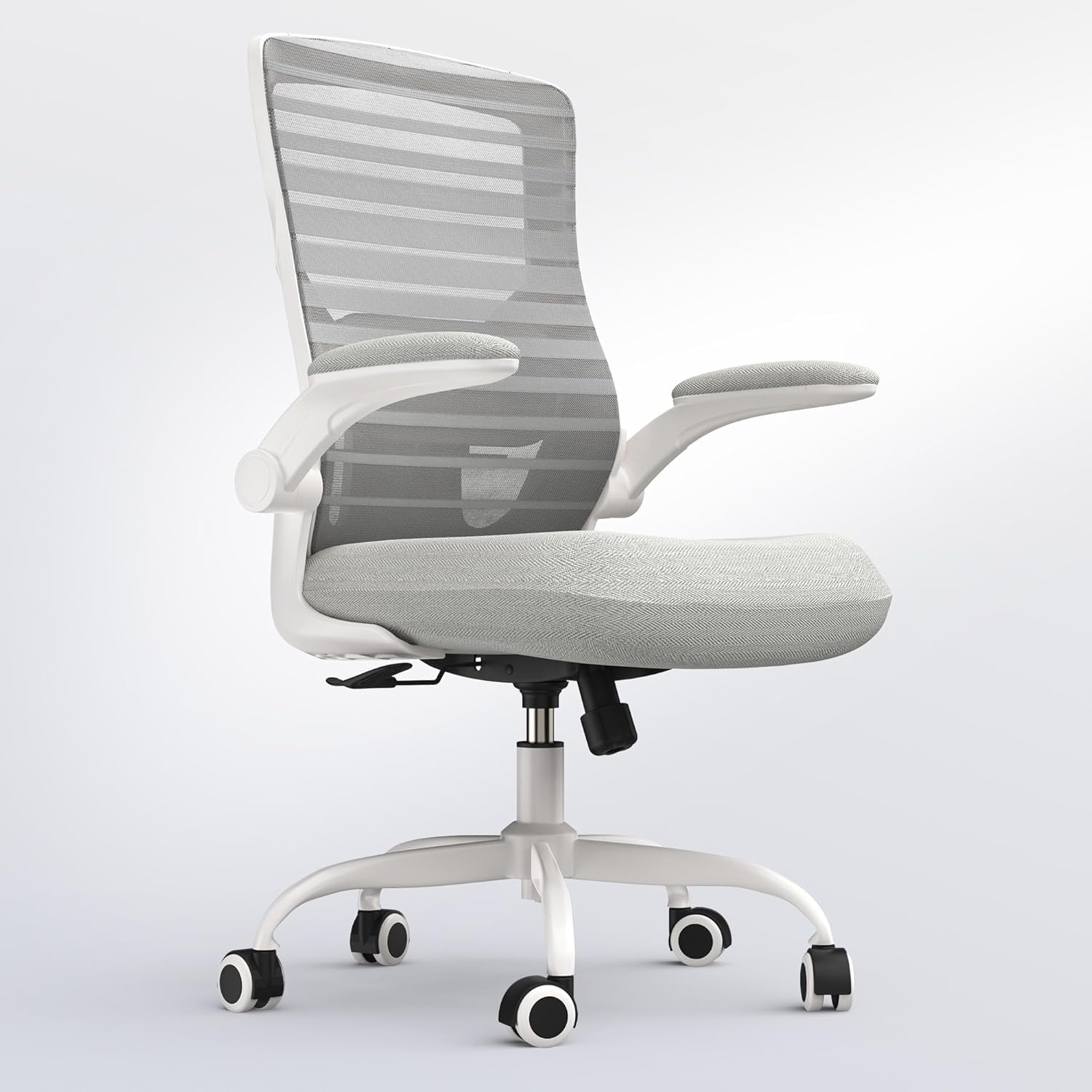
| YFO Ergonomic Chair★ Best Overall | Value and comfort | Fixed cushion | — | No | Amazon |
| QLTPLUS Long Hours ChairBack Pain Relief | Back pain relief | Adjustable pad | 350 lbs | No | Amazon |
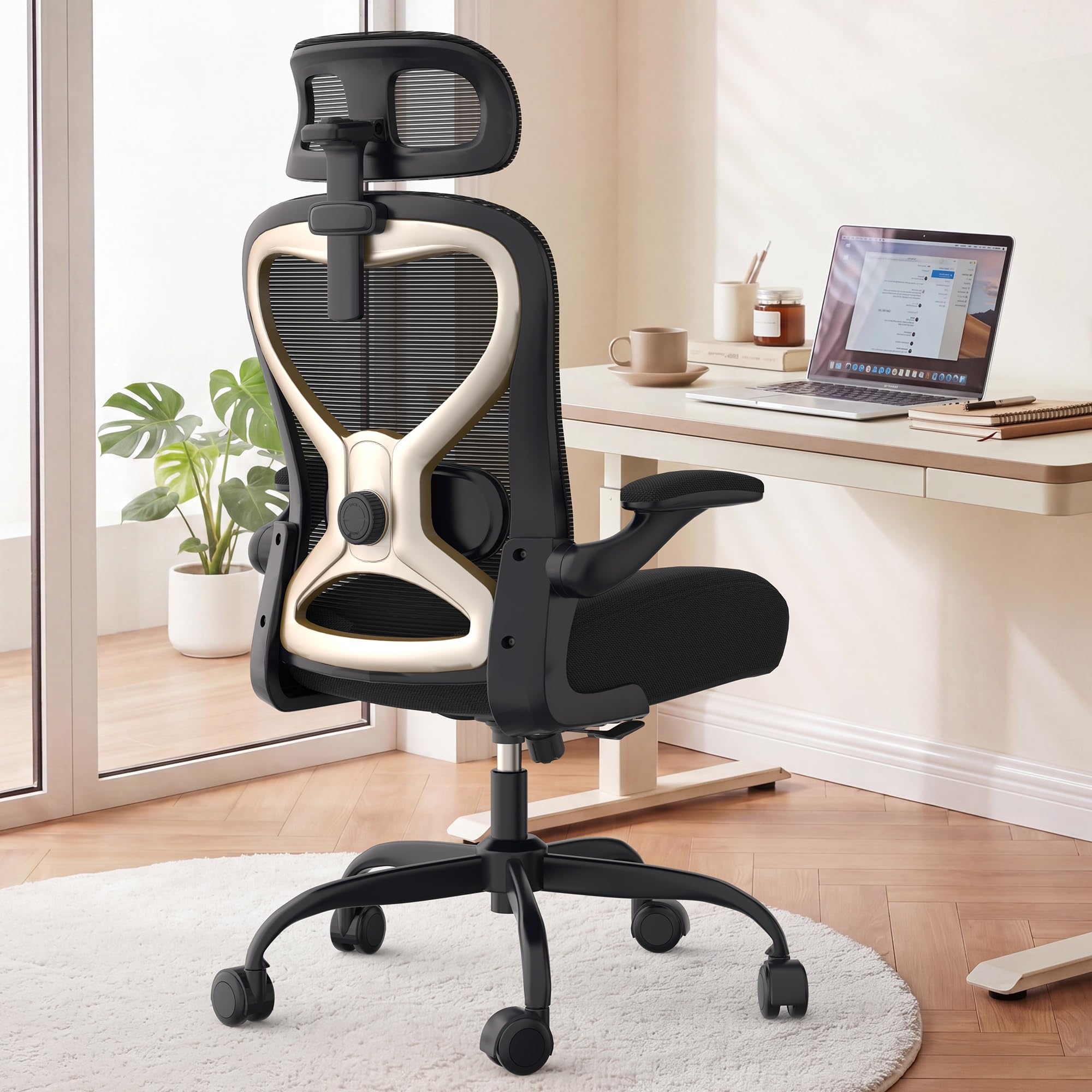
| CASASIO Mesh ChairStyle Pick | Neck and back support | Adjustable pad | 350 lbs | No | Amazon |
| FAMSINGO Big & Tall | Heavy and tall users | Fixed mesh | 400 lbs | No | Amazon |
| ProtoArc EC200 | Legs and thighs | Adjustable 2.36″ vertical | Under 220 lbs | Yes, 5-position | Amazon |
| MOLENTS Ergonomic | 4-way adjustability | Adjustable up-down | — | No | Amazon |
| FLEXISPOT ErgoX | Footrest comfort | Dynamic 5-level | — | Yes, 17″-20″ | Amazon |
| Branch Ergonomic | Petite and mid-size | Adjustable position | — | Yes | Amazon |
| SIHOO Doro C300 Pro V2 | Adaptive full-body support | Self-adaptive 2.0 | — | Yes, slide | Amazon |
| Branch Ergonomic Pro | Total adjustability | Two-way vertical | — | Yes | Amazon |
| Hbada X7 Smart | Massage and heat | Automated AI tracking | — | Yes, slide | Amazon |
In‑Depth Reviews
1. YFO Ergonomic Chair
Our pick — over 4.5★ from 600+ verified ratings; the strongest balance of quality and price.
The crowd-pleaser that balances plush comfort, smooth wheels, and a 2-in-1 build for a price that feels like a steal
What wins people over here is the comfort—it’s the single most-praised trait, with well over 180 owners singling it out. The frame is iron, wrapped in soft sponge and highly elastic spring packs, so the seat stays soft through a long sitting period without that “tired bottom” feeling. Quality ranks second in owner enthusiasm, with 160+ buyers noting the sturdy build and premium-looking faux leather.
The 22-inch-wide seat and 15.8-inch backrest give you room to shift positions, and the rollerblade-style wheels glide silently across hardwood, carpet, and marble alike. A nice bonus: you can install it with or without the armrests, turning it into a cross-legged chair when you want to sit Indian-style during a long debug session.
Assembly is a five-step process with labeled parts, which buyers report is genuinely easy. A 5’2″ owner found the lumbar support excellent from the start, and a 22-year-old gamer approved it for heavy daily use.
What Owners Love
- Comfort is the top praise, and the spring-pack cushion backs it up
- Silent rollerblade wheels work on carpet, wood, and marble
- Five-step assembly with labeled, quality parts
Watch These Trade-Offs
- Some owners wish the lumbar support were more pronounced
- A few note the seat height adjustment could be more generous
Reach for it if: you want maximum comfort per dollar, with a wide seat and wheels that roll anywhere in the house.
Look elsewhere if: you need a sliding seat depth or heavy-duty weight capacity—this one prioritizes plushness over fine-tuning.
2. QLTPLUS Long Hours Chair
A 4-inch molded foam seat and adjustable lumbar pad built specifically for people who sit until their back protests
The defining spec here is the 4-inch thick high-density molded foam cushion—a seat that won’t flatten after months of daily use. The waterfall edge (a curved front that slopes down) reduces pressure on your legs and improves circulation, which is exactly what your thighs need after hour six of typing. The S-shaped backrest follows your spine’s natural curve, and the adjustable lumbar pad moves to target strain right where you feel it.
A 70-year-old with a bad back assembled it solo and found it comfortable for full-time work-from-home use. The flip-up armrests are a clever space saver—pivot them up and the whole chair slides under a standing desk, freeing your room when you switch to standing mode. It’s reinforced with a steel frame and supports up to 350 lbs, meeting BIFMA safety standards for stability.
One honest caveat: for a 5’2″ owner, the gas cylinder sat too tall, and the replacement part took months to arrive. Taller users won’t hit this snag, but shorter programmers should budget for a possible swap.
Standout Strengths
- 4-inch molded foam holds its shape and stays comfy all day
- Flip-up armrests let it tuck under a standing desk
- 350 lbs capacity with a reinforced steel frame
Fair Warning
- Short users may need a shorter gas cylinder, and the replacement can take months
- Backrest height feels tailored more toward taller frames
Pick this if: back pain is your daily reality and you want a thick, supportive seat with real lumbar adjustability.
skip it if: you’re on the shorter side and can’t afford a long wait for a cylinder swap.
3. CASASIO Ergonomic Mesh Chair
Adds a 3D headrest for neck relief to the mesh-back formula, wrapped in a sharp black-and-gold frame
Quality is the trait owners praise most here—47 buyers call it out—and it shows in the reinforced steel frame and tear-resistant mesh that holds up to 350 lbs. The S-shaped backrest pairs with an adjustable lumbar pad to support your spine’s curve, while the 3D headrest (which moves up, down, and rotates) cradles your neck during those lean-back thinking breaks. The breathable mesh keeps your back cool even on warm days in a stuffy home office.
The thick molded foam seat uses a waterfall edge to take pressure off your thighs, and owners describe the cushioning as substantial without being overly soft. A long-shift buyer called the lumbar support “perfect” and praised the easy assembly and smooth rolling. The flip-up armrests add versatility—fold them away to slide the chair under a desk or change positions mid-session.
The catch is physical rather than functional: the box is big and heavy (30 pounds), which made returning it a chore for one elderly buyer. That’s a one-time logistics note, not a durability concern.
Editors’ read: The rare budget pick that adds neck support without skimping on the back—the 47 owners praising quality back up the steel-frame build.
Who it’s for: Programmers who lean back to think and want head-and-neck cradle, not just lumbar support.
4. FAMSINGO Big & Tall Chair

A 400 lb capacity with a 5.5-inch thick cushion and stepless recline for bigger bodies and marathon days
The headline number is the 400 lb weight capacity, supported by a reinforced metal base and Class 4 gas lift (the cylinder that raises and lowers the seat). The extra-wide U-shaped seat spans 22.5 inches, and the 5.5-inch high-resilience foam spreads pressure evenly so you don’t sink or bottom out. A 6’5″, 380 lb owner confirmed it worked “perfectly” with good build quality, though he swapped in larger wheels.
Appearance is the most-praised trait (45 owners), followed by easy assembly (39 owners)—both sensible wins for a heavy-duty chair that doesn’t look like medical equipment. The stepless recline locks at any angle between 90° and 120°, so you’re not stuck with preset positions. For a programmer with tailbone pain from 9-hour sits, the thick cushion was the specific relief they credited.
Stability and adjustability draw mixed notes: some find it rock-solid while others report loose bolts over time, and the “big” claim gets pushback from wider-bodied users whose hips press the armrests. It’s best for tall, heavier frames looking for dependable support.
Built For
- 400 lb capacity with Class 4 gas lift and metal base
- 22.5-inch wide seat with 5.5-inch thick foam
- Stepless recline locks anywhere from 90° to 120°
Know Before Buying
- Wider hips may feel squeezed by the armrests
- A few owners mention loose bolts affecting stability
Strongest for: tall, heavy programmers who need a 400 lb-rated seat with a thick cushion for long sits.
Not ideal for: broader builds who need extra armrest clearance—this one runs narrower than its “big” label suggests.
5. ProtoArc EC200
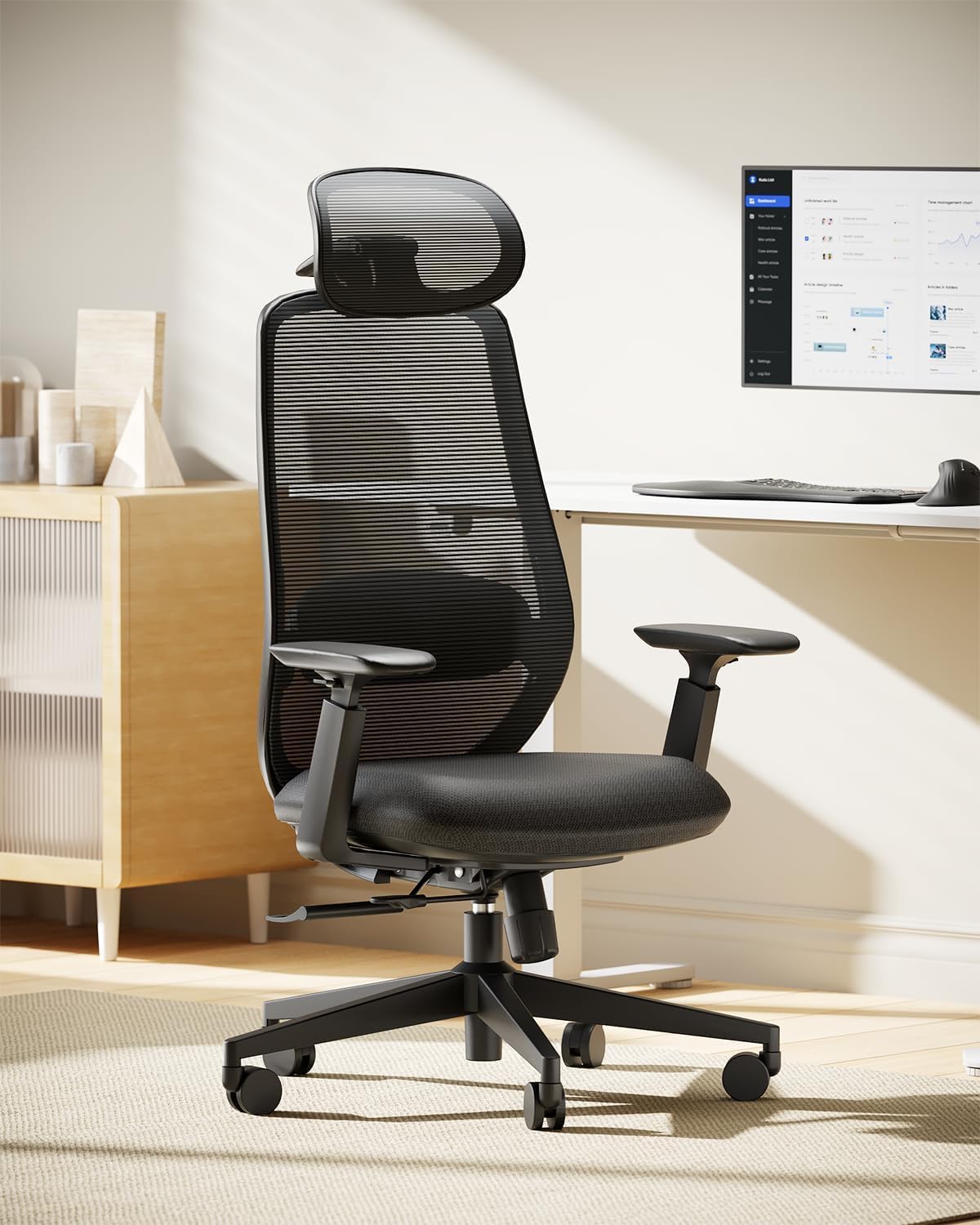
The rare sub- chair with a sliding 5-position seat depth that stops thigh pressure and knee strain
The standout spec is the adjustable seat depth: a 5-position sliding pan with 1.97 inches of travel that locks instantly, so you can rest your whole thigh on the cushion instead of dangling your legs. This is the feature that eliminates the numbness and knee pressure that creep in after 8 hours of coding. It’s tuned for users between 5’4″ and 6’0″ under 220 lbs, with the maker claiming better body contouring within that range.
The lumbar support adjusts 2.36 inches vertically and 0.8 inches in depth to fill the gap in your lower back, while the 55D high-density foam resists the sag that softer cushions develop within months. The 3D headrest moves 3.94 inches up-down and 2.76 inches in-out with a 75° pivot, locking to cradle your neck without shoving your head forward. The 4-stage recline hits 90° for work, 105° for reading, 120° for calls, and 130° for relaxation, with a tilt tension knob to tune resistance.
Assembly runs under an hour with clear labeled parts, and the build is sturdy with strong hydraulics. One shorter owner loved that the adjustments finally fit her frame—a compliment most one-size chairs never earn.
Why it stands out: The sliding seat pan is a feature usually reserved for + chairs; here, it directly fights the leg fatigue programmers feel most.
Honest limit: The 220 lb ceiling and 5’4″–6’0″ fit range mean taller or heavier programmers should look to the big-and-tall picks instead.
6. MOLENTS Ergonomic Chair

4D lumbar and 3D armrests deliver tailored support that one owner says erased lower back pain in 3 days
Comfort is the thing everyone raves about—68 owners make it the top praise—and the adjustable lumbar support is the reason. It moves up, down, forward, and backward, letting you dial in exactly where your lower back needs the most fill. The 3D armrests adjust for height, forward-back, and rotation, so your shoulders stay relaxed whether you’re typing, scrolling, or leaning back. A 6-foot, 200+ lb owner found it sturdy and creak-free.
The full mesh build—both seat and back—keeps air moving so you don’t get a sweaty back on warm days, and the skin-friendly premium mesh holds its tautness. The backrest reclines in three positions between 90° and 120°, switching you from focused work mode to rest mode with a lever. Seat height spans 19.5 to 23.3 inches off the floor, and the whole chair assembles in about 15 minutes with labeled parts.
Two fit notes: shorter owners (around 5’4″) found the wheels struggle on thick carpet—a mat helps—and taller users say the lumbar doesn’t rise high enough to hit their curve. The manufacturer will swap the gas lift if you need a different height, but that requires an email after purchase.
Genuine Strengths
- 4D lumbar adjusts four ways for a custom fit
- 3D armrests move in height, depth, and rotation
- Breathable full mesh keeps you cool all day
Fit Caveats
- Carpet wheels can drag without a floor mat
- Lumbar doesn’t adjust high enough for tall frames
Best for: average-height programmers who want four-way lumbar tuning and 3D armrests at a mid-range price.
Think twice if: you’re over 6’2″ or resting on plush carpet—both need workarounds.
7. FLEXISPOT ErgoX
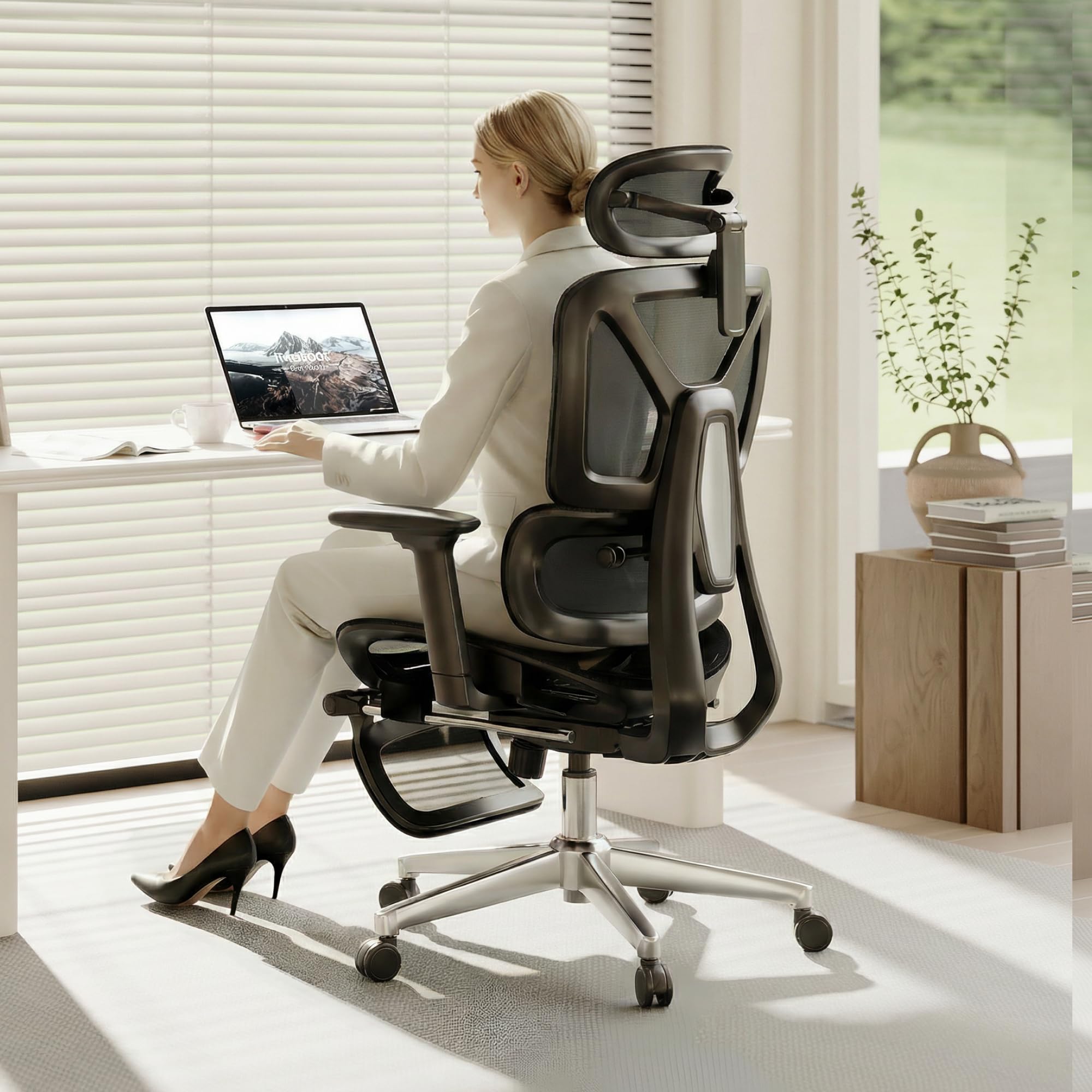
A dynamic lumbar system plus a pull-out footrest turn your chair into a nap pod for break time
Comfort leads the owner feedback here by a wide margin—119 buyers make it the clear #1—and the dynamic lumbar support is the star. It adjusts across 5 levels and moves with you rather than sitting static, which is why owners say it maintains good posture through long work stretches. The retractable footrest is the a neat extra: slide it out, recline back, and you’re set for a proper mid-afternoon reset without leaving your desk.
The seat depth slides between 17 and 20 inches, and height adjusts from 20.1 to 22.4 inches, so users between 5’1″ and 6’2″ can find their spot. The 3D armrests move in height, forward-back, and swivel, and the 3D headrest follows your neck. Owners call the mesh breathable and cool through 8+ hour shifts, with a firm-but-comfortable foam seat that doesn’t bottom out.
The honest trade-offs: assembly gets mixed marks—some find it easy, others call it complicated—and the armrests are the weak point. One larger owner (6’4″, 300 lbs) found the arms too loose, moving at the slightest touch without a locking mechanism beyond height, requiring constant readjustment.
The takeaway: The footrest and dynamic lumbar justify the premium; the armrests are the compromise you’ll live with.
Who it’s missing: Anyone who needs locked, rock-solid armrests—this one trades that rigidity for flexibility.
8. Branch Ergonomic Chair

Eight points of adjustment in an aluminum-framed package that fits petite frames down to 5’0″
Quality is the most-praised trait at 71 owners, and the aluminum frame with powder-coated finish explains why. This is a chair that feels solid under you, with eight adjustment points covering recline, tilt tension, lumbar position, armrest placement, seat height, and seat depth. The adjustable seat is the ergonomic centerpiece—dial in both height and depth so your thighs rest fully and your feet plant flat.
Owners call it a standout for shorter users: a 5’0″ reviewer found the lowest setting fit her frame perfectly, which is rare for a chair in this class. The breathable mesh back and contoured foam cushion keep you cool and supported, and assembly runs about 30 minutes with clear instructions. A remote worker called it better value than a Steelcase, fitting his 6’0″, 200 lb frame with room to spare.
Two recurring gripes keep it honest: the lumbar pad is mild and doesn’t adjust in-out, and the armrests can slide forward unintentionally when you lean. Neither breaks the experience, but both are worth knowing before you commit.
Why It Shines
- 8 adjustment points including seat depth and tilt tension
- Aluminum frame with powder-coated finish
- Fits petite frames down to 5’0″ at the lowest setting
Minor Annoyances
- Lumbar is mild and doesn’t push in/out
- Armrests can slide forward without the lock you’d want
Choose it for: a sleek, aluminum-built chair that actually reaches down to petite heights without sacrificing adjustability.
Pass if: you need aggressive lumbar pressure—this one is gentle by design.
9. SIHOO Doro C300 Pro V2

A backrest that molds to your spine and a lumbar system that chases your every move in real time
The self-adaptive lumbar support 2.0 is the defining feature—it acts like a second pair of hands, automatically filling the gap in your lower back whether you lean, twist, or slouch. The SynchroFlex backrest molds to your unique spinal curve, creating a larger contact area that spreads pressure evenly. Owners describe it as a floating sensation, and one programmer who usually ends gaming sessions with back pain said this chair never made it worse.
The 3D superwide headrest uses a larger surface area than standard designs to cradle your neck from any angle, and the 8D bionic armrests support your arms whether you’re gaming, typing, or relaxing. All essential adjustments—height, recline, and seat depth—sit on a right-side handle so you never bend or fumble. The Smart Adaptive Mechanism matches recline resistance to your weight and locks at 105°, 125°, or 135°.
Assembly gets mixed feedback, with some owners finding it easy and a few struggling. The one consistent gripe is that you can’t lock the arms in place—they move freely, which one owner called the only imperfection in an otherwise perfect chair. Quality materials mean no cheap “leather” that rips in months.
Editor’s verdict: For posture-chasers who want a chair that actively responds to movement, this is the most intelligent backrest in the lineup.
The catch: The non-locking armrests frustrate some; check that before buying if you need rigid arms.
10. Branch Ergonomic Chair Pro
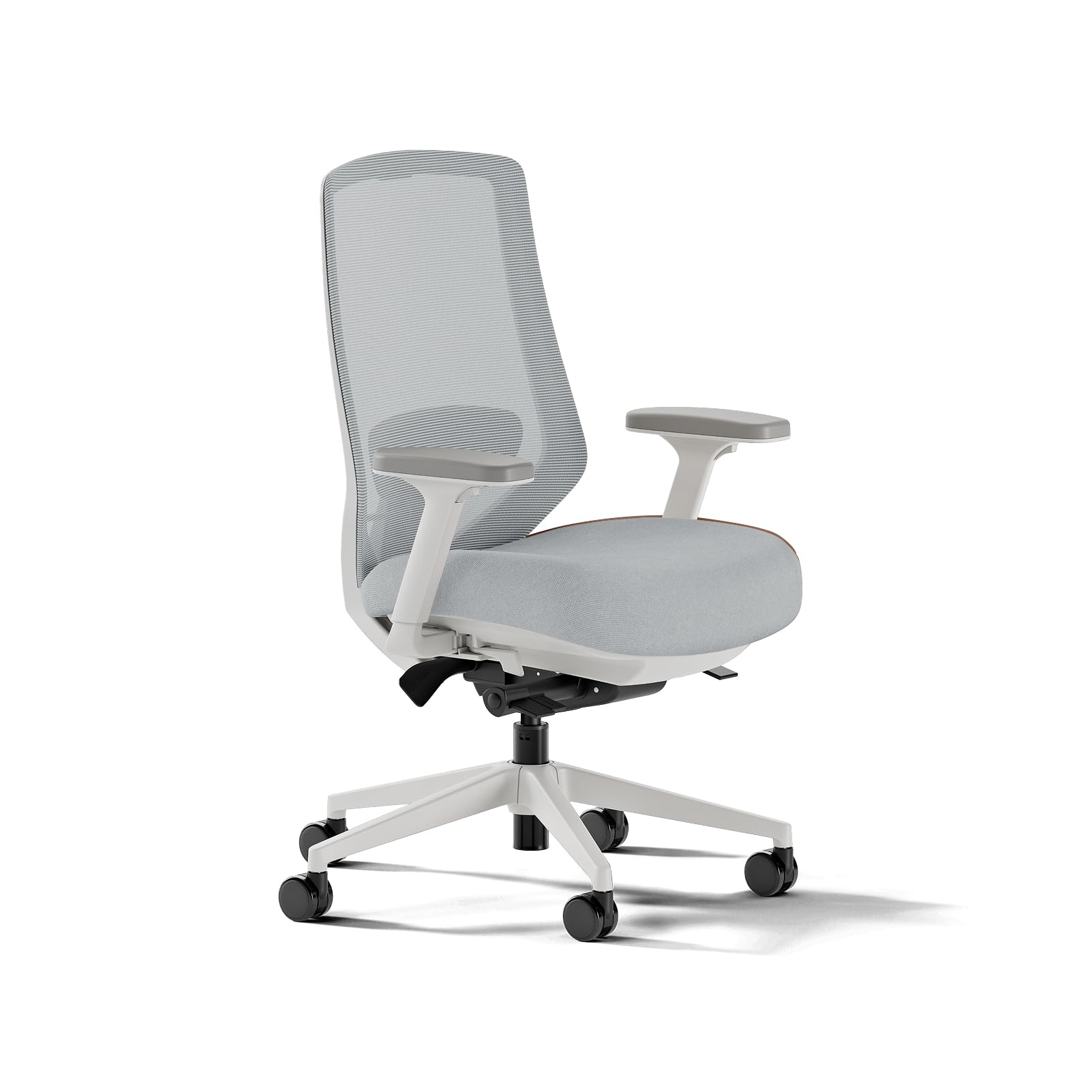
14 points of adjustment, 5D armrests, and forward tilt make this the most tunable chair in the lineup
Quality leads the owner feedback at 37 mentions, with adjustability and comfort tied right behind at 30 each—a rare triple-threat. The 14 adjustment points cover everything: seat height, seat depth, backrest angle, tilt tension, lumbar height and amount, and armrests that move in five directions (height, width, depth, pivot, and pad position). The forward tilt feature tilts the seat cushion forward to support active sitting, which keeps your hips open during intense focus sessions.
The lumbar cushion adjusts vertically for customized back support, and owners with lumbar and tailbone issues call it the best desk chair they’ve owned after 30 years of office work. The molded high-density foam evenly distributes weight and maintains its shape, so you’re not sinking by hour eight. A buyer who switched from a Herman Miller Aeron found this comparable at a fraction of the price.
Two fit notes to weigh: a 5’4″ owner wished it went lower, and the warranty requires shipping to the mainland if something breaks. Assembly takes about 45 minutes and the seat is heavy, so have a second pair of hands ready.
Why It Wins
- 14 points of adjustment for a truly custom fit
- 5D armrests move in five directions
- Forward tilt supports active sitting posture
Consider Before Buying
- Seat may not go low enough for users around 5’4″
- Warranty claims require shipping to mainland
Grab this if: you want a chair you can fine-tune to the millimeter and you value forward tilt for active sitting.
Be cautious if: you’re petite and need a very low seat height, or you want low-maintenance warranty service.
11. Hbada X7 Smart Chair
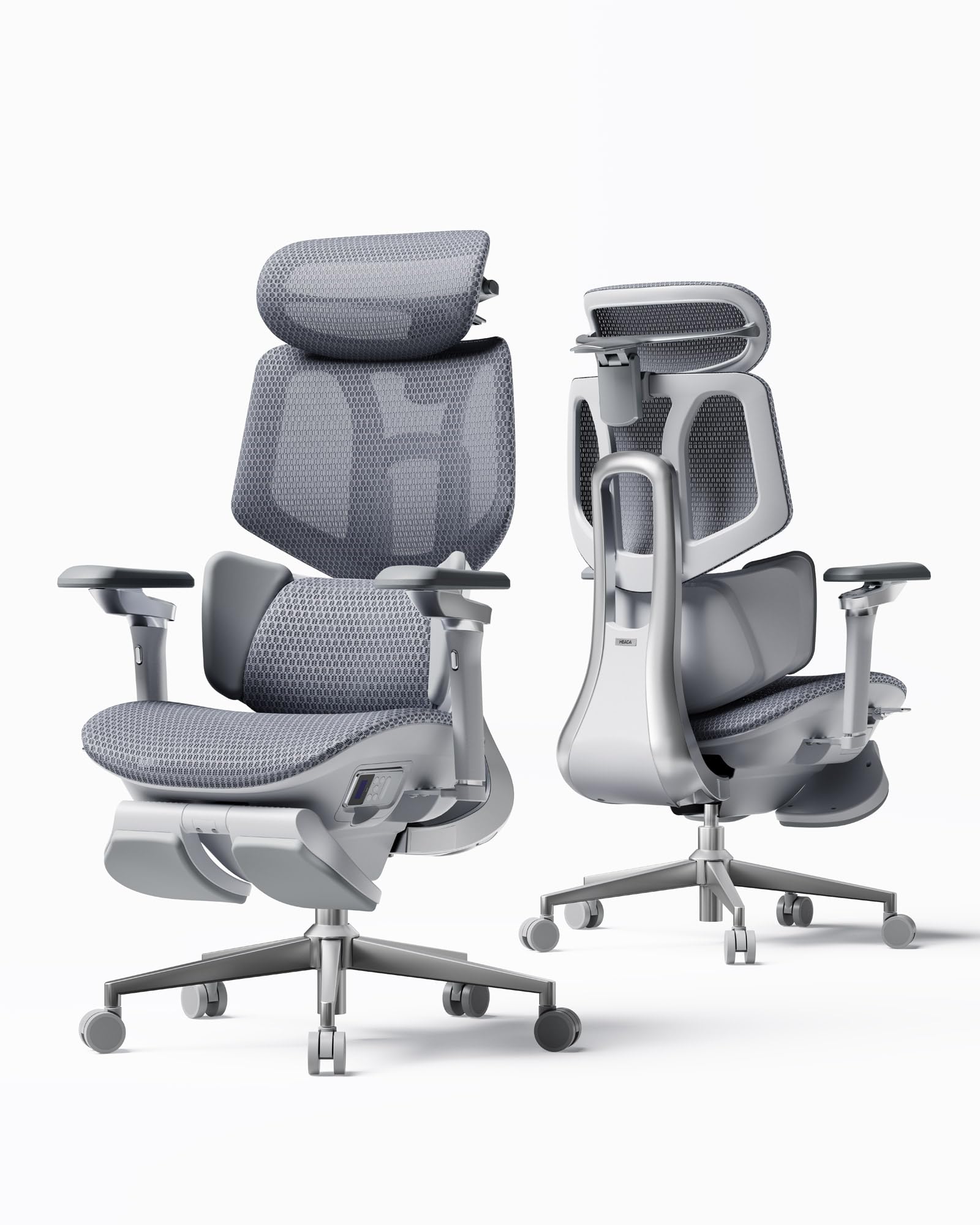
An AI-powered lumbar that tracks your posture automatically, plus 8D massage and graphene heat for recovery breaks
The X7 is the only chair here with a fully automated lumbar system—dual pressure sensors and a high-speed intelligent control track your position and adjust support in real time, whether you lean forward, sit upright, or recline. It’s the most technically ambitious pick, designed for professionals who sit 8 to 12 hours a day. An owner with a herniated L5-L2 disc credits the self-adjusting lumbar for easing long desk hours.
The work recovery system is the differentiator: integrated 8D biomimetic massage, graphene heating, and gentle red light comfort technology work together to create a warm, relaxing seat that helps you recharge between meetings or gaming sessions. The 3-level ventilated seat cushion adjusts airflow so you stay cool, and it runs on dual rechargeable batteries or a cord. The 4D headrest and 720° armrests move in every direction you can imagine, and the aerospace-grade aluminum frame anchors the whole package.
Honest sizing: a 6’3″ reviewer found it too small, with insufficient seat height and backrest for his frame, and noted the seat leather wrinkles loosely. Durability draws mixed feedback—some find it sturdy while a few report armrests breaking apart. For sub-6-foot programmers, it’s a revelation; for taller ones, look elsewhere.
Technology That Delivers
- AI lumbar tracks posture automatically with dual sensors
- 8D massage, graphene heat, and red light therapy
- Aerospace-grade aluminum frame for stability
Real Limitations
- Too small for users over 6’3″
- Durability is mixed—some report armrest breakage
Perfect for: programmers under 6 feet who want massage, heat, and automated lumbar that adapts as they move.
pass on it if: you’re tall or you want a simpler chair without electronics that could fail.
Understanding the Specs
Lumbar Support Systems
A fixed pad only helps if it happens to hit your curve. Adjustable lumbar moves up and down, and occasionally in and out, so you can fill the gap precisely. Self-adaptive systems use sensors to track your posture and adjust continuously—useful if you shift positions often while coding.
Seat Depth Adjustment
This sliding pan lets you move the seat forward or backward so your thighs rest fully on the cushion without pressure behind the knees. It’s the feature that prevents the numbness and leg fatigue that creep in after hour six of sitting. Rare at budget prices, it’s worth prioritizing if you’re tall or have long legs.
FAQ
What lumbar support should I look for in a chair for programming?
Does seat depth adjustment really matter for long sitting?
How much weight can these chairs support?
Is mesh or foam better for a programmer’s chair?
What are 3D, 4D, and 5D armrests?
Will a chair with a footrest help with long workdays?
Which chair is best for taller programmers over 6’2″?
How long does assembly typically take?
Final Thoughts: The Verdict
Across the board, the chair for programmers winner is the YFO Ergonomic Chair because it delivers crowd-favorite comfort, silent rollerblade wheels, and a 2-in-1 armrest design at a value price that’s tough to top. If you want the leg-friendly sliding seat depth that protects your thighs on 8+ hour sits, the ProtoArc EC200 is the one to reach for. And for a tech-forward splurge with massage and heat, grab the Hbada X7 Smart.
How We Picked
We do not accept paid placement. Every pick is matched to a real buyer and a real use-case; we do not hands-on test units.
Sources & Methodology
Specifications: manufacturer listings and product documentation. Review insights: verified customer reviews, as of August 2026. Pricing: not shown on this page (it changes often); check the current price via the retailer link.
As an Amazon Associate, Gadgets Feed earns from qualifying purchases. This does not affect which products we feature.