
Our readers keep the lights on and my morning glass full of iced black tea. As an Amazon Associate, I earn from qualifying purchases.
Specs are compiled from manufacturer listings and verified buyer reviews and can change over time — please confirm the key details on the product page before buying.
You can get a weathered, time-worn look on your wood without stripping it down to bare wood—just use an aged oak gel stain. The key choice is between a thick, non-drip formula for vertical cabinet doors and a thinner hybrid that soaks into unfinished grain. This guide compares the most talked-about options by coverage, consistency, and the honest trade-offs buyers report, so you can match the right can to your project.
I’m Min — the founder and writer behind Gadgets Feed. This guide is built by comparing the manufacturers’ published specifications and the patterns across verified customer reviews, so you get each pick’s real strengths and trade-offs instead of marketing spin.
You don’t need to be a finishing expert to get great results; this look at the best aged oak gel stain options keeps the technical talk simple and focuses on what actually matters in your workshop.
Our Picks at a Glance

How To Choose The Best Aged Oak Gel Stain
Gel stains are different from liquid stains because they sit on top of the wood instead of sinking deep into the grain. That makes them forgiving on surfaces like metal, veneer, and fiberglass, which don’t take a traditional stain well. Your main job is to pick a formula whose thickness and base match the surface you are finishing.
Match the base to your project
Oil-based gels (like the Minwax Quart) are the classic choice — they are thick, non-drip, and great for vertical surfaces, but they need mineral spirits for cleanup and have a stronger odor. Water-based hybrids (like the Retique It models) clean up with soap and water and smell far less, which matters if you are working indoors. The catch with very thin hybrids is that they can dry fast and act more like a glaze, which is a specific behavior you want to know before you start.
Quick Comparison
| Model | Best For | Volume | Coverage | Base | Amazon |
|---|---|---|---|---|---|
| Minwax Gel Stain★ Best Overall | Vertical & non-wood surfaces | 32 oz | — | Oil | Amazon |
| Retique It Old Oak 8oz | Small refinishing projects | 8 oz | 80 sq ft | Water | Amazon |
| Old Masters Aged Oak | Hard-to-stain wood & pine | 8 oz | — | Oil | Amazon |
| Retique It Old Oak 32oz | Floors & large surfaces | 32 oz | 360 sq ft | Water | Amazon |
In‑Depth Reviews
1. Minwax Gel Stain for Interior Wood Surfaces, Quart, Aged Oak
Our pick — 4.5★ from 550+ verified ratings; the strongest balance of quality and price.
The pudding-thick standard that stays put on vertical door panels.
This is the gel stain most people picture when they think of the category: a thick-bodied oil formula designed to sit on the surface and give you real control while you wipe. Its whole purpose is tackling vertical surfaces where a thin liquid stain would run — think cabinet fronts, molding, trim, and the doors that owners keep mentioning. The classic medium oak color is what earns its place as the most versatile entry on this list.
The phrase owners keep using is “thick pudding consistency” — and the advice that comes with it is to stir gently and never shake the can. One owner applied it straight over tan paint on a bench with no sanding at all, brushing it on and wiping after 30 to 60 seconds for a perfect color match. Another covered fiberglass garage doors with 2/3 of a quart, having cleaned the surface with TSP and skipped primer entirely, recommending a chip brush over a Wooster. It delivers even color on metal, veneer, and fiberglass, not just bare lumber.
This quart holds exactly 32 fluid ounces (the same as the biggest bottle on this list), so it outlasts the half-pint options by a wide margin. But like any oil gel, it dries fast and gets tacky quickly—you have to move and wipe with intent, and streak-free results depend on your technique. Also, the color can shift as it cures over days, and heavy finishes or wax applied too soon can lift the stain; respect the dry time and you will be fine.
Why it wins
- Non-drip formula makes vertical surfaces like doors and trim genuinely easier
- 32 fluid ounces covers a lot of ground in one can
- Works over metal, veneer, and fiberglass, not just wood
- Owners praise the staining quality and overall effectiveness most
The honest limits
- Fast drying time means less room to fix mistakes mid-stream
- Needs mineral spirits for cleanup and carries a stronger odor
- Even, streak-free finish takes practice
Reach for this if: you are finishing vertical furniture, doors, or non-wood surfaces and want the thick, controlling formula that beginners and pros alike point to.
Think twice if: you are scent-sensitive or want soap-and-water cleanup — you will want a water-based hybrid instead.
2. Gel Stain by Retique It, Thin Water-Based Gel Stain/Paint Glaze, Old Oak

A low-odor hybrid that is thin enough to act as three finishes in one.
This is the most flexible tool in the lineup because it refuses to be just one thing. Retique It calls it a hybrid: thin enough to absorb into unfinished wood like a traditional stain, but able to ride over an existing finish like a gel, and it even behaves as a paint glaze on painted surfaces. The nano-technology claim is the brand’s own, but the practical payoff is one bottle that can step in for several different products.
The big selling point for indoor work is the base — it is water-based, non-toxic, hypoallergenic, and the maker even notes it smells like water. That alone makes it a different creature from the oil-based Minwax quart above, and it changes the whole experience of finishing a piece in a living room. Cleanup means soap and water rather than solvents, which is the main reason hands-on DIYers gravitate toward it.
Keep the size in perspective: this 8-ounce jar covers 80 square feet, a dramatic contrast to the 360 square feet from the 32-ounce version of the same brand. It suits a single piece of furniture or a quick touch-up, not a whole room. The honest catch is that this size has drawn sharply divided reactions—a couple of owners flatly reported the color running off from what they expected; one called it an “expensive mistake,” and another says it does not hold up as a floor stain. Weigh the finish type you need before committing.
What stands out
- Water-based with minimal odor, ideal for indoor work
- Three-in-one behavior as stain, gel, and paint glaze
- 8 fluid ounces of liquid at 8 ounces of weight — easy to store anywhere
Where it divides opinion
- Color matching has been inconsistent for some buyers
- Owners advise against it for flooring projects
- Smaller volume means less room for error on big jobs
Best for: a scented-conscious finisher glazing or touching up one wooden piece with soap-and-water cleanup.
Not the one for: flooring — the review trail is clear that this thin water base does not behave like a floor stain.
3. Old Masters 81916 Gel Stain, Aged Oak – 1/2 Pint

The oil-base specialist that tames pine, plywood, and tricky grain.
Old Masters positions this little half-pint as the answer to wood that fights back — the label explicitly calls out hard-to-stain wood along with pine, plywood, and veneers. That is the niche where this pick stands apart from the rest of the list, because those are the surfaces where ordinary liquid stains blotch and come out splotchy. It also works on fiberglass, metal, and composition surfaces, spreading the same strengths Minwax offers into a more specialized, smaller package.
The feedback splits cleanly along project lines. One owner used it to make golden oak furniture look like weathered wood, applying with a foam brush and wiping off lightly after a few seconds to a brown, not gray, result. Another matched aged wood perfectly and praised how it covered small nicks in patio furniture. The common thread in the praise is how easily and evenly it lays down, and how far a little goes—one review sums it up: the stain spreads and wipes off immediately, so a small can covers more than its size suggests.
At 10.72 ounces of weight and just 8 fluid ounces of liquid, this is a full 4 times smaller in volume than the Minwax quart, and it comes in a 11 x 9 x 7-inch package—a 3.7x larger box than the compact 3 x 3 x 5-inch jar of the big Retique It can. The real friction point is color interpretation: owners mention it reading more gray than aged oak, with one disappointed owner saying it spreads out closer to white. If you are chasing a warm brown oak tone rather than a weathered gray, treat this one as a gamble worth testing on a scrap first.
Its strengths
- Purpose-built for hard-to-stain woods like pine and plywood
- Spreads easily and wipes off fast, per owner reports
- A little goes a long way in an 8-fluid-ounce container
Know before you buy
- Reads grayer than expected — some call it white when spread thin
- Oil base needs mineral spirits for cleanup
- Half-pint volume is best for one project, not a full room
Grab this for: a knotty pine or plywood piece that rejected every liquid stain you have tried — this is the specialist for that fight.
Pass if: you need a guaranteed warm brown; customers note this leaning gray, so test on scrap wood first.
4. Water-Based Gel Stains by Retique It, 55 Old Oak, 32oz Stain
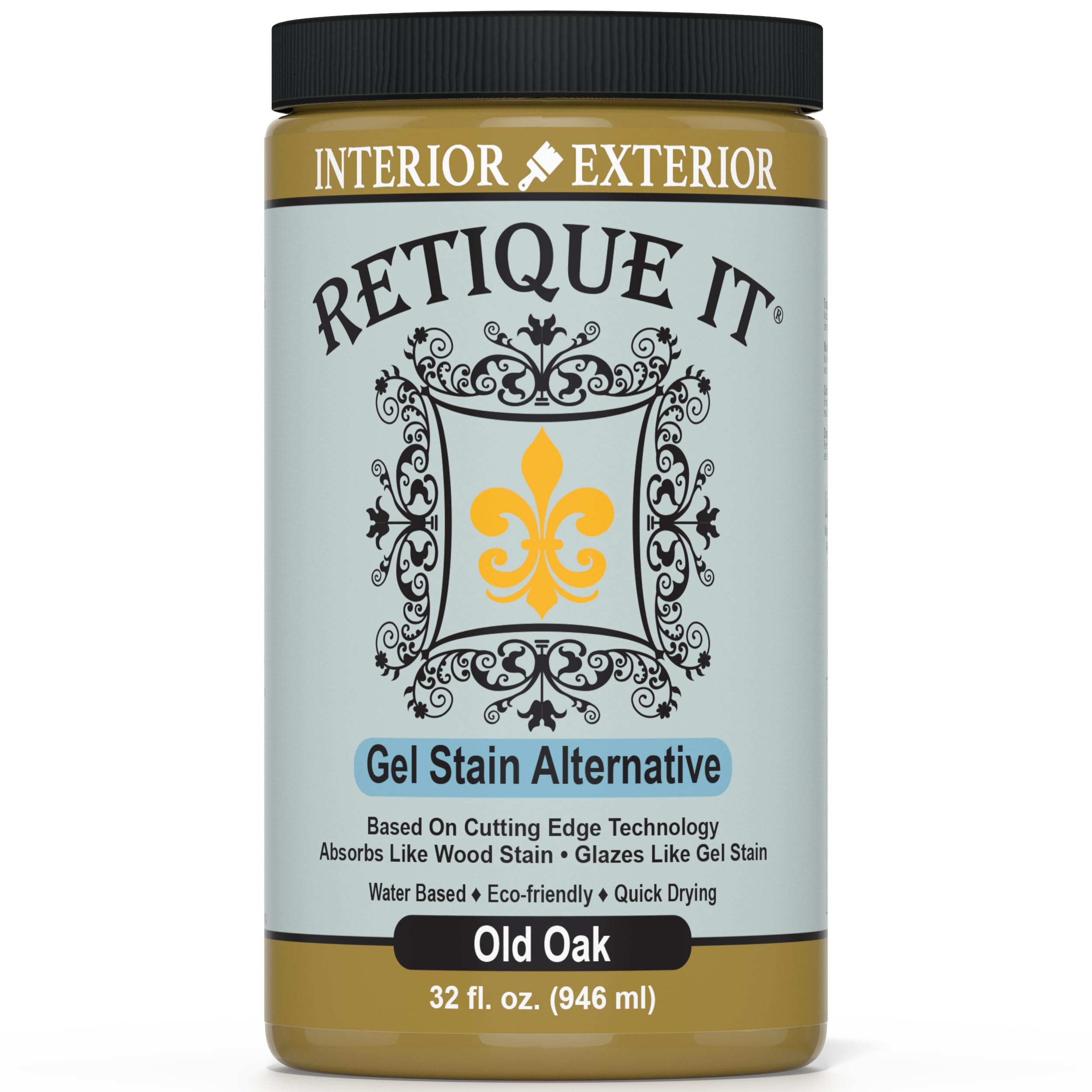
The 360-square-foot giant built for floors, doors, and whole rooms.
This is the big sibling of the 8-ounce Retique It jar, and the volume difference changes what the product is for. One 32-fluid-ounce jar is rated to cover 360 square feet, which is a 4.5x jump in coverage versus the 80 square feet of the smaller bottle. That is a room of flooring or a set of garage doors in a single can, and the maker lists furniture, trim, floors, garage doors, and front doors as fair game.
Owners who love it really love it — one called it true gray with no blue or purple undertones, layered easily from light to dark to match weathered wood, and came back after trying four in-store stains first. Another layered three coats over a light gray chalk paint on a dark dresser to hit the exact gray wanted. This is the same water-based, low-odor hybrid technology as the smaller jar, so you get the same soap-and-water cleanup and gentle smell, just in a 3-pound container that covers a whole project.
The counterweight is that this is not a beginner-proof product, and honesty about streakiness matters here since owner satisfaction is split. Its most-discussed trait is stain quality, and the feedback around it is mixed rather than glowing—one frustrated owner says it dried within seconds and ruined a coffee table project, while another finds it easy to use but too watery.
Where it shines
- 360 square feet per 32-ounce jar — class-leading coverage here
- Water-based with low odor for interior work
- Layers well to build a range of gray tones, per owners
Handle with care
- Fast-drying and unforgiving for beginners
- Some owners find the consistency too watery
- Streak-free results are not guaranteed
This is your can if: you have a floor or a large flat surface and want one low-odor jar to finish the whole thing, working at a confident pace.
Look elsewhere if: this is your first staining project — the seconds-fast drying time punishes slow, hesitant strokes.
Understanding the Specs
Oil vs. Water Base
This is the fork in the road that decides your whole experience. Oil-based gels (the Minwax and Old Masters picks) are thick, non-drip, and superb on vertical surfaces, but they need mineral spirits for cleanup and carry a stronger solvent smell. Water-based hybrids (both Retique It options) clean up with soap and water, smell far less, and often lay down thinner — which changes how they behave on raw wood versus an existing finish.
Fluid Ounces vs. Coverage
The number printed on the label tells you the container size, but coverage tells you how far it goes. The two Retique It jars show the range perfectly: 8 fluid ounces rated for 80 square feet, versus 32 fluid ounces rated for 360 square feet—a 4.5x gap in coverage that matches the 4.0x gap in volume. Match the can’s reach to the size of your project so you do not run out halfway through a door or floor.
FAQ
What is the difference between gel stain and regular liquid stain?
Can I use an aged oak gel stain on metal or fiberglass?
Should I shake or stir my gel stain before using it?
How long does gel stain take to dry?
Does aged oak gel stain come out brown or gray?
Can gel stain cover an existing paint or finish without sanding?
How much area will a quart cover?
Is water-based gel stain better for indoor projects?
Can I use gel stain on flooring?
Does gel stain need a topcoat or sealer?
Final Thoughts: The Verdict
For most people, the aged oak gel stain winner is the Minwax Gel Stain Quart because it pairs the thick, non-drip formula owners rave about with a full 32-fluid-ounce can that handles vertical doors and non-wood surfaces alike. If you want a low-odor water-based hybrid that cleans up with soap and water, grab the Retique It Old Oak 8oz for small indoor projects. And for a floor or large flat surface where coverage matters most, the Retique It 32oz jar is the one to reach for — just be ready to work fast before it dries.
How We Picked
We do not accept paid placement. Every pick is matched to a real buyer and a real use-case; we do not hands-on test units.
Sources & Methodology
Specifications: manufacturer listings and product documentation. Review insights: verified customer reviews, as of August 2026. Pricing: not shown on this page (it changes often); check the current price via the retailer link.
As an Amazon Associate, Gadgets Feed earns from qualifying purchases. This does not affect which products we feature.