
Our readers keep the lights on and my morning glass full of iced black tea. As an Amazon Associate, I earn from qualifying purchases.
Specs are compiled from manufacturer listings and verified buyer reviews and can change over time — please confirm the key details on the product page before buying.
Waking up in a puddle of your own sweat at 2 a.m. in a campground without hookups is the fastest way to ruin a trip. A 12-volt RV air conditioner solves that by running straight off your house battery bank, so you can cool down anywhere — no generator, no 110-volt shore power, no noise complaints from neighbors. The catch is that 12V AC units come in two very different flavors: rooftop units that replace your existing vent, and mini-split or under-dash kits that mount elsewhere. This guide breaks down which style fits your rig, how to match BTU output to your space, and what your battery really needs to run it all night.
I’m Min — the founder and writer behind Gadgets Feed. This guide is built by comparing the manufacturers’ published specifications and the patterns across verified customer reviews, so you get each pick’s real strengths and trade-offs instead of marketing spin.
From rooftop units with app controls to compact mini-splits that blow ice-cold air, here is everything you need to choose the best 12v air conditioner for rv for your rig, your battery bank, and your camping style.
Our Picks at a Glance
How To Choose The Best 12V Air Conditioner For RV
Picking a 12V AC isn’t like buying a window unit. Everything downstream — your battery size, your roof structure, your wiring gauge — depends on a few core choices you make upfront. Here’s how to lock in the right priorities before you spend.
Rooftop vs. Mini-Split vs. Under-Dash
The first fork in the road is physical. A rooftop unit bolts onto your existing 14″ x 14″ roof vent, which makes installation straightforward if you have that standard cutout. These typically sit low-profile — some as short as 6.1″ tall — which cuts wind drag. On the other hand, a mini-split style mounts the condenser outside and the evaporator inside, which can cool more aggressively but requires finding wall space for the indoor unit. Under-dash kits are a third path, used mainly in trucks and vans where roof space is scarce or the vehicle can’t take a rooftop install.
Match BTU to Your Space, Not Your Dreams
BTU (British Thermal Units) measures raw cooling power, but for 12V units it tells only part of the story. A 10,000 BTU unit is the balance for most smaller campers and vans, while 12,000 BTU pushes harder for larger trailers or hotter climates. However, many buyers report a 12V unit cools more slowly than a similarly-rated 120V unit, so reading real-world reviews matters at least as much as the number on the box. That 12,000 BTU model might perform closer to a good 8,000 BTU unit in practice — a detail the spec sheet won’t tell you.
Battery Math: It’s About Amp-Hours and Current Draw
Your battery bank is the whole ballgame. A 12V AC can pull roughly 40-50 amps while running hard, then settle to around 30 amps once the cabin reaches temperature. That means a 400Ah battery — about 4,800 watt-hours — can sustain all-night cooling, while a smaller 200Ah bank will struggle past a few hours. Look for an inverter compressor (a variable-speed type that sips power instead of gulping it) if you’re serious about sleeping off-grid without waking up to a dead battery.
Quick Comparison
| Model | Best For | Cooling Power | Form Factor | Weight | Amazon |
|---|---|---|---|---|---|
| Outequip 10K BTU★ Best Overall | Quiet rooftop cooling | 10,000 BTU | Low-profile rooftop | 43 lbs | Amazon |
| Bailigo 12K BTU KitClassic Car Pick | Classic cars & trucks | 12,000 BTU | Under-dash kit | — | Amazon |
| Treeligo 12K Mini-SplitMax Cold Output | Large cabins & vans | 12,000 BTU | Mini-split | — | Amazon |
| Somokg 11K BTU | DIY install on vents | 11,000 BTU | Low-profile rooftop | 43 lbs | Amazon |
| Cybertake S2 Pro | Tent & rooftop campers | 5,100 BTU | Portable | — | Amazon |
| Gidrox 10K Rooftop | App-controlled vanlife | 10,000 BTU | Rooftop | 59 lbs | Amazon |
| Contrymod 10K Rooftop | Crowd-pleasing efficiency | 10,000 BTU | Rooftop | — | Amazon |
| Outequip 10K + Heater | Year-round vanlife | 10,000 BTU | Low-profile rooftop | 43 lbs | Amazon |
| Gidrox 12K Heat Pump | Powerful all-season cooling | 12,000 BTU | Rooftop | 84.7 lbs | Amazon |
In-Depth Reviews
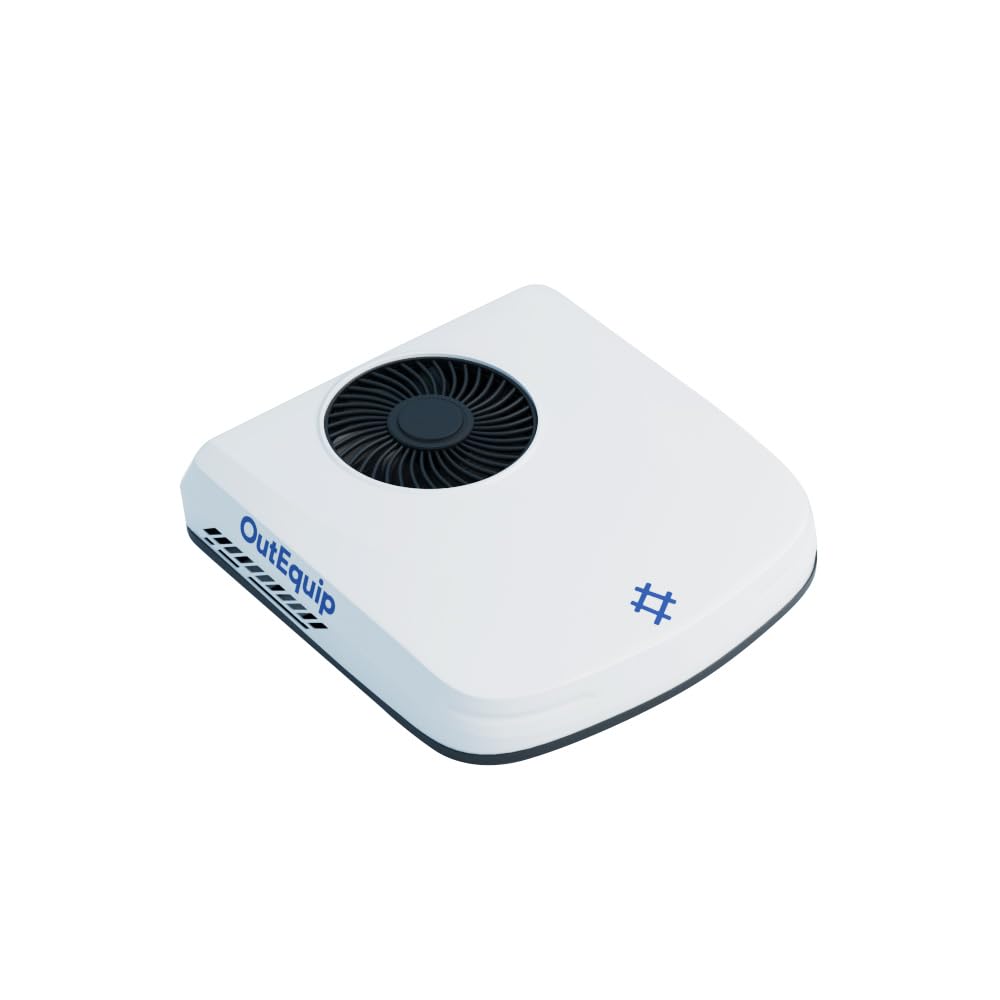
1. Outequip RV Air Conditioner 10K BTU
Our pick — over 4.5★ from 80+ verified ratings; the strongest balance of quality and price.
The featherlight rooftop unit that makes off-grid sleep actually happen
This is the unit the crowd has quietly crowned the 12V standard — and it earns that with a 10,000 BTU rating that cools a rig in about 15 minutes flat. Where it truly shines is the whisper-quiet operation, with owners reporting the exterior is quieter than their roof vent, which matters when you’re parked three feet from the next camper at 11 p.m. The brushless copper motor fans and spring-supported mounts do real work here, keeping both noise and vibration down.
What wins people over is the thoughtful engineering for real-world battery life. It draws roughly 50 amps at full tilt, then settles to around 30 amps maintaining temperature — and with a 480Ah power source you get about 8 hours of cooling, stretching to 10 hours on a 600Ah bank. Owners running it on a 360Ah battery report 6-7 hours of max cooling, which is honest math for a rig without shore power. At 43 lbs, it’s light enough for one person to wrangle onto a roof, and it fits the standard 14″ x 14″ opening without roof modifications, making solo installs a real possibility.
The electronics protection is a hidden gift: this unit is built to safeguard sensitive systems from voltage spikes., and the zinc-coated condenser plus UV-stabilized ABS shell means it shrugs off sun and rain alike. One owner running 400Ah of LiFePO4 with 200W of solar has logged over 100 hours with zero issues. The crowd favorite sits at 4.7 stars, reflecting strong owner satisfaction., and the biggest chorus of praise centers on cooling performance — the thing that actually matters. The only recurring advice is to seal the condenser area well to prevent leaks, a small but worthwhile install step.
What owners rave about
- Almost silent outside — quieter than a roof vent, per owners
- Low current draw: ~50A running, ~30A holding
- Light 43 lb weight makes solo rooftop install feasible
The trade-offs
- Needs a beefy battery bank (360Ah+) for all-night use
- Sealing the condenser area well is essential to avoid drips
Reach for this if: you want a proven, quiet rooftop unit that plays nice with a 400Ah+ battery bank and don’t mind a solo DIY install.
Think twice if: you run a tiny 200Ah bank — this unit will drain it in a few hours on high.
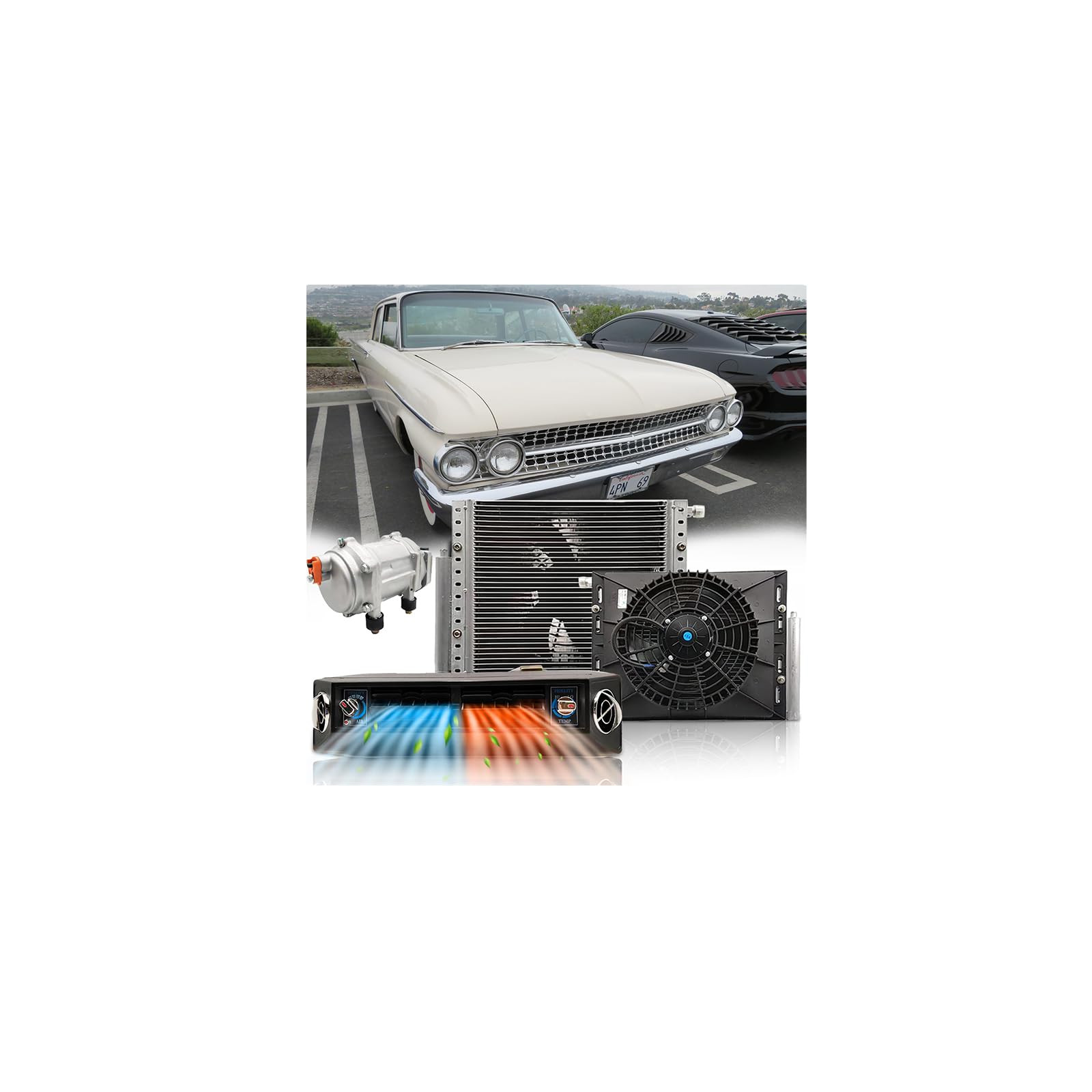
2. Bailigo 12K BTU Under Dash A/C Kit
The under-dash kit built for vintage rides that never had factory A/C
If you’re rolling a classic car, a tractor, or an ATV with no rooftop real estate, this is the 12V path that actually works. The under-dash kit packs 12,000 BTU of cooling into a compact 5.5″ x 12.6″ x 15.7″ unit, and it delivers both cooling and heating from one box. A 1956 Chevy Belair owner reported an easy install with all parts included, and plans to buy two more for other classics if performance holds — about the strongest endorsement a 70-year-old car can offer.
The inverter technology (a variable-speed compressor type that sips power on demand) keeps things running below 50dB, while a professional-grade 20cc scroll compressor with 3000-speed motors pushes cold air fast — the maker claims interior regulation in as little as 8 minutes using R-134A refrigerant (which is not included, so factor that into your budget). The 3-in-1 design merges the receiver dryer, condenser fan, and condenser into one assembled component, which simplifies wiring and connections significantly.
This is where honesty matters: some owners hit real friction. The inside unit itself isn’t exactly tiny — one buyer put it plainly: “Under dash unit is not all that small.” Others noted the kit ships without instructions, and the 8ft+ A/C lines and wiring may need cutting, with some fittings requiring replacement. If you’re comfortable improvising on install, it’s capable; if you want a turnkey bolt-on, expect some homework. The crowd rate sits at 4.2 stars, indicating solid but not flawless performance..
Why it fits the classic crowd
- Compact under-dash mount for cars with no roof space
- Dual cooling and heating from one 12V unit
- 3-in-1 assembly simplifies the install puzzle
Know before you buy
- No instructions included — expect a wiring puzzle
- Inside unit is bulkier than the photos suggest
- Some fittings may need replacement, adding to cost
Best suited for: vintage car owners and farmers who need 12V cooling where a rooftop unit physically can’t go.
Who it frustrates: anyone expecting a plug-and-play kit with clear instructions and perfect fitting lines.
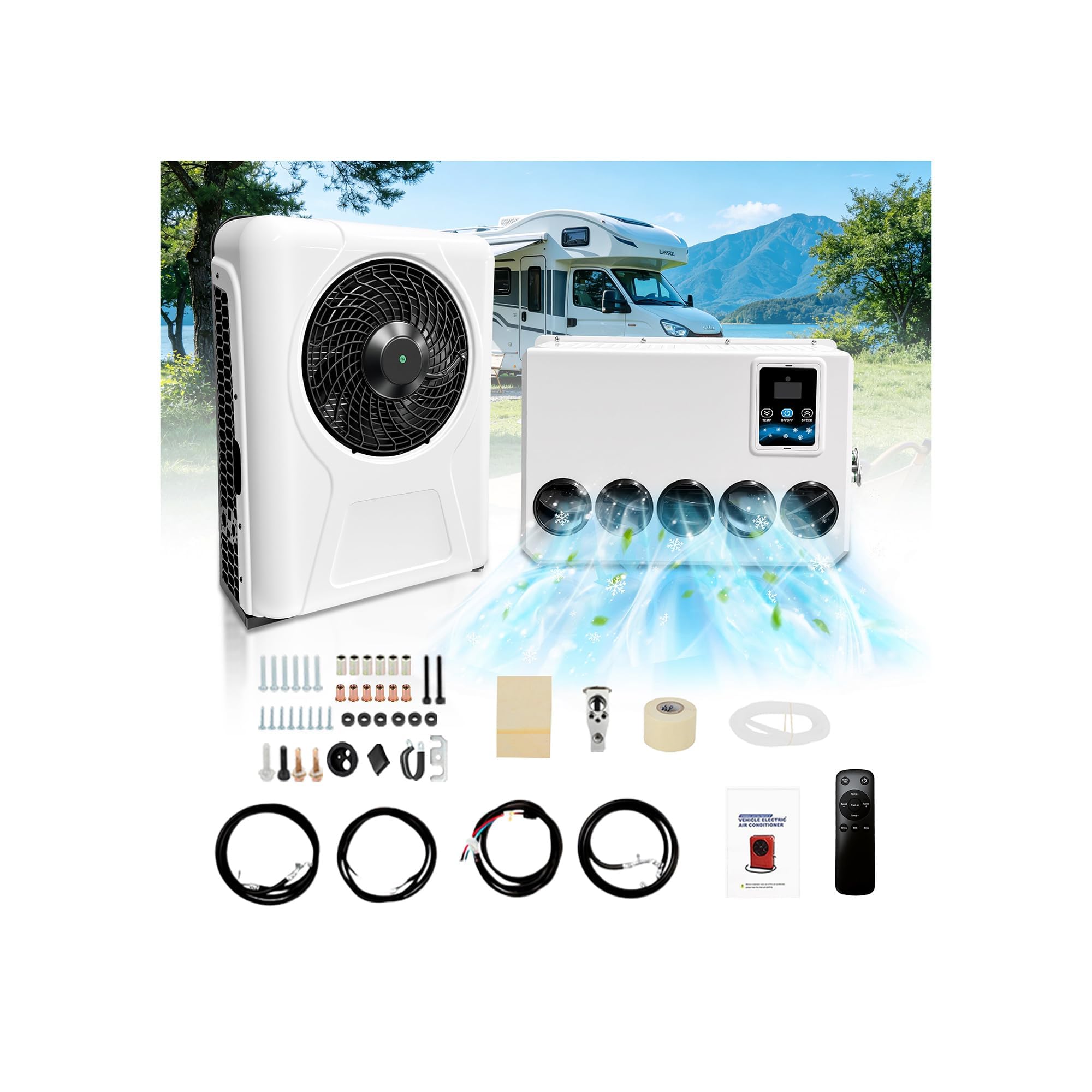
3. Treeligo 12K BTU 12V Mini-Split AC
The split-style unit that blows 42-degree air off a single deep-cycle battery
The split design puts the 26.22″ x 19.09″ x 8.66″ condenser outside and the compact indoor unit (17.95″ x 6.22″ x 12.6″) inside, which frees up roof space entirely. A 350 CFM airflow volume (a measurement of how much air it moves per minute) with 360° omnidirectional circulation means no dead spots, so the whole cabin cools evenly rather than just one corner.
The power story is impressive: 960W rated power with a stable 40-60A working current, making it a true low-consumption unit for a 12V system. One owner verified the chilling output personally, reporting “blowing 42 degree air” on a simple deep-cycle battery, and another using a 280Ah bank overnight in Florida used only 25-50% of capacity at 26°C. The inverter compressor and dual control (LCD panel plus remote) round out a package that feels genuinely complete.
There are quirks worth naming. The hoses exit from the right side only — left-side routing takes creative work. An icing issue on the expansion valve showed up for one owner, and the display is Celsius-only, which annoys some users. Owners also note the included rubber grommet struggles with power wires. The crowd rate sits at a fair 4.1 stars, with praise for cooling but quirks in install., with praise centered on how hard it cools for a 12V unit.
Where it impresses
- Strongest raw cooling at 12,000 BTU in the lineup
- Verified 42°F output from owners on simple batteries
- No roof cutout needed with split-style mounting
Install quirks
- Hoses exit right-side only — left routing is a puzzle
- Celsius-only display, no Fahrenheit toggle
- Some owners saw icing on the expansion valve
Pick this if: you need maximum BTU output and have wall space for an indoor evaporator unit rather than a roof cutout.
Pass if: you need left-side hose routing or want Fahrenheit readings straight from the panel.
4. Somokg 11K BTU with Heating

The ultra-slim, ultra-quiet vent unit that adds heat while staying affordable
At just 6.1″ tall and 43 lbs, this is the slimmest rooftop profile in the roundup — a real advantage for cutting wind drag and squeezing into low roof clearances. It delivers 11,000 BTU of cooling plus 4,500 BTU of supplemental heating, so it earns its keep in shoulder seasons when nights turn cold. The soft-start technology (which reduces startup surge by 70%) is the standout feature here, protecting your battery and wiring., dropping the initial power hit so your battery and wiring don’t get hammered every time the compressor kicks on.
That soft start pays off in battery life: owners mention about 12 hours of cooling on Eco Mode with a 400Ah battery. The noise level is genuinely library-grade at 35dB, making it a strong candidate for light sleepers. It fits the standard 14″ x 14″ roof opening and handles roof thicknesses from 1.5″ to 3.9″, with a complete hardware kit for ducted or non-ducted setups. The crowd rate of 3.9 stars reflects real capability, with owners noting solid cooling and heating for the price., with one Airstream owner calling it a “huge difference” in a 25ft trailer.
The honest caveats: thicker roofs may need a custom duct extension, and the oscillating vent motor broke on one unit. A Transit van owner installed it successfully but had to re-route wires by removing the cover, and noted the locking nut placement wasn’t in the instructions. Amp draw runs about 40 high and 25 low — consistent with the category. For the price point, the dual cooling-plus-heating ability makes it the value pick of the group.
Value highlights
- 70% startup surge reduction protects battery and wiring
- Slim 6.1″ profile reduces wind resistance
- 45W of heating plus cooling for year-round use
Budget reality check
- Thick roofs need a custom duct extension
- Wiring re-route required under the cover — not in manual
Grab this if: you want the cheapest dual heating-and-cooling rooftop unit and don’t mind a minor install improvisation on thicker roofs.
Look elsewhere if: you expect zero fiddling — this unit rewards handy owners, not plug-and-play types.
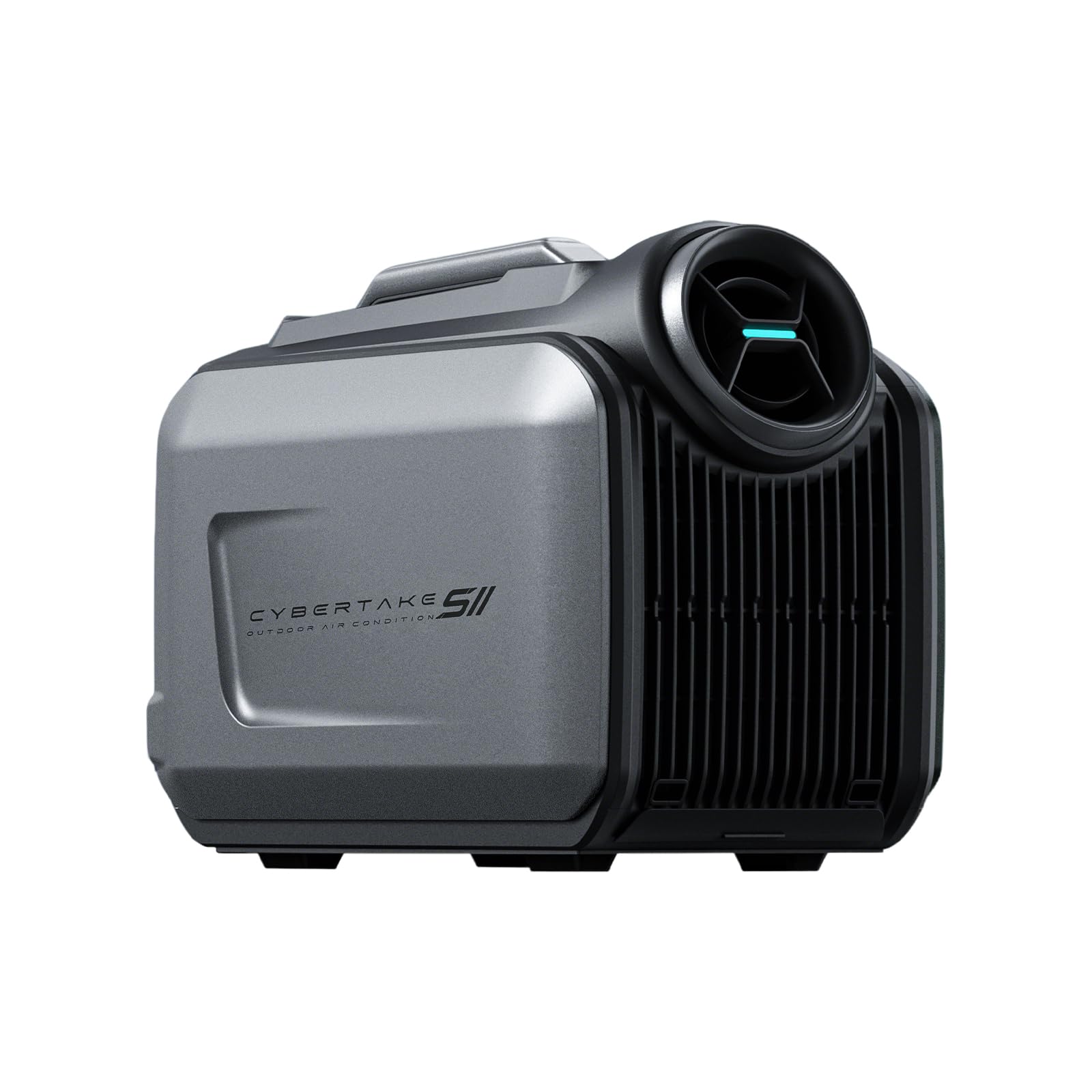
5. Cybertake S2 Pro Portable Camping AC
The plug-anywhere portable that moves from tent to truck in 30 seconds
This is the shape-shifter of the list — a truly portable unit that runs on three different power sources: wall outlet (100-240V), your vehicle’s 12V or 24V system, or a portable power station at DC 48V. It delivers 5,100 BTU of cooling and 6,100 BTU of heating, enough to condition spaces up to 130 square feet. That makes it ideal for a rooftop tent, a small cargo trailer, or even a cabin, and setup genuinely takes about 30 seconds since there’s nothing to bolt down.
The Eco+ mode is the battery-saver here, using as little as 1kWh per 8 hours — though owners note that figure takes some conditions to hit. It operates at a whisper-quiet 40dB (quieter than a dishwasher), and the IPX4 water-resistant shell shrugs off splashes and rain, making it a legitimate outdoor companion. The comfort range is wide: it can cool a space down to 60°F or warm it to 90°F, with a 0-12 hour timer and 3 fan speeds.
Owners confirm it performs excellently in 90-degree conditions and call it a reliable rooftop tent heater. But the math gets real: some customers note high power draw — one measured half of a 2000Wh battery gone in under 3 hours on Eco, while another saw 550W max draw. The remote control and a boost converter for hardwiring are sold separately, which catches people off guard. It’s a wonderful unit for tent and truck-cap camping, but it’s not a full-RV replacement.
Why it’s a fan favorite
- Triple power input: wall, vehicle, or power station
- 30-second setup with no permanent install
- IPX4 water resistance for outdoor use
Where it stays limited
- 5,100 BTU isn’t enough for a full-size RV
- High draw on Eco can drain 2000Wh in hours
- Remote and boost converter sold separately
Choose this if: your “RV” is a rooftop tent or a small truck cap, and you want one unit that also works at home on wall power.
Skip if: you’re cooling a 30-foot trailer — this is a micro-space solution, not a full rig AC.
6. Gidrox 10K BTU Rooftop AC
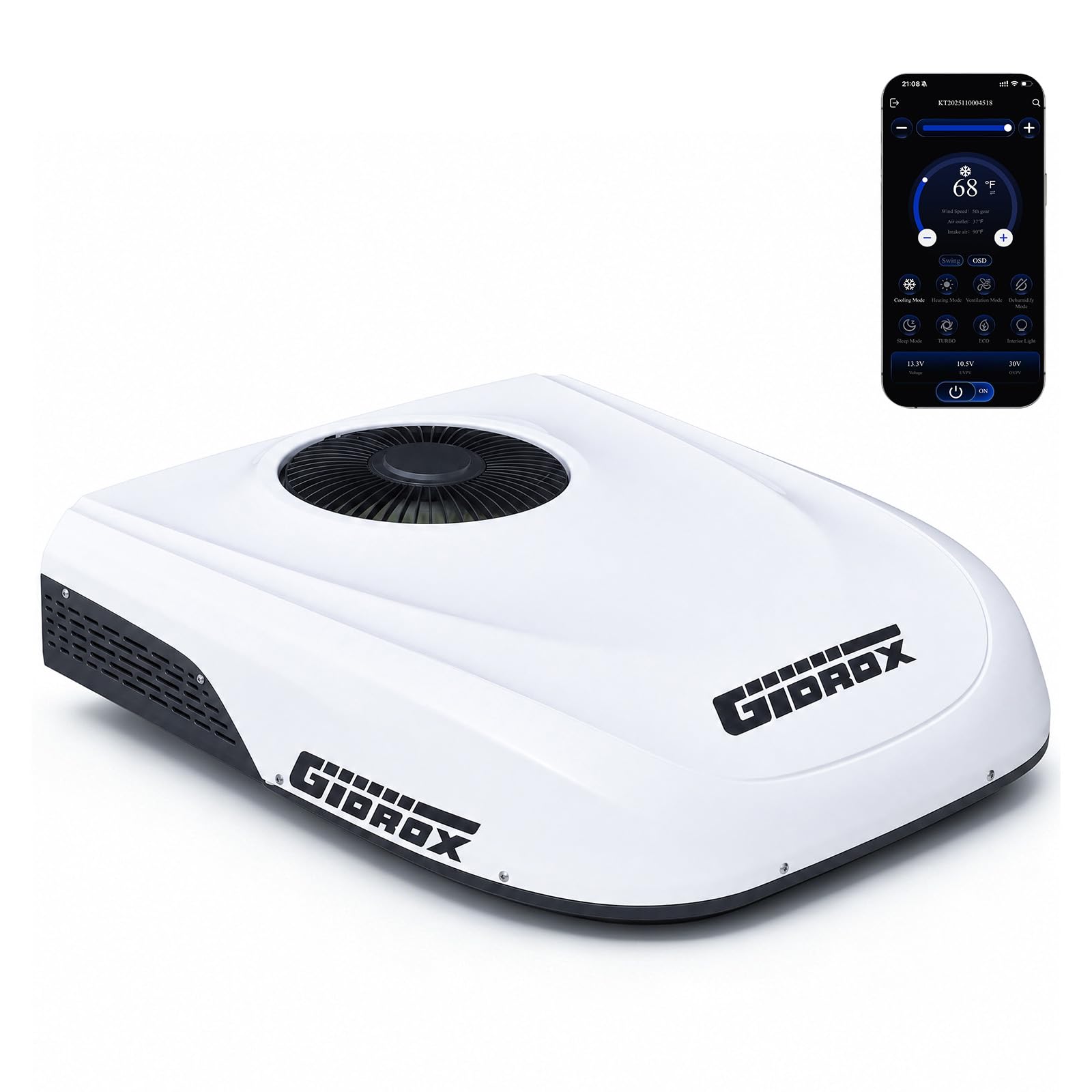
The 54-pound app-controlled rooftop unit that adapts its power on the fly
This one leans hard into smart control — you get a smartphone app via Bluetooth, an infrared remote, and physical buttons, so you’re never hunting for the right input method. It delivers up to 10,000 BTU of cooling with inverter technology that claims to chill the space in about 3 minutes, then maintains a constant temperature by adjusting power automatically. The real winner is the measured efficiency: owners measured roughly 350W draw in Eco mode at night in 30°C ambient, with cooling mode around 420W and turbo hitting 650-700W.
Those real-world numbers translate to genuine all-night capability — the maker says it can run all night off a 400Ah battery, and owners with insulated truck campers confirm it works well. The 40dB sleep mode (that’s about the volume of a quiet library) pairs with a brushless fan and sound-insulation design. At 59 lbs, it’s the heaviest of the rooftop units here, but the included 19.7 ft power cable and all mounting hardware ease the install, which fits a standard 14″ x 14″ cutout with roof thickness from 1.5″ to 3.5″.
The crowd rate sits at a solid 4.4 stars. The main critiques are fair: one owner running a 30ft camper found it “not that strong” and plans to add a second unit, while another noted the manual is vague on wiring and bolt specifics. A thicker-roof owner needed bolt and duct adaptations. The 3-way control scheme (Turbo, ECO, Sleep) is genuinely useful for matching power draw to your battery state.
Smart features that deliver
- Triple control: Bluetooth app, remote, and panel
- Measured 350W Eco draw for all-night running
- 19.7 ft power cable included
Physical trade-offs
- 59 lbs is heavy for a solo roof install
- Large 30ft campers may need a second unit
- Manual lacks detail on wiring and bolts
Reach for this if: you want phone-based temperature control and a proven 350W-nighttime draw for vanlife-sized spaces.
Consider alternatives if: you’re cooling a full 30-foot trailer and want one unit to do all the work.
7. Contrymod 10K BTU Rooftop AC
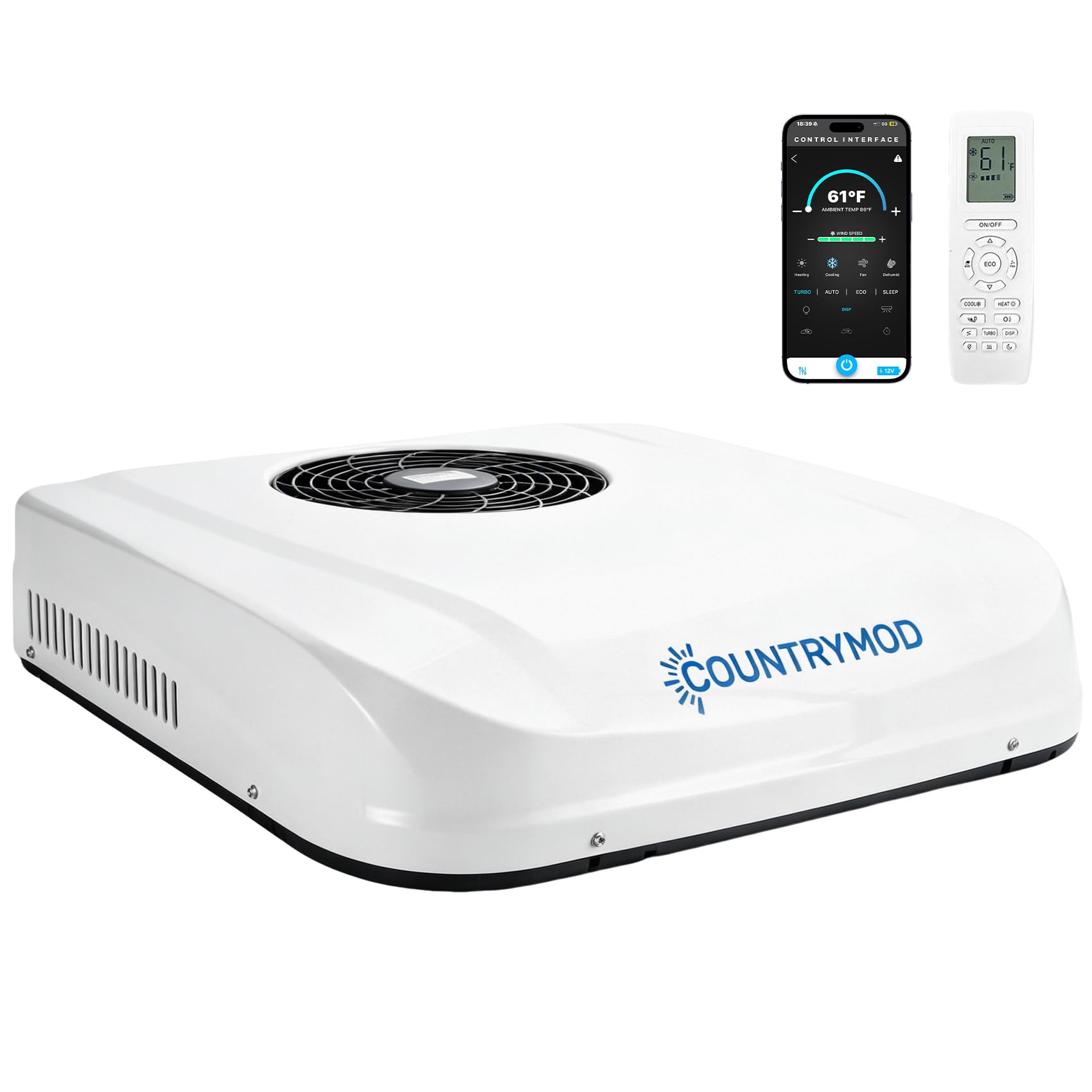
The inverter-driven rooftop unit that sips 260W in Eco and cools a bedroom to 80°F in Nevada heat
This is the efficiency champion, and it has the review volume to back it up — 4.5 stars across a deep pool of owners, making it the most-vetted unit in this roundup. The 300-900W inverter design (a variable-speed compressor type) adjusts output on demand, and owners measured the proof: 260W in ECO mode, 590W in TURBO, with a 300Ah battery lasting 12 hours in ECO. One owner cooled a 100 sq ft bedroom-and-bath to 80°F during the day and 72°F at night in 113°F Nevada heat — the kind of real-world torture test that separates hype from hardware.
The horizontal compressor design reduces vibration and keeps the center of gravity lower, which adds stability on rough roads and cuts noise to a low 45-55dB — owners describe it as “just a low humm.” The ductless design fits a standard 14″ x 14″ roof vent without major modifications, though it’s not suitable for RVs with existing ductwork. Owners consistently praise the low power consumption, noting it uses less than 50 amps and only about 50% of battery capacity, and it’s noticeably quieter and cooler than their old 120V units.
The recurring knock is instructions — owners call them poor, with some needing longer all-thread bolts for arched roofs and 6AWG or 4AWG wire depending on run length. The silver lining is customer service: “Tony” comes up repeatedly as responsive and helpful, even replacing a Bluetooth controller quickly. Fit the 14×14 vent, bring decent wiring, and this is the most battle-tested 12V rooftop unit you can buy.
Why it leads the pack
- Measured 260W ECO draw — best in class efficiency
- Cools effectively even in 113°F desert heat
- Low vibration horizontal compressor design
The install tax
- Poor instructions — bring your own wiring knowledge
- Needs proper gauge wire (4-6 AWG) for long runs
- Not compatible with ducted RV systems
Best overall value pick: the most-reviewed 12V rooftop unit with proven efficiency, if you can handle a slightly loose instruction manual.
Who it frustrates: anyone who wants a perfectly clear install guide and zero wiring guesswork.
8. Outequip 10K BTU with Heater
The 43-pound rooftop unit with a built-in heater and multi-voltage brains
This is the smarter sibling in the Outequip family, adding a 4,500 BTU PTC heater on top of the same proven 10,000 BTU cooling package. What really separates it is the multi-voltage flexibility — it runs natively on 12V, 24V, or 48V DC, which makes it a future-proof choice if you ever upgrade your battery system voltage. Owners have had the company swap units between voltages for free, which speaks to solid support. The whole package is 43 lbs and 6″ tall, keeping a low profile with a 40dB noise floor.
The efficiency story is strong: it’s a heat pump and inverter design that runs off battery or solar comfortably. One owner powered it with a 24V 200Ah bank and 870W of solar, noting it cools well in full sun. The kit includes a 15ft 6AWG wire with a fuse and measures just a 0.03V voltage drop — that’s the sort of spec detail that keeps your compressor happy on long wire runs. Reviewers point out no interior drips even in South Carolina heat and humidity, and it cools on low even at 96°F outside.
The install is genuinely well-documented — owners call the instructions accurate and clear, with one completing a 4-hour install in a 2020 Ford Transit 250. The crowd rate of 4.5 stars across over a hundred owners is the second-highest in this roundup, with installation (54 mentions) and cooling performance (49 mentions) leading the praise. The recurring gripes are minor: lid screws that are hard to remove and fragile connectors that benefit from spares. The heater is supplementary — great for mild cool nights, not for arctic conditions.
Standout strengths
- Runs on 12V, 24V, or 48V — future-proof flexibility
- Clear, accurate instructions with a 4-hour install
- 43 lbs with minimal voltage drop on long wire runs
Honest limits
- Lid screws are stubborn and connectors fragile — keep spares
- Heater is supplemental only, not for extreme cold
Pick this if: you want proven cooling plus backup heat in one rooftop unit, with an upgrade path to 24V or 48V battery systems later.
Pass if: you need primary heating for true winter camping — the 4,500 BTU heater is a supplement, not a furnace.
9. Gidrox 12K BTU Heat Pump
The heaviest hitter — 12,000 BTU cooling plus 9,000 BTU heat pump warmth in one rooftop unit
This is the all-season heavyweight, pairing 12,000 BTU of cooling with 9,000 BTU of heating in a single rooftop package. The heat pump technology claims 65% energy savings versus standard heaters, a key draw for off-grid campers., and the 12,000 BTU cooling runs at an EER (a measure of cooling efficiency, higher is better) up to 12.3, indicating strong efficiency.. It also packs a HEPA filter — a genuine differentiator if you camp with allergy sufferers. The overnight power story is the same 350W average draw at 30°C ambient as its sibling, which means a 400Ah battery supports all-night use.
Owners describe it as “noticeably lighter compared to those old school units” with a premium, sleek build, and quieter operation than original equipment with lower power draw. The sleep mode hits a library-quiet 40dB, and the Bluetooth app control makes it easy to adjust from your pillow. It’s genuinely effective in both directions — one owner called it a “complete standout” for their RV, keeping things cool on battery without draining too fast, with a reliable PTC heater as backup.
Honest math: at 84.7 lbs, this is by far the heaviest unit in the lineup — a two-person install, not a solo lift. And while the spec says 12,000 BTU, one thorough owner measured it performing “like a good 8k” unit, with weaker output than a standard 13.5K. The bolts run short (M8x1.25 threaded rod was needed), and the button beep can’t be disabled. Owners recommend professional install for the wiring and structural support. It’s the most capable all-season unit, but it demands respect in install.
The power advantage
- 12,000 BTU cooling with 9,000 BTU heat pump warmth
- HEPA filter for cleaner air while camping
- Quiet 40dB sleep mode with app control
The physical reality
- 84.7 lbs — a serious two-person install
- Real-world cooling closer to a good 8K BTU unit
- Bolts run short; professional install recommended
Choose this if: you want the most complete all-season climate machine with HEPA filtration and can arrange a pro install on a solid roof.
Look elsewhere if: you need a solo DIY install or expect the full 12,000 BTU of a traditional shore-power unit.
Understanding the Specs
BTU vs. Real-World Cooling
BTU (British Thermal Units) is the headline number, but for 12V units it tells only part of the story. A 12,000 BTU 12V unit can perform closer to a good 8,000 BTU unit in real-world conditions, because battery-powered compressors trade raw output for efficiency. When you compare units, weigh the BTU rating against owners’ actual measurements — a unit that hits its numbers at 350W draw may serve you better than one that technically outputs more but drains your bank in four hours.
Inverter Compressor vs. Standard
The inverter compressor is the single biggest efficiency upgrade you can make. Unlike a standard compressor that runs at full blast then shuts off, an inverter ramps its speed up and down continuously. That means it holds a steady temperature while sipping power — measured draws of 260-350W in Eco mode are typical of good inverters, versus 50+ amps continuous for older fixed-speed units. The trade-off is complexity: inverter units cost more upfront and are harder to service in the field.
FAQ
How big a battery do I need to run a 12V RV air conditioner all night?
Will a 12V AC unit fit my existing roof vent?
What’s the difference between a rooftop unit and a mini-split style?
Can I run a 12V AC off solar power alone?
Is a 12V AC unit quieter than a traditional rooftop unit?
How much power does a 12V AC draw while running?
Does the heater in a 12V AC unit replace my furnace?
What wire gauge do I need for a 12V RV AC install?
Final Thoughts: The Verdict
For most RV owners, the 12v air conditioner for rv winner is the Outequip 10K BTU — it pairs the highest owner satisfaction in the roundup with truly quiet operation and a light 43 lb weight that makes solo install realistic. If you want app control and proven 260W Eco efficiency, the Contrymod is the crowd’s efficiency champion. And for year-round vanlife with heating included, the Outequip with Heater gives you cooling plus a 4,500 BTU heat supplement in one rooftop unit. Match your battery bank to your pick — 300Ah minimum for comfortable all-night use — and you’ll sleep cool wherever the road takes you.
How We Picked
We do not accept paid placement. Every pick is matched to a real buyer and a real use-case; we do not hands-on test units.
Sources & Methodology
Specifications: manufacturer listings and product documentation. Review insights: verified customer reviews, as of August 2026. Pricing: not shown on this page (it changes often); check the current price via the retailer link.
As an Amazon Associate, Gadgets Feed earns from qualifying purchases. This does not affect which products we feature.