
Our readers keep the lights on and my morning glass full of iced black tea. As an Amazon Associate, I earn from qualifying purchases.
Specs are compiled from manufacturer listings and verified buyer reviews and can change over time — please confirm the key details on the product page before buying.
You want an Android fitness watch that tracks your workouts accurately and still handles notifications and apps all day without dying by dinner. The range is wide, from simple trackers to rugged titanium models, and some feel like a phone strapped to your wrist while others disappear until you need them. Here is how to pick the one that fits your real routine and training style.
I’m Min — the founder and writer behind Gadgets Feed. This guide is built by comparing the manufacturers’ published specifications and the patterns across verified customer reviews, so you get each pick’s real strengths and trade-offs instead of marketing spin.
Whether you’re a marathon runner, a gym regular, or just want better sleep, the right android fitness watch balances battery life, display quality, and health tracking accuracy for your lifestyle.
Our Picks at a Glance
How To Choose The Best Android Fitness Watch
Before you swipe a card, ask yourself one question: do you want a smartwatch that does some fitness tracking, or a fitness tracker that does some smartwatch things? Your answer determines whether you should be looking at a Wear OS watch like a Samsung Galaxy or a dedicated fitness platform like Garmin or Amazfit.
Battery Life vs. Display Brightness
The biggest trade-off in this category is between a brilliant screen and a long-lasting battery. A bright AMOLED display with an always-on mode is gorgeous, but it sips power quickly. Meanwhile, a watch like the Fitpolo with a 350 milliamp_hours battery can stretch to 250 hours, which is over 10 days for most people. If you hate charging cables, prioritize battery hours over screen peak brightness.
GPS: Built-in vs. Phone-Dependent
Some watches use their own GPS chip to track your route, which means you can leave your phone at home during a run. Others, like the budget Fitpolo, sync with your smartphone’s GPS to map your path, which requires carrying your phone. For trail runners, built-in GPS with offline maps is a massive feature, but for gym-goers, it’s an unnecessary premium.
Quick Comparison
| Model | Best For | Battery Life | Display | GPS | Amazon |
|---|---|---|---|---|---|
| Samsung Galaxy Watch Ultra★ Best Overall | Adventure & LTE independence | 60 hours | AMOLED Touchscreen | Yes | Amazon |
| Fitpolo Smart WatchBudget Champion | Budget-friendly battery life | 250 hours | 1.85″ AMOLED | Phone Sync | Amazon |
| Fitbit Inspire 3Sleep Specialist | Sleep & stress tracking | 10 days | TFT Display | Phone Sync | Amazon |
| Amazfit Bip Max | Big screen offline mapping | 20 days | 2.07″ AMOLED | Yes | Amazon |
| Fitbit Charge 6 | Exercise machine connectivity | 7 days | AMOLED | Yes | Amazon |
| Amazfit Active Max | Brilliant outdoor readability | 24 days | 1.5″ AMOLED 3000-nit | Yes | Amazon |
| Garmin vívoactive 5 | Holistic health monitoring | 11 days | AMOLED | Yes | Amazon |
| Garmin vivoactive 6 | Advanced running & Garmin Pay | 11 days | AMOLED | Yes | Amazon |
| Samsung Galaxy Watch 8 | Compact LTE convenience | Long-lasting | AMOLED | Yes | Amazon |
In‑Depth Reviews
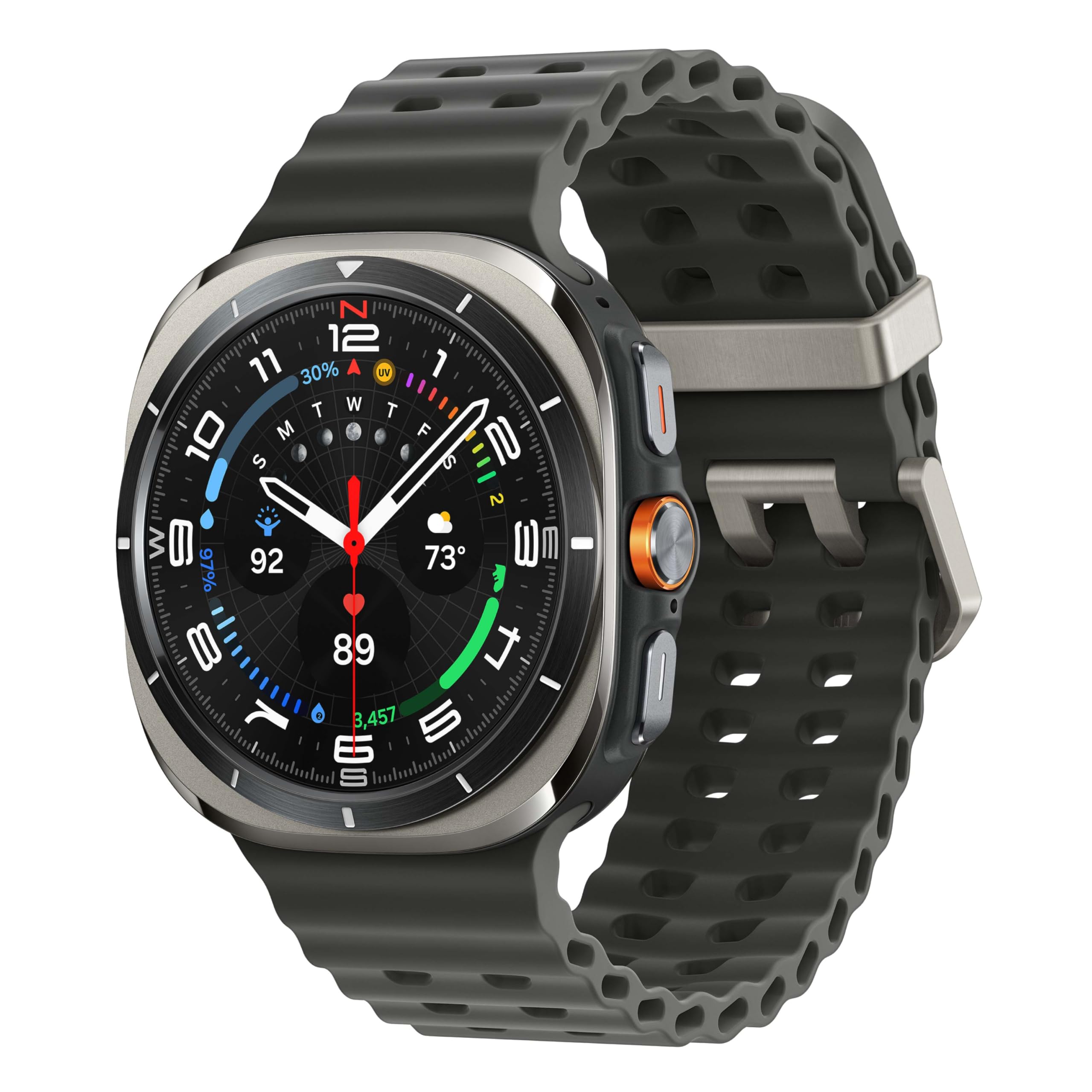
1. Samsung Galaxy Watch Ultra (2024) 47mm LTE
Our pick — over 4.5★ from 950+ verified ratings; the strongest balance of quality and price.
The titanium-bodied powerhouse that replaces your phone for calls, texts, and GPS on the trail.
If you want a true standalone smartwatch, the Galaxy Watch Ultra is the one to beat. Its durable titanium case is built for the rigors of any workout, including ocean swimming, so you can stop worrying about rain or dust. The 47mm case is chunky, but owners say the trail band keeps it comfortable, and the large touchscreen is easy to operate.
You get a full phone-like experience here, including LTE (cellular connectivity) and Galaxy AI (Samsung’s on-device intelligence), so you can leave your phone behind. That power draw explains the battery: buyers report it retains more than 75% after a 12-hour workday, roughly 3.5 days on a single charge of its 590 milliamp_hours cell. That is a 69% larger battery than the Fitpolo’s 350 milliamp_hours, yet the official average life is 60 hours versus the Fitpolo’s 250 hours because the Ultra runs more features. Each morning, Energy Score with Galaxy AI analyzes your previous day’s sleep, heart rate, and steps to give you a physical readiness score.
Reviews highlight the LTE capability as a daily win, allowing you to leave your phone behind yet still answer calls or texts. Buyers praise the durable titanium design and sharp display.
Why It’s Worth the Splurge
- Built-in LTE for calls and texts without your phone nearby
- Titanium case stands up to harsh conditions, even ocean swimming
- Galaxy AI features like Energy Score personalize your readiness
- Physical buttons are programmable for quick app access
Considerations Before Buying
- Battery life is shorter than dedicated fitness trackers at 60 hours
- The 47mm case is bulky on smaller wrists
- Health tracking depth trails a dedicated Garmin for serious athletes
Reach for this if: you want a premium, rugged smartwatch that lets you go phone-free with LTE while still offering deep health insights.
Look elsewhere if: your priority is maximizing battery life above all else, as the Ultra’s 60-hour lifespan is short compared to the 250 hours on the Fitpolo in this list.
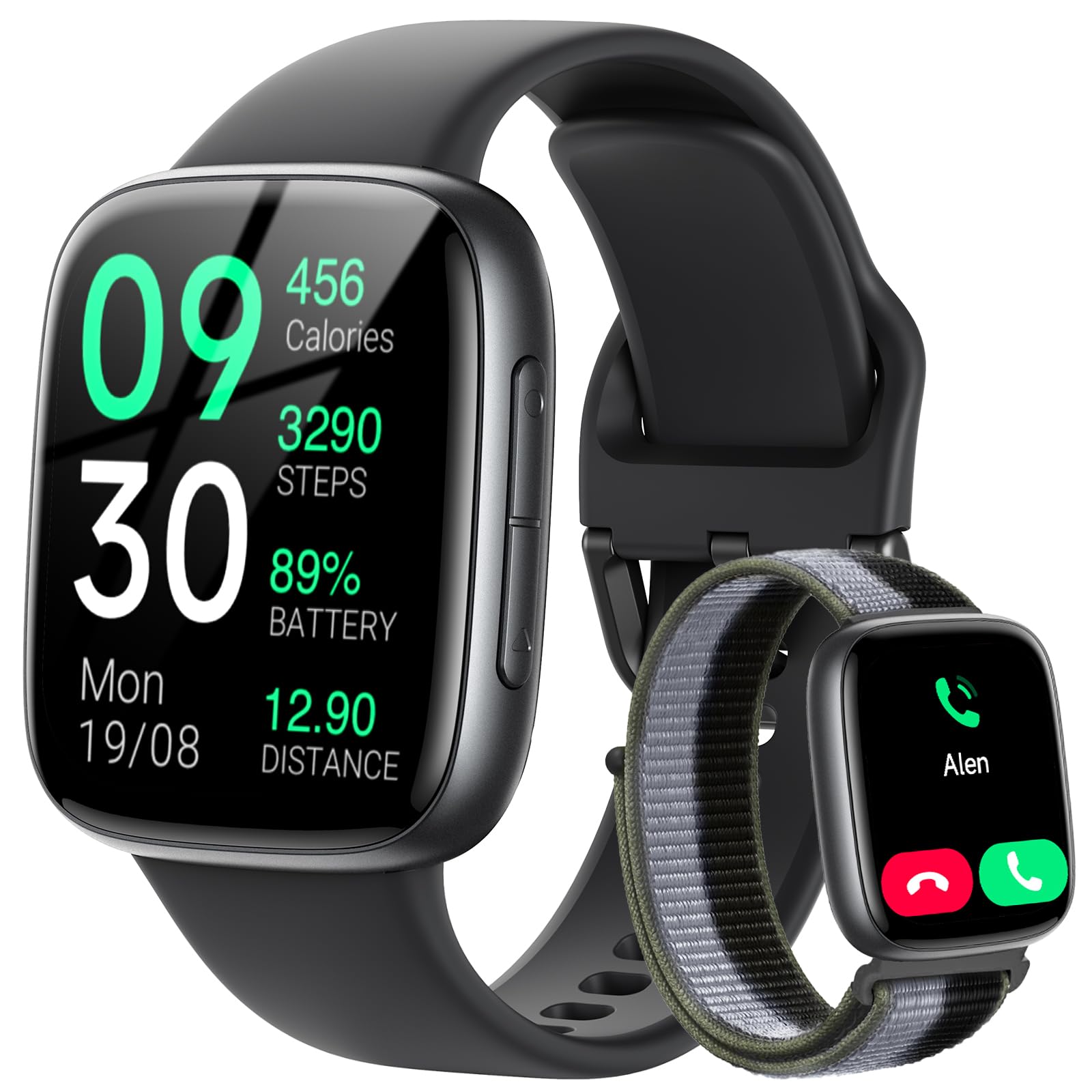
2. Fitpolo Smart Watch 1.85″ AMOLED
The budget-friendly pick that runs for over a week on one charge without cutting corners on the screen.
Battery life is the headline here, and it’s a doozy: the Fitpolo’s 350 milliamp_hours battery delivers a 250-hour average life, which owners confirm — one buyer tracked a drop from 100% to just 78% in 7 days. That’s a massive 4.2x gap versus the Samsung Galaxy Watch Ultra’s 60 hours, making this the watch to grab if you hate hunting for a charger.
You’re not sacrificing the display for that battery either. The 1.85-inch AMOLED screen (a display type that lights up each pixel individually for deep blacks and vibrant colors) stays clear and readable even in direct sunlight, which is perfect for daytime hikes. It also includes two bands in the box; the 26.4-centimeter band is longer than the 22-centimeter one on the Galaxy Watch Ultra, giving larger wrists a better fit.
Owners praise its economical price and easy-to-use interface, calling it a strong alternative to pricier trackers. It handles heart rate, sleep, SpO₂ (the blood-oxygen saturation, a key recovery metric for athletes), and stress monitoring, plus over 100 sports modes. The main limitation is that if you want GPS route mapping, it syncs with your phone rather than using its own chip.
Bottom line: You get a vivid AMOLED screen, Bluetooth calling, and 100+ sports modes for a fraction of the cost of the flagship models.
Trade-off: The plastic case and phone-dependent GPS mean you trade premium materials and standalone tracking for that incredible battery longevity.
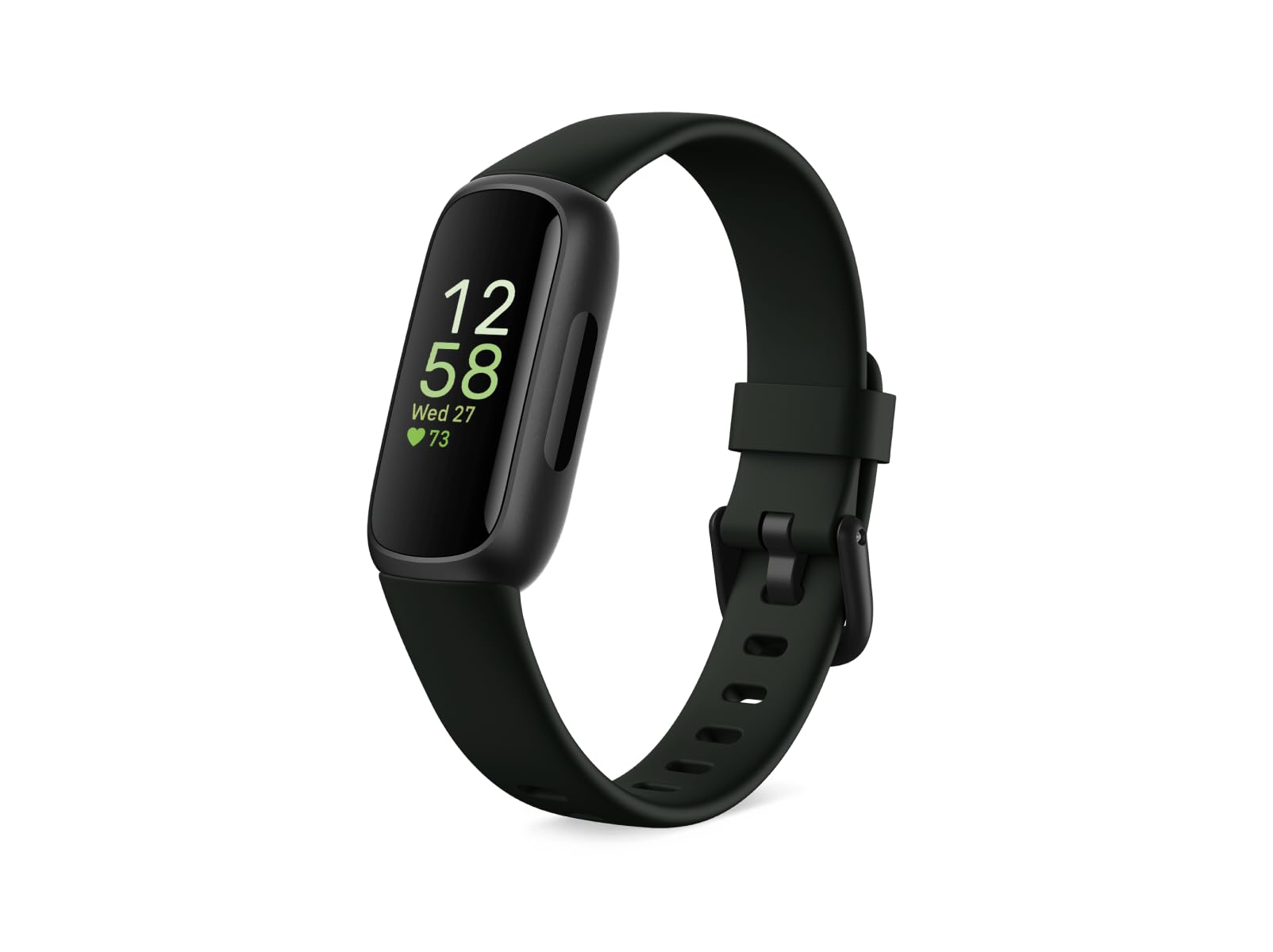
3. Google Fitbit Inspire 3
A featherlight band that focuses on sleep, stress, and all-day heart rate without smartwatch distractions.
The Inspire 3 is a tracker first and a watch second, and that focus is its superpower. It’s incredibly slim and lightweight, making it ideal for those with very small wrists or anyone who finds bulky smartwatches uncomfortable. It tracks 24/7 heart rate, sleep stages, and stress, and even offers an irregular heart rhythm notification feature. It’s a favorite for those recovering from knee surgery who want to monitor daily steps and activity without extra fuss.
Battery life is a strong point, with an average of 10 days per charge, and owners praise its durability and bright, colorful screen. The sleep tracking, however, gets mixed reactions. Some find it excellent with detailed scores and coaching, while others find it less reliable at automatically detecting sleep. Similarly, connectivity is a mixed bag; while many say it syncs easily with a smartphone, a few owners mention it stops syncing over time.
You also get a 3-month Google Health Premium membership included, which open up personalized guidance, and it works with both Android (OS 11.0 or higher) and iOS (16.4 or higher) devices.
Who it’s for: Walkers, sleep-tracking enthusiasts, and those who prioritize a slim, comfortable, and simple fitness band over a full smartwatch.
The catch: Don’t expect smartwatch features like app stores or Bluetooth calling; this is purely about health and activity, and the proprietary charging connector may wear out over time.
4. Amazfit Bip Max Smart Watch

The massive 2.07-inch AMOLED screen makes this the easiest watch to read, even without glasses.
The display is the defining feature of the Amazfit Bip Max. At 2.07 inches, the AMOLED screen is enormous, making text large and readable, which owners love even without reading glasses. It transitions from daily wear to intense workouts with its lightweight aluminum alloy body, and the design gets the most praise from buyers. It also offers 150+ sports modes including a dedicated HYROX mode (a fitness race combining running and functional stations).
Battery life is another standout, with an average of 20 days of typical use thanks to its lithium polymer cell. This means a weekly charge becomes a bi-weekly event, even with continuous heart rate monitoring. GPS is built-in, supported by 5 satellite systems for fast, precise route tracking, and there’s 4GB of onboard storage so you can download offline maps from the Zepp App and leave your phone behind.
The Value for money is rated highly by owners, who say it beats the Apple Watch SE on screen size and data points at a much lower price. It includes a BioCharge recovery monitoring score, which helps you understand your body’s energy levels from the moment you wake up.
The Display Lovers’ Pick
- Huge 2.07″ AMOLED screen with large, readable text
- 20-day battery life on a single charge
- Built-in GPS with offline map downloads via the Zepp App
- Lightweight aluminum alloy body that survives drops
Things to Know
- Few screen protectors are available for the large display
- Lacks accessibility features for disabled users
- Larger case may feel big on petite wrists
Choose it if: you want the biggest display possible for easy readability and a 20-day battery, all without a subscription.
Think twice if: you need a more compact case or comprehensive app ecosystem similar to Wear OS or Garmin.
5. Google Fitbit Charge 6

The fitness tracker that links directly to gym equipment to show your heart rate on the machine’s screen.
The Charge 6 is a tracker with a talent for connectivity. Its standout feature is the ability to link to compatible exercise machines, like treadmills and ellipticals, to broadcast your heart rate in real time on the machine’s display. If you split your time between the gym floor and the cardio deck, this integration is a genuine daily convenience. You also get Google Maps turn-by-turn directions on your wrist and contactless payments via Google Wallet.
It runs on a stainless steel or metal case and offers a 7-day average battery life. The 22-centimeter band on this model is the same length as the one on the Galaxy Watch Ultra, but buyers with petite wrists note this model fits much better than previous versions. There are 40+ exercise modes, built-in GPS (no phone needed for runs), and a Daily Readiness Score to guide your effort level.
The sensor accuracy is a highlight, with heart rate tracking matching a dedicated chest strap. However, GPS connectivity can be finicky, sometimes requiring 2 minutes of stillness to acquire a signal. Also, the distance tracking is occasionally inaccurate — one 1-mile run was recorded as 0.3 miles — though the battery life holds up well at 6-7 days despite the sensors.
Standout move: No other watch in this list broadcasts your heart rate to gym equipment, making the Charge 6 the pick for gym cyclists and treadmill runners.
Honest limit: The GPS can be slow to connect and distance accuracy isn’t always reliable, so it’s a better daily health tracker than a precision marathon coach.
6. Amazfit Active Max Smart Watch
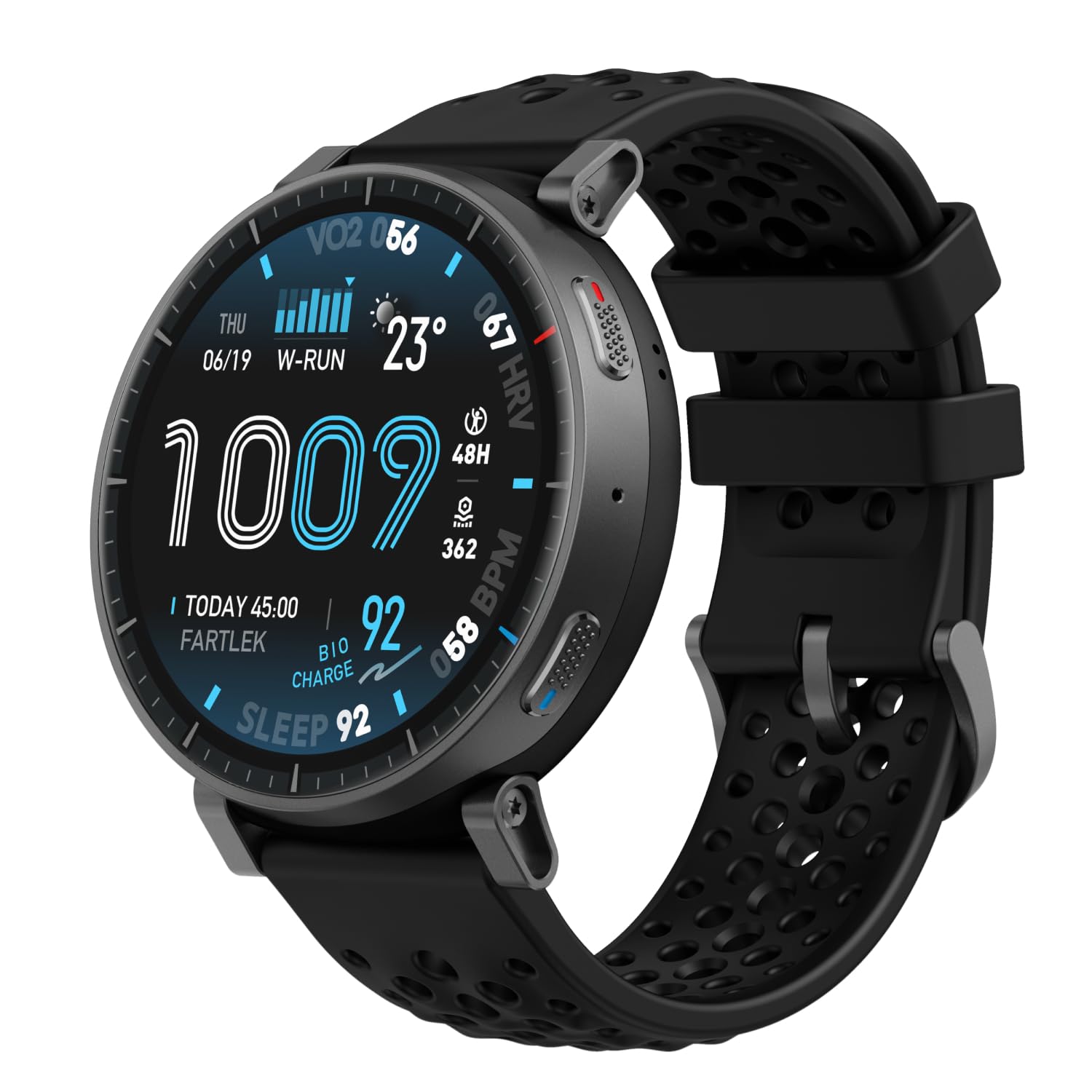
A 3000-nit AMOLED display that stays glaringly bright even under the harshest midday sun.
If you train outdoors, the Active Max’s screen is a revelation. Its 1.5-inch AMOLED display is rated at 3,000 nits (a unit of brightness), making it easily readable even in direct sunlight — a major upgrade over many competitors that look dim in daytime. The media materials call it engineered for “ultimate clarity, even under the harshest sunlight,” and it’s backed by a 24-day average battery life, which owners say holds up for roughly two weeks between charges with regular use.
It’s more than just bright; it’s a capable fitness companion with 170+ workout modes and personalized Zepp Coach running plans. There’s 4GB of onboard storage for music and offline maps with turn-by-turn directions, supported by five satellite systems (GPS, GLONASS, Galileo, etc.) for fast and accurate positioning. The built-in speaker and mic let you take Bluetooth calls from the trail or use Zepp Flow to reply to messages hands-free when connected to an Android phone.
Owners call it a “big bang for your buck,” rivaling Garmins that cost several times more. A recurring comparison notes it has a larger, crisper display than the Apple Watch SE2, with a battery life (10-24 days) that dwarfs that of the pricier Apple Watch.
Why Athletes Love It
- 3000-nit display is clearly readable in the brightest sunshine
- 24-day battery life with fast-charging puck
- Bluetooth calls and voice reply via the built-in mic
- Free downloadable maps with five satellite systems for GPS
Keep in Mind
- App ecosystem is more limited than Garmin or Apple
- Some health metrics can be inaccurate during intense workouts
- Band uses a pin connector instead of a slide-in quick-release
Grab this for: outdoor runners and cyclists who need a screen that remains readable in full sun and a battery that lasts for multi-day adventures.
skip it if: you rely on a deep third-party app ecosystem specifically for niche sports analytics, as the Zepp app is more of a closed loop.
7. Garmin vívoactive 5, 42mm

A polished health-first watch with a sleep score and Body Battery energy monitoring that guide your daily effort.
Garmin’s vívoactive 5 is about understanding your body’s energy, not just counting steps. It introduces a sleep score with personalized sleep coaching and nap detection, so you know how much rest you actually need. Combined with Body Battery energy monitoring, which factors in sleep, naps, stress, and workouts, it gives you a clear picture of when to push hard and when to rest. The design is a major strength, praised across thousands of owners for its elegant ivory finish and comfortable fit, even on smaller wrists.
It runs on a bright, colorful AMOLED display with a battery life of up to 11 days in smartwatch mode (or 5 days with the display always on). The 22-centimeter band length is the same as the Galaxy Watch Ultra, but buyers with a “very small wrist” say this one fits well and doesn’t roll around. You also get more than 30 built-in indoor and GPS sports apps, from running and cycling to swimming and golf.
The battery life here is a point of contention with some owners. While the spec sheet says 11 days and many report a week of battery with heavy GPS use, a significant number describe battery life as merely “mixed,” suggesting it can drain faster than expected depending on settings. Sleep tracking is also not flawless, with some finding nap detection creates false entries. However, the accuracy of the GPS and the depth of the health metrics — including HRV status (a measure of heart rate variability that indicates recovery) and fitness age — are frequent highlights.
Best for: runners and fitness enthusiasts who want a lightweight watch with deep recovery metrics, sleep coaching, and reliable GPS without paying for a bulky fenix-style device.
Consider: Battery performance has been inconsistent for some, and nap detection can be buggy, so it’s not a flawless sleep-tracking experience.
8. Garmin vivoactive 6 with Power Bundle
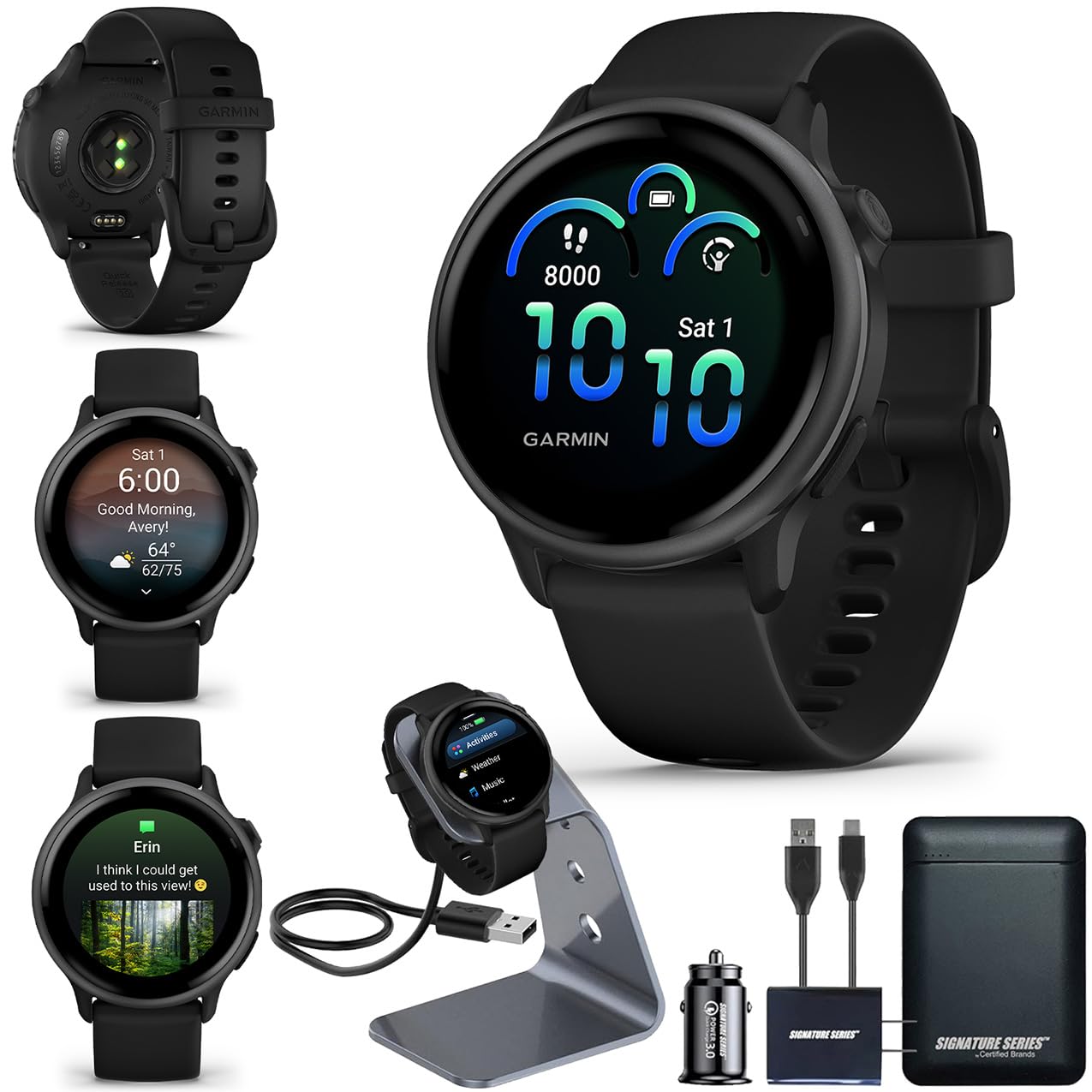
The newer Garmin that adds contactless payments and 80 sports apps to an already impressive health suite.
You get extra convenience here: the vivoactive 6 builds on the vívoactive 5 and this bundle adds the Signature Series Power Bundle, which includes a charging stand. The bright AMOLED display (a vivid screen type) stays readable outdoors, and you get up to 11 days of battery life in smartwatch mode. Owners confirm it easily survives “week-long travel without a charge.” If you are upgrading from a VivoActive 4, you can reuse your old charger, since it is compatible.
Where it pulls ahead of the 5 is connectivity: Garmin Pay lets you leave your wallet at home, and you can pair it with your phone for music, calls, and texts right from your wrist. The functionality is what owners praise most, with over 80 built-in sports apps for walking, cycling, golfing, swimming, and HIIT (high-intensity interval training). It has a water rating of 5 ATM, meaning it’s suitable for swimming and splashes.
Accuracy is what makes this watch stand out. Buyers specifically praise the GPS (satellite positioning) as precise and the sleep reports as detailed. The 180 milliamp_hours battery is well-managed, delivering over a week of use, though heavy app usage like streaming music will drain it faster. The improved button placement prevents accidental lap presses, a smart fix for runners who have been frustrated by that on other models.
The Upgraded Experience
- Garmin Pay for contactless payments on the go
- Accurate GPS with detailed sleep and health reports
- Over 80 sports apps including swimming and golf
- Compatible with existing VivoActive 4 chargers
Before You Commit
- Battery drains faster when using apps like music streaming
- Comes with a charging stand, not a standard cable, in the bundle
- Premium price tag reflects the advanced feature set
Pick this up if: you’re a Garmin enthusiast who wants the newest features like Garmin Pay and a vast sports library with accurate GPS.
Pass if: you don’t need contactless payments and are happy with the slightly simpler, more budget-friendly vívoactive 5.
9. Samsung Galaxy Watch 8, 40mm LTE

A lighter, slimmed-down LTE watch that fits small wrists and still delivers a full-tilt smartwatch experience.
For those who find the 47mm Ultra too chunky, the Galaxy Watch 8 in 40mm is the answer. It has a “thinner-than-ever silhouette” that wears comfortably all day, and owners with smaller wrists confirm it looks better than expected and fits snugly. Don’t let the slim profile fool you — it packs a 445 milliamp_hours battery (that’s 1.23 watt-hours of power) and full LTE connectivity, so you can make calls and receive notifications without carrying your phone. As one owner put it, “A real plus not having to rely on Bluetooth.”
Battery life is the big caveat. The functionality is praised, but the battery performance is “mixed” — one long-time owner says it “barely lasts a day,” especially with workouts, while others find it acceptable. Also, this model works best with Samsung phones, as the setup prompts reference the “Galaxy Watch 7 or higher” and can be confusing for users of other Android brands.
The compact choice: If you want a small, stylish LTE watch with advanced sleep coaching and don’t mind daily charging.
Watch out for: The battery life is genuinely short for heavy users, and the setup process assumes a recent Samsung Galaxy phone.
Understanding the Specs
Battery Life & Charging
Fitness watch battery life is measured in hours or days. A Wear OS watch with LTE (like the Samsung Galaxy Ultra) might only last 60 hours because it’s running a full operating system and powering a bright screen. A dedicated fitness tracker (like the Fitpolo) can stretch to 250 hours because it uses a simpler system and a more efficient AMOLED screen. Consider how often you want to charge. If you travel or hate cables, prioritize a watch with a 10+ day battery. If you’re near a charger daily, a smarter watch with a shorter battery might be fine.
Display Type & Brightness
The display is how you interact with your watch, so it matters. AMOLED (Active Matrix Organic Light Emitting Diode) is the gold standard — each pixel lights up individually, offering deep blacks and vibrant colors that are easy to read outdoors. Brightness is measured in nits. A typical smartwatch has around 500-1000 nits, which is fine for most activities. But for trail running or cycling in direct sunlight, look for a higher number. The Amazfit Active Max’s 3000-nit display is exceptionally bright, while the Fitpolo’s 1.85-inch AMOLED is clear for a budget watch.
FAQ
Which Android fitness watch has the best battery life?
Can I make phone calls on an Android fitness watch without my phone?
Which watch is best for tracking sleep accurately?
Do I need a watch with built-in GPS, or can it use my phone’s GPS?
Is an AMOLED display worth the extra cost?
What is a good battery life in mAh for a smartwatch?
How do Garmin and Samsung fitness watches compare?
Which watch is best for small wrists?
Final Thoughts: The Verdict
For most people, the best Android fitness watch is the Samsung Galaxy Watch Ultra because it combines a rugged titanium build, LTE independence, and Galaxy AI insights into the most complete Android companion. If you want battery life over everything, the Fitpolo Smart Watch is the budget star at 250 hours. And for the serious athlete focused purely on health metrics, the Garmin vívoactive 5 is the coach on your wrist.
How We Picked
We do not accept paid placement. Every pick is matched to a real buyer and a real use-case; we do not hands-on test units.
Sources & Methodology
Specifications: manufacturer listings and product documentation. Review insights: verified customer reviews, as of August 2026. Pricing: not shown on this page (it changes often); check the current price via the retailer link.
As an Amazon Associate, Gadgets Feed earns from qualifying purchases. This does not affect which products we feature.