
Our readers keep the lights on and my morning glass full of iced black tea. As an Amazon Associate, I earn from qualifying purchases.
Specs are compiled from manufacturer listings and verified buyer reviews and can change over time — please confirm the key details on the product page before buying.
The Appalachian Trail punishes bad shoes across 2,190 miles of rocks, roots, mud, and relentless descents. This guide narrows the field to 11 trail shoes that hold up, with the fit, grip, and cushioning specs that matter for AT conditions.
I’m Min — the founder and writer behind Gadgets Feed. This guide is built by comparing the manufacturers’ published specifications and the patterns across verified customer reviews, so you get each pick’s real strengths and trade-offs instead of marketing spin.
From zero-drop trail runners to waterproof leather hikers, these are the appalachian trail hiking shoes that earned their place through real miles and real owner feedback, not hype.
Our Picks at a Glance


How To Choose The Best Appalachian Trail Hiking Shoes
Before you spend money on any shoe, understand the baseline: the AT is not a weekend walk. It’s months of daily abuse where a wrong fit becomes a forced bailout. Start with your foot’s natural shape, then pack weight, then the weather window.
Drop: The Number That Shapes Your Hike
Drop is the height difference in millimeters between your heel and your toe. A zero drop (0 mm) puts your foot flat like a barefoot stance, which forces your calves to work harder but promotes a natural midfoot strike. A higher drop like 8 mm or 10 mm tilts you forward, reducing calf strain but encouraging a heel strike that can jar your knees on descents. For the AT, many thru-hikers prefer zero to low drop to avoid the Achilles strain that comes from a big heel-toe offset.
Toe Box: Where Blisters Are Won or Lost
A roomy toe box lets your toes splay naturally as you push off, especially crucial on long downhills when your feet swell and slide forward. Brands like Altra and Topo Athletic build their identity around anatomical toe shapes that accommodate bunions and cramped pinky toes. If your toes are crushed against the front, you’ll get black toenails within the first hundred miles. Size up half a size if you’re between sizes, because your feet will swell after 15 miles of heat and load.
Lug Depth and Outsole Compound
Lugs are the rubber teeth on the bottom of the sole, measured in millimeters. A 4.5 mm lug is versatile for mixed terrain, while a 6.5 mm lug bites deeper into mud and loose scree but feels less stable on hard rock. Outsole compounds matter just as much—Vibram Megagrip is the gold standard for wet rock grip, while other proprietary rubbers like MaxTrac focus on durability across all surfaces. On the AT’s slick granite slabs, this compound choice is the difference between a confident step and a slide.
Quick Comparison
| Model | Best For | Drop | Weight | Outsole | Amazon |
|---|---|---|---|---|---|
| ALTRA Lone Peak 9★ Best Overall | Zero-drop thru-hikers wanting toe room | 0 mm | 11.15 oz | MaxTrac | Amazon |
| Columbia Peakfreak RushBest Value | Waterproof comfort without the bulk | — | — | Omni-Grip | Amazon |
| Oboz Bozeman LowTown-to-Trail | Leather durability for town and trail | 8 mm | 13.8 oz | Trail Tread Rubber | Amazon |
| Salomon X-Adventure Recon | Gore-Tex protection at a mid price | — | — | — | Amazon |
| KEEN Hightrail Low | Leather build with serious wet traction | — | — | 4mm lugs | Amazon |
| Salomon X Ultra Flare Mid | Ankle support for rugged multi-day treks | 10 mm | 447 g | — | Amazon |
| Topo Athletic Traverse | Thru-hikers wanting cushion and quick-dry | 5 mm | 12.0 oz | Vibram Megagrip | Amazon |
| La Sportiva Wildcat | High-mileage durability with firm cushion | 12 mm | 13.4 oz | FriXion AT | Amazon |
| North Face Ultra 112 | Water-resistant leather with 5mm lugs | — | — | 5mm lugs | Amazon |
| Oboz Sawtooth X Low | Stability for overpronators and wide feet | 8 mm | 13.6 oz | Trail Tread Rubber | Amazon |
| Danner Trail 2650 | Lightweight suede for casual-trail crossover | — | — | Vibram | Amazon |
In‑Depth Reviews
1. ALTRA Women’s Lone Peak 9 Trail Running Shoe
Our pick — 4.5★ from 800+ verified ratings; the strongest balance of quality and price.
The zero-drop legend that keeps toes happy for 2,190 miles
The Lone Peak is the shoe you see on every AT thru-hiker’s feet for good reason: its 0 mm drop and roomiest toe box in the category let your toes splay naturally on every step. The 25 mm stack height delivers a comfortable mid-level cushion that connects you to the ground, while the reengineered upper swaps to a recycled ripstop mesh for high-mileage durability.
What wins people over is the fit—over 160 owners single it out as their top praise. The wide toe box relieves cramped pinky toes and accommodates bunions, with strong arch support that holds up for high arches. The grippy MaxTrac outsole sticks on rocky terrain and dirt alike, and the Stoneguard insert protects your soles from sharp debris so you feel stable, not stabbed, on tough ground.
The catch is the Achilles: one reviewer noted a blister on the back of the heel within an hour of wear. Most owners also advise sizing up half a size, since the toe box runs generous but the heel can be snug. Think of it as a shoe that demands a proper break-in, not a slip-on-and-go.
Why Thru-Hikers Choose It
- Zero drop promotes natural midfoot strike for long-distance comfort
- Roomy toe box relieves bunions and cramped toes
- MaxTrac outsole grips rocky, rooty terrain
- Stoneguard inserts shield against sharp debris
Where It Stumbles
- Achilles blister reported by some within the first hour
- Hand-wash only care adds maintenance
- Durability mixed—some see amazing longevity, others report quick wear
The natural pick: if you want a zero-drop shoe that lets your feet work the way they were built, this is the one that dominates the trail.
A real caution: your heel may need extra break-in time—size up half and wear thicker socks on early miles to avoid the Achilles blister.
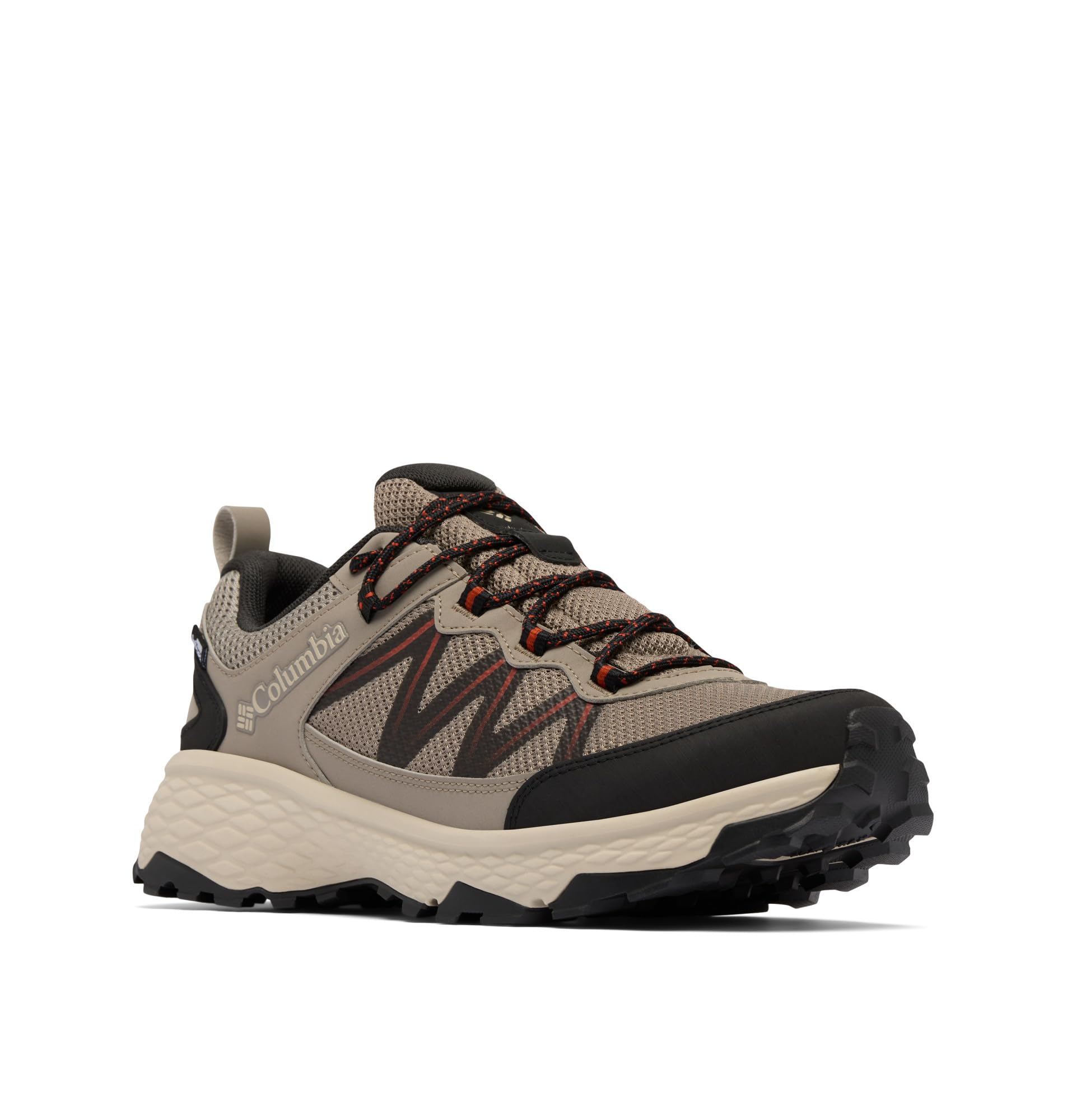
2. Columbia Men’s Peakfreak Rush Outdry
Lightweight waterproofing that shrugs off snow without the boot weight
The Peakfreak Rush is engineered for supportive stability and all-around protection, and it delivers on both. It’s fully waterproof—tested in puddles and snow under six inches—thanks to Columbia’s OutDry membrane, which sits on the outside so water never soaks in.
The quality is what owners praise most, with 23 buyers calling it out specifically. Step into a wide fit and you get comfort that holds: no blisters after 30,000 steps, per one owner’s count, and traction that slipped only a tenth as much as friends on ice. It’s breathable and not bulky, so it stays cool on climbs while the grippy outsole holds on descents.
The trade-off is sizing—Columbia’s size guide runs a full US size off in some cases, so a 9.5 may come as a 27.5cm instead of 26.5cm. Order up and expect to swap if needed. For the price, you get a lot of shoe: solid protection, real comfort, and a build quality that justifies repeat purchases.
Owners’ verdict: the waterproofing is top notch and the wide fit makes it a standout for feet that hate cramped toeboxes.
Watch for: the size guide needs a careful double-check before you order.
3. Oboz Men’s Bozeman Low Leather Hiking Shoe
The leather hiker that handles Glacier NP and date night in one shoe
Built for “mountain town life,” the Bozeman Low blends waterproof suede leather with a lower-profile build that looks sharp on city streets and grips deep lugs on trail. The 8 mm heel rise keeps you comfortable on sidewalks, while a soft EVA heel pod and firmer base deliver all-day cushion. At 13.8 oz, it’s not the lightest, but that weight buys real protection.
Comfort is the thing everyone raves about—134 owners call it out as the top trait. One construction worker wore a pair daily, 10 hours a day, five to six days a week, for three years and only replaced them because the inner heels wore out. The arch support also eased plantar fasciitis pain for one owner. For a shoe that goes from a lunchtime trail to errands, this versatility is a rare find.
The honest gripes: the tongue tends to slide outward, and some wide-width buyers find the toe box still snug. Durability is mixed in the review data—while some see years of use, others report the shoes falling apart. If you want a leather hiker that works both on and off trail, this is a strong mid-range pick.
Reach for this if: you want one shoe that does trail miles and a casual dinner without changing.
Consider the fit: wide feet may still find the toe box tight—try before you commit.
4. Salomon Men’s X-Adventure Recon Gore-Tex Waterproof Hiking Shoes
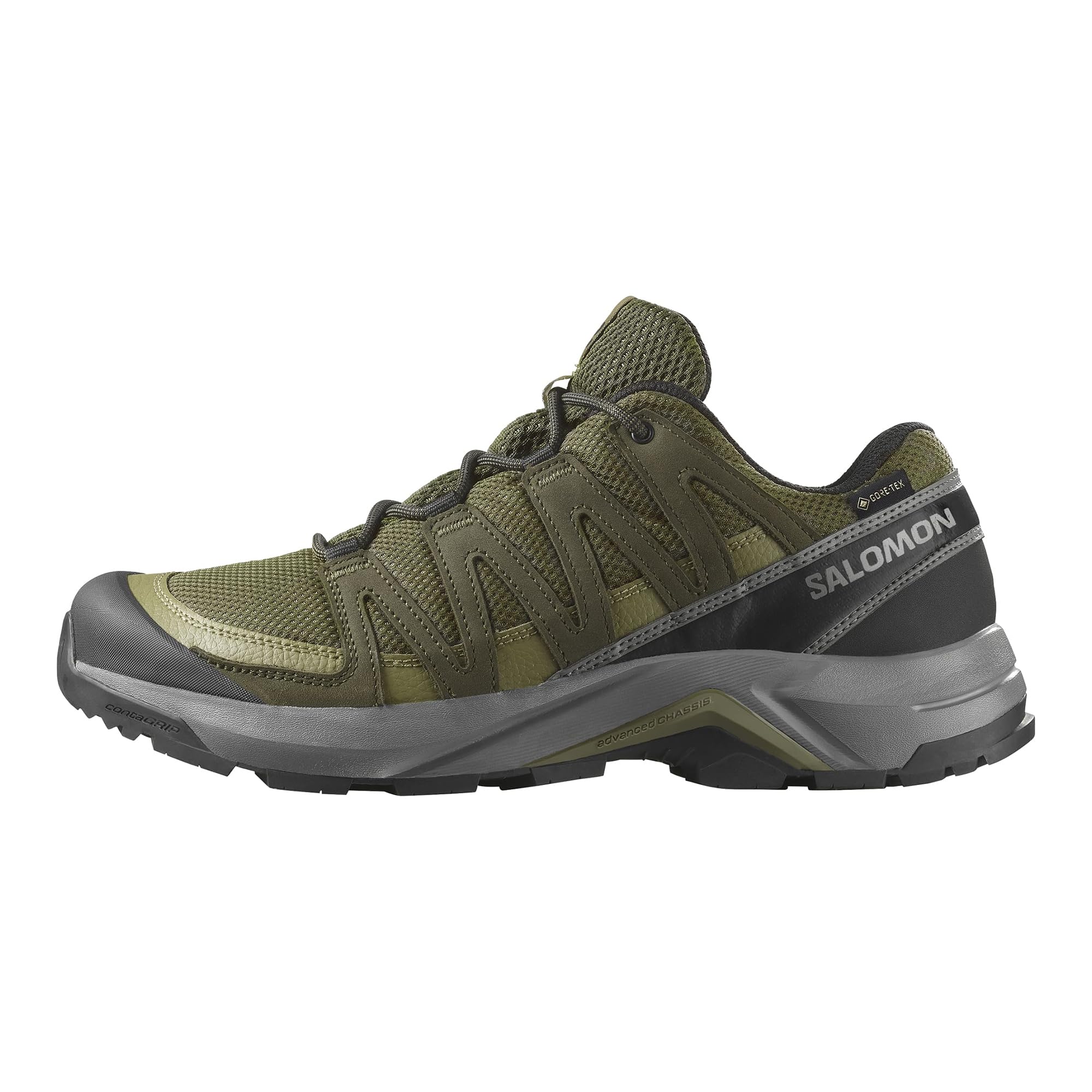
A return to form for Salomon fans who felt the brand slipped
The X-Adventure Recon brings back the quality long-time Salomon owners remember, described as feeling like the older models after recent declines. The Gore-Tex membrane keeps water out while the lacing system secures the midfoot, making it a dependable everyday hiker that’s true to size and comfortable right from the start.
Comfort and quality each get 12 positive mentions in the review data, and buyers report a perfect fit with stitching intact. It’s a different feel from the Speedcross line—the lugs are traditional, not aggressive mud-eaters—so it works better as a general trail shoe than a muck specialist. Two pairs were purchased by one satisfied owner, a sign of real confidence.
You get a dependable Gore-Tex hiker at a fair mid-range price, but fit and durability draw mixed reviews. Some owners say it runs a wee-bit large, and one reported holes in the sides and worn soles after four months, noting “Salomon is not what it use to be.” Another owner calls it their third pair and keeps coming back. Break it in properly, and it serves everyday trail use well.
the balance: You get Salomon’s classic fit and dependable Gore-Tex (a waterproof breathable membrane) for everyday trail use.
Keep in mind: durability has mixed reviews—inspect the stitching early and consider a warranty plan.
5. KEEN Men’s Hightrail Low Waterproof Hiking Shoes
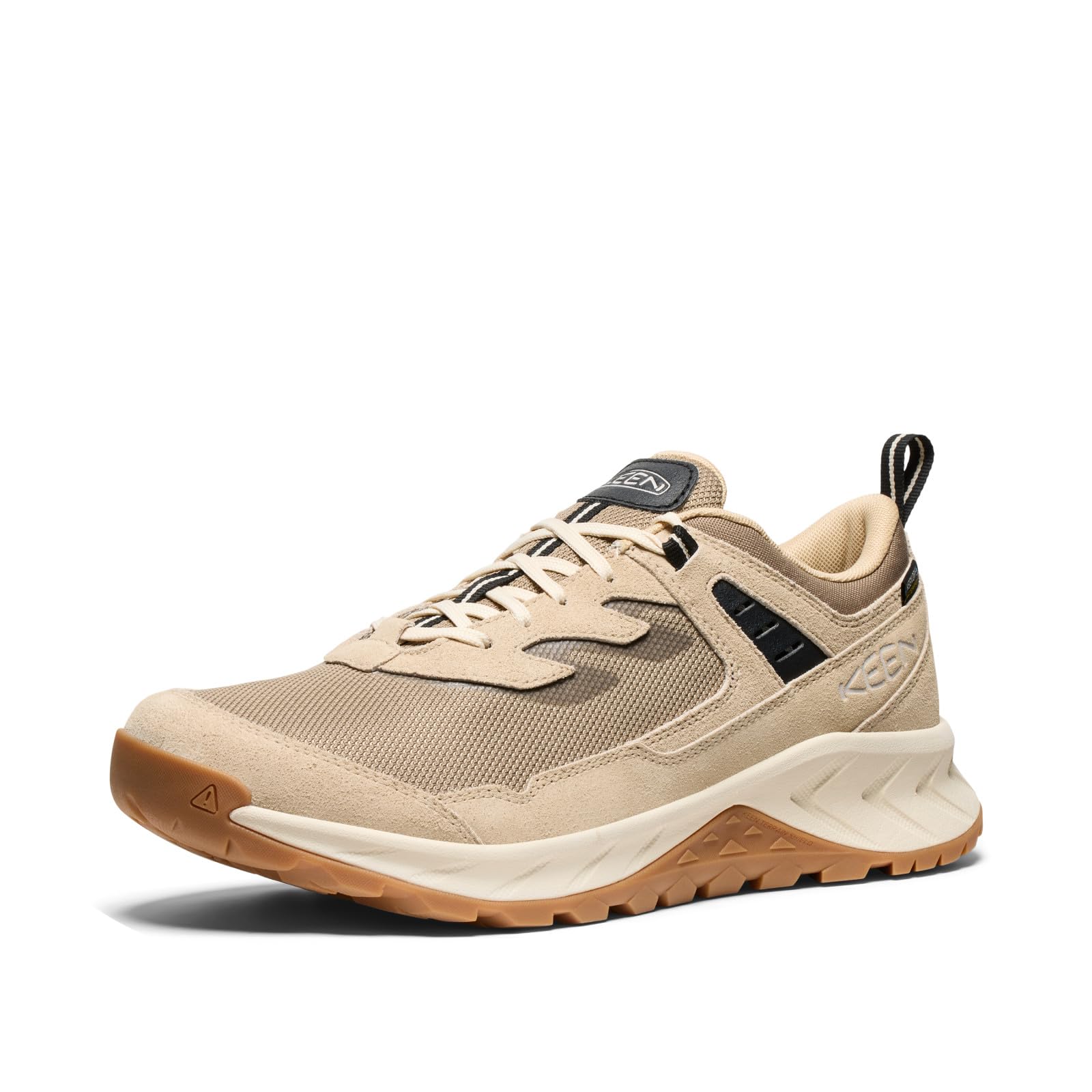
The “armored tank” of day-hike leather that grips slippery rock like glue
The Hightrail fuses a sneaker-like design with the durability of water-resistant leather, built for fast day hikes where you want speed without sacrificing protection. The 4mm lugs bite into wet, slippery rocks—one owner praised them on uneven terrain while another called the shoe “armored tanks” for mud. KEEN’s Contoured Fit curves with the natural shape of your foot for a secure, locked-in feel.
Quality is the top praise at 37 mentions, with water resistance close behind at 19. One 63-year-old owner took them on a country-wide trip and called them “a dream,” sized perfectly at his usual 9.5. Another wore them up Huayna Picchu without issues, noting they’re versatile enough for hiking and casual wear. The leather build holds up to work use too, with one owner impressed by the sturdiness.
The trade-off is weight and heat: these run heavy on long treks and have poor breathability, making them hot in summer. Fit is mixed—some find them spacious while others say the toe box runs snug. They’re not the lightest waterproof option, but if you want leather protection with serious wet grip, they’re a strong mid-range buy.
Built For Wet Rock
- 4mm lugs grip slippery, uneven terrain
- Water-resistant leather keeps feet dry
- Versatile for hiking and casual wear
- Sturdy enough for work or weekend use
The Weight of It
- Heavy on long treks compared to lighter rivals
- Poor breathability—hot in summer months
- Toe box runs snug for some wide feet
Grab these for: wet, rocky day hikes where grip and leather durability beat featherlight weight.
Think twice if: you’re hiking a hot summer section and prioritize airflow over protection.
6. Salomon Men’s X Ultra Flare Mid Gore-Tex Hiking Shoe
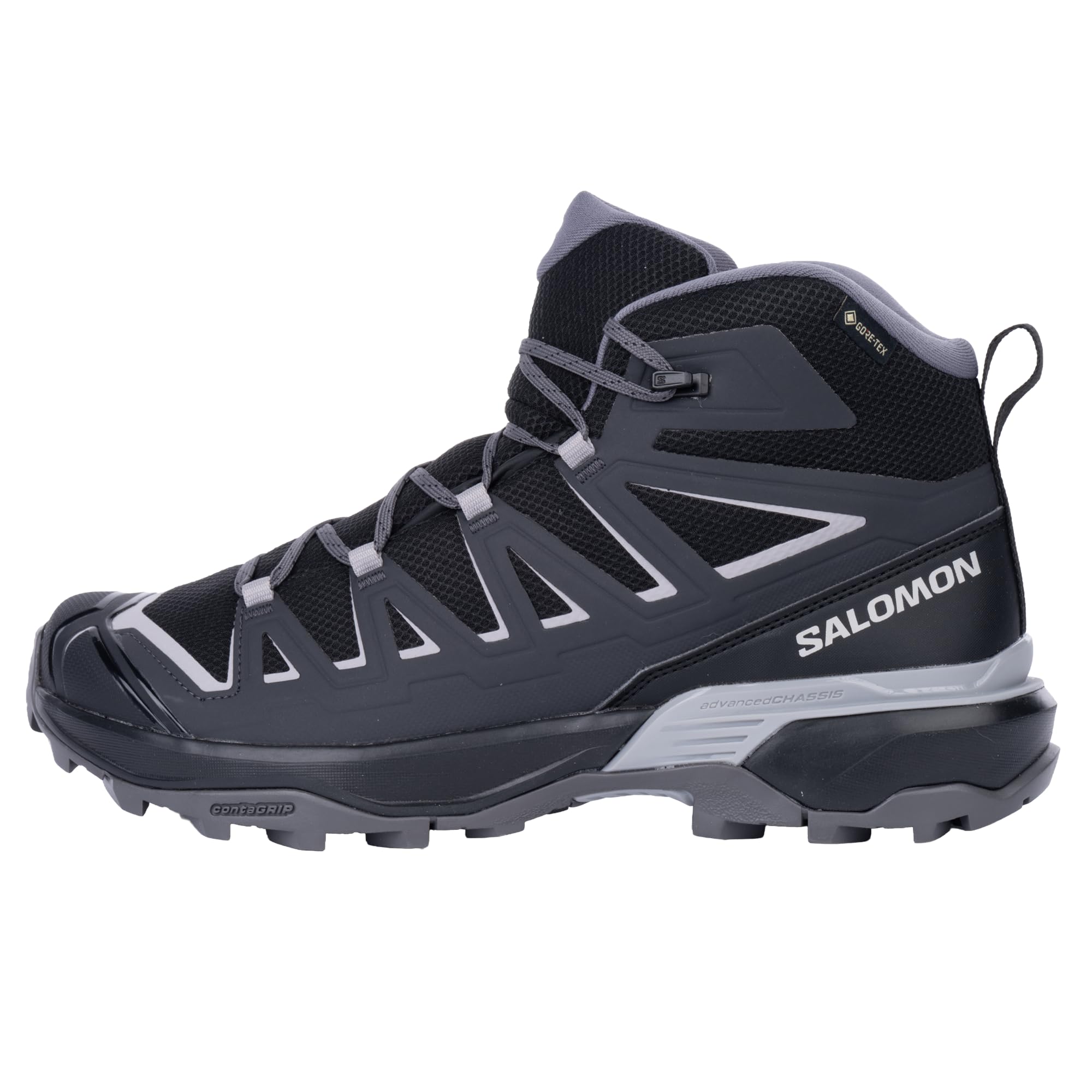
The mid-cut that adds ankle guard without sacrificing daily flexibility
The X Ultra Flare Mid is built for rugged trails and multi-day hikes, with a 10 mm drop that tilts you forward for efficient strides. At 447 g per shoe, it’s noticeably heavier than the low-cut options, but that weight shows up as real ankle support. One owner ran through many work boots and hiking boots before landing here, calling them “durable, light, waterproof and sturdy enough for everyday use” with great ankle support and good flexibility.
Waterproofing stands out—one owner calls it “the best for hiking shoes I’ve ever had,” noting that unless you’re hiking the full Appalachian Trail, a single pair will serve you fine, and “if you are just take two pairs.” The Gore-Tex membrane plus the 10 mm drop (the height difference from heel to toe) makes this a supportive choice for heavier packs where ankle stability matters more than ounce-counting.
The gripes are specific: the laces are cheap “street laces” that some owners replaced, and one had to drill extra holes to get proper ankle cinching. Another owner found the sole too thin at the base with a lack of support, and a third returned them, saying the Flare line doesn’t match the quality of older X Ultra mids. For those who want mid-cut protection with Salomon’s signature grip, this is a solid premium choice—just plan to upgrade the laces.
The protective pick: ankle support and top-tier waterproofing for multi-day, pack-heavy hikes.
Plan for: replacing the stock laces and possibly drilling extra eyelets for a truly locked-in fit.
7. Topo Athletic Men’s Traverse Cushioned Hiking Shoes

The 5mm-drop workhorse that out-gripped the Hoka Speedgoat on the Grand Canyon rim
The Traverse blends a low-top hiker with a technical trail runner, built for “the long haul” with a multi-density midsole: soft against your foot and firmer against the ground. The 5 mm drop (heel-to-toe height difference) balances natural feel and cushion, while the Vibram Megagrip outsole (a sticky rubber compound) is universally praised for rugged grip on all terrain. A forefoot rock plate shields your soles, and the FKT insole (a closed-cell foam that locks water out and drains quickly) is designed for thru-hiking.
The proof is in the miles: one owner took them on an 8-night Grand Canyon trek and reported no blisters, quick-dry performance, and a rock plate “superior to Hoka Speedgoat 5.” Another carried a 45-lb pack for 65 miles across Philmont over 10 days, noting the Traverse beat the Altra Lone Peak 7 with extra cushion and better rock deflection. Comfort tops the praise at 44 mentions, with the roomy toe box a close second at 22.
Fit is the catch—the midfoot runs narrow even in wide sizes for some, and sizing is inconsistent across Topo lines, with one owner finding a 9.5 too short. Size up one to two sizes or try before you buy. For thru-hikers who want lightweight, quick-drying protection with genuinely excellent grip, this is a premium pick that earns its place.
The Long-Haul Edge
- Vibram Megagrip holds on rock, dust, and wet terrain
- Rock plate deflects sharp stones better than rivals
- FKT insole drains fast in wet conditions
- Roomy toe box for natural splay
Fit Is the Fight
- Midfoot narrow for normal men’s feet in wide sizes
- Inconsistent sizing across Topo lines—size up
- Needs break-in for the wide toe box and lacing
The premium workhorse: the best grip-to-weight ratio here for heavy multi-day backpacking, if you dial in the size.
Who should pass: wide-midfoot hikers who can’t find a wide size that truly fits.
8. La Sportiva Men’s Wildcat Trail Running Shoes

The 12mm-drop tank that logged 750 miles on the PCT and asked for more
The Wildcat is a versatile trail shoe with maximum cushioning rated 5 out of 5, a 12 mm drop, and a FriXion AT outsole with 6.5mm lugs built for packed trails and mixed terrain. It’s a high-drop shoe, which means more calf relief and a forward tilt—a different profile than the zero-drop Altas and Topos on this list. At 13.4 oz, it’s a sturdy platform that one PCT thru-hiker wore for 750+ miles and still called “very sturdy.”
Fit is the number one praise at 50 mentions, with owners reporting a true-to-size feel if you know to upsize. The shoe famously runs a half size small, so order up—one owner noted that after sizing correctly, there was no foot soreness even on 3.5 to 4-mile hikes five times a week. The firm yet cushioned ride eliminated knee and back pain for one owner.
Durability is genuinely mixed: lugs (the rubber treads on the sole) wear fast on concrete in about six months, and one owner saw the uppers wear quickly, though the same reviewer bought a third pair anyway—”unprecedented loyalty.” Sizing trips up 22 owners who found it too small. For a high-mileage shoe with aggressive grip and serious cushion, this is a premium pick for those who want support over minimalism.
The mileage king: sustains 750+ miles of thru-hiking with firm cushion and aggressive 6.5mm lugs.
Non-negotiable: size up at least half a size, or the snug fit will end your hike early.
9. THE NORTH FACE Men’s Ultra 112 Waterproof Hiking Shoe
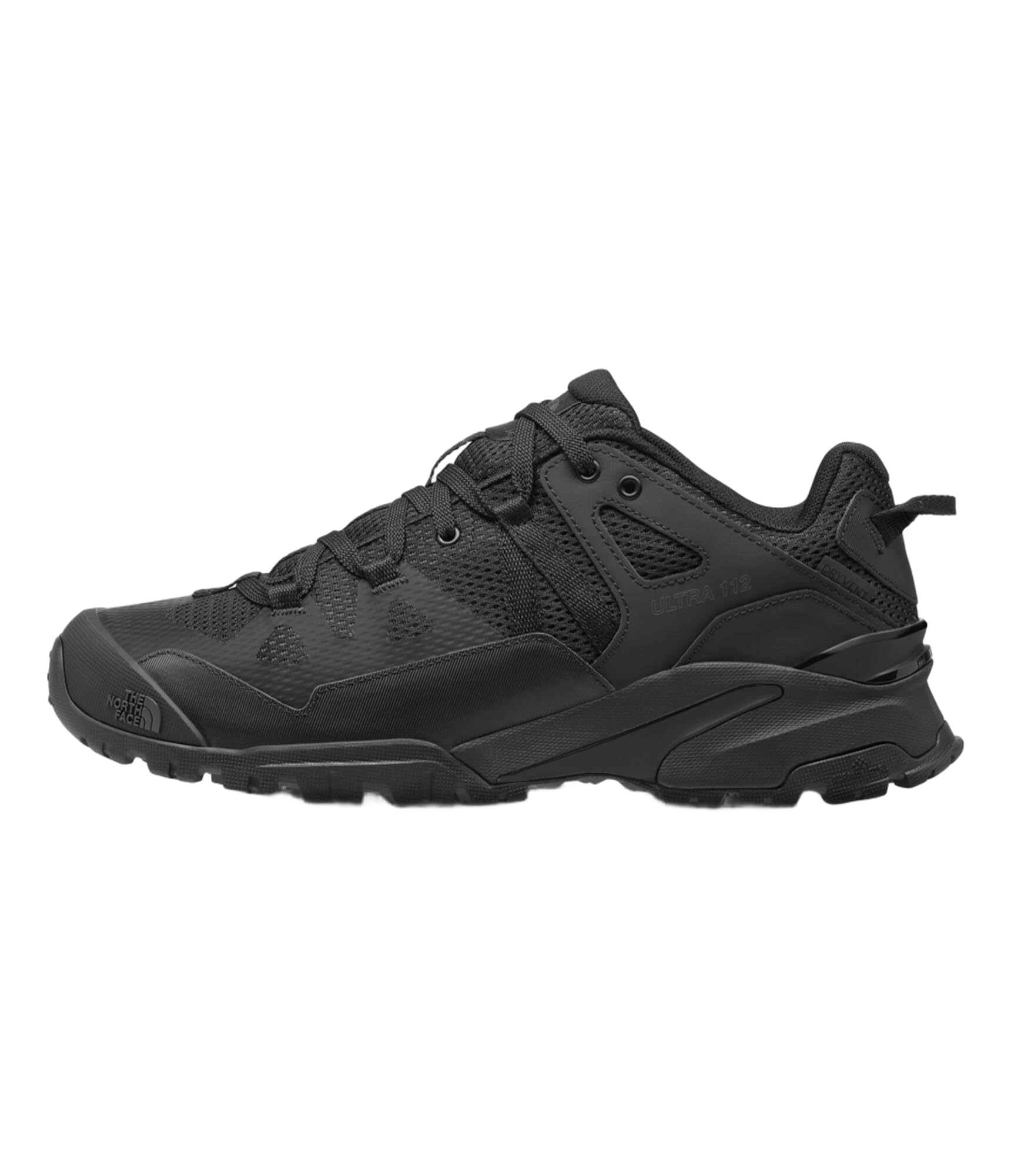
The seventh-pair loyalist’s shoe that keeps feet dry through stream crossings
The Ultra 112 pairs ripstop leather with a rubber outsole featuring 5mm lugs, built to conquer rugged trails and unpredictable weather. The DryVent membrane makes it water-resistant—not Gore-Tex-level—but owners confirm it keeps feet dry in wet conditions and looks good doing it. One owner is on their 7th pair in 15 years, noting the cheaper materials but holding quality and a sole that stays durable.
Quality leads the praise at 30 mentions, with comfort close behind at 24. The 5mm lugs grip well, and the shoe is comfortable from the start.
The known quirks: the heel runs a bit low and loose, so it can fly off when running, and the waterproofing traps heat, making summer hikes hot. Sizing runs slightly big for some—one owner found they “grow a half size” as the padding squishes down. For a dependable, water-resistant leather hiker with a proven track record, this one’s a solid premium choice.
The loyalist’s pick: 15 years and 7 pairs of proof that this shoe holds up on rough terrain.
Fair warning: the heel runs loose for running, and waterproofing means less breathability in summer.
10. Oboz Men’s Sawtooth X Low Hiking Shoe
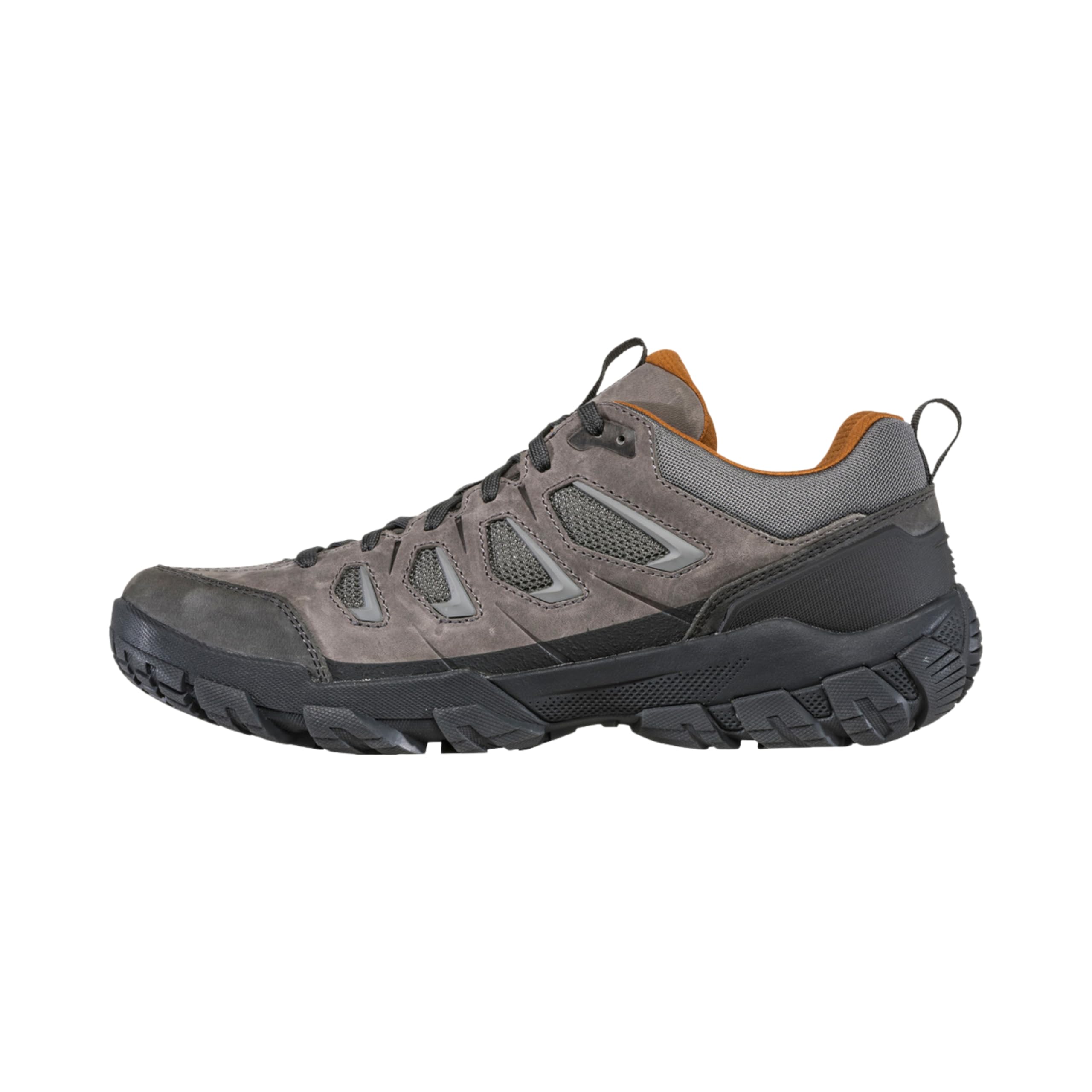
The 8mm-drop stabilizer that eased plantar fasciitis on steep descents
The Sawtooth X Low is a 10-year stalwart, redesigned with new styling and materials for improved comfort, traction, and durability. The 8 mm drop and ACT+ midsole use dual-density cushioning for a softer heel strike, while the Trail Tread outsole combines purpose-driven design with custom rubber blends for diverse conditions. At 13.6 oz, it’s a rugged workhorse that keeps small rocks from penetrating the sole.
Quality is the top praise at 47 mentions, with comfort at 33 behind it. One severe overpronator, after “trying so many hiking shoes” to avoid worsening plantar fasciitis, found the wide width “great” for the condition. Another owner tested them on dust, gravel, and slick rock, praising excellent traction and stability on steep slopes with no sole separation signs. The arch support is strong enough that one buyer didn’t need custom insoles.
The recurring fit gripe: these run small, so size up half a size, and some wide-width buyers still find them narrow. One owner’s sole separated at the toes after two months with a warranty claim ignored—a quality-control concern worth noting. A previous pair lasted two years. If you need stability and arch support for overpronation, this is a premium pick that delivers.
Built For Support
- ACT+ midsole softens heel strikes on descents
- Arch support strong enough to replace custom insoles
- Excellent traction on slick rock and gravel
- Stable on steep slopes and uneven ground
Size and Consistency
- Runs small—size up half a size
- Wide widths still narrow for some feet
- Sole separation reported by a few after heavy use
The stability specialist: the best arch support here for overpronators battling plantar fasciitis.
Check your size: order up half a size and verify wide width really fits before committing.
11. Danner Trail 2650 Hiking Shoes for Men
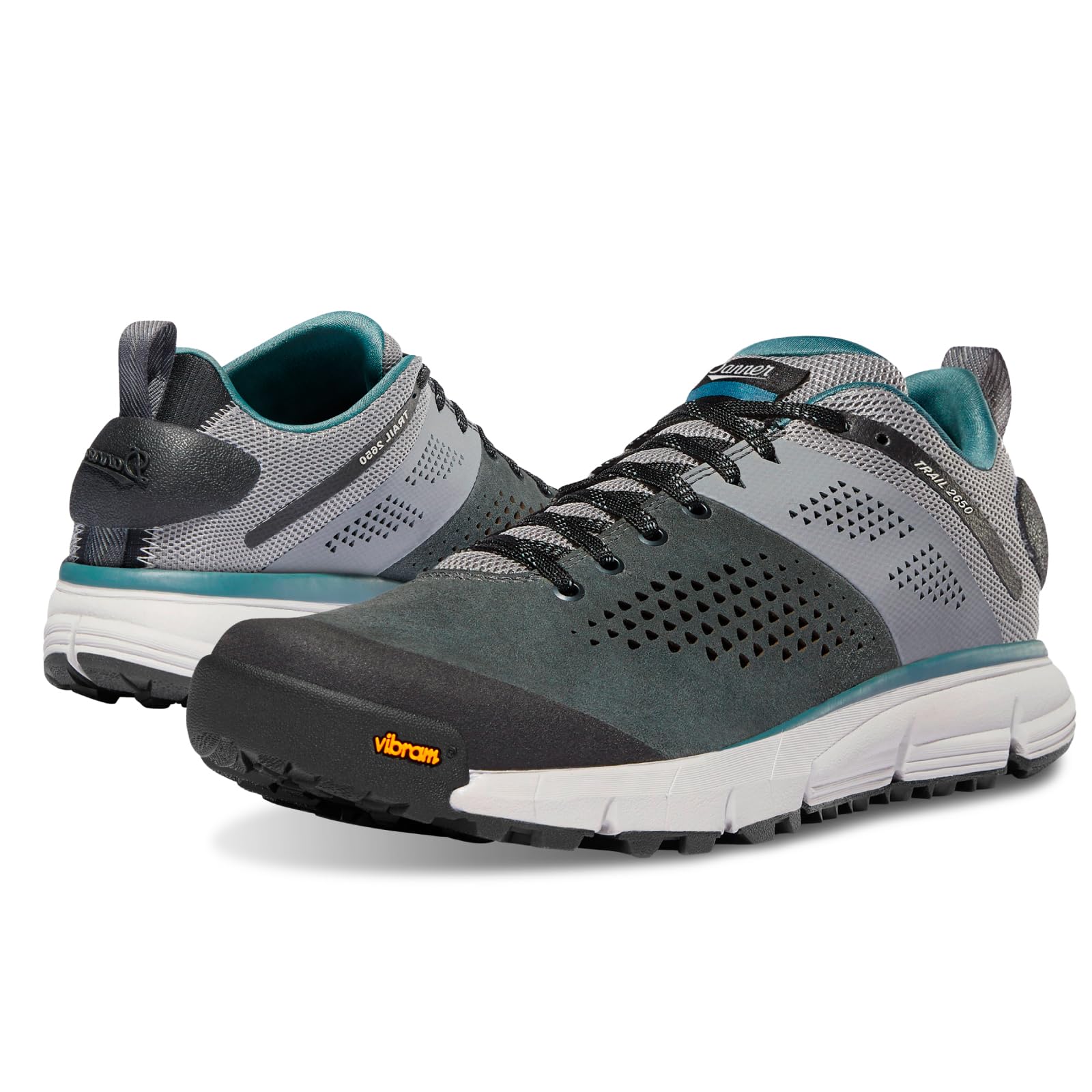
The suede lightweight that feels like a sneaker but grips like a boot
The Trail 2650 pairs durable suede with lightweight textile for a modern look that’s rooted in craftsmanship since 1932. The Ortholite footbed uses open-cell polyurethane for maximum comfort, while the PlyoGo EVA midsole adds shock absorption for extended wear. A breathable mesh lining dissipates heat, and the Vibram traction outsole prevents slipping on wet rocks—a combination that makes it as good for park trails as for casual wear.
Quality is the top praise at 55 mentions, with durability close behind at 32. Owners describe it as “light as a feather, sturdy and comfortable,” with a fit that feels like a sneaker if you size up. One owner called it the “best shoe in its class” after 20-mile hikes with excellent comfort and grip once they sorted the fit. The reflective laces add a stylish touch, and the Vibram soles are a durability hallmark.
The fit is the sticking point: it runs small for wide feet, and some need longer laces for heel slip or a high instep. Breathability is less than expected—feet get hot when sitting. An occasional unit arrives with quality issues. For a crossover shoe that goes from trail to casual without looking like a hiking boot, this is a premium pick that rewards the fit work.
The versatile finisher: suede style with real Vibram grip (a rugged rubber outsole) that transitions from trail to town smoothly.
Dial in the size: go up a size and choose wide if needed—the payoff is 20-mile comfort.
Understanding the Specs
Heel-to-Toe Drop (mm)
The vertical difference between the height of the heel and the height of the toe. A 0 mm drop is flat and barefoot-like, encouraging a midfoot strike but working your calves harder. An 8 mm or 10 mm drop tilts you forward, reducing calf strain but promoting a heel strike that jolts your knees on descents. Thru-hikers on the AT often pick low drops to keep their Achilles and calves conditioned for the daily grind.
Lug Depth and Outsole Compound
Lugs are the rubber teeth on the bottom of the sole, measured in millimeters. A 4.5 mm lug handles mixed terrain well, while 6.5 mm lugs dig deep into mud and loose scree but feel less stable on hard rock. Outsole compounds matter—Vibram Megagrip is the benchmark for wet-rock grip, while proprietary rubbers like MaxTrac and FriXion AT trade some wet performance for durability across everything.
FAQ
Should I choose zero drop or a higher drop for the Appalachian Trail?
How much toe room do I actually need in a hiking shoe?
Is Gore-Tex or OutDry better for keeping my feet dry?
How heavy is too heavy for an AT hiking shoe?
What is a rock plate and do I need one?
Why do some hiking shoes run small and how do I know my size?
Do I need to break in my hiking shoes before the trail?
What tread pattern is best for the AT’s mixed terrain?
Can I use trail running shoes for the Appalachian Trail?
How do I keep my feet dry when waterproof shoes trap heat?
Is a mid-cut or low-cut shoe better for ankle support on the AT?
Final Thoughts: The Verdict
For the majority of shoppers, the appalachian trail hiking shoes winner is the ALTRA Lone Peak 9 because its zero-drop design and roomiest toe box make it the most-comfortable, blister-resistant platform for 2,190 miles of daily abuse. If you want waterproof protection without the boot weight at a sharp value, grab the Columbia Peakfreak Rush Outdry. And for heavy multi-day backpacking where grip and rock protection matter most, the Topo Athletic Traverse with its Vibram Megagrip and rock plate is the one to reach for—just size up carefully.
How We Picked
We do not accept paid placement. Every pick is matched to a real buyer and a real use-case; we do not hands-on test units.
Sources & Methodology
Specifications: manufacturer listings and product documentation. Review insights: verified customer reviews, as of August 2026. Pricing: not shown on this page (it changes often); check the current price via the retailer link.
As an Amazon Associate, Gadgets Feed earns from qualifying purchases. This does not affect which products we feature.