
Our readers keep the lights on and my morning glass full of iced black tea. As an Amazon Associate, I earn from qualifying purchases.
Specs are compiled from manufacturer listings and verified buyer reviews and can change over time — please confirm the key details on the product page before buying.
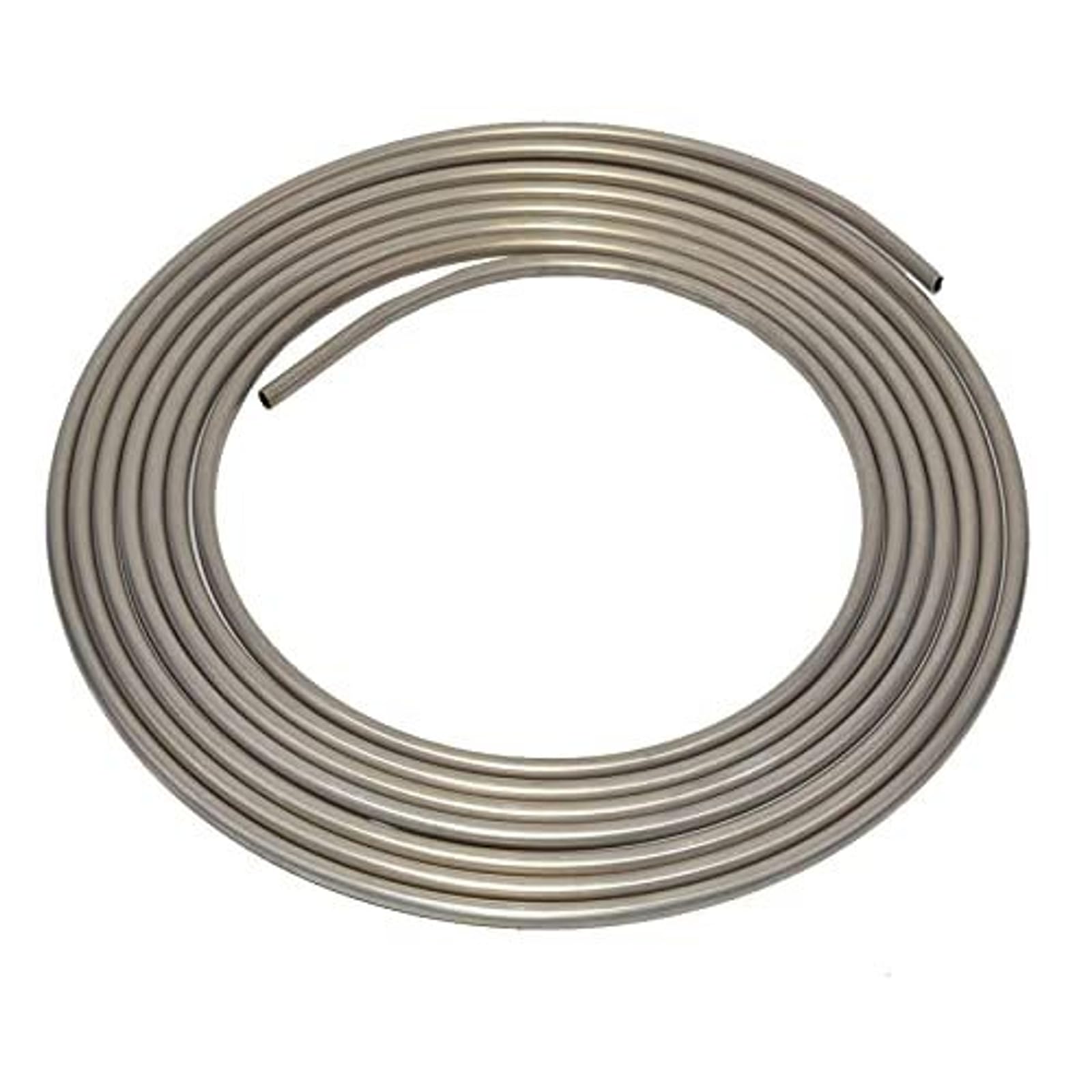
You’ve likely fought a coil of steel tubing that kinked or refused to flare cleanly. This guide cuts through the metal choices — aluminum, steel, stainless, copper-nickel, and pure copper — to show you which one matches your job, whether that’s a fuel system, brake lines, transmission cooler, or a home HVAC project.
I’m Min — the founder and writer behind Gadgets Feed. This guide is built by comparing the manufacturers’ published specifications and the patterns across verified customer reviews, so you get each pick’s real strengths and trade-offs instead of marketing spin.
From 25-foot aluminum coils that hand-bend without kinking to corrosion-proof copper-nickel that flares like a dream, here is the honest breakdown of the best 3/8 metal tubing for your project.
Our Picks at a Glance


How To Choose The Best 3/8 Metal Tubing
Choosing the right 3/8″ tubing depends on one question: what fluid is moving through it and how much pressure is it under? A fuel line, a brake line, and an air compressor line all use the same diameter, but they need very different materials to be safe and easy to work with.
Match the material to the job
Aluminum is the easiest to bend by hand and is fine for fuel, oil, and air systems at moderate pressure. Steel is stronger and safer but much harder to bend and flare without proper tools. Copper-nickel is the balance for brake lines because it bends and flares easily while resisting corrosion. Stainless steel looks great and never rusts, but it is the hardest to work with. Pure copper is for refrigeration and HVAC lines, where thermal conductivity matters more than brute strength.
Understand wall thickness and kinking
The wall thickness is measured in inches or millimeters, and it tells you how much material is there to hold a bend. A thinner wall — like 0.028 inches — is easier to bend but can kink if you force a tight radius. A thicker wall, like 0.035 inches, resists kinking better but needs more effort or a proper bender to shape. The trade-off is real: soft metal that hand-bends beautifully can collapse under a sharp angle, while stiff metal holds its shape but fights you the whole way.
Check the pressure rating before you cut
Every coil has a maximum working pressure, usually stated in PSI (pounds per square inch, a measure of internal pressure). A fuel line rated at 650 PSI is plenty for a car’s fuel system, but a brake line needs to handle far more. The data in this guide shows a wide range — from 650 PSI aluminum up to 5,955 PSI copper-nickel — so matching that number to your system’s needs is non-negotiable for safety.
Quick Comparison
| Model | Best For | Material | Length | Max Pressure | Amazon |
|---|---|---|---|---|---|
| A-Team Performance★ Best Overall | All-around fuel lines | Aluminum | 25 feet | — | Amazon |
| AC PERFORMANCEBest Value | DIY multi-system repairs | Aluminum | 16 feet | 650 psi | Amazon |
| PodavelleTop Performer | High-pressure custom builds | Aluminum | 25 feet | 650 psi | Amazon |
| 4LIFETIMELINES Steel | Harsh, corrosive environments | PVF-Coated Steel | 25 feet | — | Amazon |
| MorningRo | Versatile fuel & cooling | Stainless Steel | 25 feet | — | Amazon |
| Vigorous | Plumbing & automotive | Stainless Steel | 25 feet | — | Amazon |
| The Stop Shop | Permanent stainless fuel lines | Stainless Steel | 16 feet | — | Amazon |
| 4LIFETIMELINES Copper-Nickel | Brake & corroded lines | Copper-Nickel | 25 feet | 5,955 psi | Amazon |
| GOORY | HVAC & refrigeration | Copper | 50 feet | — | Amazon |
In-Depth Reviews
1. A-Team Performance Metal Fuel Line Tube
Our pick — over 4.5★ from 500+ verified ratings; the strongest balance of quality and price.
The crowd-pleasing coil that hand-bends into sharp turns without kinking, making it the default pick for most fuel jobs.
If you want a fuel line that behaves itself from the moment you uncoil it, this 25-foot roll of 3/8-inch diameter tubing is built from 3003-grade aluminum you can often shape by hand. Buyers report it “bends sharper than rubber without kinking,” and that it holds up at 90-degree or greater angles with no collapse — a trait that saves you from the frustration of a work-hardened kink ruining a long run.
The quality is the thing everyone raves about, and it goes beyond just bending. The 0.035-inch wall provides structural integrity., and the alloy is strong enough that owners describe it as weldable with TIG (a type of welding that uses a tungsten electrode) for custom fabrication. It’s a perfect fit for GM fuel lines, transmission cooler lines, or rebuilding a classic ’39 Chevy fuel system — and at 25 feet, you’ll have plenty left over for future projects.
There is one honest caveat: a 25-foot coil is a lot of tubing. If your project only needs a short section, you’ll have a large coil to store, though at this price, the value is hard to argue with given how often buyers call it “excellent value for price.”
What wins people over
- Bends sharply by hand without kinking, even past 90 degrees
- Strong 3003-grade alloy — weldable for custom fab work
- Ideal ID/OD fit for standard GM fuel and cooler lines
The honest trade-off
- 25 feet is more than many small jobs need, leaving storage leftovers
- Pair with the right hose size — owners oversize one step for rubber connections
The default pick: reach for this when you want a forgiving, all-around aluminum fuel line for a car, truck, or classic rebuild.
Think twice if: you need something stiffer than aluminum, say for a high-pressure brake system where steel or copper-nickel is the safer call.
2. AC PERFORMANCE 3/8″ Aluminum Fuel Line Hard Tube
A short, affordable aluminum coil that shines for rusted-line replacements and multi-system DIY jobs.
If you’re staring at a rusted fuel line on a fuel-injected vehicle, this 16-foot coil of 3/8-inch aluminum tubing is built for exactly that moment. Owners mention it’s a revelation compared to steel — “steel tubing is terrible to bend and install,” they note, while this aluminum alternative bends easily by hand or with a spring bender and works with compression fittings without a single leak.
Flexibility is what wins people over, and the 650 PSI max working pressure makes it versatile across fuel, hydraulic, AC, and transmission systems. It’s lighter than you’d expect at just 0.26 kg, which tells you the 0.7-millimeter wall is on the softer side — that’s precisely why it bends so willingly. Owners have used it for everything from compressor aftercooler lines to coolant piping, and it holds up well.
The catch is hidden in that softness: buyers have mixed feelings about the material, and one warns it can kink if you bend it past 20 degrees by hand. Use a proper tubing bender for sharp turns and this coil is a bargain workhorse for the weekend mechanic.
The highlight reel
- Bends and cuts easily with simple hand tools
- 650 PSI rating covers fuel, hydraulic, and AC systems
- Compression fittings seat with zero leaks for many owners
Know before you bend
- Soft metal kinks if bent past 20 degrees by hand — use a bender
- Some note the material feels soft; pick steel if you want rigidity
Reach for this if: you’re replacing corroded lines on a daily driver and want a cheap, bendable coil that won’t fight you.
Look elsewhere if: your run needs lots of tight 90-degree bends — that softness demands a tool and patience.
3. Podavelle 3/8″ OD Aluminum Hard Fuel Line Coil
The 650 PSI aluminum coil that holds sharp 90-degree bends without kinking, trusted by air-ride builders.
This 25-foot roll of 3/8-inch aluminum tubing stands out for one reason: it’s rated at 650 PSI max working pressure, yet still hand-bends cleanly. Customers note it “held up nicely on 90 degree and greater bends with no kinking,” and it’s a favorite for completing air ride setups because the pressure rating gives plenty of headroom for that kind of work.
Quality is the most-praised trait, and the 0.89mm wall is the reason it resists collapse where softer coils give out. It’s extruded from lightweight 3003-grade aluminum alloy, so it’s easy to cut, bend, flare, and polish. Owners have used it to replace rusted brake lines, fix brake lines on cars, and even replace cracked rubber hoses on a 5th wheel trailer — that last one being a great call since metal line outlasts rubber by years.
The trade-off with this one is durability vs. softness: some owners think it will last forever while others find it a touch too soft for heavy abuse. It’s a bit heavier than the budget options at 0.36 kg, and if you’re doing double flares by hand, you’ll want to protect the line from abrasion and vibration where it rubs against the frame.
Why it ranks high
- Holds 90-degree and greater bends with zero kinking
- 650 PSI rating suits air-ride and high-pressure fuel builds
- Compatible with fuel, oil, water, diesel, ethanol, and E85
The honest limit
- Some owners find it soft — protect it from abrasion and vibration
- Opinions split on long-term durability vs. softer feel
Grab it for: custom builds like air ride systems or E85-compatible fuel lines where the 650 PSI rating is a real asset.
skip it if: you want rock-hard rigidity — the softer temper that makes it bendable is the same trait that demands careful mounting.
4. 4LIFETIMELINES PVF-Coated Steel Brake Line Tubing

The steel coil built for snow, ice, and salt-spray regions where rust eats ordinary lines alive.
If your truck lives in a state that salts the roads, this 25-foot coil of 3/8-inch steel tubing is the armor-plated option. It’s coated with a poly-vinyl fluorine (PVF) topcoat — and The copper-brazed, double-wall construction meets SAE J527 standards, so it’s certified for marine fuel lines, brake lines, and gas lines..
Quality is the top praise by a wide margin, and buyers consistently describe it as “a heck of a lot stronger and safer” than aluminum. It’s heavier at 3 pounds, and that weight comes with real stiffness: the recurring note is that it’s hard to bend, though a spring shield or bender makes it workable. For a fuel system from tank to firewall, reviewers point out it’s a rock-solid upgrade over pieced-together steel and plastic.
The catch is the coating itself. It’s durable but can scratch off if you’re careless with tools, and the stiffness means you’ll want large-radius bends — the steel is brittle enough that tight kinks can crimp it. It’s a trade-off: more effort to install, but a lifetime of rust resistance in return.
The strong suit
- PVF topcoat resists corrosion in harsh, salty conditions
- DOT-approved and meets SAE J527 for marine and brake use.
- Much stronger and safer than aluminum for critical lines
The effort required
- Hard to bend and flare — plan on a proper bender
- Coating can scratch off; touch up with enamel if it does
Choose this for: fuel or brake lines in rust-belt climates where corrosion resistance outranks ease of install.
Not for: quick weekend jobs — the stiffness and careful coating handling demand time and the right tools.
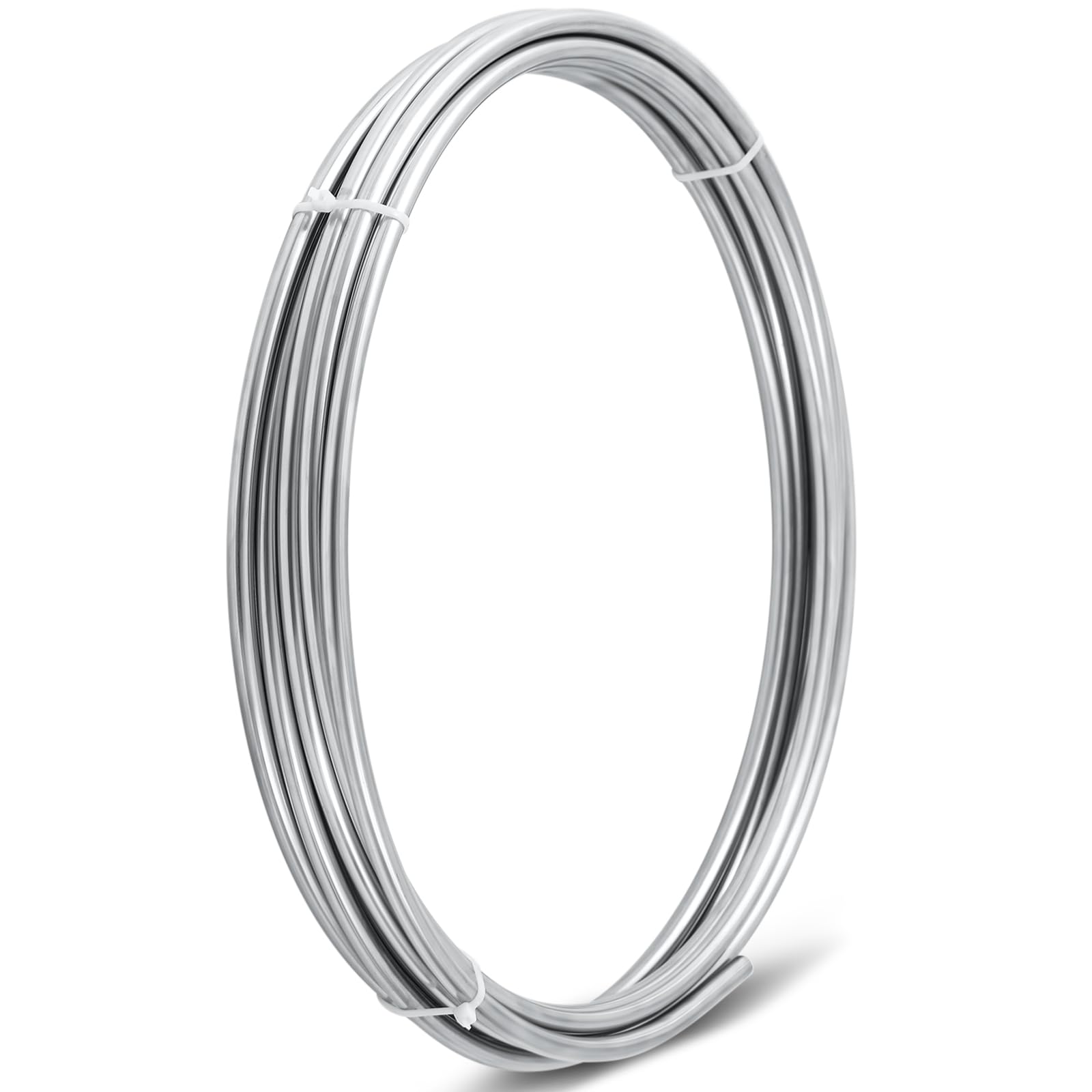
5. MorningRo 304 Stainless Steel Tubing Coil
A dual-purpose stainless coil that pulls duty as both a fuel line and a homebrew wort cooler.
This is the rare 3/8-inch coil that genuinely does double duty. It’s made from quality 304 stainless steel, which is renowned for corrosion resistance in both high and low temperature environments, and the maker explicitly bills it for both fuel line coils and wort cooling — that’s the sugary liquid homebrewers chill before fermentation. At 25 feet (about 7.62 meters) with a 0.06-centimeter wall, it’s a solid middle ground between bendable aluminum and rigid steel.
Owners find it “nice to work with” and easy to shape for their projects. One homebrewer moved away from copper specifically to avoid the chance of leaching copper into hot, slightly acidic wort, and chose this stainless for the immersion cooler instead — a smart swap that shows the material’s real-world versatility beyond cars.
The honest caveat here is that this is a newer listing with a thinner review history, so the long-term durability story is less proven than the aluminum veterans. It’s also strictly 3/8-inch — one buyer ordered it expecting 1/4-inch and got a different size, so double-check your spec before checkout.
Where it fits
- 304 stainless resists corrosion in hot and cold environments
- Works as a fuel line and a wort cooler for homebrew
- Rigid enough for demanding plumbing and automotive tasks
Watch out for
- Confirm the 3/8-inch size — it’s not a multi-size listing
- Thinner review history means less long-term feedback
Best for: the hobbyist who wants one coil that serves both a car project and a brewing setup.
Hold off if: you need a proven, heavily-reviewed workhorse — the older aluminum and steel coils have far more owner miles on them.
6. Vigorous Stainless Steel Tubing Coil

A 304 stainless coil that’s semi-rigid — shapeable like brake line but stiffer, for plumbing and auto work.
This 25-foot coil of 3/8-inch 304 stainless steel is described by owners as “semi rigid, not completely hard tubing” — if you’ve worked with bendable brake line for custom auto work, this is comparable but stiffer. That stiffness is exactly why it’s a strong, tough choice for plumbing and automotive applications where you want the line to hold its shape once you bend it.
Quality is the consensus positive, and at 1.09 kg this is a substantial coil that feels built to last. It’s easy to maintain — a quick wipe with a cloth keeps it looking good — and the corrosion resistance is inherent to the stainless material, so there’s no coating to scratch off. Owners have used it successfully to replace fuel lines and are happy with the result.
The honest trade-off is in that stiffness. The wall is thin enough that it doesn’t love flaring or tight-radius bends, and several shoppers say it’s tough to shape without the right tools. If you need to do a clean double flare, you might find this stainless less forgiving than a softer copper-nickel line.
The upside
- 304 stainless holds its shape once bent for clean routing
- Corrosion-resistant — no coating to scratch off
- Very easy to maintain with just a cloth wipe
The friction point
- Doesn’t like flaring or tight-radius bends — needs a bender
- Stiffness means more effort for custom-routing jobs
Reach for it when: you want a stainless line that keeps its routed shape and shrugs off corrosion with zero coating maintenance.
Pass if: your project involves lots of tight flares — the thin wall makes that a struggle.
7. The Stop Shop 16 Ft Stainless Steel Fuel Line

The low-maintenance stainless line — harder to work with, but you’ll never touch it again.
Here’s the pitch for stainless steel in one sentence from the review pages: “you never have to do them again.” This 16-foot coil of 3/8-inch grade 304 stainless is for the owner who wants to replace stock fuel lines once and forget about rust, corrosion, and plastic brittleness forever. One owner rebuilt high-pressure fuel lines with AN fittings (a standard threaded connector) and reports zero rust and easy straightening.
Quality is the top praise, and The 0.031-inch wall allows clean 37- and 45-degree single or double flares.. It’s noticeably lighter than you might expect for steel at 0.83 kg, For a classic car that sat with clogged fuel for 20 years, it’s the permanent fix.
The cost is effort. Stainless is hard to bend and flare without proper tools, and the review pages carry one sharp warning: avoid abrasive cutoff wheels because they can crack the metal — use a hacksaw and file instead. Plan on needing a good flaring tool and a straightener to tame the coil memory before you bend.
Why it’s worth it
- 304 stainless never rusts — a true fit-once solution
- Takes clean 37/45 degree single and double flares
- Cheaper than OEM lines, even with tool costs
The real cost
- Hard to bend and flare without a good tool set
- Cut with a hacksaw and file — cutoff wheels risk cracking
Pick this for: a permanent fuel line replacement where you want to do the job once and never revisit it.
Avoid if: you don’t own a flaring tool or bender — stainless punishes shortcuts.
8. 4LIFETIMELINES Copper-Nickel Brake Line Tubing

The corrosion-proof copper-nickel that hand-bends and flares easily, with a 5,955 PSI burst rating for brake duty.
If you’ve ever fought a steel brake line, this 25-foot coil of 3/8-inch copper-nickel is the relief valve. It’s a nickel-copper alloy built for super-easy hand bending and flaring, and the review pages are emphatic: “so much easier than steel tubing.” Buyers report bending it by hand without kinking and routing it under the car with far less effort than steel, all while being completely corrosion-proof.
The 5,955 PSI burst rating and 0.028-inch wall pass SAE and ISO specifications. That’s why owners trust it to replace rusted-out fuel lines and steel transmission cooler lines. The material flares easily too, which is the single most tedious part of any brake job. One owner’s summary says it best: “they look good and will never corrode.”
The catch is a matter of technique, not quality. Because the metal is softer, it can over-flare if you’re not careful, and the bending needs to be deliberate — the effort is reduced, but rushing it is the main way to go wrong. And yes, this is the pricier end of the spectrum, but owners say they’d happily pay double for it again.
The standout
- Hand-bendable without kinking — no heavy bender needed
- 5,955 PSI burst rating meets SAE and ISO specs.
- Flares easily and never corrodes, unlike standard steel
Handle with care
- Easier to over-flare than stiffer metals — go slow
- Premium price, though owners call it worth it
The brake-line answer: if corrosion and hard bending have you dreading the job, this coil turns a weekend chore into an afternoon.
pass on it if: your budget is tight and you’re only doing a low-pressure fuel line — aluminum handles that for less.
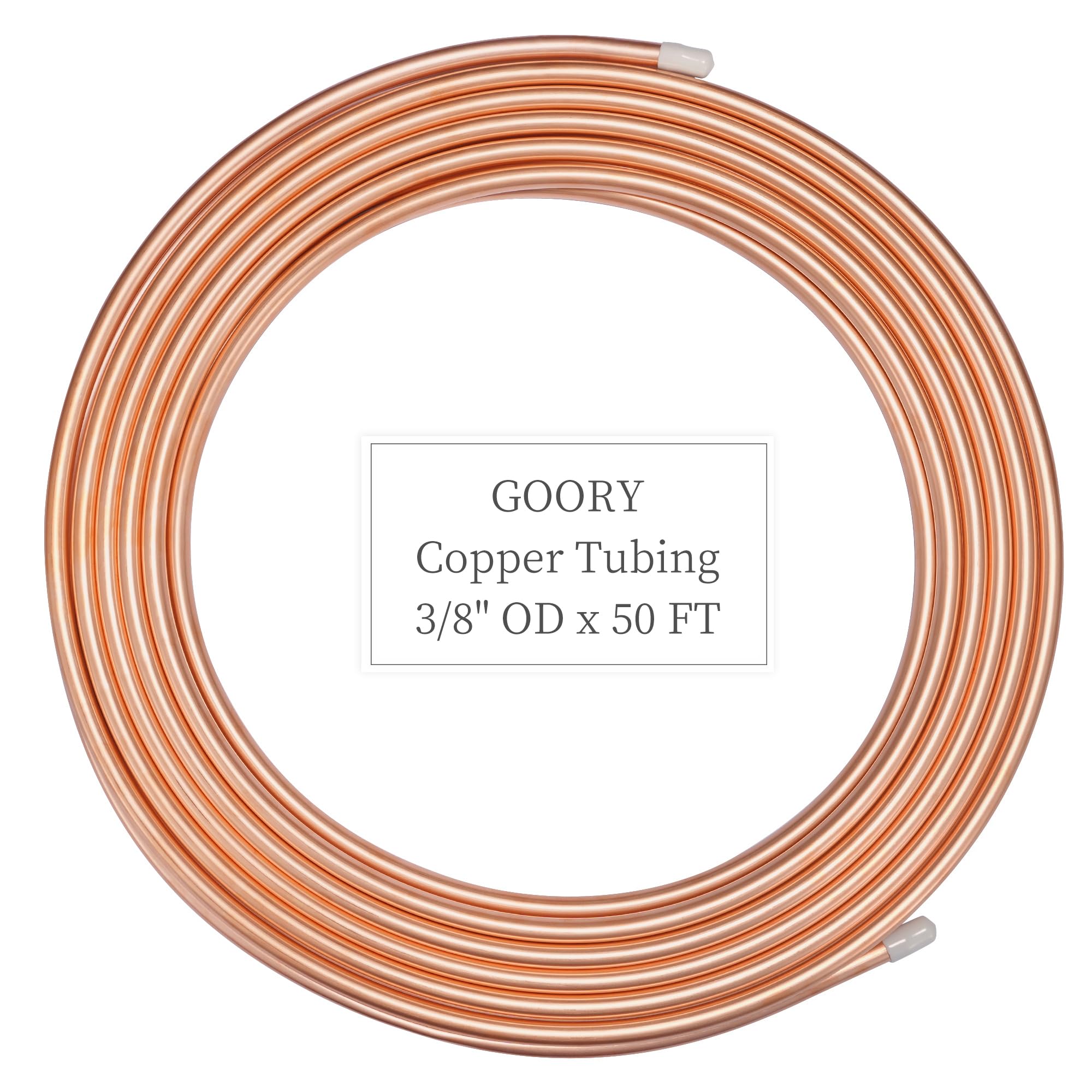
9. GOORY Copper Tubing 3/8″ OD x 50 FT
A 50-foot pure copper coil built for refrigeration and HVAC, with the thermal conductivity steel can’t match.
If your project involves an air conditioner, refrigerator, or heater, this is the coil you want. It’s made from 99.9% C12200 copper, a grade known for outstanding thermal conductivity, and it’s compliant with the ASTM-B280 standard — the spec that governs ACR (air conditioning and refrigeration) tubing. The 50-foot length with a 0.328-inch inner diameter gives you serious reach for multi-unit runs.
Quality is the most-praised trait by a wide margin, and owners specifically note it contains more copper than similar products. It’s filled with nitrogen during production to resist oxidation, and it’s soft enough to cut and bend manually or with ratcheting tools into any angle. It works with both sweating and flared fittings, and buyers have used it for everything from installing propane ventless heaters to trailer projects.
The honest caution is the classic copper weakness: kinking. It’s soft annealed copper, so flexibility and kink resistance get mixed marks — packaging and tight bends can crimp it. One unit also arrived with transit damage, so inspect the coil when it lands. It’s not for high-pressure potable water, but for HVAC and DIY it’s a solid performer at a reasonable price.
The pure-copper edge
- 99.9% C12200 copper with outstanding thermal conductivity
- Nitrogen-filled during production to resist oxidation
- 50 feet gives generous reach for multi-unit HVAC runs
The soft-metal catch
- Soft annealed copper kinks easily on tight bends
- Not rated for high-pressure potable water systems
Get this for: refrigeration, HVAC, and ACR piping where thermal conductivity and easy shaping matter most.
Think twice if: you need a rigid high-pressure line — copper’s softness is the trade-off for its conductivity.
Understanding the Specs
Wall Thickness & Kink Resistance
The wall thickness, given in inches (like 0.035″) or millimeters (like 0.89mm), is the amount of metal between the inside and outside of the tube. A thicker wall resists kinking when you make a sharp bend, but it takes more force to shape. A thinner wall bends easily but collapses if you push too tight a radius. The right choice depends on how many tight bends your route needs.
Pressure Rating (PSI)
PSI stands for pounds per square inch, a measure of the internal pressure the tube can withstand. Aluminum fuel lines typically sit around 650 PSI, which is fine for fuel and air systems. Brake lines need far more — the copper-nickel option here is rated at 5,955 PSI burst. Always match the rating to your system; under-specing a brake line is a safety risk, not a minor mistake.
FAQ
Can I bend 3/8 metal tubing by hand?
What is the difference between aluminum and steel tubing?
Is stainless steel tubing better than copper-nickel for brake lines?
Will 3/8 tubing work with AN fittings?
How do I cut metal tubing without damaging it?
Can this tubing be used for transmission cooler lines?
Is 650 PSI enough for a fuel injection system?
What is PVF coating and why does it matter?
Final Thoughts: The Verdict
For most people, the best 3/8 metal tubing is the A-Team Performance aluminum coil because it hand-bends without kinking, earns overwhelming praise for quality, and covers nearly every fuel-line job with 25 feet of forgiving 3003-grade aluminum. If you’re replacing rusted fuel lines on a daily driver and want the cheapest bendable option, the AC PERFORMANCE 16-foot coil is the value pick with a 650 PSI rating. And for a brake line you’ll never touch again, the 4LIFETIMELINES copper-nickel is the one to reach for — it hand-bends, flares easily, and carries a 5,955 PSI burst rating that makes rust a thing of the past.
How We Picked
We do not accept paid placement. Every pick is matched to a real buyer and a real use-case; we do not hands-on test units.
Sources & Methodology
Specifications: manufacturer listings and product documentation. Review insights: verified customer reviews, as of August 2026. Pricing: not shown on this page (it changes often); check the current price via the retailer link.
As an Amazon Associate, Gadgets Feed earns from qualifying purchases. This does not affect which products we feature.